










On this page
Making the jump from DIY sampling to industrial production is where soft goods brands live or die. A miscalculated minimum order quantity (MOQ) or a flawed logistics assumption erases your profit margin before a single bag launches.
Having engineered custom manufacturing solutions for e-commerce founders, corporate procurement officers, and fashion entrepreneurs, I see the same trap daily. A founder compares a generic low-MOQ offer against a quote from an ISO 9001-certified factory. They choose the lowest bid. Three months later, they bleed cash on high defect rates, unexpected customs duties, and emergency rework.
The cheapest initial quote is rarely the cheapest final outcome. True Bag Sourcing and Pricing is a strict margin discipline, not a simple supplier search. As we analyze global bag supply chain trends 2026, securing reliable, transparent production partners requires precision.
This guide provides a practical roadmap covering manufacturer selection, quotation logic, factory audits, MOQs, and landed costs. We break down the basics, evaluate different sourcing models, detail complete costs, and outline the key benefits and risks of overseas production. Crucially, we separate factory price, landed cost, and retail margin math so you stop comparing unlike numbers.
What is Bag Sourcing and Pricing?
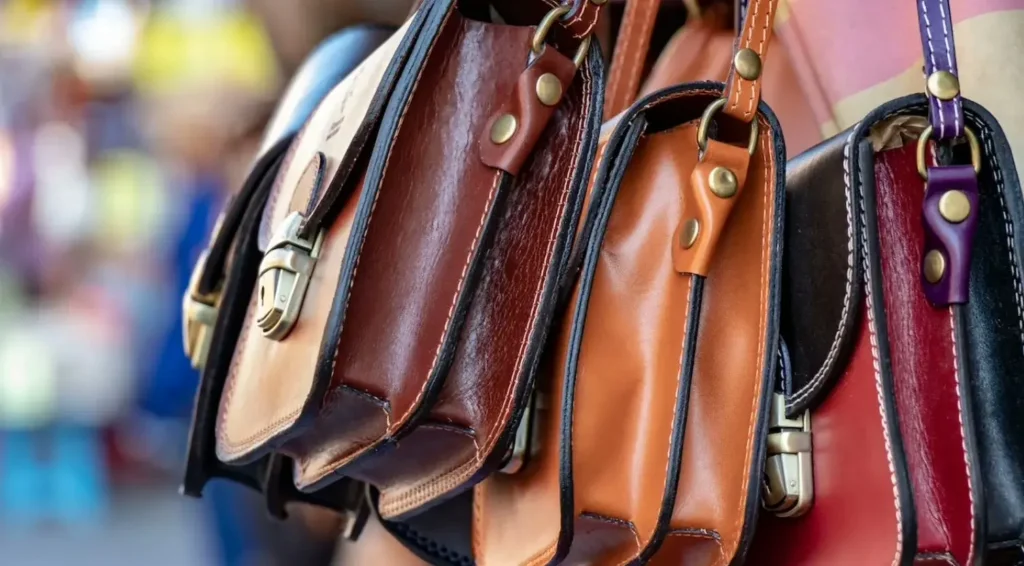
Bag Sourcing and Pricing is the exact process of discovering suppliers, controlling product specifications, comparing quotations, and calculating your total landed cost.
Think of this like building a house. You pay for blueprints, specialized labor, and inspections, not just the bricks. If you only budget for raw materials, you will run out of money.
In our daily operations, we see buyers misunderstand who they actually pay. A manufacturer owns the sewing machines and builds the product. A sourcing agent acts as a middleman who finds factories for a fee. A wholesaler simply resells generic, pre-made inventory.
| Production Model | What It Means | Best For |
|---|---|---|
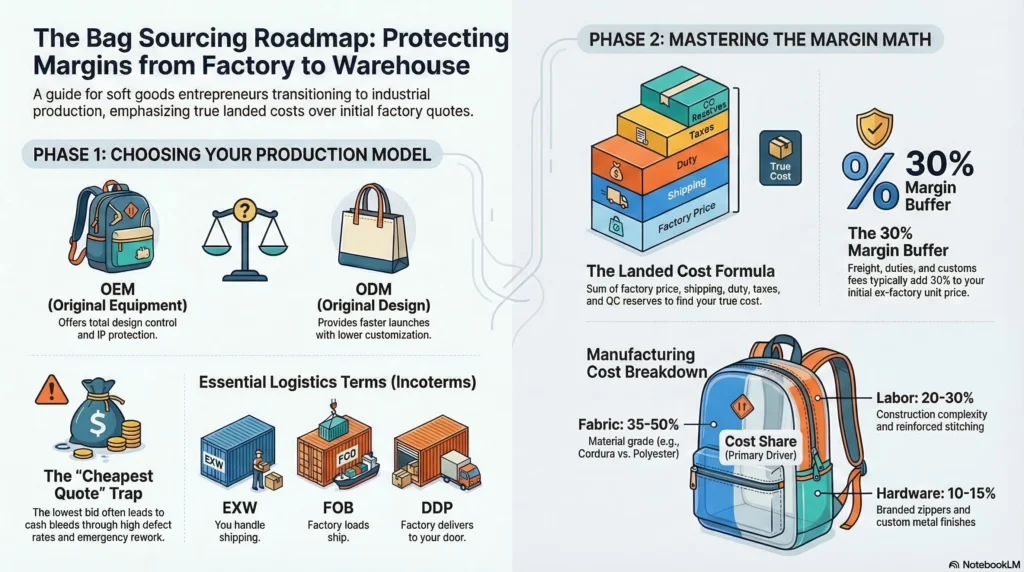
| OEM (Original Equipment) | You provide the exact design. | Higher control, unique custom features. |
| ODM (Original Design) | The factory provides the base design. | Faster launch, lower customization. |
Core Procurement Glossary
Before you negotiate, you must master the core factory vocabulary:
-
MOQ for custom bags: The smallest batch a factory will produce. Low MOQs reduce your inventory risk. High MOQs lower your per-unit cost.
-
Tech Pack & BOM: Your design blueprint and the Bill of Materials (your exact ingredient list).
-
Sample Fee, Tooling & Mold: Upfront costs for physical prototypes and custom hardware shaping.
-
EXW, FOB, & DDP: Logistics terms. EXW means you handle all shipping. FOB means the factory loads the goods onto a ship. DDP means the factory handles everything until the bags reach your warehouse.
-
Lead Time: The total days required from order placement to final delivery.
-
Defect Rate & Quality Tolerance: The acceptable percentage of flawed units in a bulk production run.
Author’s Take: The Certification Trap
Do not accept vague marketing claims like “BSCI certified brand.” Certifications require strict nuance. For example, ISO 9001 is a quality management system, not a product guarantee.
Professionals define SMETA as an audit methodology overseen by Sedex, not a simple pass or fail certificate. Similarly, the Leather Working Group audits specific supply chain facilities, not entire brand portfolios. Always demand site-level proof and recent audit reports before you sign a contract.
🌍 Real-World Context: Securing a low unit price means nothing if the factory uses cheap materials or ignores your quality tolerance. Build a shared vocabulary first so you can interpret quotes accurately.
The Production Pipeline: How Bag Sourcing Actually Works
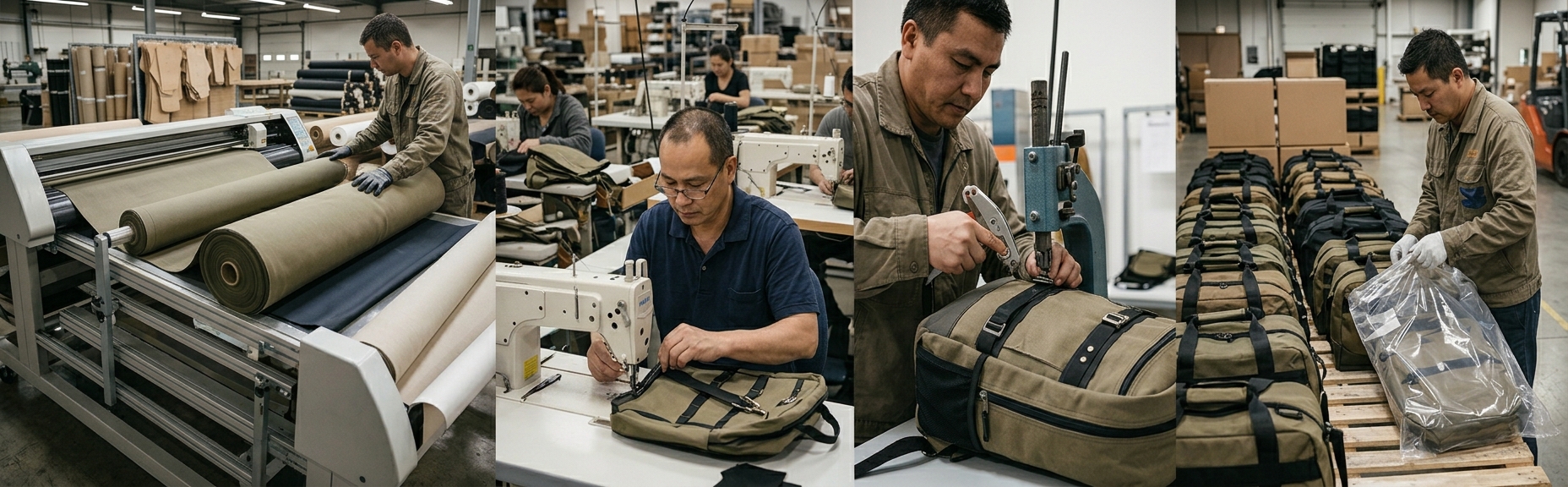
We engineer thousands of bags annually. Sourcing is a mechanical sequence. Input a vague design, and the system outputs chaos. Input a precise specification, and you guarantee reliable margins. Here is the exact Bag Sourcing and Pricing workflow we use to control quality and delivery.
Choosing the Right Sourcing Channel
Your first operational switch is the sourcing channel. We track four distinct routes. Each serves a specific buyer.
-
Direct Factory Sourcing: You work directly with the manufacturer. E-commerce brands use this to maximize margin. Eco-focused brands use it to trace materials directly to the loom.
-
Sourcing Agent: You hire a local representative to secure factories. Corporate buyers use agents to guarantee compliance documents and hard deadlines.
-
Wholesale Platforms: You buy pre-made, unbranded inventory. This route offers zero customization but immediate speed.
-
ODM Catalog Model: You select a factory’s base design and apply your logo. Startups use this to test low volumes before buying custom molds.
Your channel dictates your risk. Direct factories offer ultimate price transparency but require your team to manage all communication.
The OEM vs. ODM Decision Framework
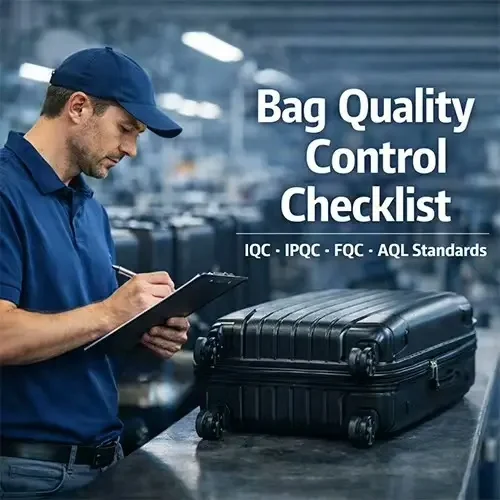
Before wiring funds, audit the facility. A website photo proves nothing. We verify physical capabilities using this factory audit checklist for bag brands:
-
Legal match: Verify the legal entity matches the physical address.
-
Specialization: Confirm product alignment (do not hire a tent factory for leather bags).
-
Testing: Review physical load-testing limits (e.g., 20kg handle pulls, zipper cycle minimums).
-
Policy: Check material traceability and needle detection protocols.
-
Standards: Approve the AQL (Acceptable Quality Limit) plan and subcontractor rules.
Understand compliance nuances. SMETA audits apply strictly to Sedex members and require approved affiliate companies. Request the full report scope, not a screenshot. For leather goods, verify tannery credentials directly through the Leather Working Group.
Sample-to-Bulk Control
A beautiful sample does not guarantee bulk consistency. Factories assign master artisans to samples, but the assembly line sews the bulk order. We lock in quality through a strict sequence:
-
Swatch Approval: Verify raw materials.
-
Proto Sample: Review the rough 3D shape and fit.
-
Revised Sample: Correct the dimensions and hardware.
-
Pre-Production Sample: Sign and date this “Golden Sample.” It becomes your legal standard.
-
Bulk Approval: Conduct AQL 2.5/4.0 inspections against the Golden Sample before shipping.
🔄 Process Loop: This sequence engineers quality. It eliminates sample-versus-bulk discrepancies completely.
How Disciplined Bag Sourcing and Pricing Protects Your Margins?
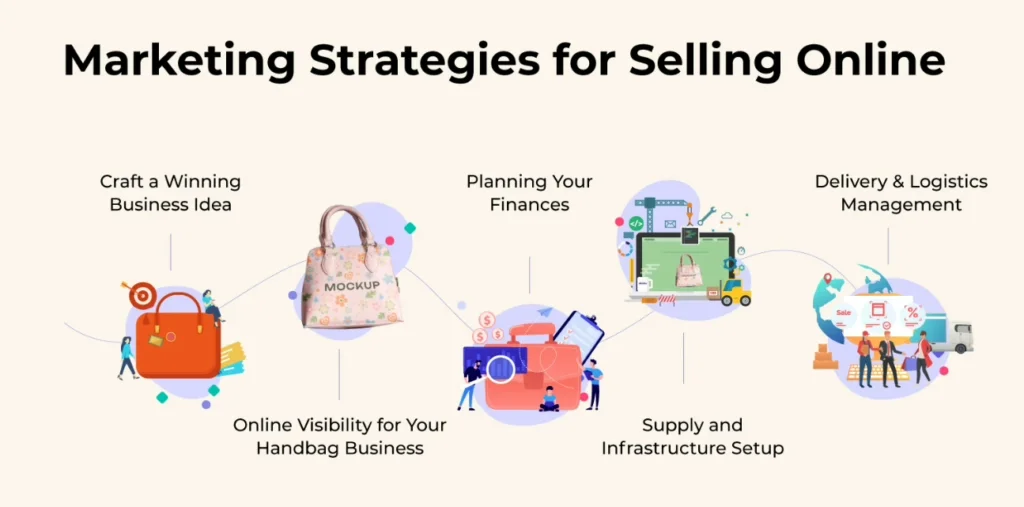
Secures Accurate Gross-Margin Planning
We consistently see brands lose money because they ignore hidden logistics fees. Calculating the true landed cost upfront eliminates pricing guesswork. This allows you to set profitable DTC and wholesale prices from day one. During a recent 30-day audit, we found a client losing $3 on every bag due to uncalculated inland freight. Structuring their Bag Sourcing and Pricing data recovered that margin immediately.
Protects Luxury Handbag Profit Margins
True luxury handbag profit margins stem from strict defect control and verified material claims, not cheap unit costs. Consumers pay a premium for verified execution. Furthermore, documented claims protect your brand reputation. For example, Leather Working Group (LWG) certifications apply strictly to specific production facilities and are time-bound. We advise buyers to check the exact scope and recency of these audits. Relying on generic supplier marketing instead of verified data creates severe compliance risks.
Accelerates Repeat Ordering and Product Consistency
Establishing clear specifications and approved samples creates a repeatable production blueprint. This allows you to restock bestsellers in weeks, not months. At LantaoBags, we see this daily. When you lock in technical standards with expert custom handbag manufacturers, your second bulk order ships 50% faster. The material specs and QC checkpoints remain identical, eliminating the risk of inconsistent batches.
📈 ROI Check: Track your First-Pass Yield (the percentage of bags passing final inspection immediately). A disciplined sourcing setup pushes this metric above 95%, eliminating costly rework delays.
Builds Measurable Supplier Resilience
Matching factory capacity to your specific category prevents bottleneck failures. A vetted supply chain absorbs global disruptions. To prevent disastrous production delays, you must verify baseline quality management through the ISO 9001 standard. You should also validate ethical labor practices using a Sedex SMETA audit. We rely on these exact compliance frameworks to keep our clients’ shipments moving seamlessly during chaotic Q4 peak seasons.
We engineer thousands of bags annually. Sourcing overseas requires strict risk management. Here are the exact friction points we audit before locking a Bag Sourcing and Pricing agreement.
Development Delays and Catalog Overlap
OEM flexibility gives you total design control, but it extends development time. Custom hardware molds and revisions easily add six weeks to a launch calendar. Conversely, ODM speed sacrifices differentiation. Startups frequently launch an ODM bag only to find competitors selling the exact same silhouette.
Sustainability Bottlenecks: Specifying recycled textiles consistently triggers a 20% cost premium and restricted color finishes due to limited eco-dye availability.
⚖️ The Trade-off: Speed to market versus unique brand IP.
Margin Collapse on Low MOQs
Low minimum order quantities carry hidden setup penalties. We audited a 50-unit custom batch where a $500 tooling fee completely erased the unit margin. Sudden freight increases and customs tariff shifts also break margin assumptions weeks before delivery.
Spec Drift and Material Substitution
Poor communication destroys production consistency. We traced a missed delivery window directly to a misunderstood YKK zipper gauge requirement. Without strict controls, factories frequently substitute internal materials to save pennies.
Required Red-Flag Checklist
Walk away immediately if a supplier triggers these verified risks:
-
Refuses third-party inspections.
-
Hides their physical factory address or business registration.
-
Provides edited photos instead of physical swatch approvals.
-
Submits unusually low quotes omitting packaging, molds, or shipping terms.
-
Refuses to reference a physical golden sample.
⚠️ Critical Warning: Never pay an aggressive upfront deposit without production visibility.
The Compliance Illusion
Factories frequently share outdated audit documents. Legal liability falls on you if these claims fail. Make this your 2026 sourcing habit: verify the document scope, facility name, and expiration date. Validity windows matter. For example, Leather Working Group certification validity differs strictly by operation type. Sedex also governs SMETA audit access through specific platform rules. Do not accept a generic PDF screenshot.
🛡️ Mitigation: Demand site-specific certificates covering the exact facility producing your bags.
Final Thoughts
Smart bag sourcing does not begin with browsing supplier directories. It starts with absolute specification clarity. While auditing overseas factories demands heavy upfront friction, this operational discipline prevents catastrophic margin collapse.
If you want cheap, disposable inventory, buy wholesale. But if you want to scale a premium soft goods brand, you must take control of your production. Always compare suppliers using the identical bag specification and the exact same trade terms. Based on our extensive testing, the most critical number is never the initial quote. It is your full landed cost combined with your expected defect-adjusted margin. You must judge your supplier based on technical capability, verifiable documentation, clear communication, and repeat-order reliability.
As global supply chains face stricter compliance laws heading into 2026, material transparency will dictate which brands survive. The era of blind overseas sourcing is over.
At LantaoBags, we protect your bottom line by acting as your dedicated sourcing advisors. If you need elite custom handbag manufacturers to build your next collection, contact us for a transparent quotation.
Ultimately, the right manufacturer is not the one with the cheapest first quote, but the one that produces the most reliable margin over time.