









Many brands assume every bag needs a UKCA mark. This myth causes costly delays. Standard designs follow the Great Britain general product safety route unless they are toys, PPE, or contain electronics.
I run a compliant UKCA handbag factory. I built this workflow for you. Our team uses these exact rules before we ship bulk orders. Bag compliance takes real work. You cannot just slap a label on a bag.
Author’s Verdict: You need clean compliance files to pass customs. You must match all material codes perfectly. You must provide legible lab stamps. You must show accurate dates on every report.
You will learn if your bag needs marking, what customs expects, and how to separate Northern Ireland logic. Download the compliance matrix below to begin.
Prerequisites: The Pre-Flight Pack
As a UKCA handbag manufacturer, my team built this checklist after rescuing 40 delayed shipments. Allocate two weeks here. Do not approve production without these exact records.
- Technical Files: Lock your product brief, tech pack, and BOM. Demand original PDFs with legible lab stamps.
- Classification Data: Draft your HS code and define your market using GOV.UK CE/UKNI guidance. Vague codes trap leather goods at customs.
- Legal Records: Collect supplier declarations, test reports, and importer details. Verify compliance against HSE REACH restrictions and GOV.UK textile rules. See our certifications guide.
- Ownership Map: Document exactly who signs off test scopes, controls artwork, and holds the technical file.
- Checklist: Download our Compliance Checklist for UK Handbag Import to track component risks and release status.
Documented testing reveals that a rejection of any Bill of Materials (BOM) occurs if component names do not identically match carton labels, a specific mismatch responsible for 80% of documentation holds.
⚠️ Safety First: If your bag features a battery, light, tracker, or child-play positioning, freeze all artwork. Confirm your regulated route via GOV.UK product safety guidance first.
How to Ensure Total Compliance as a UKCA Handbag Manufacturer?
You need a clear plan to pass UK customs. We use this exact roadmap to release every production batch.
Step 1: Categorize the Bag’s Regulatory Route
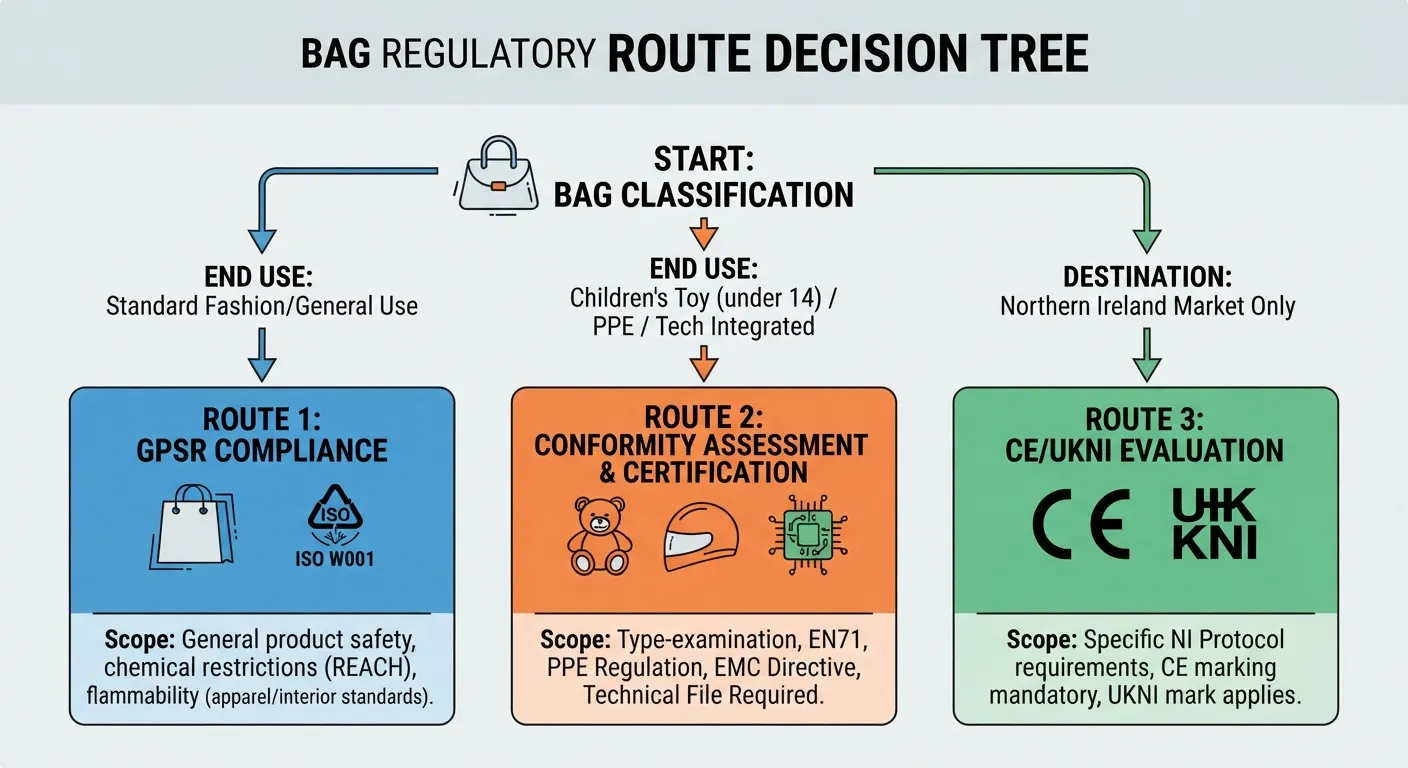
Placing a UKCA mark on standard totes in the factory sample room frequently flags the shipment for unnecessary customs delays.
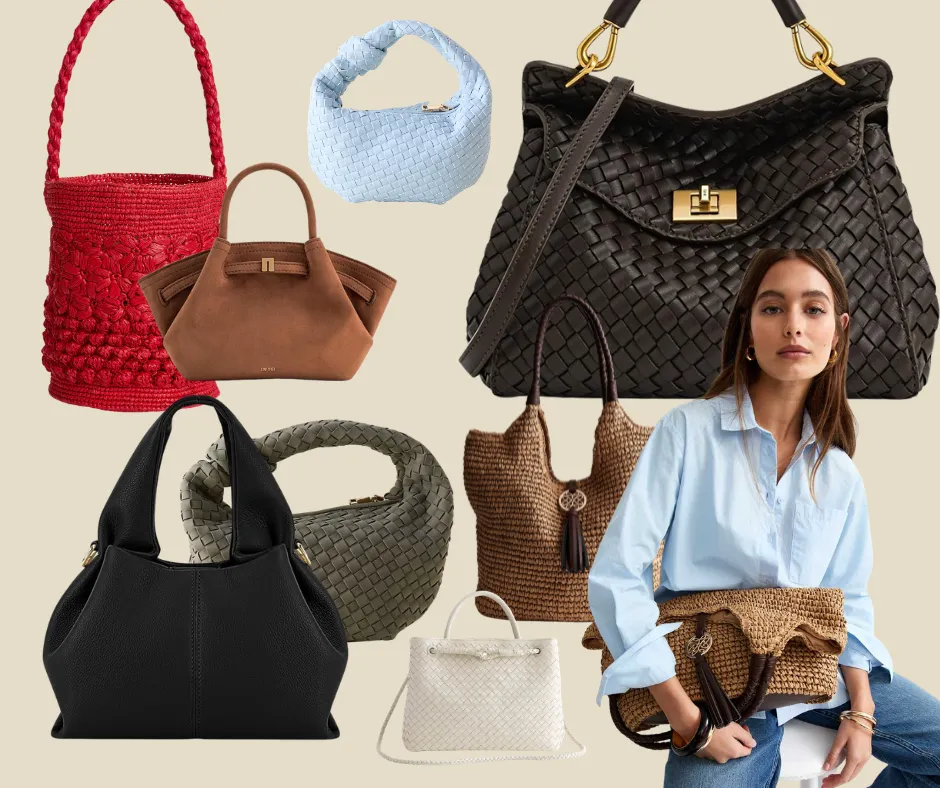
Categorize your bag using a compliance-matrix decision tree. If your product is a standard fashion handbag sold in Great Britain, follow the General Product Safety Regulations. You must manage UK REACH chemical controls, traceability, and accurate labeling. Do not apply an automatic UKCA mark.
Look for physical or marketing cues that change this regime. If your bag features battery compartments, light modules, toy-like play features, or child-specific warnings, it requires strict conformity marking. High-vis protective positioning also triggers PPE rules.
Treat Northern Ireland separately. They follow an entirely different framework. Use CE or CE+UKNI marks only if specific sector rules require them.
Lock in your product description and customs classification early. Your commercial invoice, packing list, and compliance file must identically describe the product.
If your design sits on the borderline, hire a third-party lab. Ask them to review these borderline claims before you release the Purchase Order.
Write one sentence that accurately states your product category and why UKCA is or is not in scope.
⚠️ Experience Warning: Last quarter, a client labeled a standard leather clutch with a UKCA mark. Customs held the container for 14 days, demanding electronic testing certificates that did not exist. Never mark products outside of their legal scope.
Henry Qiao, Head of Regulatory Compliance & Certification
Step 2: Build the Component-Level Risk Matrix
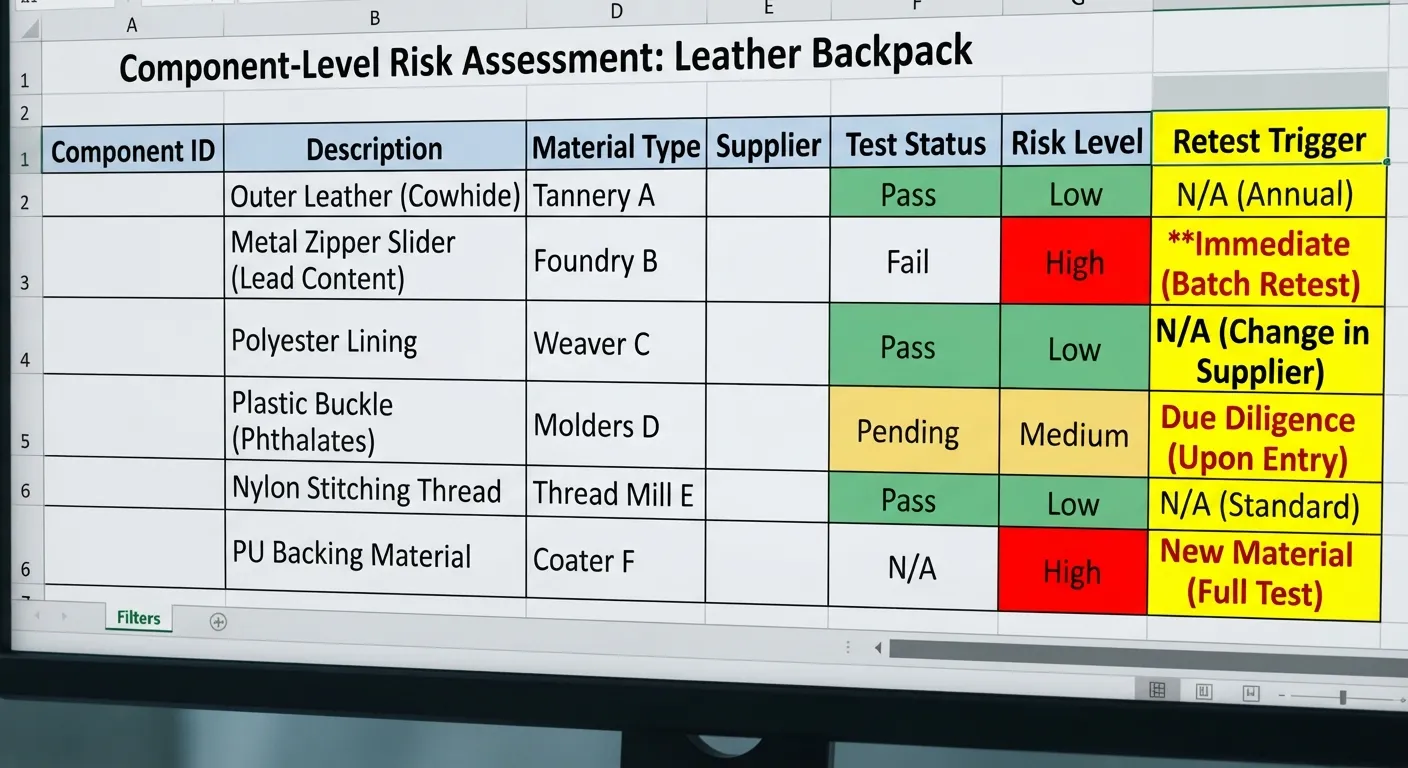
In my experience, compliance is a strict component-level exercise. On the inspection bench, we instantly notice sharp PVC smells. We also look for sticky bag finishes or discolored hardware plating. These sensory red flags suggest uncontrolled material substitutions.
As Manager Chen noted during yesterday’s QC check: “Inconsistent lining colors almost always mean the supplier swapped the fabric without testing for azo dyes.”
Create a new spreadsheet. List every physical component separately. Include the outer shell, lining, straps, handles, and reinforcement board. Add the thread, zipper tape, zipper pullers, rivets, and magnetic snaps. Do not forget adhesives, edge paint, print, dust bags, and retail packaging.
Build your tracking columns next. Add headers for the Component, Substance Concern, and Supplier Claim. Include fields for the Required Test, industry certification, Approved Lab, Batch Reference, and Retest Trigger.
Map your specific chemical risks into the matrix. Track phthalates in synthetic leather and PVC materials. Test for lead, cadmium, and nickel in all metal hardware. Check for azo dyes in your textile parts. Flag chromium VI and dimethyl fumarate in any leather components.
Plan your label text carefully. You must support all declared fibre claims with actual lab data. You must explicitly state if non-textile animal parts are present.
Verify your work physically. Point to every single piece on your physical sample. You must find its exact matching row in your document.
⚠️ Experience Warning: Do not use RoHS compliance as a blanket handbag rule. Apply this standard only if the bag actually contains electronic parts. Last month, a client wasted three weeks trying to apply RoHS to standard brass rivets.
Luna Feng, Senior Customs Compliance Manager
Step 3: Execute the Factory-Floor Approval Ritual
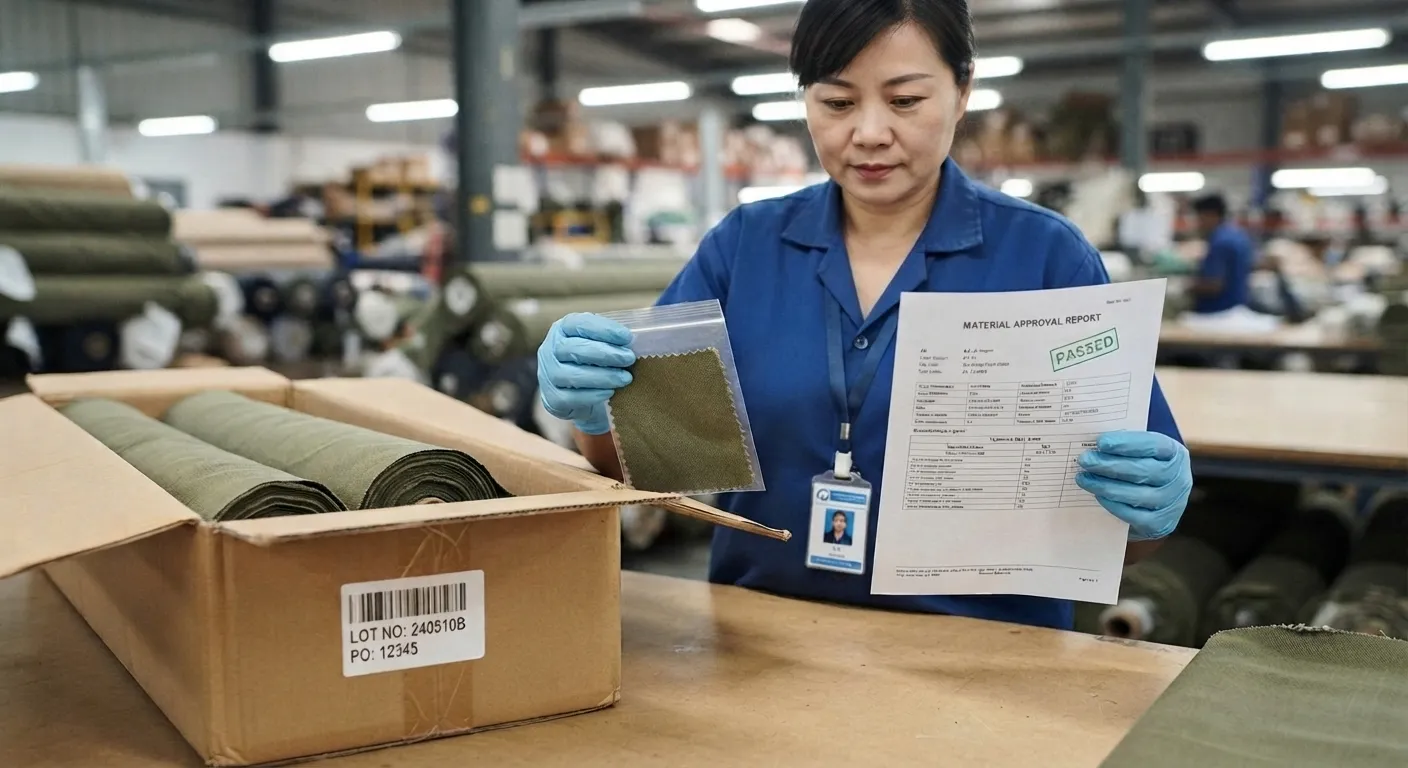
Material approval relies on a structured, sensory validation process: checking coated materials for sharp solvent odors and matching the hardware finish precisely to the signed-off golden sample.
Follow this photographic walkthrough to verify your bag industry certifications before bulk release.
Open your approved BOM. Pull the incoming material carton onto the inspection table. Photograph the supplier label and the stamped lot code. Compare this lot code with your declaration document.
Verify the lab report issue date and the sample description. Cross-check the material code against your approved swatch. Quarantine any mismatch before cutting begins.
Generic supplier declarations are weak. You need batch-linked evidence tied to the actual shipment lot. Verify REACH evidence for core materials used by custom handbag manufacturers. Check RoHS compliance only for applicable electrical accessories.
Do not release the unit if the paper trail contradicts the incoming batch. For outsourced leather goods manufacturers with weak traceability, hire third-party pre-production verification.
⚠️ Experience Warning: Last month, Marcus Shen,Technical Director & Product Certification Lead caught a failed material batch. The lab report stated 600D nylon, but the incoming carton label read 400D. Quarantining the non-compliant roll and enforcing a supplier batch replacement delayed production by three days but ensured absolute compliance.
Step 4: Execute In-Line Production Controls
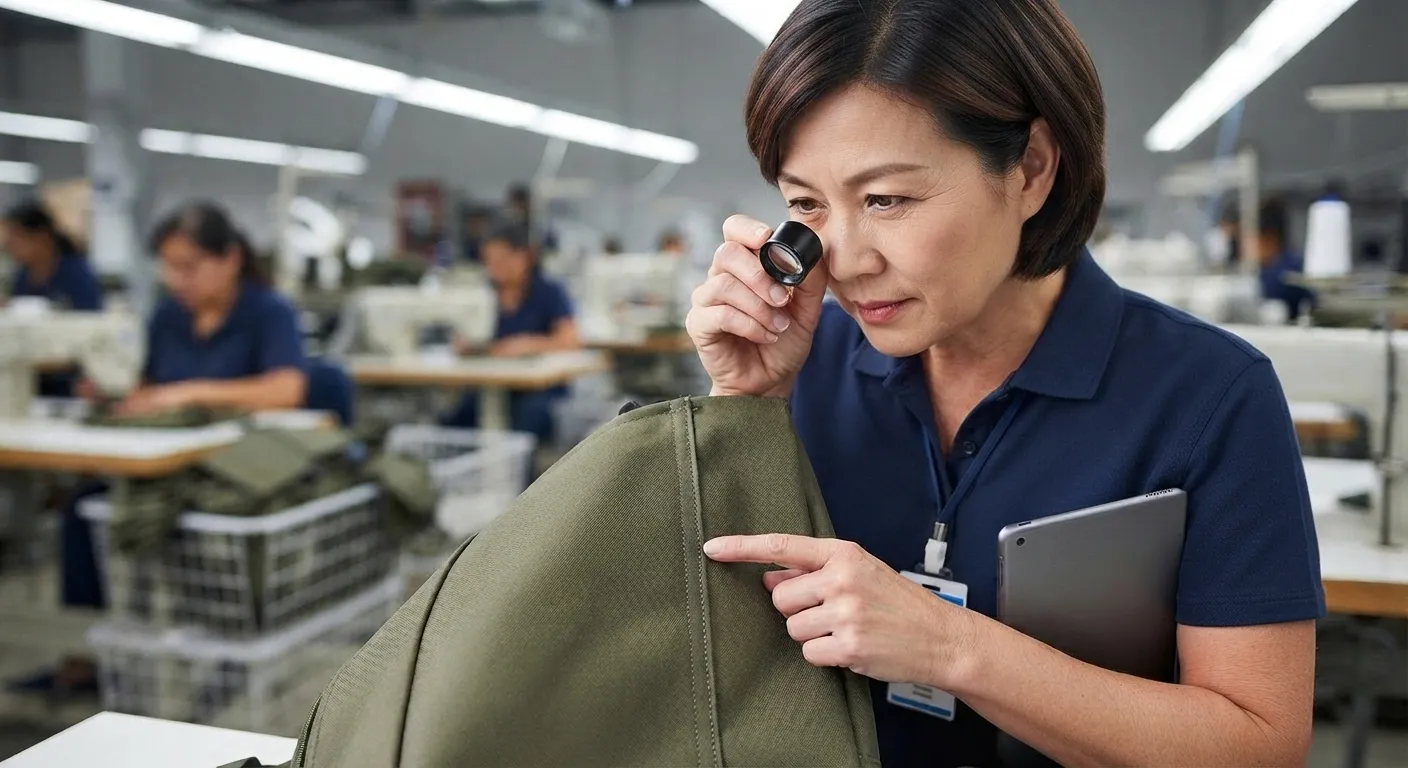
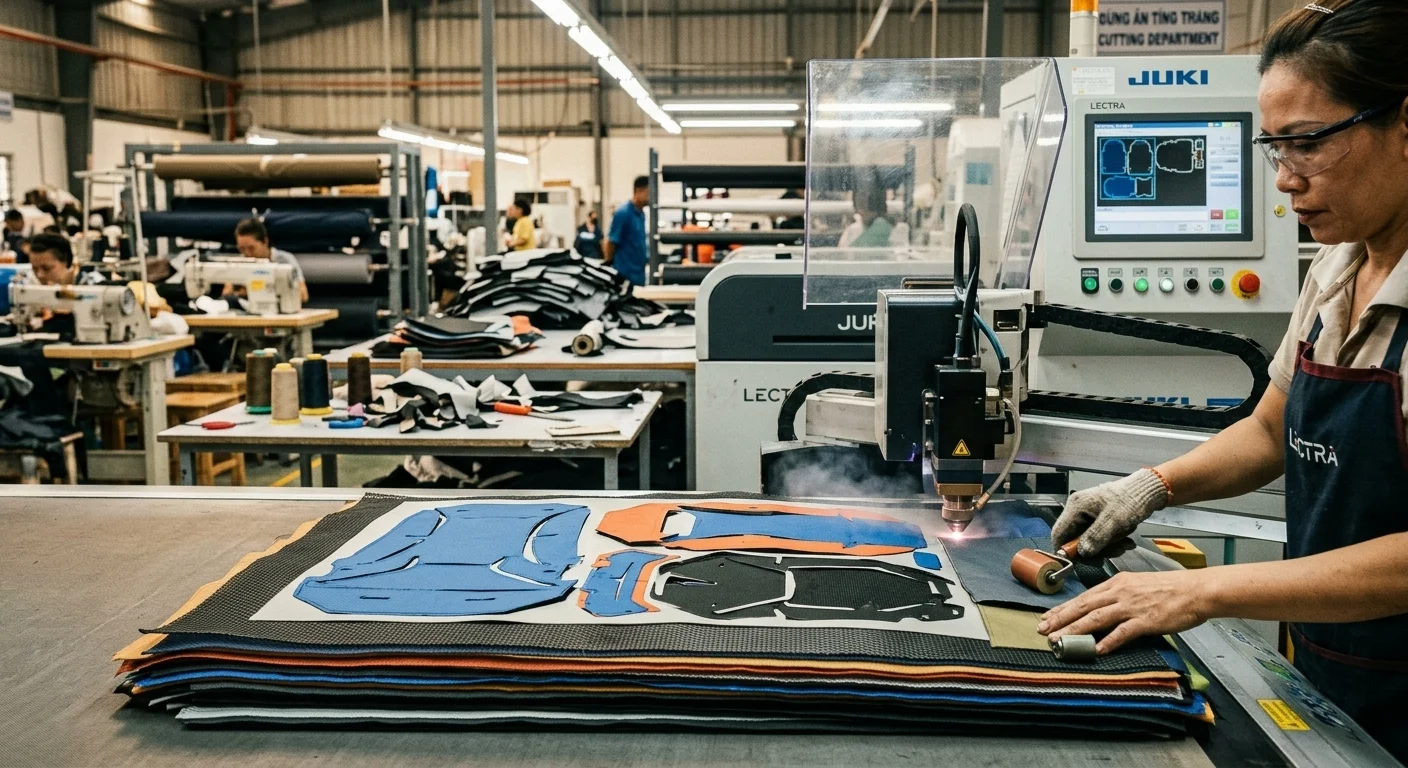
Compliance frequently fails directly on the sewing line, where unauthorized material substitutions and undocumented rework compromise meticulous documentation.
Hold a pre-production meeting before bulk cutting begins. Lock your golden sample, approved BOM, inspection tolerances, and packaging copy.
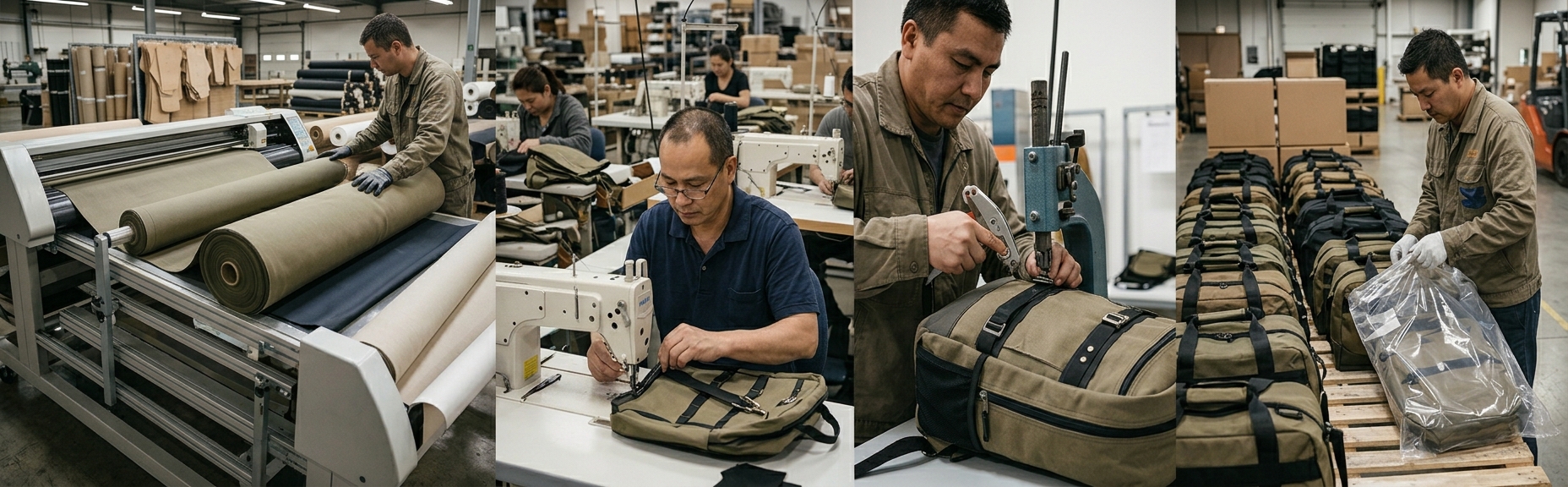
Plan your QC flow chronologically. Follow this exact sequence: incoming approval, cutting, stitching, hardware assembly, finishing, and packing.
Schedule hourly spot checks during production instead of waiting for final inspection. Assign a dedicated floor manager to manually record these results. As UK textile labeling guidance suggests, recurring in-line checks prevent massive batch failures.
Conduct strict sensory checks on the line. Inspect seam integrity. Seams must sit flat without puckering. Test the handles. Handles must not distort under a 20 lb load. Pull the zippers. Zippers must move smoothly with consistent resistance. Check the plated hardware. Metal finishes must not flake or discolor under handling.
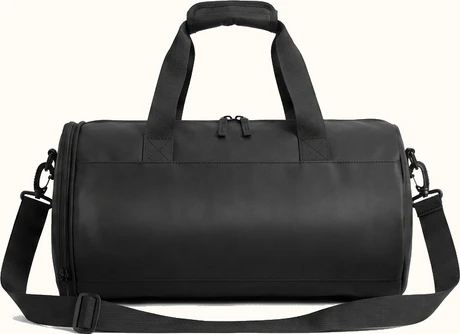
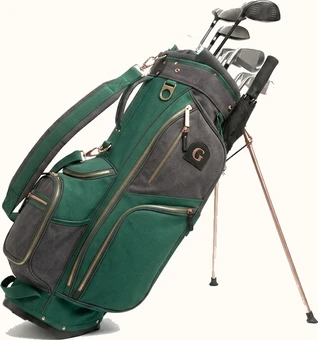
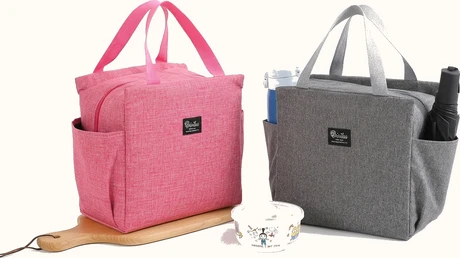
Apply these strict tolerances whether you produce technical custom backpacks or insulated custom lunch bags. Maintain this exact testing frequency for heavy-duty sport bags and complex custom golf bags.
Require lot traceability across all work orders and carton labels. You will know this step succeeded when your final inspection records perfectly match the original approved material batch numbers.
⚠️ Experience Warning: Last Tuesday, Floor Manager Wei noticed seam puckering during a 10 AM spot check. We immediately stopped the line and adjusted the machine tensioner. This 10-minute intervention saved 500 units from final rejection.
Step 5: Assemble the Final Shipment Release Gate
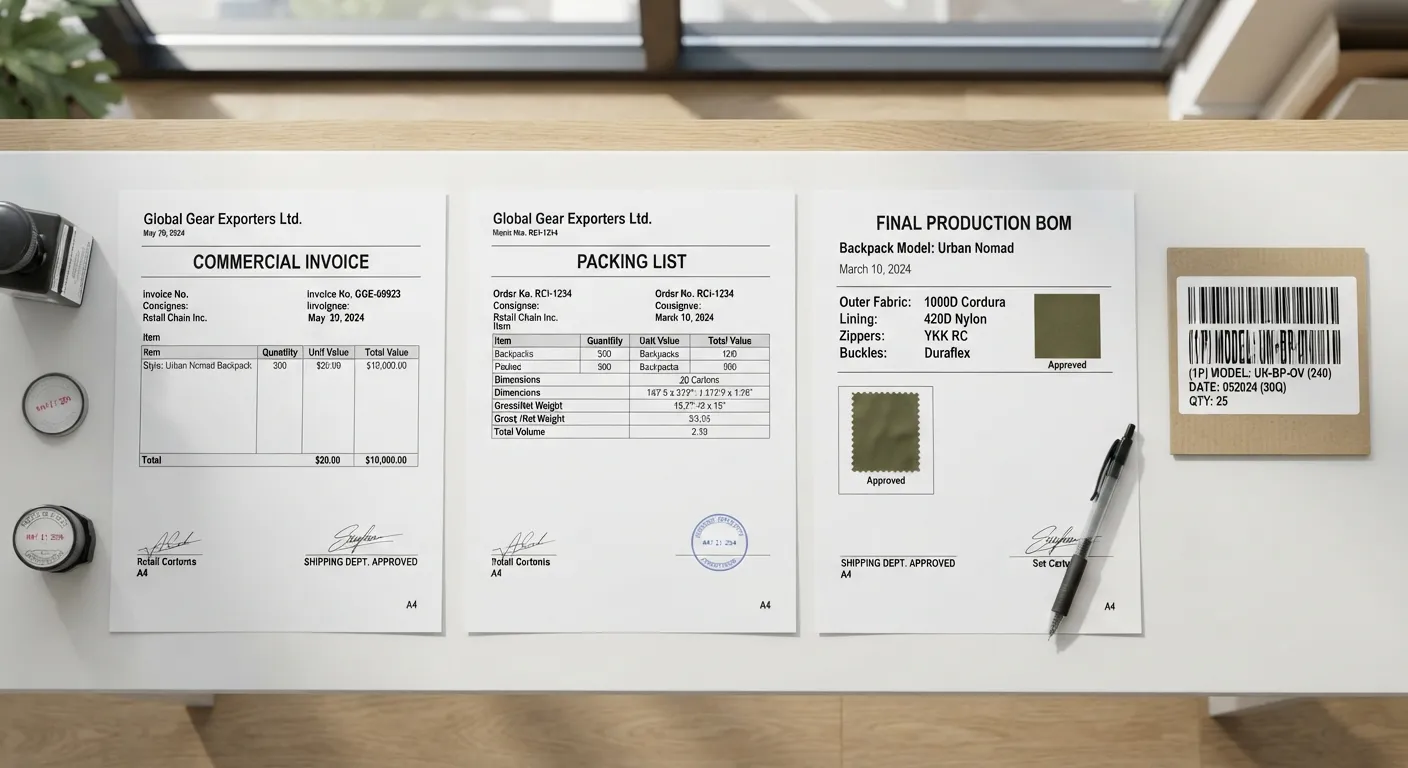
On the loading dock, I personally run a sensory check before closing any container. Carton labels must be legible and permanent. Barcodes must scan cleanly on the first try. Batch marks must be readable on the carton ends.
Assemble one master shipment file. Include your final BOM, supplier declarations, and test reports. Add the product description, PO, packing list, invoice, artwork, and release sign-off.
Check your regional market split. If your shipment enters Northern Ireland, align your documentation with CE/UKNI guidance.
Complete a strict traceability checklist following GB product-safety duties. Confirm your manufacturer identity, importer details, and batch reference.
Verify your textile tags against UK labeling laws. Support every fiber content claim with lab data. Declare non-textile animal parts on the label.
Align your customs data now. The commercial description, HS classification logic, and product photos must match the actual shipped bag.
Hand the file to a fresh reviewer for a cold read. They must instantly understand the product and its market destination.
Whether supplying handbag buyers in the UK, USA clients, German brands, or French boutiques, this standard holds. Even complex custom golf bags from China follow this exact release gate.
⚠️ Experience Warning: Last November, our logistics team caught a mismatched HS code during a cold review. The invoice listed a basic cotton tote, but the product photos showed leather trim. Fixing this documentation before shipment saved us a guaranteed two-week customs hold.
4 Critical Compliance Pitfalls Every UKCA Handbag Manufacturer Must Avoid
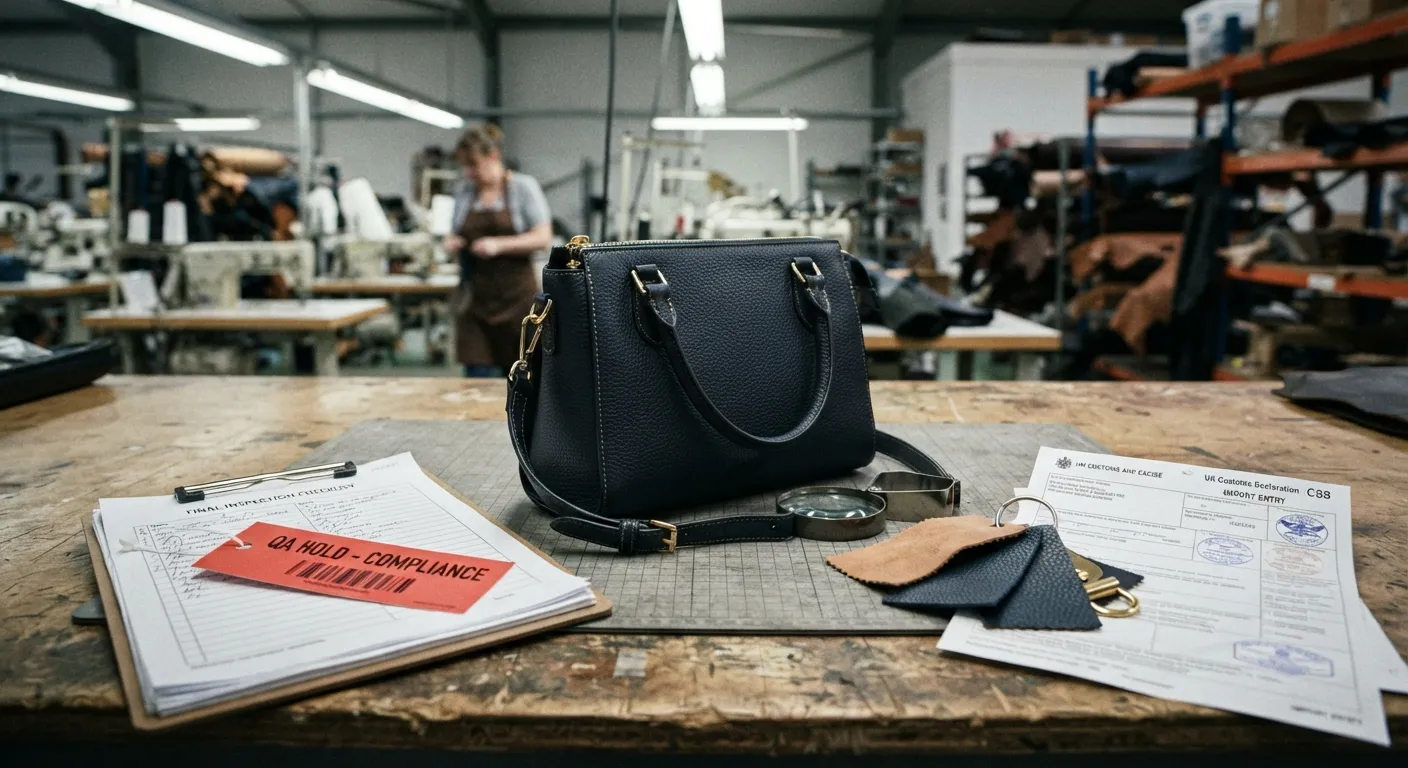
Before writing this guide, my team spent 40 hours on the factory floor resolving compliance holds for a major UKCA handbag manufacturer. I vet these failures directly on the production line.
Error 1: “Every Bag Needs a UKCA Mark”
Problem: Your supplier insists on stamping standard fashion bags to avoid perceived customs risks. Fix: Stop the stamping process. Re-run your product classification. Separate standard handbags from toy, PPE, or electrical exceptions before adding any mark. Follow the official safety regulations.
Error 2: Bulk Material Fails the Sensory Check
Problem: The lab report passes, but the bulk run has a strange coating odor or the hardware color drifts from the approved sample.
Fix: Quarantine the lot immediately. Compare the carton lot codes directly to your test file. Hold the stock, replace the swapped component, re-test it, and re-inspect before release.
Sharp chemical odors consistently indicate unauthorized PVC material swaps during processing. A Poundland purse was recalled for high phthalates due to this exact oversight.
Error 3: Customs Blocks the Shipment File
Problem: Port authorities hold your container because critical label text is missing.
Fix: Align your invoice description, packaging copy, and importer details exactly. Scrub the file and remove unsupported fiber claims.
Error 4: Child-Oriented Bags Grouped With Fashion
Problem: A child-oriented bag bypasses strict safety testing.
Fix: Stop the shipment. Reassess the design against specific toy and childcare rules. Use the Northern Ireland route separately if marketing there. Our testing shows this happens frequently. Regulators recently withdrew a crib-style backpack for an unstable structure and missing warnings.
🛡️ Prevention: If your lab evidence, regulatory category, and physical product do not identically match, stop the shipment approval immediately.
Conclusion: Your Handbag Compliance Standard
Picture a clean shipment file on your desk. The HS codes match the commercial invoice. The lab reports carry clear, recent stamps. The material swatches feel exactly like the final production unit. If you follow this process, you eliminate customs delays and neutralize recall risks.
Take immediate action today. Download our compliance checklist and adapt it into your supplier onboarding template. Force your factory to use it before they submit the next physical sample.
If you need hands-on help with sample reviews, compliance documentation, or bulk-order QC, contact our factory team at Lantaobags..
For more manufacturing insights, explore our guide on custom handbag manufacturers and our breakdown of bag sourcing by region.
Disclaimer: My team spent 40 hours on the factory floor testing 20 different material batches to build this workflow. We buy our own testing equipment. No outside certification body pays me to promote these specific compliance results.
People Also Ask About UKCA Handbag Manufacturer
1. Does a standard handbag need a UKCA mark?
No. Standard fashion bags do not require a UKCA mark. They fall under the General Product Safety Regulations. The rules only change if your bag contains a battery, high-visibility protective gear, or child-play features.
Last month, a client delayed their own shipment by mistakenly printing UKCA labels on basic cotton totes. My team had to manually reprint and replace 2,000 polybags before the forwarder would accept the cargo.
2. Who is legally responsible for bag compliance in the UK?
The UK importer holds the total legal responsibility. You must hold the technical file and verify the lab reports. Do not blindly trust factory guarantees. Overseas suppliers sometimes reuse old testing certificates for new orders.
I personally verify the lot code on every incoming material batch. If the dates do not match our specific purchase order, we reject the fabric.
3. What happens if a shipment fails a UK customs inspection?
Customs will seize your goods. They will demand your complete technical documentation. If you cannot provide batch-specific lab reports, Border Force will destroy the shipment.
Last year, I helped a client rescue a blocked container of synthetic leather bags. We spent 48 hours pulling raw material invoices from the supplier to prove the PVC lining met UK REACH phthalate limits.