Your design deserves a factory that sweats the details as much as you do — 15 years of engineering sports bags that survive daily workouts, wet gear, and overstuffed zippers, at any production scale.
Talk to an Engineer About Your DesignSports & Fitness Brands Served
Sports Bags Produced
Sample Turnaround
Repeat Client Rate
Common Challenges
Compiled from return data, review analysis, and conversations with fitness brand founders. These are the warning signs your factory isn't building for real-world abuse.
Standard #5 coil zippers wave and catch fabric under the asymmetric load of an overstuffed gym bag. Your customer wrestles with it in a packed locker room — and faults the bag, not their packing.
YKK #8 or #10 RC zippers on all main compartments. Anti-wave tape prevents fabric-catch. Every batch pull-tested to 10,000 cycles. Anti-corrosion coating for sweat and chlorine exposure.
Mesh dividers collapse under the weight of a packed bag. Within 3 uses, odor molecules migrate to laptops, clothes, and headphones. Your customer stops using the bag and tells everyone why.
Sealed TPU barrier with welded seams — not a mesh divider. Antimicrobial mesh verified for airflow under 5 kg compression. User-replaceable activated carbon filter. Optional removable machine-washable shoe pod with magnetic docking.
Fabric passes a swatch test, but water enters through stitch holes at seams and zippers. One rainy commute, one damp laptop, one viral post tagging your brand. The refund costs $40 — the reputation damage costs years.
Full-bag IPX3 spray testing, not fabric swatches. Welded seams on critical panels eliminate stitch holes. YKK AquaGuard zippers on electronics compartments. PU coating at 2,000mm minimum on outer shell.
50-unit sample passes QC. 2,000 units later: stitch density drops, zipper supplier changes without notice, fabric lot is a different shade. Your repeat customers notice before you do.
Sealed golden sample locked on-site. Four-stage AQL 2.5 inspection with SPI gauge verification. Material traceability to supplier lot. Batch deviates more than 2% from reference — rejected before shipping.
The System
Each system addresses a specific failure mode we've measured across millions of bags. Learn more about our custom sport bag manufacturing capabilities.
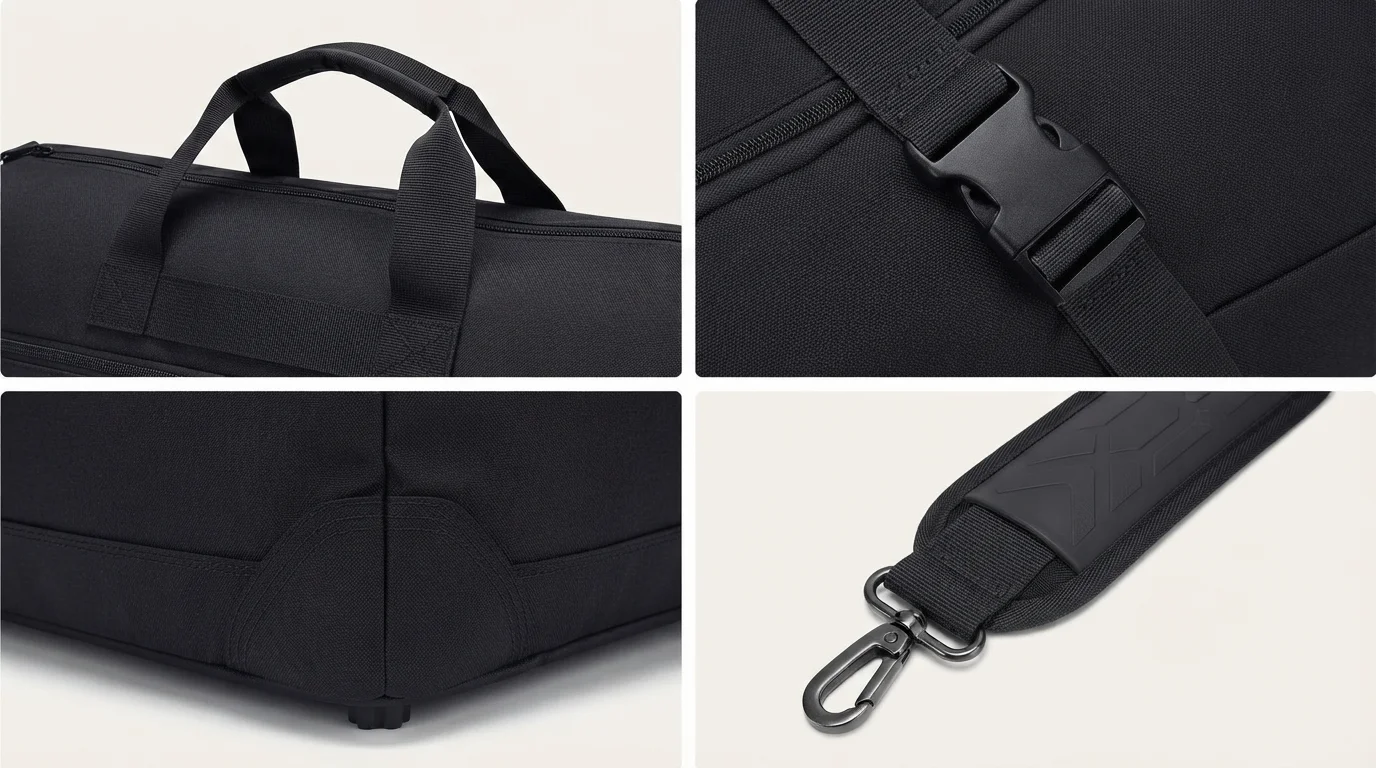
Gym bags fail at predictable points: strap anchors, D-rings, handle bases, and zipper endpoints. We reinforce every one before cutting — flagging attachment width, stitch count, and backing material in CAD so you approve the engineering, not just the look.
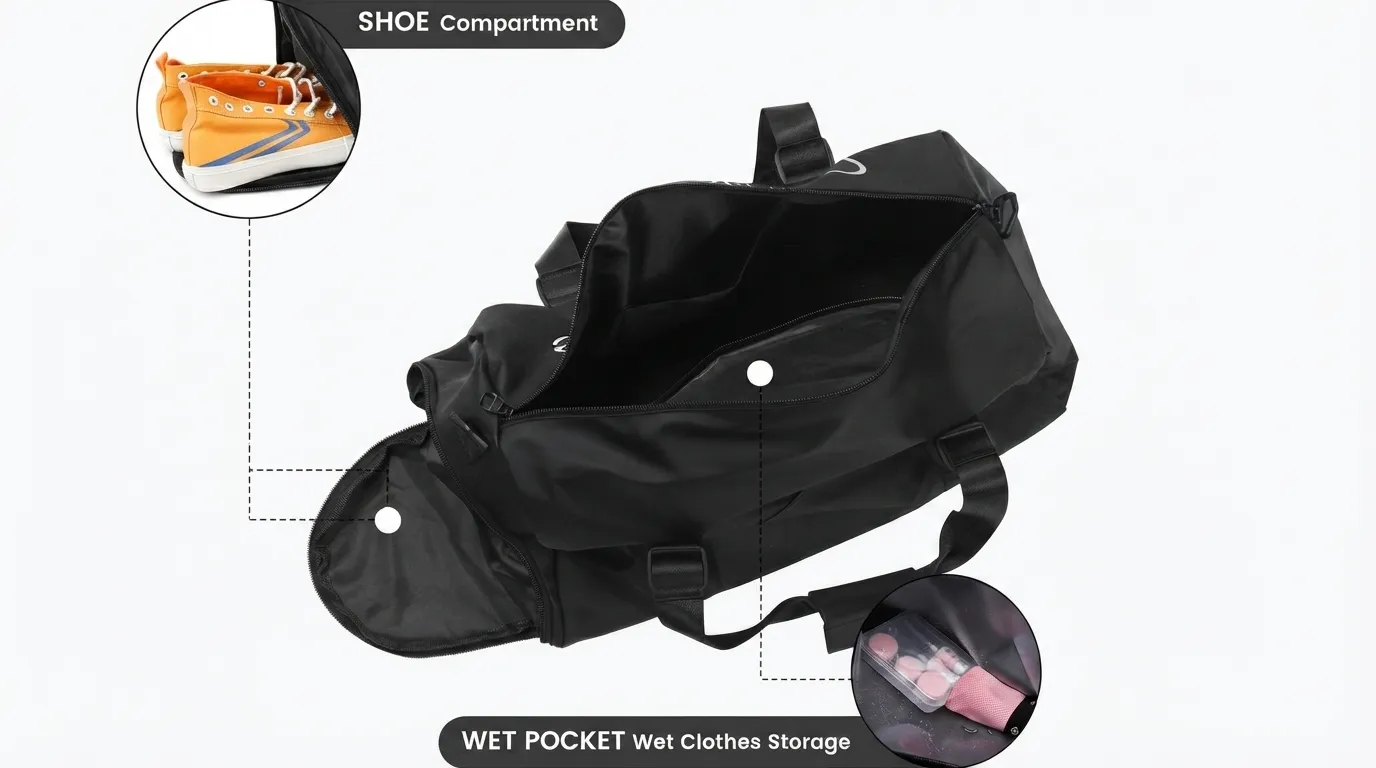
A mesh divider collapses under a packed bag and does nothing to stop odor migration. We build sealed waterproof barriers for wet gear, antimicrobial mesh that breathes under load, and activated carbon filters your customers can swap out — each compartment independently leak-tested.
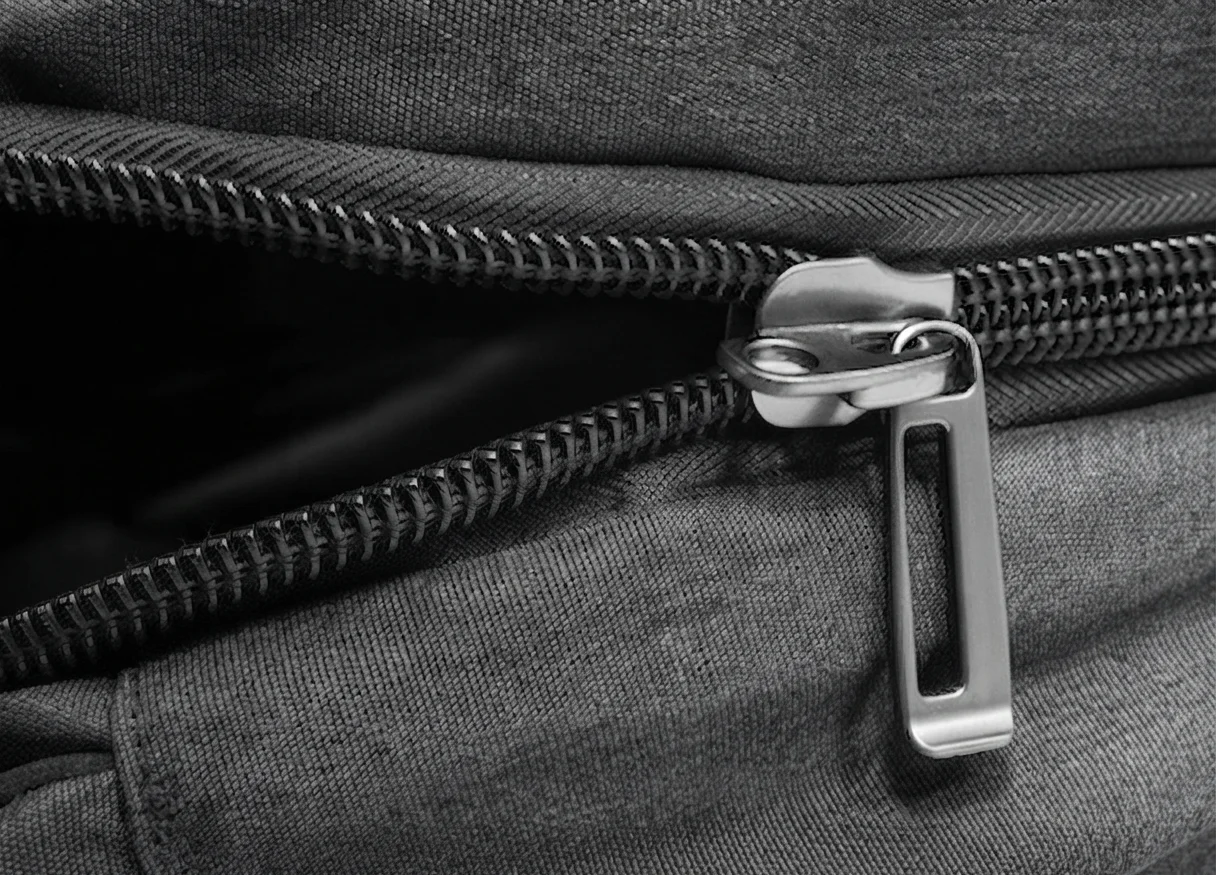
Sports bags cycle zippers more times per day than any other bag category. We spec heavy-duty zippers with anti-wave tape that prevents the fabric-catch jamming your customers hate — and every batch is pull-tested with documented results.
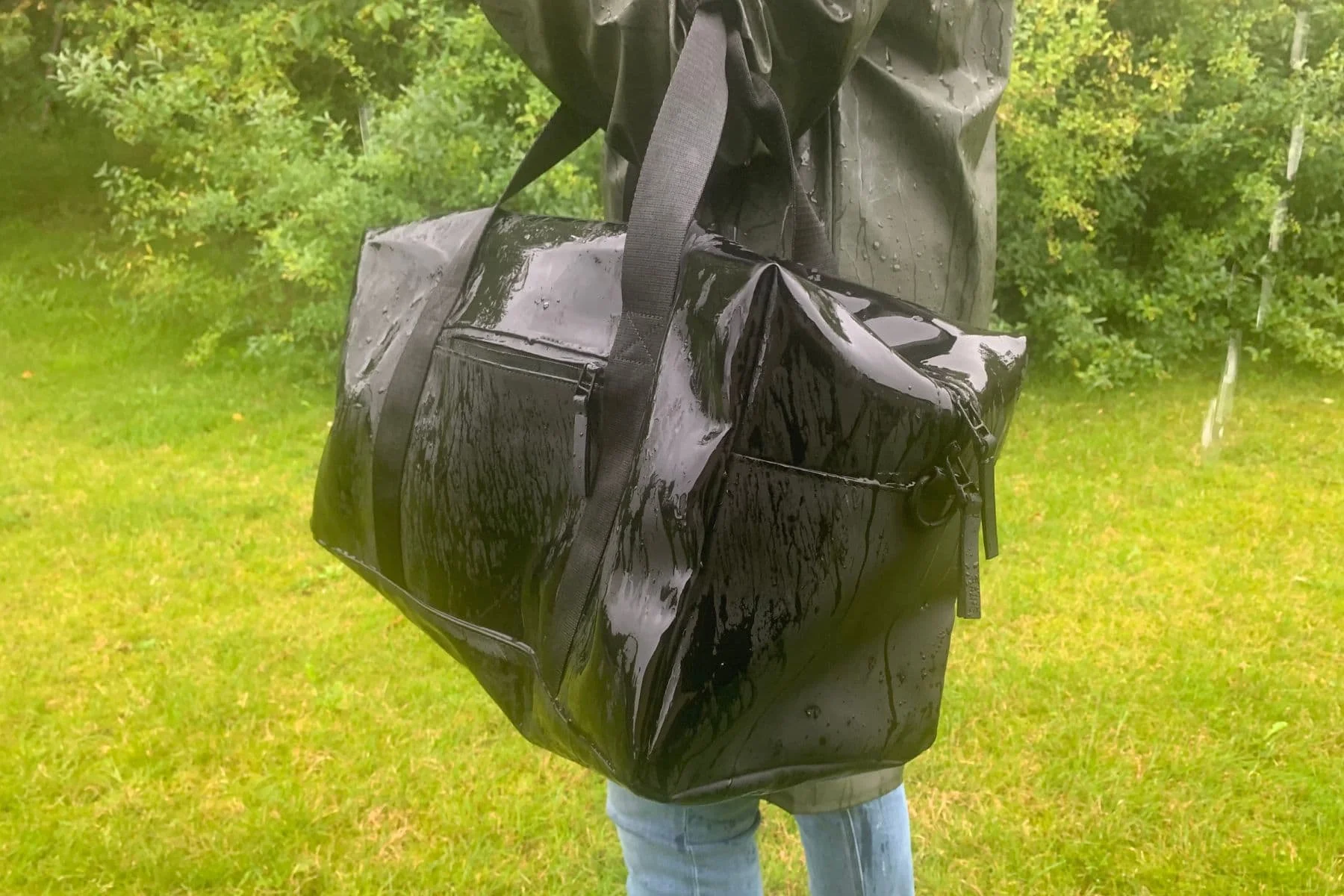
Most "water-resistant" bags pass a fabric swatch test but leak through stitch holes at the seams. We spray-test complete bags — not swatches — focusing on zipper lines and seam junctions where water actually gets in.
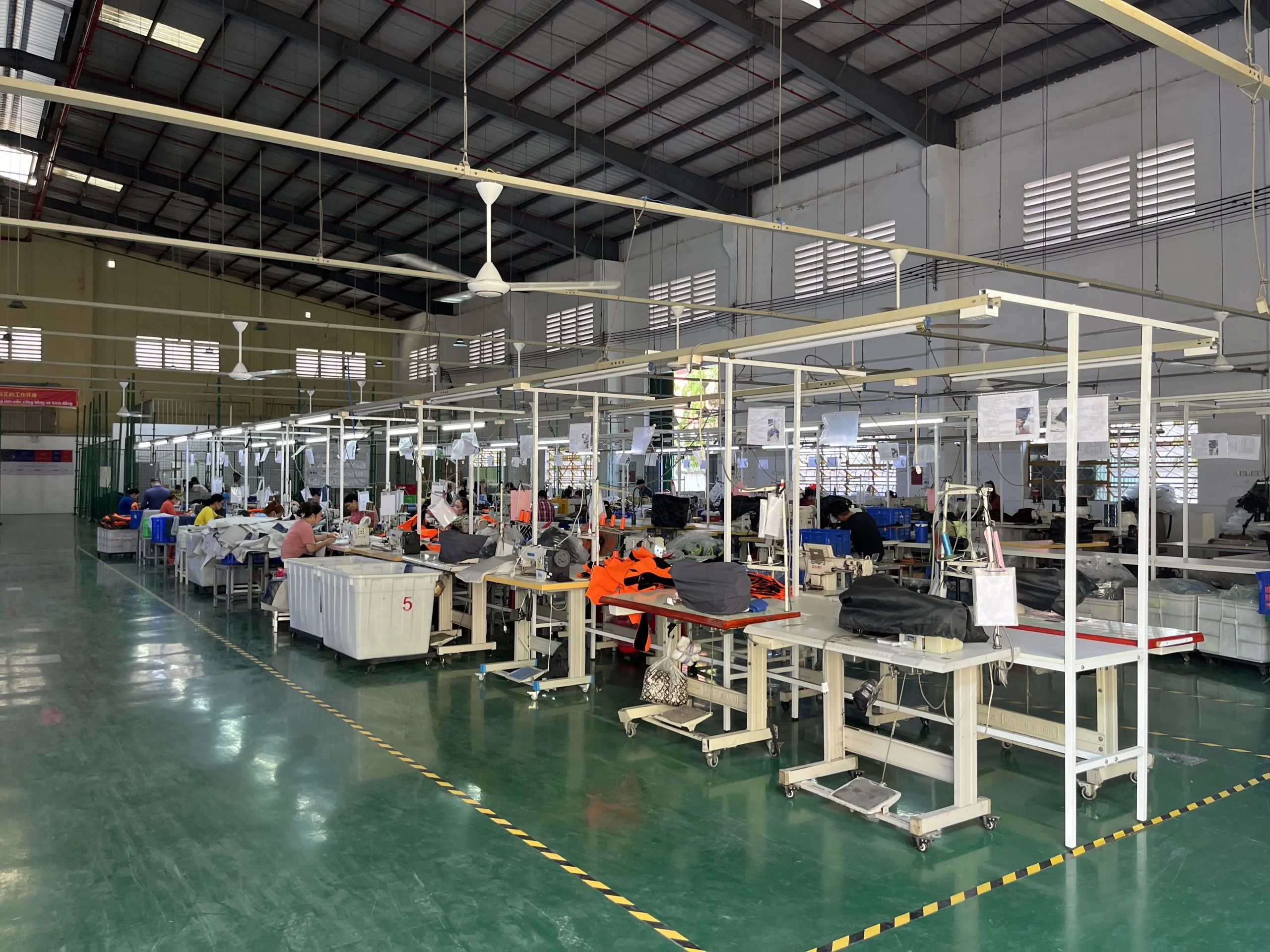
Quality drift between pilot and production is the #1 reason brands switch factories. We lock every batch against a sealed physical reference sample — not a spec sheet — with four-stage inspection and material traceability down to the supplier lot number.

Your seasonal push shouldn't mean switching factories. We run dedicated production cells that scale without compromising quality — 300-unit pilots to 15,000-unit peak runs, with weekly photo updates and direct shipping to your warehouse or 3PL.
Industry Resources
Download these guides to evaluate your current supplier — or brief a new one. Each document is built from real production data, drawn from 2M+ sports bags manufactured.
The 12-point engineering checklist we use to audit every sports bag design before production. Covers stitch density, zipper sizing, strap anchor reinforcement, and waterproof seam standards.
Side-by-side comparison of 12 fabrics (nylon, polyester, Cordura, coated, recycled PET) across abrasion resistance, water column, weight, cost, and sustainability certifications.
Technical guide to designing compartments that keep wet gear contained and odor isolated. Includes material specs, seam-sealing methods, and ventilation panel placement.
Compiled from 50+ team order projects: color consistency across batches, size run distribution errors, logo application durability, and delivery coordination for multi-location drops.
Certifications
Your customers expect proof — not promises. Every certification below is verified by independent third-party auditors and renewed on schedule.

ISO 9001:2015
Quality Management
BSCI Audited
Social Compliance
SEDEX Member
Ethical Trade
REACH Compliant
EU Chemical Safety
Proven Results
Average reduction in return rate after switching to our reinforced stress-point engineering
Post-switch improvement in "durability" review keyword sentiment (across 12 brand clients)
Units scaled without factory change — same QC team, same standards, same results
Months of daily gym use in wear-testing with zero handle or strap attachment failures
"Our first factory looked great on paper. Then the production batch arrived — zippers jammed, the "water-resistant" claim was fiction, and the shoe compartment turned into a biohazard. LantaoBags rebuilt the entire spec: heavy-duty #8 zippers, welded wet-compartment seams, and antimicrobial liners that actually work. Return rate dropped from 11% to under 2% within two cycles."

David Park
Co-Founder, Iron Republic — South Korea
"Every August we order 2,000 team bags across 40-plus university programs. Before LantaoBags, at least one color variant came back wrong every single year. Three years in: zero rejects, every delivery on time, and the segregated assembly system means our red bags are actually red — not pink, not orange."

Emily Cross
Athletic Director, Ontario University Athletics — Canada
"Commercial laundry cycles destroy most bags within months — logos peel, seams tear, customers blame us. LantaoBags put our spec through 60 wash cycles before approving production. Two years and 8,000 bags later: fewer than 20 warranty claims, and most of those were reported lost, not broken."
Oliver Reed
Operations Manager, Elevate Fitness Group — United Kingdom
"Scaling from 500 to 3,000 units usually means switching factories or accepting that batch three won't match batch one. Not this time. Same quality, same turnaround, zero surprises. The reference sample system keeps every run identical — and our customers notice. When a bag lasts, they come back for another color."

Yuki Tanaka
Brand Director, Tokyo Sports Supply — Japan
FAQ
Yes — most clients come to us with a concept, not a finished spec. Our in-house design team converts your sketch or reference images into a production-ready tech pack: material selection, dimensions, hardware specs, stitch types, and reinforcement points. We provide a digital 3D render for your approval before cutting any fabric. This development phase typically takes 5-10 business days and is included in your sampling cost. You own the final tech pack — it's your IP.
Design development: 5-10 days. Sampling: 7-14 days (2-3 rounds if adjustments needed). Production: 15-25 days for standard orders, 25-40 days for complex multi-color runs. Shipping: ocean 4-6 weeks or air freight 5-8 days. Realistically, from first contact to receiving your order: 8-12 weeks for ocean freight, 6-8 weeks for air. Rush service available for tight launch deadlines — ask your engineer.
Your design is your asset. We sign a bilateral NDA before any technical discussion. Your tech pack, patterns, and samples are never shown to other clients. We don't produce your design for anyone else — period. If you want additional protection, we support exclusive mold agreements for custom hardware and can register your design with China Customs for export monitoring. We've been trusted by leading brands since 2009 with zero IP incidents.
Yes. We work with GRS-certified recycled polyester (rPET), recycled nylon, and OEKO-TEX certified liners. For brands targeting sustainability claims, we provide full chain-of-custody documentation — from fiber origin to finished bag. Options include: recycled outer shell fabrics, plant-based PU coatings, biodegradable packaging, and Bluesign-approved dye processes. Minimums for sustainable materials are slightly higher (500-800 units depending on the fabric), but we stock common GRS fabrics for smaller runs.
Every shipment includes a detailed QC report with photos of the inspection process. If a defect is found after delivery, we request photos within 14 days. For manufacturing defects (not misuse or normal wear), we offer three options: replacement units at our cost, credit toward your next order, or partial refund — your choice. Our defect rate across sports bag production is under 0.3%. Most issues we identify and fix before shipping — that's what the four-stage inspection is for.
Yes — and many of our longest client relationships started with small pilot orders. We don't require a minimum annual spend or long-term contract. Start with one design, validate your market, then scale. You get the same QC team, the same reference lock process, and the same engineering support whether you order a trial run or a full container. The only difference is per-unit cost, which improves with volume. We'd rather grow with you than lose you to a factory that only cares about large accounts.
Zero Risk Entry
No commitment. No sales pitch. Just a detailed engineering assessment from the team behind millions of sports bags. Your design is protected under NDA from the first conversation.
No commitment. Your design stays yours.