
Stand collapse, leaking pockets, faded fabric, and bulk that drifts from the sample — these do not feel like "manufacturing issues" to the person carrying the bag. They feel like a reflection of the brand or club that put it in their hands. We build bags so they do not happen.
Golf Brands Served
Golf Bags Exported
Starting MOQ
AQL 2.5 Pass Rate (2024-25 Avg)
Course-Level Problems We Solve
These issues show up after the sample is approved, when bags meet real play. Each one has a clear engineering response — and a measurable outcome for the business.
Lightweight spines flex in heat. Weak bases crack under a full set of clubs. Legs deploy unevenly on soft or sloping ground. Customers notice immediately — and the pro shop hears about it.
How We Fix It
Stand bags hold their ground on soft, sloping turf — mechanisms are cycle-tested under a full club load, with high-density bases locked to the frame before release.
You ship a bag that stays upright through practice and play — not just on a showroom floor. That means fewer returns, stronger reviews, and repeat orders from accounts that trust the product.
Bags sold as "water-resistant" use light coatings and unsealed seams. Morning dew, cart spray, or a short rain soaks through. Main zippers split when players force gear into overpacked pockets — a top source of warranty claims.
How We Fix It
Pockets stay dry and zippers hold under load — sealed-seam waterproofing with genuine YKK heavy-duty zippers on all critical openings.
Customers stay dry and their zippers hold. Less time processing returns, more time growing the line. The waterproof claim is backed by lab data, not marketing copy.
UV exposure fades panels and logos within months. Budget hardware corrodes in humidity or coastal air. High-contact zones show abrasion after a handful of rounds. A bag that looked premium at delivery undermines the brand by mid-season.
How We Fix It
Bags and logos keep their finish for seasons — UV-stable face fabrics, abrasion-resistant high-wear zones, and hardware tested for humid, coastal conditions.
Bags still present well after repeated rounds and storage cycles. Brand logos stay sharp. Hardware keeps its finish. The bag continues to reflect the quality the brand stands for — long after the sale.
The System That Removes These Failures
Each stage exists to eliminate one of the failures you just read — so the bag you approve is the bag customers carry, order after order.
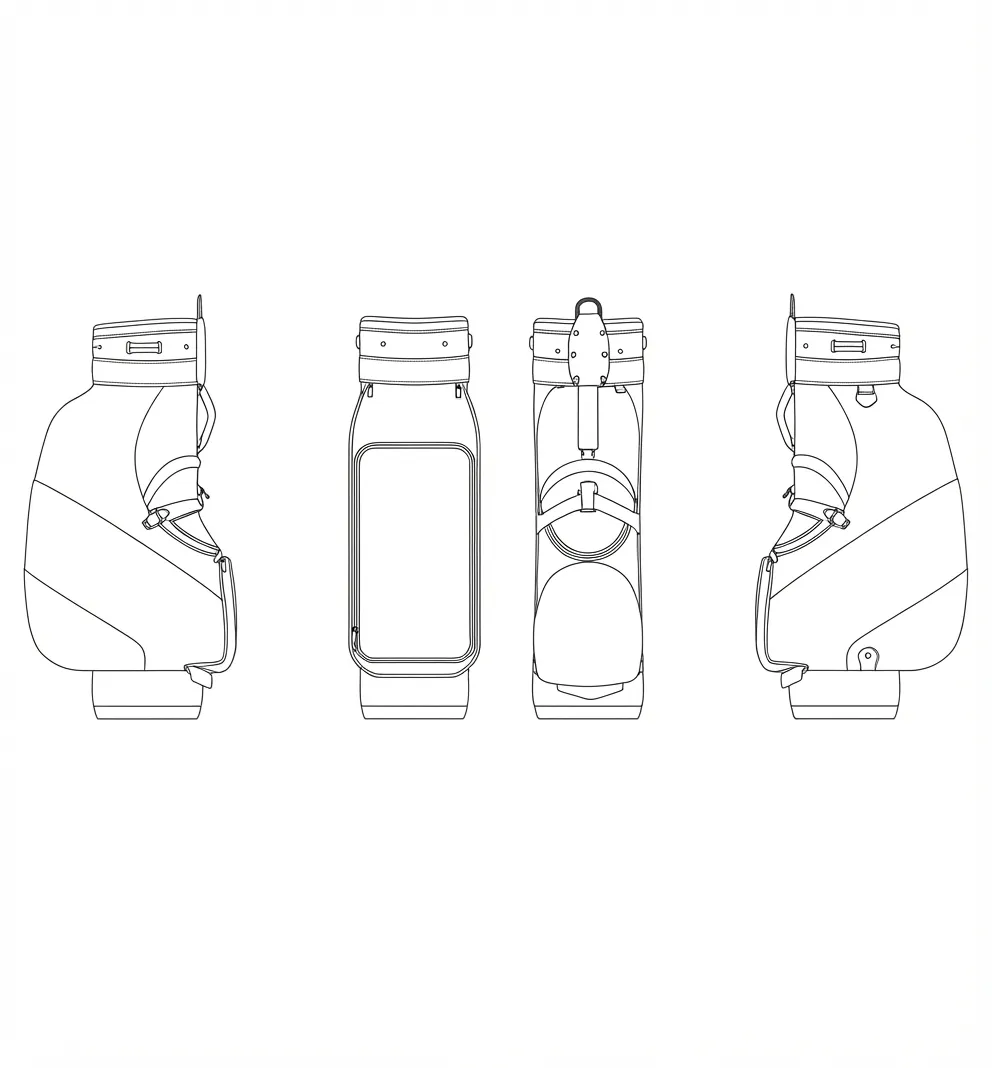
You share a sketch, tech pack, or reference bag
Most tech packs go to production with hidden failure risks — a stand geometry that flexes, a strap anchor that pulls, zipper placement that stresses a corner. You usually find out after the first bulk order.
Design flaws are caught before any fabric is cut — CAD renders and engineering notes flag stand geometry, strap anchor, and zipper risks within ~48 hours, with three revision rounds to converge the spec.
You Get
You approve a design that has already been stress-checked — informed decisions, not reactive fixes.
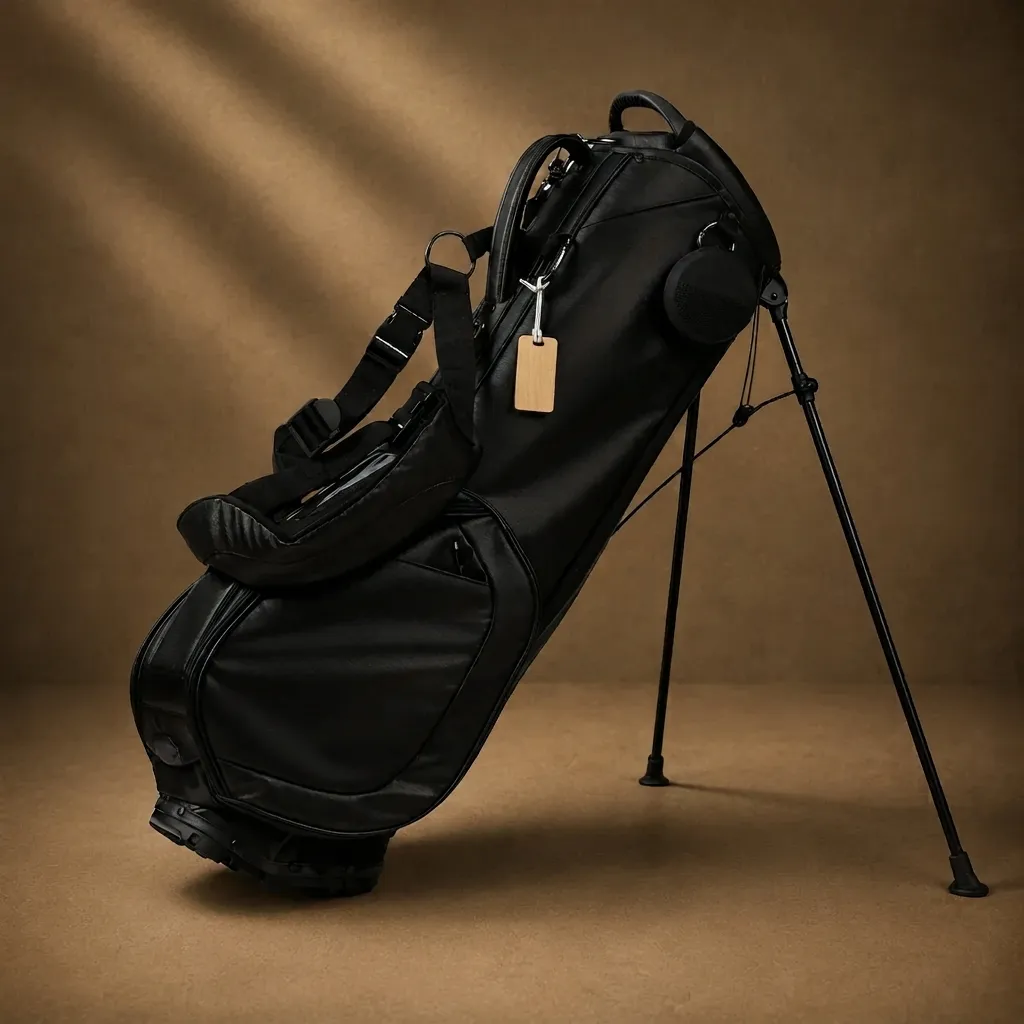
Physical sample ready in ~7 days
Many "samples" are showroom pieces — photo-ready, but never loaded with a full set of clubs or set on uneven ground. What you approve in a photo is not what players will carry.
A functional prototype you can load with clubs and set on uneven ground — tested the way a serious player or pro-shop buyer would, with an annotated inspection report on each sample.
You Get
You test the bag the way customers actually use it — before a single unit goes to production.

No substitutions, weekly photo updates
The classic factory failure: bulk that drifts cheaper with each carton — lighter materials, skipped reinforcement, looser tolerances — until the run no longer matches the bag you approved.
Bulk holds to the exact sample you approved — materials, construction, and QC criteria are frozen, no substitutions without written approval, and a sealed golden sample anchors each batch.
You Get
You receive bulk that holds the approved standard — not a drifting average.
One invoice, door-to-door
Most buyers juggle freight forwarders, customs brokers, and port clearance on their own — landed-cost surprises arrive with the invoice, and duties hit after the fact.
Delivery lands at the warehouse, 3PL, or club dock — not a port. Freight, duties, and last-mile delivery come as one DDP invoice, with the paperwork handled for you.
You Get
Bags arrive at a warehouse, 3PL, or club receiving dock — not a port — with a clear landed cost and no customs surprises.

Who This Is For
The same engineering standards apply across all orders. But what you need from a manufacturing partner depends on where a brand is in its journey.
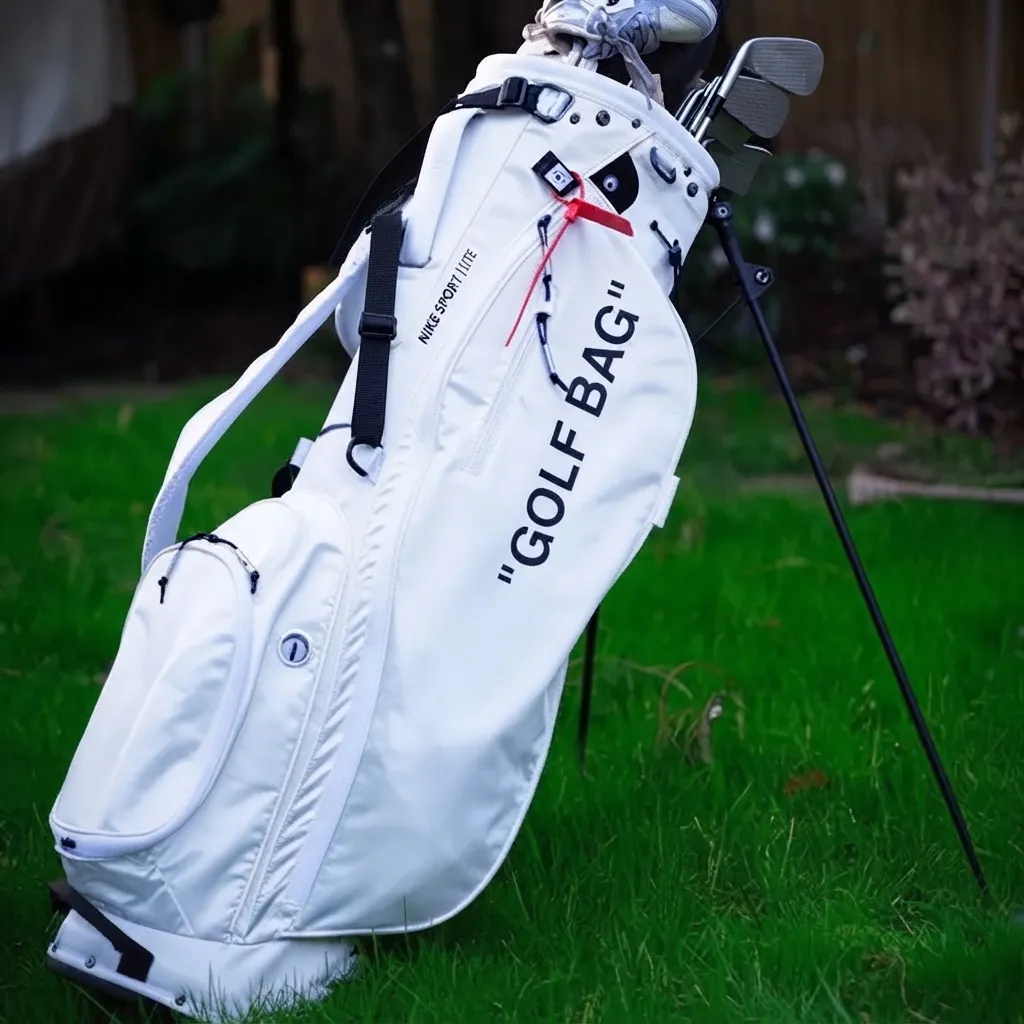
Test the market with a low-MOQ pilot, then scale winners with the same engineering team — no re-qualifying a new factory.
One quality baseline from first pilot to full production.
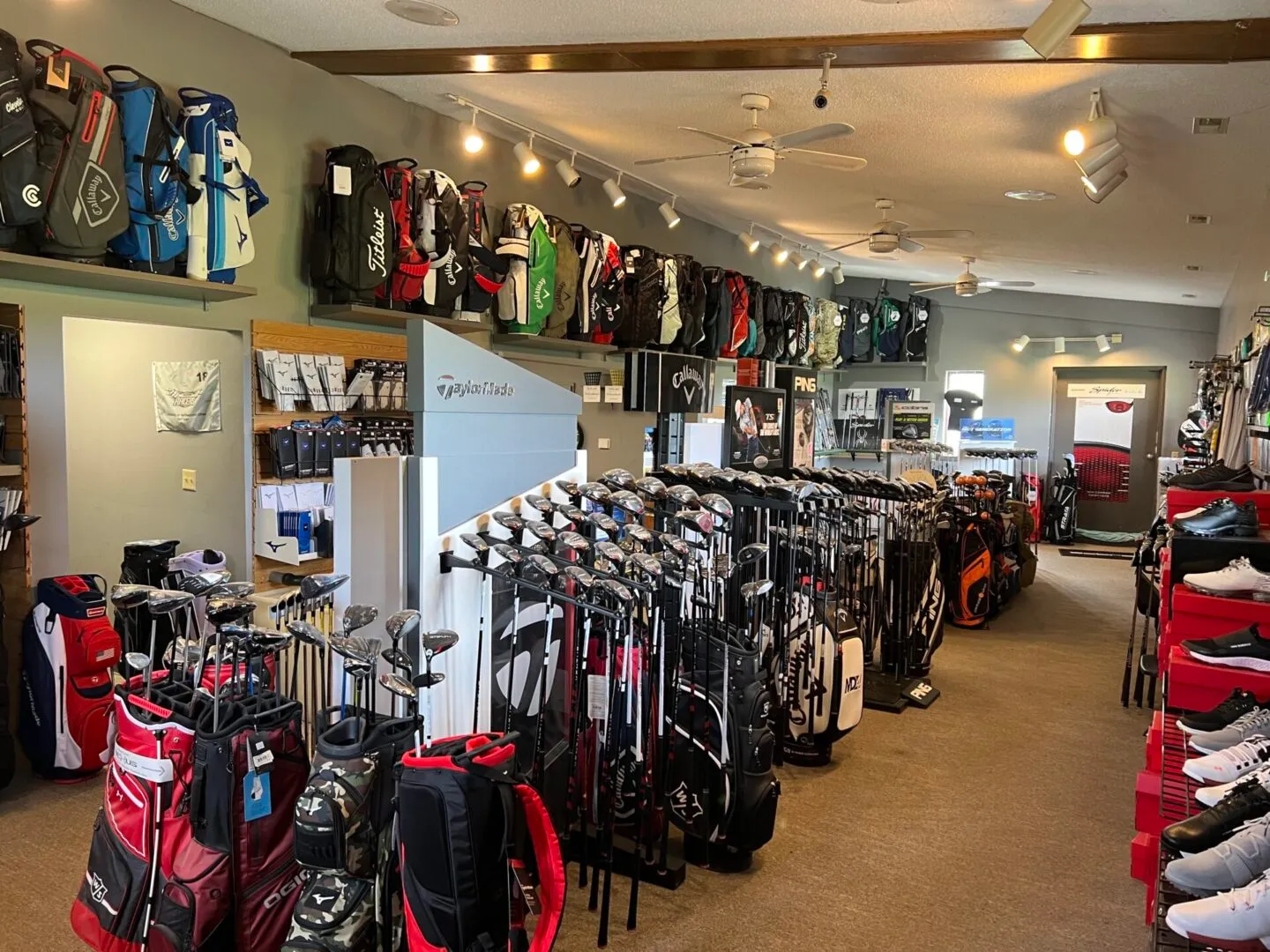
The logo rides on tee boxes, cart paths, and bag rooms. Staff bags, member gifts, and shop stock all carry one club-level standard — so the impression stays consistent.
Consistent production across the whole order — no good batch / bad batch.
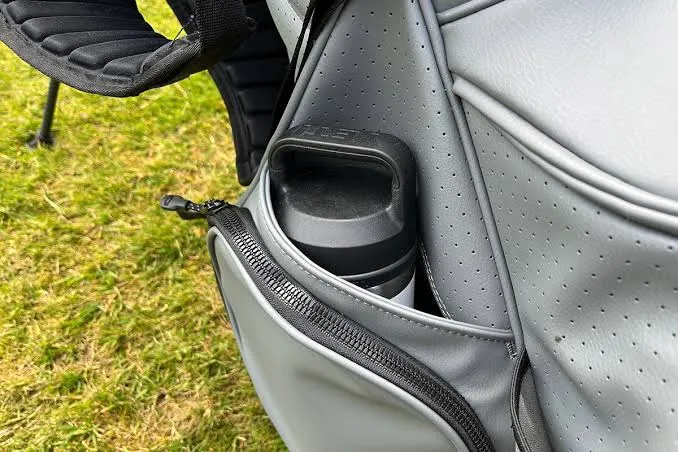
Existing bags that keep failing — collapsing stands, leaking zippers, fading fabric, drifting batches. Share where they break, and you get a replacement line engineered to hold up in real play.
A new production bag built to the standard the current supplier missed.
Proof These Failures Don't Happen
Each number below is the standard behind one of the failures you just read about — written into the spec and verified order after order, not claimed after the fact.
Most "tested" stands are cycled a few hundred times on a flat floor — then fail on sloping turf after a few months.
Cycle-tested under a full club load, including uneven-ground deployment. High-density bases are locked to the frame, and leg alignment is verified before design release.
The stand holds through hundreds of rounds of real play.
A "water-resistant" label proves nothing in a real downpour — water finds unsealed seams and zippers.
TPU-laminated, seam-sealed constructions rated in a hydrostatic chamber. Internal seams are taped and sealed, and zippers are seam-sealed with water-resistant coatings.
Customers stay dry in real weather, and returns stay low.
Sun-faded panels and logos make a premium bag look cheap after a few hot months.
Primary face materials specified and tested in an accelerated weathering chamber. UV-stabilized dyes and finishes are selected so panels and logos hold their color under prolonged sun exposure.
Logos stay sharp and colors hold through repeated rounds and storage.
Cart rails, caddie straps, and airline belts grind through cheap face fabric within weeks.
Outer fabric verified with Martindale abrasion testing before it is approved. Abrasion-resistant weaves and coatings are specified on high-wear zones such as cart rails and caddie straps.
The bag still presents well after heavy daily handling — stronger reviews.
Manual cutting drifts between batches — seams misalign and panels fall out of tolerance.
Computer-guided cutting keeps all panels on spec across the entire order, and each batch is measured against the approved sample before sewing begins.
Panels land on spec — from the first cut to the last.
Most factories inspect only at the end — defects ship and you find out at the customer's door.
Inspection gates at incoming materials, in-line sewing, pre-shipment, and container loading — plus an individual bag check before packing. A photo report accompanies each gate so nothing slips through unnoticed.
Defects are caught before they ship — not at the customer's door.
Documented Results
A Fortune 500-related golf program deployed 1,000+ premium branded bags for a high-stakes corporate tournament. The published case study covers the engineering approach, the 7-day golden sample SOP, and the measured outcomes — including quality results well inside our AQL limits against a 3% industry average.

Compliance That Gets You Approved
So the compliance team signs off quickly and retail or membership partners accept the order — audited annually, documented on request.

ISO 9001:2015
Quality Management
BSCI Audited
Social Compliance
SEDEX Member
Ethical Trade

GRS Certified
Global Recycled Standard
REACH, OEKO-TEX, Prop 65, and CPSIA documentation available on request.
Client Testimonials
Two perspectives on what changes when the bag stops being the weakest link on the course.
★★★★★"Our previous staff bags and member gift bags were the weakest thing with our name on them. By midsummer the stands sagged and the legs deployed unevenly on the course, and by October the club logo had visibly faded on the face panels. Members noticed — a few even joked about it at the grille. For a club that trades on first impressions, that is the wrong kind of attention. LantaoBags did not start with a sales pitch. They asked for one of our failing bags, tore it down, and came back with a written diagnosis: stand mechanism fatigue, UV-unstable face fabric, and hardware finish that could not handle humid coastal summers. Then they sent a physical prototype we could set on a bag stand ourselves — not a photo of a sample. The production run was locked to that exact unit. A full order later, every bag still presents the way the first one did on day one. That consistency is why they are now our only bag supplier."
★★★★★"We launched Harbor Links with a small first order split across three styles — a stand bag, a cart bag, and a staff bag — so we could test the market before committing to real volume. Our previous factory could only quote at 1,000-unit minimums, which forced us into dead inventory from day one. What won us over was how specific their process is. The stand test data was documented rather than claimed, the waterproof spec came with a lab rating, and the bulk run held to the exact sample we approved. Status updates came to us weekly — we never had to chase them. The shipment landed at our distributor's door on schedule, with one invoice and no port clearance on our side. Eighteen months on, we have reordered twice without changing a single spec."
Common Questions
Yes — we sign bilateral NDAs before any technical discussion, and the tech pack, patterns, and samples are never shared with other clients or used for anyone else. For extra protection we support exclusive mold agreements for custom hardware. Your design stays your IP, start to finish.
The sample fee is credited toward the bulk order. Most golf projects finalize within 1–2 sample rounds, and each round returns with annotated engineering feedback so revisions converge quickly. Rush sampling is available for time-sensitive launches.
It depends on use case. Premium stand bags: 1680D ballistic nylon body with 600D ripstop pockets. Waterproof constructions: TPU-laminated 600D polyester with RF-welded seams. Luxury/corporate: full-grain leather with ballistic nylon base. Eco-conscious lines: 900D RPET. We ship physical swatches within 5 business days so you can evaluate hand-feel before committing.
Yes — and it is a lab test, not a spray booth. Waterproof constructions use RF-welded, seam-sealed TPU-laminated fabric rated to 10,000mm water column, and each waterproof bag is verified in a hydrostatic chamber. Internal seams are taped and sealed, and zippers are seam-sealed with water-resistant coatings. So when you ask us the question, the answer is a number from a test report — not a marketing phrase.
Yes. We develop proprietary molds for stand mechanisms, base feet, divider tops, and handle mounts. YKK zippers are paired with custom pullers in a choice of finishes. Each mechanism is cycle-tested to 20,000+ deployments before design sign-off. Mold development typically takes 10–15 days.
With a sealed golden sample and four AQL 2.5 inspection stages. Each production batch is measured against the golden sample for stitch density, material lot, hardware finish, and dimensional accuracy at five critical points. If a batch deviates beyond 2% tolerance, it is rejected before leaving our facility. Bag #1,000 matches bag #1 because both are held to the same physical standard — not to memory.
One Factory. Every Golf Bag Category. 300 Units to Start.
Send a current sample, a sketch, or a short note on where previous bags fell short on the course. We reply within one business day with a clear read on feasibility, timeline, and next steps.
