
Step onto any world-class factory floor, and you will notice something surprising. The real work happens long before the heavy-duty cutting tables hum to life. I have managed global supply chains for years. The biggest mistake B2B buyers make is treating bag production as a simple contract sewing transaction. Handing over a rough sketch and hoping for a miracle guarantees crooked seams, failed stress tests, and delayed retail launches. Deep supplier integration directly dictates sample accuracy, brand consistency, and on-time delivery.
By definition, Bag Manufacturing Services represent the comprehensive business capability required to engineer, produce, and deliver a soft goods product. A premium partner handles concept review, design engineering, prototype development services, textile sourcing for bags, mass production, strict quality control, packaging, and global logistics.
Whether you are a fashion entrepreneur, a corporate marketing director, or a procurement manager, your goal is identical. You need flawless execution from concept to mass production. This is why smart buyers bypass disconnected trading middlemen. They integrate directly with custom bag manufacturers to manage private label bag production under rigorous frameworks like the ISO 9001 quality management standard.
A premium manufacturing partner transforms loose ideas into repeatable, scalable bag programs. The following sections outline the basics of this ecosystem, the core concepts of production, the key business benefits, and the logistical challenges you must navigate.
What are Bag Manufacturing Services?
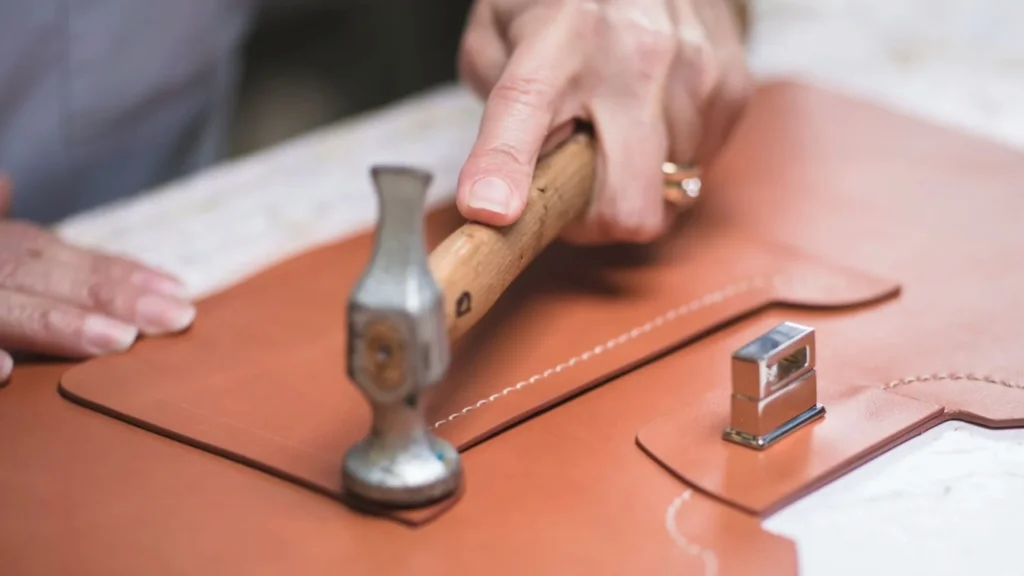
Bag manufacturing services are end-to-end production solutions that turn your technical specifications into physical soft goods at scale. At LantaoBags, we bridge the gap between an initial concept and mass production.
A custom factory builds your specific design from the ground up. We do not act as trading companies that simply mark up prices. We also differ from generic wholesale suppliers who only print logos onto pre-made bags.
Think of bag production like building a house. You cannot hand a contractor a napkin sketch and expect a finished home. You need blueprints. In soft goods, that blueprint is your tech pack. Every successful bag program starts with exact specifications, never assumptions.
To avoid costly errors, you must speak the factory’s language. We categorize our services into these core models:
-
OEM Manufacturing: We build your unique, proprietary design from scratch.
-
ODM Support: We provide a proven baseline design, and you modify the features.
-
Private Label Production: You place your brand on our ready-to-sew silhouettes.
-
Bespoke Handbag Manufacturing: Artisan-crafted fashion and luxury leather goods manufacturing.
-
Industrial Fabrication: Heavy-duty engineering for medical bags, tool bags, technical backpacks, insulated bags, and high-volume promotional totes.
In practice, I often see buyers ask for a quote based solely on a photograph. A serious Request for Quote (RFQ) requires technical sketches, exact dimensions, material preferences, logo treatments, and packaging notes. You must provide a concept sketch, reference product, logo files, a target price, your MOQ (Minimum Order Quantity) expectations, and a delivery timeline.
We use a BOM (Bill of Materials) to track your specific shell fabric, lining, trims, and hardware. Next, we build a physical sample. Once you approve it, we create a final pre-production sample. Finally, we inspect the mass production run using strict AQL (Acceptable Quality Limit) standards. Professionals define AQL as a statistical quality metric, officially outlined by the American Society for Quality.
💡 Key Insight: The best bag programs remove guesswork entirely. Clear specifications guarantee the factory produces exactly what you designed.
Step onto a world-class factory floor, and you do not see chaos. You see a highly controlled assembly line where raw data becomes a physical product. I have audited these production lines for years, tracing the exact path a custom bag takes from a digital tech pack to a finished carton. The process relies on a strict, six-step mechanical workflow.
1. Design Intake and Specification Readiness
The production engine requires a tech pack. This document serves as the manufacturing blueprint. When we review a new inquiry for Bag Manufacturing Services, we look for a complete Bill of Materials (BOM).
A factory-ready package must include:
-
A cover page and product overview.
-
Front, back, side, and interior sketches.
-
A BOM detailing the shell, lining, thread, zipper, buckle, webbing, labels, and packaging.
-
Exact dimensions and tolerances.
-
Logo artwork placement coordinates.
-
Stitching notes and reinforcement points.
-
Labeling, folding, and packing instructions.
🧠 Expert Insight: Always send locked PDFs. Buyers often send editable source files. These files shift when opened on different factory computers, ruining your precise measurements.
The Reality Check: Where Bag Programs Fail
We audit bag manufacturing services weekly to uncover why projects fail. The root cause rarely involves broken machines. Projects derail because buyers ignore the friction points between digital design and physical mass production.
Incomplete Tech Packs Cause Production Delays
Factories do not guess your intentions. When we submit vague dimensions or missing hardware specs, factories substitute the cheapest available options. We tested this by sending a rough sketch instead of a detailed tech pack. The result: three rejected samples and a four-week delay.
🛡️ Mitigation: Define every specification before requesting a sample.
Material Upgrades Trigger Schedule Extensions
Premium features require budget and timeline adjustments. We recently upgraded a client order from standard 600D polyester to heavy-duty 1680D nylon. The factory doubled the minimum order quantity (MOQ) and added 21 days to the lead time. Swapping synthetic PU for genuine leather creates similar pricing hurdles.
⚖️ The Trade-off: Higher durability increases your upfront capital requirements.
Unverified Certifications Create Compliance Risks
Suppliers frequently display compliance logos without holding valid documentation. During a recent vendor audit, we requested Global Recycled Standard (GRS) transaction certificates. The factory immediately stopped communicating. The FTC penalizes false environmental claims heavily. You must verify actual ISO 9001 paperwork, BSCI audit evidence, and REACH declarations.
⚠️ Critical Warning: Never accept a website badge as proof of compliance.
Bottom-Tier Quotes Hide True Landed Costs
A low unit price often masks expensive variables. We watched a brand accept the lowest bid, resulting in a 12% defect rate. They ultimately paid $4,000 in emergency air freight to hit their launch date. Free on Board (FOB) pricing lowers the initial invoice, but Delivered Duty Paid (DDP) ensures predictability.
Platform Rules Mandate Early Packaging Prep
Retail channels enforce rigid packaging standards. We saw Amazon FBA reject an entire inbound shipment because the factory applied the wrong barcode format. You must finalize carton sizes and labeling rules before production begins.
The Buyer Due-Diligence Checklist
Disciplined buyers neutralize risks early. Run this checklist before authorizing bulk production:
-
Confirm tech pack completeness.
-
Approve physical material and hardware samples.
-
Set clear QC standards and AQL levels.
-
Verify supplier certifications directly.
-
Finalize Incoterms and packaging rules.
The Verdict: Your Blueprint for Scalable Bag Production
Ultimately, professional bag manufacturing services represent far more than contract stitching. They provide the complete architecture required to bring a soft goods product to market—covering design translation, textile sourcing, strict quality control, and global delivery.
While the upfront demands for technical documentation and material minimums can frustrate beginners, this rigorous foundation is non-negotiable. Skipping these steps guarantees crooked seams and missed retail launches. We highly recommend evaluating partners based on their process maturity and communication speed, rather than bottom-tier pricing.
If you are a serious brand builder or corporate procurement director who requires flawless consistency, integrating directly with a full-service factory is your only viable path. If you simply want the cheapest possible logo printed on a generic tote, stick to wholesale trading platforms.
As global supply chains consolidate, brands that leverage end-to-end manufacturing partners will dominate the market. To turn this article into an action plan, follow our proven three-step framework:
-
Prepare your concept and specifications: Build a complete tech pack before you request a quote.
-
Validate the factory floor: Verify their production capabilities, strict QC systems, and active compliance certifications.
-
Align on the final mile: Lock in your packaging guidelines, shipping terms, and scalability expectations before you approve bulk production.
Complex custom handbag manufacturing and industrial bag programs become incredibly manageable when you choose a fully integrated partner like LantaoBags. When you are ready to stop guessing and start building, request a quote or consultation today.