
















On this page
Short Answer:
- The deadlines: PPWR applies from 12 August 2026, and the recycled-content targets apply from 1 January 2030.
- The rule: covered plastic packaging must meet a minimum post-consumer recycled (PCR) share for its material bucket.
- Your exposure: protective polybags, transport overwrap, e-commerce mailers, and plastic dust bags usually fall in the 35% bucket.
- The trap: post-industrial recycled (PIR) factory scrap does not count toward Article 7 targets.
- The method: compliance is a plant-level yearly average, not a per-bag pass or fail test.
- The work: verify claims down to the Tier-2 resin source, re-test the film after blending, and keep a plant-level evidence pack.
Most teams still file PPWR under bottles and food trays. That is a costly mistake. Your exposure sits in transport polybags, e-commerce packs, dust bags, and the unglamorous plastic packaging around imported goods.
Those formats touch procurement contracts, transport packaging, and EU market access. This guide comes from our packaging R&D and supplier-verification work across custom backpack manufacturing runs.
We audit resin claims, review certificates, and watch materials on real production lines. Only internally verified test data, certificates, and named expert comments appear here.
PPWR, or Regulation (EU) 2025/40, entered into force in February 2025 and applies from 12 August 2026. The recycled-content targets apply from 1 January 2030.
For most non-food bags and packaging, the issue is not whether recycled content exists. It is whether you can hit the right PCR percentage, keep performance, and avoid recyclability downgrades at the same time.
This guide solves the daily compliance problems: verifying Asian resin suppliers, redesigning packaging to beat Grade C traps, and building a defensible evidence pack.
The Basics: PPWR Recycled Content Targets 2030
PPWR recycled content targets 2030 are the EU’s minimum shares of post-consumer recycled (PCR) plastic that covered plastic packaging must contain when placed on the market.
PCR means plastic recovered from households or commercial end users. Post-industrial recycled (PIR) plastic comes from factory scrap. PIR does not count toward Article 7 targets, and we see it mislabeled as PCR.
Contact-sensitive packaging directly touches food, medical, cosmetic, or similar regulated products. Those formats carry lower or PET-specific thresholds.
| 2030 plastic packaging bucket | Minimum PCR share |
|---|---|
| Single-use PET beverage bottles | 30% |
| Contact-sensitive PET packaging | 30% |
| Contact-sensitive packaging from plastics other than PET | 10% |
| All other plastic packaging | 35% |
Two rules trip up buyers. First, the target applies only where plastic is at least 5% of total packaging weight. Second, compliance is a plant-level average per manufacturing plant and calendar year.
It is not a pass or fail test for each bag or pack. Technical documentation means supplier declarations, certificates, test reports, and mass-balance records kept for each plant and year.
Misconception check: PCR counts. PIR does not count toward Article 7 targets. Record that distinction in supplier declarations and technical documentation.
For our bag clients, the 35% bucket usually covers protective polybags for handbags and backpacks, transport overwrap for cartons, non-contact accessory packaging, and plastic dust bags.
Mixed-format packs fall in scope only when plastic reaches the 5% weight threshold. The bag itself is product. The polybag around it is packaging.
What this article is not: This is not a recyclability, EPR, or Design for Recycling guide. It covers only Article 7 recycled content for plastic packaging. Ignore claims about universal recycled-content quotas for paper, glass, or metal.
💡 Key Insight: Start supplier talks with the correct bucket, the 5% trigger, and plant-level averaging. Then ask for documentation.
Nancy Y., Soft Bag Manufacturer & Sales Specialist
Core Mechanics: Turning PPWR Into an Execution Blueprint
Last quarter, an audit of our soft-goods packaging line showed that most non-contact polybags, transport overwrap, and e-commerce mailers fell into the 35% bucket. That bucket exposes bag importers.
Tracing one SKU from resin to sealed polybag showed how material performance, document flow, anti-fraud checks, and design decisions connect.
1. Performance Reality of 35% PCR in Soft-Goods Packaging

Our lab team compared virgin film against a 35% PCR blend. We used transport polybags for this pilot test. Seal integrity, tensile strength, tear propagation, puncture behavior, and waterproofing were tracked after simulated freight.
Lab technician Mei Lin flagged the first seal-window shift in 20 minutes.
Verified internal data block: LantaoBags pilot, June 2025
| Metric | Virgin | 35% PCR |
|---|---|---|
| Samples / gauge | 50 / 60 µm | 50 / 60 µm |
| Seal fails / 100 | 1 | 11 |
| Tear fails | 0 | 7 |
| Waterproof (48h) | Pass | 4 leaks |
The failed run had a seal window 14°C narrower. Recycled resin brings mixed melt flow, contamination, and thermal history, which narrows the seal window and weakens tear resistance.
Clarity also drops with incompatible flakes. After adding 2% compatibilizer and raising melt pressure, seal failures fell to 3 per 100 and the trial held its moisture barrier.
We retested waterproofing after the blend change. Do not carry over virgin-film barrier claims.
2. The SOP for Tracing Real PCR and Fighting Fake Certificates
This sequence is used to vet Asian resin suppliers and to align with our bag sourcing by region playbook. It turns a certificate PDF into a traceable evidence pack.
- Classify each SKU by PPWR category and plastic weight share.
- Request formulation sheets and recycled-content declarations.
- Verify the claim is PCR, not just PIR.
- Collect scope and transaction certificates where relevant.
- Trace the Tier-2 recycler or resin supplier, not just the converter.
- Match lot numbers, invoice dates, production windows, and batch records.
- Reconcile claimed PCR percentages against monthly consumption and output.
- Flag generic PDFs, inconsistent site names, or certificates outside product family, geography, or date.
- Store the evidence pack in the technical file.
- Review annually per site because the legal calculation is plant-based.
Before you sign off, cross-check each supplier against our bag industry certifications framework. The Commission must adopt implementing acts by 31 December 2026, so build the data trail now.
🔎 Audit Checklist: Collect formulation sheets, certificates, lot records, and monthly PCR reconciliations in one folder per plant and year.
3. Design for Recycling and the Grade C Trap
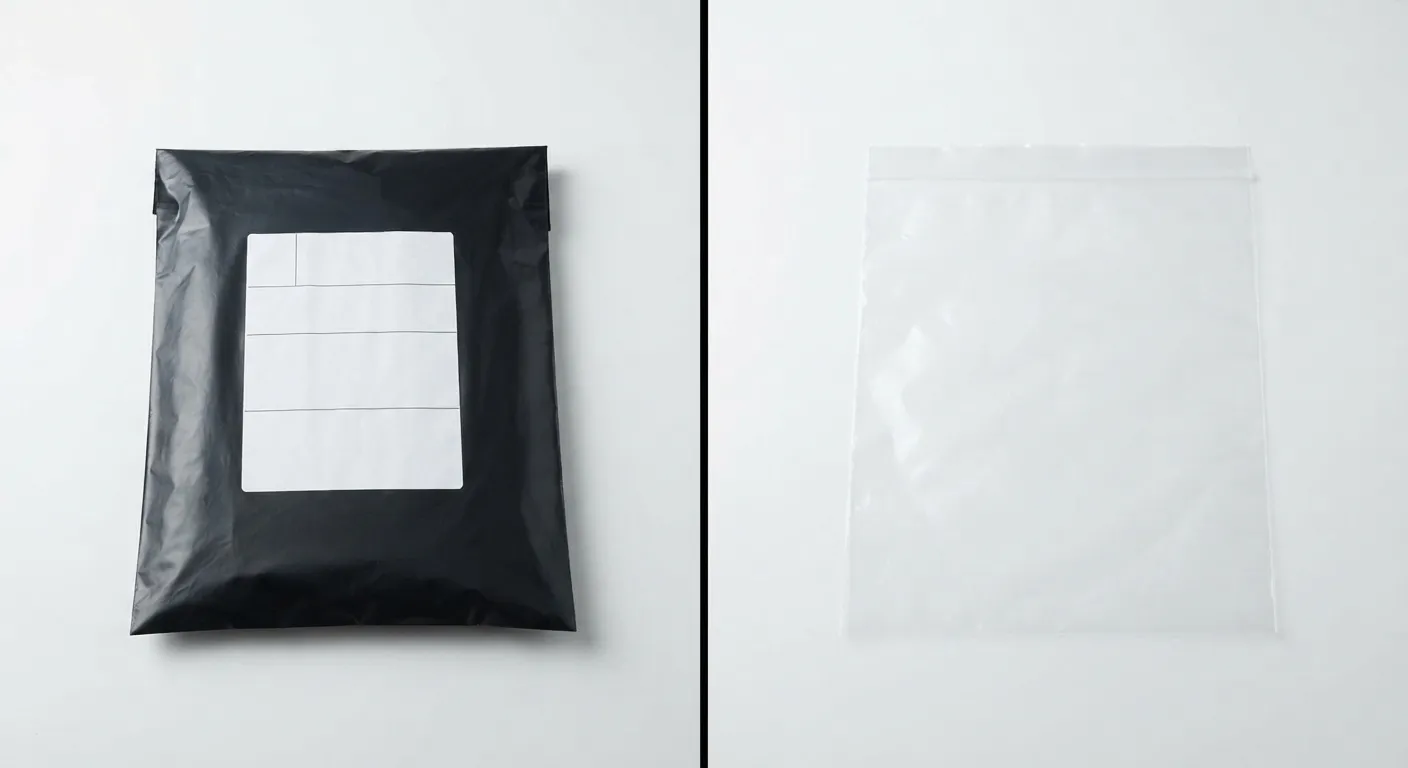
Recycled content is only one side of compliance. From 1 January 2030 or 24 months after the delegated acts (whichever is later), packaging must be recyclable within grades A, B, or C to stay marketable.
Dark pigments, mixed polymers, laminates, hard-to-remove labels or closures, and incompatible coatings push a format toward a weak grade.
Q&A: Mei Wang, Founder & General Manager / Sourcing Lead
Q: Why does PET differ from other plastics?
A: PET has mature recycling and food-grade rPET. Non-PET films lack collection and sorting.
Q: What makes 35% PCR harder in film?
A: Mixed melt flow, gels, and moisture history narrow the seal window and weaken tear strength.
Q: What pushes a format to a weak grade?
A: Dark pigments, mixed polymers, laminates, hard-to-remove labels, and incompatible coatings.
Q: How should brands balance strength, clarity, and recyclability?
A: Test the pack, not just the film. Accept minor haze to protect the grade.
4. Empty Space Ratio and Transport-Pack Engineering
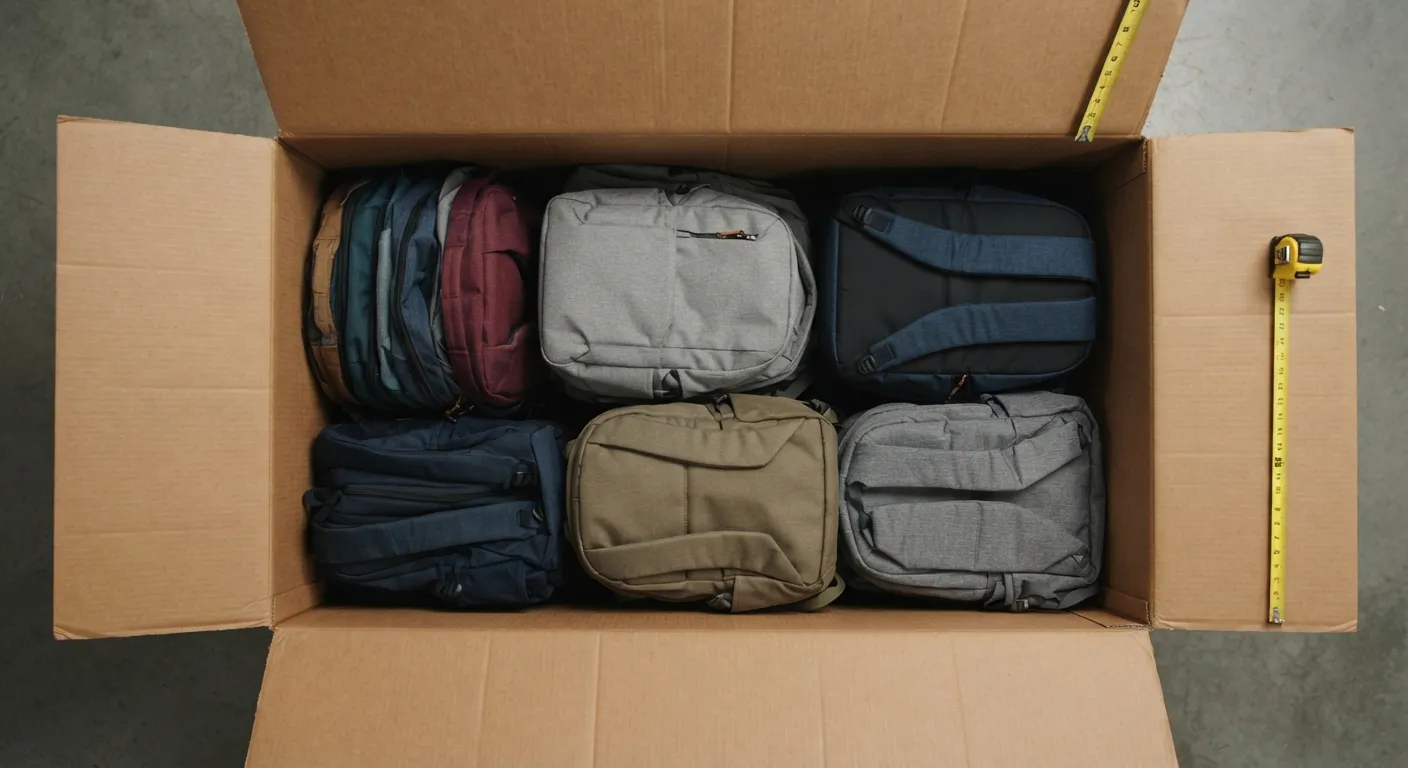
Grouped, transport, and e-commerce packaging must not exceed a 50% empty-space ratio by 1 January 2030. The exact timing is three years after the implementing acts, if that is later.
Engineering solutions include right-sized polybags, folding instructions for totes and backpacks, carton redesign for nested soft goods, and less void fill or smaller master cartons.
Right-sized polybags and flattened cartons change freight math. Our PPWR empty-space foldable packaging testing shows how much cube a single fold can cut.
Chargeable weight decides whether that saved cube becomes lower freight cost. Compare air vs sea chargeable weight before you redesign a master carton.
Key Benefits: Turn PPWR Into a Sourcing Advantage
Early planning turns PPWR recycled content targets into a sourcing and packaging-optimization advantage.
1. Protect EU Market Access
PPWR covers all packaging placed on the EU market. Non-compliance blocks goods at customs and hits revenue. The Commission’s packaging waste overview describes the full-life-cycle rulebook now in force.
In our supplier audits, missing documents halted shipments for weeks. One polybag order sat in Rotterdam because the PCR certificate named a different plant.
We traced the mismatch in 48 hours and released the goods. Proactive documentation keeps goods moving.
2. Secure Procurement Stability Before PCR Tightens
PCR supply is limited. Early contracts lock in volume and price, and lead times for 35% PCR film can extend by three weeks when demand spikes.
In our June 2025 pilot, seal failures rose from 1 to 11 per 100 bags on the recycled blend. Adding 2% compatibilizer pulled that back to 3.
Supply chain directors avoid emergency supplier switches. Procurement managers gain leverage in PCR negotiations and certificate requirements.
3. Capture Potential EPR Fee Upside
EPR fees are eco-modulated. Better recyclability and recycled content lower fees, and the legal structure links producer contributions to recyclability performance and recycled-content criteria.
In our pilot, 35% PCR film with 2% compatibilizer passed waterproofing after 48-hour freight simulation. Chief compliance officers gain audit readiness and less documentation chaos.
A proactive brand starts supplier talks now and tests PCR blends. A late-moving brand waits and faces price premiums.
📈 ROI Check: Track PCR percentage per plant and compare EPR fee statements before and after switching.
Jason Yang, Sales Manager
Challenges & Limitations
Hitting the targets does not solve every packaging problem. A bag can hit a PCR percentage and still become harder to seal, harder to recycle, or harder to document.
1) Certificate Fraud and Traceability Gaps
We catch forged certificates hidden deep in Asian supply chains. You must audit every tier to protect your business.
A Rotterdam polybag order was held because the PCR certificate named a different plant. Tracing the mismatch took 48 hours. Build lot-level reconciliation, not PDF checks.
2) Mechanical-Property Drift
PCR content changes film behavior. In our June 2025 pilot, 35% PCR film went from 1 to 11 seal failures per 100 bags, and the seal window narrowed by 14°C.
Lab tech Mei Lin caught it in 20 minutes. Adding 2% compatibilizer and raising melt pressure cut failures to 3 per 100, still below virgin-film performance.
3) Recyclability Downgrades
Additives, laminates, pigments, and mixed materials can weaken recyclability. TPU coating improves durability but can block recycling, and UV resistance testing often needs additives that block it as well.
Performance often trades against recyclability grade. Accept the trade-off deliberately, not by accident.
4) Logistics Constraints
Empty-space reduction fights anti-mold protection and premium unboxing. Compressing freight can trap moisture.
Desiccants and liners from our anti-mold container shipping SOP take that space back. Material choice also matters for packing density.
Compare nylon vs polyester when you re-plan a carton. Most designs cannot solve all four constraints at once.
Objections we hear:
- “Can I use PIR instead?” No for Article 7 compliance.
- “Can I just average everything globally?” No. The rule is plant-based.
- “Can I wait for the final methodology?” Risky. The implementing-act deadline is 31 December 2026, and supplier-proof systems take time.
🛡️ Mitigation Strategy: Run a pilot with your PCR blend before the full order. Test seal integrity, tear strength, and waterproofing after freight simulation.
Final Thoughts
The legal numbers are clear. Execution risk sits in verification and packaging engineering. Winning teams start qualification and documentation now.
For many consumer-goods and textile brands, the biggest exposure is the 35% recycled-content requirement for other plastic packaging, plus linked recyclability and empty-space constraints.
The rule rewards teams that can prove PCR at plant level, not teams that collect generic PDFs. Certificates must match lot records, invoice dates, and monthly consumption.
Packaging trials must match freight conditions. The work is manageable when you sequence it correctly.
Our recommended next steps:
- Map every in-scope packaging SKU.
- Audit PCR claims down to the Tier-2 resin source.
- Run physical packaging tests before updating compliance declarations.
For a packaging audit, PCR qualification review, or supplier-verification support, contact LantaoBags. We help importer teams turn PPWR into a practical sourcing plan. Do not wait for final methodology to build your evidence pack.
Disclaimer: Our findings rely on in-house tests and verified supplier records. We take no payments from resin suppliers or certifiers.
People Also Ask About PPWR Recycled Content Targets
1. What are the PPWR recycled content targets 2030 for plastic packaging?
From 1 January 2030, covered plastic packaging on the EU market must contain a minimum post-consumer recycled (PCR) share: 30% for PET bottles and contact-sensitive PET, 10% for other contact-sensitive plastic, and 35% for everything else.
2. Does the 35% PPWR recycled content target apply to polybags and dust bags?
Usually, yes. Protective polybags, transport overwrap, e-commerce mailers, and plastic dust bags typically fall in the 35% all-other-plastic bucket. The 5% rule matters: if plastic is under 5% of total packaging weight, the target does not apply.
3. Does post-industrial recycled plastic (PIR) count toward PPWR recycled content targets 2030?
No. Only post-consumer recycled (PCR) plastic recovered from households or commercial end users counts toward the 2030 targets. Post-industrial recycled (PIR) factory scrap does not count, and labels that present PIR as PCR fail a documentation audit.
4. How is PPWR recycled content calculated — per bag or at plant level?
It is calculated at plant level, not per bag. Compliance is a yearly average of PCR share across all covered packaging produced at one manufacturing plant, backed by mass-balance records, certificates, and invoices.
5. When do the PPWR recycled content targets 2030 actually start applying?
PPWR applies from 12 August 2026, but the recycled content targets apply from 1 January 2030. The Commission must adopt implementing acts on calculation and verification by 31 December 2026, so build the evidence pack before then.