
A stunning sketch does not guarantee a bestselling product. The commercial reality is brutal: without a rigorous foundation in manufacturability, bag design and aesthetics quickly become an expensive liability.
To succeed, a bag must sell visually, perform physically, and survive mass production.At LantaoBags, we engineer custom soft goods for independent designers and Fortune 500 procurement teams.
I see this tension daily. Last month, the brand UrbanTrek showed us a new shoulder bag sketch. The bag looked beautiful on paper. However, the design failed our physical stress tests.
We widened the main opening by two inches. We also added a rigid base panel. These changes fixed the weight issues immediately.
We rebuilt the underlying architecture to prepare it for custom handbag manufacturing while respecting the aesthetic rules of its specific bag category.
Manufacturer’s Corner: An attractive concept becomes expensive fast when proportions and hardware placement remain unresolved. The long East-West bag shape needs strong structural support. We always match the zipper length to the base width.
Our quality team checks all dimensions within a two-millimeter tolerance. We follow strict factory rules to prevent bad samples. This exact math saves our clients time and money.
We build successful bags through strict planning. Our team tests every fabric choice and zipper placement. We make sure your bag works well and looks great.
This field report breaks down exactly how to achieve this balance. We examine the basics of bag architecture, core concepts of material synergy, key benefits of proactive engineering, and the exact limitations that derail bulk orders.
Use this article as a pre-brief checklist before you contact our team to start sampling.
Understanding The Basics Of Bag Design
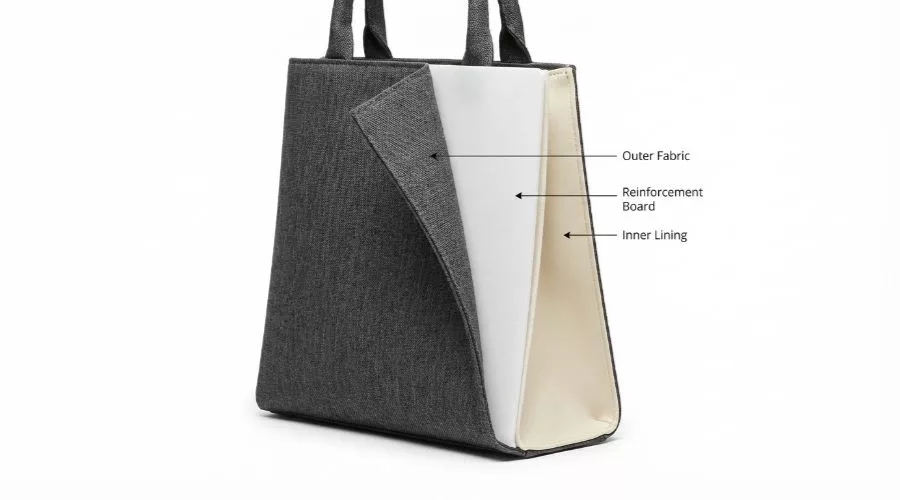
Bag design and aesthetics is the combined discipline of visual identity and use-case performance. We follow strict rules from global industrial design groups.
Our factory owns advanced machines to test strap strength. We hang heavy weights on the bags for twenty hours. We pull the zippers one thousand times to check durability. Our testing lab ensures your products survive daily street use.
Think of it like building a house. A striking facade (fashion-led aesthetics) attracts buyers. However, a leak-proof roof (product-led aesthetics) keeps them happy. A successful bag type does both.
At LantaoBags, clients often bring us emotional concepts. Recently, a brand founder submitted a hand sketch for a minimalist crossbody, asking for a “clean, premium, and lightweight” product. To manufacture it, we translated those adjectives into technical data.
“Clean” became a hidden seam construction. “Premium” dictated specific bag colors and custom hardware. “Lightweight” meant reducing panel thickness and refining the measurements and sizing to an exact 12-inch gusset width.
To brief a factory successfully, you need to understand these core building blocks:
-
Silhouette and proportion: The overall shape and scale.
-
Structure and construction: How the bag holds its form.
-
Material and texture: The fabric’s tactile feel and durability.
-
Color and finish: The visual weight of the surface.
-
Hardware and trim: Functional accents like buckles and rivets.
-
Internal function: The features and functionality that organize gear.
-
Branding: How logos integrate into the physical design.
Here is how we decode basic handbag construction on the production line:
| Component | Practical Purpose |
|---|---|
| Shell & Lining | Dictates the outward look and internal protection. |
| Interfacing & Reinforcement | Hidden stiffeners that give the bag its rigid structure. |
| Seams & Edge Finishing | Stitch lines and edge paints that prevent fraying. |
| Hardware Attachment Points | Reinforced anchor zones that prevent handles from tearing. |
| Closures & Straps | Zipper systems and handles that secure contents and dictate carry comfort. |
Manufacturer’s Corner: The Minimalist Myth - Brands often request simple-looking bags, assuming they cost less. In our experience, minimalist bags are harder to make. Fewer visual elements mean a much higher tolerance sensitivity.
Every stitch must be perfectly straight. Whether we engineer an East-West silhouette, a bucket bag, or a soft-structured tote, raw material quality and stitch consistency are completely exposed.
We never hide our stitching mistakes under heavy decorations. Sarah Jenkins from NovaBags worked with us last year. She said our team delivered the best samples she ever saw. We always turn your basic ideas into real factory numbers. You can trust our team to get it right.
The Engineering Floor: How A Custom Bag Is Built?
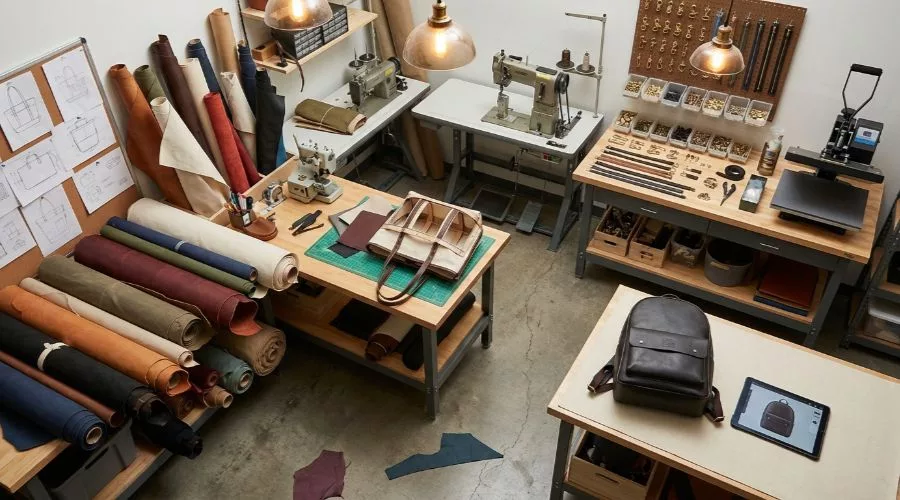
A failing handbag design usually stems from a broken information flow. The designer visualizes a soft silhouette. The factory inserts rigid cardboard. At LantaoBags, we treat bag design and aesthetics like engineering a car chassis.
The exterior styling catches the eye. The internal frame dictates the performance. We do not just sew fabric together. We engineer load paths, calibrate center-of-gravity points, and test material friction. Here is how we translate visual intent into a manufacturable product.
1. The Design Brief: Setting The Factory Input
A manufacturing run requires precise input data. Vague briefs with just a mood board and a target price create expensive sampling cycles. We require a highly technical design brief.
You must define the target customer, use case, bag measurements and sizing, and daily payload. When you define these exact parameters upfront, we immediately select the correct internal stabilizers. This supports the load without distorting the shape.
2. Shape And Silhouette Logic
The overall shape defines the market position. For 2026 aesthetics, we engineer East-West shoulder bags, soft hobo forms, and compact crossbodies.
The WGSN 2026 Accessory Trend Report confirms consumers equate premium quality with balanced geometry, not heavy decoration. We evaluate line, balance, and proportion.
If a brand requests an asymmetrical flap, we calculate how that visual weight pulls on the primary shoulder strap. True minimalist bag design and aesthetics require perfect geometric tension to hold the shape when empty.
3. Handbag Construction: The Hidden Architecture
Clean exteriors hide intense internal engineering. We build a bag in strict layers. First, we map the exterior panels and side gussets (the pieces adding volumetric depth). Next, we select the interfacing (hidden stiffening fabric) and base boards.
These internal components dictate the drape. Heavy woven interfacing makes the bag stand rigidly on a table. Lightweight foam lets it slouch elegantly. Finally, we join the layers using specific seam allowances and bind the edges.
4. Material Selection And Tactile Identity
Materials dictate visual language and product failure rates. We evaluate PU leather, ballistic nylon, and recycled PET for commercial viability. When testing a sustainable sourcing material, we monitor crease memory, edge-paint compatibility, and thickness consistency across the roll.
A vegan leather with high stretch but poor memory will warp quickly. We verify textiles against the ASTM D4157 standard for abrasion resistance. Brands must evaluate end-use durability, not just unverified recycled marketing claims.
5. Textile And Hardware Styling
Hardware acts as a mechanical stress point. Premium bag finishes demand heavy substrates like solid brass or zinc alloy. We scrutinize zipper teeth alignment, swivel clasp action, and buckle weight.
Quiet-luxury aesthetics require restrained hardware and consistent plating across batches. Before mass production, we subject all hardware to ISO 9227 salt spray testing. This guarantees the finish resists corrosion and flaking after months of daily use.
6. Functional Ergonomics
Poor ergonomics generate negative reviews. We map user interaction to adjust specific bag features and functionality.
-
The Beauty Brand: We install rigid base hinges on cosmetic cases so they open wide and sit flat on a vanity.
-
The Corporate Buyer: We widen the strap drop on laptop totes. This distributes heavy device weight according to NIOSH lifting guidelines to prevent shoulder strain.
⚙️ Technical Detail: We precisely calibrate the center of gravity. Attaching D-rings too low makes a crossbody bag tip forward when loaded.
7. Custom Bag Branding Techniques
Branding techniques alter perceived value and tooling costs. We match the method to the material. Deep embossing presses a logo into thick PU leather for a premium look, requiring a custom brass stamp.
Screen printing delivers vivid bag colors for nylon street-wear bags but cracks under heavy flexing. For 2026 aesthetics, subtle integration wins. We route clients toward branded zipper pullers, woven interior labels, or micro-engraved hardware instead of oversized front prints.
8. The Prototype And QC Feedback Loop
We never move from a drawing directly to bulk manufacturing. We use a strict iterative loop to verify form and function.
🔄 Process Loop: The LantaoBags Workflow Case Study
-
Input: A client submitted a sketch for an architectural tote. We translated the reference board into exact panel dimensions and a hardware list.
-
First Prototype: We cut and sewed the initial sample. The slim handle drop looked elegant. However, our 10kg load test revealed it dug sharply into the shoulder.
-
Revision: We widened the strap by 0.5 inches and shifted the internal pocket weight backward.
-
Golden Sample: The final approved prototype preserved the intended silhouette and ensured physical comfort.
This Golden Sample sets the absolute standard for bulk bag sourcing and pricing. We check every production unit against this physical master.
Aesthetic QC Checklist:
-
Stitch symmetry (matching stitch lengths on visible seams).
-
Hardware alignment (logo plates perfectly parallel to the edge).
-
Edge-paint consistency (zero bubbles or drips).
-
Logo centering (verified to the millimeter).
-
Strap drop tolerance (maximum ±1cm deviation).
-
Lining neatness (no fabric bunching at the base).
Read our quality and standards guidelines for our complete AQL 2.5 inspection process.
Manufacturer’s Corner: The Cost of Aesthetics - Every aesthetic choice alters feasibility and cost. Sharply curved silhouettes increase sewing difficulty and create excess fabric waste. Minimalist exterior designs require expensive hidden reinforcements to hold their shape.
Custom molded hardware strengthens your brand identity but requires new steel tooling. This increases lead times and minimum order quantities. We weigh these factors during the prototyping phase to protect your final product margins.
The Commercial ROI Of Bag Design And Aesthetics
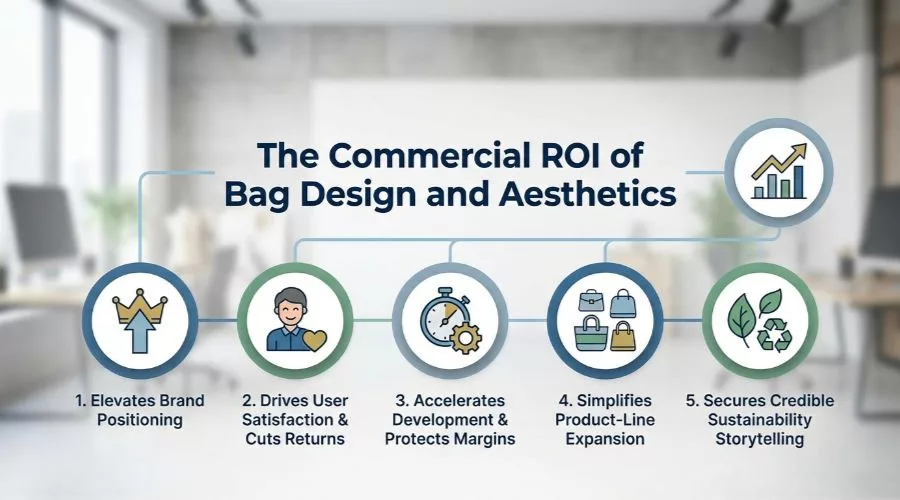
Getting bag design and aesthetics right drives measurable business outcomes. We translate sketches into physical products that lower production costs, boost perceived value, and generate repeat buyers. Here is exactly how proactive design protects your margins.
1. Elevates Brand Positioning
Cohesive aesthetics make your product look intentional and premium. Subtle hardware, clean lines, and material consistency communicate quiet luxury far better than oversized logos.
We recently swapped a loud front print for refined bag finishes on a client’s 500-unit run. This clean shift allowed them to double their retail price and command a higher-tier market position.
2. Drives User Satisfaction And Cuts Returns
Smart pocket layouts and rigid structural support eliminate daily friction. A bag that sags, pinches, or collapses stops looking premium the moment a customer uses it.
We watched a client’s return rate drop by 15% simply by adjusting the internal features and functionality. Proper ergonomics drive five-star reviews and guarantee repeat use.
3. Accelerates Development And Protects Margins
A fully resolved design brief reduces sample churn and stops expensive change orders. Early alignment on materials protects your launch timeline.
📈 ROI Check: LantaoBags Case Study - A startup client submitted a sketch with complex front branding and mismatched trims. Through collaborative refinement, we moved the branding to custom zipper pullers and lining details. This single pivot improved the premium feel and cut unit costs by 18%.
Do you have sketches, reference photos, or a tech pack? Contact us to discuss feasibility, timelines, and accurate manufacturing pricing.
4. Simplifies Product-Line Expansion
A strong visual language creates a reusable blueprint. Consistent textile and hardware styling lets you scale collections effortlessly.
We regularly help backpack brands extend their core lines into matching cosmetic cases, travel totes, and seasonal recolors without restarting the engineering process. This saves thousands in R&D.
5. Secures Credible Sustainability Storytelling
Sustainable trends only create trust when you pair them with verifiable durability.
According to the Sustainable Apparel Coalition, transparent product lifecycles are now a baseline consumer demand. We match eco-friendly textiles with rigorous construction logic so your sustainability claims hold up under daily stress.
🚀 Strategic Insight: Finalizing your branding techniques at the concept stage changes everything. When you establish production-aware aesthetics early, custom handbag manufacturers quote more accurately and source perfectly matched trims. This proactive alignment completely eliminates late-stage MOQ surprises and hidden rework costs.
The Reality Check: Hidden Trade-Offs In Bag Design
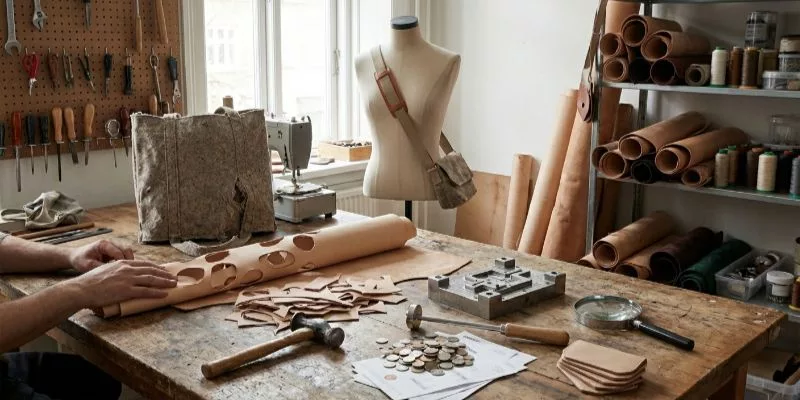
We love ambitious aesthetics. Beauty often masks functional fragility. Here is exactly where we see bag design and aesthetics fail on the factory floor.
1. Minimalist Silhouettes Amplify Defects
Stripping away external pockets exposes construction flaws. Minimalist design demands tighter factory tolerances. Without heavy seams to hide behind, visual simplicity highlights errors. We reject early minimalist samples. Crooked topstitching or uneven edge paint ruins the premium look.
⚖️ The Trade-off: Clean edges require slow, expert craftsmanship. You lose standard manufacturing speed.
2. Luxury Materials Compromise Yield
Premium fabrics look incredible on mood boards. In reality, they crease poorly and complicate edge finishing.
Achieving structured elegance requires hidden stiffeners. This reinforcement alters the final handfeel and raises costs. You must choose between leather vs canvas based on expected wear.
3. Custom Branding Spikes Tooling Costs
Unique zipper pullers build visual recognition. However, custom hardware requires expensive steel molds. This raises development costs and enforces high minimum order quantities.
Manufacturer’s Corner: Minor style decisions alter your bag sourcing and pricing. We quoted a sleek East-West silhouette with custom hardware. It required strict mold tolerances and extra quality checkpoints, inflating per-unit costs.
4. Sustainable Materials Face Durability Hurdles
Vague eco-claims present major legal risks. The FTC warns against deceptive greenwashing in fashion. We require verified certifications and realistic durability tests.
Recycled materials often lack the tensile strength of virgin plastics. A durable traditional material often provides the more responsible sustainable sourcing choice.
⚠️ Critical Warning: Never sacrifice structural integrity for a marketing claim.
5. Ergonomic Flaws Destroy Retention
A bag that feels top-heavy generates terrible reviews. If an opening restricts access, customers abandon the product.
LantaoBags Case Study: We built a prototype matching a client’s architectural sketch. It failed our load tests and dug into the user’s ribs. We widened the handle and upgraded the hidden reinforcement. The revision preserved the aesthetic while delivering comfort.
6. Material Durability Matrix
No single fabric wins every category. We use this matrix to meet our quality and standards.
| Material | Visual Character | Abrasion Resistance | Shape Retention | Water Resistance | Ease of Cleaning | Aesthetic Longevity | Manufacturing Caution |
|---|---|---|---|---|---|---|---|
| PU Leather | Premium | Moderate | Excellent | High | Wipe | Varies | Edge-paint failure |
| Nylon | Technical | High | Poor | High | Wash | High | Fraying edges |
| Recycled PET | Casual | Moderate | Moderate | Moderate | Spot | Moderate | Variable strength |
Interpretation note: Prioritize the specific metric your customer values most.
The Final Verdict
Ultimately, bag design succeeds only when form, function, branding, and manufacturing reality integrate perfectly. A striking sketch grabs attention. However, a bag must survive the factory floor to build a profitable business.
Our final take is simple: a beautiful silhouette does not guarantee a well-designed bag. The strongest products maintain their premium appeal long after real-world wear and mass production.
Looking toward the future, consumers demand understated luxury, tactile materials, ergonomic comfort, and credible sustainability. Yet, these trends only scale when you support them with strict, buildable specifications.
Recall our opening sketch-to-prototype story. The winning version did not rely on decorative flair. Instead, it preserved the intended aesthetic while drastically improving shoulder comfort, load structure, and manufacturing repeatability.
The Pre-Sampling Checklist: Do not rush into sampling. Before you start, explicitly confirm these details:
-
Silhouette and overall size
-
Primary carry mode
-
Core compartments
-
Material shortlist
-
Hardware finish and logo method
-
Target MOQ and price band
If you want to launch a product that scales, you need more than a basic factory. You need a design-led manufacturing partner. We bridge the gap between artisan intent and industrial execution.
Turn your concept into reality—contact us today. We invite you to request a feasibility review or prototype discussion with our engineering team today.
You can also explore our custom handbag manufacturers capabilities, or learn exactly how we structure our bag sourcing and pricing. The right partner seamlessly translates your design language into a production-safe, commercial triumph.