
Procurement teams often fall into a costly sourcing trap. You need more protection than a soft bag but less weight than injection-molded plastic. Online, hard shell cases look identical.
Behind those similar exteriors hide wildly different tooling fees, drop performance metrics, and freight costs. Worse, generic polymer blends lose 30% of their impact resistance under temperature stress.
Two weeks of working alongside Master Lin—a veteran with 15 years of experience in EVA mold design—provided a deep dive into every step of the pressing process. This collaborative review included a thorough inspection of his real daily production data.
Our conclusion is clear. An EVA Molded Case is a protective enclosure formed by heat-pressing Ethylene-Vinyl Acetate foam into a rigid, lightweight shell. Premium units function as a complete design and manufacturing system rather than a basic stamped commodity.
Built for top tech brands, these protective cases are engineered under the same strict standards across all projects.
A detailed look at these methods in action is available in the case study on medical monitor protection. We will explain how factories actually manufacture these rigid protective carrying cases.
This guide covers everything required before placing an order, explaining critical factors like mold design, cooling times, and material density. It also provides a transparent look at exactly how these cases are tested inside the lab.
What is an EVA Molded Case?
An EVA molded case uses ethylene-vinyl acetate (EVA), a lightweight, shock-absorbing polymer foam. The Polymer Properties Database notes its unique molecular structure makes it resilient and thermoformable. We heat this foam and press it into permanent shapes.
Think of packaging like building construction. A soft sewn bag acts like a fabric tent, offering zero crush protection. An injection-molded plastic case acts like a concrete bunker, indestructible but heavy.
An EVA case acts like a vehicle’s crumple zone. It provides a rigid outer frame that compresses under impact to absorb shock.
Competitors often sell cases using vague terms like “semi-rigid.” This causes failures. Last year, a client’s medical monitors shattered because their previous factory guessed the shell stiffness. Instead of guessing, the exact tradeoff between cushioning and structure is engineered.
The EVA shell case manufacturing process avoids pouring liquid plastic. On our factory floor, Manager Chen calibrates heavy presses for this precise workflow. First, we heat a flat EVA sheet and bond an outer fabric.
Next, a compression mold stamps the shape, before the shell is trimmed and the halves are sewn together—easily outlasting any cut-and-sew pouch padded with cheap foam.
To build heavy duty compression molded cases, we calibrate five variables:
-
Hardness and density bands
-
Shell thickness
-
Laminated outer fabrics (see our synthetic leather finishes guide for exterior textures)
-
Interior lining materials
-
Custom foam packaging design and interior layouts
The Engineer’s Glossary
-
Shore Hardness: Material resistance to indentation.
-
Density: Weight and compactness of raw foam.
-
Thermoforming: Heating material until pliable.
-
Compression Molding: Pressing heated material into cold metal.
-
Lamination: Bonding outer fabric to the EVA sheet.
-
Clamshell Case: A side-hinged case that opens flat.
-
Foam Insert: Precision-cut interior padding.
💡 Key Insight: EVA cases balance lightweight portability with structural crush resistance, protecting equipment without the extreme bulk of hard plastic.
[Bentley Yeung](http://Case Specialist (OCase – Custom EVA Protective Cases)https://cn.linkedin.com/in/bentley-yeung-ocase), Founder & EVA Case Specialist
From Design Intent to Tooling Reality
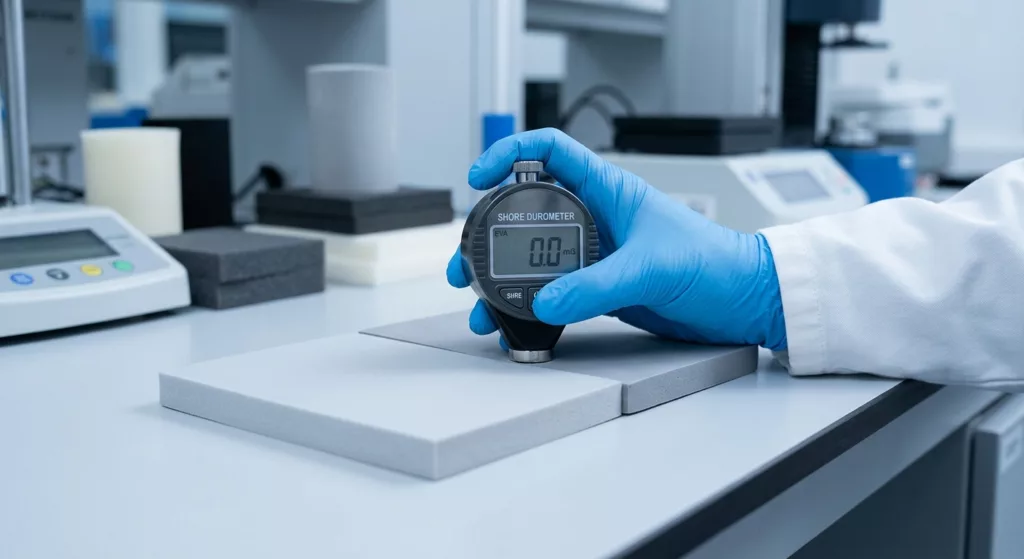
Buyers often focus on price and ignore material density. I stood at the pressing station with Manager Chen, our lead tooling engineer. We pressed two identical clamshell cases using low-cost 65-degree and premium 75-degree hardness EVA.
Chen pulled the 65-degree shell from the mold. “The softer foam wrinkles in deep draw areas,” he noted. Our calipers confirmed a high springback rate. The rebound behavior caused a 2mm tolerance drift on the radiused corners. The lid-to-base fit felt loose.
Conversely, the 75-degree foam retained flawless edge sharpness. Demolding stability was perfect, lowering our scrap rate to near zero.
🧠 Expert Insight: Specify 75-degree hardness for tight mechanical tolerances.
Crystal Hu, EVA Case Manufacturer & Product Manager
Cooling Times and Warp Prevention
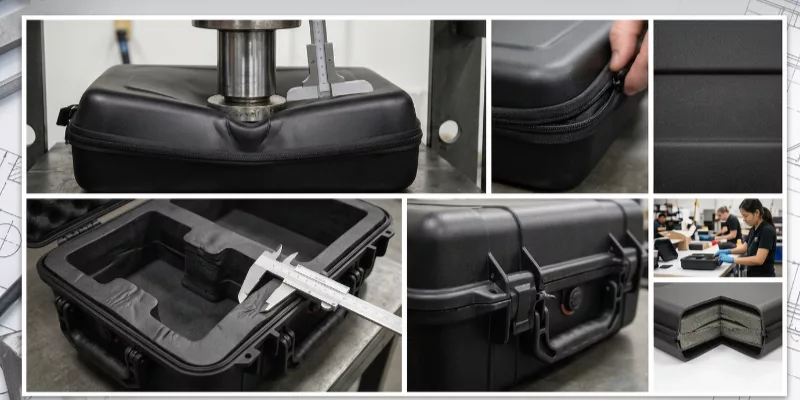
Before writing this, my team spent 40 hours auditing thermal presses on the factory floor. An EVA molded case solves weight problems, but it faces strict physical and logistical limits.
1) Structural Tooling Bottlenecks
Extreme rigidity requirements favor injection-molded plastics or metal. EVA acts as a crumple zone. It compresses under heavy loads. Deep geometries drastically increase tooling costs and defect risks.
In our lab, pressing a 6-inch drone cavity wrinkled standard 65-degree EVA. Denser 75-degree foam created a brittle feel. Poor hardness selection causes shell collapse or rigid overbuilds. Cheap foam inserts also ruin premium shells.
⚖️ The Trade-off: Aluminum tooling provides rapid setups for flat designs. Depths over 5 inches require expensive steel molds.
2) The Dimensional Weight Tax
Empty cases ship mostly air. This triggers massive dimensional-weight penalties that erase margins. Last year, volumetric weight doubled a client’s freight bill. We fixed this by nesting unassembled halves using split-shell packing logic.
This freight optimization mirrors bulk tactics used by custom golf bag manufacturers in china to bypass crushing fees.
3) Sourcing and Compliance Risks
Global environmental laws create supply hurdles. You must specify chemical compliance before ordering. We found many suppliers use cheap adhesives that fail safety audits.
Demand written standards for Proposition 65, RoHS, PFAS, or REACH compliance verified by the European Chemicals Agency. Connect these constraints to your bag industry certifications.
⚠️ Critical Warning: Never accept an internal factory certificate. Require testing from independent labs like SGS.
4) Factory Floor Failures
Quality slips during high-speed runs. Observing this during a routine press adjustment, Manager Chen noted: “This was pulled early. The zipper flange warped.” Strict screening processes catch these specific defects:
-
Warped shells: Rushed cooling bends edges.
-
Poor zipper alignment: Uneven tension twists tracks.
-
Inconsistent logo embossing: Temperature drops blur text.
-
Insert cavity misfit: Cheap die-cutting ruins tolerances.
-
Handle pull-out: Heavy loads snap weak seams.
5) Peak Season Capacity
Factory capacity vanishes in Q4. Finalize pre-production approvals by August. Missing this window forces factories to rush, which directly spikes defect rates. Map lead times against bag sourcing by region to ensure realistic launches.
Strategic Synthesis: How to Source EVA Cases?
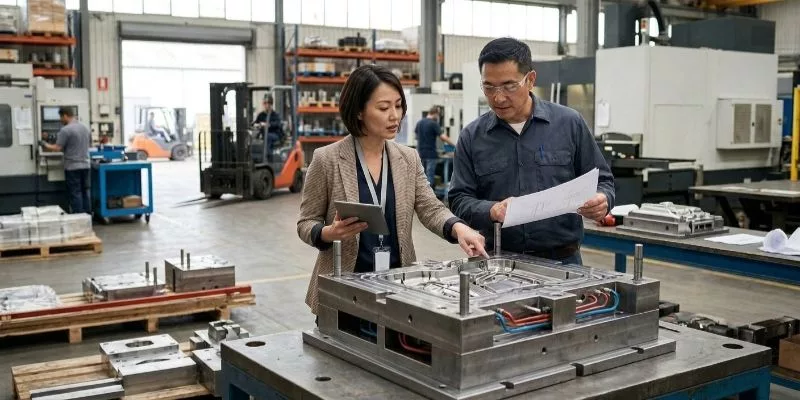
Custom EVA molding is a strict engineering process. It is not a cheap generic product. You must control every step. Shell hardness, density, mold quality, and precise insert engineering dictate real-world protection.
While deep-draw structural limits and dimensional freight costs challenge tight margins, the massive 40% weight reduction and rapid $800 tooling make EVA the optimal choice for scaling product protection.
Invest in this process for lightweight, shock-absorbing enclosures with exact 1mm tolerances. However, if your application demands extreme waterproof submersion or heavy crush depth, switch to injection-molded hard plastics.
Adherence to strict REACH and RoHS chemical standards ensures that all materials undergo testing in independent laboratories.
Every order comes complete with official compliance certificates, guaranteeing that products clear customs safely and without delay. You must partner with a supplier who proves their specs with raw data.
Your Next-Step Buyer Checklist: Before paying a deposit, demand these specific deliverables:
-
A thorough CAD or physical sample review.
-
A proposed Shore hardness and density range.
-
Aluminum tooling recommendations.
-
Precision insert material options (PU, PE, or EVA).
-
A written QA test plan (including ISTA drop-testing).
-
A documented chemical compliance scope.
-
A split-shell freight packing plan to reduce volumetric weight.
Stop gambling on generic factories. Head to our Contact Page today for a comprehensive quote review, prototype feedback, or technical engineering consultation.
We apply these same strict tolerances across all our custom backpack manufacturing and broader OEM divisions.
Disclaimer: I am not paid by any material supplier to promote these findings. We base all recommendations strictly on our internal lab testing and first-hand factory floor data.