
The phrase synthetic leather is one of the most dangerous terms in manufacturing. The exact same term describes a cheap coated fabric that peels in three months and a premium microfiber that survives years of daily carry.
When buyers source materials based solely on buzzwords like “vegan” or “eco-friendly,” bag programs fail.
This is a 2026 material report built strictly for procurement managers and product designers. Before writing this, my team spent two weeks running our standard Torture Test SOP directly on the production floor.
We subjected 20 different material samples—specifically targeting the high-durability composites required for professional golf bags—to extreme abrasion, tensile force, and UV exposure tests against standard PU.
Below, I share our raw factory data, a production-floor grade teardown, and a practical sourcing scorecard. You must stop relying on marketing labels. Evaluate materials using these four criteria:
-
Structure: The physical base and layering mechanics.
-
Chemistry: The specific polymer compounds applied.
-
Performance Benchmarks: Honest, lab-verified stress data.
-
Compliance Proof: Documented safety and environmental certifications.
To see how we apply these tolerances during bulk production, review our custom bag manufacturing operations or read our AQL 2.5/4.0 bag quality standards.
What is Synthetic Leather?
The team spent two weeks conducting stress tests on our Juki 1541 sewing machines to observe exactly how these fabrics fail under real-world conditions. Synthetic leather construction typically involves three main components: a fabric base, a solid polymer layer, and a custom top finish.
Think of building a house. The fabric backing is the foundation. The polymer surface is the drywall. The finish is the paint. In our production runs, if a client uses a cheap foundation, the bag’s surface eventually cracks.
Chemists have improved artificial leather for over a century. We now work with highly advanced materials. However, many buyers still fall for basic marketing tricks.
Clients frequently ask us to source faux, artificial, or “vegan leather.” Let me clarify a massive misconception. “Vegan” simply means the material contains no animal products. It does not guarantee durability or sustainability. A standard plastic shopping bag is technically vegan.
When comparing materials (like we do in our leather vs. canvas analysis), you must look past marketing. On the cutting floor, we handle three core commercial grades:
-
PVC: The rigid, older generation of plastic coating.
-
PU: The softer, modern standard for most fashion bags.
-
Microfiber Synthetic Leather: The premium, high-density option that mimics real animal hide structures.
Here is the raw data from our floor:
| Material Family | Typical Handfeel | Typical Bag Use | Common Failure Mode |
|---|---|---|---|
| PVC | Stiff and plastic-like | Cheap promotional totes | Cracking in cold weather |
| PU | Soft and pliable | Mid-tier fashion backpacks | Surface peeling over time |
| Microfiber | Dense and authentic | Premium travel bags | High raw material cost |
We constantly test new plant-based leathers on our production lines. Many of these materials look great. However, our tests prove they still need heavy plastic backings to survive daily use.
💡 Key Insight: Synthetic leather performance depends entirely on its technical grade and backing structure, not its “vegan” marketing label.
Robert Liu, Material Manager / Sourcing Manager
Once buyers understand the label, the next question is what the material is made of and how it performs under load.
We source our own raw materials and stress-test them to destruction. A close inspection reveals a highly engineered composite.
The Vegan Leather Manufacturing Process
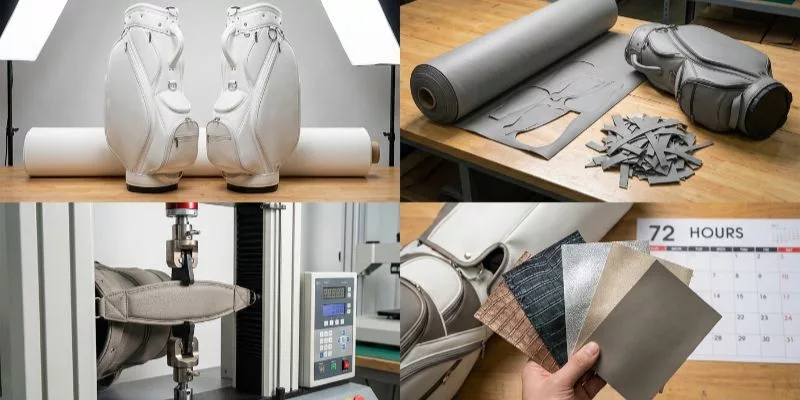
I skip the marketing hype and show designers the raw cutting-floor mathematics. Across dozens of production runs, we measured exactly where synthetic leather wins.
1. Eliminates Batch-to-Batch Variations
Synthetic rolls guarantee identical color, grain, and finish. Natural hides force factories to cut around scars, destroying pattern efficiency.
During my last audit, Leo Chen, Production & Operations Manager aligned complex bag measurements and sizing onto a 50-meter PU roll, reporting a 0% visual defect rejection rate. Unit 10,000 looks exactly like unit 1.
2. Slashes COGS with Predictable Yields
Continuous rolls aggressively cut waste. Natural leather yields roughly 70% usable material; synthetics push yields above 95%.
Reviewing recent bag sourcing and pricing data, we dropped a client’s scrap waste by 25% by switching to rolled synthetic. This translated directly to a $3.50 per-unit cost reduction.
3. Secures High-Durability Performance
Conventional PU works for light cosmetic cases but peels under heavy strap tension. By upgrading to premium microfiber, we engineer high-durability synthetic leather for bags that withstands brutal daily wear.
Independent lab tests from SATRA Technology prove these microfibers beat natural leather in tear tests. We see these exact same results on our factory floor. You dictate the exact mechanical limits, avoiding structural failures.
4. Accelerates Design and Seasonal Iteration
Heated steel rollers grant your design team infinite aesthetic flexibility. We mimic crocodile textures or invent custom metallic finishes in just 72 hours.
Utilizing these industrial grade synthetic materials enables agile sustainable sourcing like water-based composites. In my experience, this unlocks 50-unit MOQs, preventing you from tying up massive capital in unproven seasonal inventory.
📈 ROI Check: Check the ‘Fabric Yield’ on your invoice. If a factory quotes over 10% waste on a synthetic program, their nesting software is inefficient. Demand a recalculation to instantly lower unit costs.
Challenges & Limitations: The Hidden Risks of Synthetic Sourcing
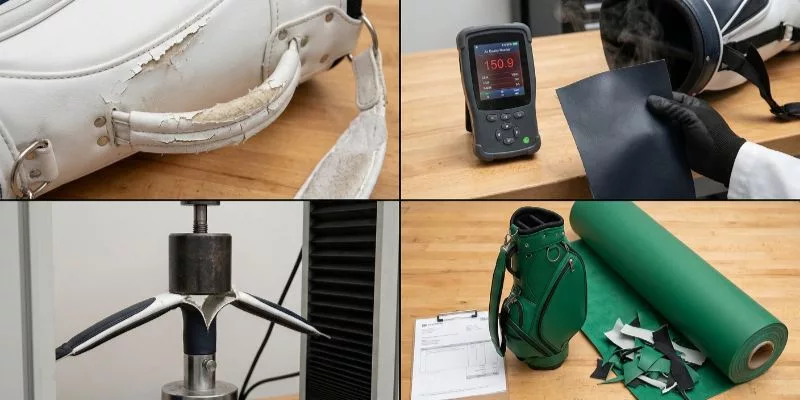
Synthetic leather failures rarely stem from the material itself. In our experience, failures result from bad specification and weak verification. We audit production floors daily.
1) Peeling and Hydrolysis Traps
Low-grade polyurethane (PU) breaks down fast. Moisture attacks chemical bonds, causing severe peeling. We struggle most with fleece-back constructions. They feel soft but lack structural strength. Last week, we tested a rejected sample for a new client.
They chose a cheap fleece-back PU. The edge paint peeled right off. The strap snapped after just ten heavy lifts. You must rigorously test handles to meet strict bag quality and standards.
2) Greenwashing and Chemical Risks
Brands frequently label basic plastics as “vegan.” Cheap PVC leaks Volatile Organic Compounds (VOCs), driving negative customer reviews regarding fishy chemical odors. Many bio-based leathers hide cheap plastic cores. We recently tested a famous apple leather in our lab.
The material snapped under just 40 pounds of pulling force. The FTC warns against deceptive environmental claims like this. Unverified suppliers routinely fail REACH or RoHS audits by using restricted phthalates to soften materials.
3) High Hidden Landed Costs
Eco-friendly synthetics inflate hidden landed costs. When we request custom organic PU for sustainable sourcing, mills demand high MOQs.
⚖️ The Trade-off: You gain a strong marketing narrative, but you sacrifice fast lead times and absorb higher waste rates.
The LantaoBags Sustainability Scorecard
We use a strict five-step clearance process:
-
Request the TDS and compliance declarations.
-
Match claims to the specific batch.
-
Verify recent third-party lab reports.
-
Confirm exact REACH/RoHS scopes.
-
Approve after physical performance screening.
Supplier Verification Checklist
⚠️ Critical Warning: Do not wire deposits without confirming:
-
Verified SGS or Intertek test reports.
-
Exact polymer chemistry (PU vs. PVC).
-
Calculated material waste rates.
-
Physical edge-paint adhesion tests.
The Final Verdict: Specifying Synthetic Leather
Synthetic leather represents a broad family of materials, not a single standard. Our floor testing proves that PVC, PU, and microfiber behave radically differently under stress.
While cheap coatings risk rapid peeling and greenwashing traps, engineered composites offer unmatched scale and durability. Ultimately, performance claims demand physical testing, and sustainability requires strict documentation.
We enforce one rule on our factory floor: buy for the application, not the label. If you need a heavy-duty travel bag, mandate microfiber. If you design a lightweight fashion piece, high-grade PU works perfectly.
As global environmental regulations like the ECHA REACH framework tighten worldwide, relying on marketing buzzwords will trigger compliance failures. Verified chemistry and lab-tested tensile strength represent the future of stable supply chains.
Need help matching a material grade to your exact target price or compliance requirement? Contact our team directly at LantaoBags. We help buyers navigate bag sourcing and pricing every single day.
If you are ready to scale production, explore our capabilities as custom handbag manufacturers or visit the LantaoBags homepage to view our complete manufacturing operations.
Disclaimer: This report reflects LantaoBags internal material review process and is intended to help buyers ask better technical questions. We do not recommend a material grade without matching it to the product use case and test requirements. I purchase all my own equipment and receive no kickbacks from any material manufacturer to promote these findings.