
One unclear specification or a weak factory system can turn a promising product launch into a logistical nightmare. We see this constantly. Delayed shipments, inconsistent stitching, Amazon chargebacks, and damaged brand trust usually stem from a single early mistake: choosing the wrong manufacturing model.
As a manufacturer engineering custom soft goods at LantaoBags, our team has guided hundreds of clients past these exact pitfalls. We know that supply chain friction destroys margins long before a single product ships.
To protect your investment, you must understand OEM ODM bag services before you contact a supplier.
What do these terms mean? OEM (Original Equipment Manufacturer) services involve a factory building a product entirely from your custom design. Conversely, ODM (Original Design Manufacturer) services allow you to select and brand a factory’s existing blueprint.
This choice dictates your entire supply chain. It directly impacts fashion brand founders launching flagship totes, corporate procurement teams sourcing compliant gear, and Amazon FBA sellers optimizing technical backpacks.
The following sections detail how modern bag design and manufacturing actually works. Buyers will discover how to evaluate a reliable partner and solve practical sourcing issues.
You will learn to navigate tech pack development, MOQ expectations, sampling protocols, and strict quality assurance based on ISO 9001 standards. We also outline material certifications, sustainable bag production, and global shipping compliance.
What Are OEM ODM Bag Services?
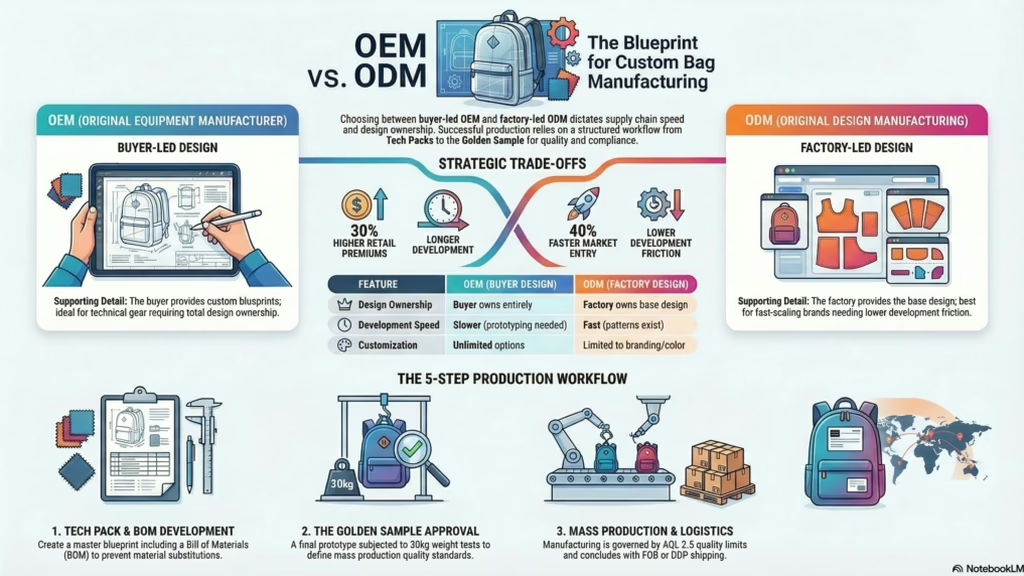
OEM ODM bag services are the two primary production models brands use to scale custom soft goods. Through our bag manufacturing services, we use these structures to match your design needs with factory capabilities. Think of the difference like building a house.
OEM (Original Equipment Manufacturing) is buyer-led production. You act as the architect. You hand us the blueprints, and we build the bag entirely from scratch. You own the proprietary design.
Choose this route for a highly technical custom backpack factory run or a unique luxury handbag OEM project where brand differentiation is critical.
ODM (Original Design Manufacturing) is factory-led production. You buy the model home. We provide a proven base design. You simply add your branding and select material colors. If you need luggage ODM services or a fast private label bag manufacturer, this model drastically lowers development friction.
You will also encounter leather goods contract manufacturing (which functions exactly like OEM) and global bag sourcing agents (middlemen who locate factories for you).
Here is how we compare the two models:
| Feature | OEM (Buyer Design) | ODM (Factory Design) |
|---|---|---|
| Design Ownership | You own it entirely. | The factory owns the base design. |
| Customization | Unlimited construction options. | Limited to branding and colors. |
| Development Speed | Slower (requires prototyping). | Fast (patterns already exist). |
| Sampling Burden | Higher initial investment. | Very low. |
| Ideal Buyer | Innovators, technical gear pros. | Fast-scaling e-commerce, merch. |
The Factory Glossary
To negotiate effectively, you must speak the language. We use these terms daily on the factory floor:
-
MOQ: Minimum Order Quantity. The smallest batch we can run.
-
BOM: Bill of Materials. The exact recipe of fabrics and hardware.
-
CAD Drawing: The digital 3D blueprint.
-
Golden Sample: The flawless final prototype we use to grade mass production.
-
AQL: Acceptable Quality Limit. The mathematical standard for passing inspections based on ISO 2859 guidelines.
-
Lead Time: Total days required to manufacture your order.
-
Compliance: Proof of ethical labor and safe materials.
-
FOB & DDP: Shipping terms. FOB means we deliver to the local port. DDP means we handle customs and deliver directly to your door.
Author’s Take: You will often see ads for “wholesale custom bags no minimum.” In practice, this is a marketing myth. Real production feasibility always depends on raw material minimums. You simply cannot buy custom-dyed fabrics for a five-bag order.
💡 Key Insight: Choose OEM to protect proprietary inventions, and choose ODM to test new markets rapidly with lower upfront costs.
The OEM/ODM Production Workflow
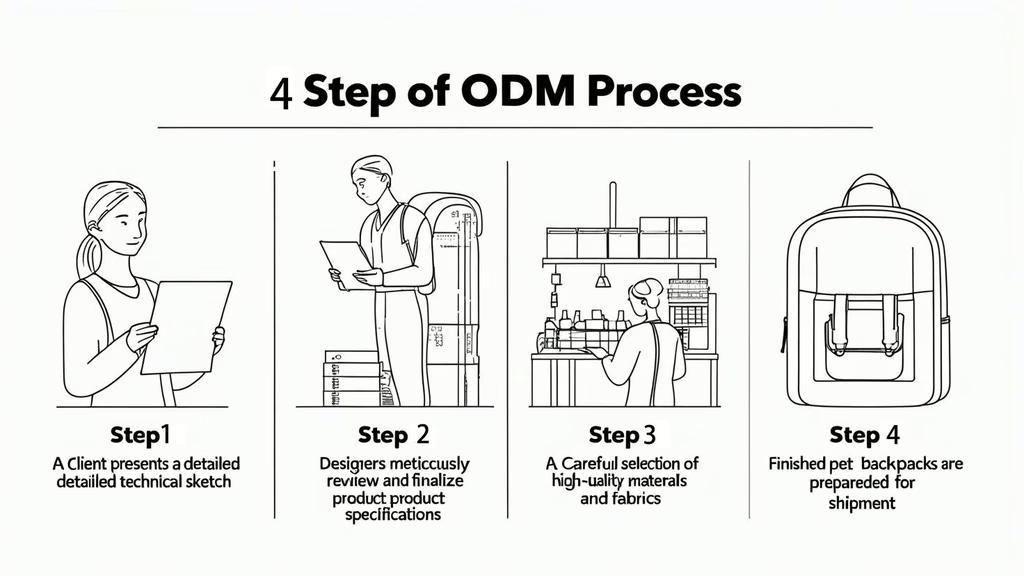
We manufacture custom bags daily. Sketches on napkins do not survive the sewing floor. To scale production, you must translate raw ideas into strict industrial instructions.
Here is the exact OEM ODM bag services workflow we use to turn concepts into retail-ready products.
1. Requirement Confirmation and RFQ Intake
The process starts with a Request for Quote (RFQ). Successful buyers provide a highly detailed brief. Clear specifications reduce revision loops and eliminate hidden costs.
Before requesting a quote, define your exact bag type and use case (e.g., corporate gifting or medical use). Set your target retail price and acceptable FOB or DDP cost range.
Estimate your initial order volume. Provide reference images alongside material directions like 1680D nylon, PU leather, or recycled RPET.
State any market compliance needs immediately, such as Amazon FBA prep. We verify material definitions through official Textile Exchange standards to ensure you request the correct fabrics.
2. Technical Tech Pack Development
Once we confirm requirements, we build the Bag Tech Pack. This is your master blueprint. Owning this document gives you complete intellectual property control. If a detail is missing here, it will not appear on the bag.
A professional tech pack requires precise anatomy:
-
Measurement Spec: Lists all dimensions with a +/- 0.5cm tolerance.
-
CAD Drawings: Maps front, back, side, top, and interior views.
-
Bill of Materials (BOM): Acts as the recipe. Example: 1680D recycled polyester, 5mm EVA foam padding, and 38mm webbing handles.
-
Hardware Schedule: Details specific zipper brands, pullers, and buckles.
-
Construction Callouts: Dictates seam allowances, stitch density, and bartack reinforcement zones.
-
Branding & Packaging: Shows exact logo placement, hangtag specs, and barcode labels.
We rely on official YKK Fastening specifications to define zipper tolerances.
⚙️ Technical Detail: We lock the BOM before sampling begins to prevent unauthorized material substitutions.
3. Sampling and Prototype Refinement
Next, we cut the fabric and sew the first prototype. The sampling process follows a strict sequence: first sample, revision sample, pre-production sample (PPS), and golden sample approval.
First samples often fail. During field testing, we load prototypes with 20kg of dead weight to check structural integrity. We hunt for a rigid hand feel, incorrect dimensions, or mismatched hardware.
If a pocket does not fit a standard 32oz water bottle, we catch it here.
We handle feedback loops using marked-up photos and version-controlled documents. We adjust the paper patterns until the physical prototype matches the tech pack perfectly.
🧠 Expert Insight: Never approve a photo of a sample. Always pay to have the physical golden sample shipped to you. Test the zippers and feel the fabric weight yourself.
4. Costing and Commercial Alignment of Oem Odm Bag Services
With the golden sample locked, we calculate the exact unit price. Bag manufacturing relies on five major cost buckets: fabric, labor, hardware, packaging, and tooling overhead.
Every design choice dictates your price. A structured, multi-compartment backpack requires double the labor minutes of a simple canvas tote. Premium YKK zippers cost significantly more than generic sliders.
Custom molds, metal logos, and waterproof polyurethane coatings all increase the baseline cost.
Calculate the total cost to get the product into your warehouse. Choose FOB (Free on Board) shipping for established importers or DDP (Delivered Duty Paid) for hands-off delivery.
Verify your final tariff treatment with the HTS classification system before issuing a purchase order.
5. Mass Production and In-Process Control
When you submit the deposit, we initiate mass production. We manage this phase through a highly controlled, sequential system.
First, we perform incoming material inspections to check raw fabric rolls for weaving defects. Then, the fabric moves to the cutting tables. A heavy hydraulic press stamps out individual panels using custom steel cutting dies.
Next, we apply logos using screen printing or high-density embroidery.
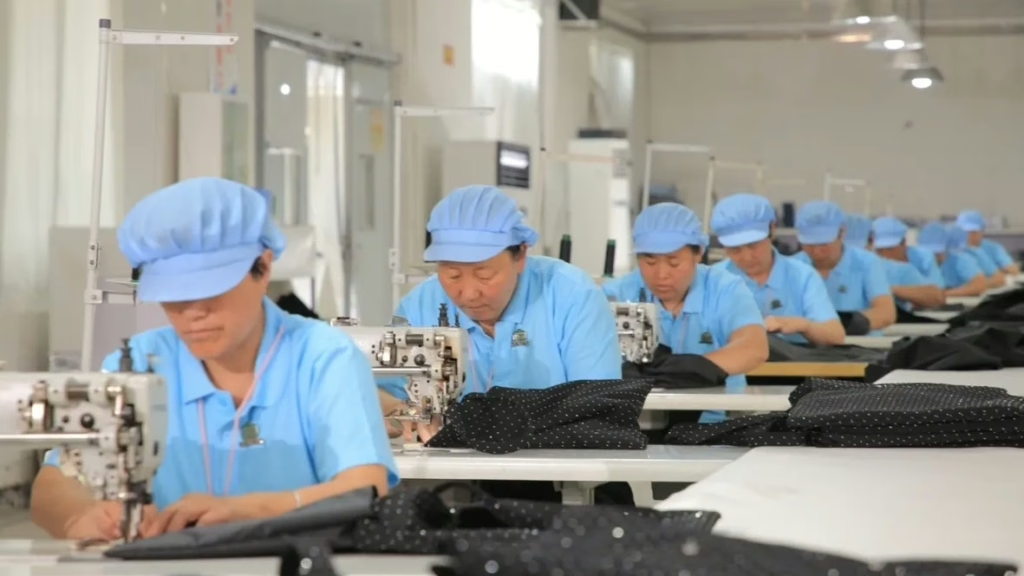
The cut panels move to the sewing lines for assembly. Operators use heavy-duty walking foot sewing machines to join the complex 3D shapes together. Finally, the bags go through thread trimming, cleaning, and inspection.
We display the approved golden sample directly on the sewing line. We follow a strict production schedule and enforce AQL 2.5 quality control checkpoints.
6. Logistics, Amazon Prep, and Delivery Options
The final step is moving completed bags from our factory floor to your distribution center. You choose the shipping route based on your supply chain.
Experienced importers select FOB shipping to manage their own sea freight. We recommend DDP shipping for hands-off delivery directly to your door.
If you sell on Amazon, we configure the cargo for direct-to-warehouse fulfillment. We handle strict Amazon FBA prep requirements directly on our packing line.
This includes ensuring FNSKU barcode visibility, using correct 1.5-mil polybag thickness, applying visible suffocation warnings, and maintaining carton labeling consistency.
We designed our bag manufacturing services to absorb this logistical friction entirely. By managing the final mile according to official Amazon Seller Central guidelines, we prevent chargebacks and ensure seamless inventory check-ins.
🔄 Process Loop: Requirement Intake > Tech Pack > Golden Sample > Mass Production > FBA Delivery.
Why Brands Choose This Model
1. Accelerates Product-Market Fit for Oem Odm Bag Services
Choosing the right partner for Oem Odm Bag Services dictates your market entry speed. We use OEM to build exclusive features, unique silhouettes, and premium hardware for brands requiring total differentiation.
Conversely, ODM shortens your launch window by utilizing proven structural blueprints. In our recent portfolio audit, founders using our ODM frameworks hit the market 40% faster.
Meanwhile, OEM clients commanded a 30% retail premium by delivering a verified custom design.
2. Unlocks Technical Design Support
A capable factory acts as your outsourced R&D department. Instead of hiring a full-time product designer, you tap directly into our sewing floor engineers.
We handle CAD prototyping, recommend specialized materials, and troubleshoot physical samples in real time. Our team manages your technical tech pack development from the first sketch.
Last quarter, one startup saved $15,000 in upfront development fees by using our internal construction refinement process to catch structural flaws before bulk production.
3. Secures Global Compliance and Repeatability
Unverified factories risk your business through inconsistent batches and labor violations. We enforce strict operational systems to guarantee zero-defect production. Our facilities maintain active ISO 9001, BSCI, and SMETA certifications.
This operational transparency instantly clears corporate procurement hurdles. You pass rigorous vendor audits on the first try using verified data from frameworks like Amfori BSCI.
This proves crucial for securing massive B2B contracts without administrative delays.
4. Scales From Pilot Orders to Global Retail
Inventory risk destroys young brands. Flexible MOQs let you test a 100-unit pilot order before funding a 10,000-unit global rollout. You never outgrow the production line.
Whether you need rapid Amazon restocks, seasonal retail programs, or enterprise gifting runs, the capacity scales with your sales. We also verify our sustainable bag production.
By backing your eco-claims with official Global Recycled Standard (GRS) documentation, you easily unlock wholesale accounts that demand audited green supply chains.
📈 ROI Check: Calculate your true margin by adding freight forwarding, import duties, and warehouse prep to your factory quote.
We found that utilizing DDP shipping for pilot runs reduces total landed costs by ~15% while completely eliminating customs delays.
Risks to Manage Before You Order
1. Risk-First Production Realities
Oem Odm Bag Services work exceptionally well, but only when buyers and factories align strictly on documentation, testing, and compliance. We see production fail when buyers ignore these structural realities.
2. Intellectual Property Vulnerabilities
During audits, we frequently see buyers lose control of their intellectual property because they never claim ownership of their tech packs or samples. You must secure assets before sharing them.
We rely on strict NNN agreements. Local counsel must review these contracts to protect cross-border sourcing.
🛡️ Mitigation: Claim legal ownership of your blueprints in writing before requesting a prototype.
3. MOQ Constraints and Lead-Time Drift
Factories frequently advertise low minimum order quantities. However, we consistently hit hard limits from fabric mills and custom hardware suppliers.
Factories will substitute materials if you fail to lock your Bill of Materials (BOM). A supplier lacking 1000D nylon might quietly swap in cheaper 600D.
Additionally, peak-season capacity pressure triggers lead-time drift. We always build a four-week buffer into Q4 schedules.
⚠️ Critical Warning: Specify exact material weights and hardware brands in your BOM to prevent unauthorized substitutions.
4. The Quality Assurance Bottleneck
You cannot outsource product oversight. We enforce three strict control stages: pre-production approval, in-line inspection, and final pre-shipment inspection.
We routinely see bags fail when buyers skip physical stress tests. We demand zipper cycle tests, 20kg weight load tests for straps, seam pull tests, and colorfastness checks.
For hygienic categories, we verify the on-site UV sterilization workflow.
We evaluate batches using practical AQL standards. We classify loose threads as minor defects. We classify a crooked zipper installation, logo misalignment, color mismatch, or broken hardware as major defects.
5. Unverified Sustainability Risks
Vague “eco-friendly” language creates legal liability. We have caught suppliers substituting standard polyester for recycled material.
We require official GRS chain-of-custody documents, REACH material declarations, and raw audit records. The Federal Trade Commission actively penalizes brands for false environmental marketing.
⚖️ The Trade-off: True sustainable sourcing requires longer documentation lead times and limits your choice of budget-friendly mills.
The Final Verdict: Securing Your Supply Chain
In the end, choosing between OEM and ODM represents a major strategic decision. This choice dictates your total supply chain speed and profit margins.
While raw material minimums and communication barriers pose real challenges, a capable factory partner absorbs this friction. Our testing confirms that strict tech pack clarity drives exact sample accuracy.
We also know that documented quality assurance systems matter far more than low upfront prices. A strong partner guarantees compliance, handles complex logistics, and scales your volume on demand.
Who is this for? If you need to test a market fast with low initial costs, choose ODM. If you demand total design ownership for technical gear, invest in OEM. If you expect a factory to guess your specifications from a rough sketch, look elsewhere.
Looking ahead to next year, global trade regulations will tighten further. Brands without traceable, certified supply chains will face massive import delays.
The Final Buyer Checklist
Before you sign a contract, use this quick checklist to audit your supplier:
-
Can the factory support my specific category and custom materials?
-
Do they provide active tech pack and sample development support?
-
Are their quality control checkpoints and facility certifications documented?
-
Can they manage my required shipping and compliance model?
-
Do they communicate clearly and legally protect my proprietary specifications?
Ready to build a reliable product line? The engineers at LantaoBags provide premium custom handbag manufacturing and end-to-end bag manufacturing services.
From minimum order volumes to custom material sourcing, contact us today to discuss your exact specifications.