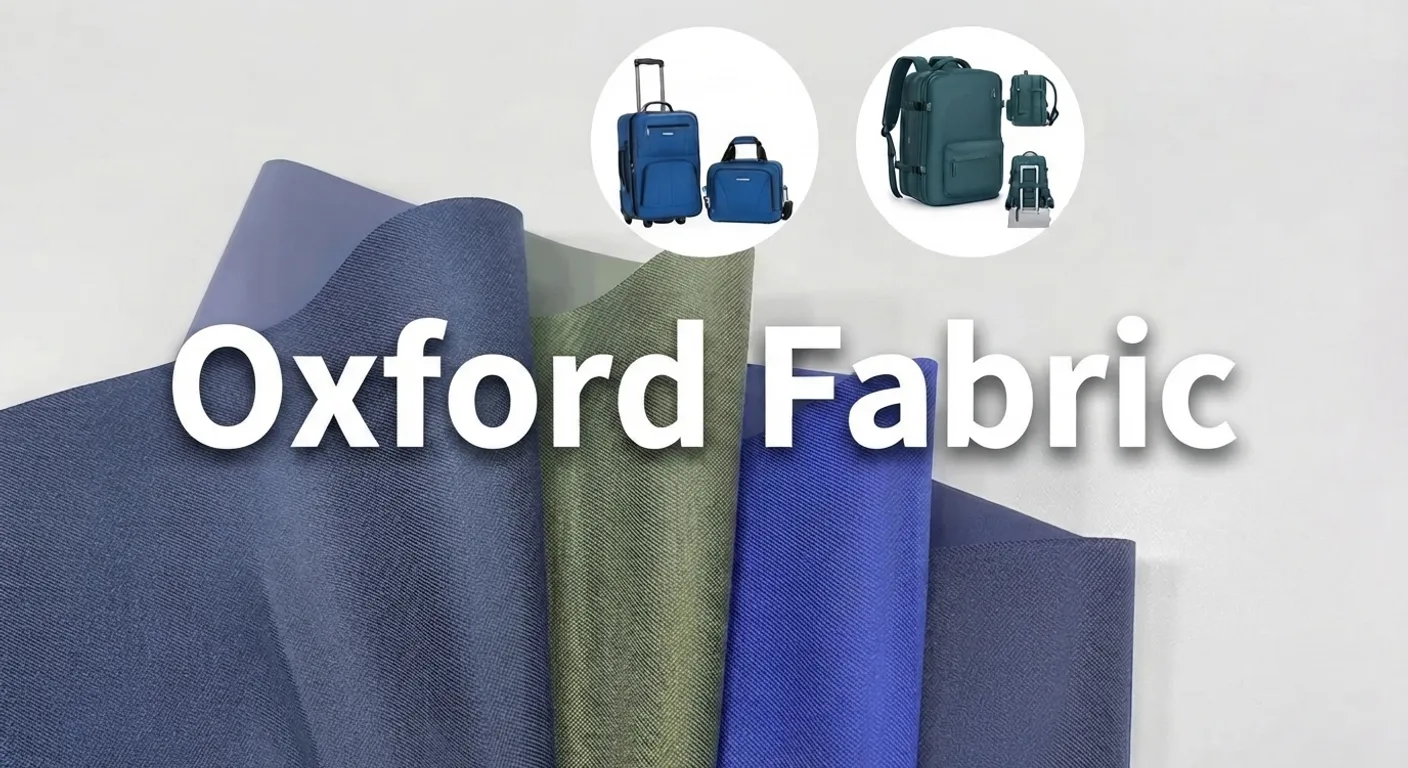
600D Oxford wins as the default house spec for most backpacks, sport bags, and general luggage shells. Choose 1680D for premium luggage, tactical, golf, medical, or high-abuse bottoms. Choose 300D only when weight, drape, and cost outrank durability.
I compared our internal tensile, abrasion, sewing-yield, and waterproof test cards plus pilot production observations. I pulled these numbers from actual production runs, not supplier sheets.
Denier alone does not determine performance. Coating and weave matter just as much. In our pilot runs, 1680D added about 0.4 pounds per bag and slowed sewing line speed by roughly 20 percent.
The heavier fabric is not automatically the smarter buy. It raises GSM, sewing difficulty, and freight weight.
The real decision is not which denier is strongest. It is which denier, coating, and construction combination matches the bag’s load profile and price ceiling.
Spec 600D for one balanced house fabric. Spec 1680D if your bag gets dragged across concrete, packed heavy, or tossed under seats. Spec 300D if you are chasing packable weight and low unit cost.
We tested production cards, sewing logs, and AATCC 127 waterproof data: 600D Oxford wins as default shell; 1680D fits high-abuse zones; 300D stays packable/liner.
| Metric | 300D Oxford | 600D Oxford | 1680D Oxford |
|---|---|---|---|
| Use case | Packable day bags, shoe bags, linings, light duffels | Backpacks, sport bags, laptop sleeves, general shells | Luggage shells, golf, tactical, medical, bottoms, high-abuse panels |
| Finished GSM | 165–210 | 230–310 | 550–680 |
| Tensile / tear class | 1 (lowest) | 2 | 3 (highest) |
| Abrasion (Martindale cycles) | 5,000–10,000 | 15,000–25,000 | 40,000–60,000 |
| Hydrostatic head (mm, AATCC 127 / ISO 811) | 500–800 | 800–1,200 | 1,000–1,800 |
| Coatings | PU, light TPU; PVC adds stiffness | PU, PVC, TPU; balanced | PU, PVC, TPU; heavy PVC common |
| Thread / needle | TEX 40–70; DBx1 #14/16 | TEX 70–90; DBx1 #18/20 | TEX 90–135; DBx1 #21/23 |
| Sew difficulty | Faster; lower needle-heat issues | Moderate; standard setup | Slower; more needle breakage/skip risk |
| Weight impact | ≈0.15–0.25 lb lighter than 600D | Baseline | ≈0.35–0.45 lb heavier than 600D |
| Verdict | Use only for packable/liner | Default house spec for most shells | Premium / high-abuse zones |
Main Differences: 300D vs 600D vs 1680D Oxford Fabric
We balance durability, weight, and costs daily. You must know these fabric differences to build better bags. Below is a direct comparison of their physical performance and practical applications to guide your material selection.
1. Load Strength and Seam Survival Under Tension
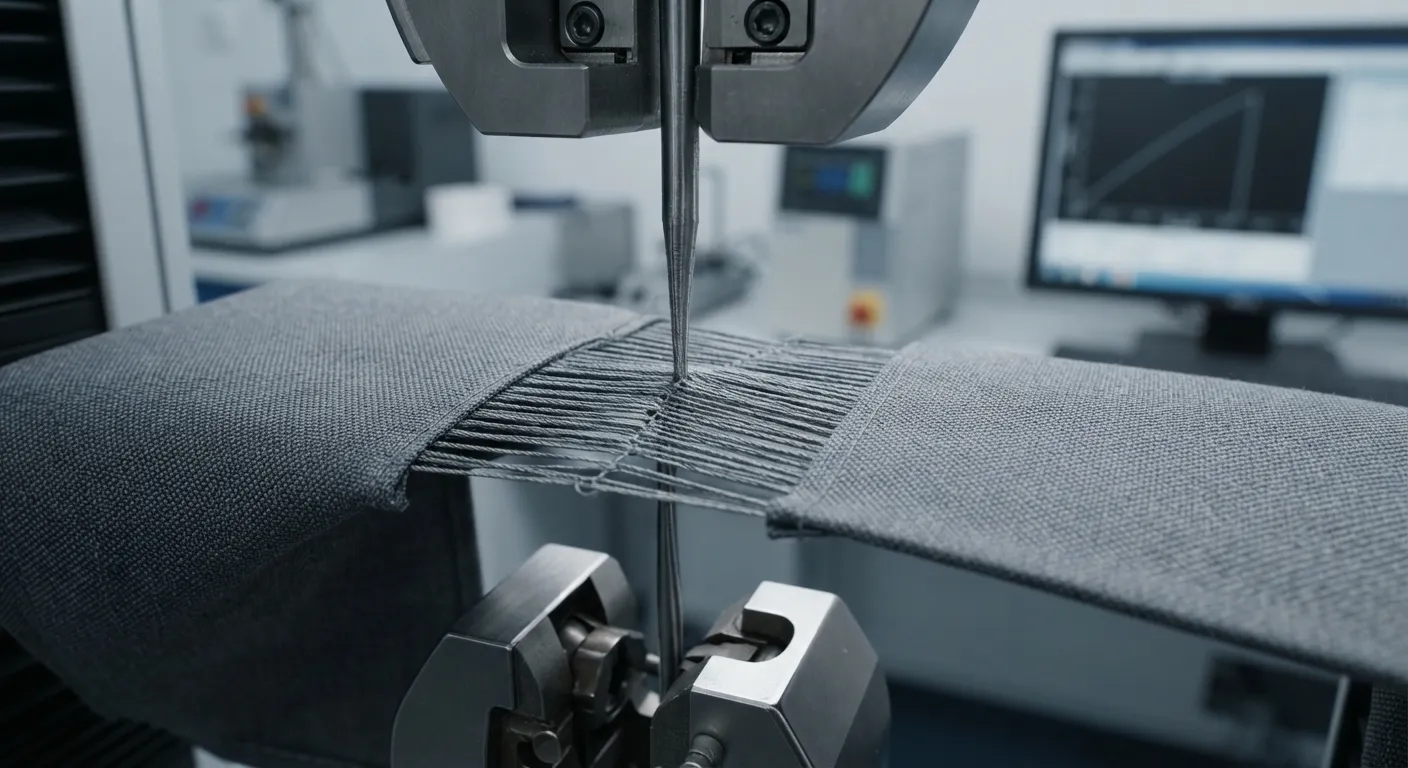
Oxford fabric test cards were pulled directly from the Shenzhen pilot floor rather than relying on supplier marketing decks. Denier serves merely as a starting clue, as yarn construction, weave density, backing, and seam design ultimately determine finished performance.
When 10 cm strips cut from production cards were pulled on the tensile rig, the data proved that a heavier face fabric offers little value if the stitch line slides apart.
I used 300D as the lightweight baseline.
| Sample ID | Finished GSM | Coating Class | Peak Load Before Seam Distortion | Peak Load Before Failure | Failure Mode | Pass/Fail (120 lbf) |
|---|---|---|---|---|---|---|
| LT-300-PU2 | 210 | PU 2-pass | 45 lbf | 90 lbf | Seam slippage at stitch line | Fail |
| LT-600-PU3 | 285 | PU 3-pass | 115 lbf | 190 lbf | Seam slippage at 115 lbf; panel tear at 190 lbf | Pass (borderline) |
| LT-1680-PVC2 | 620 | PVC 2-pass | 210 lbf | 340 lbf | Base fabric tear; seam stayed intact | Pass |
I read these numbers commercially. 300D fails in handle zones. A loaded 300D tote tears at the seam. 600D misses the full 120 lbf standard until we add seam tape or edge binding. 1680D holds so well that the fabric breaks before the stitch line.
That matters for backpack panels, luggage bottoms, and high-stress handle anchors. You can check ASTM D5034 Grab Test Standard.
Winner: 1680D for seam survival under high tension.
2. Abrasion Resistance, Panel Structure, and Real-World Feel
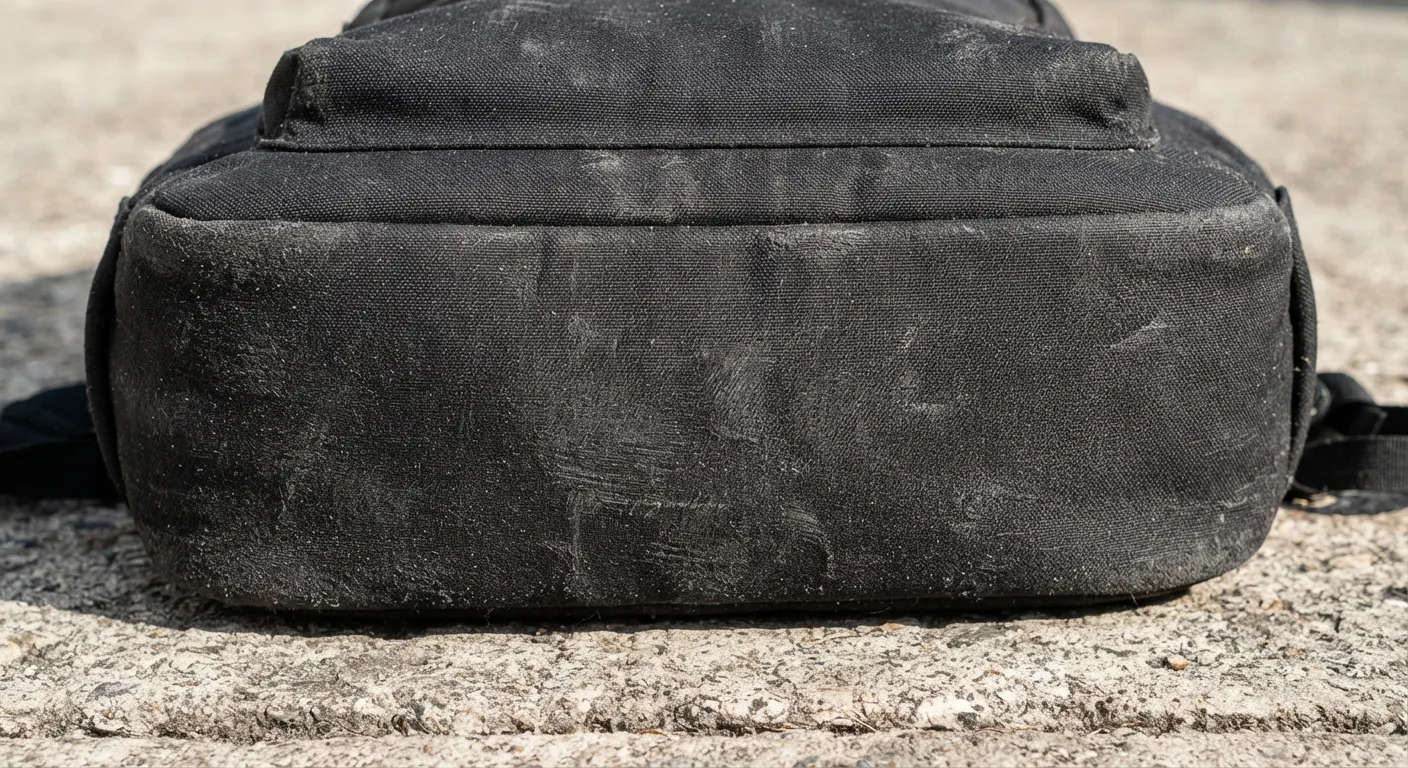
I handled all three Oxford fabrics in our sample room. 300D drapes like a light rain jacket and crinkles. 600D folds cleanly with more body. 1680D feels armored and holds panel shape.
Heavy PVC versions sound plasticky and resist corner scuffing.
Our Martindale numbers: 300D at 5,000–10,000 cycles, 600D at 15,000–25,000, and 1680D at 40,000–60,000. Wear concentrates at bottom corners, zipper garages, drag points, and trolley-sleeve edges. We rarely see mid-panel failure.
A full 1680D shell adds weight and stiffness, but only about 10 percent of a bag sees hard abrasion. Put 1680D on those zones. Keep 600D on the rest.
You can refer to ISO 12947-2 Martindale Abrasion Test Standard.
Winner: 1680D for structure and abrasion; 600D for balanced full-shell default.
3. Waterproofing, Coating Chemistry, and Delamination Risk
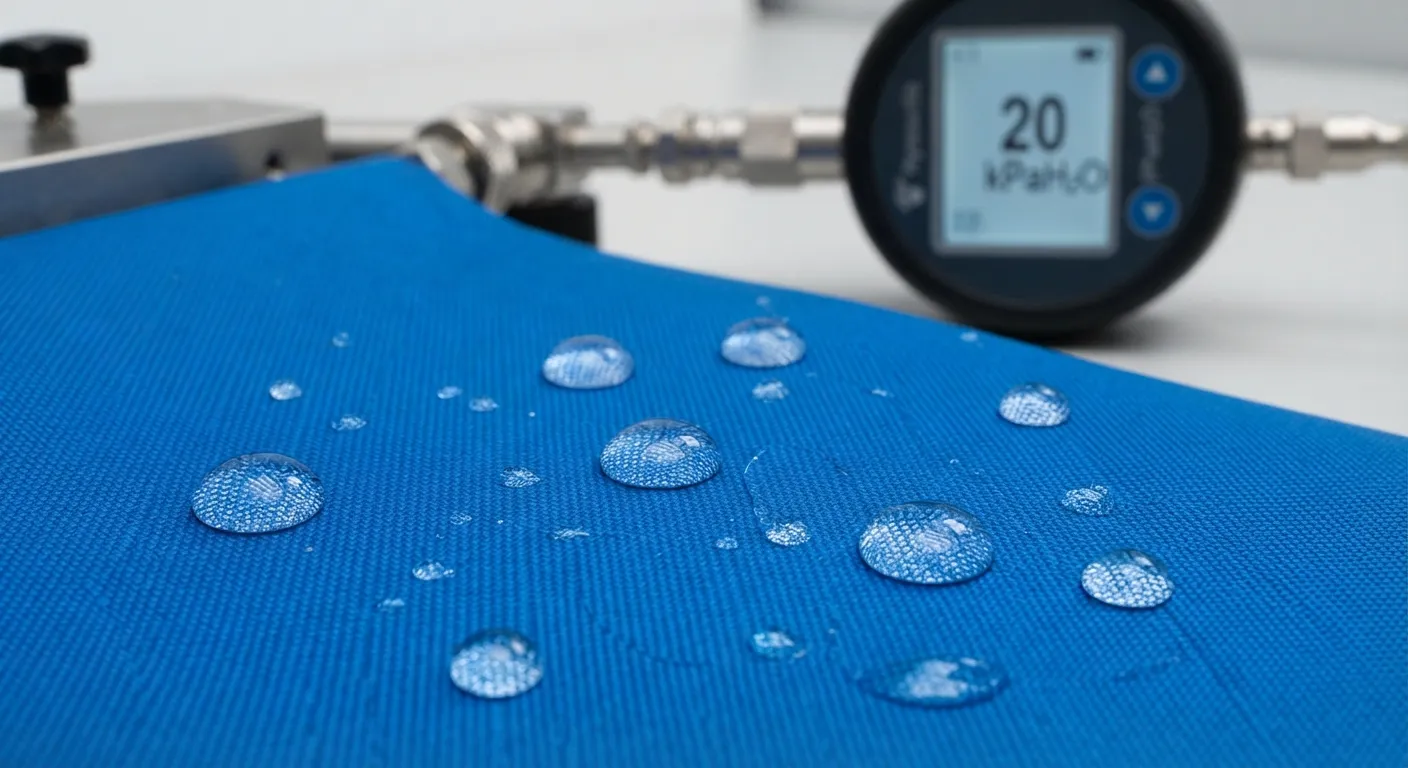
PU is standard and cheap. PVC is heavy, very water-resistant, but stiff. TPU/TPE stays flexible and bonds better to seam tape.
We measure hydrostatic head, not the word waterproof. Our internal AATCC 127 cards show 300D with light PU at 500–800 mm, 600D with 2-pass PU at 800–1,200 mm, and 1680D with heavy PVC at 1,000–1,800 mm.
Heavier denier does not automatically lift waterproof rating unless the coating system changes too.
An outdoor delamination failure occurred on a client order from Arc’teryx when their 600D PU 1-pass shell delaminated after eight weeks, allowing water to blister the backing. The resolution required a structural fix: increasing weave density and upgrading to a 0.20 mm 2-pass TPU coating.
Hydrostatic head jumped from 700 mm to 1,100 mm. Trade-off: 0.09 lb extra per bag and two extra coating days.
Cold-crack risk rises with rigid PVC. TPU stayed flexible at minus 10°C in our small freezer test.
For international orders, ask for REACH and Prop 65 documentation on plasticizers.
Winner: 600D TPU for wet outdoor shells; 1680D PVC for extreme containment.
4. Material Compatibility SOP for Industrial Sewing
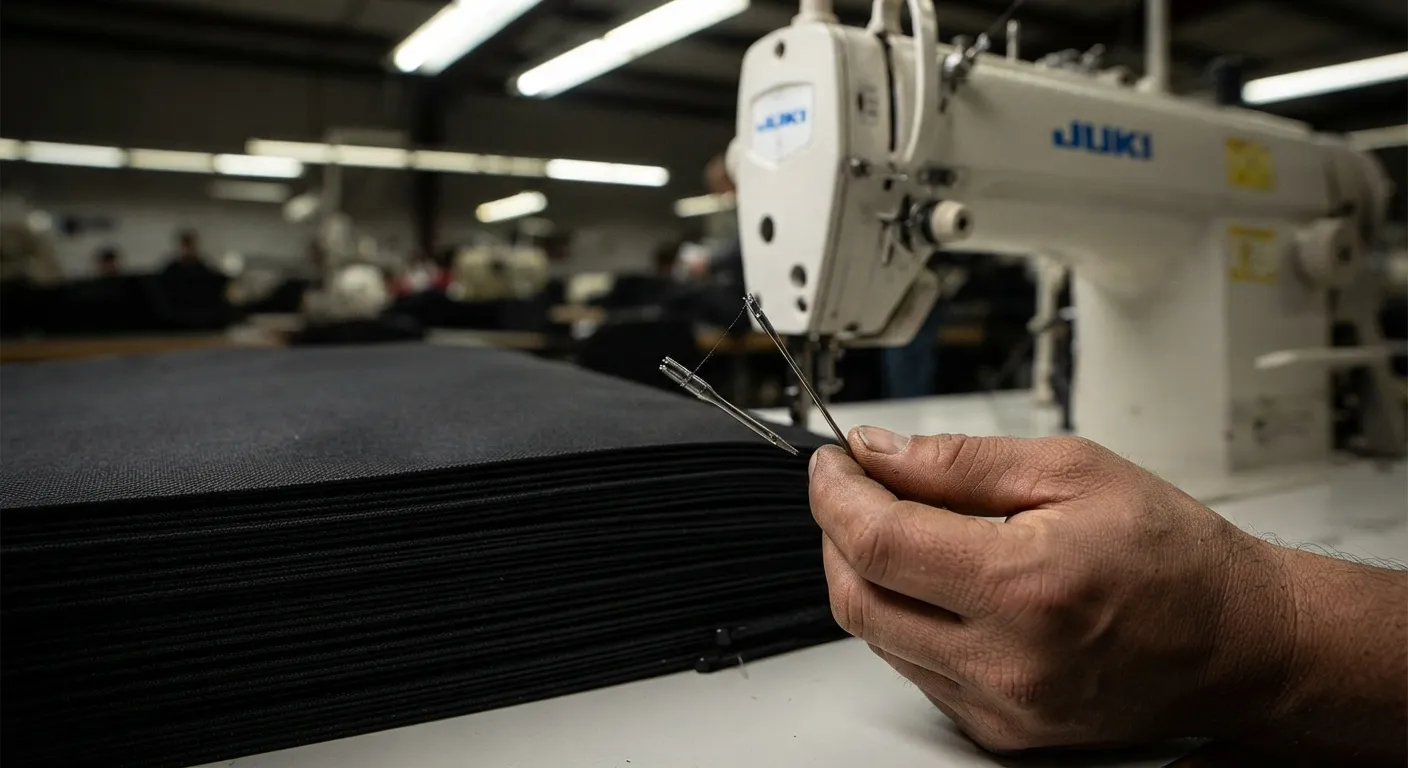
I asked Jamie Chan, Production Manager at OSAMIC BAGS, for the floor SOP. Her rules:
- Thread: T-70 bonded polyester for 300D and 600D. Switch to T-90 bonded polyester or bonded nylon for 1680D. We avoid cotton, which shrinks.
- Needles: DBx1 #16 for 300D, #18/#20 for 600D, #21/#22 for 1680D. Heavy 1680D also likes #23 on Juki LK-1900 bartacks and handle anchors.
- Stitch density: 3.5–4 stitches per cm for 600D. Drop to 3.0 for 1680D. More stitches mean more needle heat.
- Tension and speed: Sam Feng, Senior QA/QC Technical / Engineer resets upper thread tension to approved settings—lower for 600D, higher for 1680D—and sews double-layer and four-layer test strips before bulk cutting.
- Machine speed: Running speed on the Juki DDL-8700 drops from 2,500 rpm on 600D to 1,800 rpm on 1680D, while seams are re-engineered with offset edge binding or tape to prevent seam slippage.
- Seam tape: TPU tape bonds well to PU and TPU. PVC-coated 1680D often needs solvent primer; otherwise tape peels. For water-resistant outdoor programs, we test tape before fabric approval.
This SOP prevents skipped stitches, bird’s nesting, puckering, needle heat, and edge distortion. 1680D demands more skill. JUKI DDL-8700 Instruction Manual. See our bag quality standards for how we validate seam strength before bulk cutting.
Winner: 600D for production ease. 1680D requires slower, more controlled sewing.
5. Cost, Yield, and Landed-Weight Math
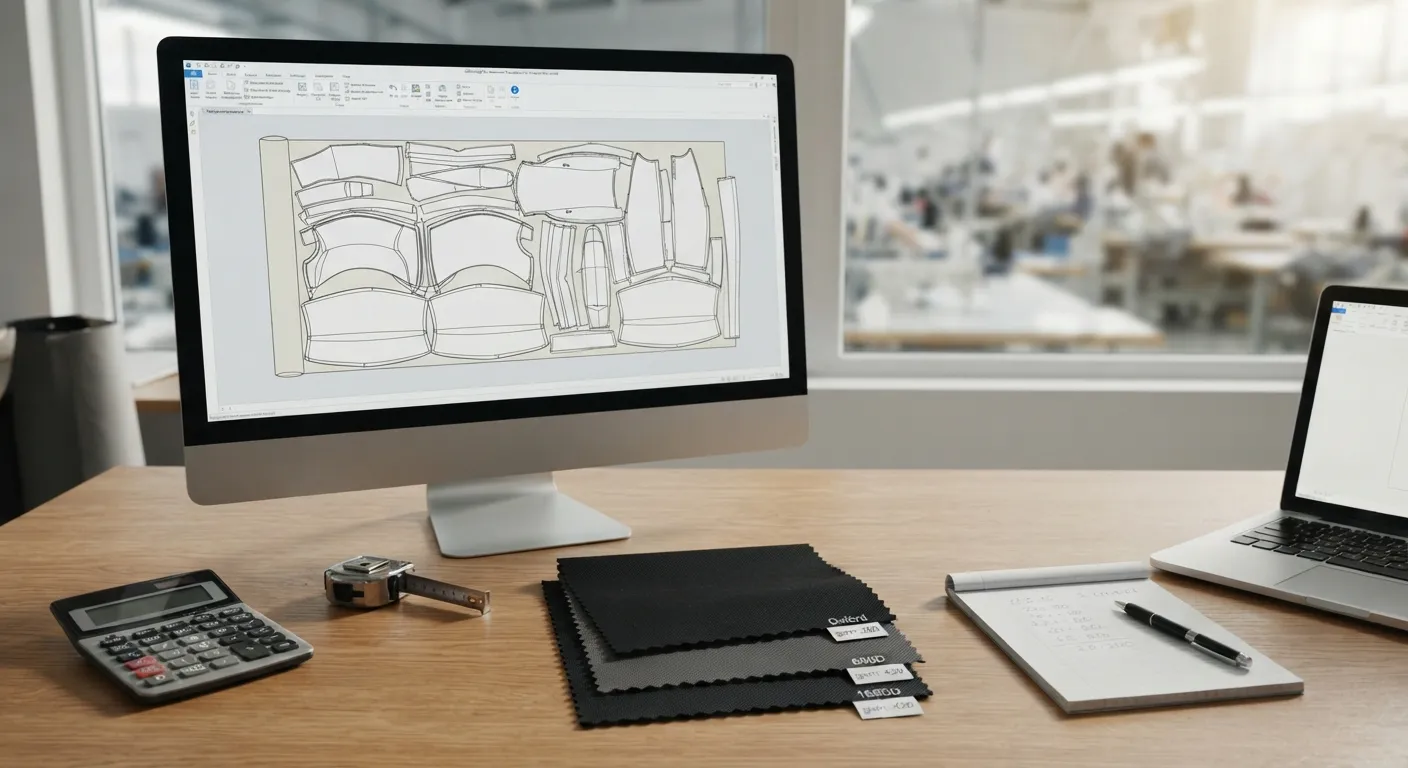
We costed all three on a standard 22 L backpack. 300D is cheapest, but we reject it for shells. 600D adds about 8–12 percent fabric cost over 300D. 1680D adds 18–25 percent.
Labor rises too. Tight weave and stiff coating increase cutting resistance. Needle wear and breakage go up.
Packed cartons get heavier: 1680D adds roughly 0.35–0.45 lb per bag, which pushes freight 6–9 percent.
1680D makes sense on luggage bottoms, golf bags, or tactical gear where the user sees high loads and dragging. It quietly destroys margin on a light urban commuter bag.
I have seen brands blanket-spec 1680D and end up with a stiff, heavy bag that costs more to ship but offers no real world advantage.
Our landed-cost logic — fabric class uplift × labor difficulty × carton weight effect = final landed impact — matters more than full-shell spec. Use 600D on the body. Add 1680D reinforcement only on bottom panels, corner guards, and handle anchors. See our bag sourcing and pricing guide for the full cost framework.
Winner: 600D body + targeted 1680D reinforcement for most volume programs.
Pros and Cons of Oxford Fabric: 300D vs 600D vs 1680D
Each denier rating of Oxford fabric balances strength, weight, and production cost differently to suit specific structural needs. Below is a breakdown of the key advantages and drawbacks for 300D, 600D, and 1680D to help you select the right material for your build.
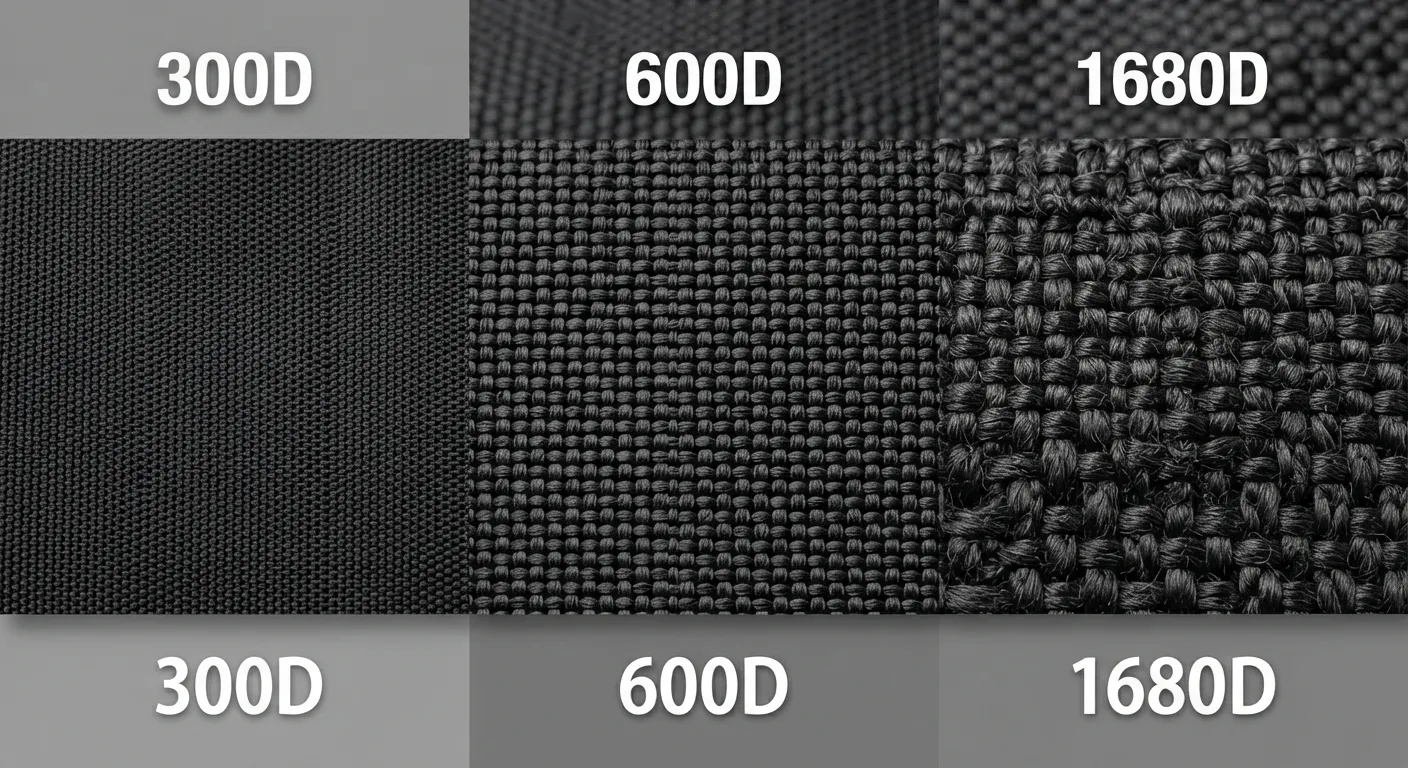
1. 300D
Pros:
- Lowest weight: 165 to 210 GSM. Disappears in packable gear.
- Best drape: Folds soft. No crinkle stiffness.
- Faster sewing: We ran 2,500 rpm with zero needle breaks.
Cons:
- Weak seams: Tensile seam slipped at 45 lbf, under half the 120 lbf target.
- Easily underbuilt: Needs bottom reinforcement or it tears under daily load.
Best fit: Packable day bags, shoe bags, linings, light duffels
🚀 Actionable Insight: Reinforce the bottom with a 1680D patch. It fixes weak seam risk without killing weight. — Wendy Chen, Sales Manager
2. 600D
Pros:
- Strong all-round value: 8 to 12 percent upcharge over 300D for double abrasion.
- Widely manufacturable: Every line sews at standard tension. No needle changes.
- Balanced feel: 230 to 310 GSM. Drapes clean, holds shape.
Cons:
- Not premium under hard use: We saw corner shine after Martindale abrasion. It underwhelms on premium structure, high-scuff bottoms, and extreme abuse versus 1680D.
- Fails extreme abuse alone: Still needs 1680D bottom panels for premium luggage shells.
Best fit: Backpacks, sport bags, laptop sleeves, general shells
⚡ Power Move: Spec 600D body plus 1680D corner guards and bottom panels. Per-bag cost penalty stayed near 6 percent.
3. 1680D
Pros:
- Best structure: Panel held rigid in hand. Feels armored.
- Strongest wear impression: Martindale hit 40,000 to 60,000 cycles before damage.
- Premium/tactical signal: Weight signals high-end before buyer touches zipper.
Cons:
- Heaviest: Adds 0.35 to 0.45 lb per bag; 6 to 9 percent DDP freight uplift.
- Hardest to sew: We dropped machines to 1,800 rpm and still saw skip risk at corner needles.
Best fit: Luggage shells, golf, tactical, medical, high-abuse bottoms
⚠️ Safety First: Do not overspec. It adds real weight and cost. Use it only for abuse points or premium shells.
The right winner changes by abuse profile, not marketing status.
Need a specific material recommendation? Contact us and we will review your tech pack against load, abuse, and compliance requirements.
Disclaimer: We receive no payments from fabric suppliers. This recommendation is based solely on manufacturing fit, test data, and use case.
People Also Ask About Oxford Fabric
1. Is 1680D Oxford better than 600D?
No. 1680D is stronger and more abrasion-resistant, but it adds real weight and production friction. In our pilot runs, 1680D added 0.35–0.45 lb per bag and slowed sewing line speed by roughly 20%. Use 1680D only on high-abuse zones. Keep 600D as the default shell.
2. What is 300D Oxford used for?
300D works only in packable gear, linings, shoe bags, and light duffels. Our tensile test showed seam slippage at 45 lbf—half the 120 lbf target. Do not use it for main load-bearing panels.
3. Which denier is best for backpacks?
Spec 600D for the main body. Add a 1680D bottom panel and corner guards. This hybrid build raised per-bag cost only 6% in our production test. For custom backpack programs, see our backpack manufacturing guide.
4. Is 600D Oxford waterproof?
With a 2-pass PU or TPU coating, 600D achieves 800–1,200 mm hydrostatic head under AATCC 127. That resists rain but not full submersion.
For wet outdoor shells, we switched to 2-pass TPU and seam tape. Hydrostatic head jumped from 700 mm to 1,100 mm. Heavier PVC on 1680D reaches 1,000–1,800 mm.
⚡ Power Move: For wet outdoor shells, spec 600D TPU 2-pass plus seam tape. Our test showed the upgrade added 0.09 lb but doubled waterproof pressure resistance.
5. What denier should I use for a golf bag?
1680D for the shell or at least the bottom and dividers. Golf bags drag across concrete and carry heavy clubs. Our Martindale test shows 1680D endures 40,000–60,000 cycles vs 15,000–25,000 for 600D. See our custom golf bag manufacturers for structural options.