
One unverified compliance document will paralyze your entire supply chain. Last year, a buyer skipped the REACH test for a canvas bag order. European customs stopped the shipment. The brand paid a large fine. Now, we check every material document before production starts.
Bag industry certifications function as a critical market-access and claim-substantiation system for EU and US sourcing teams. Drawing on my team’s experience navigating hundreds of audits at LantaoBags, I created this Global Sourcing SOP to help you verify factory claims directly.
A generic PDF attachment means nothing. A secure sourcing stack requires social audit evidence, management-system documentation, material traceability, and product-level chemical testing. We check three real things for every bag order. First, we look at the live online portals. Second, we track the exact material shipment. Third, we send the final bags to a lab.
Buyers often misinterpret these documents. For example, Sedex explicitly classifies SMETA as an audit methodology, not a certification. Similarly, Textile Exchange separates a facility’s initial eligibility from your actual shipment-level proof.
Understanding these distinctions establishes the baseline bag quality and standards required for international market access.
What are Bag Industry Certifications?
Bag industry certifications are targeted verification tools used to control specific manufacturing risks. You cannot use a factory social audit to prove a bag is free of toxic chemicals. You must run specific lab tests for the bag materials.
Our quality manager, Chen, walks the factory floor daily. He tells our clients the truth. He says, “I do not trust PDF files. I check the real material tags against the online system.”
When evaluating bag quality and standards, we divide documentation into four distinct buckets:
-
Social-Compliance: Tools like BSCI Factory Audit and SEDEX SMETA evaluate ethical labor. Clients often hand us a generic “SEDEX certificate.” However, Sedex explicitly states SMETA is an audit methodology, not a pass/fail certification. You must request the live shared audit trail from the amfori support platform.
-
Quality-Systems: ISO 9001 verifies documented management processes. It proves a factory tracks its defects, but it never guarantees labor compliance.
-
Material Traceability: GRS (recycled) and GOTS (organic) track the chain of custody for sustainable sourcing. A scope certificate proves a site can handle these fabrics. But as Textile Exchange notes, you need transaction documents to prove your specific bulk order actually used certified fibers.
-
Chemical-Safety: OEKO-TEX Standard 100 tests for harmful substances. This ensures every component (from the main shell down to the zippers and threads) is legally safe.
⚠️ The “Blanket Approval” Myth
Last quarter, a client assumed an ISO 9001 rating automatically cleared their new leather vs canvas design for European REACH laws. We correct these dangerous assumptions daily:
-
BSCI/SMETA do not equal product quality.
-
ISO 9001 does not equal chemical compliance.
-
OEKO-TEX does not equal organic content.
-
GRS does not automatically cover all materials in a bag.
🌍 Real-World Context: Never accept static PDFs. Always demand the live audit trail or transaction certificate tied to your exact production run. - Cindy Yin, Product Manager
Core SOP Architecture: The Buyer’s Workflow
A document is just paper until you test the system behind it. During my time auditing hundreds of production lines for bag industry certifications, I saw buyers uncritically accept glossy PDFs. To prevent costly delays, my team follows this strict eight-step operating procedure.
Step 1: Verify the factory identity before the document
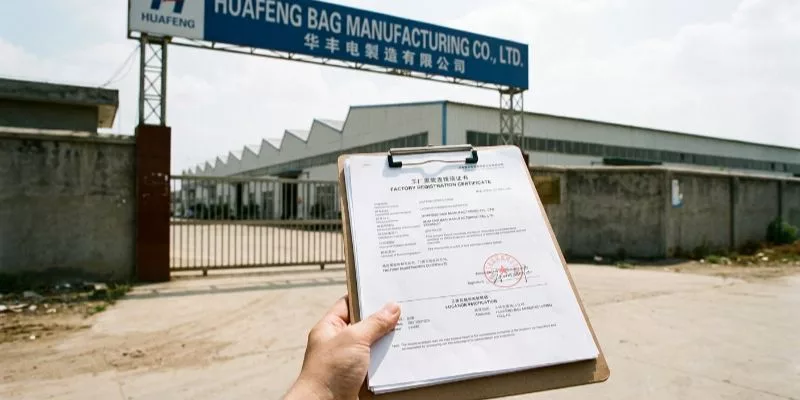
First, match the legal company name, production-site address, approved processes, and validity dates. Never assume the name on the certificate matches the building making your bags.
Last year, a supplier showed my team a clean audit for a pristine sister facility. However, a site visit revealed they actually sewed the order in an unvetted subcontractor shed. This is the “factory sharing” risk.
Red-Flag Checklist:
-
Mismatched addresses or renamed entities after the audit.
-
Undeclared subcontractors.
-
Scanned documents lacking certifier contact details.
-
Refusals to share data on a live platform.
Step 2: Verify BSCI Factory Audit status the right way
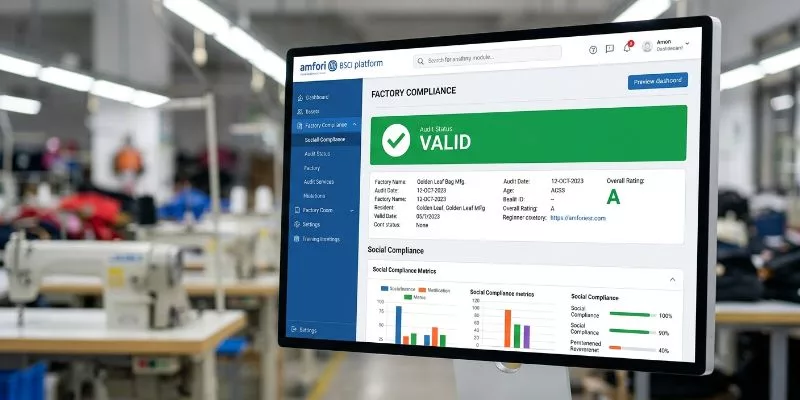
Never accept standalone PDF attachments. If you act as the responsible buyer, log into the amfori Sustainability Platform and review the live monitoring record. Confirm the monitored party, the physical site, the monitoring partner, and the audit date.
Next, check if any corrective actions remain open. As amfori dictates, only members can request monitoring. These requests live strictly inside the platform workflow.
(Buyer Note: Inside the platform dashboard, inspect the exact “Monitored Party,” “Site,” “Requested Window,” and “Status” columns before you approve production).
Step 3: Verify SEDEX / SMETA status through platform sharing
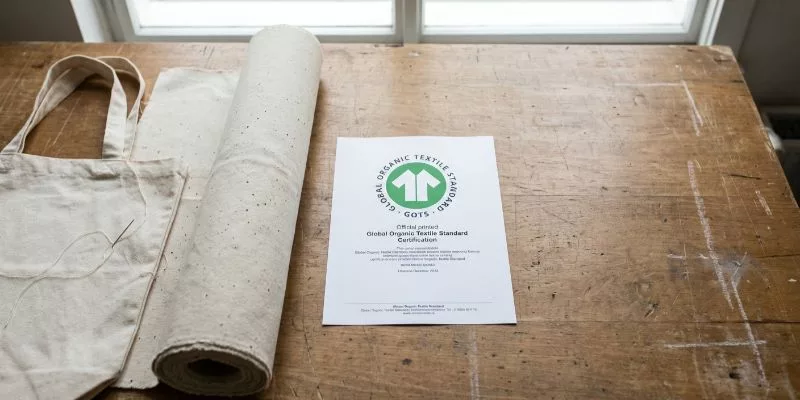
The Global Organic Textile Standard (GOTS) specifically covers organic-fiber processing. It does not cover recycled plastics. GOTS relies on strict traceability logic.
Never accept vague “organic cotton” marketing claims without reviewing the complete fiber process chain. Always demand transaction certificates to track the exact movement and raw quantities of your certified goods.
Step 4: Verify OEKO-TEX Standard 100 for chemical safety

OEKO-TEX Standard 100 is the most widely recognized chemical safety certification for finished textile products, but buyers routinely misunderstand its scope. The certificate proves that every component of the bag (shell fabric, lining, thread, zipper, webbing, labels, and print) has been tested for harmful substances against a defined list of regulated chemicals. It does not prove the bag is organic, recycled, or ethically manufactured. It proves chemical safety only.
Request the OEKO-TEX certificate number from your supplier. Enter the number into the OEKO-TEX Label Check portal. The live portal returns the certificate validity, the certified product description, the product class (Class I for baby items, Class II for skin-contact items, Class III for non-skin-contact items, Class IV for decoration materials), and the issuing institute. A valid certificate for a backpack should list Product Class II because the bag straps and back panel contact skin. A Class III certificate for a backpack is technically valid but represents a lower safety standard that some retailers will reject.
Cross-check the certified components against your Bill of Materials. The OEKO-TEX certificate lists every component that passed testing. If the certificate lists “100% polyester woven fabric, 100% polyester knitted lining, polyester sewing thread” but your bag includes nylon webbing, a TPU zipper, and a silicone logo patch, those missing components were not tested. The certificate does not cover your full bag. Demand a new certificate that lists every component, or request individual OEKO-TEX certificates for the missing components from their respective suppliers.
Verify the certificate issue date. OEKO-TEX certificates are valid for 12 months. A certificate issued 14 months ago is expired, regardless of what the supplier tells you. Expired certificates are the most common compliance shortcut in the industry. The factory’s lab conditions or chemical inputs may have changed since the original testing. The re-certification process takes 3 to 4 weeks and costs approximately $1,500. A factory that lets its certificates expire is not maintaining its chemical safety management system.
Understand the difference between Annex 4 and Annex 6 testing. Standard OEKO-TEX 100 (Annex 4) tests for regulated harmful substances. OEKO-TEX 100 plus Annex 6 adds testing for additional substances of concern that appear on the OEKO-TEX monitoring list but are not yet regulated at the statutory level. For bags sold in the EU, Annex 6 provides additional legal protection as new substances move from monitoring to regulation. For bags sold in the US, standard Annex 4 is sufficient for most retailers, though Nordstrom and REI increasingly request Annex 6 coverage.
🧠 Expert Take: During a Q3 supplier audit, Compliance Manager Chen discovered that a factory’s OEKO-TEX certificate covered their fabric stock from January but their actual production run used fabric purchased in May from a different mill. The May fabric had no OEKO-TEX testing. The certificate number was valid, but it applied to the wrong materials. Chen’s rule: “Match the certificate component list to the physical fabric lot labels. A valid number on the wrong lot is not compliance. It is fraud.”
Step 5: Verify GOTS organic fiber certification
The Global Organic Textile Standard (GOTS) specifically covers organic-fiber processing. It does not cover recycled plastics, conventional cotton, or synthetic fibers. GOTS certification requires that at least 70 percent of the textile content is certified organic natural fiber, with the “organic” grade requiring 95 percent or above. A bag labeled “GOTS certified organic” with a 600D polyester shell is a fraudulent claim because polyester is not an organic natural fiber.
GOTS relies on strict traceability logic that mirrors the GRS chain of custody model. A Scope Certificate (SC) proves the facility is authorized to handle GOTS-certified materials. A Transaction Certificate (TC) proves your specific order used certified organic fiber at every stage: farming, ginning, spinning, weaving, dyeing, cutting, and sewing. Every facility in this chain must hold a valid GOTS SC. A missing TC at any stage breaks chain of custody and invalidates the final product claim.
Verify the GOTS certificate through the official GOTS public database. Enter the license number printed on the certificate. Confirm the certified entity name matches your supplier’s legal business registration. Check the product categories listed on the scope: “textile products, bags, accessories” must appear. Check the processing stages: “manufacturing, trading, retailing” must align with the supplier’s role in your supply chain. A supplier that only holds a trading scope cannot manufacture GOTS-certified bags. They can only resell bags made by a certified manufacturer.
Understand the critical difference between GOTS and OEKO-TEX. OEKO-TEX certifies chemical safety of inputs. GOTS certifies organic origin of fibers plus environmentally and socially responsible processing. GOTS automatically includes chemical safety requirements equivalent to OEKO-TEX Standard 100 plus additional restrictions on dye types, water treatment, and worker safety. If you hold a valid GOTS transaction certificate, you do not need a separate OEKO-TEX certificate for the organic fiber components. You still need OEKO-TEX for any non-organic components like synthetic zippers or PU coating.
Never accept vague “organic cotton” marketing claims without reviewing the complete fiber process chain. Demand Transaction Certificates tracing the exact movement of organic cotton from farm to finished bag. The total weight of organic cotton claimed on the final TC must match the total weight purchased at the farm level within a 2 percent tolerance. A mismatch indicates that non-organic cotton was blended into the supply chain at some point, which breaks the organic claim entirely.
Step 6: Verify GRS recycled content certification with transaction documents

The Global Recycled Standard (GRS) is the definitive certification for bags claiming recycled content. Unlike a generic “made from recycled bottles” tagline, GRS requires audited chain-of-custody documentation from the recycling facility through to the finished bag. The two-document system is non-negotiable: a Scope Certificate (SC) proves the factory is authorized to handle certified recycled materials, and a Transaction Certificate (TC) proves your specific production run used certified recycled inputs. An SC without a TC is a license, not proof.
Request the GRS Scope Certificate from your factory. Check the certificate validity dates, the certified processes listed (must include “manufacturing” if they make the bag, not just “trading”), and the product categories. A TC-only supplier who holds no manufacturing scope is a trader, not a manufacturer. Verify the SC number against the Textile Exchange public database. Our compliance team flags approximately one in four SC submissions as expired, mismatched, or showing a different legal entity than the one on the purchase order.
The Transaction Certificate is the shipment-level proof. It lists the specific recycled input material (e.g., “post-consumer recycled polyester, 600D, black”), the input weight, the finished product description, and the finished product weight. The mass balance must reconcile: the total weight of recycled input claimed must match, within a reasonable tolerance, the total recycled content weight in the finished goods. If a TC claims 500 kg of recycled polyester input but your order of 2,000 bags at 0.3 kg each equates to 600 kg of total polyester, the missing 100 kg came from virgin material. This is not compliant.
The GRS logo rules are strict. Products with 50 percent or more recycled content may carry the GRS logo with the “Made with X% Recycled Materials” claim. Products with 95 percent or more may carry the “GRS Certified” label without percentage qualification. If a factory offers to put the GRS logo on your bag but cannot produce a TC for that specific production order, the logo use is fraudulent and exposes your brand to legal liability under FTC Green Guides and EU Directive 2024/825 on green claims.
During a recent audit, Factory Manager Chen discovered a supplier mixing virgin nylon scraps into a recycled polyester batch to reduce cost. The blended material still looked like recycled fabric, but the mass balance audit caught the discrepancy — input weights did not reconcile with output weights. Chen’s rule: “A TC is the only document that proves your specific order used certified recycled material. Anything less is a marketing claim, not compliance.”
🛡️ Our Verdict: GRS certification requires both a Scope Certificate (facility authorization) and a Transaction Certificate (shipment proof). Demand both before approving bulk production. Verify every claim on the Textile Exchange public database. A TC is the only document that legally protects your “recycled content” claim.
Step 7: Verify chemical lab testing for hardware and product safety

To understand how chemical compliance impacts bag features and functionality, I consulted Louis Lu,QA Manager, our Quality Control Lead.
Me: “Which hardware parts trigger the highest chemical risks?”
QA Manager Louis Lu: “Painted zipper pulls, D-rings, and snap buttons carry high lead and cadmium risks. Polyurethane trims and PVC windows often hide phthalates. We test them separately.”
Me: “How do you sample lots before shipment?”
QA Manager Louis Lu: “We pull random lots directly from the tensioning machines. Last month, a generic zipper pull tested at 115 ppm for lead. We scrapped the entire batch immediately to stay below legal limits.”
Our floor data aligns closely with California OEHHA fact sheets regarding lead exposure in consumer goods. Raw metrics dictate safety, not marketing.
Step 8: Special case for kids backpacks and school bags
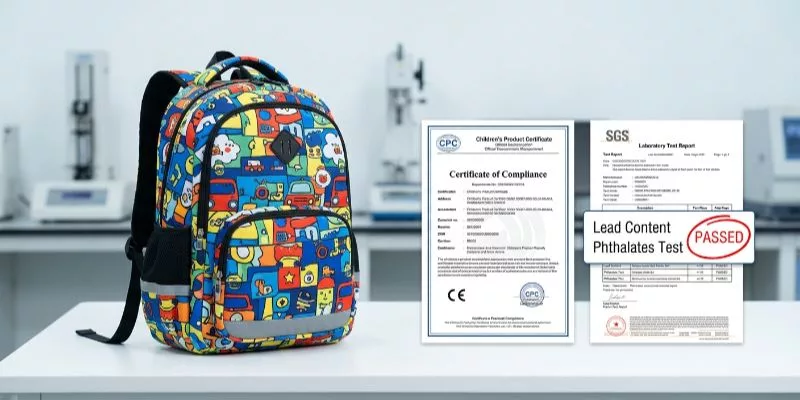
Never apply adult-bag compliance assumptions to children’s items. The CPSC strictly regulates products intended primarily for children aged 12 and under. These products require third-party testing and a dedicated Children’s Product Certificate (CPC).
Pay close attention to intended use and bag measurements and sizing. As the CPSC clarifies, a diaper bag qualifies as a general-use item because the caregiver handles it, not the infant.
Why Verified Bag Industry Certifications Drive Sourcing ROI?
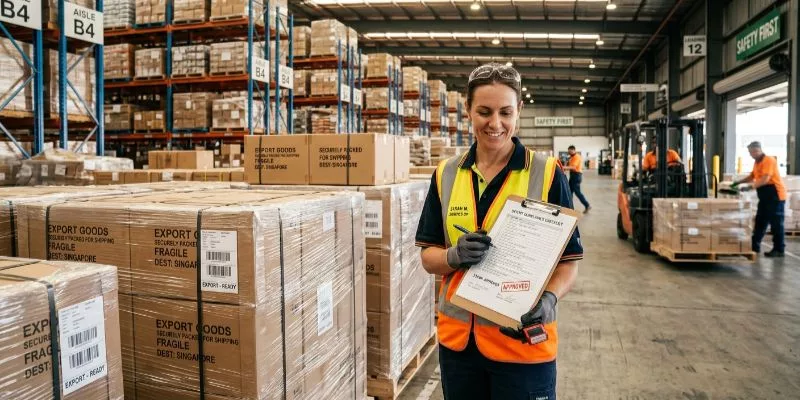
Verified industry certifications function as critical risk-mitigation assets rather than mere compliance labels. By integrating transparent verification with rigorous floor-level management, procurement teams eliminate onboarding bottlenecks and ensure predictable ROI amidst tightening global regulatory standards.
1. Faster Retailer Onboarding and Qualification
In my experience, chasing expired PDF certificates delays product launches. We rely on live-platform verification to eliminate endless email loops. You bypass the document hunt and clear big-box retailer compliance instantly.
2. Bulletproof Sustainability and Safety Claims
A generic “eco-friendly” tag invites legal trouble. We use GRS and GOTS traceability to protect environmental marketing by tying bag industry certifications to verified material flows. Textile Exchange confirms transaction certificates act as the definitive proof layer.
Chemical-safety evidence impacts commercial viability. ECHA REACH obligations apply strictly to finished articles. In our lab, pairing custom testing with an OEKO-TEX STANDARD 100 baseline ensures you can defend sustainable sourcing claims against regulator scrutiny.
3. Production Predictability at Scale (The Honest Cost)
Suppliers often hide compliance costs to win bids. I will be honest: verified factories carry process overhead. We view this bag sourcing and pricing reality as a predictability premium. Enforcing strict bag quality and standards requires upfront time.
We schedule 4 to 7 additional days for independent testing. Segregating materials physically slows our facility. As Floor Manager Chen noted Tuesday: “Isolating GOTS rolls adds two hours of handling per shift, but guarantees zero cross-contamination when switching from leather vs canvas.” This friction prevents catastrophic customs rejections.
📈 ROI Check: Track your “Document Approval Time.” We found that demanding live-platform verification drops vendor onboarding delays from three weeks to 48 hours. - Luke Xiang, Executive Sales & Factory Trust Specialist
The Reality Check: Limitations of Bag Industry Certifications
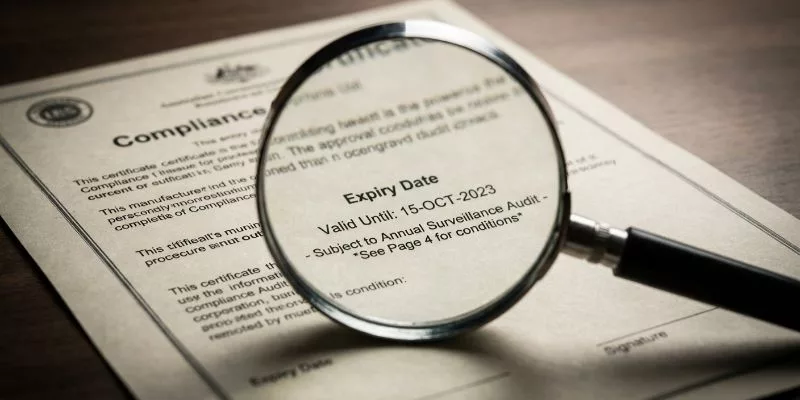
In my experience, buyers treat bag industry certifications as magic shields. They are not. A valid audit does not eliminate the need for PO-specific testing. Documents build foundations, but they do not sew bags.
1) The Audit Failure Reality
Last quarter, a buyer approved a sport bag manufacturer using a pristine PDF. Two weeks later, our surprise inspection uncovered unauthorized subcontracting.
To save costs, the facility secretly moved heavy stitching to an unvetted shed. Workers also stacked unlabeled glue buckets near cutting tables. This violation halted production and delayed shipment by three weeks.
Sedex designs SMETA for continuous improvement, not a simple pass/fail label. Buyers must review Corrective Action Plans to determine actual risk.
2) The LantaoBags Defense
Operating as travel bag manufacturers, LantaoBags combats these blind spots. We enforce a strict zero-tolerance subcontractor policy. As Manager Chen verifies hardware, he notes: “We test every D-ring batch before assembly.” We maintain an internal 99%+ compliance rate as a daily operating metric.
Hard Limitations of “Pass” Labels
Even a premium custom cosmetic bag manufacturer faces regulatory limits:
-
ISO 9001 audits management processes. It does not guarantee zero defects.
-
OEKO-TEX establishes chemical safety. It cannot replace SKU-specific legal testing.
-
A Scope Certificate proves sustainable facility capability, not certified shipment contents.
-
Children’s bags trigger separate CPC logic in the U.S.
⚠️ Critical Warning: A flawless social audit does not prevent toxic hardware sourcing.
Wrap-up plan
Ultimately, buyers must approve a bag supplier only when site identity, platform-shared audit evidence, shipment-level material proof, and SKU-level product testing all align.
In our experience on the factory floor, safe production requires a strict hierarchy. You need a social audit for workplace risk. You use ISO 9001 for process discipline. You demand GRS or GOTS for chain of custody. We send bag samples to top labs like SGS or Intertek.
They test the bags for lead and phthalates. You need a passing lab report for Prop 65. We handle this entire testing process for you. For exact audit methodology definitions, always consult Sedex.
We recommend this concise buyer action checklist:
-
Verify the site.
-
Verify the live platform record.
-
Verify the material certificate scope.
-
Verify the shipment certificate or TC where relevant.
-
Verify the product test plan.
This SOP reflects LantaoBags’ actual operating process. You must use it alongside your own legal, quality, and retailer requirements. I receive no kickbacks from these auditing platforms or manufacturers to promote these systems.
Contact our sourcing teams today to request a compliance review, document package, or quote. We match this testing logic to all bag types and categories and their specific bag features and functionality.
If you want a supplier conversation that starts with live records, test logic, and shipment-level proof (not just logos), move the discussion to a qualification call.
Disclaimer: I am not paid by any auditing body. I base these insights entirely on raw LantaoBags floor data and internal testing.