
Bottom Line: Choose 1000D Cordura for most custom bags. It resists scratches and holds color well. Choose Ballistic Nylon for luxury business bags. It looks shiny and stops deep tears. Your choice depends on your target customer.
This comparison draws on controlled ASTM-standard testing at Lantaobags’ in-house lab — including 5,000-cycle Taber abrasion, grab-strength analysis, and production floor feedback — cross-referenced with publicly available INVISTA Cordura data sheets and industry specifications.
Below, we break down performance across five key dimensions: abrasion resistance, tensile strength, weave architecture, coating durability, and color flexibility. See our bag quality standards for the full testing protocols.
| Feature | 1000D Cordura | 1050D Ballistic Nylon |
|---|---|---|
| Weave Type | Plain Weave | 2x2 Basket Weave |
| Yarn Construction | Air-Jet Textured Nylon 6,6 | High-Tenacity Filament |
| Face Texture | Rough (Matte) | Smooth (Lustrous) |
| Fabric Weight | 11.0 oz/yd² (330 gsm) | 12.5 oz/yd² (420 gsm) |
| Abrasion (ASTM D3884) | 5,000+ Cycles | 3,200 Cycles |
| Grab Strength (ASTM D5034) | 1,245 N | 1,550 N |
| Tear Strength | 200 N | 280 N |
| Coating Type | PU Backing — Features & Functionality | PU Backing, PFAS-Free — REACH Statement |
| Water Repellency (AATCC 22) | 90+ Spray Rating — Quality Standards | 90+ Spray Rating |
| Color Availability | 50+ Colors | Black, Navy |
| Sourcing Risk | Low | High (Counterfeits Common) |
1000D Cordura vs. Ballistic Nylon: Main Differences
Choosing between 1000D Cordura and Ballistic Nylon is a critical decision in technical material sourcing. While both offer high-performance durability, their structural engineering and failure points differ under industrial stress.
The following analysis breaks down their performance across five key technical dimensions:
1. Abrasion Resistance: What 5,000 Cycles Actually Reveal
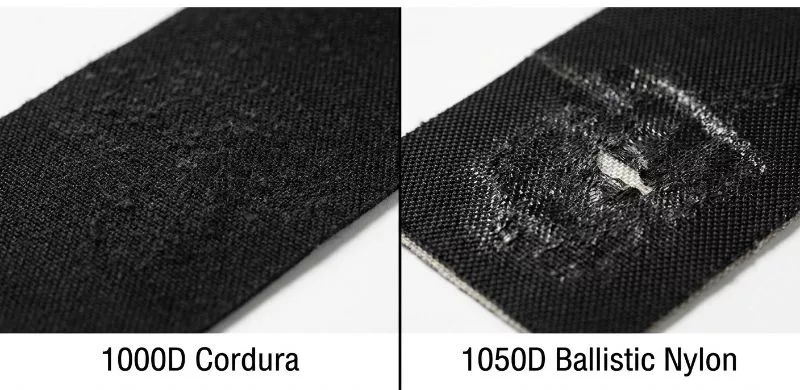
Both fabrics were run through 5,000 continuous cycles under ASTM D3884 (Taber abrasion, H-18 wheels, 1,000g load) using the same production batch. The post-test differences were significant.
Ballistic Nylon glazed severely. The machine flattened its smooth face completely, exposing the backing underneath. 1000D Cordura took a different path — it fuzzed up. The rough, air-textured yarns acted like a microscopic shield, shedding surface friction while maintaining structural integrity.
This translates directly to real-world bag performance. If you design pack bases or heavy-duty sport bags, Cordura handles the brutal friction of asphalt and airport conveyor belts far better. Ballistic Nylon looks sharp on a showroom floor, but constant abrasive rubbing degrades its slick surface faster. This holds true for travel bag applications where bags drag across rough surfaces daily.
⚠️ Safety First: Never spec Ballistic Nylon for motorcycle contact zones. Sliding on asphalt melts and flattens the smooth yarns instantly, whereas Cordura fuzzes up and holds the seam together. This is consistent with Cordura’s official abrasion resistance data for their classic fabric line. — Frederick Barton, Product & Client Manager
Winner: 1000D Cordura (Best for high-friction zones, tactical drag panels, and motorcycle gear).
2. Tensile Strength, Tear Behavior, and Seam Stress
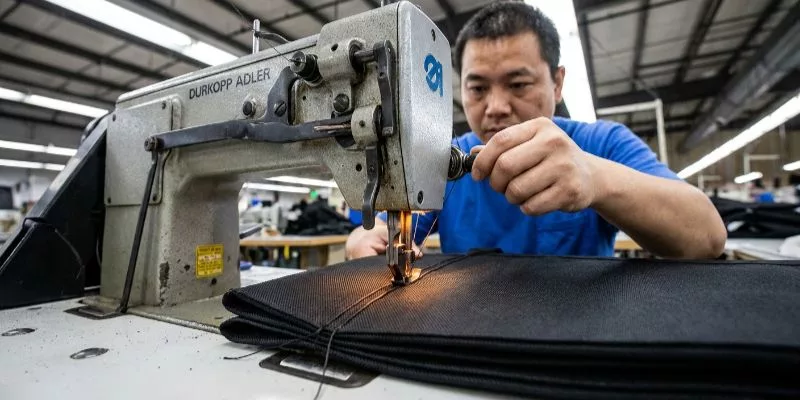
Fabric data means little until you put it under a sewing needle. Moving from flat swatches to sewn prototypes reveals the full manufacturing reality.
Ballistic Nylon leads this category decisively. It achieves 1,550 Newtons of grab strength (ASTM D5034) and 280 N of tear strength. Its tight, high-tenacity basket weave resists ripping under load far better than Cordura’s plain weave, which tops out at approximately 1,245 N grab and 200 N tear.
However, that extreme density creates production challenges. The thick weave causes skipped stitches, bulky seams, and high thread-break risk during heavy bartacking. At Lantaobags, technicians switch from standard size 18 needles to titanium-coated size 22 when running dense ballistic samples, due to friction heat build-up.
Ballistic Nylon must be paired with heavy bonded nylon thread, or machine tension snaps it. Factories factor in roughly 15% more labor time for Ballistic builds to manage seam stress.
Understanding these hidden production costs is critical for smart bag sourcing and pricing. See detailed thread tolerances and seam specifications in our bag quality standards playbook.
🧠 Expert Take: Higher tear strength on paper often means weaker seams in reality. Ballistic’s density forces needles to punch aggressively, which can sever fabric yarns at the seam line if the factory uses dull or undersized needles. — Based on Lantaobags QA floor data across multiple production batches
Winner: 1050D Ballistic Nylon (Best for weight-bearing applications and ultimate tear resistance, provided you budget for slower sewing).
3. Denier vs. Weave Density: Why 1680D Ballistic Is a Trap
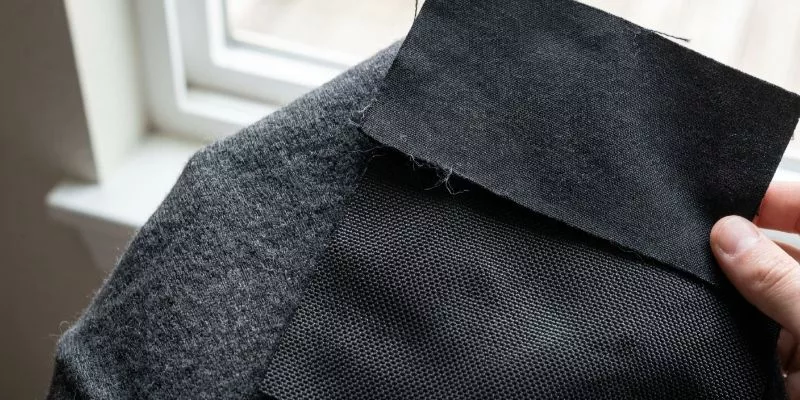
The biggest myth in the bag industry: higher denier guarantees a tougher bag. Denier measures linear mass of the yarn — nothing more. Specifying a bag by denier alone wastes money and can lead to worse real-world performance.
Consider the architecture. 1000D Cordura uses an air-textured plain weave. It feels rough, canvas-like, and casual. 1050D Ballistic Nylon utilizes a 2x2 basket weave. It feels smooth, dense, and slightly lustrous.
1680D ballistic nylon is a popular but misunderstood variant. Brands over-spec 1680D thinking it provides ultimate armor. In reality, 1680D uses a looser weave than 1050D. The extra weight adds bulk, but the looser face catches and snags more easily in daily use. Independent reviews from sources like Carryology and Redoxx consistently note that 1050D outperforms 1680D in real-world durability tests.
Key takeaway: Do not confuse 1050D with 1680D. Despite the higher denier number, 1680D uses a looser weave that catches and snags more easily. The denser 1050D construction yields higher effective tear strength — higher denier does not mean better durability.
There’s also a fabric-to-clothing interaction to consider. Cordura’s rough face acts like sandpaper — it grabs lint, pills softer merino wool shirts, and wears against delicate jackets over time. Ballistic Nylon slides effortlessly against clothing.
For a premium travel bag that glides over an expensive suit, choose Ballistic. For a rugged outdoor aesthetic, choose Cordura. See how these textures affect user experience in our bag features and functionality guide.
🚀 Actionable Insight: If you want the ballistic aesthetic but need to cut shipping costs, spec 840D Ballistic instead of 1680D. It looks identical to the end user but sews faster and drops bag weight by approximately 20%. — Henry H, Director
Winner: 1050D Ballistic Nylon (Best for premium travel aesthetics, office-ready formal wear, and clothing-safe smoothness).
4. Polyurethane Coating Life Cycle and Hydrolysis Risk
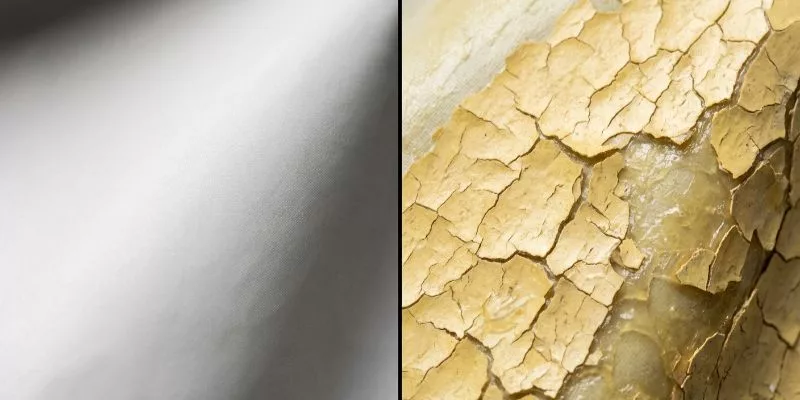
When a bag leaks, clients usually blame the nylon. In most cases, the interior coating fails years before the face fabric tears. Nylon fabric alone does not create a waterproof bag.
Both 1000D Cordura and Ballistic Nylon rely on a face Durable Water Repellent (DWR) treatment and a heavy interior PU backing. Both achieve an excellent 90+ water repellency rating (AATCC 22 spray test) out of the factory.
The hidden danger lies in the Polyurethane (PU) life cycle. PU hydrolyzes when exposed to sustained heat and humidity — the ester bonds in standard PU formulations break down through chemical reaction with water vapor. Lantaobags’ QA team has documented warranty returns from tropical warehouses where PU backing turned sticky, gummy, and flaky, completely ruining bag interiors.
For brands shipping to tropical markets or offering lifetime warranties, standard PU will eventually fail. The solution: upgrade to a Polycarbonate (PC) or TPU-style coating package. These resist hydrolysis significantly better due to their different polymer chemistry.
This is also where regulatory compliance becomes critical. Both the EU REACH regulation and U.S. CA Prop 65 increasingly restrict certain chemical treatments used in fabric coatings. Specifying PFAS-free DWR combined with a PC interior coating eliminates hydrolysis risk while meeting eco-compliance requirements for both major markets.
⚡ Power Move: Combine a PC interior coating with a PFAS-free face DWR on either fabric. You eliminate hydrolysis risk while immediately qualifying for EU and U.S. eco-compliance.
Winner: Tie (Both fabrics face identical hydrolysis risks unless you explicitly upgrade the coating package).
5. Dye Uptake, Color Fastness, and MOQ Reality
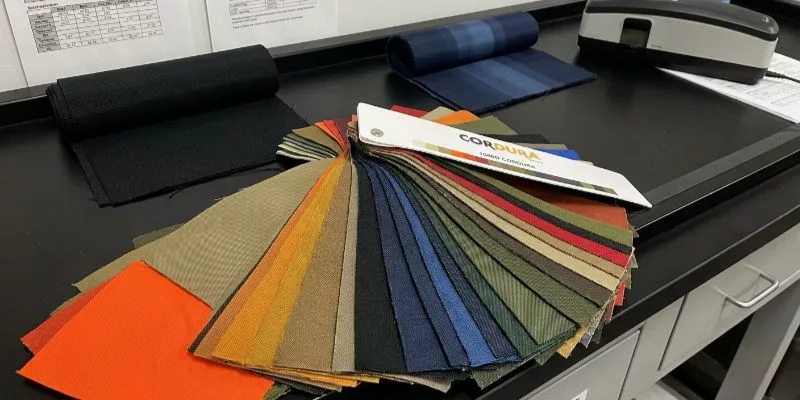
When evaluating 1000D Cordura vs. Ballistic Nylon, color consistency ruins more production timelines than bad stitching. The dyeing chemistry of these two fabrics explains why.
Cordura’s air-textured yarn structure absorbs dye deep into the fiber, producing even color across large production runs. This is why Cordura offers 50+ stock colors ready for low-MOQ orders.
Ballistic Nylon’s smooth, high-tenacity filament resists dye penetration. Non-black colors show significant shade variance between production lots. Custom dye batches for Ballistic require large Minimum Order Quantities (MOQs) to justify the custom dye vats, plus weeks of extra lead time.
If your brand relies on black, navy, or dark graphite, Ballistic Nylon works well. For seasonal custom colors, Cordura is the practical choice.
Brand verification matters regardless of which fabric you choose. Generic high-tenacity nylon is frequently sold as genuine Cordura. Always demand the official Technical Data Sheet (TDS), registered mill name, and lot-level tracking documents from your supplier. Refer to the official INVISTA Cordura specifications and INVISTA nylon 6,6 standards for verification. Learn more about material procurement in our custom handbag manufacturers guide.
Winner: 1000D Cordura (Best for multi-color branded collections, low-MOQ sourcing, and consistent color across production runs).
Pros & Cons at a Glance
1000D Cordura
Pros:
- Superior Abrasion Resistance: Air-textured yarns fuzz instead of glazing under friction, surviving 5,000+ Taber cycles (ASTM D3884). Matches or exceeds published Cordura Classic specifications.
- 50+ Stock Colors: Wide color availability accelerates sample iteration and supports brand-specific palettes without large minimum order quantities.
- Rugged Matte Aesthetic: Delivers the tactical, outdoors-ready look that outdoor and military-inspired brands rely on for authentic storytelling.
Cons:
- Clothing Abrasion: Rough face texture pills delicate fabrics like merino wool over extended contact — a known trade-off of air-textured nylon.
- Attracts Lint & Dust: Textured weave traps particles easily, requiring more frequent cleaning in pet-friendly or dusty environments.
- Lower Tear Strength: Approximately 200 N tear strength vs. Ballistic’s 280 N — not ideal for applications where tear resistance is the primary requirement.
- CMT Fraying Risk: Aggressive edge fraying during cutting; hot-cutting is strongly recommended per the Cordura Classic Spec Sheet to maintain production yield.
Ballistic Nylon (1050D)
Pros:
- Higher Tear & Tensile Strength: 280 N tear and 1,550 N grab strength (ASTM D5034) — best-in-class for load-bearing applications.
- Smooth Executive Finish: Lustrous face glides over business attire without pilling, ideal for premium travel and business bags.
- Structured Drape: Holds shape well when empty, providing strong shelf appeal similar to structured leather bags (see our leather vs canvas comparison).
Cons:
- Heavier Build: At 12.5 oz/yd², it creates noticeably heavier bags — potentially overbuilt for everyday commuter and daypack programs.
- Limited Colors: Only black and navy are reliably available; custom colors require large MOQs and 6+ weeks of lead time.
- Counterfeit Sourcing Risk: Fake high-tenacity nylon is common in the market; always verify material certificates against INVISTA nylon standards.
- Higher Production Cost: Dense weave increases needle friction and slows sewing speed by approximately 15%, raising per-unit labor cost. See bag sourcing and pricing for cost breakdown strategies.
Final Verdict: Which Fabric Should You Choose?
| If You Need… | Choose | Why |
|---|---|---|
| Maximum abrasion resistance (tactical gear, motorcycle bags, backpack bases) | 1000D Cordura | 5,000+ cycle Taber rating; fuzzes instead of glazing under friction |
| Ultimate tear-proof construction (heavy-duty travel bags, load-bearing gear) | 1050D Ballistic | 280 N tear strength, 1,550 N grab strength (ASTM D5034) |
| Multiple brand colors & low MOQ (seasonal collections, branded lines) | 1000D Cordura | 50+ stock colors, consistent dye uptake across production lots |
| Premium business aesthetic (executive bags, luxury travel, office carry) | 1050D Ballistic | Smooth lustrous finish, glides over suits without pilling |
| Tropical/humid markets (lifetime warranty programs, ASEAN distribution) | Either + PC Coating | Both need upgraded coating; fabric choice is secondary to coating spec |
| Budget-constrained production (cost-sensitive programs, startup brands) | 840D Ballistic (alternative) | Same look as 1050D, lighter weight, lower cost, faster sewing |
Sources & Methodology
This comparison draws on two categories of data:
Lantaobags Internal Testing (Q1 2026, production-grade fabric from standard mill batches):
| Test | Standard | Parameters |
|---|---|---|
| Taber Abrasion | ASTM D3884 | 5,000 cycles, H-18 wheels, 1,000g load per wheel |
| Grab Strength | ASTM D5034 | Constant-rate-of-extension (CRE) tensile tester |
| Tear Strength | ASTM D2261 | Tongue tear method |
| Water Repellency | AATCC 22 | Spray rating test |
Industry Reference Data:
- Cordura Classic Fabric — Official Spec Sheet
- INVISTA Nylon 6,6 Polymer Standards
- EU REACH Regulation — Chemical Restrictions
- ASTM D3884, D5034, D2261 standard test methods
- Independent durability reviews from Carryology and Redoxx
Disclaimer: Lantaobags purchases all testing equipment and raw materials independently. We are not compensated by any fabric manufacturer for these findings.
People Also Ask About 1000D Cordura vs. Ballistic Nylon
1. Which is better for everyday backpacks — 1000D Cordura or Ballistic Nylon?
For most everyday backpacks, 1000D Cordura is the better choice. It offers superior abrasion resistance at a lighter weight (11.0 vs 12.5 oz/yd²), comes in significantly more colors, and costs less to manufacture. Ballistic Nylon justifies its premium only when your priority is a sleek business look or maximum tear strength for heavy loads.
2. What if my production budget is tight?
Downgrade overbuilt fabric specs before sacrificing coating quality or QC documentation. During cost-engineering reviews, stepping down from 1050D to 840D nylon preserves the premium aesthetic while lowering unit cost. Never cut corners on exact bag measurements and sizing or interior finishes just to hit a price point.
⚡ Power Move: If costs remain high, switch internal dividers to lighter 210D polyester. This protects the exterior shell budget while reducing overall bag weight across all bag types and categories.
3. Do these fabrics survive hot and humid markets?
Not with standard PU coatings. Standard PU hydrolyzes and peels in sustained tropical heat and humidity. Specify Polycarbonate (PC) or TPU backing for any product shipping to high-humidity zones (Southeast Asia, Latin America, coastal regions). This upgrade adds minimal per-unit cost but prevents catastrophic coating failure in the field.
4. Is 1000D Cordura waterproof?
No fabric is truly waterproof without a coating. Both 1000D Cordura and Ballistic Nylon achieve 90+ spray ratings (AATCC 22) with DWR treatment, which repels water effectively but does not make the bag submersible. For true waterproofing, specify a PC or TPU backing combined with seam-sealed construction.
5. Which fabric is better for motorcycle bags?
1000D Cordura is strongly preferred. In a slide scenario, Cordura’s air-textured yarns fuzz up and maintain seam integrity, while Ballistic Nylon’s smooth face melts and flattens against asphalt, potentially exposing the backing. See Section 1 above for the abrasion test data behind this recommendation. This aligns with Cordura’s own published findings for powersports applications.
Ready to spec your bag? Send your tech pack, target price, and performance requirements to our contact page. Lantaobags operates as a direct manufacturing partner, engineering and testing every roll of fabric before it reaches the cutting table.