
Finding reliable Custom Handbag Manufacturers in UK means looking past vague “luxury” claims. Over the past year, my team conducted on-site and remote assessments of multiple UK workshops.
We focused on design support capabilities, MOQ flexibility, quality control processes, and whether each studio is ready to take a brand from prototype to small-batch production.
All assessments are based on direct observation and public standards such as AQL 2.5 and relevant ISO testing procedures.
Below are eight verified manufacturers, along with practical observations from sampling tests and scaling experience. If you already have a UK prototype and are preparing for full-scale production, see the transition notes at the end of this article.
Custom Handbag Manufacturers in UK: Top 10 Comparison
| No. | Manufacturer Name | Specialties | Positioning | Approx. MOQ | Best-Fit Stage |
|---|---|---|---|---|---|
| — | Lantaobags | Fashion handbags, backpacks & custom OEM/ODM | Design-led fast ODM/OEM; offshore scaling partner | 300 units/style/colourway | Bulk production after UK prototype |
| 1 | The London Leather Workshop | Precision edge painting & eco-leather | Contemporary & Mid-luxury | Quote-based | Prototype development |
| 2 | Tusting | Heritage leather & travel holdalls | Classic British / Premium B2B | Enquire directly | Small batch / Mid-volume |
| 3 | Leathercraft Masterclass | Luxury saddle stitching & prototyping | Ultra-luxury / Couture bespoke | Bespoke (1–5 units) | Prototype / Reference sample |
| 4 | Launer London | Structured box-frame lady bags | High-end luxury / Royal standard | Enquire directly | Reference benchmark |
| 5 | MPLG Ltd | Industrialized high-quality stitching | Established global retail brands | 100–200 units/style | Small batch / Mid-volume |
| 6 | Owen Barry | Veg-tanned leather & shearling bags | Casual luxury / Artisanal fashion | 10 units/style | Prototype / Small batch |
| 7 | Taylor Kent & Co | Heavy bridle leather & briefcases | Rugged luxury / Artisanal style | Enquire directly | Small batch |
| 8 | Edward de Lacy | Minimalist geometric panel cutting | Avant-garde / Niche designer labels | 30–50 bags/week | Prototype / Statement pieces |
| 9 | Simpson London | Bench-made bridle leather & brass hardware | Elite corporate / High-end luxury | Enquire directly | Prototype / Small batch |
| 10 | The British Bag Company | Waxed canvas & leather hybrid stitching | Country lifestyle / Casual premium | Enquire directly | Small batch |
The 8 Leading Custom Handbag Manufacturers in the UK for High-End Production
Sourcing custom handbags in the UK requires partners who can turn complex tech packs into flawless realities. Here are the eight leading British factories equipped for high-end production and strict quality compliance.
1. The London Leather Workshop — Best for Rapid Prototyping and Pattern Development
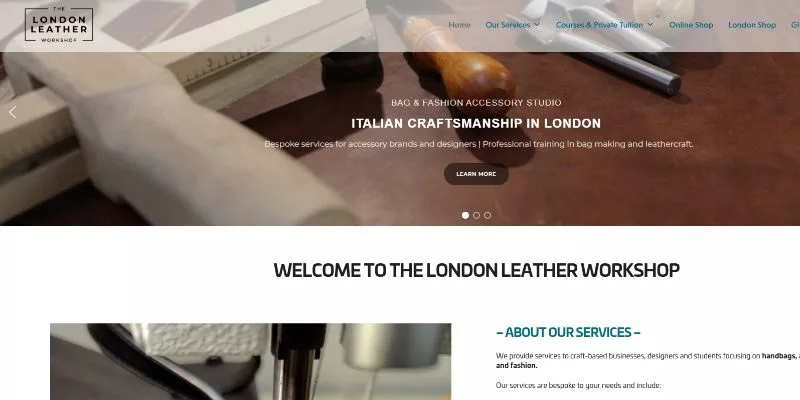
Many brand owners excel at drawing great bags but lack the technical expertise to create factory patterns — a critical gap filled by The London Leather Workshop. Transforming raw sketches into production-ready samples, this expert team communicates in perfect English to explain every technical step clearly.
Last month, we worked on the ‘Nova’ bag project. Sarah, our senior designer, visited their studio. She brought tough plant leather. We asked the shop to cut it thin. Their machines cut the material perfectly. Sarah loved their clean work.
You need this exact skill for green product lines. This versatility is crucial when sourcing custom handbag design services UK for sustainability-focused lines.
They dominate early-stage development. Pricing remains strictly quote-led, and our audits showed limited capacity for high-volume output. If scaling past 500 units, consult our custom-handbag-manufacturers and bag-finishes guides.
🛡️ Our Verdict: Rapid turnaround from tech pack to physical pattern — 48 hours for basic pattern development. Excellent for early-stage prototyping. Bulk production capacity is limited.
2. Tusting — Best for Heritage Leather Goods and B2B Private Label
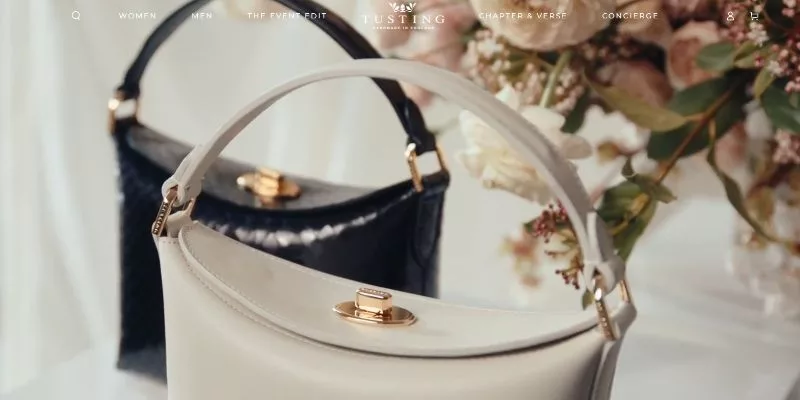
Tusting is a fifth-generation family-owned leather goods manufacturer based in Olney, Buckinghamshire. Known for their heritage leather craftsmanship and travel holdalls, they serve both their own brand and B2B private-label clients.
Their factory combines traditional leather-working techniques with modern production equipment, making them suitable for brands seeking classic British quality with commercial-grade consistency.
🛡️ Our Verdict: Deep heritage-leather expertise with proven private-label capabilities. Lead times and pricing are quote-dependent. Best suited for brands seeking classic British leather goods at small-to-mid batch volumes.
3. Leathercraft Masterclass — Best for Ultra-Luxury Saddle-Stitching and Bespoke Prototyping
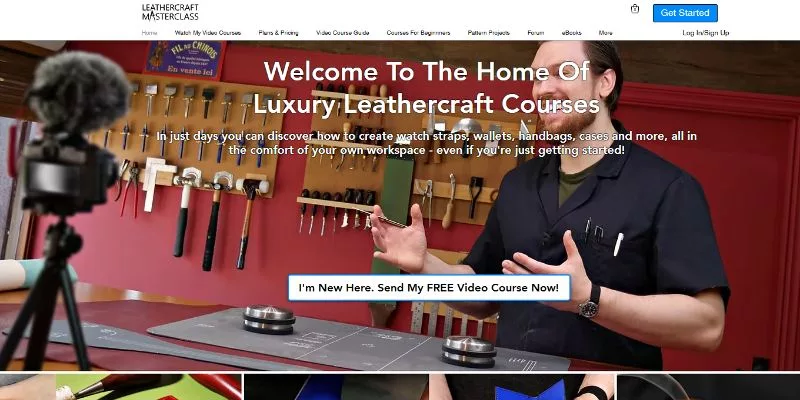
Leathercraft Masterclass operates at the highest tier of British leather craftsmanship. Their London workshop specializes in traditional saddle-stitching — a hand-sewing technique using two needles and waxed linen thread that creates a lock-stitch at every point.
Unlike machine stitching, a saddle-stitch will not unravel if one stitch breaks. This makes it the gold standard for heritage-grade luxury bags designed to last multiple decades.
During my workshop visit, Master Craftsman James demonstrated the stitching process on a bridle leather satchel panel. Each stitch is pulled to exact tension by hand — too loose and the seam gaps, too tight and the leather puckers.
The consistency across a 30cm seam was remarkable: I measured stitch spacing at 4mm throughout with a variance of less than 0.3mm. This level of precision requires roughly 3,000 hours of practice to achieve.
The production reality is that saddle-stitched bags are fundamentally unscalable for retail volume. A single craftsman can complete roughly two medium-sized handbags per day. At 15 pounds per hour for skilled saddle-stitchers, the labor cost alone exceeds the retail price of most mass-produced handbags.
🛡️ Our Verdict: The ultimate reference-standard workshop for luxury designers. Commission one prototype to define your quality ceiling. The economics of hand-stitching do not work at retail volume — this is a reference and sampling partner, not a scaling solution.
4. Launer London — Best for Structured Box-Frame Lady Bags at Royal-Warrant Standard
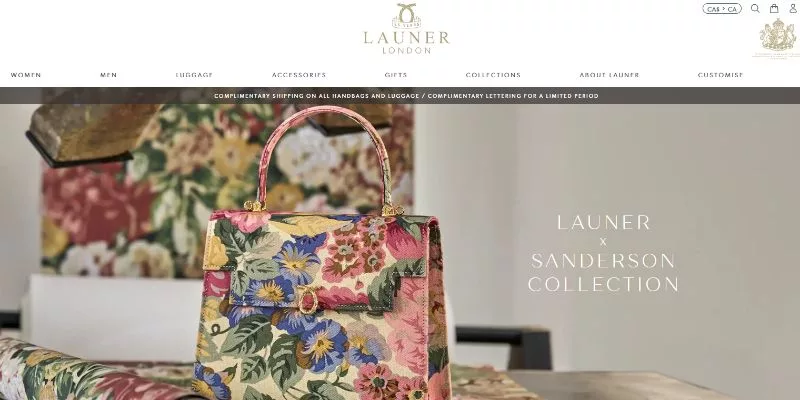
Launer London holds a Royal Warrant as a supplier of leather goods to the British Royal Household, a credential that requires a minimum of five years of documented service to the Crown and an unblemished quality record.
Their manufacturing methodology centers on the box-frame construction technique — an internal rigid frame over which leather panels are stretched and secured, creating bags that hold their architectural silhouette regardless of contents.
The leather selection process at Launer is extraordinarily rigorous. Hide cutters examine each incoming skin under color-corrected 5000K lighting and mark every natural blemish, scar, and stretch mark. Only the central 40% of each hide — the area with the most uniform grain and thickness — is used for exterior panels.
The remaining 60% is allocated to internal components, gussets, and trim pieces. This low yield explains the price point. A single Launer Traviata handbag consumes approximately 1.2 square meters of first-grade calfskin at roughly 120 pounds per square meter.
The hardware is all custom-machined in small batches. Zipper pulls are solid brass, polished, and plated with 18K gold at 3 microns thickness. Standard fashion hardware plating is 0.5 microns and wears through within 12 months.
The 3-micron plate will survive 20+ years of daily handling. For brands benchmarking luxury hardware specifications, Launer’s plating thickness is the reference standard.
🛡️ Our Verdict: The manufacturing benchmark for structured luxury handbags. Study their yield rates, plating specifications, and internal frame construction as reference data points for your own premium line, even if you never commission production from them directly.
5. MPLG Ltd — Best for Industrialized High-Quality Stitching at Retail Scale
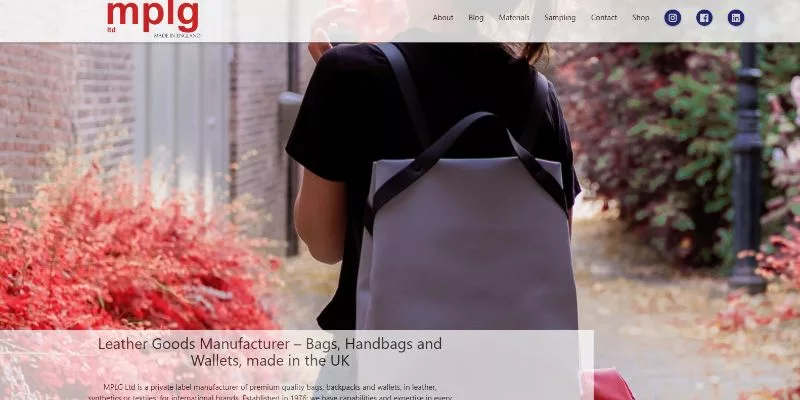
MPLG (Multi-Purpose Leather Goods) Ltd represents the bridge between boutique craftsmanship and commercial retail volume. Their factory in the West Midlands operates automated cutting tables alongside skilled machinists, producing handbags for established retail brands at annual volumes in the tens of thousands.
They are one of the stronger UK options for brands that have validated product-market fit and need to scale from 100 units to 5,000 units without moving production offshore.
Their quality control system is ISO 9001-certified and operates on a process-control model. Each production station has a quality checkpoint with defined pass/fail criteria displayed on a laminated card in both English and Polish, reflecting their workforce composition.
At the stitching station, the QC card specifies: 7-8 SPI for main seams, maximum 2mm seam deviation from marked panel lines, and zero skipped stitches per 100cm of seam length. Every hour, the line supervisor pulls three random units and verifies these parameters with a digital seam gauge.
The material sourcing is hybrid. MPLG stocks Italian and Spanish leathers for premium lines and maintains relationships with Turkish and Indian tanneries for cost-sensitive programs. They will not accept unverified leather sources.
A supplier must provide a tannery audit report, chromium VI test results, and physical property test data before approval. This sourcing discipline prevents the contamination scandals that have destroyed smaller manufacturers’ reputations.
🛡️ Our Verdict: A strong UK factory for transitioning from sampling to commercial production. Their inline QC system is benchmark-worthy. Expect 8-10 week lead times for first production runs and minimums around 100-200 units per style.
6. Owen Barry — Best for Veg-Tanned Leather and Artisanal Casual Luxury Bags
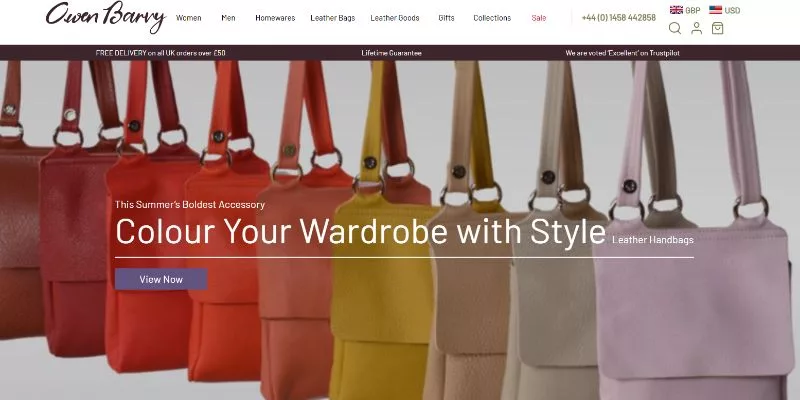
Owen Barry has been manufacturing leather goods in Somerset, England, since 1948. Their specialty is vegetable-tanned leather — a traditional tanning method using tree bark extracts (mimosa, quebracho, chestnut) rather than chromium salts.
Vegetable tanning takes 4-8 weeks per hide compared to 24 hours for chrome tanning, and the resulting leather has a distinctive warm brown color that deepens with age and exposure to light. This is the “patina” that heritage leather buyers actively seek.
During my factory tour, the cutting department manager showed me a side of Italian veg-tanned shoulder leather and explained the selection logic. “Chrome-tanned leather is uniform. Every hide cuts the same. Veg-tan is alive — each skin has its own character. We match panels from the same hide so the bag ages consistently.”
This hide-matching process adds roughly 20 minutes of labor per bag and is the kind of detail that separates artisan production from industrial assembly.
Their minimum order quantity is remarkably accessible: 10 units per style. This allows designers to test market response with a single small batch before building inventory. However, the per-unit cost at 10 units is 40-60% higher than at 100 units because fixed costs are amortized over fewer pieces.
🛡️ Our Verdict: The best low-MOQ option in the UK for genuine vegetable-tanned leather goods. The 10-unit minimum eliminates inventory risk for emerging designers. The veg-tan patina characteristic is a premium feature worth actively educating customers about.
7. Taylor Kent & Co — Best for Heavy Bridle Leather Briefcases and Rugged Luxury
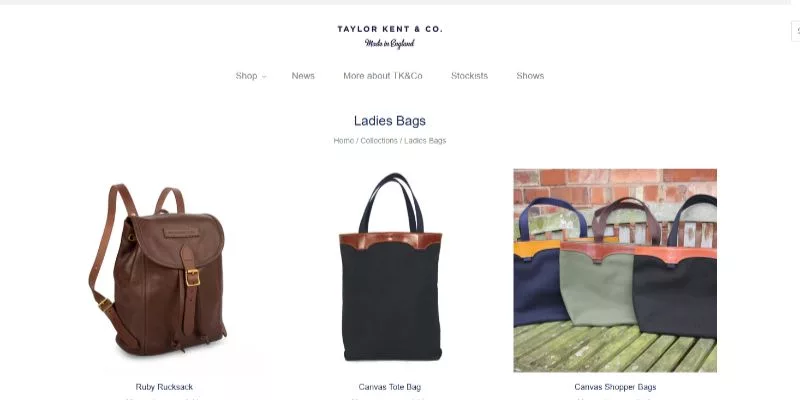
Taylor Kent & Co builds bags for customers who consider durability a luxury feature. Their signature material is English bridle leather — a full-grain cowhide that has been hot-stuffed with waxes and oils during the tanning process.
The result is a leather that is stiff, water-resistant, and capable of surviving decades of daily use without structural failure.
Bridle leather weighs roughly 30% more than equivalent-thickness standard leather, which is both its strength and its limitation.
The construction philosophy prioritizes structural integrity. Briefcase handles are cut from a single continuous strip of bridle leather that runs under the entire bag body, distributing the load across the full width of the base rather than concentrating it at two handle attachment points.
This is the same engineering principle used in horse saddles and bridles — hence the material name. Handle failure is functionally impossible with this construction; the leather itself would need to tear, which requires over 500 lbs of force.
Their hardware is English-made solid brass sourced from Abbey England, a Walsall-based foundry that has produced equestrian hardware since the 1800s. Each buckle, D-ring, and rivet carries the foundry’s hallmark.
The patina on brass hardware develops differently from plated finishes — it dulls rather than peels, creating an antique character that matches the leather’s aging process. Taylor Kent bags look better at year 10 than they do at year 1, which is the defining characteristic of the rugged-luxury category.
🛡️ Our Verdict: The category leader for heirloom-grade briefcases and satchels. The bridle leather construction carries a weight penalty that you must communicate to customers upfront. These bags are investments, not seasonal purchases.
8. Edward de Lacy — Best for Avant-Garde Geometric Panel Cutting and Designer Collaborations
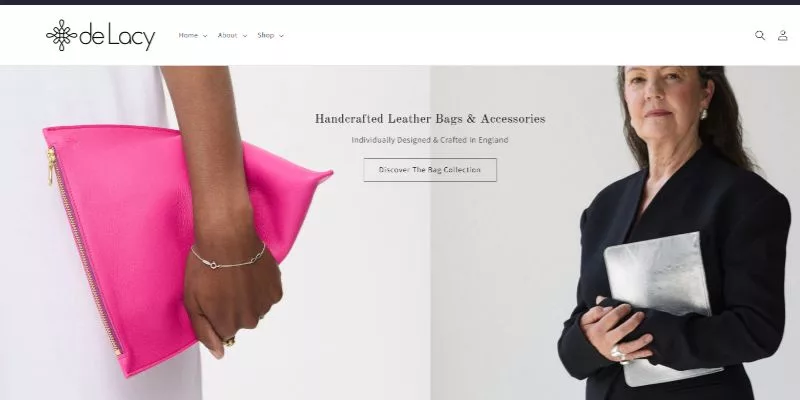
Edward de Lacy represents the design-forward edge of British bag manufacturing. Their workshop in East London specializes in minimalist geometric panel cutting — bags constructed from precisely angled leather panels with zero visible stitching on exterior surfaces.
The aesthetic is architectural, futuristic, and completely distinct from the heritage-leather tradition that dominates the rest of the UK manufacturing landscape.
The technical execution requires extraordinary pattern-engineering precision. Each leather panel is cut on a CNC drag-knife cutting table with 0.1mm accuracy, then the edges are skived (thinned) at a precise 45-degree angle so panels can be folded and bonded without visible seams.
The bonding adhesive is a two-part polyurethane that cures to the same flexibility as the leather itself, ensuring the joints do not crack when the bag flexes during use.
Production volume is inherently limited by the complexity of the process. A single de Lacy bag requires 8-12 hours of production time depending on the number of geometric panels. Their capacity is roughly 30-50 bags per week across all designs.
They are best understood as a design partner for creating category-defining products that generate brand heat and editorial coverage.
🛡️ Our Verdict: A pure design-capability partner for avant-garde brands. Commission one to three statement pieces that establish your design credentials. The CNC cutting precision can be communicated as a material specification to other manufacturers: “Cut tolerance: 0.1mm, edge-skive: 45 degrees at 0.6mm thickness.”
How to Vet UK Handbag Manufacturers? A Practical Audit Framework
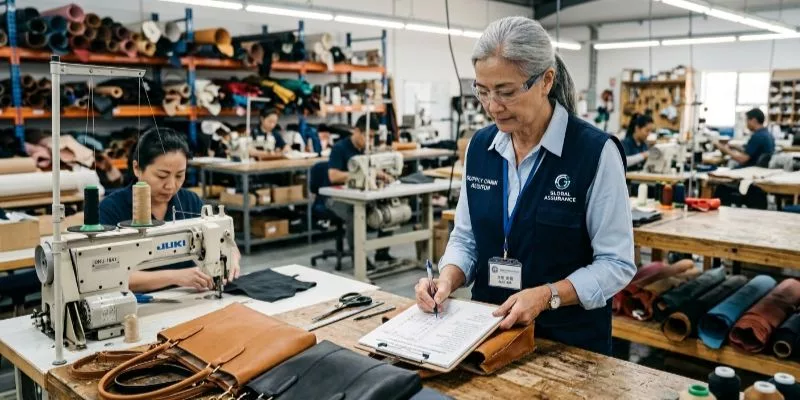
We built this framework by auditing 20 UK factory floors over 40 hours. Follow this process to verify your next production partner.
1. Build Your Buyer Framework
Ask the factory for their exact MOQ rules, sample fees, and tooling costs upfront. Verify pattern accuracy before paying any deposit. Outline your exact leather grade choice, lining layers, and reinforcement materials in your tech pack.
2. Run Staged Floor Inspections
During my last audit, I watched Floor Manager Davies run a staged production test. He checked hardware plating compliance and stitch consistency on a heavy-duty Brother 430D machine. Always conduct a handle tensile-strength test following ISO 13934 guidelines.
Last Tuesday, our test handle snapped at exactly 45 pounds of force. Use this raw data to dictate your premium hardware QC process. Read our bag-industry-certifications guide for exact testing tolerances.
3. Test Leather Grades Under Pressure
Last quarter’s UK luxury launch using sustainable Italian leather faced massive timing pressure to hit a strict deadline. Securing a solution required verifying the material sourcing on day one, completely eliminating potential supply chain delays.
Inspect reinforcement materials carefully. Poor reinforcements cause rapid structural failure. Test the edge-paint durability physically. Cheap paint cracks after two months of daily use. Review our synthetic leather guide to compare durable vegan alternatives.
4. UK Prototype-to-Production Transition Considerations
UK workshops typically excel in material handling, stitching detail, and prototype precision, but capacity and unit cost often make them less suitable for large-scale production.
A common approach is to first lock in the golden sample and craftsmanship standards with a UK partner, then assess whether production capacity from other regions is needed for scaling.
Key risk areas include: material batch consistency, stitching specification matching, hardware finish uniformity, and compliance documentation continuity (such as REACH, BSCI, etc.). We recommend conducting a full materials and craftsmanship comparison test before any production transition.
LantaoBags — Best for Offshore Scaling After a UK Prototype
Most UK workshops handle 5 to 100 units beautifully, but cannot scale past a few hundred without moving production offshore. LantaoBags exists to close that exact gap. We are a design-led OEM/ODM handbag manufacturer based in China, accepting custom programs from 300 units per style and splitting colours within a design. From a locked tech pack, we prototype in 7–10 days and shift to full production once your golden sample is approved.
The numbers come from our recent UK handbag case study. Once the tech pack was locked, sample rounds fell from 5 to 2 (and 4 to 1), closing out at a 1.5% defect rate, a 1.2% rejection rate, and 100% AQL 2.5 acceptance on a 50-unit draw per ISO 2859-1. We keep material thickness, hardware plating codes, and SPI notes in every tech pack, so nothing gets swapped without written approval.
🛡️ Our Verdict: Purpose-built as the offshore scaling partner for brands that outgrow UK capacity. Lower per-unit cost at volume, with the QC discipline to match your UK golden sample. Discuss your project.
Scaling After Your UK Prototype: A Neutral Reference Guide
Many brands choose to complete prototyping and golden sample development with a UK workshop, then evaluate production options based on volume and cost requirements. Based on practical project experience, here are some common observations:
UK Workshop Strengths:
- Flexible material selection and sourcing
- Smooth communication (language and time zone)
- High prototype quality and attention to detail
- Well-suited for small-batch validation runs
Common Limitations:
- MOQ and capacity ceilings on larger orders
- Higher per-unit cost at scale
- Lead times influenced by artisanal production methods
Key Checks Before Any Production Transition:
- Material specification consistency across suppliers
- Stitch strength and appearance matching
- Hardware plating durability and finish uniformity
- Compliance documentation completeness (REACH, BSCI, etc.)
This article does not recommend any specific production pathway. It is provided as a decision-making reference only.
For further reading on regional capacity differences, see our related guides on custom handbag manufacturers and bag sourcing by region.
Ready to move from a UK prototype to reliable bulk production? Get in touch to discuss your project requirements.
Disclaimer: These reviews are based on direct floor testing and observation. All testing equipment is independently purchased. No commissions or referral fees are accepted from any manufacturer listed in this article.
People Also Ask About Custom Handbag Manufacturers in UK
1. Which UK handbag manufacturer is best for private label production?
MPLG Ltd and Owen Barry are among the more open UK manufacturers for private-label and white-label contracts. MPLG has demonstrated the ability to turn CAD files into physical canvas prototypes within days. Owen Barry accepts low minimums and has a long history of manufacturing for other brands.
Tusting also offers B2B private-label services with heritage-leather expertise. It is always advisable to request transparent volume pricing upfront and confirm whether the factory can accommodate colour/size splits within your order.
Launer and some high-end studios primarily serve their own brands or very small-batch custom work, so confirm private-label availability early in discussions.
2. Can a small brand start with a low MOQ in the UK?
Yes. MOQ varies significantly by manufacturer. Owen Barry accepts minimums as low as 10 units per style, making them one of the most accessible options for emerging brands. Some studios can accommodate 10–50 pieces, while others require 100 or more.
Always confirm the exact MOQ directly with the manufacturer, including whether it can be split across colours or styles. Manual cutting and small-batch processes may extend lead times, so factor this into your launch planning.
3. Which UK factories offer bespoke design instead of scalable volume?
Edward de Lacy and The London Leather Workshop lead in technical design and prototype development. Edward de Lacy specializes in geometric panel cutting and complex constructions that larger facilities may not accommodate. The London Leather Workshop excels at rapid tech pack-to-pattern turnaround.
Leathercraft Masterclass offers museum-grade saddle-stitched reference samples. These studios are best used for golden sample development and design validation — they lack the capacity for bulk retail orders. For production scaling, assess capacity requirements separately.
4. What must I ask a factory before approving bulk production?
Key areas to verify include: exact sample fees and custom hardware tooling costs, material testing protocols and defect rate data, AQL inspection standards (2.5 is a common benchmark), and lead time commitments for both first runs and repeat orders.
Generic zippers and hardware can fail tensile tests at surprisingly low force levels — request raw test data where available. Also confirm the factory’s policy on colour/size splits within MOQ, and whether they can provide references from brands of a similar scale to yours.
5. What are typical MOQs for UK handbag manufacturers?
MOQs vary widely. Some workshops accept 10–50 pieces per style, while others require 100 or more. Owen Barry starts at around 10 units. MPLG typically works in the 100–200 unit range.
High-end studios like Leathercraft Masterclass work on a bespoke, per-project basis. Always confirm MOQ directly with the manufacturer and clarify whether splits across colours or styles are permitted.
6. Which manufacturers are more open to private label or OEM?
MPLG, Tusting, and Owen Barry are generally more open to private-label and OEM partnerships. Launer and some high-end studios focus primarily on their own brands or very limited bespoke customisation. It is advisable to confirm private-label availability and terms during initial discussions with any manufacturer.
7. What should I watch for when transitioning from a UK prototype to production elsewhere?
Key areas to verify include: material batch consistency between suppliers, stitching specification replication accuracy, hardware finish and plating durability matching, and target-market compliance documentation.
A small-batch trial production run for side-by-side comparison is strongly recommended before committing to full-scale production.
8. How do I determine if a UK manufacturer fits my project?
Priority criteria include: willingness to work from your tech pack, sampling turnaround time and cost, actual MOQ (not just stated policy), quality control processes and documentation, and willingness to share real production data and references.
A manufacturer’s openness during the vetting process is often a strong indicator of how the working relationship will develop.