





On this page
Most buyers searching for custom handbag manufacturers in Canada picture a contract factory that will take a tech pack, run 500 units, and issue an AQL report. In Canada, that factory is rare. What exists is a cluster of self-branded studios making their own collections, plus a handful that accept personalization or limited modifications.
That distinction changes how you source. This guide reviews six Canadian studios, states what each one actually accepts, and explains when to compare an Asian OEM instead. Studio terms were checked against their own public pages in October 2026.
Quick answer: Canada’s custom handbag scene is mostly small, self-branded ateliers rather than open contract factories. Most accept personalization or minor modifications; full private-label runs are the exception.
They suit 50–300 unit capsule launches that need a “Made in Canada” story. They are not the right fit for 500+ units per quarter with formal AQL documentation.
6 Custom Handbag Manufacturers in Canada: Comparison
| No. | Studio | Location | What they accept | Best for | Not suitable for |
|---|---|---|---|---|---|
| 1 | m0851 | Montreal, QC | Own-brand production; about 90% made in its Montreal workshops; no published private-label program. | Premium local story and material control. | Brands that need a confirmed private-label commitment. |
| 2 | Opelle Creative | Toronto, ON | Own collection; FAQ states no custom orders beyond minor strap-length changes. | Design reference and retail stockists. | Private label or design changes. |
| 3 | Sadelmager Design House | Ontario | Made-to-order with published customizations (pockets, stamping, engraving); no published OEM terms. | Heritage bridle-leather builds. | High-volume OEM programs. |
| 4 | Sparrow Handmade | Calgary, AB | Made-to-order own designs; colour choices; occasional one-off custom work. | Small made-to-order runs. | Contract manufacturing and AQL programs. |
| 5 | Westwood Leather Co. | Nanaimo, BC | Personalization and minor modifications; wholesale and bulk/corporate orders. | Vegetable-tanned small goods and corporate gifts. | Fully custom bag development. |
| 6 | modjūl studio | Canada | Individually handmade bags and accessories; monogram personalization. | Small leather goods and line extensions. | Bulk production runs with no published terms. |
Custom Handbag Manufacturers in Canada: 6 Studio Reviews and Sourcing Limits
Each profile separates three things buyers usually mix together: what the studio sells, what it accepts from outside brands, and what it has not published.
1. m0851: Best for a Verified Montreal Production Base and Premium Leather Control

m0851 is a Montreal leather house founded in 1987. Public reporting, including Export Development Canada’s profile, states that roughly 90% of its products are designed and made in its own Montreal workshops, with the rest handled by local subcontractors.
That in-house control is real, and it is why m0851 belongs on a material-quality shortlist. What is not public is a private-label program. The company sells its own collection through its own stores and distributors; our October 2026 review found no published MOQ sheet, sample-fee schedule, or contract-manufacturing terms.
For an outside brand, the practical question is not “can they sew?” but “will they reserve capacity for someone else’s label?” Get that answer in writing before paying for a prototype.
Fit: premium capsule with a Montreal story. Not fit: a brand that needs a confirmed private-label slot. Public data: no published MOQ or contract terms.
🛡️ Our Verdict: m0851 is the strongest local credibility signal in this list, but treat it as an own-brand house until it confirms otherwise in writing.
2. Opelle Creative: Best for Design Reference, Not Private Label

Opelle Creative is a Toronto atelier founded in 2010. Its bags are hand-made in small batches from Italian, German, and Spanish leathers, and the studio sells its own collection online and through stockists.
The important line for buyers is in Opelle’s own FAQ: the studio does not take custom orders or make design changes beyond minor strap-length adjustments. That rules it out as a private-label partner, even though its finishing and material choices are a useful benchmark.
Use Opelle to calibrate what a well-finished small-batch bag should look like, then look elsewhere for production. If a directory tells you otherwise, believe the studio’s own FAQ.
Fit: design reference and retail stockists. Not fit: private label or design changes. Public data: FAQ states no custom orders beyond minor strap adjustments.
🛡️ Our Verdict: Opelle is excellent at its own collection and explicit about not being a contract manufacturer.
3. Sadelmager Design House: Best for Heritage Leather Expertise

Sadelmager is a family-owned Ontario leather house founded by second-generation saddler Rebecca Meadows. Its bags are made to order using North American vegetable-tanned bridle and harness leather, with solid brass or stainless steel hardware.
Its published customization menu goes further than most studios: extra pockets, card slots, brass-plate engraving, and hand stamping. The company also sources hardware from Wallenstein, Ontario, and backs its retail goods with a lifetime guarantee.
What is still missing is a contract-manufacturing program. Customizing an existing pattern is not the same as taking a new brand’s tech pack and running it repeatedly. Ask for a written sample timeline, material lead times, and reorder terms before assuming either.
Fit: heritage bridle-leather builds with visible craft. Not fit: high-volume OEM programs. Public data: customizations published; OEM terms not published.
🛡️ Our Verdict: Sadelmager is the most verifiable craft story here. Lock material lead times and reorder quality terms in writing before paying a sample fee.
4. Sparrow Handmade: Best for Made-to-Order Capsule Runs

Sparrow Handmade is a Calgary maker of waxed-canvas and full-grain-leather bags. Most pieces are made to order, with colour choices and occasional one-off custom work; ready-to-ship items are the exception.
That model suits a founder testing a silhouette without committing to 500 units. It is not a contract-manufacturing floor. There is no published wholesale program, MOQ sheet, or AQL documentation, and the studio’s product pages describe made-to-order lead times rather than production capacity.
If you want to test a rugged capsule, Sparrow is a reasonable first conversation. Ask directly whether it will take a repeatable private-label run and what a 50–100 unit quote would include.
Fit: small made-to-order runs. Not fit: contract manufacturing and AQL programs. Public data: no published MOQ, wholesale terms, or AQL documentation.
🛡️ Our Verdict: a good launchpad for product-market testing, not a scaling partner.
5. Westwood Leather Co.: Best for Small-Batch Vegetable-Tanned Goods

Westwood Leather Co. is a Nanaimo, British Columbia studio run by leatherworker Olivia D’Alessandro. It makes small-batch, minimalist goods from full-grain vegetable-tanned leather, with monogram personalization on many items.
The studio’s FAQ is explicit: it is not accepting custom orders outside personalization and minor modifications to existing products. It does accept bulk and corporate orders, and it runs a wholesale program for shops that want to stock its collection.
That makes Westwood a fit for corporate gifting and a retail assortment, not for a brand that needs its own pattern developed. If your goal is a unique silhouette, this is the wrong starting point.
Fit: personalization, corporate gifts, wholesale. Not fit: fully custom bag development. Public data: FAQ states no custom orders beyond personalization and minor modifications.
🛡️ Our Verdict: strong material character and a clear boundary. Use it for gifts or stock, not for OEM development.
6. modjūl studio: Best for Handmade Accessories and Line Extensions

modjūl studio is a Canadian handbag and leather-goods brand whose pieces are designed and made in Canada and handcrafted by designer Stephen Brown. The collection is made individually rather than in production runs, with monogram personalization available.
That makes it useful for small leather goods, pouches, and line extensions that need a distinctive handmade look. It is not a source for a 50-piece repeatable production run unless the studio confirms otherwise.
Our October 2026 review found no published MOQ, sample-fee, or contract-manufacturing terms. Ask those questions before commissioning anything, and do not assume a cardholder run is available just because the studio makes cardholders.
Fit: handmade accessories and line extensions. Not fit: repeatable production runs. Public data: no published MOQ, sample fees, or contract terms.
🛡️ Our Verdict: a good source for a small, design-led accessory drop. Confirm volume before building a launch plan around it.
How to Audit Custom Handbag Manufacturers Before Production?

A studio visit tells you how well a sample is made. It does not tell you whether the studio can repeat that sample next quarter. This audit framework separates the two.
Step 1: Walk the Factory Floor in Sequence
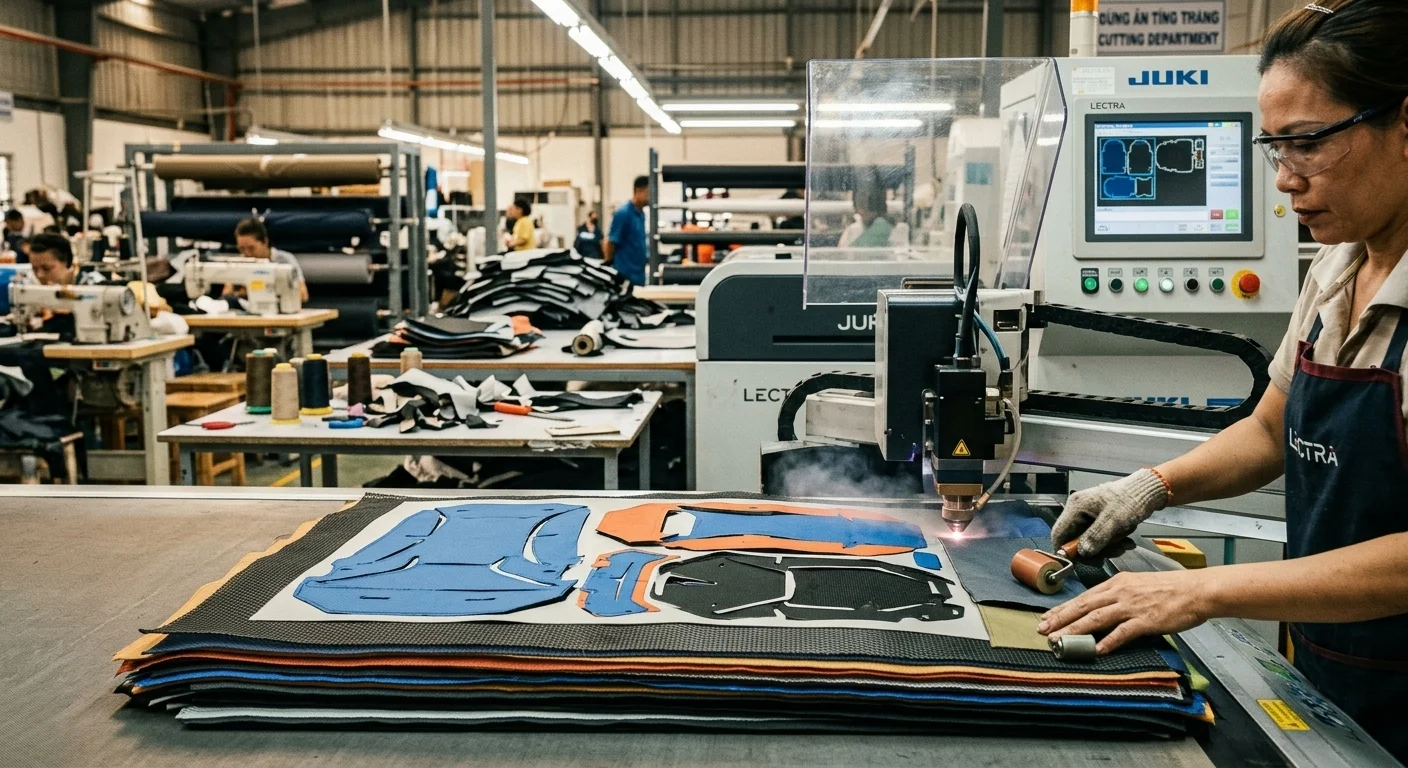
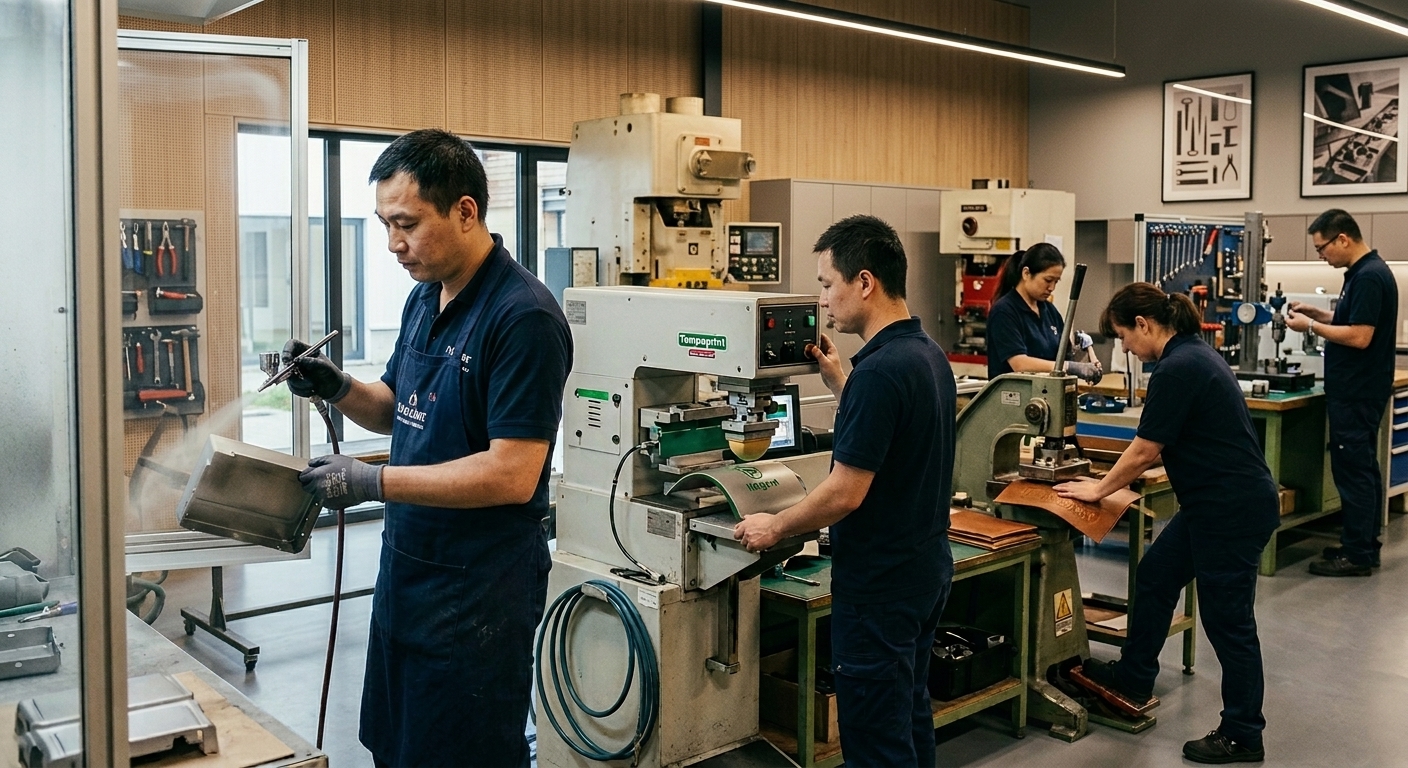
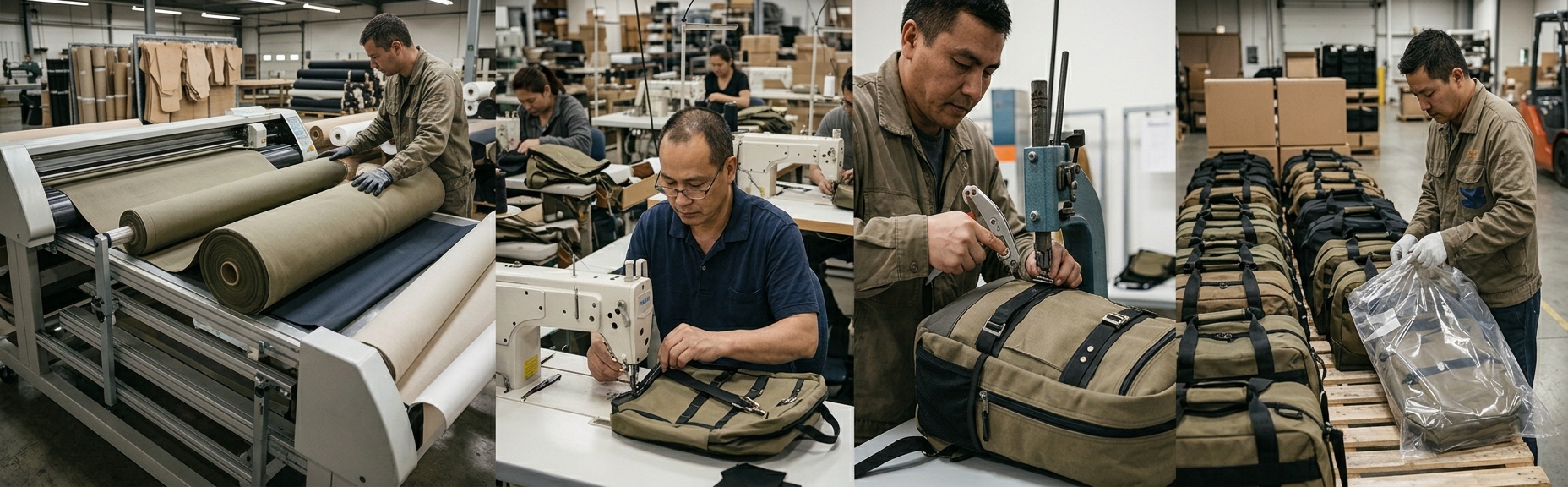
Walk the production floor in a strict sequence: incoming materials, cutting, skiving, reinforcement, lining prep, stitching, edge finishing, hardware installation, polishing, and pack-out.
Ask for raw material test data where it exists. A Bally Flexometer test, for example, checks leather flex endurance under ISO 32100; repeated flex failure is a common cause of strap failure. Then talk to the cutter, the skiving operator, and the QC manager separately.
A small studio may not have every machine or a formal test lab. That is not automatically a disqualifier for a 50–300 unit run, but it is a hard limit for a program that requires documented testing.
Step 2: Run Your AQL Quality Checklist
Bring a physical checklist to the audit. Use this list to verify bag industry certifications:
- Visuals: material specs, leather grade, finish consistency, colour tolerance.
- Construction: stitch consistency, seam alignment, edge-paint cleanliness, logo placement, symmetry.
- Function: hardware function, zipper smoothness, strap anchoring strength.
- Compliance: dimensional tolerance, odour, packaging accuracy, country-of-origin marking, textile-component labelling.
Brands set their own defect thresholds under ISO 2859-1. Premium programs often target AQL 1.0; AQL 2.5 is a common commercial baseline. Ask the studio whether it actually runs AQL inspections or only inspects the final sample.
Step 3: Question the Realities of Local Sourcing
Domestic labour costs more, but communication loops are tighter. That is the honest trade. Local assembly also does not mean local materials: many Canadian studios still import synthetic leather, hardware, and some leathers, which adds lead-time drag.
Use Canadian production for sampling, small capsules, and a “Made in Canada” story. Do not use a boutique studio for aggressive volume unless it has confirmed capacity, a QC process, and reorder terms in writing.
Step 4: Finalize Your Sourcing Shortlist
End the audit with a contract framework, not a handshake. Ask every studio for its exact MOQ and sample-fee credit rules, its tech-pack requirements, and its capacity by quarter. Require an NDA and written IP ownership before sharing patterns or cutting dies.
If you need a scalable program, compare the Canadian quote with an Asian OEM quote on the same tech pack. Read our guide to custom handbag manufacturers in Canada for the country-level view. You can also use the Canadian Intellectual Property Office checklist before sending designs abroad.
Method note: Studio limits in this guide come from each studio’s own published pages (FAQ, customization, wholesale) and publicly reported production details, checked in October 2026. Where a term is not published, the table says so.
Canada vs Asia: When Local Stops Making Sense?
The decision is rarely “Canada or China” in the abstract. It is a volume and documentation question.
Use a Canadian studio when the order is roughly 50–300 units, the studio accepts outside work, and the “Made in Canada” story is worth the unit-cost premium. Use an Asian OEM when you need 300+ units per SKU, repeatable quarterly capacity, formal AQL reporting, and a landed cost that supports wholesale margins.
Most studios in this list do not publish MOQ, capacity, or sample-fee terms. That does not mean they cannot work; it means you have to ask, and you should get the answer in writing before sending a tech pack.
If you are comparing both routes, download the Canada handbag import checklist (PDF) and put the same tech pack in front of both suppliers. Compare sample lead time, unit cost at 300 and 500 units, AQL terms, and landed cost — not just the factory gate price.
For broader Canadian manufacturing data, see Canadian Industry Statistics.
Next Step
If you have a tech pack and want a comparable Asian OEM quote, contact LantaoBags with your target volume and materials. We will tell you whether your order fits our production minimum and what the sample timeline looks like.
No-fee statement: No studio paid to be included in this guide, and we receive no referral fees or commissions from any of them.
People Also Ask About Custom Handbag Manufacturing in Canada
1. What MOQ should I expect for a custom handbag run in Canada?
There is no published Canadian MOQ standard. Among the studios in this guide, most do not publish an MOQ at all, and several do not accept full custom orders.
Where a studio does accept outside work, expect a practical floor in the tens to low hundreds of units. Stock materials and basic hardware lower that floor; custom hardware and new patterns raise it.
Sample fees are usually quoted separately and may or may not be credited against a bulk order. Get the credit rule in writing before approving a prototype.
2. Do Canadian handbag studios accept third-party private label?
Mostly no. The studios in this guide are self-branded: m0851 sells its own collection, Opelle’s FAQ rules out custom orders beyond minor strap adjustments, and Westwood’s FAQ rules out custom work beyond personalization and minor modifications.
Sadelmager and Sparrow accept customization of their own products, which is not the same as private-label manufacturing.
If a studio says it will take your label, ask three questions in writing: Will you produce from our tech pack? What is the MOQ? Who owns the pattern and cutting dies?
3. Is Herschel Supply a contract manufacturer?
No. Herschel is a brand, not an OEM for other companies’ designs. Custom-logo Herschel products are sold through promotional partners such as PCNA and Custom Ink, usually as decoration on existing styles, not as private-label manufacturing. It does not belong on a shortlist of contract factories.
4. How does Canadian handbag production compare with China on cost and lead time?
Canada wins on communication distance, small-run flexibility, and the “Made in Canada” story. Asia wins on unit cost at volume, repeatable quarterly capacity, and formal AQL documentation. The gap widens as order size grows: a 50-unit run can be viable locally, while a 500-unit program usually lands cheaper offshore even after freight.
Do not rely on a rule of thumb. Put the same tech pack in front of both suppliers and compare sample lead time, unit cost at 300 and 500 units, AQL terms, and landed cost.
5. Do I need a tech pack, and who owns the design patterns?
Yes, you need a detailed tech pack with dimensions, stitching tolerances, and hardware placements. Before sampling, sign an NDA and confirm in writing that you own the patterns, cutting dies, and digital files. Founders lose designs by skipping this step.
6. What labeling laws apply in Canada, and how do I test durability?
Most leather handbags fall outside the Textile Labelling Act unless they contain significant textile components. Country-of-origin marking and bilingual English/French labeling still apply where required. Confirm the current rules with the Competition Bureau before printing labels.
For durability, ask for raw test data where available — for example, a Bally Flexometer result under ISO 32100 — and run an AQL inspection on the production lot, not only on the salesman sample.
7. What certifications should I ask a Canadian studio for?
Ask for ISO 9001 if the studio claims a quality management system, Leather Working Group (LWG) certification if it makes leather claims, and BSCI or SEDEX if you need social-compliance evidence. Many small studios will not have these; that is a reason to scope the order to a capsule run, not a reason to assume the work is poor.
If your retail customer requires certification, put it in the RFQ before sampling.