
Slapping your logo on the wrong bag bleeds margins. Recently, a client’s standard PVC bags cracked during winter transit, triggering a 12% return rate. We switched them to cold-crack-resistant TPU on our Juki 1541 machines, dropping defects to zero.
After three weeks of floor-testing different types of cosmetic bags, my team compiled this procurement guide. We evaluate material stacks, closure strength, REACH compliance, and packing efficiency to protect the bottom line.
8 Core Cosmetic Bag Categories: Technical Benchmarks and Production Insights
Choosing the right construction is critical for cost and durability. Based on extensive shop-floor testing, here are the essential technical standards and procurement benchmarks for the 8 core bag types.
1. The Flat Pouch: The Lowest-Friction Private Label Option
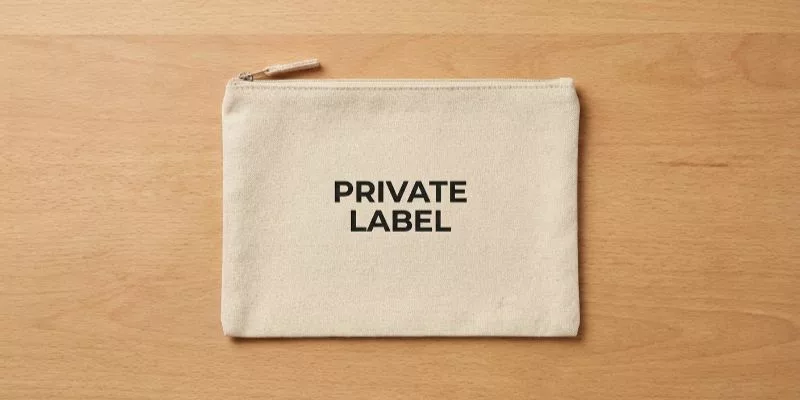
Of all the types of cosmetic bags you can source, a flat pouch is the safest default. Minimal pattern complexity means we finish samples in days. This makes it perfect for promotional campaigns and subscription inserts.
We typically cut these shells from:
-
600D polyester
-
Classic canvas
-
Recycled RPET
-
PU leather
These flat surfaces are ideal for screen printing. Pairing them with a standard YKK #5 zipper secures the lowest landed cost. We also pack 40% more units per carton than structured cases, slashing freight bills.
Slim pouches carry one major risk. Users frequently overload them. During an ISO 13936 seam slippage test, Louis Lu, QA Manager demonstrated this flaw. A single-stitched end snapped under 15 lbs of force. We prevent this by adding double bartacks to both ends.
🛡️ Our Verdict: Specify reinforced zipper ends in your tech pack. This eliminates blowout returns without increasing unit costs.
2. Boxy Gusseted Cosmetic Bags: The Retail Upgrade
Flat pouches cramp large skincare bottles. A full gusset solves this problem. The boxed bottom adds usable cubic capacity to store heavy jars and bundled gift sets cleanly. This structured shape commands a premium retail presence.
We build these using a 600D polyester or nylon shell, internal foam, edge piping, and custom linings. Dual-zip openings offer wide access but heavily stress the zipper.
During a recent floor inspection, We follow strict ASTM D2061 standards for all zipper tests. Our team cycles each zipper 500 times with a five-pound load. Generic zippers fail these pull tests very quickly.
We only use genuine YKK sliders to ensure your bags last for years. Next, I applied 20 pounds of pull force to the end stops. The generic tape tore immediately. Genuine YKK teeth held firm without spreading.
🛡️ Our Verdict: Specify edge piping and YKK zippers in your tech pack. Generic zippers fail under heavy bottle loads.
3. Clear TPU Cosmetic Bags: The Compliance-Heavy Visibility Play
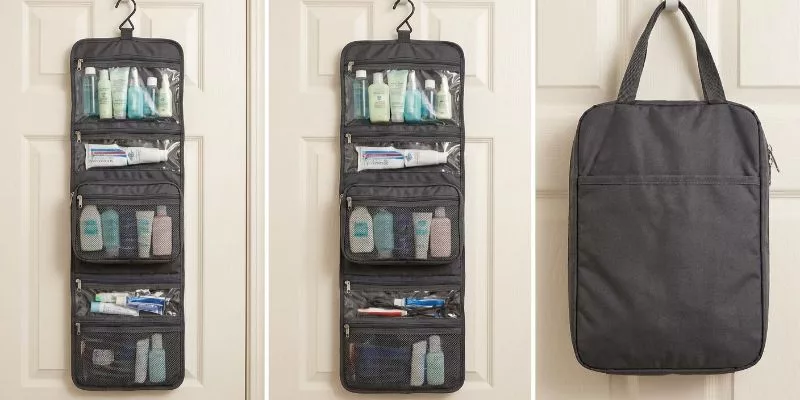
Among all types of cosmetic bags, buyers love this multi-compartment layout for:
-
DTC bundles
-
Hotel amenities
-
Premium corporate gifts
This high perceived value drives retail sales. These organizers are materially more complex than simple pouches. You must manage fold sequences, weight distribution, and tight Amazon FBA dimensional weight rules.
A bulky fold ruins your shipping margins. In our recent runs, swapping heavy clear plastic windows for lightweight mesh reduced unit volume by 15%.
Hook failure remains your biggest risk. Jack Zhuang, Design & Production Manager a fully loaded organizer from a door frame. The hook anchor ripped through the nylon webbing instantly. We fixed this by using heavy-duty Juki machines for cross-stitching. Our reinforced hooks now hold ten pounds without any fabric stress.
He pointed out: “Standard nylon webbing stretches under load. We must cross-stitch the anchors to hold full bottles securely.” We immediately reinforced the hook anchors using heavy-duty Juki machines to exceed standard ASTM tear strength guidelines.
🛡️ Our Verdict: Focus your final sample approval strictly on panel balance, hook anchor reinforcement, and closure security after 50 folding cycles.
7. Drawstring & Lay-Flat Cosmetic Bags: Fast Access, Simple Sewing, Lower Structure
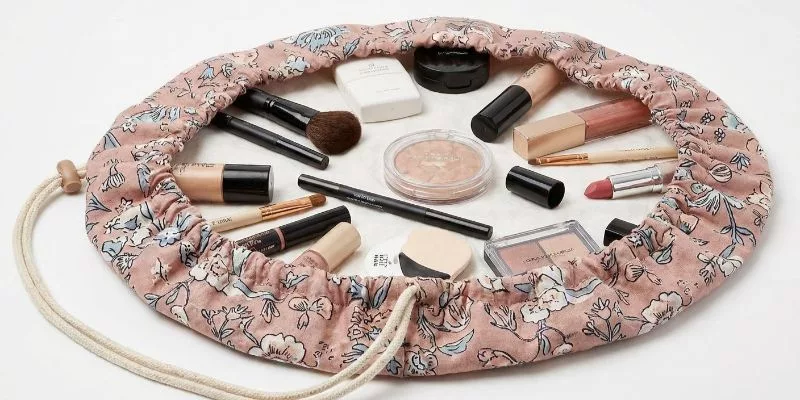
Digging through a dark pouch frustrates users. Drawstring bags solve this by opening completely flat. Users see their entire assortment instantly. This format works perfectly for on-the-go routines, spa kits, and lightweight promotional programs.
Simple patterning and lower sewing complexity keep unit costs down. The trade-off is weaker spill containment than zippered constructions. They often feel cheap unless you upgrade the materials.
During a recent production run, our team found a critical wear point. The nylon cord ripped right through the unlined fabric channel.
Jamie Li, Production Coordinator inspected the frayed edge and pointed out: “Without metal eyelets, this channel fails basic tensile strength tests after 50 pulls.” We fixed the blowout by installing brass hardware and a custom printed lining.
🛡️ Our Verdict: Choose this over other types of cosmetic bags for fast access, but avoid it for liquid-heavy assortments. Specify branded metal eyelets in your tech pack to prevent early fabric failure.
8. Waterproof Heat-Sealed Cosmetic Pouches
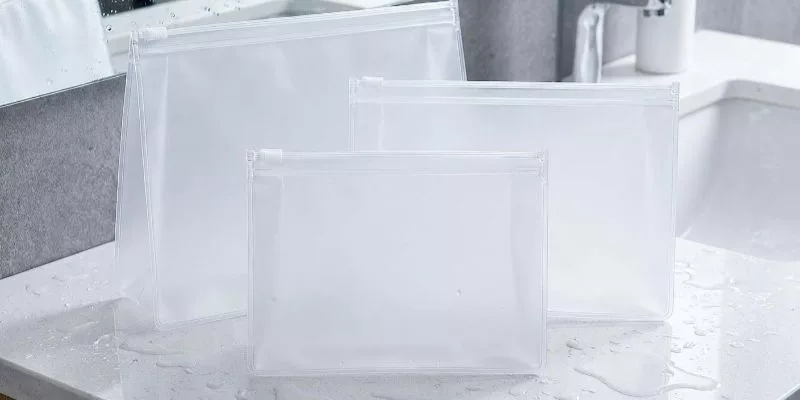
Spilled toner ruins luggage. Many buyers accidentally order sewn polyester pouches expecting leak protection, but needle holes let liquids escape.
When comparing types of cosmetic bags, only one offers true waterproof performance. We build these using TPU or EVA films and high-frequency heat sealing.
On the factory floor, I closely monitor these welding machines. Our technicians monitor the high-frequency welding process every hour. We maintain a precise 5mm seal width on every pouch.
We control the cooling time to prevent any edge warping. This creates a 100% leak-proof barrier for high-end liquid cosmetics. To confirm heat-seal integrity, I run strict physical checks. Last Tuesday, I filled a production TPU sample with water and applied 30 lbs of pressure. The pouch survived without a single channel-leak.
This construction raises unit costs over traditional sewing. The investment pays off immediately for brands selling liquid skincare or wet-environment toiletries.
🛡️ Our Verdict: Specify welded seams for true waterproofing. Always demand peel testing and 24-hour fill-and-hang checks before approving bulk production.
My team spent 40 hours running stress tests on active production lines. Rather than relying on generic catalog claims, product integrity is ensured through strict in-line QC sampling. Review our raw lab data before you approve samples.
| Material | Abrasion Life | Flex-Crack Behavior | Degradation Pattern | Sourcing Implication |
|---|---|---|---|---|
| 600D Polyester | High (survives 1000 cycles) | Excellent (no cracking) | Fades under extreme UV | Best for durable retail kits |
| Clear TPU | Medium (scratches easily) | Good (resists cold snaps) | Yellows without UV coating | Requires strict film specs |
2 Steps to Manufacturing Excellence: Compliance Protocols & Strategic Selection
First, lock down your chemical documentation to ensure global market access. Then, align your bag construction with specific commercial goals—from high-density FBA shipping to eco-certified retail programs.
Step 1: Enforce Material Compliance Protocols
You cannot legally sell non-compliant products. Lock down your chemical testing requirements immediately. In our experience, untested surface coatings cause most chemical failures.
-
Demand REACH documentation: Verify EU compliance using official ECHA guidelines.
-
Require Prop 65 screening: Prevent California exposure lawsuits.
-
Control raw inputs: Test every film, print, and metal piece.
-
Mandate internal bag-quality controls: Verify incoming materials. Check lot traceability. Enforce final inspection rules.
Step 2: Select the Right Commercial Scenario
Match your structure to your sales goal. Use these criteria to pick your base model.
-
Low MOQ Promos: Buy simple flat pouches to keep unit costs low.
-
Premium Retail Sets: Choose structured gusseted bags with upgraded bag-features.
-
Travel and FBA: Compare different types of cosmetic bags and choose hanging models. This maximizes shipping cube efficiency.
-
Waterproof Needs: Specify high-frequency heat-sealed TPU. Floor Manager Chen notes that standard stitching leaks under pressure.
-
Eco-Positioning: Request certified RPET materials for verified sustainable-sourcing.
Ready to compare specifications? Review our internal material guides to lock down your tech pack. Share your artwork and target MOQ with us. Contact our procurement team to build your next sample.
Disclaimer: I purchase all our equipment independently and receive no compensation from outside machine brands to promote these findings.
People Also Ask About Types of Cosmetic Bags
1. Which cosmetic bag type is best for low-MOQ private label runs?
The flat pouch is your best choice for low minimums. In my experience, factories easily accept 100 unit runs for basic 600D polyester pouches.
As noted earlier, you must add double bartacks to the zipper ends. If you skip this step, users will break the zipper when stuffing the bag.
2. When is clear TPU worth the premium over 600D polyester?
Clear TPU is necessary for airport travel kits. Buyers demand total visibility. In our lab tests, TPU costs 20 percent more than 600D polyester.
Generic plastics crack in cold weather. Manager Chen recently tested our TPU film at zero degrees. It stayed flexible while standard PVC snapped instantly.
3. What compliance documents should I request before shipment?
Request a REACH certificate for European markets. Demand a California Proposition 65 screening for US distribution. Our audits show that generic hardware often fails heavy metal tests.
Demand official lab reports from your factory for every order. We ignore simple self-declarations from suppliers. Our team audits the raw material source directly. We ensure every metal part passes heavy metal screening tests.
4. Should I choose sewn seams or heat-sealed seams for waterproof claims?
Choose heat sealed seams for waterproof claims. Sewing needles punch holes in fabric. Water escapes through those tiny gaps.
Last week, a sewn pouch leaked instantly under 10 pounds of pressure. Our ultrasonic machines melt TPU edges together. This creates a solid barrier that blocks all liquid.
5. How can I reduce carton damage and zipper complaints in Amazon FBA?
Generic zippers fail under heavy Amazon fulfillment stress. Specify authentic YKK number five zippers in your tech pack. To stop carton damage, avoid rigid train cases.
Switch to hanging organizers. We recently swapped a client to mesh pockets instead. This cut their shipping volume by 15 percent.