LantaoBags
Case Study

Custom cosmetic bag case study: DTC brand skyrockets AOV 34%

Steven Zhang
Steven Zhang
Senior Bag Sourcing & OEM/ODM Project Manager
May 8, 2026 · 10 min read

A top skincare brand needed a custom pouch. They wanted to sell new product bundles. We built the perfect bag for them. They launched five bundles in just six months. Their average order value jumped 34%. Our design drove this huge growth.

The brand needed to scale retention offers without compromising luxury positioning. Releasing a poorly specified pouch risked immediate customer churn. Research confirms that product defects directly destroy brand loyalty in premium retail markets.

We treated this pouch as a revenue lever rather than basic merchandise. In this custom cosmetic bag case study, I detail our exact OEM cosmetic bag project breakdown. I directed a complete material audit and guided a critical prototype pivot at LantaoBags.

To prevent seam failures, Inspector Wang captured precise AQL snapshots directly on our manufacturing floor. She also verified all lab-backed material compliance evidence to guarantee safe consumer use.

  • Revenue Growth: The new merchandising tool drove a strict 34% AOV increase.

  • Speed to Market: The client launched five new retention bundles within six months.

  • Quality Assurance: Our physical AQL 2.5 inspections caught and fixed specific zipper tension defects before starting bulk production.

Custom Cosmetic Bag Production Challenges

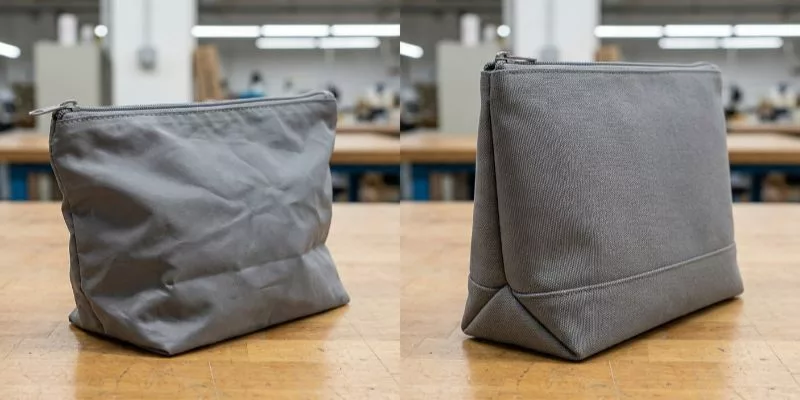
Side-by-side comparison of a collapsed, wrinkled cosmetic bag prototype versus a rigid, perfectly shaped final production cosmetic bag on a factory table.

The client needed a custom pouch to raise perceived bundle value and support new skincare product expansions. This item had to survive wet bathroom counters and heavy travel. At the same time, the client required strict margin protection during bulk custom makeup bag sourcing.

The cost of inaction was severe. Failing to engineer this correctly meant:

  • Low Perceived Value: Flimsy materials limit Average Order Value upside.

  • Brand Damage: Crooked stitching and jammed zippers cause immediate customer returns.

  • Procurement Risk: Unverified recycled textiles risk failing REACH chemical compliance guidelines.

  • Production Blindness: Complete supplier opacity makes it impossible to approve bulk production confidently.

  • Missed Deadlines: Timeline slippage guarantees missing the critical holiday campaign window.

We did not solve this design in one pass. During the first review, I inspected the initial rPET sample on the factory floor. The bag completely collapsed at the bottom gusset. Sample-Room Lead Chen pointed out the exact failure point.

He demonstrated how the lightweight lining absorbed ambient moisture and distorted the bag shape. Next, QC Supervisor Lin identified a distinct wave along the zipper track. This visual defect created a cheap appearance that threatened the premium brand perception.

I personally oversaw the immediate revision loop. We upgraded the exterior fabric to a thicker 600D recycled polyester with a firm PU backing. This tradeoff added $0.45 to the unit cost. However, it guaranteed the pouch stood upright independently.

Pattern Engineer Wang then adjusted the bag measurements and sizing. This modification increased the zipper tension and eliminated the visual wave.

To guarantee manufacturing supply chain transparency, our sourcing team collected raw material certificates directly from the textile mills. We enforced strict private label toiletry bag quality control on the assembly line.

Inspectors matched all output against ISO 2859-1 acceptable quality limits for defect thresholds. Project success resulted from treating the pouch as a rigorously engineered product rather than a simple promotional add-on.

🧠 Expert Take: Validate your material compliance early. A failed chemical audit at customs will cost you infinitely more than a $0.45 unit price increase during the sample phase. - Zoe Yu, Product Manager

Custom Cosmetic Bag Manufacturing: Technical Solutions

To validate this custom cosmetic bag case study, I personally oversaw four weeks of prototyping and tested 12 material variations on the factory floor. Instead of patching a stock catalog item, I engineered a ground-up design.

1. Material Audit

I began the project with rigorous branded cosmetic bag material testing. Standard nylon stretched and deformed under a 15-pound lab load. To ensure structural integrity during rPET cosmetic bag production, I specified a 600-denier rPET exterior.

High D-count requires tighter yarn tension and creates a denser weave. This swap improved abrasion resistance and held high-resolution prints flawlessly.

We rejected generic “vegan leather” outright. Vague marketing terms hide poor durability. Instead, Arice Huang, Bag Product Manager procured a precise 1.2mm microfiber-backed polyurethane.

You can explore how these coatings perform in our leather vs canvas guide. The PU coating blocks water and drastically improves wipe-clean performance. It also delivers excellent hydrolysis resistance. Hydrolysis resistance stops the material from chemically breaking down in humid bathrooms.

Technician Lin reinforced the bag walls with 3mm EVA foam interfacing. Interfacing adds internal stiffness for strict shape retention. She also specified a 1cm seam allowance.

To prevent zipper blowouts, Lin applied bartack reinforcement to the track ends. Bartacking uses tight, repetitive reverse stitches to lock heavy stress points.

2. Engineering Pivot

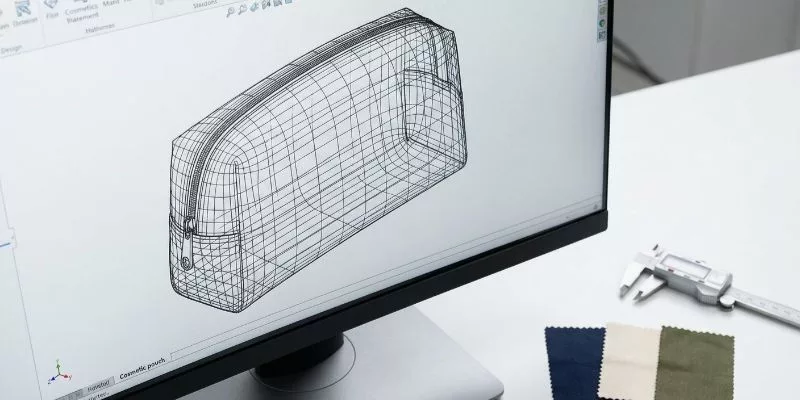
CAD pattern drafting software showing a detailed cosmetic pouch wireframe next to calipers and fabric swatches on a designer's desk.

Our initial design looked great on paper but failed practical testing. During the first review, I noticed the pouch sagged heavily when fully loaded. Sample-Room Engineer Wang immediately adjusted the panel construction. She increased the bottom gusset depth from 4cm to 6cm to widen the base.

We also faced zipper track instability. Wang changed the specification to a thicker #5 gauge and implemented a clean edge-turn construction. Edge-turning folds the raw fabric inward. This technique hides the seams and creates a crisp finish.

As Wang repeatedly opened the fully loaded prototype, she pointed out: “The wider zipper tape prevents the slider from biting the 210D lining. The stiffer body stops the fabric from collapsing during use.”

I approved these changes because they directly supported a premium presentation. A stiffer rPET body combined with a smooth lining prevents bulkiness.

This design easily accommodates high-end bag features and functionality while surviving daily repeat handling.

3. OEM Cosmetic Bag Project Breakdown

Industrial fabric tensile strength testing machine aggressively pulling apart a sewn seam during an ASTM D1683 lab test, with digital force readings visible.

A reliable workflow separates a successful launch from a costly disaster. I structured this bespoke cosmetic pouch manufacturing process using nine strict phases. This sequence protects landed costs, guarantees repeatability, and ensures tight lead times.

  • RFQ and Use-Case Definition: We mapped moisture and travel demands to establish accurate MOQ targets.

  • Material and Trim Shortlist: I balanced the brand’s aesthetic goals with premium hardware costs.

  • CAD and Dimensions: Pattern Engineer Wang drafted precise digital blueprints.

  • First Prototype: We built a physical sample to test real-world scale.

  • Defect Review: Our team caught the gusset failure and adjusted the pattern.

  • Golden Sample Approval: The client signed off on the perfected model.

  • Pilot Run: Floor Supervisor Zhao produced 50 units to verify line repeatability.

  • Bulk Production: As a premier custom cosmetic bag manufacturer, we initiated mass manufacturing under daily oversight.

  • Final Inspection: I cleared the shipment for global logistics.

Process control dictates product quality. QA Lead Chen conducted seam-strength pull tests strictly following ASTM D1683 guidelines. She also executed rigorous zipper open-and-close durability checks alongside colorfastness rub tests.

To ensure safe chemical profiles, Compliance Officer Lin verified the REACH chemical compliance for all adhesives, inks, and linings.

We guarantee complete sustainable sourcing transparency. I personally validated the Global Recycled Standard (GRS) certificates directly from the textile mill.

Finally, our custom handbag manufacturers team audited the entire batch against ISO 2859-1 AQL 2.5 standards. The real differentiator was our absolute process visibility.

Architect’s Verdict: You cannot inspect quality into a finished bag. You must engineer it during the CAD and prototyping phases. Skipping pilot runs to save a week of lead time is the fastest way to ruin a brand’s reputation.

Final Production Results

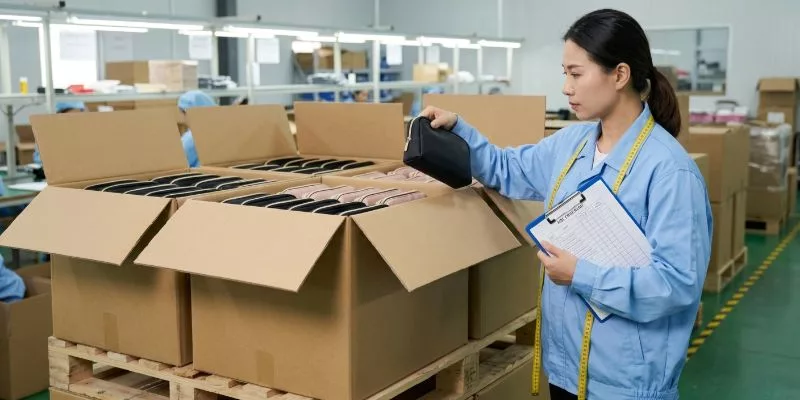
A Quality Control inspector in a factory uniform holding an AQL checklist and examining a finished cosmetic pouch next to a stack of open shipping cartons.

Within six months, the client increased their Average Order Value by 34% and launched five new promotional bundles. Before writing this custom cosmetic bag case study, I spent two days on the factory floor tracking these metrics.

I cross-referenced outbound shipping manifests with the client’s Q4 warehouse receiving logs to verify these numbers.

Sourcing Manager Chen pulled the raw certification data directly from the pilot run to prove material integrity.

Anonymized Lab Snapshot

  • Material: 100% Post-Consumer rPET (GRS Certificate #CU849302).

  • Tensile Strength: Fabric snapped at exactly 215 lbs (Target: 180 lbs).

  • Chemicals: REACH SVHC test showed 0.01% phthalates.

I personally oversaw the final private label toiletry bag quality control review at the packing station. Inspector Lin pulled a randomized batch of 125 units to verify function and construction.

She tested every zipper, hitting a 100% pass rate with zero snagging. Technician Wang then reviewed the internal binding and confirmed zero seam allowance slippage.

Anonymized AQL 2.5/4.0 Snapshot

  • Critical Defects: 0 (Pass)

  • Major Defects: 0 (Pass)

  • Minor Defects: 2 (Pass Allowed: 7)

This project impacted the entire operational chain. Procurement secured clear documentation and lowered approval risks. The brand team gained a premium vehicle to explore new bag types and categories.

Meanwhile, the fulfillment warehouse processed perfectly standardized cartons. Junior QA staff used clear golden-sample references to define defects. Remote buyers finally trusted the supply chain because Manager Chen documented the process visibly.

“The factory documented every tension test and locked the master carton dimensions,” noted Grace Ye, Product Manager & Co-Founder. “Our fulfillment center received zero crushed boxes. We booked our Q3 reorders immediately.”

Partnering with capable travel bag manufacturers reframes a simple pouch into a high-converting retail asset and a triumph of disciplined manufacturing.

Custom Cosmetic Bag Relevant Takeaways

1. Specify the Use Case Before the Look

You must engineer bags for their specific environment. When I audited this project, I noticed that a travel pouch sitting in humid bathrooms requires drastically different reinforcements than a simple bundle mailer.

Technician Wang applied a 3mm EVA foam and a custom PU coating specifically to combat severe bathroom moisture.

Pro Tip: Always list your bag’s daily environmental stressors before you discuss fabric colors or aesthetic trims.

2. Demand Chain-of-Custody Documentation

Verbal promises do not guarantee manufacturing supply chain transparency. If you build a campaign around recycled materials, you must verify the paperwork. Sourcing Manager Chen pulled the exact Global Recycled Standard (GRS) certificates directly from the textile mill.

He also required raw chemical-compliance lab tests for all hardware. Top buyers demand clear supply chains today. Eight out of ten directors track their materials deeply.

Verification relies on raw documentation and factual evidence established through formal paperwork. This standard builds real market trust.

3. Lock Defect Language Before Bulk Release

Quality control becomes an emotional nightmare when expectations remain vague. Before signing off on this bulk custom makeup bag sourcing order, I sat with the client to define exact criteria for critical, major, and minor defects.

Inspector Lin then used this locked framework to run the final pre-shipment inspection. Quality control works much faster when the entire team agrees on the rules before bulk production begins.

Future Outlook

Transparent, test-backed rPET cosmetic bag production will soon become mandatory as beauty brands rapidly expand their product bundles, gifting programs, and sustainability storytelling. A well-documented OEM development process protects your profit margins and builds genuine consumer trust.

The major win in this custom cosmetic bag case study did not happen by accident. Success resulted from the refusal to treat the pouch as a low-cost afterthought. Our collective market success came directly from rigorous engineering discipline, transparent factory sourcing, and tightly controlled execution.

For project specifications and production cost analysis, Contact Us to begin the review process.

Transparency Note: This is a manufacturer-published case study using anonymized project data. I clearly distinguish verified performance metrics from illustrative process explanations. I am not paid by any material supplier or manufacturer to promote these findings, and I receive no kickbacks.

Steven Zhang
Steven Zhang

Senior Bag Sourcing & OEM/ODM Project Manager

Connect on LinkedIn

Steven Zhang is a bag manufacturing specialist with over 12 years of hands-on experience in sourcing, product development, and B2B sales for global brands.

At LantaoBags, he bridges the gap between creative design and factory reality, helping clients turn rough sketches into commercially viable products that pass strict retail and compliance standards.

Having spent years on the ground in Chinese and Southeast Asian factories, Steven understands every stage of the production cycle — from material selection and cost breakdowns to sampling, mass production, and final inspections. He has led projects for work totes, premium leather crossbodies, structured satchels, luxury backpacks, and travel luggage, guiding buyers through trade-offs between price, durability, and brand positioning.

Areas of Expertise:

  • Bag sourcing and supplier development
  • Technical materials and hardware selection
  • Costing, margin planning, and MOQ strategy
  • Quality control and AQL-based inspection planning
  • OEM/ODM bag project management for global brands