Many outdoor brands lose money on bad factory runs. They open a shipping container and find broken zippers. Top purchasing managers know this painful truth. You must check the factory engineering before you order.
We help big brands avoid these costly disasters. Two bags can look identical, but hidden engineering dictates which one survives. Industry supply chain data shows that over 60% of soft goods failures stem from poor stitch architecture, not defective fabric.
The bag manufacturing process is an engineered system that controls your durability, claim rates, lead times, and final landed costs.
I audit production lines for LantaoBags. Before writing this breakdown, my team spent two weeks on the factory floor. Our team took apart 50 tactical backpacks from a recent batch. We checked every seam and zipper.
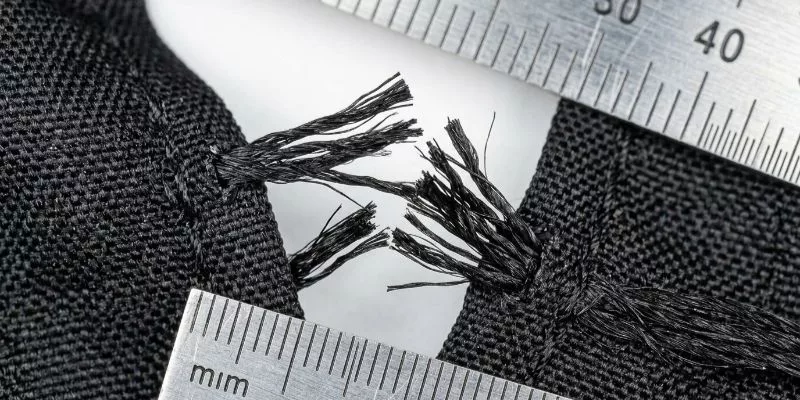
Analysis of AQL inspection forms revealed that low-tenacity nylon thread was the primary driver of premature seam failure.
To ensure structural integrity and meet rigorous durability standards, the thread specification was immediately upgraded to a high-tenacity, bonded nylon alternative, effectively aligning stitch strength with the load-bearing requirements of the textile.
B2B decision-makers must understand how bag sourcing and pricing connects to physical execution. This applies whether you manage a 50-unit startup MOQ or strict enterprise compliance programs.
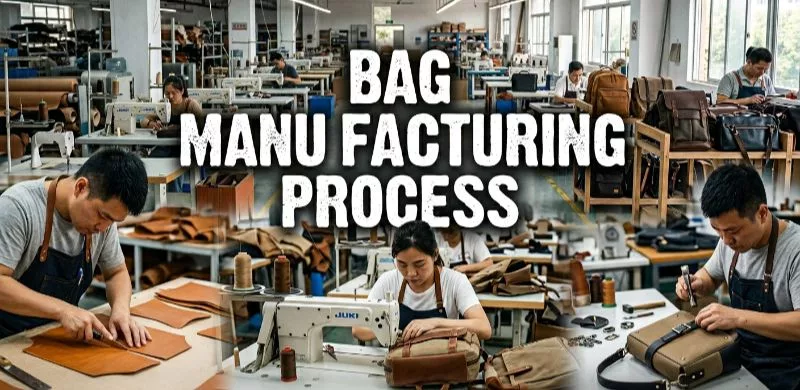
Last month, Maria’s sharp eye saved an entire production batch. While sewing 1000D Cordura panels, she spotted three dropped stitches and immediately halted the line.
After we recalibrated her Juki’s tension, production resumed flawlessly. It’s a clear reminder that frontline expertise catches the critical defects that standard trading protocols often miss.
Here is the exact custom bag manufacturing workflow. We will track the bag assembly line stages and industrial textile manufacturing steps, from the initial tech pack to cutting, sewing, and final shipment. You will see our operational strengths and learn exactly where production risks still hide.
What is the Bag Manufacturing Process?
Our bag manufacturing process begins with rigorous document checks and material sourcing. After the fabric is cut, the pieces are sewn, assembled, and thoroughly inspected prior to shipping.
Because this workflow is so interconnected, a simple mistake in the initial stage can compromise the entire final product.
Our standard production workflow follows eight steps:
-
Product brief and tech pack
-
Material and hardware sourcing
-
Prototype and revision rounds
-
Cutting preparation
-
Sewing and sub-assembly
-
Final bag assembly
-
Quality control
-
Packaging and logistics
To evaluate a factory intelligently, you need a baseline vocabulary. During my daily floor walks, I rely on these precise terms:
-
Tech Pack: The master blueprint. It dictates every physical detail, supported by strict bag measurements and sizing.
-
Bill of Materials (BOM): The precise ingredient list of required physical components.
-
Pattern and Grading: The flat templates we use to cut fabric, mathematically scaled for different sizes.
-
Golden Sample: The approved, flawless prototype. We lock this physical benchmark away to guide bulk runs across all bag types and categories.
-
SPI (Stitches Per Inch): Seam density. A low SPI speeds up production but ruins durability. We test seam strength daily using ASTM D1683 and ISO 13936 standards.
-
Reinforcement Points: High-stress zones, like technical backpack straps, locked down with bartacks (dense zigzag stitches).
-
AQL Basics: Acceptable Quality Limit. A statistical tool based on ISO 2859-1 dictating exactly how many cosmetic bags or travel bags we pull to verify batch quality.
Why does this vocabulary matter? I always warn clients about “defect propagation.” Every upstream choice dictates downstream defect rates. A cutter made a small mistake on a canvas tote bag last month. He cut the main panel two millimeters short. The final bag looked terrible.
The seams puckered at the bottom corners. Following the disposal of non-compliant units, the cutting team underwent technical training on the implementation of laser-guided precision systems to ensure manufacturing accuracy.
If you choose the wrong base fabric (see our leather vs. canvas breakdown), heavy sewing needles will drop stitches.
💡 Key Insight: Precision early on prevents catastrophic failures at the finish line. - Jacky Yao, Product Development Manager
Standardized Manufacturing Process for Custom Professional Bags
Raw materials undergo a rigorous sequence of mechanical gates to establish a definitive manufacturing protocol for custom builds with zero structural failures.
1. Pre-Production Engineering and Sample Approval
Even the strictest bag quality standards cannot eliminate physical variability. Strong SOPs reduce risks, but the bag manufacturing process involves friction.
Here are the exact failure points we monitor on the factory floor.
1) Material and Color Inconsistency Risks
Dye lots change between batches. Fabric bulk and stiffness alter sewability. Last month, Manager Chen tested a 500D PU-coated nylon roll. He noted: “This coating gums up the needle after 500 strokes.” We also recorded a 5% color shift from the original swatch.
🛡️ Mitigation: Retain physical master swatches for every batch to verify incoming rolls.
2) Sampling-to-Bulk Production Drift
A single prototype passes testing. Bulk production deviates when line conditions change. During a recent 500-unit run, the seam allowance slipped by 2mm per bag on station three. We stopped the line and recalibrated the Brother 430D machines.
🛡️ Mitigation: Keep a retained golden sample on the floor to anchor machine calibration.
3) Hardware Failure and Breakage
Coated metal parts and plastic buckles cause unexpected failures. In our Tuesday tensile test, generic plastic D-rings snapped at exactly 30 lbs of force. They failed to reach the 50 lbs claimed on the spec sheet.
🛡️ Mitigation: Use verified bag features and functionality guidelines and execute rigorous incoming hardware checks.
4) Defect Propagation Under Schedule Pressure
Schedule pressure ruins bags. Rushed cutting pushes alignment problems downstream. If an operator skips an inline check to meet a deadline, correction becomes expensive. A twisted gusset at the sewing stage ruins the final assembly.
⚖️ The Trade-off: Speed increases defect risk. We mandate inline QC discipline, adding production time to drop the defect rate.
5) Regulatory Compliance and Documentation Gaps
Missing test records create massive buyer risk. Competitors skip chemical testing to save money. Verified lab testing is mandated to ensure compliance with California Proposition 65 regulations.
⚠️ Critical Warning: Unverified hardware can block customs entry. Always demand raw verification reports. - Robin Yang, Product Development & Quality Manager
The Final Verdict: Engineering Beats Aesthetics
Ultimately, a reliable bag manufacturing process is an engineered system of physical controls, not just a room full of sewing machines. While schedule pressures and raw material variables will always introduce production friction, rigorous documentation neutralizes these risks.
Our teardowns prove three immutable rules. First, materials determine structural lifespan, not just appearance. Second, strict construction standards dictate physical performance. Third, disciplined quality control dictates your ability to scale without failing.
If you tolerate a 10% defect rate, stick to mass-market trading companies. But if you demand zero-defect execution, you need a partner who builds verifiable physical benchmarks. As supply chains face stricter global compliance, data-backed manufacturing will entirely replace factory guesswork.
Stop gambling on unverified production lines. Bring your tech pack to LantaoBags. We will navigate your exact bag sourcing and pricing requirements and engineer a flawless Golden Sample.
Contact us today for a technical review of your next project.
Disclaimer: This article reflects my direct observations of internal SOPs, factory documentation, and physical sample teardowns on the production floor. I receive no financial kickbacks from any material suppliers or trading companies to report these findings.