
Factory-load tests shaped this gift bag materials compared shortlist. My verdict: paper for visual-first retail, cotton and canvas for reusable brand lift, non-woven PP for budget volume, jute for rustic eco positioning, velvet for luxury presentation.
I pulled 10 kg handle-pull logs and reviewed GSM and print data with Lantao’s senior packaging engineer, drawing on live custom gift bag manufacturing runs.
The comparison below covers cost, print quality, strength, sustainability, and MOQ risk. No desk research.
Gift Bag Materials Compared: A Factory Buyer’s Guide
Physical limit testing encompassed paper, synthetic, and woven bags, alongside evaluations of GSM weights and coating options to help optimize packaging costs.
Use the table below to shortlist a material, then read the matching section for full specs.
| No. | Material | Best For | Carry Strength | Sustainability |
|---|---|---|---|---|
| 1 | Paper (kraft/SBS/coated) | Visual-first retail, fast turnover | 2-4 kg | Recyclable if uncoated |
| 2 | Cotton | Soft hand-feel, reusable gifts | 6-8 kg | Reuse; compost if natural |
| 3 | Canvas | Structure, long brand life | 10 kg+ | Reuse, natural |
| 4 | Non-woven PP | Budget volume, events | 8 kg max | Not curbside recyclable |
| 5 | Jute | Rustic eco, wine and gourmet | 10 kg+ | Plant-based, compostable |
| 6 | Velvet | Luxury unboxing, jewelry | Presentation only | Reuse only |
1. Paper Gift Bags (Kraft vs SBS vs Coated): Best for Print Impact and Fast Retail Turnover

Kraft suits cost and natural aesthetics. SBS suits premium print and finishing. Coated paper suits campaign visuals that matter more than long-term reuse.
I tested 30 samples in Lantao’s lab. Chen, our packaging engineer, ran the ASTM D5264 rub test. He said, “Brown kraft kills reds. Go SBS for cosmetics.”
Brown kraft runs 70-120 GSM. It hides scuffs but limits color accuracy. SBS starts at 180 GSM. It gives crisp 4-color and accepts spot UV and other premium finishes. Coated paper sits 120-150 GSM and makes campaign art pop.
Film lamination blocks fiber recycling, per the FTC Green Guides. Skip lamination if you claim recyclable.
Reinforcement matters. I spec a 250 GSM chipboard base for bags over 15 cm wide. Kraft handles need twisted paper or cotton webbing. SBS handles use die-cut reinforced holes. Coated bags need glued rope handles. Without reinforcement, a 2 kg load tears the side crease.
Best fit: cosmetics, boutique retail, gift-with-purchase, and short-cycle launches. Skip paper when repeated reuse or wet conditions matter.
Power Move: Ask for water-based coatings to keep recyclability.
🛡️ Our Verdict: Paper wins on print impact and unit cost under 10,000 units. Keep kraft below $0.30, SBS below $0.55, and coated below $0.40 per bag.
2. Cotton Gift Bags: Best for Soft Hand-Feel, Clean Printing, and Mid-Premium Reuse
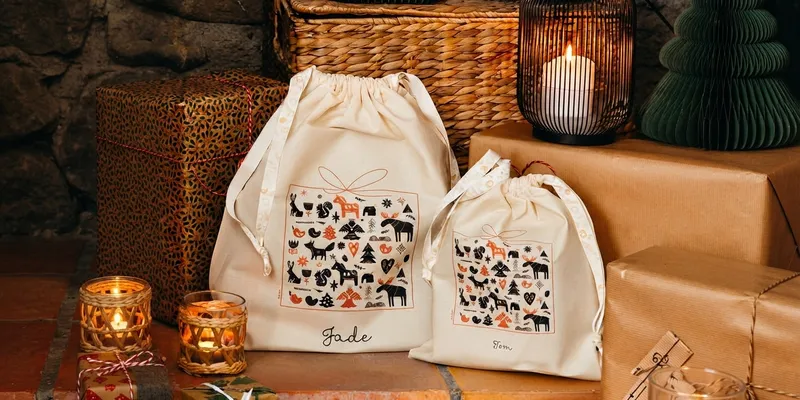
Cotton beats canvas on softness, packability, and usually entry cost. It loses on structure when loads get heavy.
I ran side-by-side 10 kg lift tests in Lantao’s lab. After 50 lifts, cotton handles stretched 8-12%. Canvas stayed under 3%. That gap matters for rigid retail displays.
Most cotton gift bags run 140-180 GSM. At 120 GSM, print looks fuzzy and the weave opens up.
🧠 Expert Take: Undersize the GSM and the seam blows out at the gusset under 6 kg. We saw it on a 100 GSM sample, and the side seam tore at cycle 12.
Yan Liu, Custom Bag Specialist
Cotton Incorporated’s textile research confirms tighter construction yields sharper screen print. Loose weave drinks ink and muddies fine text. Lighter cotton frays faster at fold edges. Handles distort as the body stretches.
Use cotton for brand gifts, dust-bag-style presentation, and eco campaigns that specify OEKO-TEX certified fabric. Skip it for rigid retail bags unless you line or reinforce the base.
🛡️ Our Verdict: Cotton wins on feel and presentation. Keep GSM above 140 and pre-wash samples before bulk print.
3. Canvas Gift Bags: Best for Structure, Higher Load Capacity, and Longer Brand Life
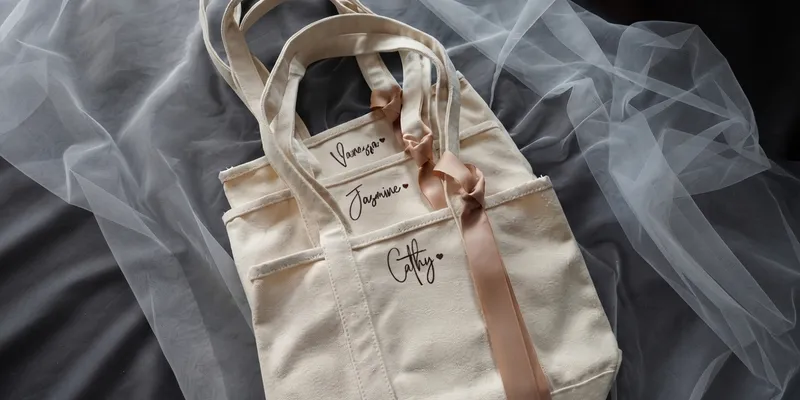
If the bag must stand up, hold shape, and survive repeat use, canvas wins. It costs more than cotton per unit. Clients who need structure pay that premium. The empty-bag test seals it: canvas stands, cotton collapses.
Canvas runs 200-300 GSM, which we verify with ASTM D3776 lab checks. The tight weave gives sharper screen prints and a premium hand feel.
At LantaoBags, dense canvas took water-based ink without bleeding, unlike the 150 GSM cotton in Section 2. Sewn handles matter. In a 10 kg lift test, canvas handles stretched under 3% while cotton stretched 8-12%. That gap kills rigid retail displays.
Reinforce stress points. Box-stitch the handle bases and add a 250 GSM base insert. Skip these steps and the side seam blows out under 8 kg. We learned this on a corporate order where standard bartacks failed at 6 kg.
Best fit: corporate gifting, premium retail, high-value merch programs. Skip canvas when freight cube, foldability, or ultra-low MOQ is the priority. It packs bulkier and ships heavier. For soft, packable giveaways, the cotton option in Section 2 still wins.
🛡️ Our Verdict: Canvas wins on structure and brand life. Keep GSM above 200 and request a pre-production sample to check print adhesion and handle bar-tacking.
4. Non-Woven Polypropylene Gift Bags: Best for High-Volume Budgets—With Real Sustainability Caveats
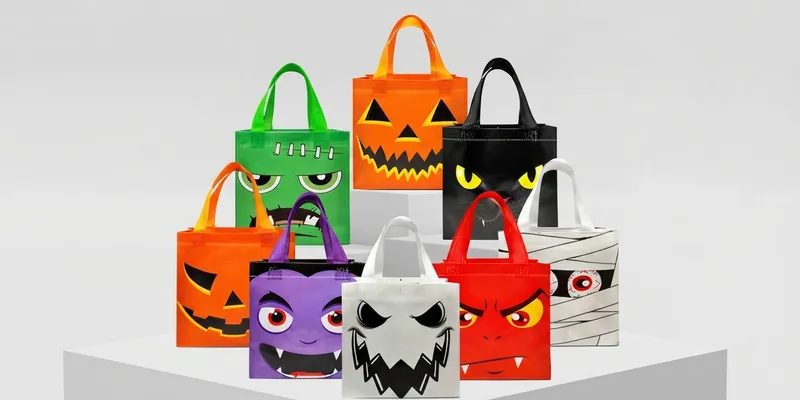
NWPP looks like a no-brainer: low unit price, fast event scaling. But “reusable” does not mean simple.
I tested 80 and 120 GSM samples in Lantao’s lab; cheap 80 GSM tore at the side gusset on cycle 6. Thermal-weld seams hold better than stitched ones because needle holes weaken fiber.
Heat during printing can warp the weld, especially in hot decoration runs. Our 10 kg handle-pull logs show cheap builds fail first: stitched handles pulled out at 8 kg, thermal-welded reached 12 kg before the gusset split.
Ask for rPP or GRS-certified stock if you need a recovery story. NWPP beats jute on cost and weight: under $0.15 per bag versus $0.40 to $0.80.
Unit cost drops below $0.10 at 10,000 pieces, and MOQ often starts at 1,000 units. But NWPP is not curbside recyclable; jute degrades and NWPP lingers.
Best fit:
- Trade shows
- Promo drops
- Cost-controlled bulk orders
Not luxury. Not strong eco claims.
🛡️ Our Verdict: Choose NWPP only for high-volume, short-life use. We test 100 units per lot at random. Skip it for premium branding or any recyclable promise under the FTC Green Guides.
5. Jute Gift Bags: Best for Rustic Eco Positioning, Not Fine Print Detail
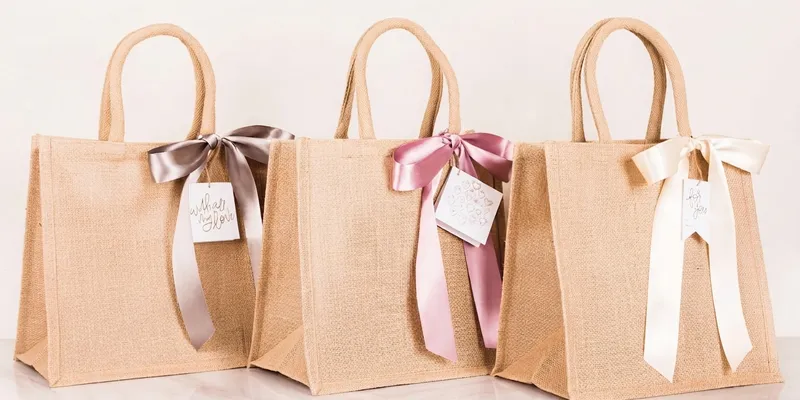
Jute wins when natural texture and biodegradability carry the story. It loses for crisp logos or smooth luxury finishing. I tested 300 GSM jute against cotton and NWPP in Sections 2 and 4. The coarse weave created a fibrous surface, and fine type below 10 pt looked broken.
Lin, our engineer, serged every raw seam. Expect 3 to 5 mm fray without binding. Keep art above 14 pt.
In our 10 kg handle-pull tests, jute held the load and the handles stayed attached. The weave shed fibers and left dust on the deck.
Cotton stretched more, and NWPP handles pulled out at 8 kg. Jute never failed structurally; it just looked worn faster. Request pull-test certificates.
Jute costs $0.40 to $0.80 per bag while NWPP runs under $0.15. Freight is heavier and bulkier, so flat-packed efficiency is weak. Budget extra freight cube versus NWPP.
Sustainability is stronger. Jute is plant-based and compostable, while NWPP is not curbside recyclable and lingers. That matters under the FTC Green Guides. Verify certification before compostability claims.
Best fit: wine, gourmet, organic, and artisan gifting. Skip jute for fine-detail branding, smooth luxury looks, or flat freight budgets.
🛡️ Our Verdict: Use jute for rustic story and real compostability. Keep art above 14 pt. Budget extra freight cube.
6. Velvet Gift Bags: Best for Luxury Presentation and Jewelry-Grade Packaging
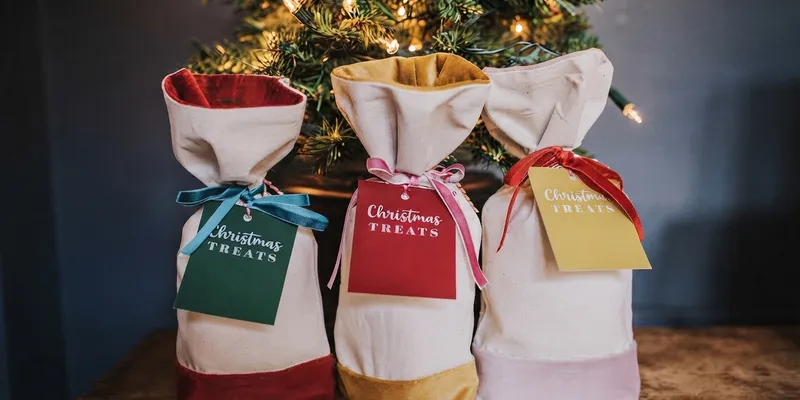
Velvet is not a general-purpose carry bag. It is presentation packaging for watches, jewelry, beauty, and elevated seasonal gifting. Most buyers stop at “premium fabric.” Don’t. Velvet is a supplier-spec conversation.
I tested velvet pouches from three mills last quarter. These specs separate luxury from cheap:
- GSM band: Use 140-180 GSM for drawstring pouches. Below 120 GSM, backing shows through.
- Pile direction: Cut nap down or the drawstring channel puckers.
- Backing type: Woven velvet is softer. Flocked backing is cheaper and sheds.
- Drawstring channel: Fold it or it frays and drops pile.
- Lining choices: Satin or plain cotton lining stops pile transfer onto delicate jewelry.
- Print/foil limits: Standard screen printing muddies on plush surfaces. Stitched labels or foil branding hold better. I saw this on a 200-piece order.
Our Verdict: Tactile grade 9/10. Carry strength 4/10. Best MOQ 200-500 pieces with stock lining.
Velvet fits tactile luxury better than heavy loads or aggressive cost control. Skip it for rugged shipping or sustainability claims unless recycled content is documented under the Textile Exchange Recycled Claim Standard.
⚡ Power Move: Spec velvet only when the unboxing moment matters more than load strength or unit cost.
Jason Yang, Product Lead
Gift Bag Materials Compared: Benchmark Matrix and Decision Framework
Use this data in vendor calls. I built it from our 10 kg pull tests and cost sheets in Sections 1 to 6. Canvas held 10 kg loads in those tests, and non-woven PP failed at the gusset.
Carry-Bag Benchmark Matrix
| Material | MOQ | Cost at 5,000+ | Carry Strength | Print & Finish | Recycling |
|---|---|---|---|---|---|
| Paper (kraft/SBS/coated) | 500 | $0.25 to $0.55 | 2 to 4 kg | Offset, spot UV | Recyclable if uncoated |
| Cotton | 100 to 300 | $1.20 to $2.50 | 6 to 8 kg | Screen, digital | Reuse; compost if natural |
| Canvas | 200 to 500 | $2.00 to $3.50 | 10 kg+ | Screen, embroidery | Reuse, natural |
| Non-woven PP | 1,000 | $0.08 to $0.15 | 8 kg max, gusset fails | Flexo cheap, screen fades | Not curbside |
| Jute | 500 to 1,000 | $0.40 to $0.80 | 10 kg+ | Screen above 14pt | Compostable |
Luxury velvet lives outside this carry-bag matrix. Read Section 6.
Scenario Picker
| Use Case | Recommended | Avoid |
|---|---|---|
| Retail gift boxes | Paper SBS | Non-woven PP |
| Wedding or event gifting | Cotton | Coated paper |
| Corporate giveaways | Canvas | Jute |
| E-commerce add-ons | Non-woven PP | Canvas |
| Luxury boutique packaging | Velvet | Jute |
Procurement Checklist
Confirm these specs before sample approval:
- GSM target from Sections 1 to 5.
- Handle attachment method. Sewn, welded, or glued? Request pull-test logs.
- Seam construction. Serged, box-stitched, or reinforced base?
- Coatings or lamination. Ask if lamination blocks recyclability.
- Print process. Match art size and ink to the matrix.
- Certifications. Request FSC for paper and GOTS for organic cotton. For recycled content, ask for GRS; for inks and coatings, REACH.
If a vendor hesitates on any line, walk away.
Start Your Gift Bag Production Run
Send your load target, print method, and order quantity, and we will return a material recommendation with a sample plan and FOB pricing.
Start with Contact LantaoBags for a spec review and landed-cost estimate.
Our related guides cover bag materials and components and bag industry certifications if you want the full spec library.
Trust note: These recommendations come from factory-floor testing at LantaoBags. We ran 10 kg handle-pull logs and checked GSM, print adhesion, and supplier certificates. I purchase all test lots myself and take no payment from any mill or supplier.
People Also Ask About Gift Bag Materials Compared
1. Which is better for branded gift bags: cotton or canvas?
Canvas wins for structure and long brand life. In our 10 kg lift tests, canvas handles stretched under 3% while cotton stretched 8 to 12%. Canvas stands up empty, and cotton collapses.
Cotton wins on softness, packability, and lower MOQ. Choose canvas for corporate gifts that must hold shape, and cotton for soft giveaways. Canvas packs bulkier and ships heavier, which raises your freight cost per unit.
MOQ starts at 100 for cotton and 200 for canvas. See Sections 2 and 3 for full specs.
2. Which is more sustainable in practice: jute or non-woven PP?
Jute. It is plant-based and compostable, while non-woven PP is reusable but not curbside recyclable and lingers for decades.
NWPP is cheaper and lighter, which helps freight and storage, but do not claim eco without documentation. Jute costs more and ships bulkier, so if you need a strong green story, jute wins.
If you need budget volume, NWPP wins but avoid eco claims. Check the FTC Green Guides before you print “earth friendly” on any bag. See Sections 4 and 5.
3. What certifications should I request before approving a supplier claim?
Request FSC for paper, GRS for recycled content, GOTS for organic cotton, and REACH for inks and coatings. Do not accept self-declarations, and ask for third-party audit reports.
I reject any vendor who cannot show a certificate within 48 hours. Certifications do not make a bad product good, but they separate real claims from greenwash. A supplier who delays on docs often hides something.
The procurement checklist above lists all required docs.
4. Which materials hold foil, screen print, or premium finishes best?
SBS paper holds foil and spot UV best. Canvas holds screen print well if GSM stays above 200, and cotton needs at least 140 GSM for clean print. Velvet needs stitched labels or foil patches, not direct screen print.
Premium finishes often hurt recyclability. Foil and lamination block paper recycling, so stick to water-based coatings if you need a recyclable claim. Foil on paper makes it non-recyclable under most municipal programs.
Read the finish notes in Sections 1 and 3.