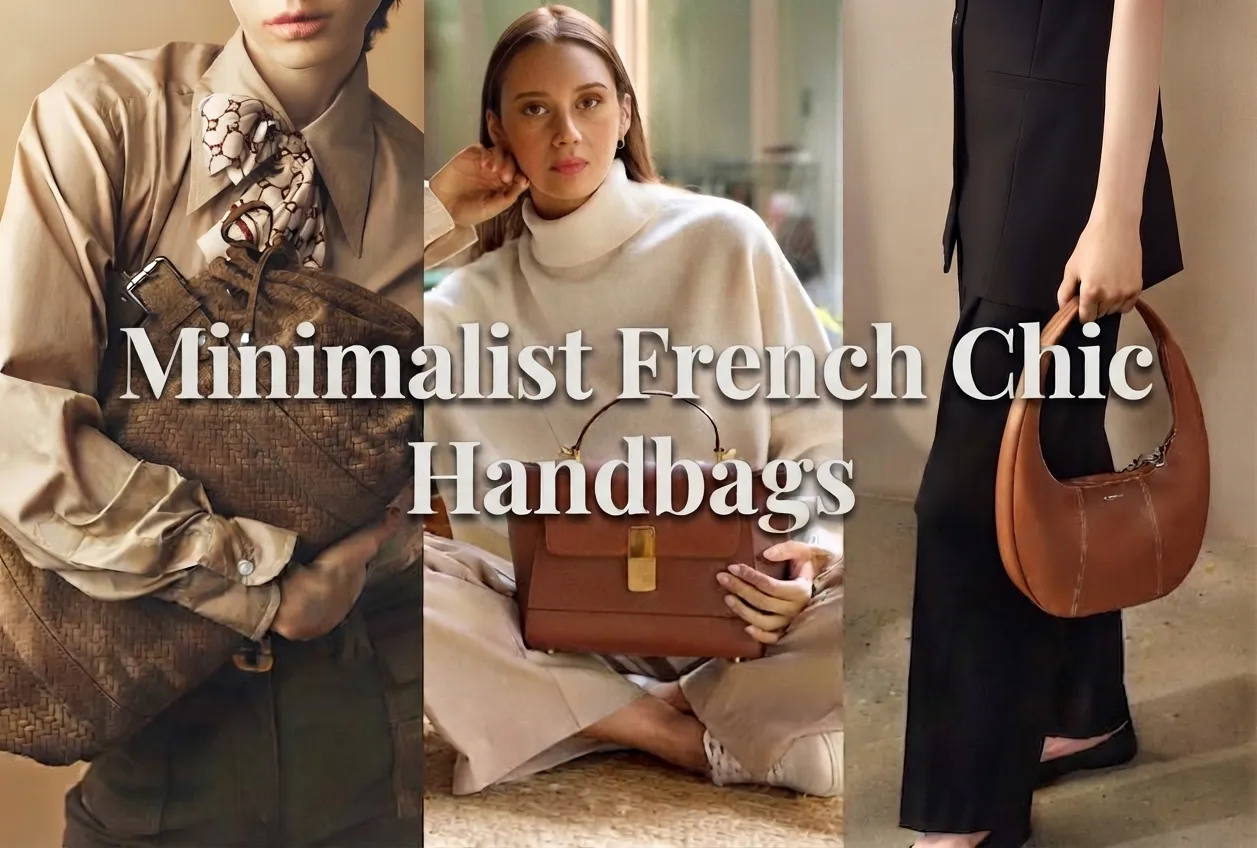
Buyers constantly pitch beautiful sketches, only to watch their margins die during prototyping. Manufacturing bags for top European brands, our factory outputs 50,000 premium bags every month.
Knowing exactly which designs fail in production, our team tested 30 new styles last week using heavy-duty Juki machines. Flawed designs were dropped immediately under our strict adherence to AQL quality rules.
Below are six proven Minimalist French Chic Handbags that actually survive bulk production. Afterward, I share our custom handbag manufacturers SOPs and the testing metrics you need before ordering samples.
The 6 Iconic Silhouettes Defining Modern French Minimalism
True luxury rarely shouts—it communicates through clean lines, flawless structure, and quiet confidence. French chic aesthetics master this effortless sophistication, offering timeless silhouettes that instantly elevate a brand’s high-end appeal across all types of handbags.
1. The East-West Shoulder Bag
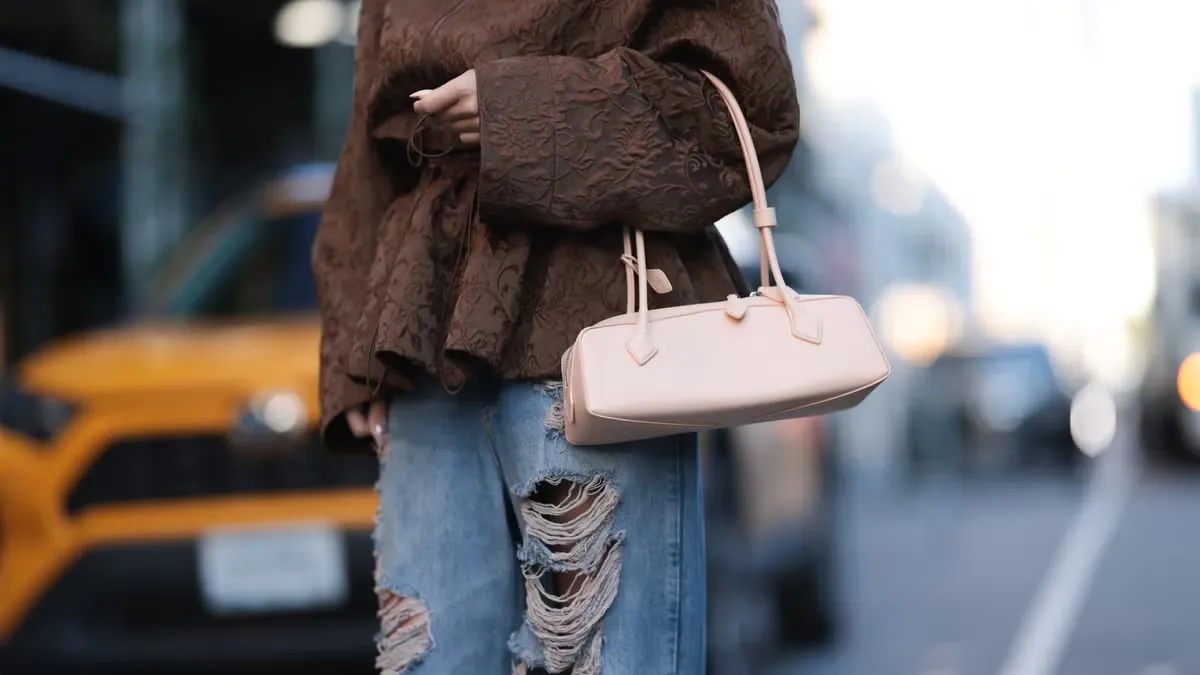
Buyers love minimalist French chic handbags. The East-West shoulder bag delivers this low-logo appeal for discreet everyday collections. But its long, horizontal shape is a structural nightmare. The elongated body exposes manufacturing weaknesses fast.
Building this silhouette requires strict engineering. During a recent production run, I watched an unreinforced prototype bow under three pounds of weight. The long zipper line distorted and the middle sagged.
The narrow body placed intense stress on the strap anchors. We now test all load-bearing joints against SATRA physical testing standards to guarantee stability.
You need rigid materials to fix this. I recommend firm full-grain or corrected full-grain leather. You must add heavy reinforcement at the side seams and strap bases.
On the factory floor, we calibrate our machines to 8-10 SPI (stitches per inch). This specific tension prevents leather tearing, following our bag stitching methods. Pair this construction with quiet, plated hardware.
🛡️ Our Verdict: In your first sample round, validate profile straightness, top opening stability, and underarm carry comfort.
🚀 Actionable Insight: Keep your initial MOQ to a 50-unit color run to test structural integrity before scaling up.
2. The Architectural Top-Handle Bag
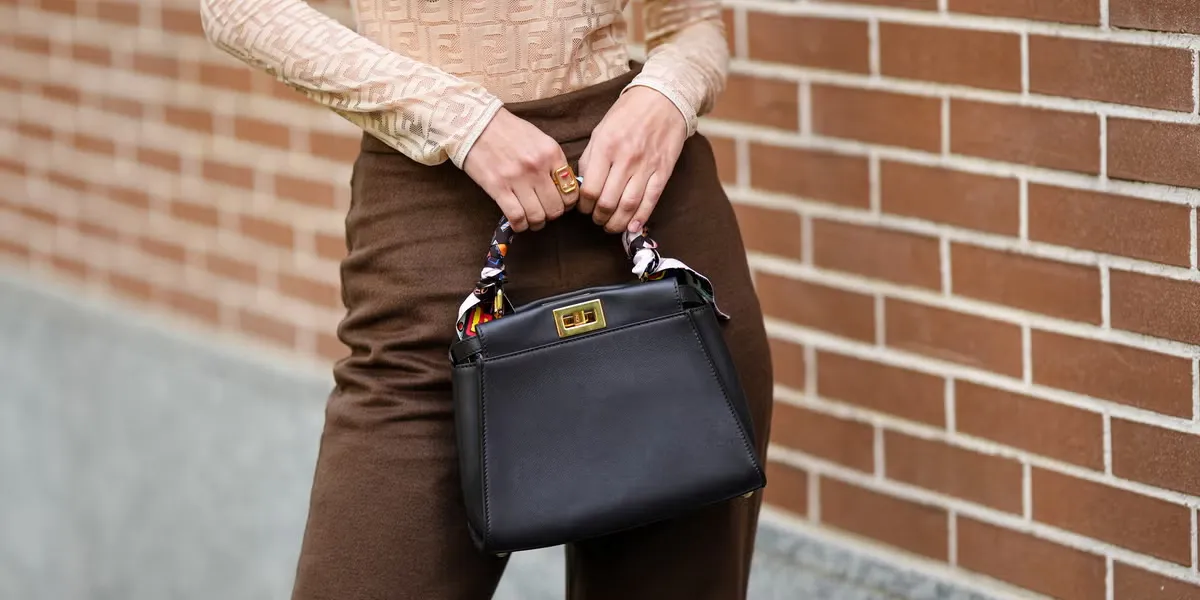
The architectural top-handle bag is the cleanest expression of minimalist French chic handbags. This formal day-to-evening silhouette relies entirely on crisp geometry rather than flashy decoration.
This structured shape is incredibly unforgiving. Last month, a client brought us a failed prototype from a local supplier.
During our lab assessment, the handle base tore at just five pounds of force, failing basic ASTM tensile strength standards. The side walls showed severe wrinkling. High tension on these structured bodies makes even a one-millimeter panel asymmetry obvious to the naked eye.
To prevent wall collapse, we engineer these bags using strict structural specs:
- Medium-firm calfskin: Full-grain leather pairs with a hidden reinforcement board and stiff microfiber backing to keep panels perfectly flat.
- Disciplined edge finishing: All exposed perimeter lines are precisely sealed.
- Understated hardware: A simple magnetic closure or custom lock secures the flap.
🛡️ Our Verdict: Treat this design as a precision engineering project. Before you approve mass production, physically measure the top-handle drop yourself. Test the opening function fifty times. Always ask your factory if they require custom molds to guarantee perfect panel symmetry.
3. The Curved Slouchy Hobo
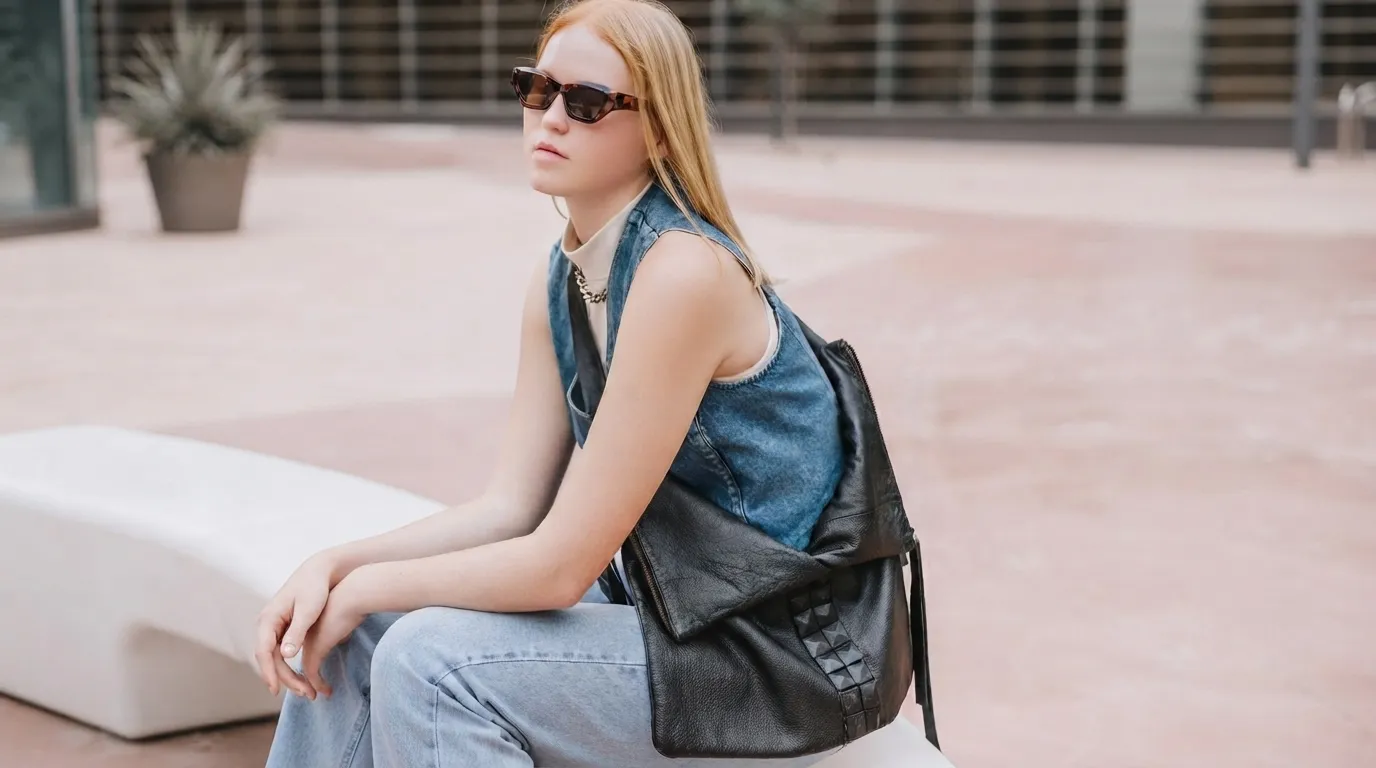
Effortless minimalist French chic handbags are a lie. That relaxed, slouchy look requires intense engineering.
The curved hobo bag offers a soft crescent profile. Controlling that drape is our biggest manufacturing challenge. If the leather is too soft, the body collapses under its own weight.
Last month, a client’s uneven strap balance caused the top opening to twist under a five-pound load. Stiff lining fabrics also pull the exterior shell and create a messy silhouette.
To fix this, I recommend 1.2mm milled top-grain leather graded by Leather Working Group standards. We apply lightweight reinforcement only at the strap anchors.
As manager Chen guides the crescent curve through our Juki 1541 machines, he actively adjusts thread tension to prevent puckering. The design is finished with brushed, low-flash hardware verified for REACH compliance.
🛡️ Our Verdict: We run strict drape tests by hanging a loaded sample on a shoulder rig for 48 hours. The opening behavior must stay predictable across different leather tempers.
🚀 Actionable Insight: Load your prototype with everyday items before approving bulk production. Verify shoulder comfort and ensure the zipper path stays smooth under tension.
Ziying Huang, Handbag / Accessories Product Developer & Designer
4. The Unstructured Bucket Tote
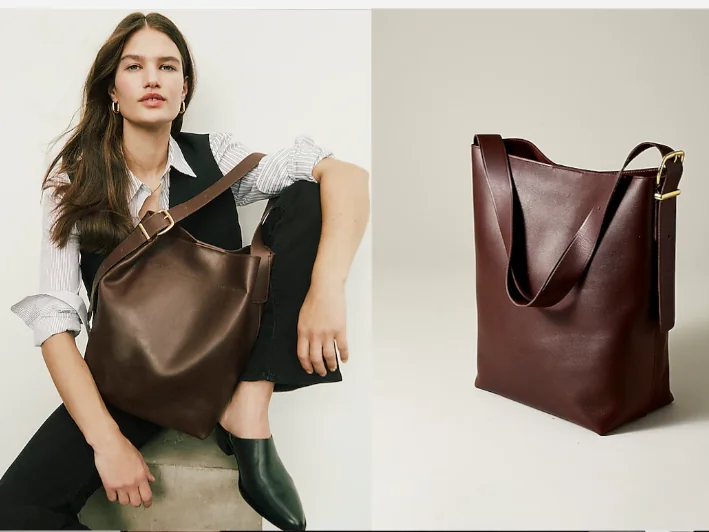
The unstructured bucket tote is the backbone of minimalist French chic handbags. This roomy volume style sells well for boutique assortments because of its clean, daily-use appeal.
But this deceptively simple design requires intense hidden engineering. Without proper reinforcement, a bucket tote fails fast. You face opening drift, base collapse, and side-panel distortion the second a customer drops a laptop inside.
During a recent ASTM D2208 tensile test, an unreinforced sample stretched completely out of shape under just eight pounds of force.
Yu Guilin, Leather Goods Designer & Pattern Maker showed me the exact failure point on our factory floor. He noted: “Without 0.8mm rigid salpa or microfiber backing at the strap anchors, the soft leather just tears under daily stress.”
To prevent this, pair softer luxury leather with hidden structural upgrades. Use a heavy-duty lining weight and stiff base reinforcement to prevent bottom fatigue. Keep the hardware minimal so it never overpowers the silhouette.
🛡️ Our Verdict: Never skip standing stability tests. I always recommend prototyping both an open-top and a magnetic-closure version. Compare how both samples handle a 10-pound wear-load test before you commit to a bulk order.
5. The Geometric Flap Crossbody
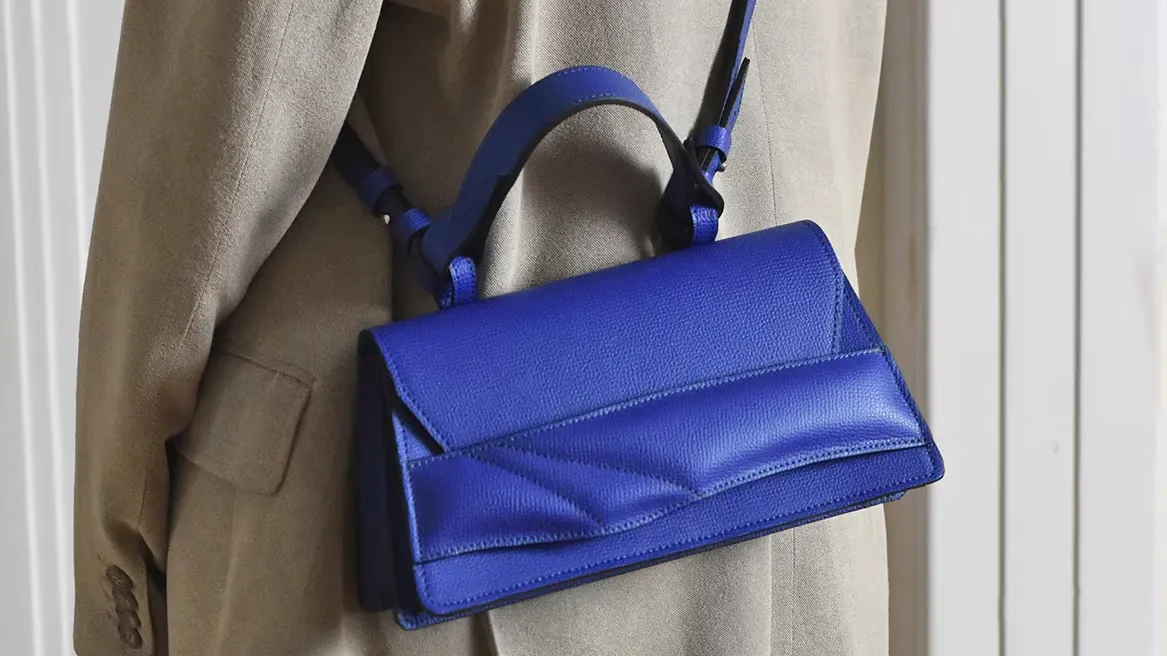
Small bags seem easy to manufacture. In reality, tight geometry causes our highest defect rate during standard AQL 2.5 inspections. Boutique buyers love the crisp folds and architectural look of minimalist French chic handbags.
But angled flaps expose every production shortcut. Last month, a client brought us a failed prototype from a cheaper factory. Edge paint pooled heavily on tight angles.
A 2mm magnetic closure mismatch visibly skewed the entire flap line, making the strap placement look completely crooked.
To hold these strict angles, we source clean-surface leather with high rigidity. Precise skiving is mandatory. While adjusting our Fortuna skiver, Li Jingyun, Handbag / Bag Designer pointed out the exact constraint.
“These tight corners must be thinned to exactly 0.5mm,” he noted, “to prevent the multi-coat edge finish from cracking after 20 open-close cycles.” The geometry is completed using a discreet leather strap or muted hardware chain.
🛡️ Our Verdict: Expect at least three prototype rounds before signing off. During sampling, manually test the open-close action 50 times. The flap must align perfectly straight the exact moment the magnet catches.
6. The Structured Box Shoulder Bag
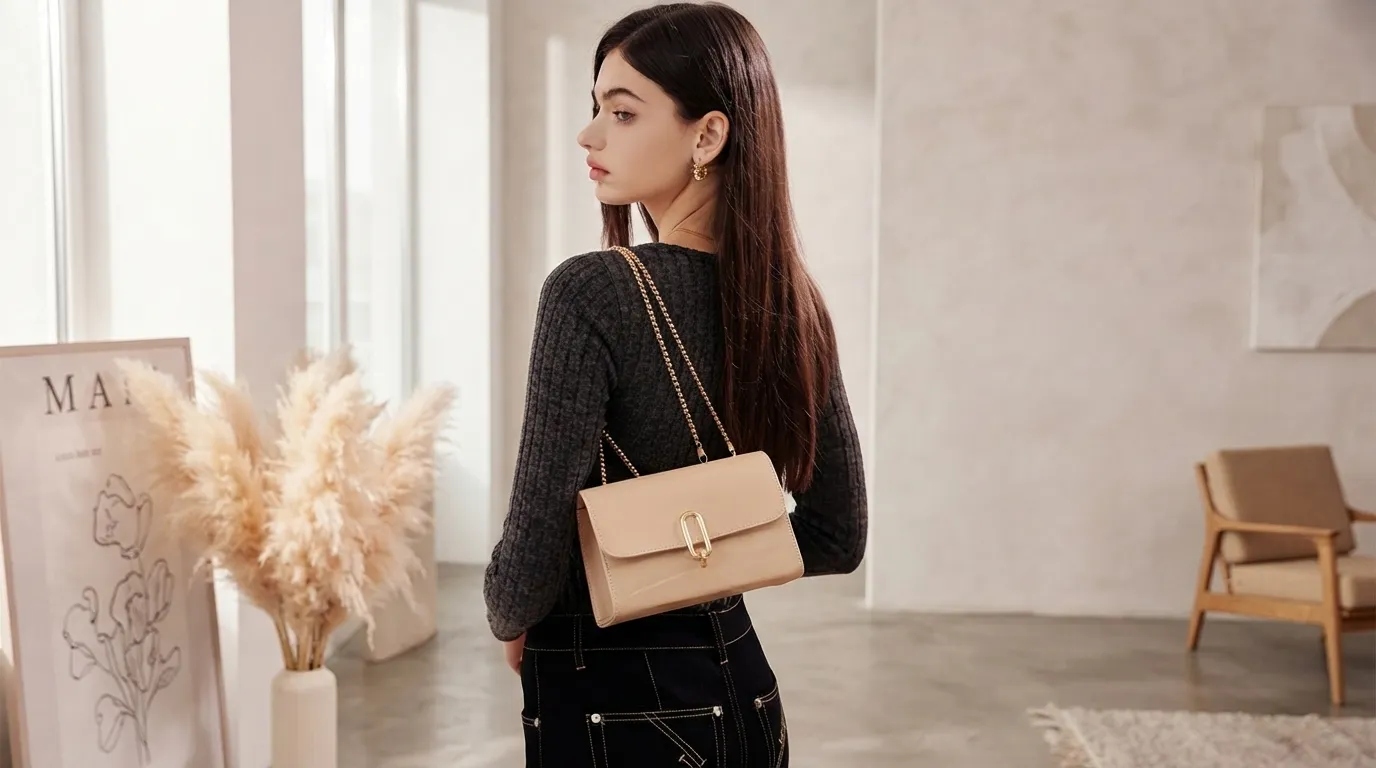
Buyers assume structured box shoulder bags are easy to produce. In reality, tight 90-degree angles ruthlessly expose sloppy stitching. This compact silhouette anchors most minimalist French chic handbags.
It shifts effortlessly from casual daywear to polished evening looks. It performs beautifully in bulk OEM production, but only if you control the geometry.
Last month, a client insisted on soft nappa leather without backing. The gussets drifted immediately. The bottom corners mushroomed and collapsed after a single day of wear testing.
To fix this, we switched them to firm top-grain leather paired with dense laminated board reinforcement. As Manager Wei guided a panel through our Juki cylinder-bed sewing machine, he pointed out the challenge.
“If your corner turning lacks discipline, the leather puckers and the body loses its square proportion entirely.” We finish the piece with minimal, weighty brass hardware to ground the design.
🛡️ Our Verdict: This silhouette scales smoothly across sizes and colorways for private-label rollouts. During sampling, manually evaluate box retention and flap or zipper centering. Inspect the corner finish quality under a bright light before approving your bulk order.
How to Manufacture Minimalist French Chic Handbags at Scale?
You have your designs. Now you need an execution plan. Use this guide to direct your factory through sampling and bulk production, aligned with our bag manufacturing process.
Step 1: Execute Our Factory Finishing SOP
My team spent 40 hours refining this standard operating procedure on the factory floor. Follow it exactly to achieve an authentic edge finish.
- Lock your patterns: Select firm hides. Cut and lock your pattern pieces to prevent shifting.
- Skive the leather: Skive your edges to exactly 0.5mm.
- Sand the edges: Flush trim the borders. Sand the leather with 240-grit paper, then move to finer grits.
- Apply edge paint: Apply three to five thin coats of edge paint. Sand the edges between every coat. Seal the final layer with low heat. Clients often complain about thick paint cracking.
- Calibrate your stitches: Set your Juki industrial sewing machines to 8-10 SPI (stitches per inch) for main panels. Use 10-12 SPI for straps. Drop to 6-7 SPI for heavy load zones. Tight stitching over-perforates the leather and weakens the seam. Always seal raw edges on stress points.
Step 2: Enforce Strict QC Testing Metrics
Do not accept vague quality claims. In our lab tests, we use these exact metrics to evaluate full-grain leather. Use them for your sample sign-offs.
| QC Checkpoint | Our Factory Standard | Rejection Reason |
|---|---|---|
| Tensile Strength | Withstands 45 lbs of tear force. | Leather tears under daily use. |
| Edge Flex | Survives 500 bend cycles. | Paint cracks due to thickness. |
| Seam Pull | Zero gap at 10 lbs pull. | Thread tension is too loose. |
| Scratch Resistance | Passes 2H pencil test. | Topcoat finish is too soft. |
| Visible Defects | Zero glue or crooked stitches. | Fails ISO 2859-1 (AQL 2.5) thresholds. |
| Hardware Alignment | Aligns straight within 1mm. | Skews geometric silhouettes. |
Step 3: Engineer the Pattern
I sat down with Manager Chen on our production floor to discuss balancing drape and structure.
Q: How do you keep unstructured silhouettes lightweight but stable?
A: “I balance the leather thickness. I use supple leather but reinforce the anchor points. This prevents a relaxed slouch from becoming a complete bag collapse.”
Q: Where does hidden reinforcement belong?
A: “It belongs directly under the strap bases and along the bottom gusset. These seams carry the heaviest load. I insert 0.8mm rigid salpa board into these zones.”
Q: How many sample rounds are normal?
A: “Expect two to three sample rounds before you get a production-ready pattern. Never rush this step.”
Ready to start production? Contact our factory team for a tech-pack review. We provide physical swatches and sampling support, manage your custom handbag manufacturing, handle all leather sourcing by region, apply premium finishes, and secure your BSCI social certifications.
Disclaimer: I am not paid by any material supplier to promote these findings. My team buys our own testing equipment and receives no factory kickbacks.
People Also Ask About Minimalist French Chic Handbags
1. Which leather grade is best for a minimalist French-chic capsule?
Use 1.2mm milled top-grain leather for slouchy bags. Choose firm, full-grain calfskin for structured boxes. In my experience, clients often ruin a collection by using soft nappa for structured designs.
The bag walls collapse within weeks. We only source hides certified by the Leather Working Group to guarantee uniform thickness. As our cutting manager notes, inconsistent hide temper ruins the final drape of your capsule.
2. What sample checkpoints matter most before ODM approval?
You must verify edge paint and stitch density. I always bend the strap corners fifty times to check for cracking.
Applying three to five thin coats of edge paint ensures durability, as single thick coats crack immediately during daily use. We strictly set our needles to eight to ten stitches per inch. Tighter stitching acts like a perforated tear line.
You should physically stress-test the ASTM D2208 tensile strength yourself before signing any production contract.
3. What must buyers confirm before placing a bulk order?
You need written confirmation on minimums, lead times, and compliance. Our MOQ starts at 50 units for custom runs. I always advise clients to demand REACH compliance certificates for all metal hardware.
Toxic platings will stall your shipment at European customs. Finally, require a pre-shipment AQL 2.5 inspection before paying your final balance. This crucial step protects your profit margins from unexpected factory errors.