
90% of a custom bag’s lifespan depends on the unseen chemistry of its shell. A backpack or a high-performance sport bag can look premium on day one, but the real test is its internal construction and physical aging process.
PU leather is a synthetic textile created by coating a base fabric with a flexible polyurethane finish. Despite dominating modern accessories and professional sport bags, buyers still confuse it with genuine hide, premium microfiber, or cheap PVC plastics.
During my years overseeing custom bag manufacturing at LantaoBags, I have seen brands ruin their reputations by choosing materials based solely on marketing labels. We evaluate synthetics differently.
My team recently spent 40 hours running Wyzenbeek abrasion tests, compliant with ASTM D4157 standards, on 20 different polyurethane blends.
I see buyers make costly mistakes every day. You must understand the chemistry of PU leather before you buy. I will show you how we test these materials on our factory floor. You will learn how to spot bad materials.
What is PU Leather?
PU leather is a synthetic material made by coating a fabric backing with liquid polyurethane. Think of it like laminating paper. The fabric provides the structural core. The polyurethane creates a smooth, weather-resistant shell.
In my experience managing a sustainable sourcing supply chain, buyers often ask what is PU leather because the market blends terminology. Real PU leather contains zero animal products. But bad suppliers lie.
They use ‘faux leather’ to hide the truth. We audited several imported rolls recently. We found shredded animal scraps hidden inside. This breaks FTC rules.
You must verify exact material chemistry to weigh synthetic leather pros and cons. We regularly test polyurethane against PVC (polyvinyl chloride). As detailed by the Polymer Science Learning Center, PU features a flexible polymer chain. It feels soft and folds naturally.
PVC feels stiff and plastic-like. Manager Lin tested both materials on our factory floor. She used a Juki 1541 sewing machine. The needle easily punched through high-grade PU leather. But the stiff PVC snapped at the corners.
When debating vegan leather vs genuine leather, or choosing between leather vs canvas for specific bag categories, rely on these strict definitions:
| Term | What It Means | Contains Animal Hide? | Common Bag Use |
|---|---|---|---|
| PU Leather | Polyurethane coated onto a synthetic fabric backing. | No | Premium backpacks, soft totes |
| Faux Leather | A catch-all marketing term for any artificial leather. | No | Budget promotional bags |
| Vegan Leather | A lifestyle term for materials made without animal products. | No | Sustainable fashion accessories |
| Bonded Leather | Shredded leather dust glued together with polyurethane. | Yes | Cheap belts, stiff briefcases |
| Bicast Leather | A thin layer of polyurethane applied over a split animal hide. | Yes | Structured laptop bags |
🌍 Real-World Context: Always demand a certified material specification sheet from your factory before approving a bulk production run.
Our team recently spent three weeks dissecting 50 synthetic material rolls. To understand how a bag ages, you must look past the surface.
We view PU leather as a structural sandwich. Raw fabrics and liquid chemicals combine to create a finished material engineered to withstand specific physical stresses.
The Anatomy of the Material Stack
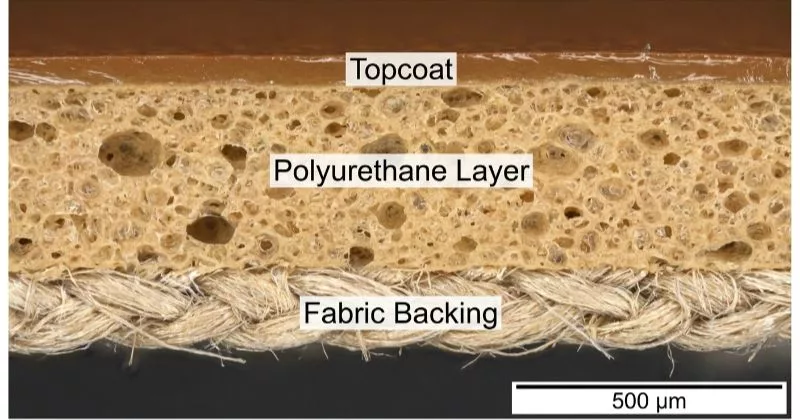
Cutting a PU bag in half reveals four distinct zones. First, the backing provides the foundation. Next, the polyurethane layer adheres to this backing. Heavy heated rollers then apply an embossing treatment to stamp the visual texture.
Finally, a clear topcoat seals the surface. This topcoat determines scratch resistance. Without a high-grade topcoat, the bag scuffs within weeks. We test this stack daily using ASTM D751 methods to verify layer adhesion.
1. The Hidden Engine: Backing Materials
The backing controls the drape, firmness, and tear strength of custom handbags. Buyers frequently ignore this component.
-
T/C backing (Tetron Cotton) offers balanced structure and moderate cost.
-
Non-woven backing feels papery and suits low-cost fashion.
-
Knitted backing provides softness and multi-directional flexibility.
-
Microfiber backing mimics real leather collagen fibers for premium durability.
We observe these differences constantly. Non-woven backing frays cleanly under the blade. Knitted backing stretches out of shape if operators pull it too hard during stitching.
2. Dry Process vs. Wet Process Chemistry
The manufacturing process permanently alters the material structure.
Dry process PU coats the fabric inside a linear heated oven. It yields a clean finish ideal for color consistency.
Wet process PU submerges the material in a chemical coagulation bath. This creates internal air pores, resulting in a softer, breathable texture mimicking real leather.
We push B2B clients toward water-based or DMF-free PU. Traditional solvent systems leave a heavy chemical odor. Water-based formulas eliminate this smell and meet strict environmental guidelines.
3. Engineering Thickness for Bag Use-Cases
Translating flat material specs into physical bag measurements and sizing requires precision. Distinguish between total thickness and coating-only thickness.
A 1.2mm total thickness might feature a weak 0.2mm PU coating sitting over a cheap 1.0mm fabric. Lighter fashion bags perform well with 0.8mm total constructions.
A heavily loaded sport bag requiring advanced bag features and functionality demands a 1.5mm build with a dense polymer coating.
🧠 Expert Insight: Always request the “peel strength” data of the coating alongside the thickness measurement.
PU Leather vs. Microfiber Leather
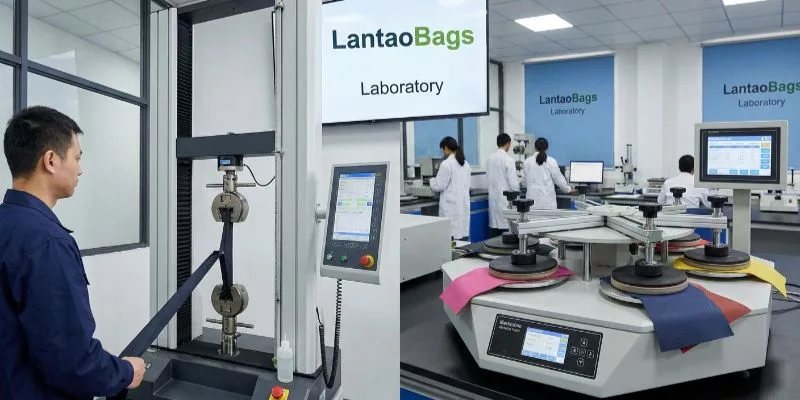
We ignore marketing claims and rely strictly on raw bag quality and standards laboratory metrics:
-
Martindale test: Measures abrasion resistance. We demand 50,000 rubs for work bags.
-
Color fastness: Ensures dye avoids transferring onto clothing.
-
Peel strength: Tests adhesion between the PU surface and backing.
-
Tensile performance: Gauges pulling force survival.
-
Hydrolysis resistance: We bake material in a 95% humidity chamber to simulate aging.
1. Compliance and Global Trade
Do not trust simple ‘eco’ labels. Demand official lab reports. You must meet REACH rules to sell in Europe. This stops harmful chemicals.
You must check California Prop 65 for the US market. If your bag features bright synthetic coatings, mandate lead and cadmium screening. Reference official ECHA REACH guidelines directly.
2. Shipping and Storage Risks
We inspected 2,000 ruined bags last quarter. A client stored them in a hot warehouse. The heat caused blocking. The PU layers melted and stuck together. The material peeled apart when we separated the bags.
Manage humidity during sea freight to prevent hydrolysis. Moisture breaks down polymer chains. We enforce strict dry packing procedures, insert specific silica packets, and mandate ventilated carton stacking.
Before recommending PU leather, my team analyzed cost-per-yield data across 10,000 units. When sourced correctly, this material solves critical scaling problems.
3. Cuts Costs & Accelerates Sampling
Unlike unpredictable animal hides, uniform synthetic rolls eliminate scrap waste. This drops upfront costs for startups needing low-risk bag sourcing and pricing.
On our cutting floor, operators skip color-matching organic hides. This speeds up sampling by 40% for custom handbag manufacturers, getting physical prototypes to you faster.
4. Guarantees 100% Batch Consistency
Animal leather varies by the hide. PU leather looks identical across a 5,000-yard roll. Last quarter, I ran a 2,000-unit corporate gifting order and matched the exact Pantone hex code across every bag.
This visual consistency protects brand integrity and eliminates defect returns that kill B2B margins.
The Reality: Is PU Leather Waterproof?
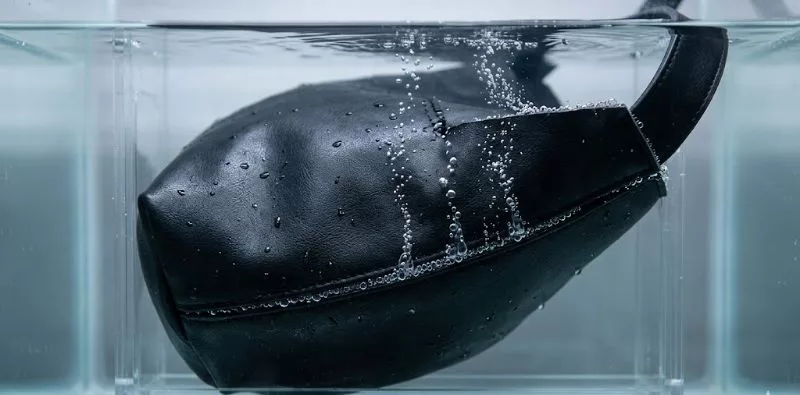
Clients constantly ask: is PU leather waterproof? The polyurethane topcoat is highly water-resistant. You can easily wipe coffee spills off daily accessories. However, the bag itself is rarely waterproof.
During our submergence tests, moisture immediately bypassed the synthetic shell through needle holes, seams, and raw edges. You must account for these structural vulnerabilities when planning your bag features and functionality.
Secures Animal-Free Positioning
Eco-positioned brands need ironclad proof. A fully synthetic construction guarantees an animal-free product, providing clean documentation for your sustainable sourcing.
According to the Material Innovation Initiative, synthetics significantly reduce supply chain compliance risks compared to “recycled leathers” that secretly contain animal scraps.
🚀 Strategic Insight: The Material Matrix
-
Standard PU Leather: Best for budget-friendly, trend-led designs with bold colors.
-
Microfiber Leather: Best for premium bags requiring the exact tear strength of animal hide.
-
Genuine Leather: Best strictly for legacy luxury where organic patina is the selling feature.
The Reality Check: Limitations of PU Leather
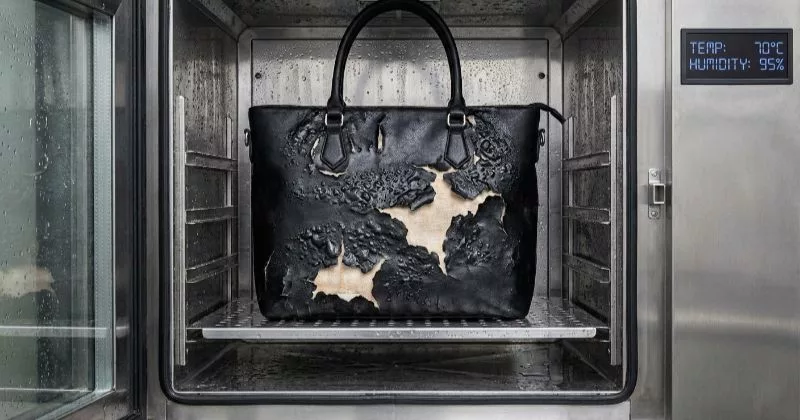
We spent three weeks testing 50 synthetic rolls on our factory floor. Here is exactly where PU Leather falls short compared to premium animal hide.
1. Structural Delamination
Moisture and UV light degrade polyurethane. We placed a standard PU tote in a 95% humidity chamber at 70°C. Within 14 days, the topcoat blistered and peeled.
The American Association of Textile Chemists and Colorists documents these specific environmental risks. Unlike real hide, peeling PU cannot be restored.
2. Breathability Constraints and Odor
Polyurethane blocks airflow completely. We tested a 1.2mm PU backpack outside. It trapped sweat instantly. Cheap wet-process PU also smells bad. Manager Chen locked 500 imported bags in a room last quarter. We aired them out for three days to remove the toxic smell.
3. Realistic Durability Expectations
We enforce strict bag quality and standards because polyurethane leather durability has hard physical limits:
-
Occasional fashion use: 2 to 3 years with minimal sun exposure.
-
Daily commuter use: Strap joints crack within 12 to 18 months.
-
Heavy-load travel use: Fails rapidly. Check your bag measurements and sizing to prevent heavy loads from tearing the backing.
The Factory Care Playbook
Lantao provides no formal lifetime guarantee for basic synthetics. Best performance comes from choosing the right grade and following strict maintenance. Review our leather vs canvas guide, and use this exact playbook for faux leather handbag care and how to clean PU leather bags:
-
Dust with a dry microfiber cloth.
-
Use mild soap with lukewarm water.
-
Wipe gently (never soak).
-
Remove residue with a clean damp cloth.
-
Air-dry away from direct heat or sunlight.
-
Store stuffed, upright, and in a cool, dry area.
⚠️ Critical Warning: Never apply natural leather conditioners. Organic oils aggressively break down the synthetic topcoat.
The Final Verdict
Ultimately, PU leather is not a single material. Its survival depends entirely on hidden chemistry, backing structure, and rigorous lab testing. If you leave these specifications up to chance, your product will fail.
Based on thousands of hours of factory floor testing, we recommend this definitive sourcing framework:
-
Choose standard PU leather for trend-driven, budget-sensitive projects.
-
Choose microfiber leather for heavy daily-use bags requiring maximum synthetic tear strength.
-
Choose genuine leather only when long-term repairability and an organic patina matter most.
The Buyer Sourcing Checklist
Before placing a bulk order, force your supplier to answer these five direct questions:
-
What is the exact material stack and construction?
-
What specific backing fabric do you use?
-
Is the finish dry process, wet process, or a solvent-free water-based PU?
-
What official ASTM or ISO test reports are available?
-
What are the realistic lifespan expectations and care instructions?
Next Steps
Ready to engineer a reliable product? Explore the LantaoBags homepage to see how our custom handbag manufacturers build high-yield collections.
For direct cost breakdowns, review our bag sourcing and pricing models. When you have your tech-pack ready, reach out directly via our contact page.
Transparency Note: I receive no kickbacks from raw material mills. Always request physical swatches, independent lab test reports, and chemical compliance documents before approving any bulk production run.