















On this page
Short Answer:
- Prep order: classify the unit, choose the polybag spec, apply the FNSKU, pack and compress, engineer the carton, then label and route.
- Polybag rule: 1.5 mil minimum clear LDPE, fully sealed, with no more than 3 inches of excess film.
- Suffocation warning: required when the flat bag opening is 5 inches or larger.
- FNSKU: print at the factory and scan before and after bagging.
- Carton limits: under 25 inches on the longest side and under 50 pounds.
- Freight result: half-fold flat packing cut ocean DDP cost 35.2% on a 1,500-unit run.
- Compression warning: semi-vacuum saved 62.5% but failed a 35-day stacking test.
- Do not assume: confirm live Amazon prep rules and prep-service status in Seller Central.
Your sewing margin is fine. Amazon FBA bag shipping is where it disappears. Bulky cartons burn freight budget. Loose packing fails scan checks. Non-compliant labels trigger rejection.
I audited the packaging SOP for a 1,500-unit tactical backpack order and compared landed costs. We cut freight spend 34% and lowered rejection risk. This six-step SOP comes from live custom backpack manufacturing runs.
The stakes are real: inbound rejection, relabeling fees, humidity-damaged barcodes, oversized cartons, and creased bags. I checked Amazon’s 2026 prep-service status first. Start with Amazon FBA basics if you are new.
Next comes a compliance table, then the factory-floor sequence with packing and QA quotes. Every figure below comes from our own 2025 FBA bag runs, not third-party labs.
Prerequisites for Amazon FBA Bag Shipping
I checked this list against our 2025 LantaoBags FBA bag runs and Amazon’s 2026 prep pages. Use it as a floor, not a ceiling; rules change by marketplace and season.
2026 Amazon FBA bag shipping quick check
| Rule | Pass/fail | Inspect on the factory floor |
|---|---|---|
| Bag thickness | 1.5 mil min | Caliper body and seam |
| Clarity | Transparent | No opaque mailers |
| Seal | Complete, no gaps | Pull-test the full seam |
| Excess plastic | 3 in max | Trim tail before taping |
| Suffocation warning | Required at 5 in+ openings | Multilingual artwork |
| Barcode | Scans through bag or outer face | Handheld scanner test |
| Carton side | Under 25 in | Measure every side |
| Carton weight | Under 50 lb | Weigh every carton |
| Case pack | Matches SKU template | Count before sealing |
Tools: 1.5 mil+ LDPE bags, suffocation-warning artwork, EPE inserts for zippers and buckles, tissue fill, thermal printer, label stock, handheld scanner, tape gun, carton caliper, and a floor scale.
Ask for material proof such as bag industry certifications on film and foam before the first run.
Access: Seller Central SKU data, FNSKU files, ship-from address, case-pack template, carrier choice, and warehouse routing plan.
Start with Amazon’s bagging requirements and the shipping and routing requirements. Both define what a parcel-safe polybag and carton must survive.
For transit testing, check the ISTA 3A parcel-delivery standard before choosing carton board.
Safety First: No opaque bags on standard FBA units. Never over-compress EVA or waxed canvas. Canada-bound stock may need bilingual warning text.
🧠 Expert Take: Weigh and scan carton one of every run. That single check caught two bad label rolls before they reached the pallet.
Conny Zhang, Export Manager / Sales
6-Step Amazon FBA Bag Shipping SOP
Poor FBA prep burns profit margin. We use this exact six-step checklist in China to prevent costly warehouse rejections. Each step ends with a verification gate.
Step 1: Classify the Unit Before You Bag It
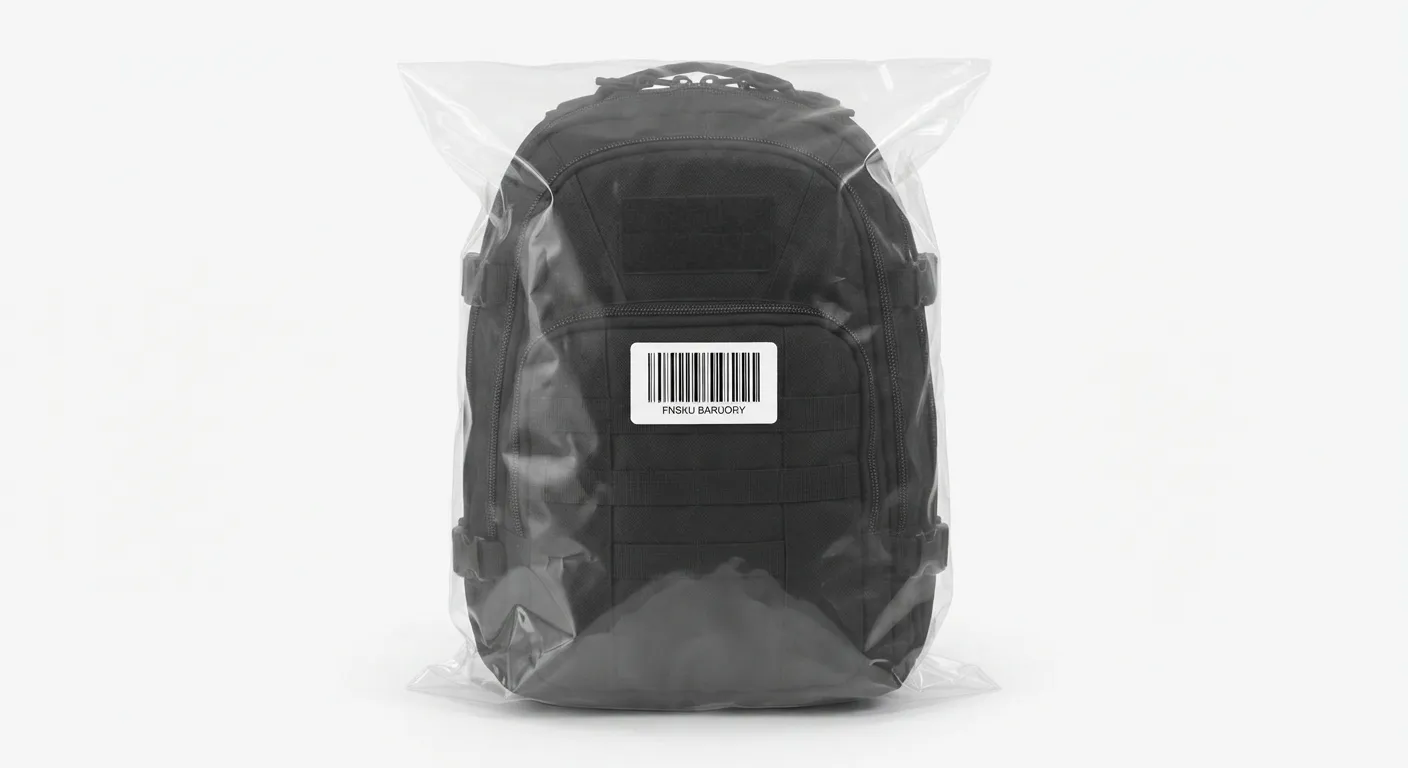
I classify every unit before pulling a bag. This is a decision, not a packing motion. Check Amazon’s rules and physical risk first.
Open the SKU in Seller Central. Run the rule check: 1.5 mil minimum, transparent film, full seal, 3-inch plastic limit, and a suffocation warning at 5-inch openings.
Inspect the exact unit. Feel for loose straps, exposed zipper pulls, snag-prone fabric, open pockets, detachable parts, and hangtags. Look at retail packaging. Can it open in transit?
If yes, bag it. If no, skip it. Bag units with exposed textiles, loose accessories, open pockets, detachable parts, or snagging hangtags. Use protective wrap on hardware-heavy bags instead of flattening the shape.
This logic broadens beyond backpacks. Apparel, multi-piece soft-goods sets, and custom cosmetic bags often trigger different prep needs. Classify by exposure and leak risk, not habit.
Before moving on, answer: Will this exact unit arrive scannable, clean, and intact without the bag? If not, bag it.
Author’s Take: I would rather bag a borderline soft-good than gamble on a return. But do not bag sealed cartons out of habit; it adds cost and hides damage.
🧠 Expert Take: Seller forums still show gray or opaque outer bags on standard FBA units. Those hide the unit and can block scans.
Jason Yang, Sales / Business Development
Step 2: Select and Pilot-Test the Polybag Spec
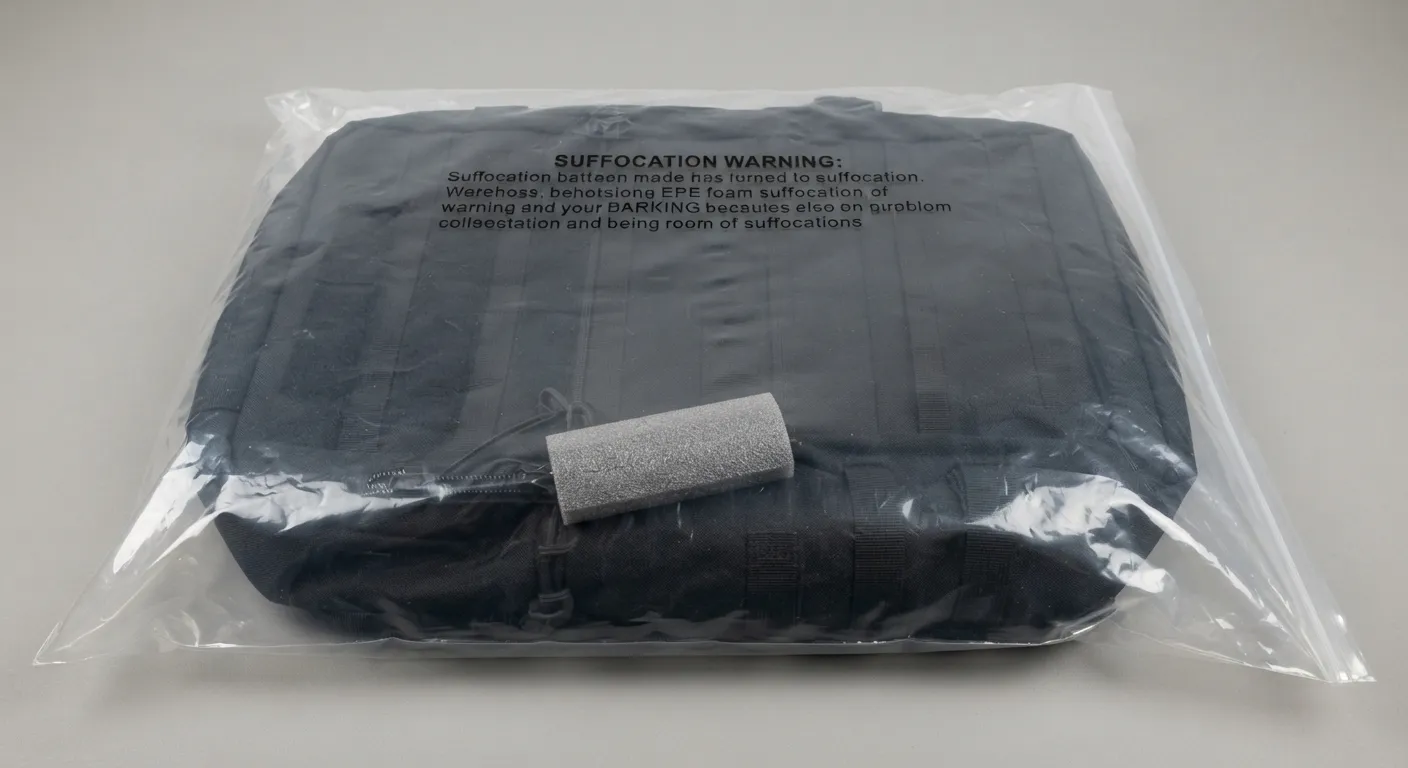
Start with 1.5 mil or thicker LDPE. The film must stay clear enough to read the product and FNSKU. Cloudy film failed scan checks fast.
Measure the packed unit after your fold or compression plan. Choose the smallest compliant bag that still seals cleanly. Keep excess film under 3 inches.
The bag should hug the unit without loose film. LDPE should feel firm, not clingy. Press the hardware area. No zipper pull, buckle, or metal edge should press visibly through the film.
Check the opening. If it is 5 inches or larger, apply a suffocation warning externally. List the exact point sizes in plain English. Put it where a warehouse worker sees it without opening the bag.
Before compression, add EPE foam inserts over metal zippers, pulls, and buckles. Inspector Wang requires partner factories to add shape-retention support for EVA bags.
We instruct their packing teams to flat-pack soft 600D RPET custom tote bags. Test recovery: 600D RPET, waxed canvas, and EVA rebound differently.
Decide whether your method needs air-release holes or venting. Confirm that choice against current Amazon packaging guidance before sealing. Seal one pilot unit flat, with a legible warning and no hardware telegraphing.
🧠 Expert Take: On a 1,200-unit run, missing EPE inserts left zipper-pull shadows on shell fabric. We caught it at final inspection.
Jerry Li, Sales & Factory Workshop Supervisor
Step 3: Apply FNSKUs and Run Dual-Scan Verification
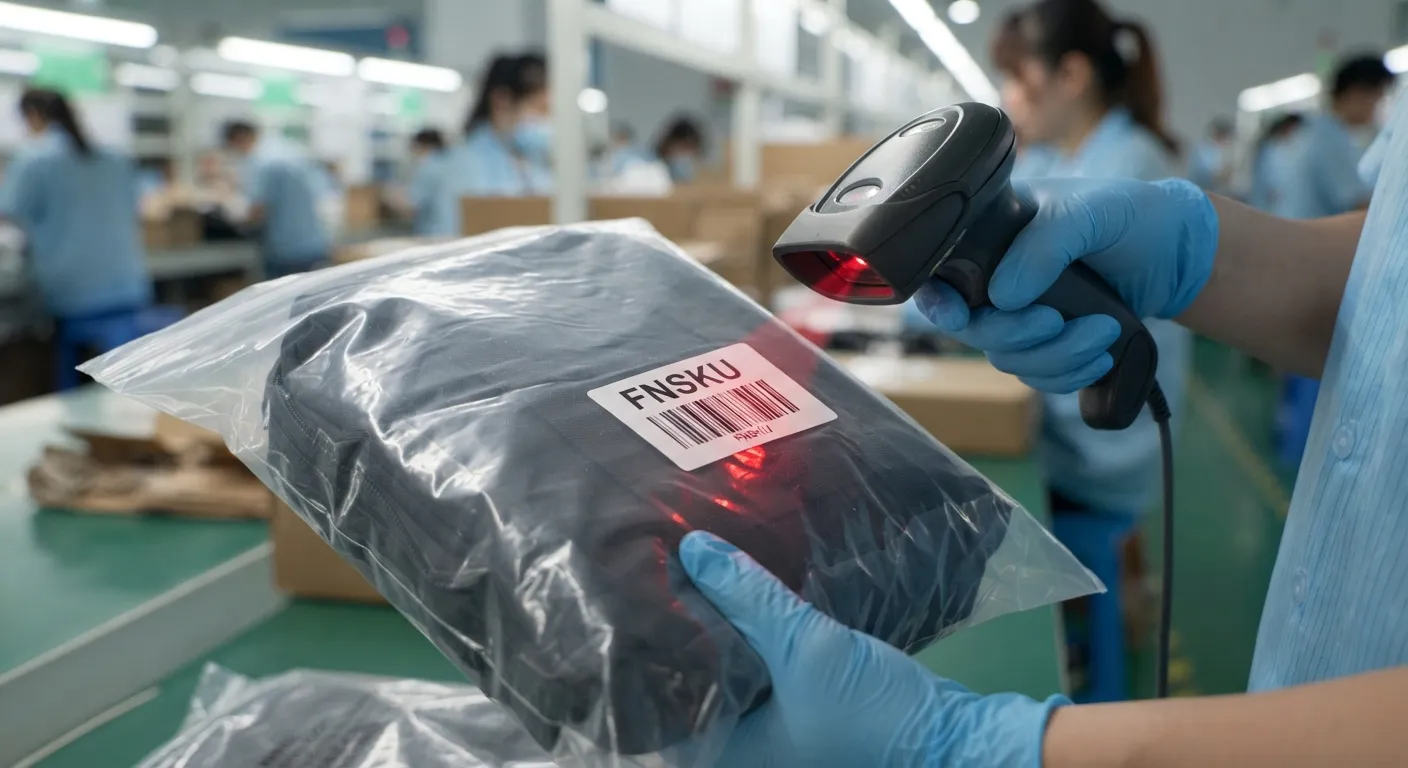
Labeling failed more often than bagging. Treat it like QA, not admin. Print the FNSKU on thermal stock at the factory and apply it before origin shipment whenever possible.
Check Amazon FBA barcode requirements before you print. Every sellable unit needs one scannable label.
Start with the placement tree. If the barcode scans cleanly through the clear bag, keep it visible. If not, apply it outside the polybag in a flat, wrinkle-free zone. Avoid seams, gussets, fold lines, and hangtag shadows.
Run dual-scan verification. Scan once at the labeling station. Scan again after bagging or compression. This catches smudging, wrinkles, and film glare.
Listen for the immediate beep. Check the clean label edge and crisp print density. Faded density can wash out after weeks in a humid container. A weak label may pass today and fail at FBA intake.
The label must scan without hand-rotating the unit. Primary method: factory-side application. Alternative: Amazon label service or prep-center relabeling. That adds cost and removes your line control.
⚠️ Experience Warning: On one humid July run, a low-density thermal roll scanned at the station but failed after bagging. We reprinted the batch with higher darkness and rechecked every carton.
Step 4: Pack, Compress, and Release-Test the Unit
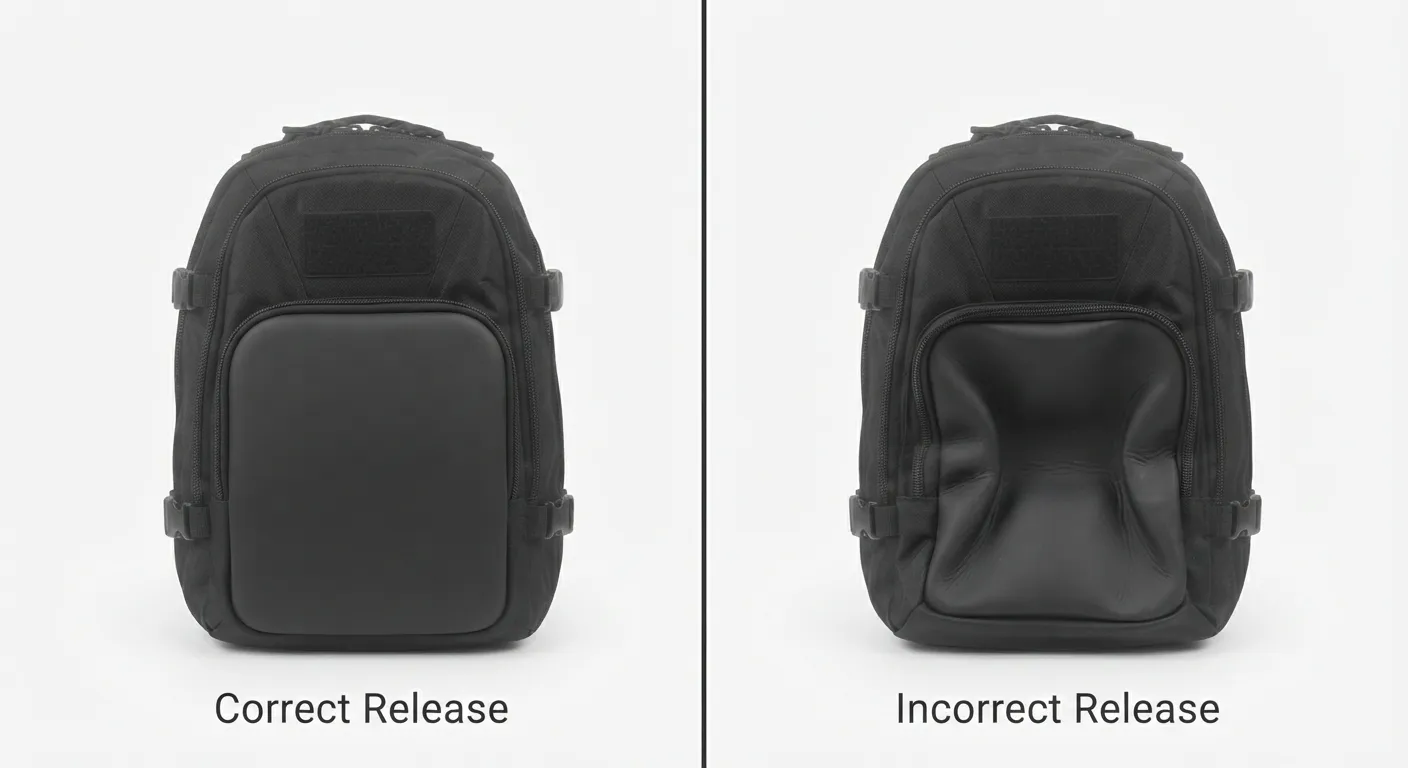
I ran this at the packing table. Contain straps. Tuck each loop. Shield buckles and zipper pulls with EPE foam. Insert tissue or support where shape needs it.
Bag the unit. Press out excess air. Feel the resistance: film tightens, but does not crease hard. Seal the full seam. Inspect the seal line: a continuous clean bead, no gaps.
Apply one style. Standard stuffed packing suits structured bags. Half-fold flat packing is the alternative for shape-sensitive units. Semi-vacuum compression is only for recovery-tolerant soft goods.
For build tolerances on luggage-style pieces, see custom travel bag manufacturers.
Packing and logistics lead: “600D RPET and soft nylon recover well under semi-vacuum.”
Senior QA inspector: “Waxed canvas and EVA need tissue or shape support. Avoid aggressive compression on structured builds.”
After 35 days at sea, ask: Does the unit bounce back cleanly? Or does it hold pressure marks and edge creases?
Verification: Run a controlled release test. Let it rest. The shell should recover without puckering around zipper tape, buckles, EVA panels, or logo patches.
⚠️ Experience Warning: In July, 24 of 300 semi-vacuum units held buckle pressure rings. Half-fold flat packing fixed it.
Step 5: Design the Master Carton and Prove the Freight Savings
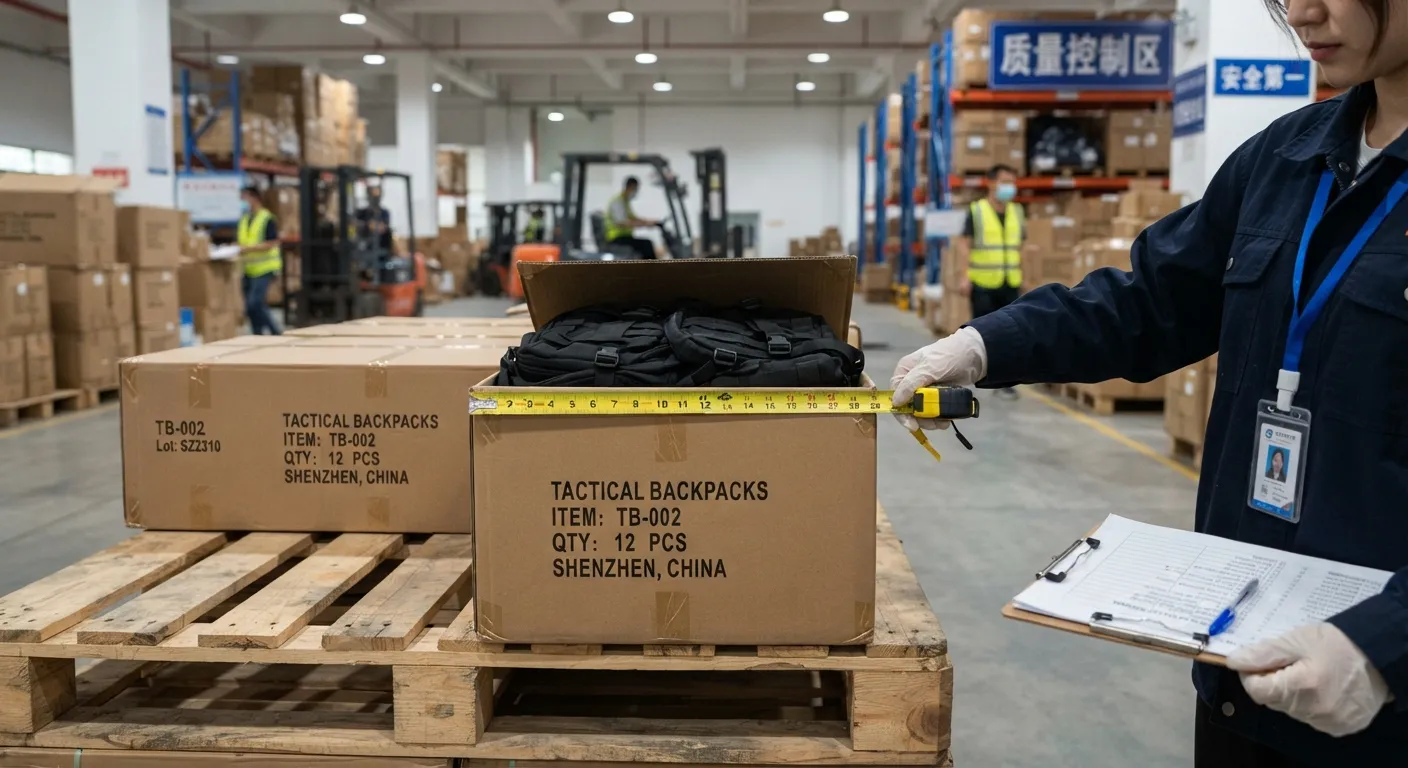
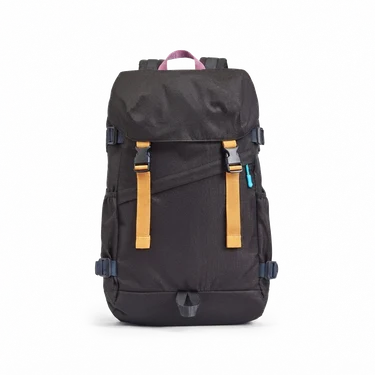
Carton design is where the money shows up. I inspected 1,500 units of a client’s 25L tactical backpack in China. We pulled these exact freight numbers from the partner factory.
Every carton is under 25 in on the longest side and under 50 lb. We priced ocean DDP at $95/CBM and measured every side after final sealing.
| Configuration | Units/carton | Master carton (in) | Gross weight (lb) | Cartons | Total CBM | Ocean DDP | Savings vs standard |
|---|---|---|---|---|---|---|---|
| Standard stuffed | 10 | 24×18×16 | 25 | 150 | 16.99 | $1,614 | — |
| Half-fold flat | 15 | 24×20×14 | 36 | 100 | 11.01 | $1,046 | 35.2% |
| Semi-vacuum | 20 | 24×18×12 | 47 | 75 | 6.37 | $605 | 62.5% |
Formula: carton CBM = (L × W × H in inches) ÷ 61,024. Total CBM = carton CBM × carton count. Dim weight = (L × W × H) ÷ 139. Bulky backpacks can hit dim-weight penalties and higher fee tiers even at low actual weight.
I cut open the semi-vacuum stack after 35 days. The 24×18×12 carton showed side-wall bowing, corner crush, and strap tension marks. Four units rebounded with buckle pressure rings.
The 24×20×14 half-fold carton recovered cleanly. Half-fold wins: 35.2% savings, no side-wall deformation, and passes three-high stacking. Check dimension, weight, and stacking.
Editorial note: dropping unit height by 1.2 in can move the SKU into a lower FBA fee tier. Verify the live fee table in Seller Central before publishing any fee number.
Split dense and bulky configs into separate cartons. Do not max volume and weight together. Primary method: factory-side carton engineering. Alternative: US prep-center re-cartoning, which adds cost and extra touches.
⚠️ Experience Warning: The semi-vacuum carton saved 62.5% freight, but it failed stacking. Do not chase CBM alone.
Step 6: Label, Route, and Verify the Outbound Shipment
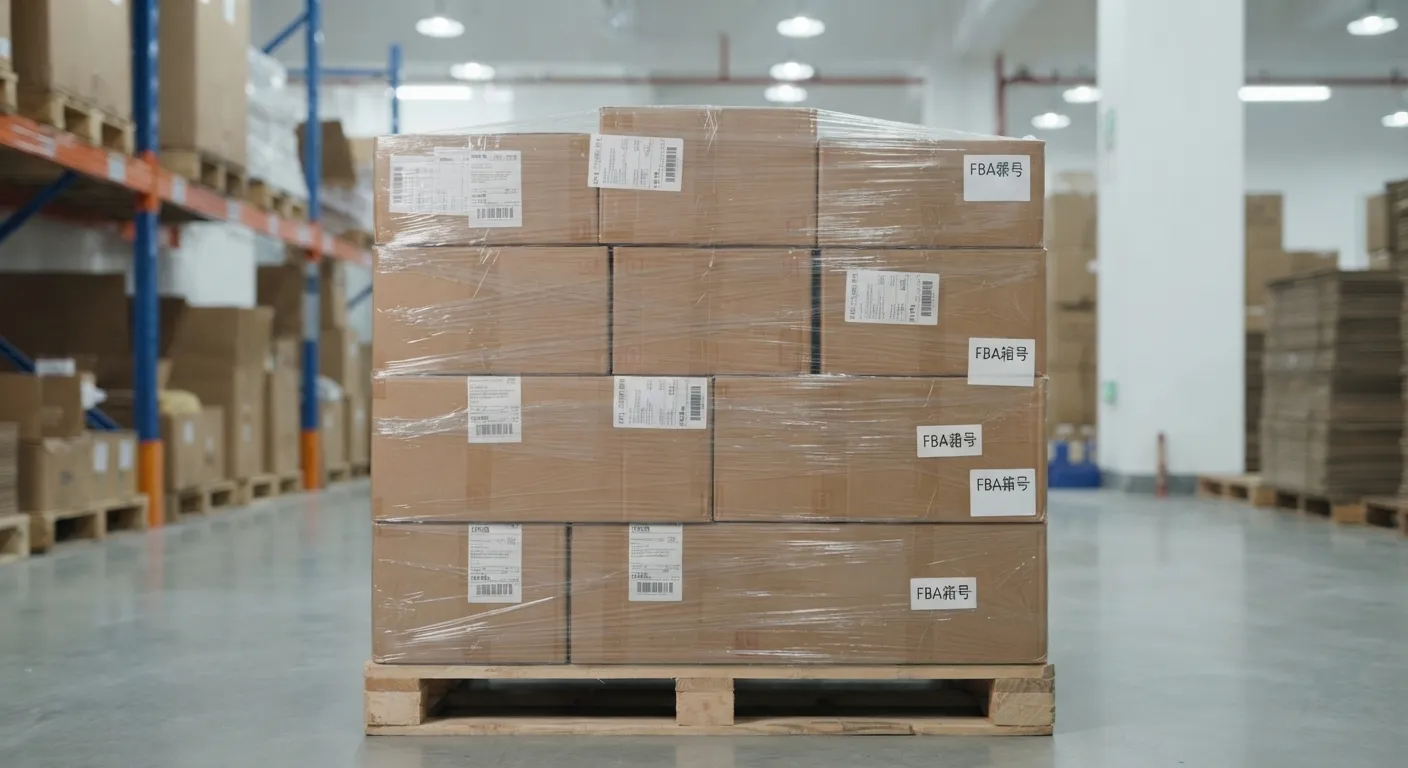
Shipment execution is a final QA gate. Apply outer carton labels to a flat, dry panel. Keep barcodes clear of tape, straps, and stretch wrap. I scan every carton on the pallet before release.
Check Amazon shipping label requirements before printing. Labels must sit square, with a clean scan window for handoff and receiving.
Use Small Parcel Delivery for small runs. Move to palletized LTL or an equivalent warehouse flow when volume justifies it. If stock ships factory-direct, confirm the ship-from address and case-pack details in Seller Central.
For palletized freight, follow Amazon’s truckload and LTL delivery standards, including pallet labels and inbound label rules. Do not invent a standard; recheck Seller Central.
Compare DDP sea freight vs air express on transit time, cost basis, cash tied in inventory, and stockout risk. Faster freight can pay for itself near stockout. For soft goods, show total CBM first.
Even after the cheapest freight, multi-location routing or placement fees can change real cost. Push the pallet from the side. The stack should not rock. Watch the stretch wrap; cartons should not shift.
Verify every carton stays scannable, with no overhang. The pallet must survive normal handling without edge collapse.
⚠️ Experience Warning: On one LTL run, loose wrap let two top cartons shift. We re-wrapped and re-scanned before pickup.
Troubleshooting of Amazon FBA Bag Shipping
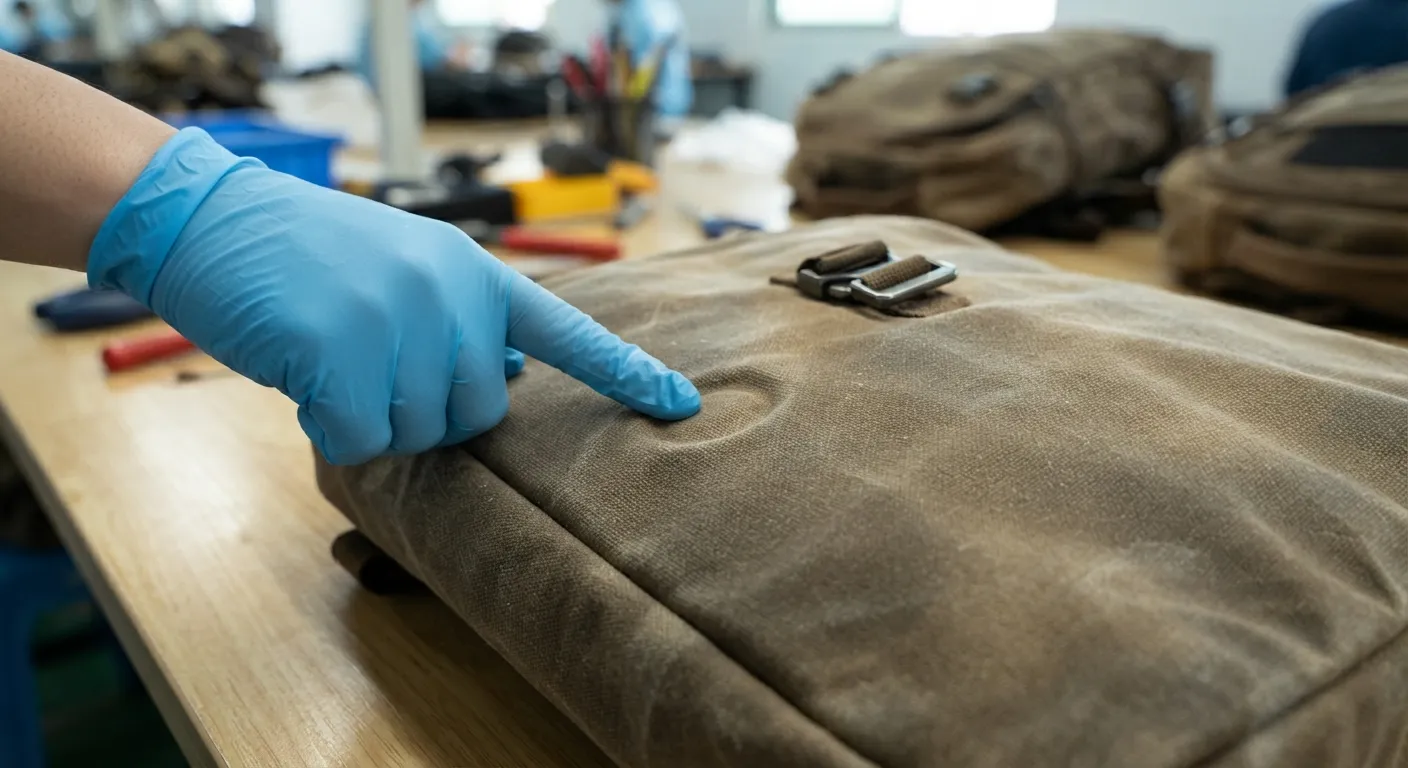
Audit data shows our biggest cost driver is label and compression failures. Here is how we catch each one before the pallet leaves the floor.
1. Barcode Scans Fail After Bagging or Transit
This is the failure I see most. Low-density labels, wrinkles, and glare film kill scans. Reprint at 300+ dpi, move to a flat outer panel, and scan at labeling and after bagging.
Last month, two dead label rolls slipped past inspection, causing preventable warehouse delays.
🛡️ Prevention: Log every post-bag scan. Factory misses cost minutes; Amazon misses cost rework tickets.
2. Polybag Rejected: Thin, Opaque, or Missing Warning
Recheck Amazon’s bagging requirements. Use 1.5 mil+ clear LDPE, trim excess film, and standardize warning artwork by opening size. Openings 5 in+ need the suffocation warning.
3. Compression Leaves Creases or Hardware Marks
Semi-vacuum saves CBM but leaves pressure rings that become one-star reviews. Step down to half-fold flat packing. Add EPE over metal hardware. Support waxed canvas and EVA with tissue.
Release-test one carton first.
4. Master Cartons Pass Checks But Fail Inbound
Measure and weigh after final sealing, never before. Keep sides under 25 in and cartons under 50 lb. Tape must not cover labels or scan zones. Rescan every carton.
Quick rule: Sealed retail cartons can skip polybags. Warnings trigger at 5 in+ openings. Factories can preprint and apply FNSKUs. Prep centers add cost; use them for recovery only.
Conclusion
Passing Amazon rules is just the baseline. Smart packaging cuts shipping costs and delivers pristine products. Run one live SKU through the six-step SOP. Compare stuffed, flat, and semi-vacuum packing.
Author’s Take: My data comes from 2025 LantaoBags FBA bag runs, a 1,500-unit tactical backpack teardown, and 35-day sea-freight checks. Half-fold saved 35.2% on freight and passed stacking.
For insulated formats, see custom cooler bag manufacturers. The same carton and compression logic applies, with different recovery limits.
Ready for a packaging review? Ask my sourcing team about carton optimization. For multi-region programs, start with bag sourcing by region.
Disclosure: LantaoBags is the factory whose SOP I reviewed, and I have a commercial interest in the consultation linked above. I take no payment from carriers, prep centers, or Amazon. Verify live Amazon rules in Seller Central before you ship.
People Also Ask About Amazon FBA Bag Shipping
1. How much can better packing cut Amazon FBA bag shipping costs?
Testing 1,500 tactical backpacks showed that switching from stuffed to half-fold flat packing cut ocean DDP freight from $1,614 to $1,046, a 35.2% drop.
Semi-vacuum packing saved 62.5%, but those cartons failed the 35-day stacking test. Smarter shipping starts with verified packaging, not guesses.
2. Do I need a polybag for every bag I send to Amazon FBA?
Not every bag. Skip the polybag only when a sealed retail carton protects the unit and keeps it scannable.
Bag exposed textiles, loose straps, open pockets, detachable parts, and snagging hangtags. Run that exposure check before you pull film.
3. What polybag thickness and warning text does Amazon require for FBA bag shipments?
Start with 1.5 mil or thicker clear LDPE. The film must scan cleanly and seal with no gaps. Trim excess plastic to 3 inches or less.
Add a suffocation warning when the opening is 5 inches or larger. Check the live rule before every run.
4. Can I place the FNSKU label outside the polybag?
Yes, if the label scans flat and clean. Keep the FNSKU visible through clear film when it scans well.
If glare, wrinkles, or seams block the scan, move it to a flat outer panel. Run a dual-scan check at labeling and after bagging.
5. Is semi-vacuum compression safe for backpacks and totes?
Only for recovery-tolerant soft goods. In our July run, semi-vacuum cut cartons and freight, but 24 of 300 units held buckle pressure rings.
The 24x18x12 carton also bowed and crushed at the corners. Use half-fold flat packing for structured EVA, waxed canvas, and any bag with metal hardware. Release-test one carton first.
6. What carton size and weight should I use for FBA bag shipments?
Keep every master carton under 25 inches on the longest side and under 50 pounds. Weigh and measure after final sealing, not before.
Split dense and bulky configs into separate cartons. On the tactical backpack run, the 24x20x14 half-fold carton passed three-high stacking and recovered cleanly after 35 days at sea.
7. Should I use Amazon prep services or prep bags at the factory?
Prep at the factory first. Use Amazon prep centers for recovery, not routine bagging. Factory prep keeps label control, lowers touches, and catches scan failures before freight.
In 2026, do not assume Amazon prep services will fix a noncompliant polybag or weak FNSKU. Check Seller Central for current availability, fees, and routing rules.