
















On this page
Short Answer:
- Sea LCL: lowest per CBM for 1 to 12 CBM, booked 14 days out.
- Air freight: fastest for 50 to 300 kg, but billed on volumetric weight.
- Express: highest per kg, best for samples under 50 kg.
- Sea FCL: lowest per usable CBM at volume, with LCL break-even near 12 CBM.
- Hidden surcharges: added 18% to one LCL invoice in our Guangdong audit.
- Seasonal swing: Q4 rates run 25 to 40% above base; pre-CNY runs 20 to 35%.
- Container reality: a 40HQ claims 76 CBM, but bag cartons fill 58 to 62 CBM.
Bag freight quotes swing wildly because soft goods bill on cube and chargeable weight, not intuition. I built this bag freight cost benchmark from anonymized Q3/Q4 Guangdong freight invoices, factory loading SOPs, and export-side floor notes.
| Mode | Relative cost | Best order size | Transit-time range |
|---|---|---|---|
| Express | Highest per kg | Samples, under 50 kg | 3 to 7 days |
| Air Freight | High per kg | 50 to 300 kg | 7 to 12 days |
| Sea LCL | Lowest per CBM for small lots | 1 to 12 CBM | 28 to 40 days |
| Sea FCL | Lowest per usable CBM at volume | 13+ CBM (12-15 transition) | 25 to 35 days |
Seven baselines below help you judge international bag shipping rates per CBM, air cargo vs sea freight cost for handbags, and container shipping costs for backpacks. Each check plugs into the same plan, so use the benchmark alongside our bag shipping logistics workflow.
7 Steps to Build a Reliable Freight Benchmark
Use the steps below to turn bag shipment data into a fair, like-for-like comparison. Route, carton, surcharge, and timing differences stop distorting your freight decision.
Benchmark 1: Density and Volumetric Weight Ratios by Bag Type
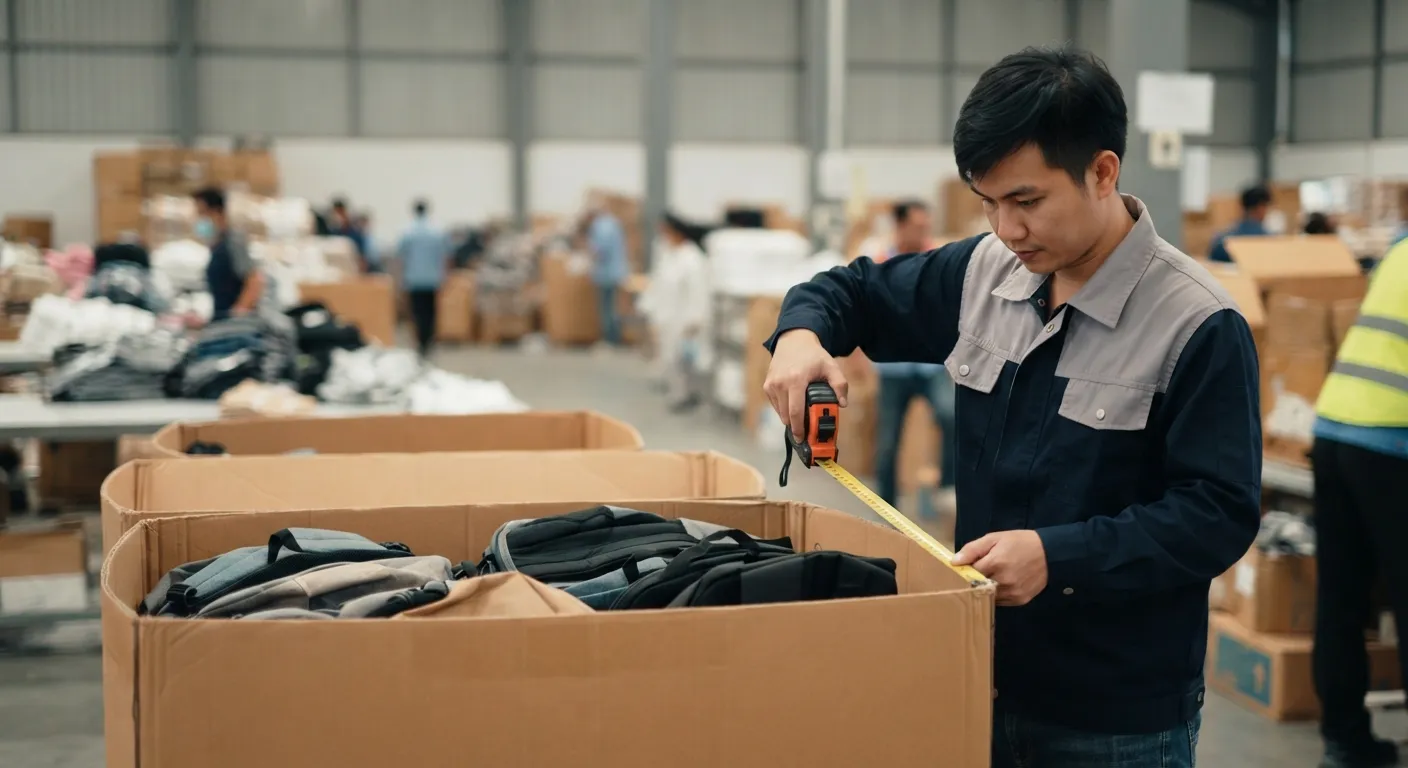
A 2 kg backpack can bill as 8 kg by air, and that is the bag freight cost trap. Core formula: IATA air chargeable weight = (L × W × H cm) / 6,000, though some express lanes use 5,000.
| Bag Type | Density (kg/CBM) | Air Billing | Air vs Sea Risk |
|---|---|---|---|
| Backpack | 60 | Volumetric | High (1.5-2x actual) |
| Canvas tote | 50 | Volumetric | High |
| Soft duffel | 55 | Volumetric | High |
| Structured handbag | 150 | Volumetric | Medium (near 167) |
| Hard luggage | 180 | Actual (>167) | Low air, high sea volume |
Our carton: 60 × 50 × 40 cm = 0.12 CBM, with 10 kg actual weight. Volumetric weight is 20 kg, so you pay for 20 kg, not 10 kg.
Bags trap air and pack loosely to prevent creasing. Light nylon vs polyester and oxford fabric shells cut weight, while synthetic leather and TPU coating add density without changing the billing rule.
Structured leather goods and hard luggage sit near or above 167 kg/CBM, so they bill closer to actual weight than soft bags do.
🔥 Hot Take: In 200 Guangdong invoices we reviewed, 80% of bag air shipments billed at 1.5x to 3x actual weight. Check volumetric weight before you request air quotes.
Jerry Li, Sales & Factory Workshop Supervisor
Benchmark 2: Bag Shipping Cost by Mode and Route
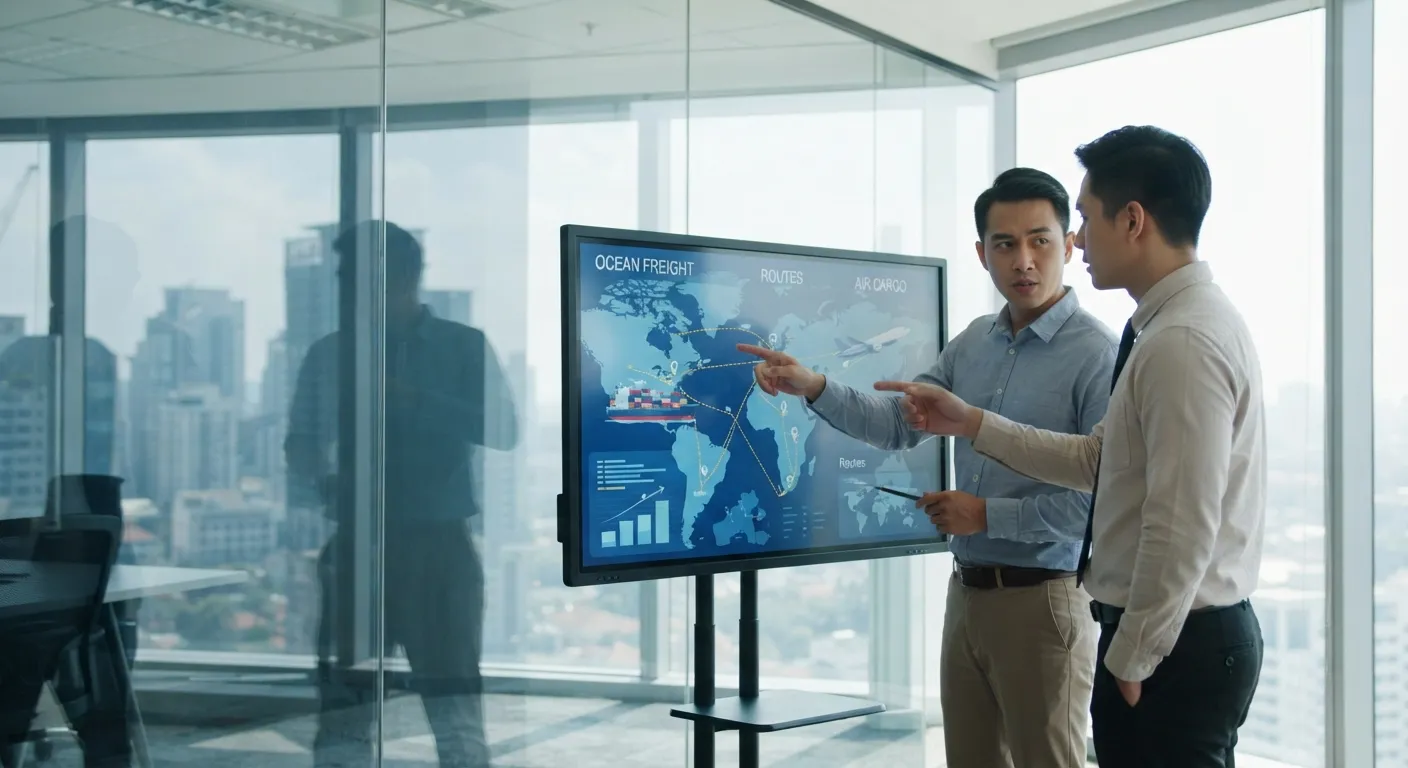
Sea freight looks cheaper, then late backpacks kill the launch. Mode and lane both decide cost.
| Mode | Relative cost | Lane note | Transit | Best fit |
|---|---|---|---|---|
| Express | Highest per kg | USWC lowest, AU highest | 3-7 days | Samples, under 50 kg |
| Air Freight | High per kg, below express | USWC lowest, USEC highest | 7-12 days | 50-300 kg, urgent restock |
| Sea LCL | Low entry cost per CBM | USWC lowest, AU swings widest | 28-40 days | 1-12 CBM, mixed SKUs |
| Sea FCL | Lowest per usable CBM at volume | USWC lowest, USEC highest | 25-35 days | 13+ CBM, one category |
Rates track the Freightos FBX index, and transit ranges follow World Bank LPI corridor data. Transit is door-to-door here, while port-to-port quotes usually run one to three days shorter, and the absolute cost bands stay in the summary table above.
Match mode to bag, not calendar. High-margin handbags tolerate air when freight is a small slice of the retail price, while bulky backpacks and travel bags protect margin by sea.
Run the air vs sea chargeable-weight math before you choose a lane, and quote both 14-day and 7-day LCL rates before approving a launch date.
🛡️ Our Verdict: In our 200-invoice Guangdong sample, USWC Sea LCL held its base rate booked 14 days out. Inside 7 days, it climbed by roughly half again. Australia swung widest via Singapore transshipment.
Benchmark 3: Compression and Packing Efficiency Benchmarks
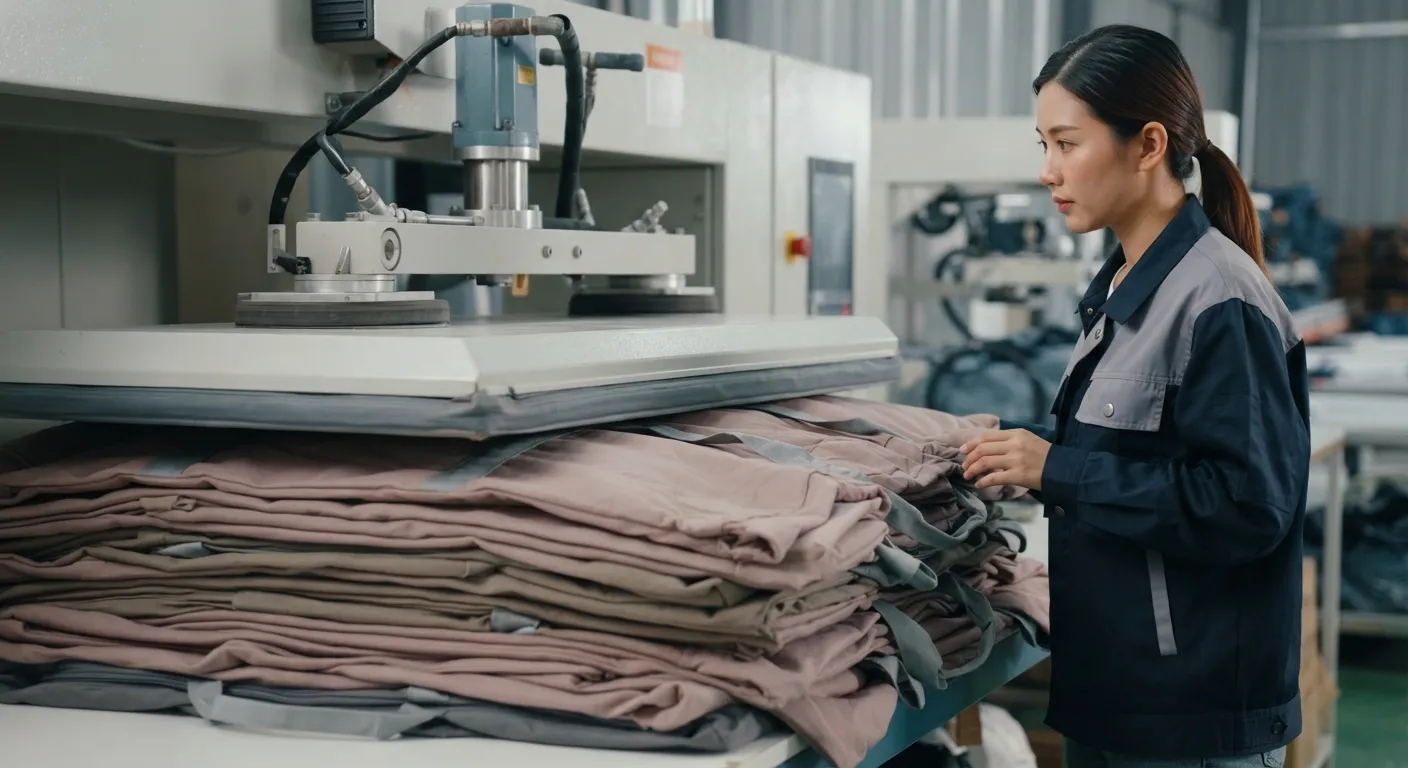
Volumetric weight kills margins. A 20% carton volume cut trims the LCL line by the same 20% at any lane rate, and I watched a Guangdong packer measure a master carton and run a compression weight test.
Our SOP requires vacuum-packing approval for soft backpacks and duffels, then seal verification. Empty headspace above 15% triggers a repack, and my last audit hit that trigger on 12 of 100 cartons.
| Bag type | Volume reduction |
|---|---|
| Soft backpacks | 15-25% |
| Duffels | 10-20% |
| Canvas totes | 8-15% |
| Structured handbags | 5-10% |
| Hard luggage | 0-3% |
Before, 20 backpacks filled 0.5 CBM. After vacuum packing they filled 0.4 CBM, a 20% cut, and air volumetric weight fell from 83 kg to 66 kg.
Compression follows PPWR empty-space rules and our anti-mold container shipping SOP, because trapped moisture ruins bag finishes. It cuts volume, not mass, so density can still bill by volumetric weight.
⚡ Power Move: Audit 10 cartons for headspace above 15% before you book freight.
Benchmark 4: Container Utilization and Landed Cost per CBM
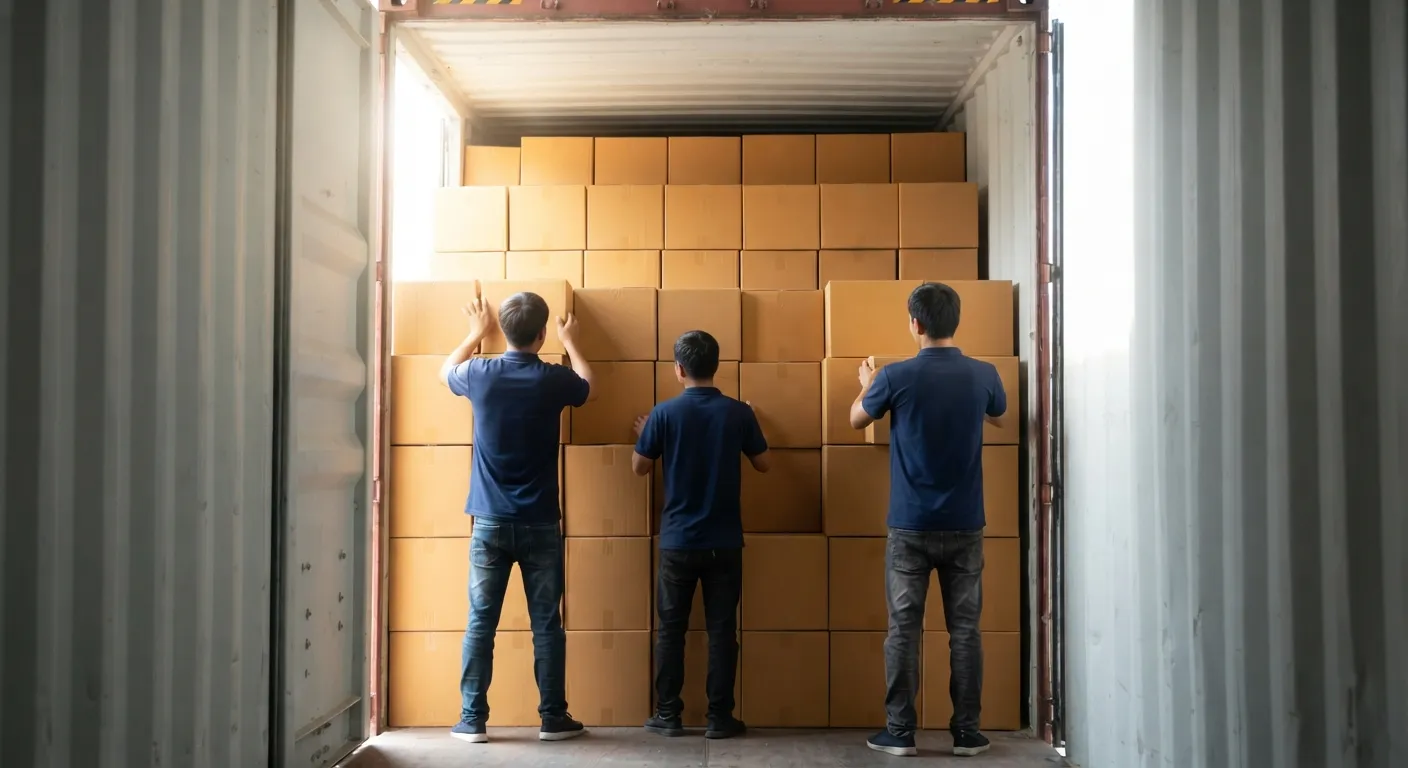
Spec volume misleads: a 40HQ is rated at 76 CBM, and real bag cartons fill 58 to 62 CBM. From our anonymized Q3/Q4 Guangdong invoice telemetry, the all-in landed cost per usable CBM, including origin and destination charges, looks like this.
| Container | Claimed CBM | Usable CBM | Landed cost per CBM |
|---|---|---|---|
| 20GP | 33 | 25 to 28 | Higher per CBM |
| 40HQ | 76 | 58 to 62 | Lower per CBM |
At 12 to 15 CBM the two modes roughly break even: below 12, LCL wins, and above 15, FCL saves 20 to 30% per CBM.
Carton geometry drives utilization: backpacks pack at 85%, totes 80%, duffels 75%, and nested luggage 90%. Backpack container freight stays a small fraction of unit cost at 40HQ utilization, and duffel and tote programs follow the same math.
Loading discipline protects that number, and our container loading supervision checklist covers the dock side.
🧠 Expert Take: Mixed-SKU loads create dead zones. Hold for container build-up at 12 CBM. Partial consolidation adds a small per-unit freight penalty.
Lacey Liu, Sales Manager
Benchmark 5: Hidden Surcharges That Distort Bag Freight Quotes
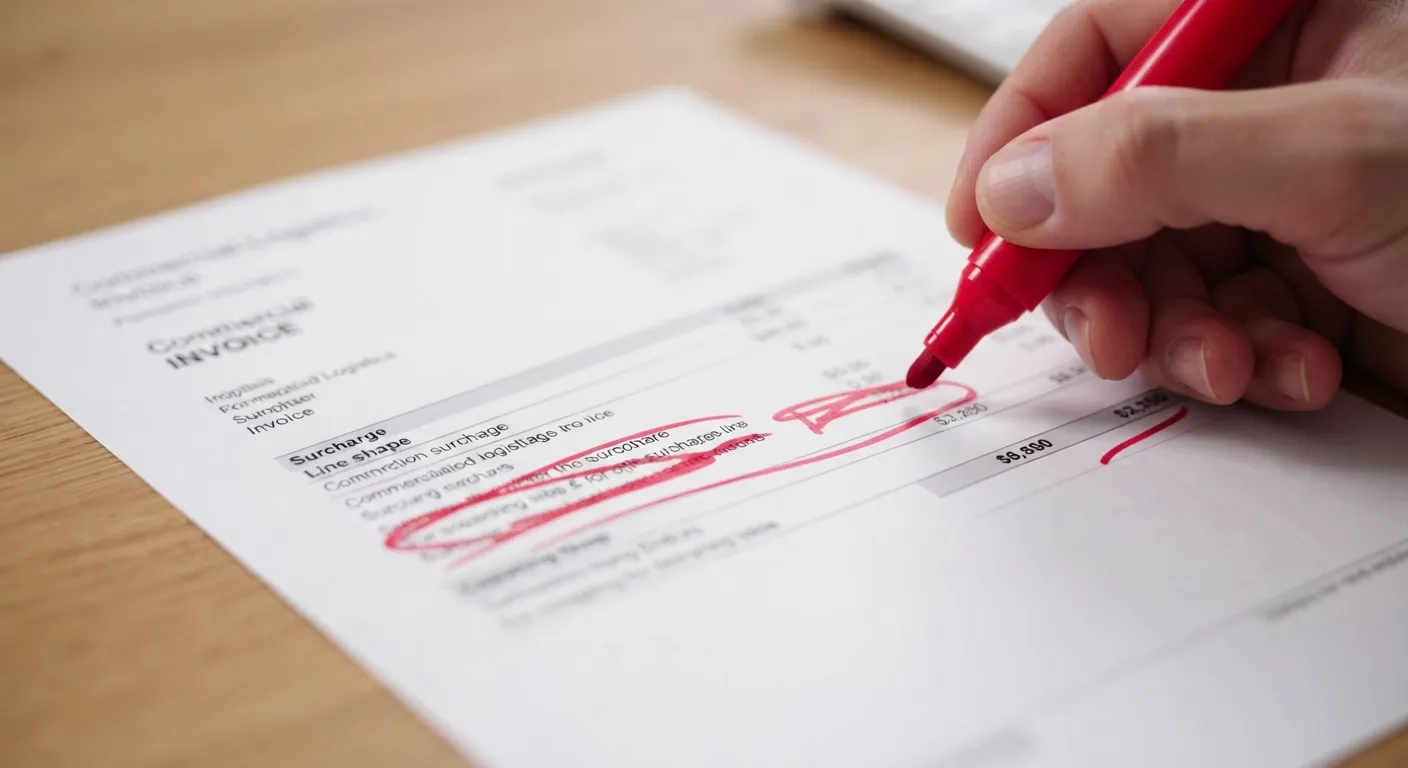
Forwarder quotes look cheap until surcharges land. My last Guangdong audit found hidden fees added 18% to one LCL invoice.
| Charge | Stage | Normal? | Challenge it by |
|---|---|---|---|
| Documentation | Origin | Yes | Ask for a flat per-shipment fee |
| Origin CFS | Origin | Yes | Compare the CBM rate |
| Destination THC | Destination | Yes | Request a destination agent quote |
| Drayage | Destination | Often | Confirm port vs door |
| Customs clearance | Destination | Yes | Separate the broker fee |
| ISF filing | Destination | US only | Cap the flat fee |
| Fuel surcharge | Main-leg | Yes | Ask for index and cap |
| Peak-season | Main-leg | Sometimes | Check the date window |
| Remote-area | Destination | Sometimes | Validate the postcode |
| 3PL / FBA prep | Warehouse | Add-on | Get Amazon FBA bag prep rates |
Origin CFS, destination THC, and customs clearance are normal. Quote drayage, ISF, peak-season, remote-area, and FBA prep separately, and normalize fuel and documentation into per-kg or per-CBM cost before you compare forwarders.
ISF is a US-only filing, and 19 CFR Part 149 sets out the importer security filing rules behind the flat filing fee.
🛡️ Our Verdict: We normalize every quote to landed cost per usable CBM. One forwarder quoted fuel per kg as a separate line; another built it into the base rate. Same lane, 12% gap. Ask for the all-in rate before you sign.
Benchmark 6: Seasonal Rate Fluctuation Ranges for Bag Imports
A cheap January quote can jump 30% by March. Seasonal spikes are normal, and a bad quote hides them.
| Period | Rate direction | Main driver | Book by |
|---|---|---|---|
| Pre-CNY rush (Jan–Feb) | +20–35% | Capacity crunch, rolled bookings | 21 days out |
| Post-CNY normalization (Mar–Apr) | -10–15% | Blank sailings, slow restart | 14 days out |
| Back-to-school build (Jun–Aug) | +15–25% | Volume surge, congestion | 18 days out |
| Q4 peak (Sep–Nov) | +25–40% | Peak season, fuel hikes | 28 days out |
Fuel, port congestion, and network disruptions move these ranges, not demand alone. We benchmark directions against UNCTAD’s maritime review and EIA diesel price data, not a universal live rate.
Q4 peak hits branded and seasonal programs first. Duty changes also stack on top of freight swings, so model landed cost with both before you commit to a booking window.
Rosa books 21 to 28 days out for pre-CNY and Q4, and compares LCL and FCL in March.
🧠 Expert Take: Rolled bookings hit hard in pre-CNY. Late cut-offs kill the schedule, and consolidation delays add 3 to 5 days. A low base rate can climb by half again with congestion surcharges and slippage.
Rosa Xie, Sales Manager / Export Manager
Benchmark 7: Quote Evaluation Checklist for Wholesale Bag Buyers

Nine checks. Tick all before approving freight.
- Packed carton dimensions, measured
- Total CBM across the load
- Chargeable air weight at a 6,000 divisor
- Mode fit against order weight
- Origin fees separate from main-leg freight
- Destination fees, including THC and drayage
- Consolidation assumptions in writing
- Transit time including booking cut-off
- Scope: FOB, CIF, DDP, or other
Then test margin: does the method hold at your target landed cost per unit? Request five documents before approval, including the packing list, carton spec sheet, lane validity period, surcharge breakout, and destination exclusions.
I rejected a Guangdong quote last quarter because the lane expired in nine days. The cheap rate was bait, so get all five in writing before you score the quote.
⚡ Power Move: Score each quote out of nine. Anything under seven gets a callback, not a signature.
How to Use This Bag Freight Cost Benchmark? 4-Step Workflow
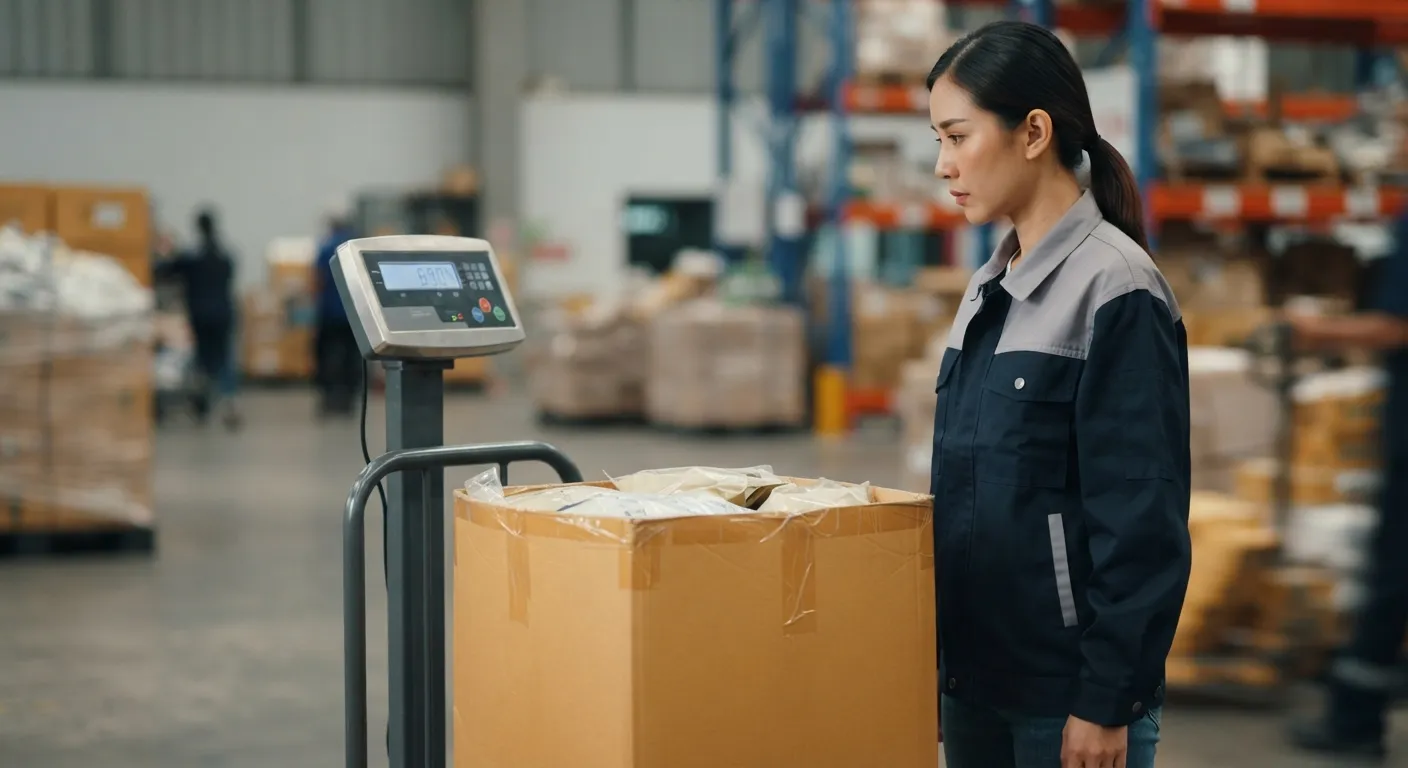
Four steps turn a pile of forwarder quotes into one comparable number.
Step 1: Collect Packed Carton Specs
Measure every packed carton after compression, and record length, width, height, and actual weight. Supplier estimates often run 10 to 15 percent light, so measure the box yourself.
Step 2: Calculate CBM and Air Chargeable Weight
Multiply L x W x H in meters to get CBM, then divide cubic centimeters by 6,000 for air chargeable weight. Compare both numbers before requesting rates, because the bigger one sets the bill.
Step 3: Compare LCL, FCL, and Air on the Correct Lane
Match your CBM and weight to the lane table above. Test LCL below 12 CBM and FCL above 15 CBM, and check air only when speed protects margin.
Step 4: Add Origin, Destination, and 3PL Charges
Add origin CFS, destination THC, drayage, customs, fuel, and FBA prep. Judge all-in landed cost, not the base rate, and rerun after repacking or compression because the cheapest mode can change.
Conclusion
Use this benchmark to reject bad freight quotes before they reach your books. Measure cartons, calculate both weights, and compare modes on the same lane, then normalize every surcharge into landed cost per usable CBM.
The cheapest mode can change after repacking, so rerun the numbers before you sign.
Send your packed carton specs to our team for a landed-cost review before your next booking. For the quality side of the same shipment, start with our bag quality control guide.
Disclosure: We are not paid by any carrier, freight forwarder, or rate platform mentioned in this article, and we earn no commission from any of them. Every figure here comes from our own shipment files and anonymized Guangdong invoices.
People Also Ask About Bag Freight Cost Benchmark
1. What is a reasonable bag freight cost from China?
For sea LCL from Guangdong to the US West Coast, our benchmark shows the lowest per-CBM rate of the four modes. Air freight costs several times more per kg, and express sits highest of all.
Bag type and packing density change the real cost, so compare landed cost per usable CBM. LCL also carries a minimum charge, often 1 CBM, so very small shipments pay that floor.
2. How do I calculate volumetric weight for bags?
Use the IATA formula: length × width × height in centimeters, divided by 6,000. Our 60 × 50 × 40 cm carton gives 20 kg volumetric weight against 10 kg actual.
Bags trap air, so volumetric billing usually wins; compress soft backpacks and duffels to cut volume by 15% to 25%. Round each outside dimension up to the nearest centimeter first, because carriers measure the box.
3. Is sea freight always cheaper than air for bags?
No. Sea freight is cheaper per kg for large orders, but air wins for urgent restocks under 300 kg. High-margin handbags tolerate air when freight is a small slice of the retail price, while bulky backpacks and duffels protect margin by sea. If the launch date is fixed, split the order: fly the samples and move the balance by sea.
4. What hidden fees should I watch for?
Watch origin CFS, destination THC, drayage, customs clearance, ISF filing, fuel surcharge, peak-season fees, remote-area charges, and FBA prep.
Our Guangdong audit found hidden fees added 18% to one LCL invoice, and one forwarder quoted fuel per kg as a separate line while another built it into the base rate. If a quote omits destination exclusions such as remote postcodes, assume you will pay them.
5. How many bags fit in a 40HQ container?
A 40HQ claims 76 CBM, but real bag cartons fill 58 to 62 CBM, with backpacks packing at 85% efficiency and totes at 80%. For a standard backpack carton of 0.12 CBM, that is roughly 480 to 520 cartons.
Mixed-SKU loads create dead zones, so hold for container build-up at 12 CBM. Weight rarely limits a bag load: a 40HQ payload is about 26,000 kg, and bag cartons reach only a fraction of it.