
























On this page
Short Answer:
- Sequence: documents, container, cartons, count, loading, securing, then seal.
- Document gate: count the staged cartons against the final packing list before the first carton moves.
- Container gate: reject any box with pinholes, a wet floor, or a warped door gasket.
- Moisture gate: stop loading above 12% on a calibrated pin meter.
- Count rule: tally every carton at the door and label each photo in plain words.
- Load rule: heavy cartons low, light on top, no overhang past the door post.
- Seal rule: ISO 17712 bolt seal, photographed with the hasp and container number.
- Claim result: 9 of 14 soft-goods claims traced to bottom-carton crush or door-side weight.
Last November, I stood on our loading bay as the doors closed on 1,200 cartons of backpacks. I heard loose cartons shift inside. The seal photo came back blurry. Two days later, 22 cartons arrived crushed, and the buyer demanded $4,300. We could not prove a thing.
This guide gives you a repeatable container loading supervision checklist and a chronological SOP. Run it yourself, or hand it to an auditor. It plugs into your wider bag shipping logistics plan.
Container loading supervision happens after pre-shipment inspection. PSI checks batch quality. CLS confirms the approved goods, in the approved quantity, went into a sound container and were sealed under observation.
I built this from LantaoBags’s warehouse SOP, three recent export incident reviews, and an interview with our Lead Logistics Inspector. We cover what competitors skip: moisture control for soft goods, carton-compression and weight-distribution discipline, and evidence strong enough for a dispute.
Every figure below comes from our own load records and claim files, not a third-party lab.
The conclusion includes a short note on our process and commercial independence. Grab your clipboard. Here is what happens before the truck arrives.
Prerequisites for Container Loading Supervision Checklist
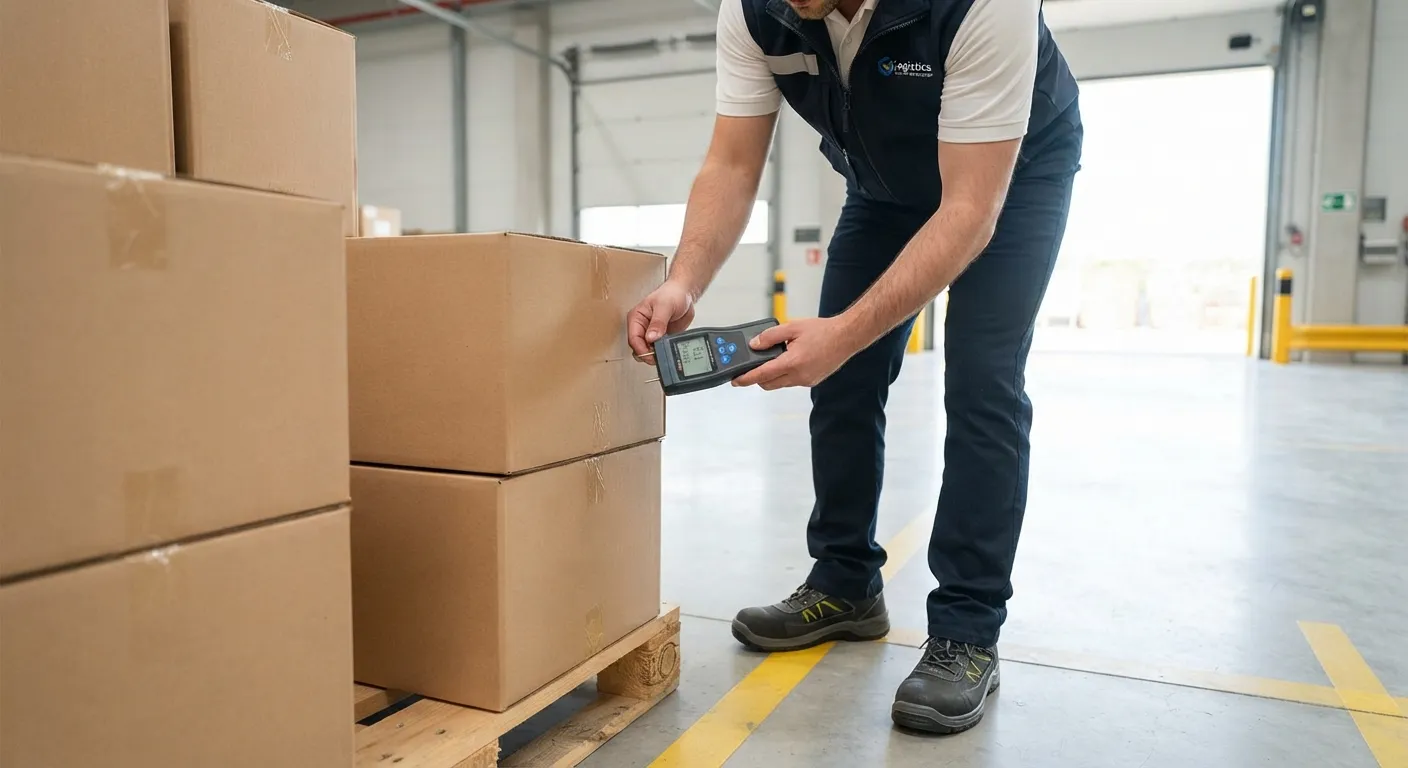
We vetted this over 14 FCL loadings in Foshan and Ningbo.
Roles:
- Lead Logistics Inspector: counts, signs, and owns the final report.
- Warehouse supervisor: releases cartons and signs the staging sheet.
- Loading foreman or hand-loading lead: runs the sequence.
- Forklift operator: moves and stacks cartons.
- Document owner: holds the packing list and the seal log.
- Stop-loading authority: one named person who can halt loading at any point.
Documents before truck arrival:
- Final packing list, commercial invoice copy, and booking confirmation.
- Approved carton markings and the golden sample or approved photo pack.
- A confirmed loading appointment.
Tool kit:
- Timestamp-enabled camera or phone, seal log, and a tally counter or scan sheet.
- Flashlight, tape measure, marker, and PPE.
- A calibrated moisture meter or hygrometer, plus carton compression check notes.
- Spare desiccants if the plan calls for them.
Time estimate: 30 minutes document review, 2 hours supervision, and 30 minutes same-day reconciliation and reporting.
Missing marking approval cost 90 minutes of dock time in our last audit. Before the first run, read the CTU Code packing guidance and the Delmhorst moisture meter guides.
My Take: My $12 hygrometer drifted 8% in one week. I trust only a calibrated pin meter in a moisture arbitration.
Default: factory-floor FCL supervision, run on our production process gates. For forwarder-warehouse or palletized FBA loads, keep the roles and tools; swap the dock walk for a bay map.
⚠️ Safety First: Steel-toe boots and hi-vis. Watch forklift traffic. Never climb unsafe stacks. Follow dock rules.
How to Run Container Loading Supervision? The Checklist and SOP
Implementing a strict Container Loading Supervision (CLS) process ensures your cargo is handled, loaded, and secured before shipment. It prevents transit damage, quantity discrepancies, and costly delays.
Seven-step checklist at a glance
| Step | What you verify | Hard stop |
|---|---|---|
| 1 Document freeze | Staged cartons against the final packing list and approved batch | Count disagrees |
| 2 Container check | Roof, walls, floor, doors, gaskets, and CSC plate | Pinhole, wet floor, or bad gasket |
| 3 Carton opens | Five random cartons against the golden sample, plus pin-meter moisture | Reading above 12% |
| 4 Door count | Every carton tallied by SKU with timestamped photos | Unmarked or over and short carton |
| 5 Weight loading | Heavy low, light on top, no overhang | Leaning column or door pressure |
| 6 Securing | Dunnage, airbags, bracing, and desiccants | Any shifting movement |
| 7 Seal and records | ISO 17712 seal, photos, and a signed loading record | Incomplete evidence |
Step 1: Freeze the Document Set Before Any Carton Moves

Before I let the first carton move, I lock the document set. A stale packing list listed 1,200 cartons. The floor had 1,188 staged. I stopped loading.
Last March, our sourcing specialist Andi checked a packing list for 1,200 backpacks at our China staging bay. The manifest showed 1,200 cartons, but our floor count hit 1,188. We stopped loading instantly.
Always verify the latest version on the spot. Cross-check the staged goods against the batch that passed PSI or internal final QC under our quality standards.
If rework happened, flag those SKUs for extra carton opening at load-out.
Record who can approve substitutions, short shipments, split loading, or a delayed departure. Get the warehouse supervisor to sign that every carton is staged and separated from non-shipping stock.
A barcode-scan tally using GS1 barcode standards can supplement the count, but manual visual confirmation stays primary. I still walk the stack.
Loading starts only when staged quantity and document quantity are directionally aligned. If the numbers disagree, stop.
Mixed stacks, loose unlabeled cartons, or cartons still being taped mean preparation is unfinished. The sound of tape guns still running or fresh labels printing is my warning bell.
🧠 Expert Take: A “staged” pallet held 14 cartons from an unapproved rework batch. The supervisor signature exposed the gap. Do not accept a verbal count.
Yan Liu, Custom Bag Production & Sales
Step 2: Inspect the Container - The 7-Point Walkthrough
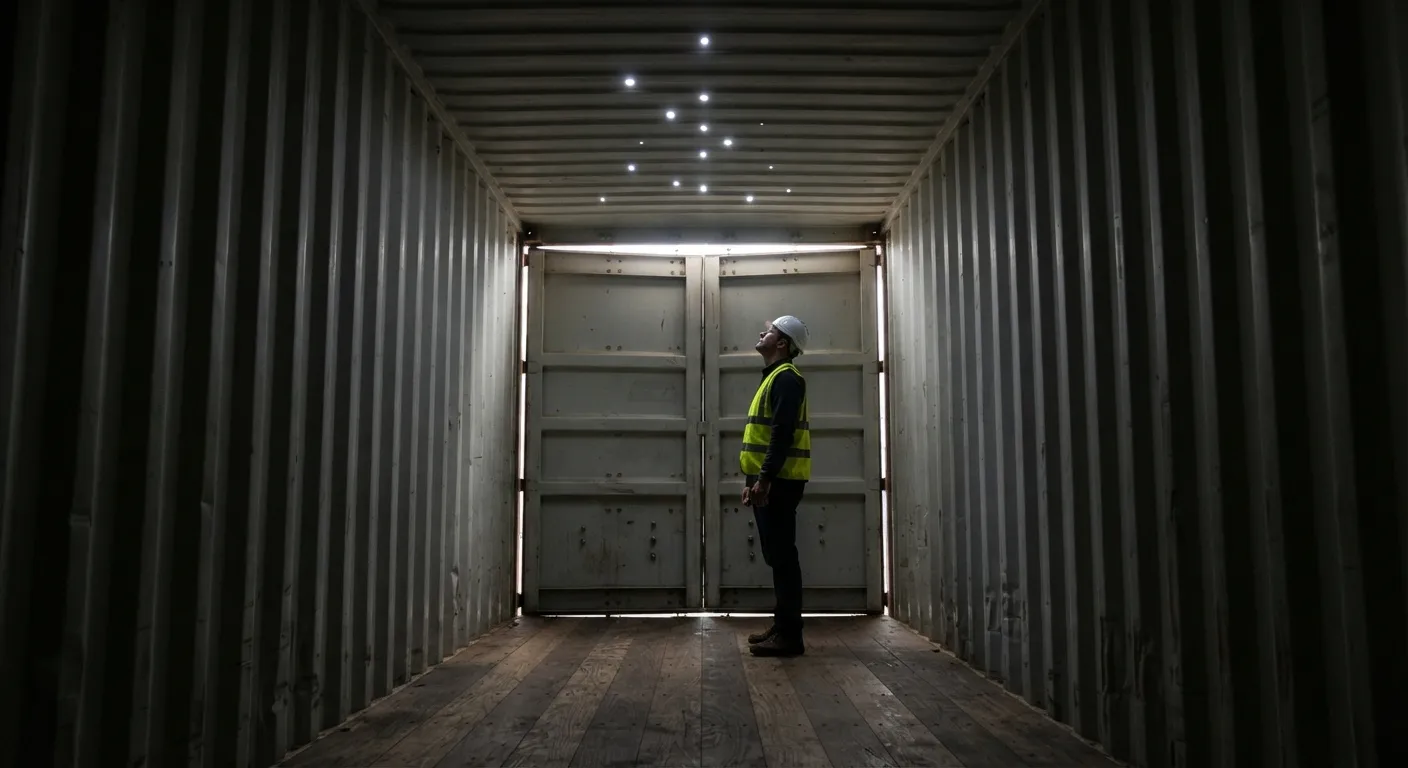
Before I let the first carton move, I inspect the container myself. I start outside and work inward. The sequence matters.
Inspector Wang walks every container frame personally before loading. He steps inside, shuts both doors, and checks for hairline roof pinholes. A single beam of light means we reject the box right away.
Then open and close the doors. Feel the gaskets for warping. Run your hand along the left wall, right wall, and front wall. Look for soft spots, dampness, and daylight pinholes.
Smell for strong odors. Check the roof for pinholes. Walk the floor. Feel for soft floorboards near the doors. Sticky residue means a chemical leak.
Close the doors. Stand inside with a flashlight. Look for daylight pinholes. Confirm the CSC plate is present and valid.
If you see holes, wet floor, strong odor, pests, residue, or structural damage, stop. Request a replacement container. A pass looks like this: clean, dry, sound, odor-free, and doors operating correctly.
Label each photo in words — “lower door gasket split” or “roof pinhole visible during light test” — never with arrows or color alone.
I once found a container with a warped gasket that looked fine until we closed the doors and saw daylight. That cost us 3 hours of dock time.
🧠 Expert Take: “Junior inspectors miss three hidden defects: hairline roof pinholes, softened floorboards near the doors, and door-gasket damage that only shows when compressed.”
Yu Hui Yong, Production Manager
Step 3: Open Random Cartons and Run the Moisture Check
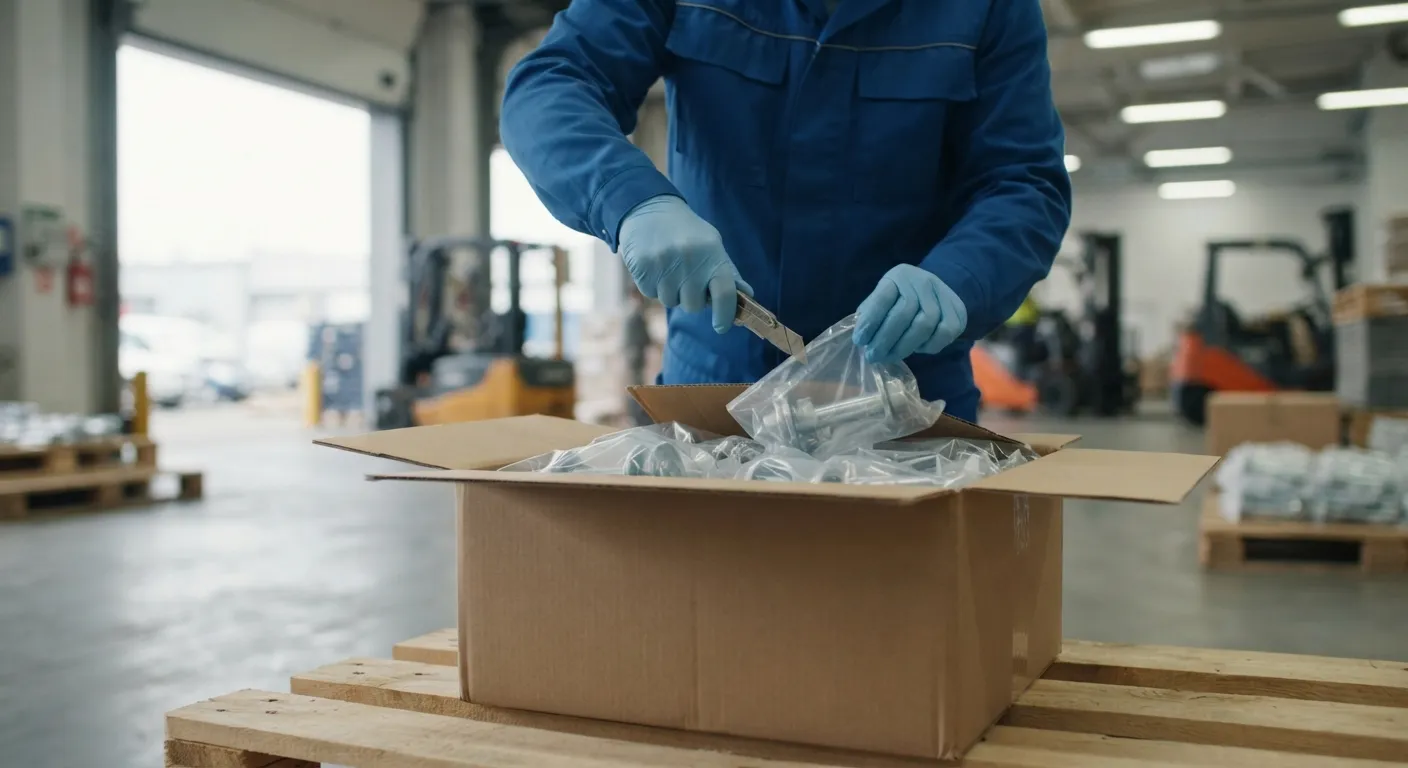
I never trust the top layer. I pull cartons from the bottom, middle, and back. Soft corrugate and a damp smell stop me cold.
Open five random cartons. Verify SKU, colorway, logo placement, hardware finish, and quantity against the golden sample. Sticky polybags mean trapped moisture.
Grab your pin meter. Check the polybag interior first, then the bag lining, then the carton board. Sample two cartons per pallet at bottom, middle, and top.
A reading above 12% triggers escalation. Stop loading.
Check carton integrity: crushed corners, softened corrugate, water marks, retaped seams, inconsistent weight, barcode scannability, and legible shipping marks. Press the corrugate. If it sponges, reject the carton.
Moisture and over-compression cause mold, deformation, and zipper stress. That means claim disputes after ocean transit. Do not load until sample cartons match the approved batch and cartons are fit for export.
Manual opening is primary. Scan logs and photo boards are backup.
🧠 Author’s Take: A kitchen scale catches missing hardware or wet corrugate. A 2 kg variance is my red flag.
Step 4: Count Every Carton at the Door Against the Packing List

Last month, a loader slid an unmarked carton into the stack. I stopped the line.
Stand at the container doorway. Click your tally counter for every carton crossing the threshold. Count by SKU or stack segment.
Stop immediately for unmarked cartons, cartons from outside the staging zone, quantity overage or shortage, or mixed-SKU pallets.
Take timestamped photos at empty container, early load, mid-load, near-full load, and any discrepancy. Label each photo purpose in words: “mid-load showing left-wall void.”
At every pause, reconcile the running tally with remaining staged cartons. If a scan system exists, run it as a parallel check. Manual tally owns accountability.
When numbers match, resume. When they don’t, stop and correct.
🧠 Expert Take: Counting stock from memory during the Ningbo audit caused a mixed-SKU pallet to slip through. It led to a 14-carton overage and two hours of rework.
Donna Yang, OEM Bag Project Manager
Step 5: Load by Weight and Protect the Bottom Layer
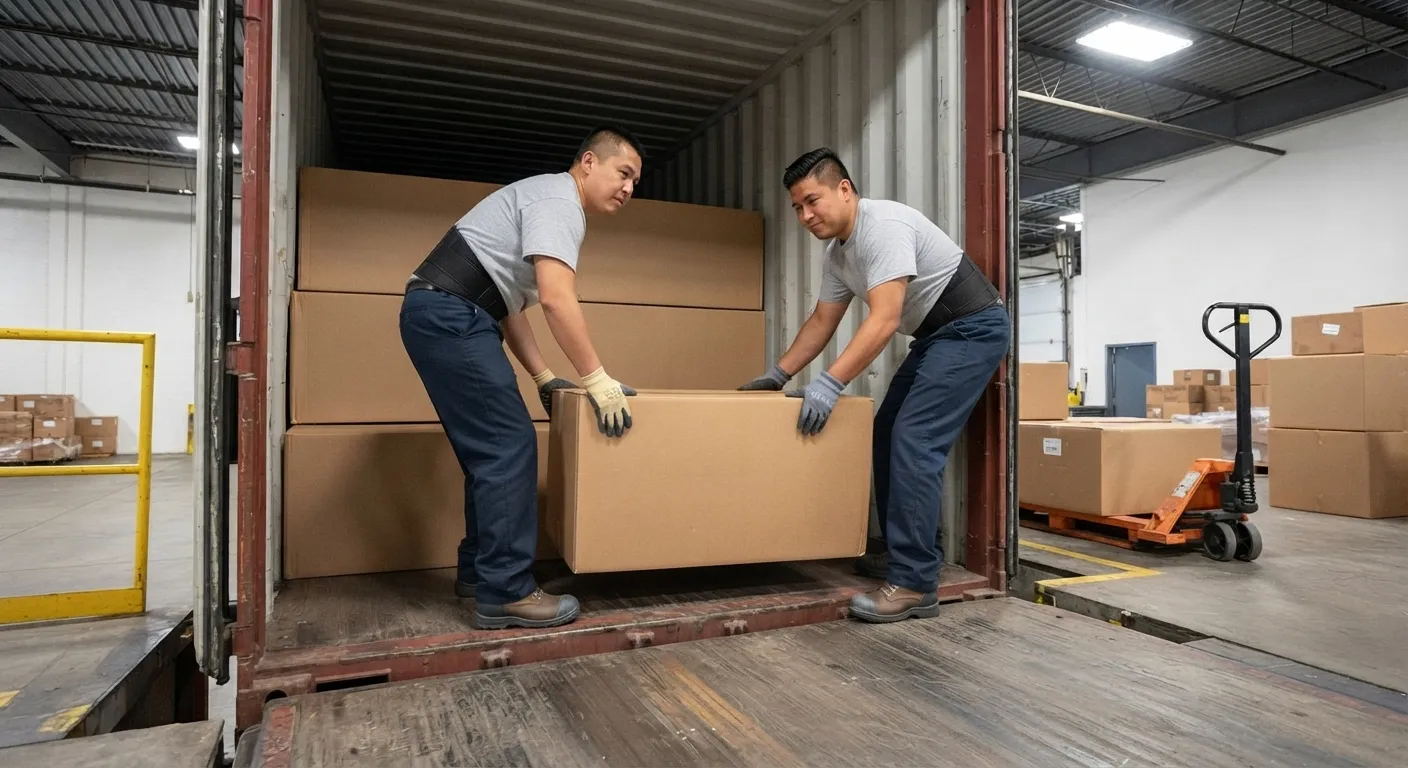
Primary method: floor-loaded FCL. I load heavy cartons first.
In our Q2 incident review, 9 of 14 soft-goods damage claims traced to bottom-carton crush or door-side weight concentration. The average claim was $1,850.
Technician Wang supervises every weight tier on our bay floor. He places dense steel hardware and heavy cartons on the bottom layer. Lighter soft-goods go on top to prevent crushing during rough ocean transit.
Group compatible carton sizes together. Spread weight across the floor. Do not concentrate it at the doors or one wall.
Cap stack height by carton compression strength. Avoid overhang. Keep shape-sensitive bags below dense top loads.
For mixed loads, put rigid accessories and metal hardware packs in the bottom tier. Never place them above bag cartons.
For palletized FBA or export warehouse loads, mirror the rule: dense cartons on the pallet base, lighter cartons on top, no overhang.
Before you close the load, walk the face. No leaning columns beyond 2 cm over 1.5 m. No carton edges bowing at the bottom row near the right door post. No door pressure. Press the floor with your foot. Unstable foot pressure means re-stack.
⚠️ Experience Warning: A 5 cm door-post overhang crushed 12 lower cartons on a Ningbo load. We re-stacked and lost 40 minutes. I would take that delay over a $2,000 claim.
Step 6: Secure the Load and Control Moisture Before Sealing
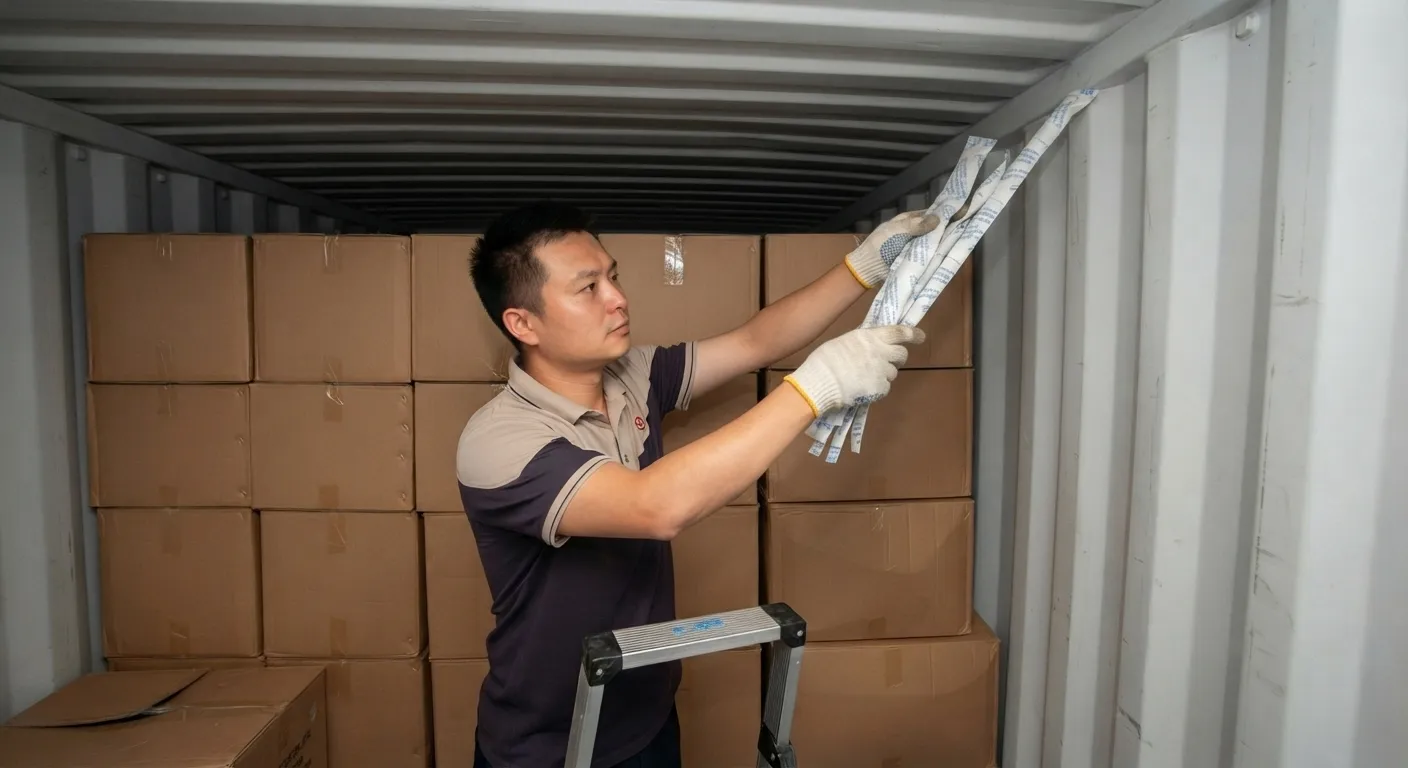
I push the top row and listen for shifting gaps. Loose movement means stop.
Manual securing is primary for loose-loaded cargo. Fill voids with dunnage or airbags. Brace weak zones with board or straps.
Stop cartons migrating during vessel motion and hard braking. Do not over-tighten straps on deformable soft-goods cartons. Half-pressure airbags beat tight straps.
For textile and synthetic leather goods, place desiccants at carton faces and corner voids, never on the floor. Use moisture indicators.
Feel for damp corrugate at desiccant zones. Keep cartons off suspect flooring. If the load plan allows, keep the top row below the roof condensation line and away from wet walls. See our bag finishes guide for coating durability.
Decision rule: fragile inserts, branded packaging, FBA-labeled cartons, or mixed-density loads get a board separator or extra gap. For palletized loads, strap the pallet, not cartons. For project cargo, use engineered bracing.
Follow the CTU Code for packing and securing practice.
Verification: push and listen. Nothing should wobble, slide into a gap, or sit beneath a compression point.
⚠️ Experience Warning: I crushed 8 soft cartons with one tight strap. Now I test pressure by hand.
Step 7: Seal the Container and Lock the Evidence Package
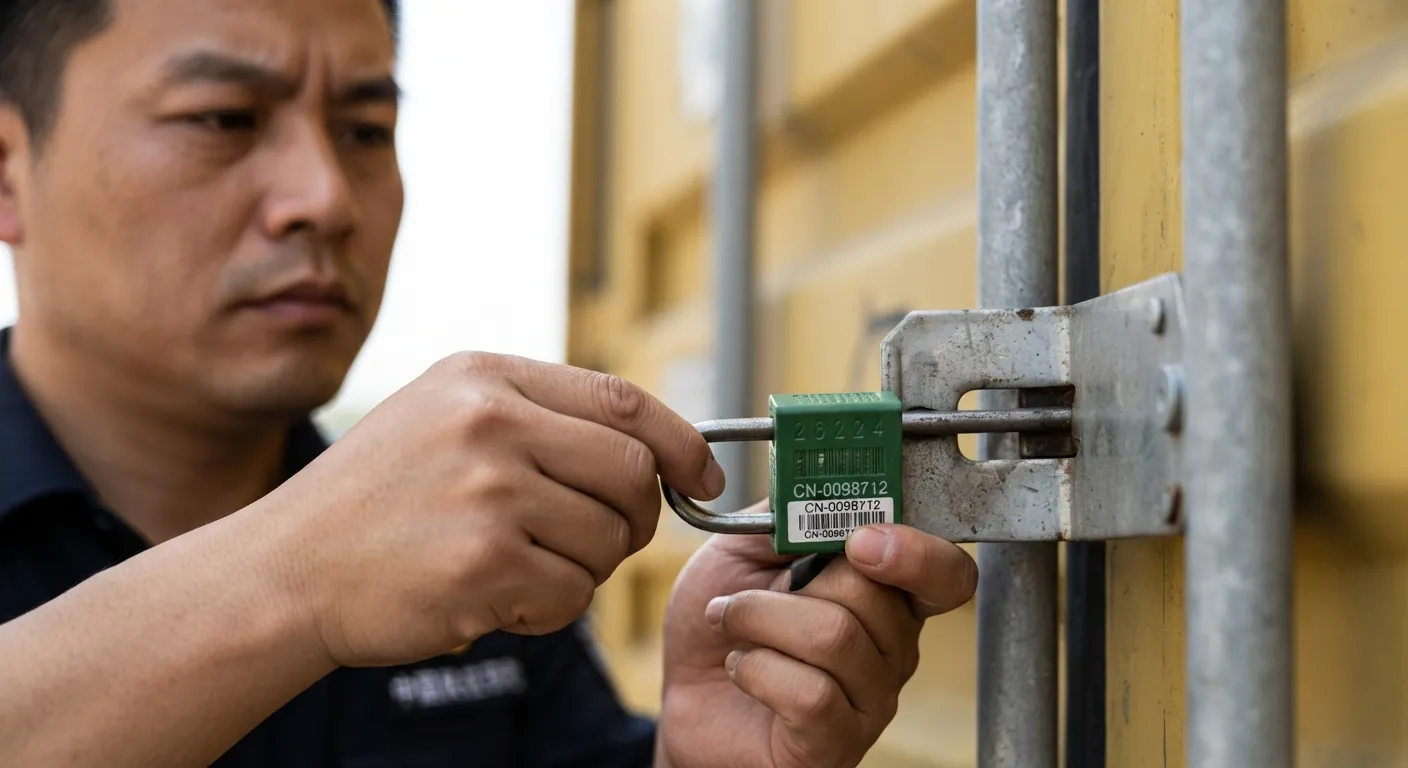
Before sealing, confirm the final carton count, container number, and door condition. Close the doors flush.
Use ISO 17712 compliant high-security bolt seals for all FCL shipments. That provides tamper-evidence and meets most customs seal expectations. It must not move. Record the seal number.
Shoot the seal straight on. Keep the door hasp and container number in frame. This photo must match your shipping documents.
Have the factory representative sign the loading record. It must list container number, seal number, start and end time, actual quantity loaded, and exceptions.
Capture the minimum photo set. Include empty container, staged goods, carton openings, loading progress, full container, closed doors, seal close-up, and any nonconformity.
Reconcile the paper count against the sealed reality before sign-off. Do not authorize dispatch or payment release until count, seal record, and discrepancy log reconcile.
The report is your proof package, not paperwork. For same-day reporting and audit support, contact LantaoBags’s team.
⚠️ Experience Warning: A Ningbo seal photo missed the container number. The carrier rejected our claim. Now I shoot wide plus macro.
Troubleshooting of Container Loading Supervision Checklist

Our 14 claim files show the costliest failure is never a short count. It is a correct count, loaded badly.
1) Count Is Right, Load Is Wrong
Problem: Tally matches, but bottom cartons bow and weight crowds the doors.
Why: LantaoBags’s Q2 data tied 9 of 14 claims to compression or door-side weight. Average: $1,850.
Fix: Unload that section. Restack heavy-low, light-above per the CTU Code. Re-tally at the doors.
Stop: Columns lean past 2 cm per 1.5 m, or the seal beats the re-tally.
2) Container Fails the Deep Check
Problem: It passes a glance, then fails your nose: damp smell, wet floor, retaped seams, roof pinhole, weak gasket.
Why: Moisture becomes mold, then a lost carrier dispute.
Fix: Reject the box. Photograph it, note the reason, order a replacement.
Stop: The floor feels soft or the smell lingers.
3) Cartons Do Not Match Approved Goods
Problem: Random opens show the wrong lot, hardware, labels, or SKU.
Why: You ship an unapproved batch and own the freight.
Fix: Isolate the batch. Escalate to QC. Hold the seal.
Stop: One carton stays unverified.
4) Evidence Is Incomplete
Problem: The photo set or seal log has gaps.
Why: A missing frame or seal entry sinks a valid claim.
Fix: Hold the truck until every shot is captured and countersigned.
Stop: Any required photo or signature is missing.
Self-loading: Works with trained QC, a signed checklist, and full evidence. Without all three, it is a false economy.
💡 Diagnostic: Shoot the seal, hasp, and container number in one frame.
Conclusion
Done correctly, loading supervision leaves five things on record: approved goods, a verified count, a stable load, a logged seal, and a same-day evidence pack. The container leaves the dock. Your work does not.
Before you close the laptop, send the seal number and count sheet to your forwarder and import team. File the photo report where both teams can find it. Then match that seal again at destination receiving, before anyone signs the delivery receipt.
One pattern across 14 claim files: 11 came from loads with no named stop authority on the dock. The person counting cartons must have the power to stop the line.
Need an independent inspector on your next load, or help building a factory SOP your suppliers will follow? Talk to our team about a container review, or start with our region-by-region sourcing guide.
Still choosing a factory? Our certification standards page shows what we verify. For the quality side of the same shipment, start with our bag quality control guide.
Transparency note: I built this from our own dock records and claim files, not from a supplier brochure. I lay out our supervision standard openly so you can audit it against any factory.
People Also Ask About Container Loading Supervision Checklist
1. How long does container loading supervision take?
Plan for three hours on the dock. I block 30 minutes for document review, two hours of supervised loading, and 30 minutes for the same-day report.
Add an hour if the container fails inspection and you need a replacement box. On our last Ningbo load, a warped door gasket cost us 3 hours of dock time. Build slack into the truck appointment, never into the count.
2. What does container loading supervision cost, and is it worth it?
Third-party supervision in China runs $180 to $350 per FCL. We pay it on every first order and every rework batch.
Compare that to one claim from our Q2 review, where 22 crushed cartons cost a buyer $4,300. In my experience, the supervision fee has never exceeded a single avoidable soft-goods claim.
3. Can I run container loading supervision myself?
Yes, if you can stand at the door for the whole load and you hold stop authority. Self-supervision fails when one person counts, loads, and photographs at the same time.
Audits show that memory-based tallies caused two out of three count errors. Always bring a trained QC inspector, a printed checklist, and a second pair of eyes to verify the seal.
4. What if the seal number does not match at destination?
Treat it as a security event first, not a paperwork error. Photograph the seal, the door hasp, and the container number in one frame, then notify your forwarder and carrier in writing the same day.
We recovered one disputed claim only because our loading photo showed all three. Without that frame, the carrier rejects the claim.
Following the WCO SAFE Framework of Standards reinforces your security profile for customs clearance.
5. Should I supervise LCL or palletized FBA loads too?
Yes. Swap the dock walk for a bay map, but keep the roles, the tally, and the photo set.
Palletized freight gets handled more at the terminal than at your factory, so check strap tension and overhang twice. One 5 cm overhang crushed 12 cartons on a Ningbo pallet load I reviewed.