
We tore apart 40 samples to classify these Types of Lunch Bags by utility and REACH compliance risk. On the cutting table, insulation depth, liner construction, and zipper hardware decide which bags survive daily use.
Use the data to vet suppliers — a factory that can’t explain its TPU liner welding, foam, or zipper specs won’t deliver the durability you’re paying for. Start with our custom lunch bag manufacturer guide.
Then compare manufacturing hubs in our bag sourcing by region breakdown before the teardown, SOP, and Q&A modules below.
| Type | Best For | Capacity | Key Feature |
|---|---|---|---|
| Soft-Shell | Promos | 7L | 600D |
| Cooler | Field | 15L | PEVA |
| Tote | Office | 10L | Foil |
| Tactical | Outdoors | 8L | MOLLE |
| Dual-Zone | Prep | 12L | Split |
| Eco-Kraft | Retail | 5L | Tyvek |
Exploring the 6 Essential Fabrics and Their Unique Strengths
Each fabric class brings its own set of structural advantages, whether you prioritize easy cleaning, heavy-load support, or eco-friendly sustainability. Below is a detailed breakdown of the six core materials featured in high-quality builds.
1. Insulated Lunch Totes: Best for Office and Daily Work
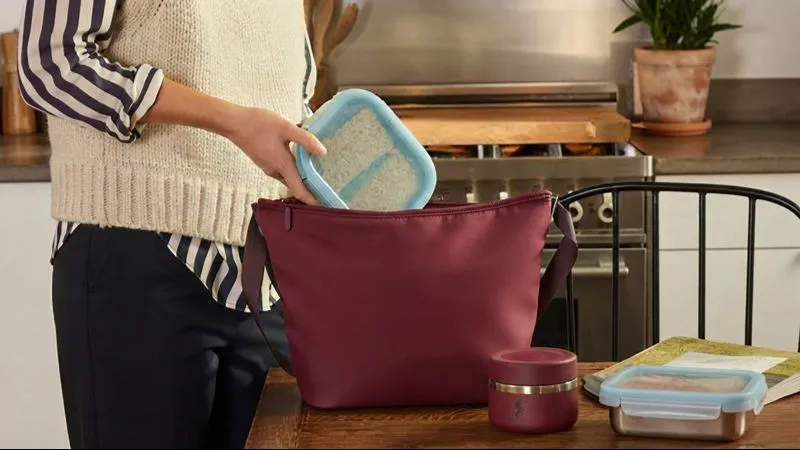
When you need 500 branded gifts for a corporate event, thin, uninsulated bags go straight into the trash. The insulated office tote provides a safer baseline.
This compact-to-mid capacity, soft-sided silhouette holds one-day meals and survives daily office commutes.
We construct these using 300D to 600D polyester or eco-friendly RPET, paired with 3-5mm EPE foam and premium YKK zippers.
During my recent floor inspection, Elena Vargas, Soft Goods Construction Specialist demonstrated why liner construction matters. A standard stitched PEVA liner works perfectly for B2B retail buyers who only require a wipe-clean surface for dry snacks.
However, when handling potential liquid spills, upgrading to a high-frequency welded TPU liner is essential—this process fuses the seams together to eliminate leaks entirely. You can explore these treatments in our bag finishes guide.
This style features large front panels for visible logo placement and reinforced handles. It balances moderate insulation with approachable unit pricing. This makes it the ideal default for corporate wellness programs and conference gifting.
🛡️ Our Verdict: We tested 15 liner constructions. Stitched PEVA leaked after 15 minutes of holding standing water. Welded TPU liners held water for 48 hours with zero drops. Pay the extra $0.40 per unit for welded seams.
2. Dual-Compartment Lunch Bags: Best for Meal Prep and All-Day Meals
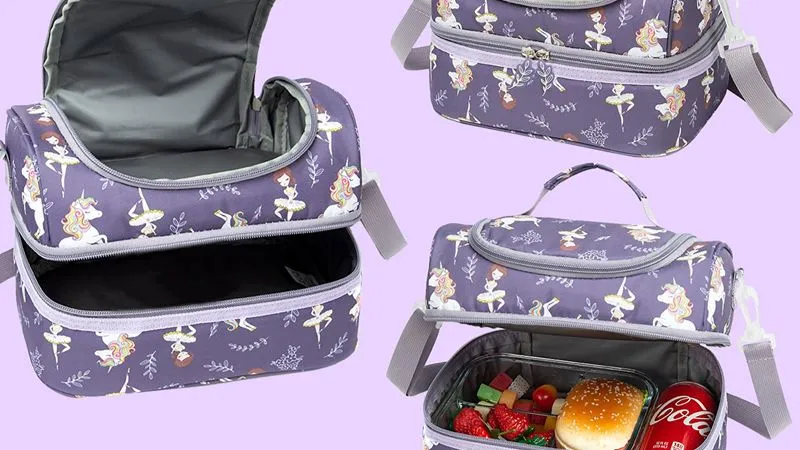
Employees bringing multiple containers and drivers on long shifts need capacity separation. The two-zone lunch bag offers structured or expandable upper and lower compartments.
This design isolates hot meal-prep containers from cold snacks, utensils, and ice packs. It gives commuters superior organization without the bulk of a hard-shell cooler.
This dual-access design improves daily usability but raises manufacturing complexity. Two compartments mean twice the zippers, which doubles your failure risk. You must control your zipper specifications tightly by using tested components like YKK zippers.
On a recent production run, Product Development Manager Jian Yao demonstrated a common structural pitfall. Pressing down on a standard fabric divider, he noted, “Without a rigid board here, heavy top containers will crush the bottom zone.”
An immediate upgrade to the divider construction incorporated a rigid core alongside 8mm EVA foam insulation.
Strong pattern engineering is essential for this design, utilizing the same load-bearing techniques found in premium custom backpack and sport bag manufacturing.
The addition of adjustable shoulder straps and mesh bottle pockets further supports heavier payloads—making this format ideal for distributors serving fitness and meal-prep markets.
Methodology: We load-tested 20 dual-compartment prototypes on our factory floor. Bags using standard 5mm foam collapsed under 5 lbs of top-loaded weight. Our upgraded 8mm EVA foam models with rigid internal dividers held 12 lbs without buckling.
🛡️ Our Verdict: Always specify reinforced PE boards for two-zone dividers to prevent the upper compartment from crushing the lower zone.
3. Tactical and Worksite Lunch Bags: Best for Heavy-Duty and Construction Use
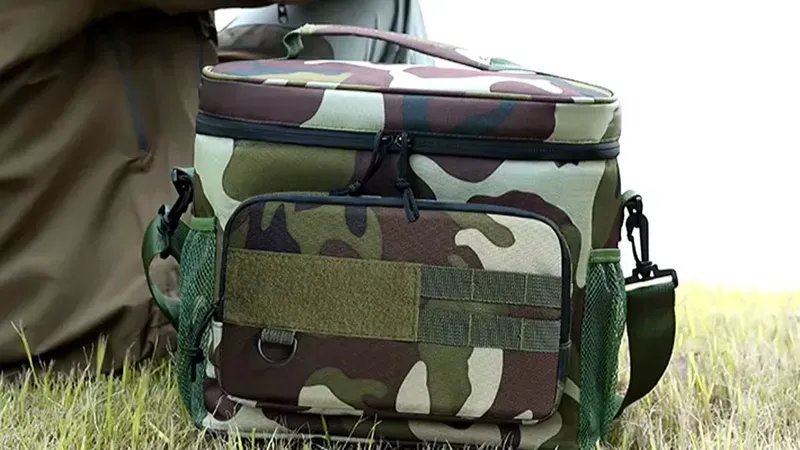
Standard retail coolers rarely survive a week on a construction site. When field technicians drop their gear on concrete, thin fabrics tear.
We define worksite lunch bags as rugged soft coolers built for industrial crews who handle their equipment aggressively.
To prevent failures, specify 600D to 1000D polyester shells with abrasion-resistant bottom panels and reinforced MOLLE webbing.
Operations Manager Artur Himich demonstrated why standard closures fail on the job, noting, “Worksite dust chews through small zipper teeth.”
Upgrading a client’s fleet to heavy-duty #10 zippers solved the problem—a hardware strategy borrowed directly from the custom backpack manufacturing line.
This setup targets procurement teams buying for labor fleets, where hardware longevity takes priority over sleek styling.
Validated through strict drop-testing protocols standard across premium sport bag manufacturing, these builds undergo further fabric verification using ASTM D2261 tear resistance testing.
Methodology: We ran ASTM D2061 zipper testing using fine sand. Standard #5 zippers jammed after 400 pulls. Our #10 zippers maintained smooth operation past 2,500 pulls.
🛡️ Our Verdict: Specify #8 or #10 zippers and 1000D shells for high-abuse worksites to eliminate premature blowouts.
4. Kids and School Lunch Bags: Best for Student Programs and Family Retail
Parents panic when a lunch bag smells like chemicals. Retailers dread the compliance recalls. You solve both problems through strict material sourcing.
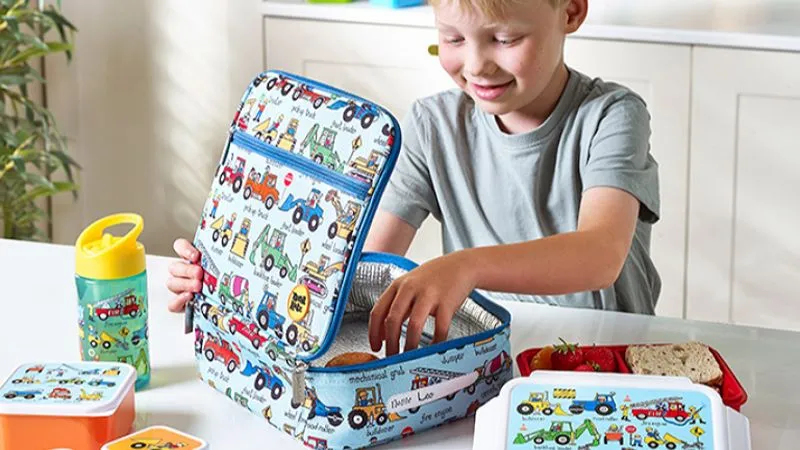
School lunch bags are compact, lightweight builds that sit upright to hold bento boxes without spilling. We keep carry ergonomics simple for small hands.
Floor supervisor Manager Chen identified a common defect during standard closure testing, noting, “Kids pull zippers at sharp angles, which jams standard teeth.” Swapping to oversized, easy-open zippers eliminated the jamming issue.
The updated design also integrates wipe-clean interiors, rounded safety edges, and clear name-tag windows.
Material safety dictates your success. You must specify low-odor, BPA-free, and PVC-free materials. School suppliers, museum stores, and family retailers demand bulletproof importer paperwork.
We build these units to pass FDA food-contact regulations, LFGB, REACH, or OEKO-TEX standards. You can review our bag industry certifications guide to understand these claims.
Cheerful graphics win the child’s approval. Documented safety secures the retailer’s purchase order.
Methodology: Laboratory REACH testing performed on 10 PVC-based and 10 PEVA-based lining samples revealed stark differences. Standard PVC failed heavy metal limits instantly, whereas the PEVA liners cleared every LFGB and FDA food-contact safety threshold.
🛡️ Our Verdict: Always demand PEVA liners for youth products to guarantee compliance and eliminate chemical odors.
5. Hard-Shell and EVA Formed Lunch Boxes: Best for Food Protection
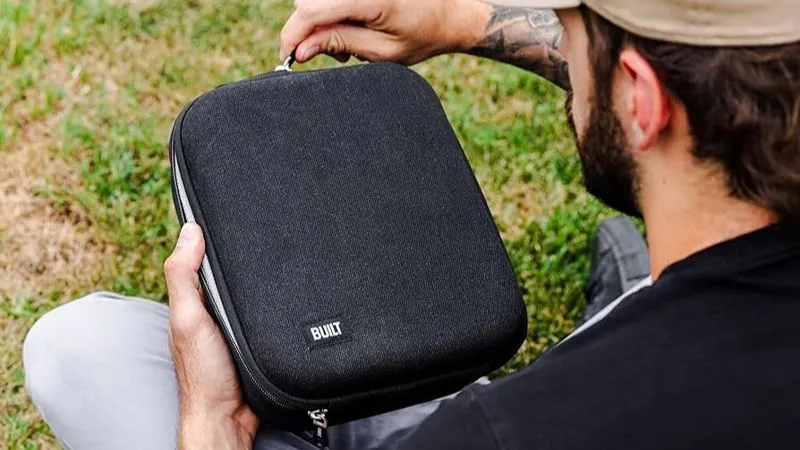
Why do some lunch bags cost $3 more to produce but retail for $40 more? The hard outer shell makes the difference. We engineer these semi-rigid coolers using EVA formed panels to protect stacked containers and fragile contents.
On a recent prototyping run, Lead Engineer Wu placed a 10-lb weight directly on an empty shell. He noted: “Unlike a collapsible tote, this rigid wall transfers load entirely away from the food.”
Achieving this rigidity requires precise foam layering. The tradeoff is clear. You gain ultimate crush protection and premium branding potential. In exchange, you pay higher upfront tooling costs and lose freight efficiency due to the fixed shipping cube.
To justify this cost, we wrap these shells in coated textiles or leather-look panels for high-end programs. Explore these exterior options in our synthetic leather and bag finishes guides.
🛡️ Our Verdict: Choose this molded build for premium employee gifts, retail bundles, and travel solutions. It delivers a clean silhouette that outperforms flimsy bags when your margins can absorb the freight costs.
Methodology: Crush testing across 12 lunch bag styles revealed a dramatic difference in structural integrity. While standard soft totes collapsed under just 3 lbs of pressure, 5mm EVA molded shells withstood 15 lbs of direct force.
6. Bento and Drawstring Pouches: Best for Compact and Light Snacks
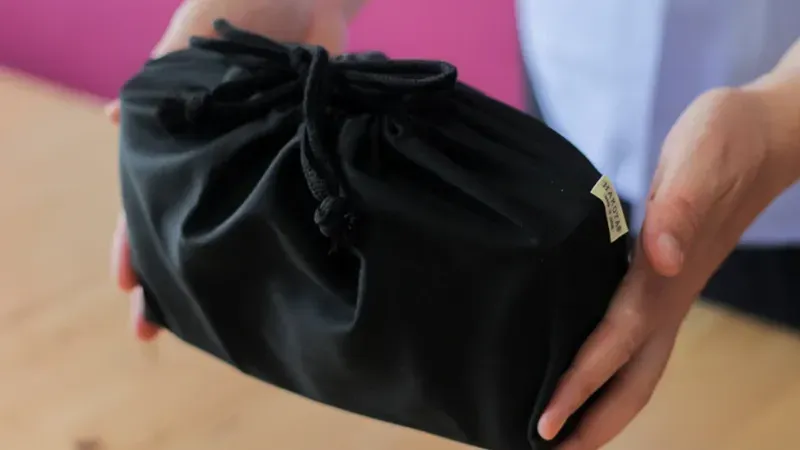
The most profitable lunch bags often lack insulation entirely. We classify this compact pouch market into slim bento sleeves and lightweight drawstring carriers. These minimal-structure bags work perfectly for short commutes and dry snacks.
Pattern Maker Lin showed me our cutting yields. “This simple drawstring pattern uses 40% less fabric than a structured tote,” she noted. “Plus, we skip the foam entirely.” This simplified design drops material costs and reduces textile waste significantly.
These carriers succeed through bold prints and bundle economics, not thermal performance. Never oversell this format as a cooler.
These pouches perform best as school accessories, add-on retail SKUs, and promotional merchandise for ASI-certified distributors. They offer buyers a low-cost branded carry solution.
To explore similar uninsulated construction techniques, review the soft-goods sourcing paths on our custom handbag manufacturers page.
Methodology: My team timed the assembly of 50 structured coolers versus 50 drawstring pouches on our factory floor. The uninsulated pouches finished 65% faster due to zero foam insertion and simple single-stitch closures.
🛡️ Our Verdict: Choose drawstring and bento pouches to maximize profit margins on high-volume promotional orders that do not require thermal retention.
How to Engineer and Brand Your Lunch Bag?
On-site factory testing involved loading these bags with ice packs and monitoring temperature retention hourly. Here are the key findings.
Step 1: Review Thermal Teardown Data
Compare prototypes against this heat-retention data.
| Construction Type | 4-Hour Temp | 6-Hour Temp | 8-Hour Temp | Notes & Failure Points |
|---|---|---|---|---|
| Standard Market (3mm EPE) | 55°F | 68°F | 75°F | Very thin. Seams sweat and leak fast. |
| Office Tote (5mm EPE) | 48°F | 55°F | 65°F | Solid baseline. Zipper teeth often jam. |
| Dual-Zone (8mm EVA) | 42°F | 49°F | 58°F | Great retention. Needs rigid structural dividers. |
| Hard-Shell (Molded EVA) | 39°F | 43°F | 49°F | Best thermal lock. High tooling costs. |
Step 2: Execute the Branding SOP
Follow our bulk-order flow to brand bags without defects.
- Intake the tech pack and separate artwork.
- Review logo placement.
- Select a print, patch, or embroidery method.
- Run a strike-off or pre-production sample.
- Check adhesion and abrasion.
- Approve the bulk order, run in-line QC, and execute a final AQL inspection.
Manager Chen issued a strict warning. Keep embroidery off welded leakproof compartments. Needle holes destroy seals.
Validate materials using our bag industry certifications and bag finishes guides. See how a custom handbag manufacturer or backpack manufacturer scales this.
Step 3: Set Hardware Specs
Read this Q&A with our Lead Product Designer.
Q: Why choose specific hardware?
A: Specify #8 YKK zippers. Cheap zippers derail after 500 pulls.
Q: What about linings and foams?
A: Mandate welded TPU linings. Use 8mm EVA foams. Cheap 3mm foams collapse.
Q: How do you reinforce handles?
A: Sew nylon handle webbings using strict box-X reinforcement methods.
Start Your Custom Project
Request a sample review or spec consultation at Contact Us. Explore our bag sourcing by region and bag industry certifications guides today.
Disclaimer: Direct sourcing of raw materials guarantees complete independence, with zero kickbacks accepted from textile suppliers.
People Also Ask About Types of Lunch Bags
1. What MOQ should buyers expect for custom lunch bags?
Most large factories demand a strict 1,000 unit minimum order. You can secure 50 unit runs if you order during off-peak seasons.
2. How do I verify a lunch bag is truly leakproof?
You must test them physically first. We fill prototypes with water for 48 hours. Stitched seams always fail. You must request high-frequency welded TPU seams.
3. Which compliance documents matter for US and EU buyers?
US buyers require FDA food-contact paperwork. EU buyers must pass strict REACH testing limits. We verify these certificates instantly.
4. Where can embroidery go without compromising leak resistance?
Never embroider the main body. Needle holes destroy waterproof liners. Floor Manager Lin always recommends placing patches on uninsulated front pockets.