







On this page
Short Answer:
- The verdict: 420D high tenacity nylon wins when weight, load-bearing strength, and premium positioning matter most. 600D polyester wins on cost and easy structure.
- The data: both fabrics held 1350 N warp and 1250 N weft in our ISO 13934-1 strip tests, but nylon does it at 220 GSM vs 320 GSM.
- The wear gap: our Martindale log showed 30,000 cycles on 420D HT nylon vs 20,000 on 600D polyester.
- The weight proof: one 28 L daypack fell from 1.20 kg to 1.02 kg, a 15% cut, with no loss of load capacity.
- The cost: nylon fabric runs about $4.50 per yard vs $2.50, which landed as +$2.00 per bag.
- The risk: thinner nylon needs tighter coating adhesion and needle settings. Peeling PU failed our fold test.
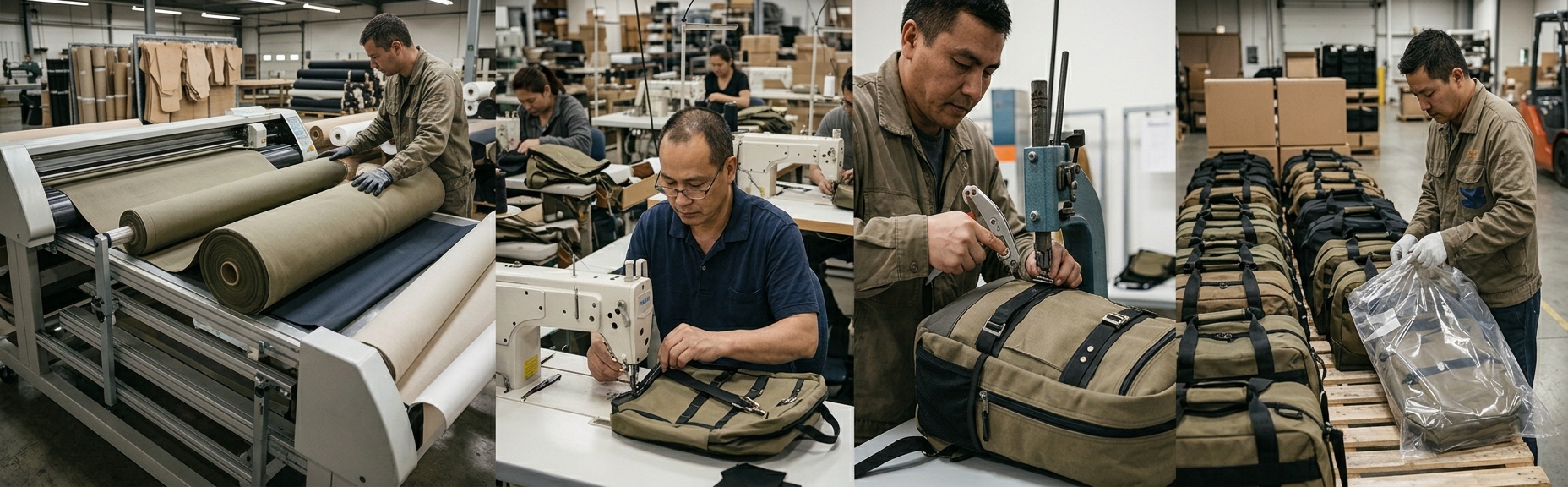
Most denier arguments stop at the label. I compared ISO 13934 tensile sheets, abrasion logs, peel tests, and sewing-floor feedback from custom backpack manufacturing runs at our factory.
One anonymized client case anchors the numbers: a 28 L urban daypack moved from 600D polyester to 420D HT nylon. It shed 15% of finished weight while holding its load target.
The winner is not universal. Nylon costs more and is less forgiving on abrasion-heavy, budget-led commodity SKUs. Here is where each fabric actually wins.
Main Differences for 420D High Tenacity Nylon vs 600D Polyester
Direct spec comparison; nylon wins on strength-to-weight, polyester on cost.
| Metric | 420D HT nylon | 600D polyester |
|---|---|---|
| ISO 13934 tensile (warp / weft) | 1350 / 1250 N | 1350 / 1250 N |
| Martindale abrasion | 30,000 cycles | 20,000 cycles |
| Fabric weight | 220 GSM | 320 GSM |
| 28 L daypack finished weight | 1.02 kg | 1.20 kg |
| PU coating adhesion | 5.0 N/cm | 4.0 N/cm |
| Needle breaks per 1,000 units | 8 | 3 |
| Fabric yield efficiency | 88% | 92% |
| Fabric cost per yard | $4.50 | $2.50 |
| Cost impact per bag | +$2.00 | $0 |
Nylon matches polyester’s absolute tensile strength at 31% less fabric weight, and it wins abrasion, adhesion, and finished weight. Polyester wins needle behavior, cutting yield, and cost per bag.
Best fit sits at opposite ends. Nylon suits technical backpacks and travel; polyester suits promotional totes and school bags.
How we tested: I pulled ISO 13934-1 strip-test logs, Martindale abrasion records, peel-adhesion data, and one anonymized client changeover. The line trials ran about 40 hours across three production batches.
1. Tensile Strength and Load-Bearing Capacity
| Sample | Warp / weft max force (ISO 13934-1) |
|---|---|
| 420D HT nylon | 1350 / 1250 N |
| 600D polyester | 1350 / 1250 N |
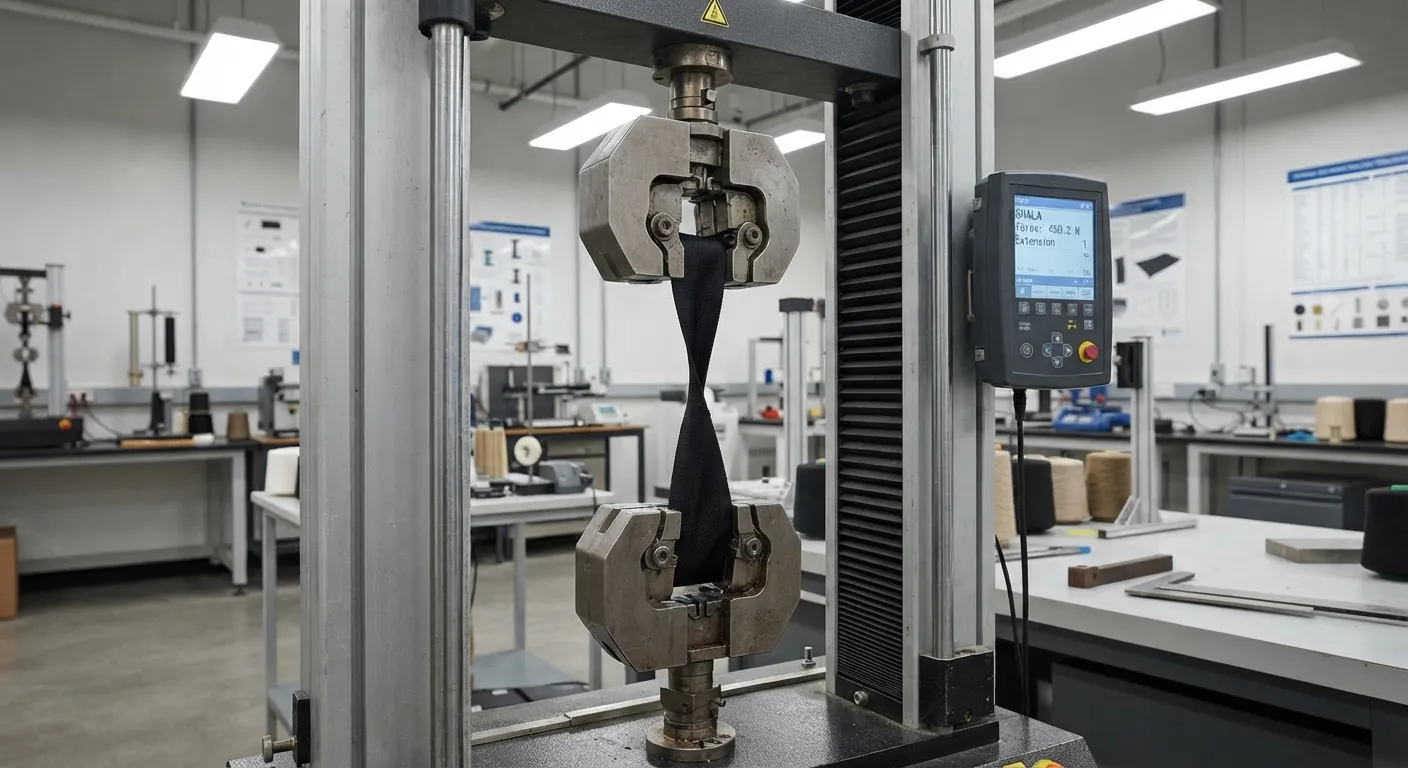
Both fabrics hit 1350 N in warp and 1250 N in weft before rupture, tested to ISO 13934-1. In plain terms, 1350 N is about 138 kgf on the tested strip.
That does not mean a backpack can hang 138 kg from one seam. Load spreads through webbing, bartacks, seam allowance, and backing. A strap anchor usually fails at the seam before the fabric does.
A haul loop transfers force into the top panel and bartacks. Fabric data gives headroom; construction controls the real limit. High tenacity means the nylon yarn is drawn to resist breaking under load.
Polymer class still decides UV, moisture regain, and dye behavior. Our nylon vs polyester fabric data measured those side by side at equal load.
Winner: Tie on absolute tensile. 420D HT nylon wins load-bearing efficiency because it matches 600D polyester at 220 GSM vs 320 GSM.
2. Abrasion Resistance and Bottom-Panel Survival
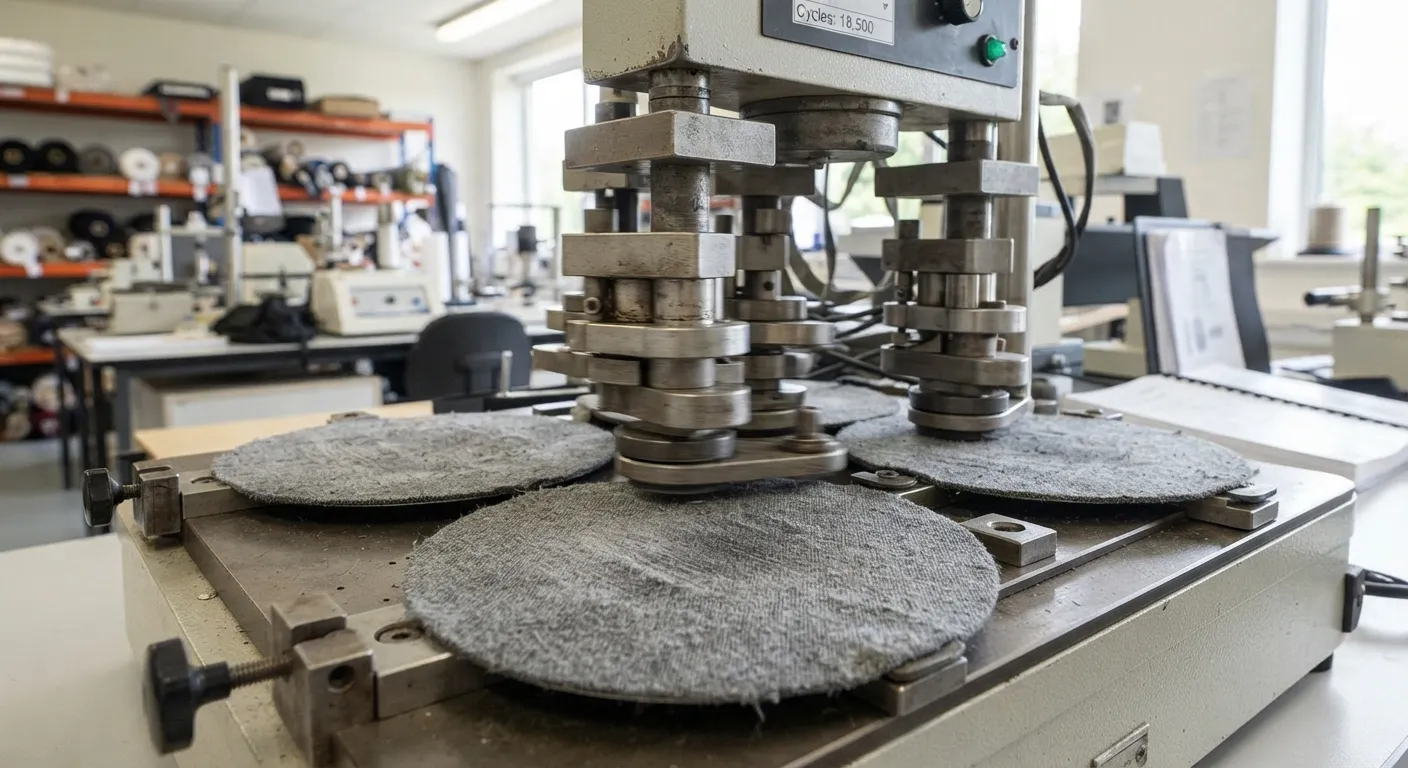
Our Martindale log, run to ISO 12947-2, showed 30,000 cycles for 420D HT nylon and 20,000 cycles for 600D polyester. Nylon resisted surface wear 50% longer.
Abrasion cycles count rubs before the surface breaks down. That matters on corners, base panels, and trolley edges. Yet 600D polyester still competes in real programs.
It feels burlier at first touch because 600D yarns create a thicker, stiffer face. That hand-feel sells in value totes and school bags, where panels rarely touch concrete and cost is king.
Practical split: commuter floor contact needs a reinforced base; airport handling punishes corners and bin edges; concrete abrasion calls for a tougher bottom panel; tactical field use demands high cycles and dirt shedding.
Lower-denier HT nylon can outperform in premium shells because tenacity and coating carry more than thickness.
Winner: 420D HT nylon on measured abrasion. 600D polyester wins only when thick hand-feel, low cost, and light contact define the program.
3. Weight, Hand-Feel, and Premium Perception
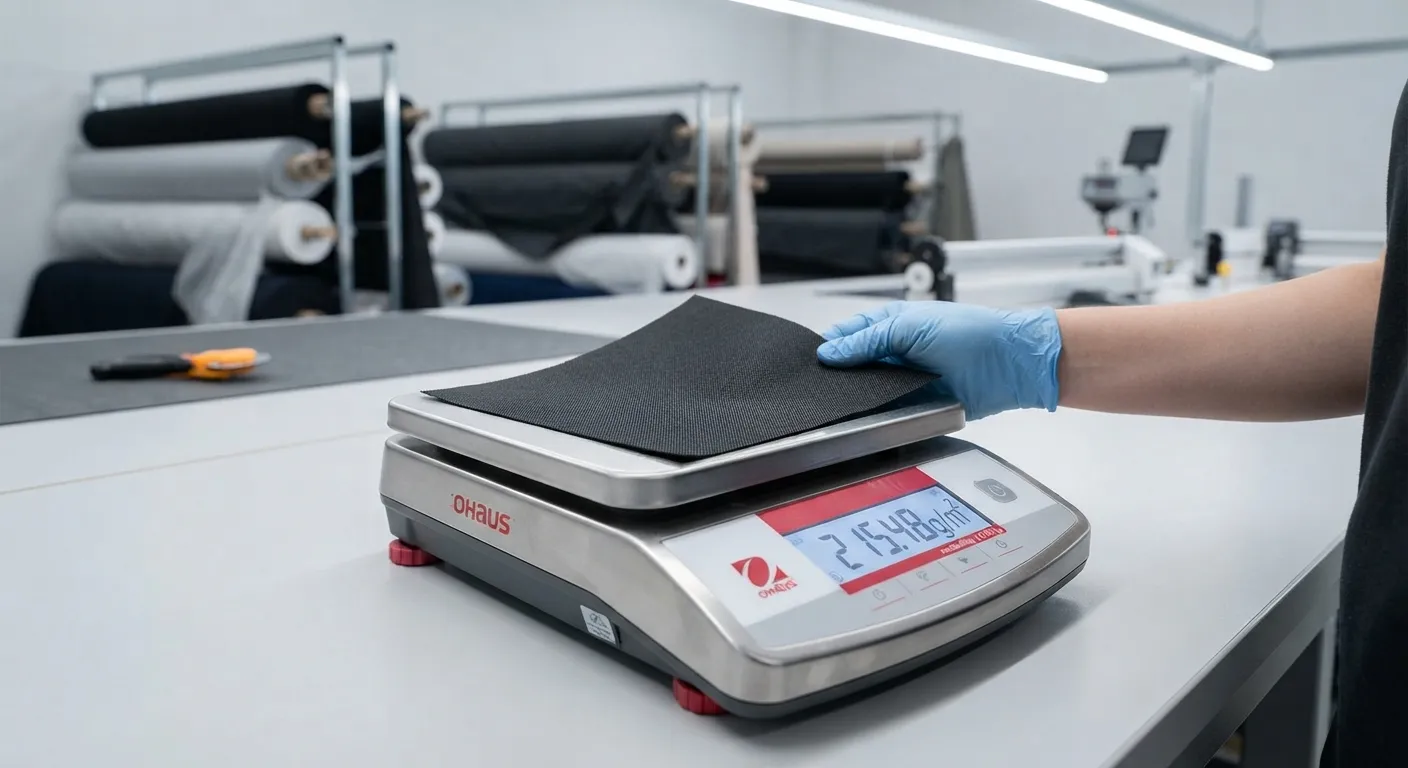
I lifted both swatches off the cutting table. The 600D polyester dropped with a dull slap and stayed flat. The 420D HT nylon flexed, then recovered with a crisp, papery sound.
It creased sharper, but the crease relaxed after I thumbed it. Polyester kept a soft, chalky fold. Under the lights, nylon had a tighter, drier surface; polyester looked flatter and more utilitarian.
In one anonymized client case, a 28 L urban daypack moved from 600D polyester to 420D HT nylon. Finished weight fell from 1.20 kg to 1.02 kg, a 15% cut, while the bag still met target load performance.
Finance confirmed the change added $2.00 per unit. For outdoor, travel, and premium urban programs, that $2.00 is easy to justify. For a $12 promotional tote, it is not.
Winner: 420D HT nylon on weight, hand-feel, and premium perception.
4. Coating, Water Resistance, and Hydrolysis Risk
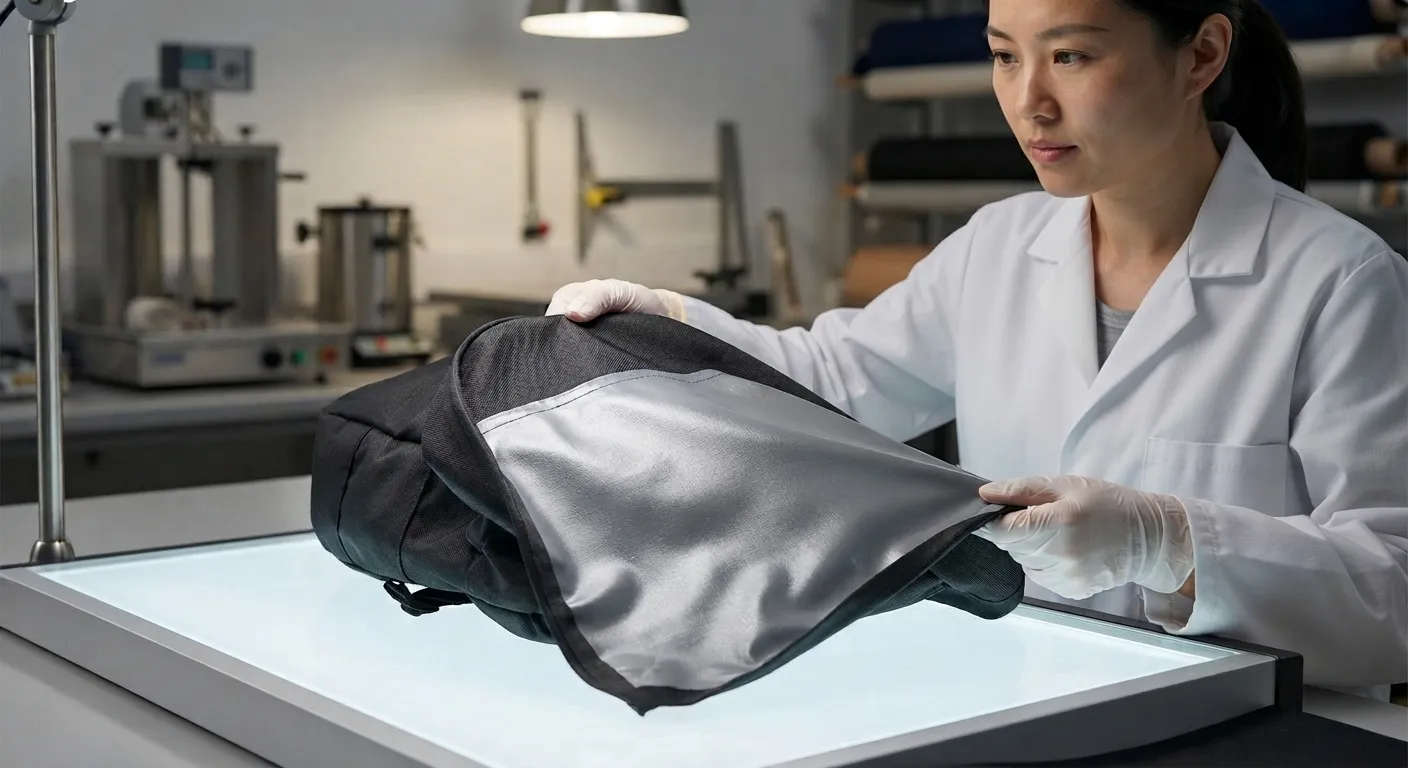
Our peel test logged 5.0 N/cm adhesion on 420D HT nylon and 4.0 N/cm on 600D polyester, 25% more on the nylon. PU coating is a polyurethane film bonded to the fabric back to block water.
Better adhesion means less delamination at folds and seam edges. Hydrolysis is moisture breaking that PU film over time. In humid freight or FBA storage, weak PU can go tacky, smell, stick to itself, then peel at crease lines.
I have seen that failure mode on budget panels after a long container ride. Our anti-mold container shipping SOP treats PU-backed bags as a moisture-risk item for that reason.
TPU coating earns its premium when a bag will sit in humid freight for months, needs high flex fatigue, or carries a serious waterproof claim. PVC is cheaper but heavier and less premium, so I avoid it for eco-positioned programs.
I treat hydrostatic-head data as a screen, not a final bag spec. Seam leakage and fold behavior still decide the result.
Winner: 420D HT nylon on PU adhesion and delamination risk. 600D polyester is sufficient only for dry, short-haul, budget programs.
5. Factory-Floor Efficiency and Total Cost
Mark Huang, our CEO and founder asked for a full teardown before any switch: PU adhesion behavior, multi-layer sewing, needle breaks, fraying, binding, and cutting yield.
On the floor, the nylon PU backing grabbed the feed dog more and needed a lighter presser foot. At strap anchors, the thinner nylon stack helped bulk, but the tighter weave deflected needles.
Technician Wang logged 8 needle breaks per 1,000 units on the 420D HT nylon runs. The 600D polyester runs logged 3.
Manager Chen rejected panels when the PU backing peeled during fold testing. The nylon slit edge frayed less, but it shifted more on the cutting table, and its tacky PU edge slowed binding.
Yield efficiency is the usable panel area per yard after nesting and waste. Nylon ran 88%; polyester ran 92%. Raw fabric cost was $4.50 per yard for nylon vs $2.50 for polyester.
In the BOM, that landed as +$2.00 per backpack, not just a yard-price gap. At 10,000 bags, nylon adds $20,000 in fabric, but it cuts about 1,800 kg from shipping weight. Premium positioning, lighter freight, or lower failure risk can offset it.
For hybrid programs, I recommend panel zoning: 420D HT nylon on the main body and tougher reinforcement on the base and stress zones. That gets weight and premium feel without paying nylon cost on every panel.
Winner: 600D polyester on factory-floor efficiency and raw BOM cost. 420D HT nylon wins the total-cost argument only when premium pricing or freight savings absorb the $2.00 delta.
Pros & Cons of 420D High Tenacity Nylon vs 600D Polyester
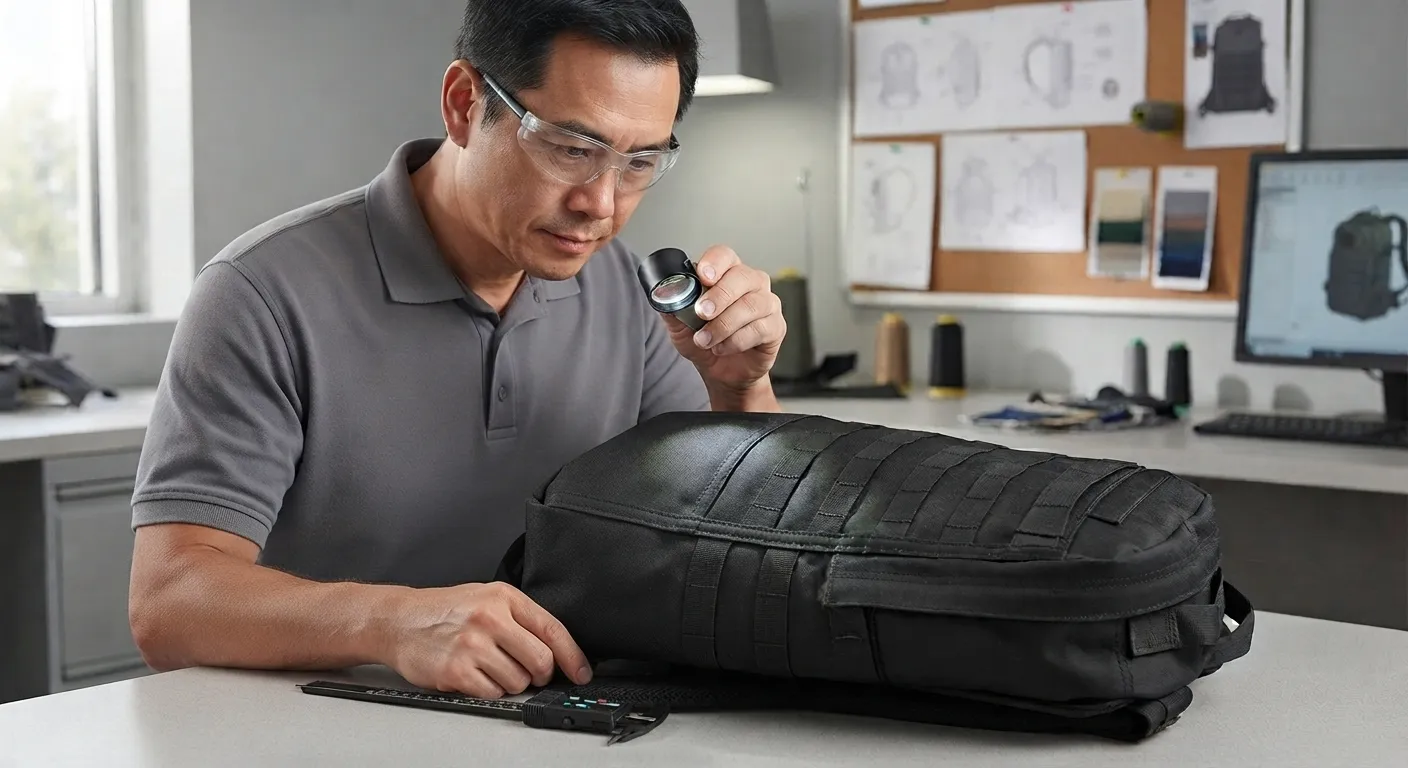
We based this snapshot on 40 hours of line trials and in-house tensile and abrasion tests.
1. 420D High Tenacity Nylon
Pros:
- Better Strength-to-Weight: ISO 13934 tests matched 600D polyester’s tensile strength at 220 GSM vs 320 GSM, 31% lighter.
- Lighter Finished Bags: One 28 L daypack dropped from 1.20 kg to 1.02 kg, a 15% cut, with no load-capacity loss.
- Premium Hand-Feel: The tighter weave and crisp flex read technical and high-end.
- Technical Design Fit: It suits travel and performance backpacks; our custom travel bag manufacturers page covers application details.
Cons:
- Higher Material Cost: At $4.50 per yard vs $2.50, it adds about $2.00 per bag. That is hard to justify in price-led programs.
- Tighter Process Control: Our line logged 8 needle breaks per 1,000 units vs 3 for polyester. It needs lighter presser feet and careful seam engineering.
- Coating Sensitivity: The PU backing grabs the feed dog and can delaminate if adhesion slips. We rejected panels during fold tests.
- Not a Universal Fit: Even as the winner, it is not the automatic pick for mass-market stiff bags. Choose 600D polyester when low cost and easy structure matter more.
⚠️ Safety First: 420D HT nylon disappoints in production when coating adhesion drifts. Our fold test rejected panels with peeling PU.
Zoey Lee, Product Development & Sales Director
2. 600D Polyester
Pros:
- Lower Cost: At $2.50 per yard, it keeps budgets tight and stays widely available.
- Strong Apparent Structure: The 600D yarns create a thick, stiff hand-feel that reads durable in value totes and school bags.
- Colorfast and Value-Fit: It holds color well and suits mainstream backpacks where cost and reliability beat weight.
- Proven Mainstream Use: We have run it for years in promotional duffels and everyday bags with predictable results. Our custom duffle bags manufacturer page covers that build.
Cons:
- Heavier Finished Product: At 320 GSM, it adds about 15% more weight than 420D HT nylon in a finished bag.
- Weaker Performance Story: It lacks the premium technical narrative that sells higher-margin gear.
- Lower Strength-to-Weight Upside: To match nylon’s load-bearing capacity, you need more fabric mass or accept lower performance.
🧠 Expert Take: 600D polyester disappoints in end use when buyers expect premium wear. Our Martindale test showed 33% faster abrasion, and the thick hand-feel hides a shorter wear life.
Rania Wang, Merchandising & Product Development
Which Material Should You Choose?
Choose 420D high tenacity nylon if performance, weight reduction, and premium positioning are the main goals. Choose 600D polyester if cost control, everyday structure, and broad commercial practicality come first.
- Best for premium outdoor and travel brands: 420D HT nylon. Our 28 L daypack test cut weight 15% for $2.00 extra per bag, and the premium hand-feel justifies the cost.
- Best for tactical and lightweight hybrid designs: usually 420D HT nylon, possibly zoned with heavier reinforcement panels. We run nylon on the main body and 600D polyester on the base.
- Best for school, promo, commuter, and value-led mass programs: 600D polyester. At $2.50 per yard, it delivers stiff structure and reliable color at low cost.
- Best for Amazon and FBA operators worried about freight weight and reviews: depends on weight target, hydrolysis risk, and end-price ceiling. Nylon cuts freight weight, but budget PU can delaminate in humid FBA storage, so specify high-adhesion PU or TPU.
- Best for procurement teams managing strict budget bands: 600D polyester unless the premium story supports the nylon upgrade. The $2.00 per bag delta must come from pricing or freight savings.
🚀 Actionable Insight: Always confirm exact denier, weave density, GSM, coating package, and test standards with your supplier before signing any commercial purchase order.
Final Thoughts
The right answer is usually a hybrid, not one fiber. Put 420D HT nylon where the pack carries load or scrapes, and 600D polyester on low-wear body panels.
Ready to lock a spec? Ask my sourcing team with your target weight, volume, and price ceiling, and we will quote both fabric paths on the same tech pack.
For the compliance trail after a material switch, start with bag industry certifications. For factory selection, use bag sourcing by region.
Disclaimer: These findings come from LantaoBags test records and factory observations. I am not paid by any fabric mill to favor one substrate over another.
People Also Ask About 420D High Tenacity Nylon vs 600D Polyester
1. What is 420D high tenacity nylon?
420D high tenacity nylon is a 420-denier woven nylon made from drawn yarn that resists breaking under load. At about 220 GSM, it matched 600D polyester at 1350 N warp and 1250 N weft in our ISO 13934-1 strip tests. Denier measures yarn weight, not strength by itself.
2. Is 420D high tenacity nylon stronger than 600D polyester?
On absolute tensile strength they tie. Our ISO 13934-1 strip tests put both fabrics at 1350 N warp and 1250 N weft. Nylon is stronger per gram, because it reaches that load at 220 GSM instead of 320 GSM.
3. How much lighter is 420D high tenacity nylon than 600D polyester?
One 28 L urban daypack fell from 1.20 kg to 1.02 kg after the switch, a 15% cut. The fabric itself weighs 220 GSM vs 320 GSM, about 31% lighter per square meter. Load-bearing performance stayed at target.
4. Is 420D high tenacity nylon good enough for a backpack?
Yes, for technical, travel, and premium urban backpacks. In our tests it matched 600D polyester on tensile strength and lasted 50% longer in Martindale abrasion. The limit is the seam and coating, not the fabric, so specify a reinforced base and high-adhesion PU or TPU.
5. Why does 420D nylon cost more than 600D polyester?
The fabric runs about $4.50 per yard vs $2.50, and it landed as +$2.00 per backpack in the BOM. Lower cutting yield, 88% vs 92%, adds to the gap. Premium pricing, lighter freight, or fewer failures must absorb it.
6. When should I choose 600D polyester over 420D high tenacity nylon?
Choose 600D polyester for price-led promotional totes, school bags, and stiff everyday silhouettes where the thick hand-feel sells. Also choose it when the panels rarely touch concrete and every $2.00 of BOM matters.