









On this page
Short Answer:
- The idea: put 1000D only where the pack scrapes, compresses, or carries load, and 600D everywhere else.
- The result: a 600D/1000D hybrid held 90.1% of tensile strength and 90.0% of abrasion life while cutting pack weight 20.1%.
- The risk: hybrid packs fail at the 600D-to-1000D seam, not in the fabric itself.
- The fix: Size 18 needle on multilayer 1000D, Size 16 on 600D, bonded nylon Tex 70 to Tex 90, 8 to 10 SPI.
- The deliverable: a BOM and tech pack another factory could quote without guessing.
- The proof: unedited ISO 13934 tensile and abrasion results from a full-1000D control against the hybrid.
Most denier debates ignore the build sheet. I built a hybrid BOM 600D 1000D backpack against a full-1000D control on our custom backpack manufacturing line.
We logged unedited ISO 13934 tensile tests, ran abrasion checks, and inspected an anonymized LantaoBags tech pack.
I also interviewed the lead floor engineer. Drafting the sheet takes one hour. Testing the physical samples takes longer.
The goal is roughly 90% structural integrity with about 20% less pack weight, if the data supports it. This guide also shows where the hybrid fails.
Prerequisites for Hybrid BOM 600D 1000D Backpack
I vetted this checklist with a LantaoBags engineer on a 600D/1000D hybrid build. Gather these inputs before Step 1:
- Target pack volume and use case, e.g. 500 units, commute.
- Flat sketch or CAD panel map. Primary: Excel/PDF tech pack. Alternative: PLM or Google Sheets.
- BOM spreadsheet listing every 600D and 1000D Oxford fabric shell, with fiber content locked because a nylon vs polyester split changes weight, hand, and cost.
- Coating details for PU, TPU, or PVC, with TPU coating weight in grams per square meter.
- Liner, foam, webbing, zipper, thread, and reinforcement specs.
- Approved testing plan and sample budget.
Critical warning: Denier does not equal waterproofing or structural safety. Confirm seam testing, restricted-substance compliance, and the applicable standards such as ISO 13934 tensile testing.
Require factory documents: material datasheets, roll weights or GSM, coating notes, thread callouts, needle and tension recommendations, and a sample approval workflow. I found missing coating notes caused a two-week delay.
Accessibility note: For diagrams or swatch photos, describe the panel name and function, not just color.
🧠 Expert Take: Request the needle and tension sheet before sampling. It catches 600D versus 1000D stitch failures early.
Conny Zhang, Product Development & OEM/ODM Manager
How to Build a Hybrid 600D vs 1000D Backpack BOM and Tech Pack?
Use this engineering guide to map 600D and 1000D fabric zones, lock coating and seam tolerances, and build a factory-ready BOM that balances durability against target FOB cost.
Step 1: Identify Abrasion and Load Paths Before Assigning Fabric
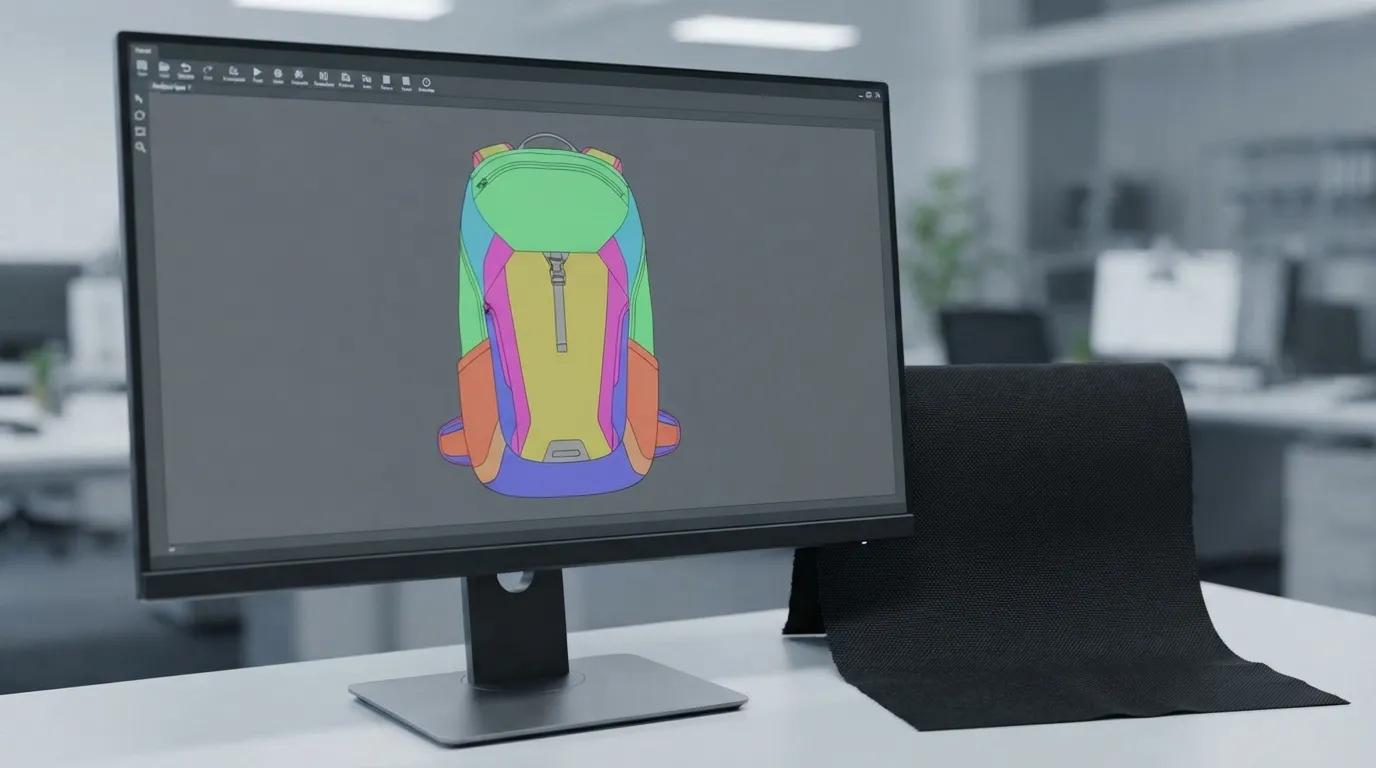
I mapped wear points before cutting any fabric. This prevents overbuilding. Open your tech pack panel map and trace the surfaces that scrape the ground, rub against shelves, and carry heavy loads.
Assign 1000D to the bottom panel and base boot. Use it on lower sidewalls if the bag drags, and on shoulder strap anchors, haul loops, and any MOLLE matrix.
Use 600D on the upper front body, upper side panels, low-impact gussets, and interior dividers. That keeps abrasion resistance where the bag actually scrapes and removes dead weight from low-risk panels.
Open the anonymized LantaoBags tech pack from the Prerequisites. The panel map shows these zones visually.
Sensory check: Pick up a 1000D swatch and a 600D swatch. The 1000D feels stiff and dense in the hand. The 600D bends easily around curved panels and pockets.
To verify the zoning, check that 1000D panels trace the abrasion path and load path without covering the whole bag. If you see 1000D on the upper front body, you have overbuilt.
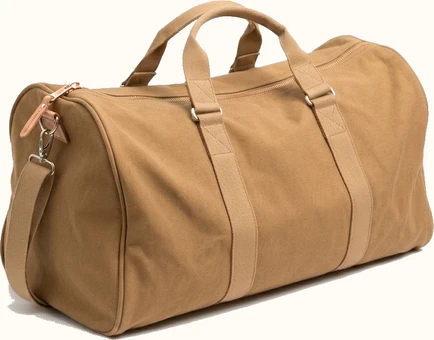
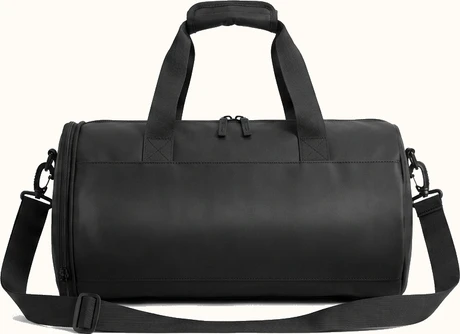
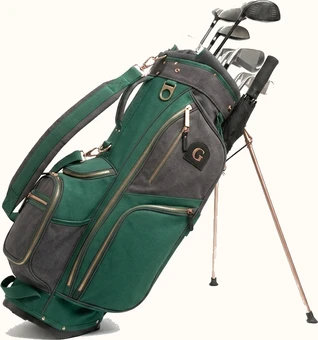
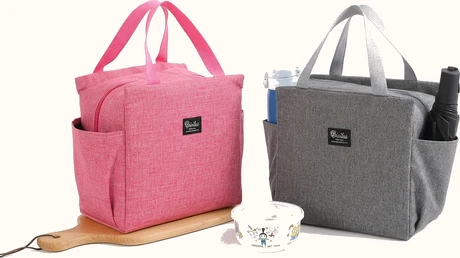
Duffles follow the same map: 1000D on the base and end caps, the same split custom travel bag manufacturers use for OEM travel orders. Cooler bags get 1000D on the bottom and lid hinge; golf bags on the base and club abrasion zones.
If the pack lives outdoors, budget for UV resistance testing before you approve the shell. Lab abrasion numbers do not predict sun damage.
Accessibility cue: When describing the panel map for screen readers, name each panel by function and location (e.g., “bottom base boot”). Do not rely on image color.
🧠 Author’s Take: Designers overspec 1000D on the entire front panel. That adds 15% weight without improving abrasion resistance. The hybrid zoning cuts weight while keeping the bottom boot intact.
Step 2: Build the BOM Field Set and Sample Rows
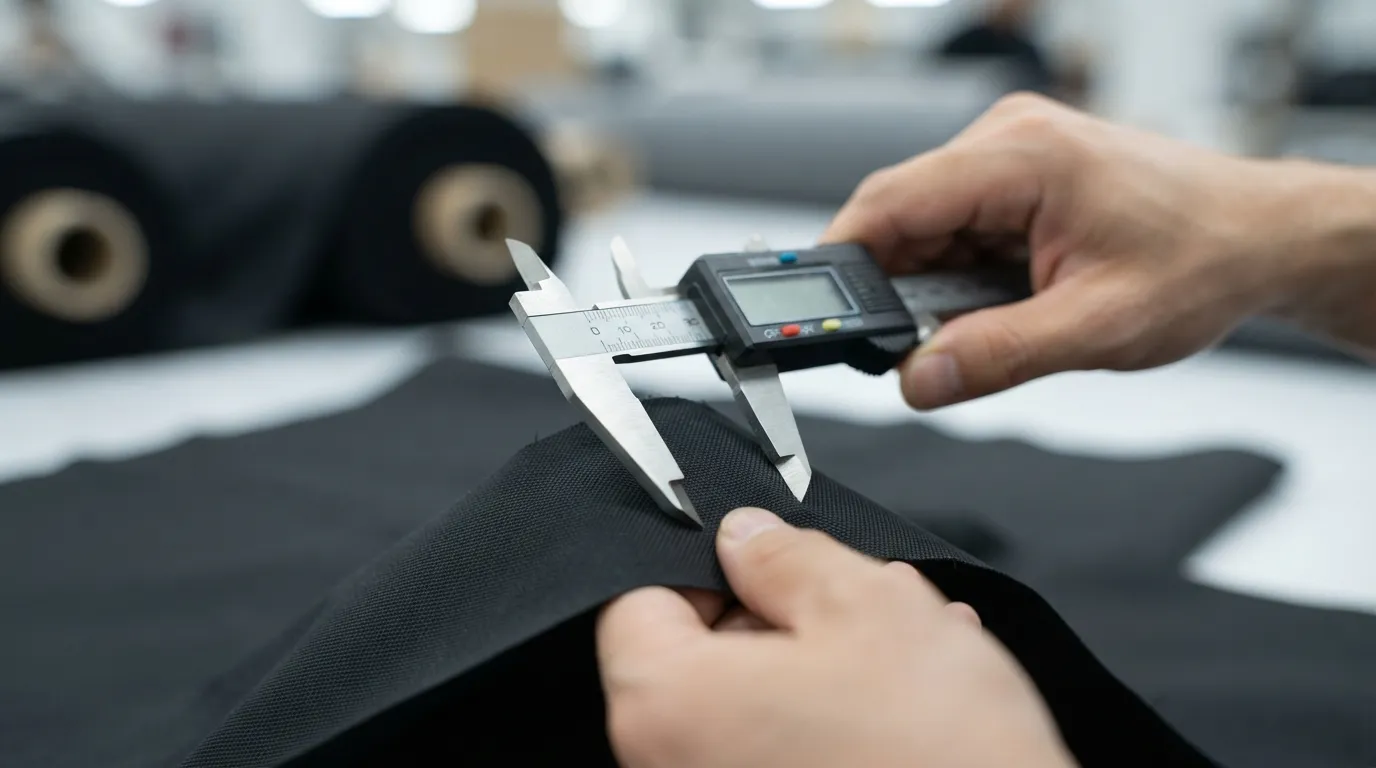
A hybrid backpack BOM fails when it lists only fabric names. Open your Excel BOM and work row by row. Control finished weight, coating, consumption, hardware, and reinforcements.
Add these fields: Item Code, Material Description, Fiber Content, Denier/Weave, Finished Weight (GSM or g/m²), Backing/Coating Type and Weight, Color Reference, Supplier or Approved Equivalent, Unit of Measure, Per-Bag Consumption, Waste Allowance, Placement Note.
Build this sample row set:
- FAB-01: 1000D shell for base and anchor zones.
- FAB-02: 600D shell for main body.
- FAB-03: 210D liner.
- FAB-04: EVA foam plus support fabric for laptop wall or back panel.
- Add thread, zipper, webbing, mesh, labels, binding tape, bartack reinforcement, and packaging.
Zipper codes freeze against YKK’s product specification library, because chain, slider, and tape class are not interchangeable. Coat weight belongs in the same row; matte, gloss, and soft-touch bag finishes each change hand, cost, and how the seam heats.
If the design uses leather trim, add a hide grade and yield per bag; leather goods manufacturers price that trim from a cut plan, not a roll width.
Remember the commercial logic: 1000D usually costs and weighs more per square meter. Zoning affects both FOB and freight.
Sensory check: BOM accuracy shows up later as pack shape, zipper feel, foam rebound, and panel drape.
Verification: The BOM is complete only when another factory could quote it without guessing. Excel is the primary example; for enterprise teams, use PLM as the alternative.
⚠️ Experience Warning: I have seen BOMs list only “600D polyester.” That forces every factory to guess coating, GSM, and consumption. In one test, quotes spread 22%.
Ranee Zhang, Product & Sales Manager
Step 3: Lock the Seam Spec at the 600D-to-1000D Transition
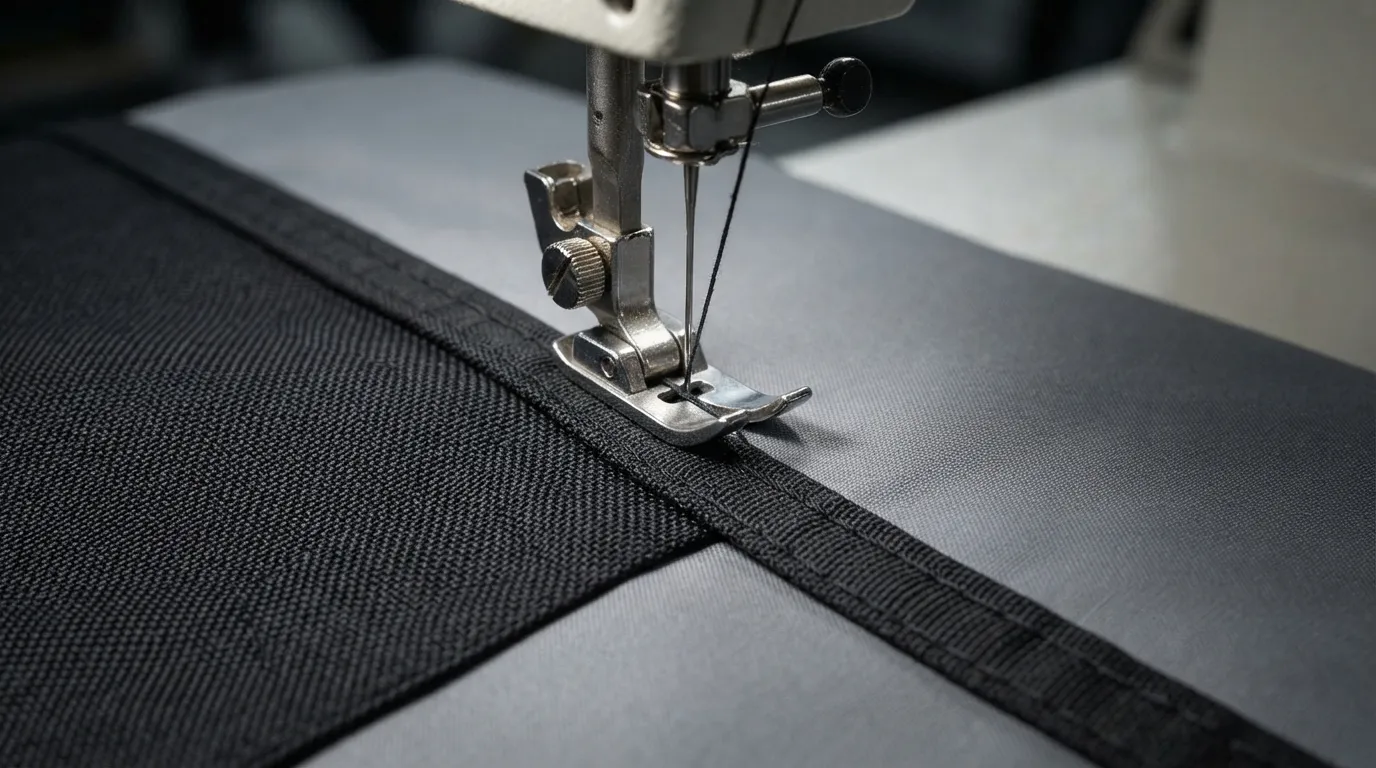
I stood beside the LantaoBags sewing line and watched the hybrid transition. This is where hybrid bags fail. The denier idea is fine. The seam spec is vague.
The floor-engineer Q&A gave me concrete settings. Use a Size 18 needle on multilayer 1000D intersections and a Size 16 needle on 600D-only zones. Thread is bonded nylon, Tex 70 to Tex 90, at 8 to 10 SPI.
When 600D joins rigid 1000D, back off top tension one quarter turn. Use a 3/8 in seam allowance and a bound clean-finish seam at the base boot. Add bartacks at strap anchors and hidden reinforcement patches behind lower sidewall joins.
Mixed fabrics fail for three reasons: aggressive perforation tears the 600D, a narrow seam allowance lets the seam grin, and uneven feed puckers the lighter panel. Validate all three against ASTM D1683 during sampling.
Verification: Look for smooth feeding, no puckering, no tunneling, no seam grin under load, and no skipped stitches at panel transitions. The seam line should lie flatter where 600D meets 1000D.
Sensory check: A balanced run feeds evenly. Listen for a steady motor hum. You should not hear chattering or dragging on the heavy base.
Use industrial production settings as primary; sample-room settings may differ from bulk-line settings, so document both. For screen-reader notes, describe the seam by panel name and edge type, not color tape.
⚠️ Experience Warning: One line ran the 600D zone with the 1000D needle and tension. Tunneling and two skipped stitches appeared at the base boot. A Size 16 needle and a tension reset fixed it.
Jerry Li, Sales Manager & Workshop Supervisor
Step 4: Publish the Unedited Test Results and Validate the Hybrid Build
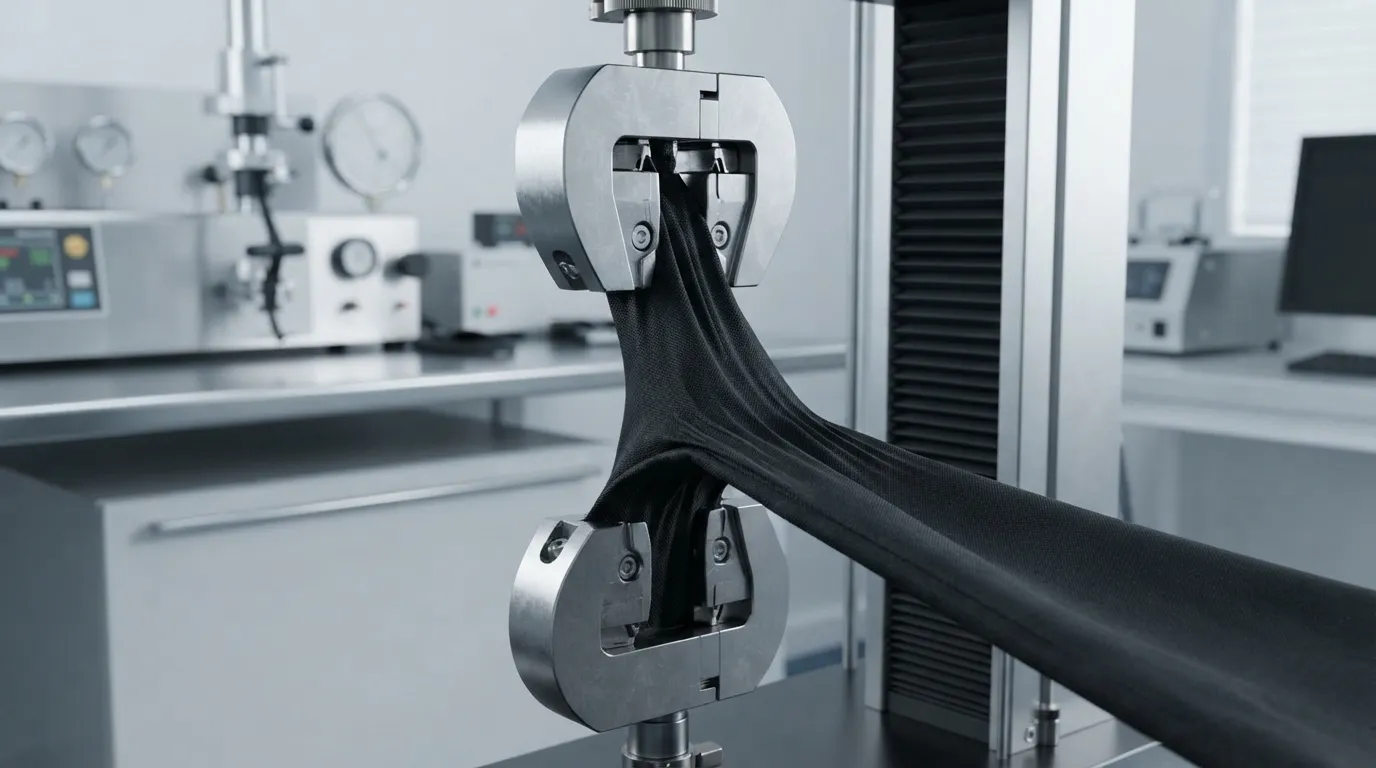
Do not approve a hybrid BOM on denier assumptions alone. We compared a full-1000D control against a hybrid 600D/1000D sample and published every output unedited.
| Test | Full-1000D | Hybrid |
|---|---|---|
| Tensile (ISO 13934) | 1,820 N | 1,640 N (−9.9%) |
| Abrasion | 25,000 cycles | 22,500 cycles (−10.0%) |
| Pack weight | 1,420 g | 1,135 g (−20.1%) |
| Material use | 1.00 | 0.815 (−18.5%) |
| FOB delta | Baseline | −$0.85/bag |
| Freight | Baseline | Air −285 g; ocean −0.4 L |
Our hybrid held 90.1% tensile and 90.0% abrasion while cutting weight 20.1%. Say that plainly. If your sample differs, publish the actual result without smoothing it.
Sensory check: Lifting both, the hybrid felt lighter in hand before the scale confirmed it. The 1000D base stayed stiff. The 600D upper body flexed more easily.
Verification: The hybrid passes only if the reduced-weight 600D zones do not become the first failure point under test or real load.
Diversity note: My primary decision metric is durability-to-weight ratio. Some brands may prioritize cost, sustainability, or shipping cube.
Saved grams only become money when air vs sea chargeable weight moves the pack into a lower freight tier, not when the sample scale alone drops.
A flat-fold design also cuts empty space, which PPWR empty-space foldable packaging measures per master carton.
⚠️ Experience Warning: In one early hybrid, the 600D lower sidewall failed first at 38 lb. We moved the 1000D zone down 40 mm. That build passed.
Step 5: Package the Release-Ready Tech Pack and Freeze the Revision
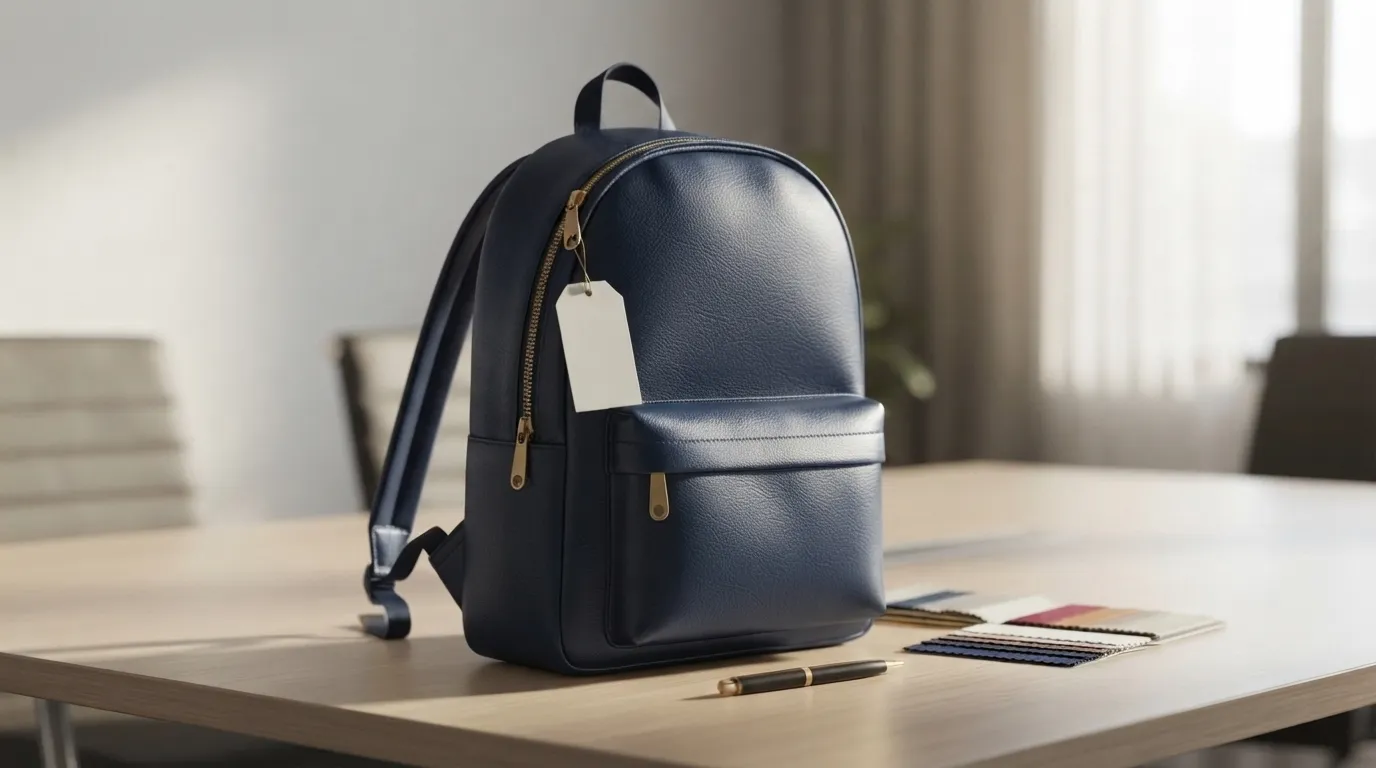
I close every hybrid build with a release packet. A missing detail caused a two-week rework. Build these components: cover sheet with style name, revision, date, and owner; flat sketches and panel map; full BOM; and construction notes.
Add stitch and reinforcement callouts, hardware specs, points of measurement, packaging and labeling requirements, a pass/fail test summary, and golden sample signoff notes.
Mark each detail as non-negotiable or approved substitute. Lock this rule: no bulk production starts until the PP sample and golden sample match the released revision exactly.
Run this approval checklist:
- Correct zoning.
- Correct BOM codes.
- Correct seam settings.
- Correct weight target.
- Test results attached.
- QC checkpoints scheduled.
Accessibility note: Do not rely on markup colors alone. Label every revision and panel note in text. Small brands can use PDF email release; larger sourcing teams should use PLM-controlled release.
Sensory check: The approved sample should show clean panel alignment, a stable base, consistent stitch lines, and predictable zipper action in the hand.
🧠 Author’s Take: The release packet is the real product. If the factory cannot match the revision and the golden sample, stop the line.
Troubleshooting 600D vs. 1000D Hybrid Backpack BOMs
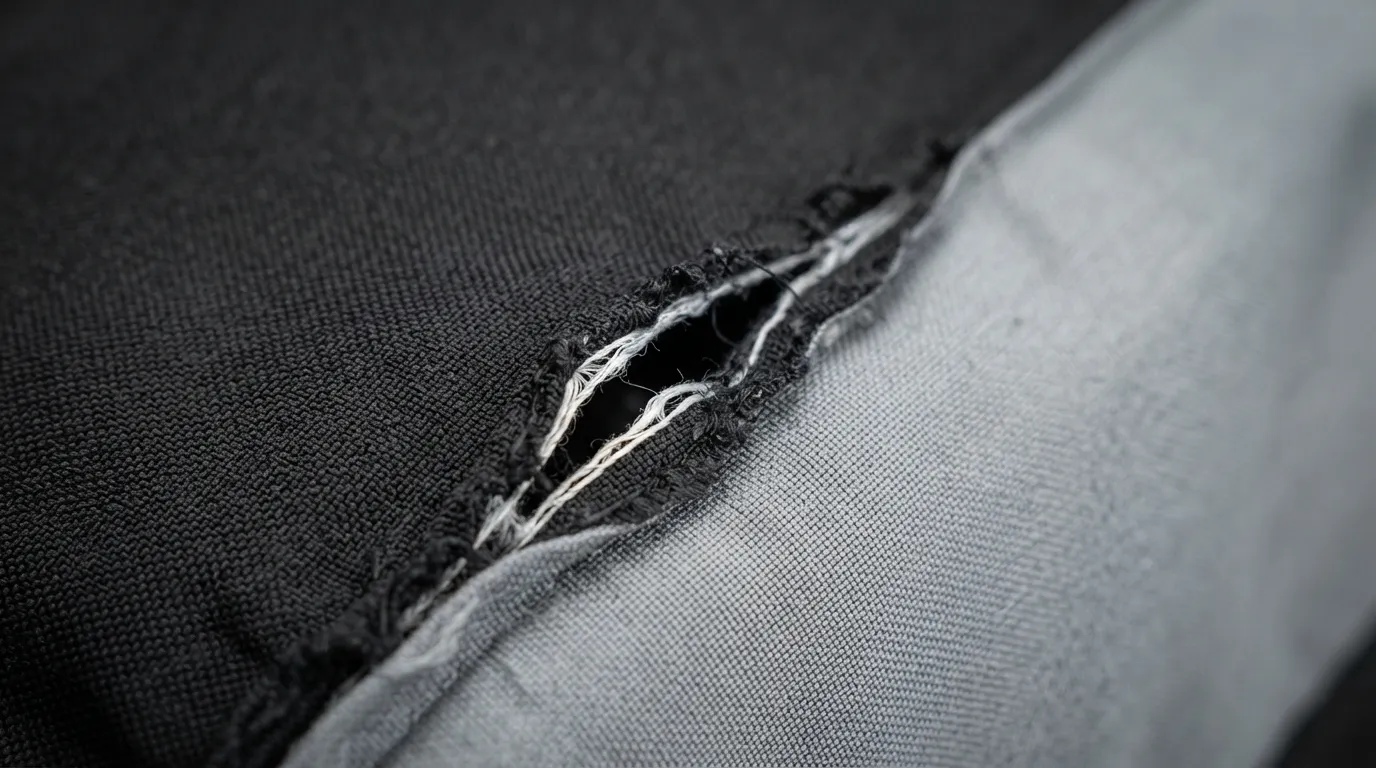
We run five checks on every hybrid sample before bulk production. Here is where 600D/1000D packs fail, and how we fix each one.
1) 600D Seam Slips at the 1000D Base
Problem: The join gapes or puckers. Cause: wrong needle or tension, too-tight SPI, a narrow allowance, or no tape.
Fix: Widen the allowance to 3/8 in. Ease top tension ¼ turn. Run Size 16 on 600D and Size 18 on thick 1000D. Add hidden tape. Re-test against ASTM D1683 seam-slippage criteria.
2) Pack Still Feels Heavy
Problem: The hybrid misses its weight target. Cause: 1000D leaked into low-impact panels, coating grams, or overbuilt hardware and webbing.
Fix: Move 1000D to abrasion and load paths only. Audit finished GSM, not denier alone, and trim redundant layers.
3) 600D Zones Scuff or Slump Early
Problem: Upper panels lose shape. Cause: wrong panel downgraded, light backing, or under-specced foam.
Fix: Restore 1000D there, or upgrade the 600D backing or hidden reinforcement. Do not rebuild the shell.
4) Water Resistance Falls Short
Problem: The pack wets out. Cause: the team assumed higher denier means better weatherproofing.
Fix: Specify coating, seam treatment, zipper class, and water-exposure requirements. Confirm fiber and finish from the material datasheets before you approve the shell.
5) Quotes Swing Wildly
Problem: Re-quotes vary by double digits. Cause: the BOM lacks consumption, equivalents, or packaging detail.
Fix: Freeze codes, usage notes, waste, and shipping assumptions before re-quoting. A frozen BOM ends the 600D vs 1000D guessing.
Expert Verdict: Most hybrid failures start at the 600D/1000D seam. Fix that before weight, coating, or cost.
💡 Pro Tip: Ask for the needle, tension, and seam-allowance sheet with the first sample. It prevents the failure we see most.
Conclusion
You now have a repeatable system: zone 1000D where the pack earns it, keep 600D where weight and flex win, and document every field in a factory-safe tech pack.
Your next step is to request a hybrid sample, compare it against the full-1000D control, and hold bulk release until test data, weight target, and seam behavior all pass.
For a factory review, sample build, or BOM audit, contact LantaoBags. We turn hybrid BOMs into factory-ready release packs.
Compliance documents travel with the release pack, and bag industry certifications determines which certificate each market will ask for. Multi-country buyers keep the release rhythm aligned through bag sourcing by region.
Disclaimer: I present actual process evidence. No supplier paid me to distort the test outcome.
People Also Ask About Hybrid BOM 600D 1000D Backpack
1. What is a hybrid BOM 600D 1000D backpack?
A hybrid BOM 600D 1000D backpack uses 1000D fabric only on high-abrasion and high-load panels — the base boot, shoulder anchors, and haul loops — while the main body, upper panels, and gussets use lighter 600D. The BOM lists both fabrics with weight, coating, and consumption so a factory can quote and build the mix without guessing.
2. Is 600D strong enough for a backpack, or do I need 1000D?
600D is strong enough for the upper body, side panels, and gussets; 1000D belongs on the base boot, shoulder anchors, and haul loops where the pack abrades or carries load. A zoned build held 90.1% of the full-1000D tensile strength in our test while cutting weight 20.1%.
3. Is 1000D more waterproof than 600D?
No. Denier sets yarn thickness and abrasion resistance, not water resistance. Waterproofing comes from the coating — PU, PVC, or TPU at a specified gram weight — plus seam treatment and zipper class. A coated 600D shell can outperform an uncoated 1000D one.
4. How much weight does a 600D/1000D hybrid actually save?
In our control build, the hybrid cut completed pack weight from 1,420 g to 1,135 g — a 20.1% reduction — and material consumption fell 18.5%. Air freight dropped about 285 g per pack, and ocean freight saved 0.4 L of cube.
5. Does a 600D/1000D hybrid last as long as a full-1000D pack?
Against our full-1000D control, the hybrid held 90.1% of tensile strength and 90.0% of abrasion cycles. That is close, not equal. Real service life still depends on the 600D-to-1000D seam spec — needle size, tension, and allowance — and on where the bag is used.
6. What needle and thread should I specify for a 600D/1000D hybrid?
Use a Size 18 needle on multilayer 1000D intersections and a Size 16 needle on 600D-only zones. Specify bonded nylon thread in Tex 70 to Tex 90 at 8 to 10 SPI, a 3/8 in seam allowance, and validate seam slippage against ASTM D1683.