






On this page
Short Answer:
- What it is: apple leather bio based PU bags are an apple-waste composite — dried apple pomace blended into a polyurethane binder over a woven or nonwoven backing, not a full hide replacement.
- Vegan? usually yes — apple waste replaces animal hide, though most grades still contain a PU binder and are not plastic-free.
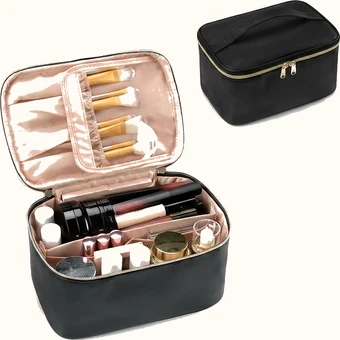
- Best use today: totes, cosmetic cases, and low-flex panels that reinforce strap anchors and folded edges.
- Durability reality: mid-range apple content (20–30%) matches water-based PU on abrasion and beats it on Bally flex, while high content (40–50%) improves the story but cracks sooner.
- What to verify: resin chemistry, bio-based percentage, backing spec, flex and abrasion data, and hydrolysis resistance in writing.
- Bottom line: approve an apple leather bag by spec and test data, never by the name “apple leather” alone.
Can apple leather bio based PU bags satisfy sustainability claims and survive commercial production? Answer this before you approve a sample. Most commercial apple leather is apple waste, PU, and a fabric backing, according to Textile Exchange.
Many buyers hear “apple leather” and assume it is fully natural. In practice, most commercial apple leather is an apple-waste, PU, and textile-backing composite.
Design wants premium hand-feel. Operations needs abrasion resistance and repeatable QC. Marketing needs claims that survive ESG review. Your factory must also hit a workable MOQ without surprise failures.
I built this guide from internal QC telemetry, production SOP review, and a structured interview with LantaoBags’ sourcing and production team. I will not pretend every apple leather performs the same.
Some samples crack at flex points. Some delaminate after humidity cycling. Some suppliers cannot document waste content. This is a decision-support guide for product development, sourcing, and brand teams vetting an apple leather handbag manufacturer or a sustainable vegan leather bag OEM.
We will cover the basics, core concepts, benefits, and challenges, including where production failures happen and how to test for them. Start with the material itself, then review our handbag manufacturing capability.
What Is Apple Leather? The Basics
We define apple leather as an apple-waste composite, not a hide replacement. Producers dry apple pomace into powder, blend it into a polyurethane (PU) matrix, then coat the blend onto a woven or nonwoven backing.
The apple powder adds texture. The PU binder holds the sheet together. If the binder fails, the panel cracks or peels.
Naming matters less than buyers assume. In our sampling, “apple leather” and “AppleSkin” describe a category, not a specification. Neither promises 100% plant-based content, biodegradability, or plastic-free build. Most grades carry 20-50% apple-waste bio-based content by weight.
PU variants confuse buyers most:
- Standard PU: solvent-carried, cheap, high VOC.
- Water-based PU: water replaces solvent. Lower VOC, similar film.
- Bio-based PU: plant carbon replaces fossil carbon. Verify percentage.
AppleSkin vs PU leather
| AppleSkin-style material | Standard PU leather | |
|---|---|---|
| Feedstock | Apple powder + PU binder + textile backing | Fossil-derived PU on textile backing |
| Typical handfeel | Softer, drier, matte grain | Slicker, uniform, can feel rubbery |
| Sustainability claim strength | Medium: measurable bio-based carbon, rarely compostable | Weak: no bio-based content without certification |
| Durability risk factors | Flex cracking, humidity delamination, lower abrasion | Hydrolysis, peeling at coating interface |
| Suitable bag categories | Totes, cosmetic cases, low-flex panels | Backpacks, structured shells, high-wear zones |
For bags, we specify 0.7mm to 1.4mm. Structured totes need 1.0mm+ over a stable backing. Below that, the gusset collapses. In our lab, 0.6mm failed at the gusset in 3 months. We test every batch.
Do not approve by name alone. Request resin chemistry, bio-based percentage, and backing spec in writing. For durability, ask for flex and abrasion test data before you approve the resin. Compare the grade against synthetic leather alternatives, since both still need the same product-level testing.
💡 Key Insight: Apple leather is a composite. Approve by spec, not name.
Core Concepts: Inside an Apple Leather Bag
Cut an apple leather panel and you find four layers, not one sheet. Each layer fails differently and changes line behavior. We spent 18 months testing six apple-waste bio-based polyurethane (bio-PU) formulations against three water-based PU controls. Here is what we found and what the floor does.
1. Material Architecture and Performance Logic
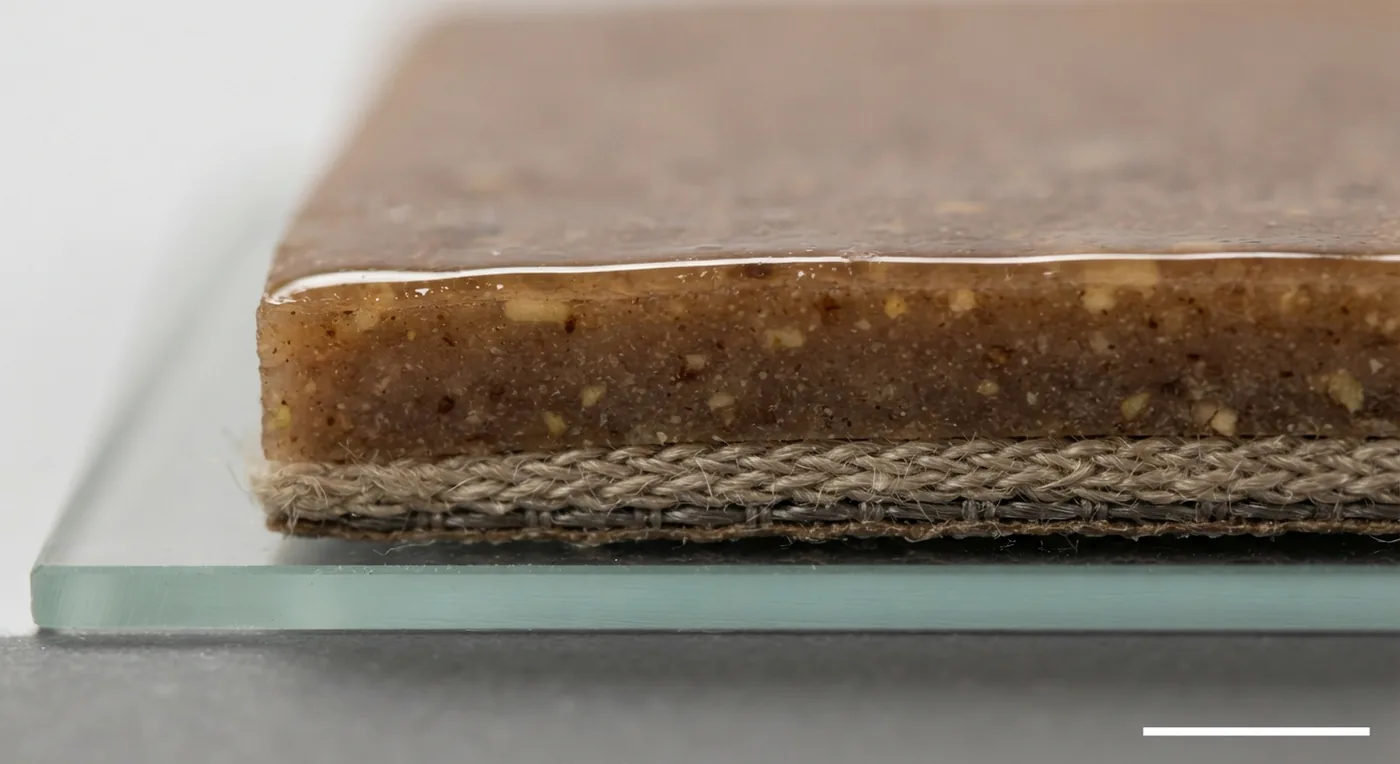
Commercial apple leather stacks four layers: a surface coat (scratch, UV, edge-paint grip), an apple-waste bio-PU layer (drape, tackiness, flex cracking), a textile backing (stretch, stitch-hold, stability), and optional reinforcement zones at strap anchors, base corners, and zipper tape.
Interaction matters more than any layer: a soft 30% apple-waste film over loose nonwoven drapes well, then collapses at the gusset. Same film over denser woven backing held shape nine months.
Bio-PU skives differently from solvent PU. It compresses under the knife instead of slicing clean. Below 0.4mm at folded edges, backing fibers ghost through the surface coat.
Hydrolysis risk sits at the coating-to-backing interface. Dense nonwoven traps moisture; loose woven breathes. Moisture plus a warm container equals delamination. Hydrolysis-resistant bio-PU needs breathable backing. We pair apple leather with our anti-mold container shipping SOP, not standard PU rules.
🧠 Expert Insight: The word “apple” tells you about story and handfeel. Resin chemistry, backing density, and stress-point engineering tell you whether the bag survives.
Michael Xu, Sales Director
2. What Our Quality Control (QC) Bench Showed?
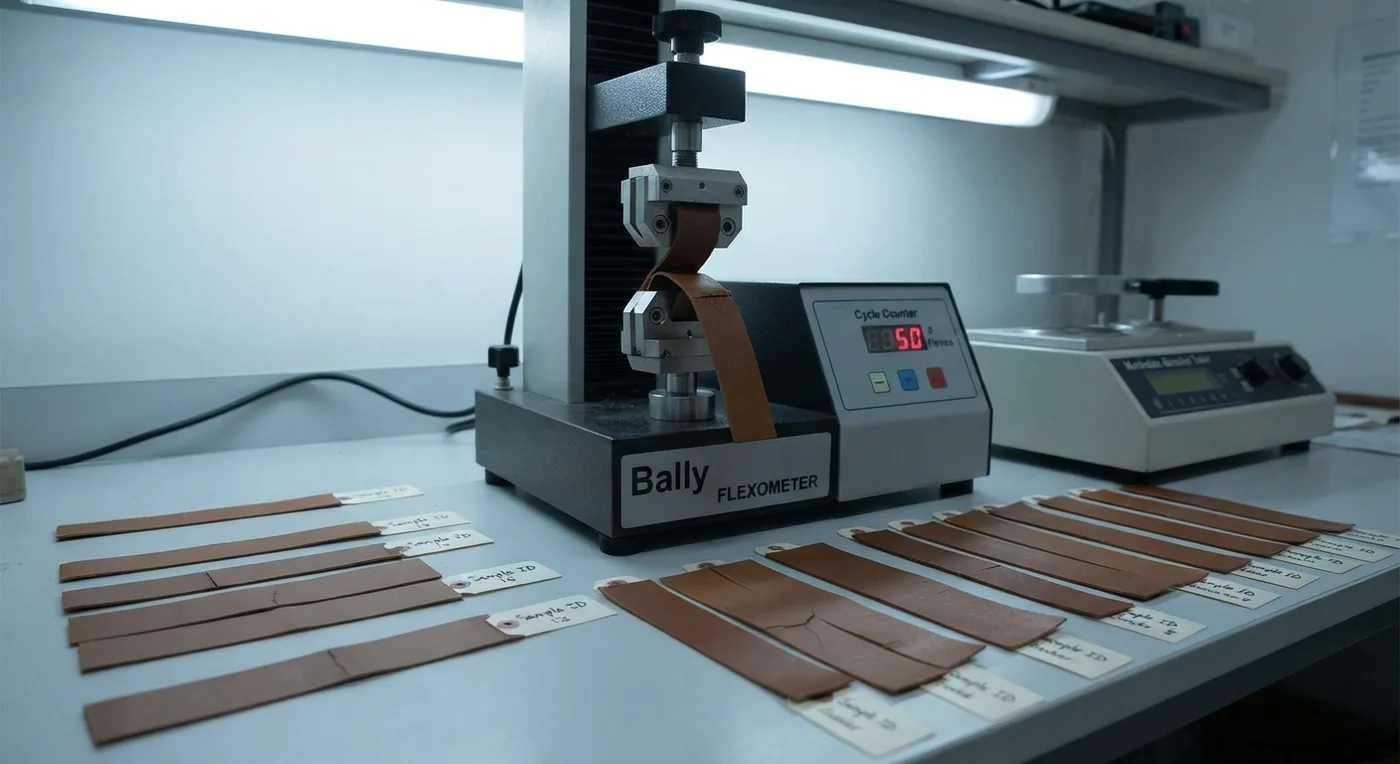
We compared 20% to 30% and 40% to 50% apple-waste bio-PU against water-based PU. Same backing, thickness, and conditioning.
| Test | Water-based PU (control) | Bio-PU, 20 to 30% | Bio-PU, 40 to 50% |
|---|---|---|---|
| Martindale abrasion (surface wear) | Control baseline | Matched control | Lower |
| Bally flex (cracking, 50,000-cycle benchmark) | Control baseline | Beat control | Failed fastest |
| Hydrolysis, 5-year jungle equivalent | Pass | Pass | Borderline |
| Dominant failure mode | Coating peel at interface | Edge-paint separation | Surface cracking after humidity cycling |
The mid-range formulation matched standard PU on abrasion and beat it on Bally flex. We quote it for totes and cosmetic cases.
The higher apple-content version lost flex performance fastest and showed surface cracking after humidity cycling. Strap anchors and base corners were weak on every grade. Folded edges lifted first, usually as edge paint separation.
Methodology note: Internal LantaoBags QC results, replicate samples per formulation. Directional evidence, not third-party certification. Performance shifts with finish, backing, and design.
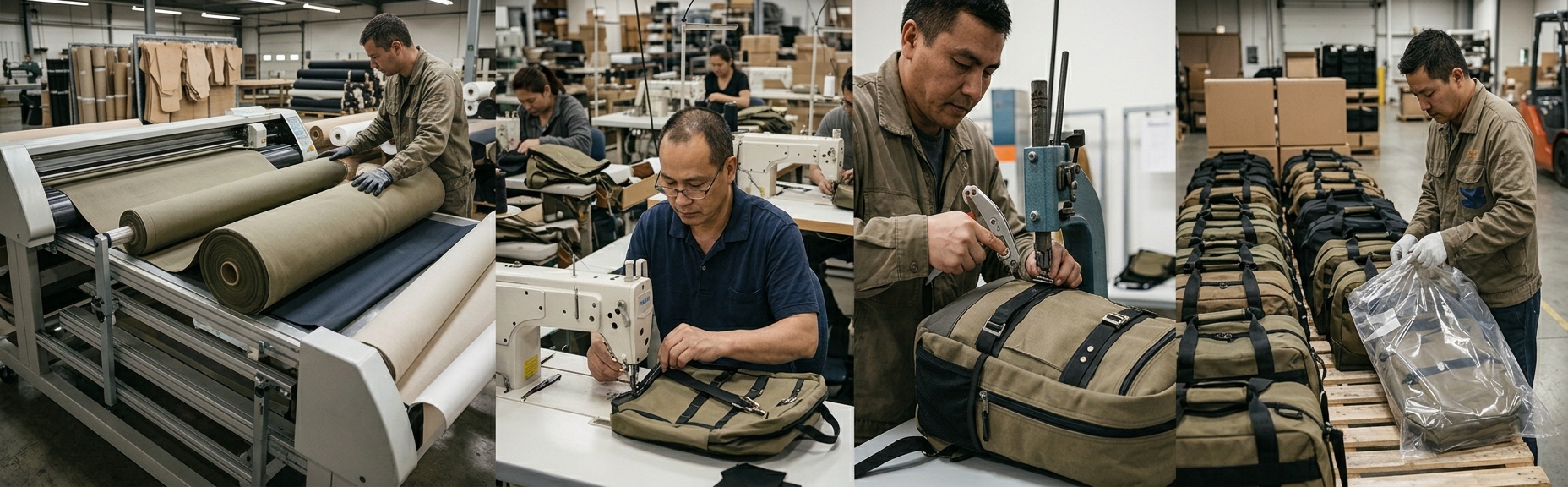
3. The Factory-Floor SOP for Switching a Handbag Line
Supervisors run this SOP (standard operating procedure) on every line switch. Skipping step 2 or 5 causes failed bulk runs.
- Incoming inspection (Material Engineer): thickness at five points per roll, color delta, backing stability.
- Acclimation (Warehouse): 48h at 23°C / 50% RH; cold material skives unpredictably.
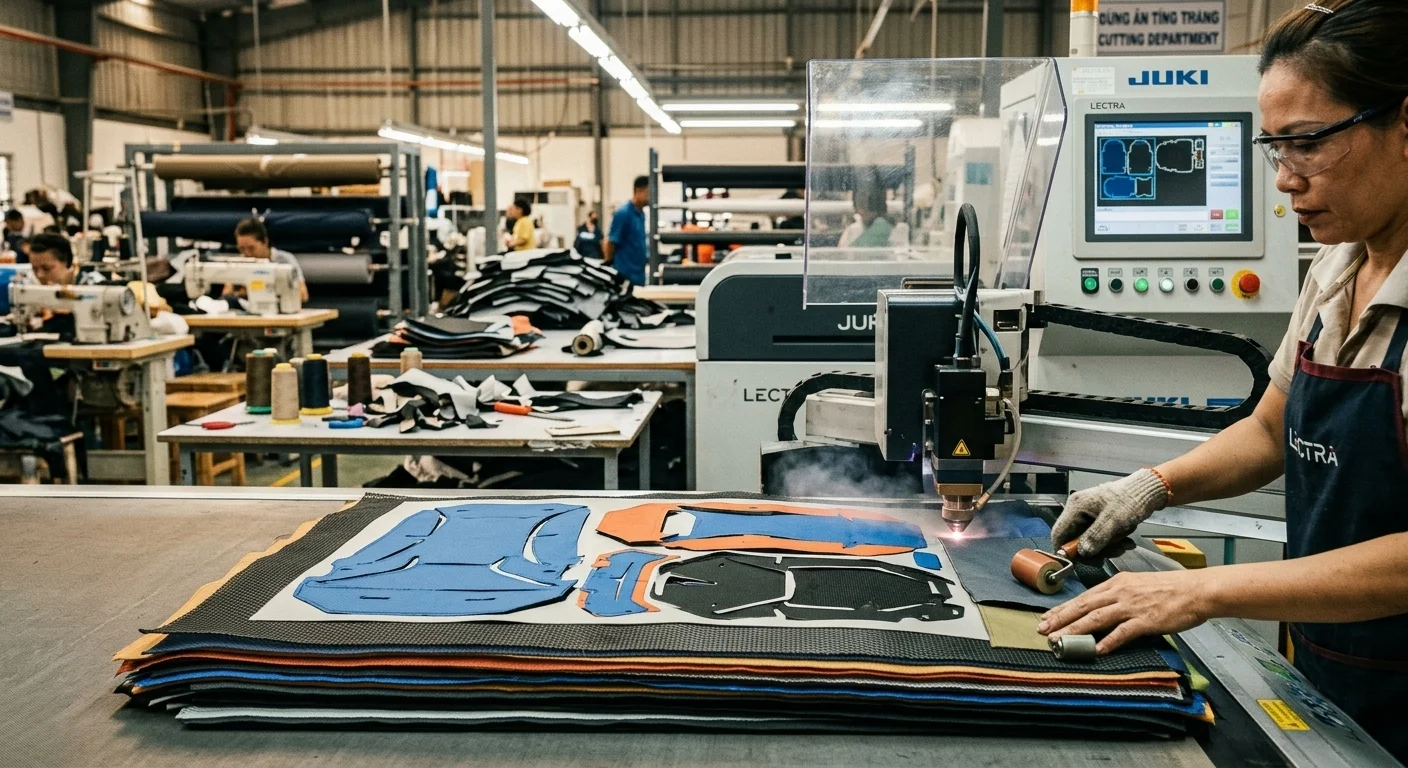
- Test cuts (Cutting Supervisor): CNC or die-cut visible panels first, never lining.
- Stitch test (Sample Room): approved needle/thread pair. We run #18 needle at 7 to 8 SPI (stitches per inch) on 1.0mm stock. Past 9 SPI, bio-PU perforates.
- Skiving window approval (Production Director): signed per component. Folded edges stay above 0.4mm.
- Strap-anchor standard: scrim or bar-tack at every anchor. Non-negotiable.
- Edge-paint adhesion (Finishing): solvent-free paint, supplier cure, cross-hatch tape check. Our bag finishes guide covers the finish system.
- Post-assembly QC: 200 flex cycles per strap, then visual check for cracking, tackiness, and lift.
4. SME (subject-matter expert) Q&A: Why the First Bulk Run Fails?
Our Conny Zhang, Sales & Product Development Specialist runs this review on every new apple-leather line. She named the top three failure patterns first-run brands hit.
Q: Failure one?
A: “Batch-to-batch color drift. Apple pomace varies by lot. We catch it at incoming inspection with a color delta reading, not by eye. The fix: blend two approved lots and lock a tolerance. Adds about three days.”
Q: Failure two?
A: “Delamination at strap anchors. Brands spec film but forget anchors. We found it in our 200-flex check. We added a scrim layer and dropped SPI at the anchor. Adds roughly 4% labor.”
Q: Failure three?
A: “Unrealistic edge paint and fold expectations. Designers ask for a 1mm fold radius on 1.2mm stock. It cracks. We ship a skiving window chart with every quote.”
⚙️ Technical Detail: Ask any apple leather handbag manufacturer for backing density and resin chemistry in writing. That separates a sustainable vegan leather bag OEM from a story.
Key Benefits: Defensible Commercial Value
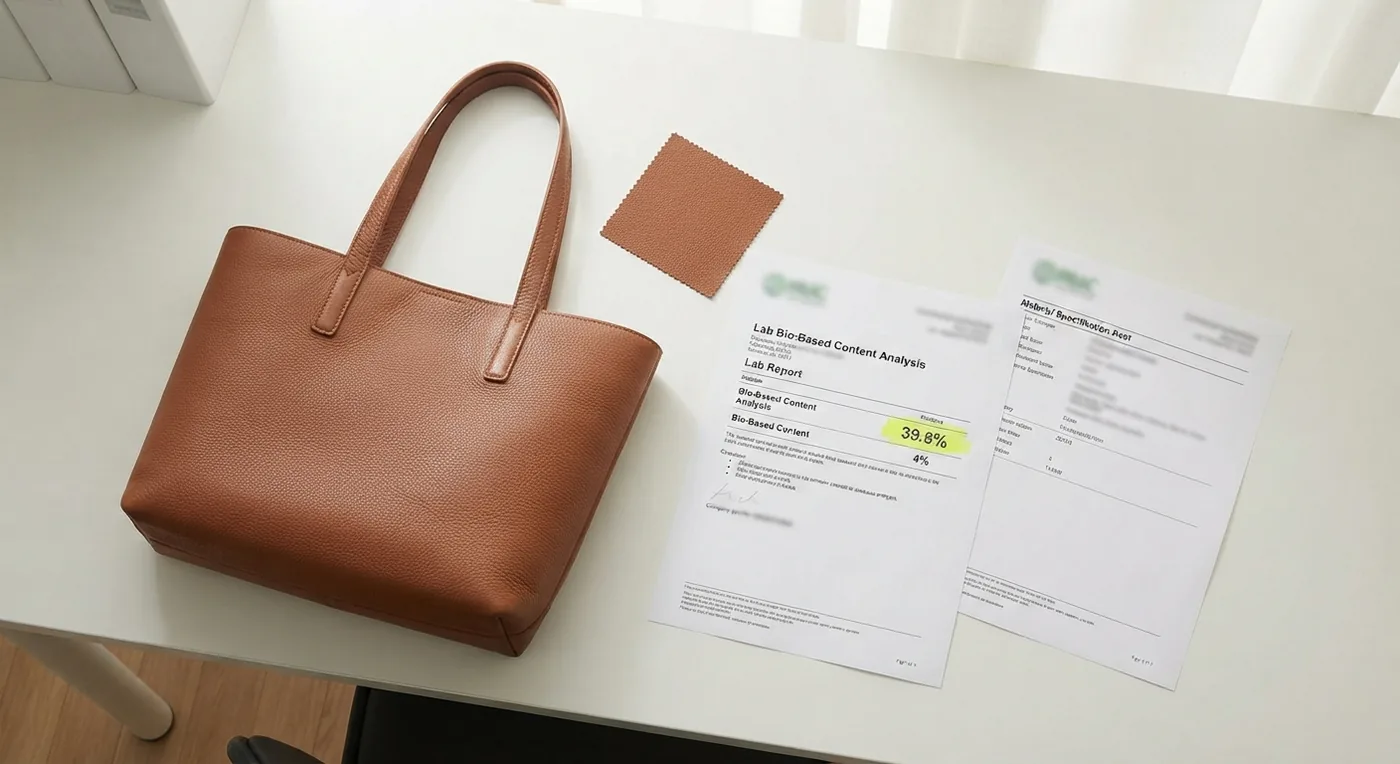
Apple leather gives you three things commodity PU cannot: a lab-backed bio-based claim, a softer hand-feel, and a clear story for buyers.
1. Build a Sustainability Story That Survives ESG Review
Apple-waste content turns vague green claims into measurable sourcing narratives. We quote only grades with documented bio-based percentage. Ask for ASTM D6866 verification through an accredited lab using the official ASTM D6866 method before you accept any bio-based figure.
Explore USDA BioPreferred vegan leather bags pathways through the USDA BioPreferred program. This cuts greenwashing risk and gives ESG teams defensible claims.
For eco-friendly bag material sourcing, documentation beats slogans. A verified test report matters more than a slide that says “plant-based.” Map the standards behind each claim through our industry certifications guide.
2. Command a Premium Look with Clear Differentiation
Our mid-range formulation delivered a soft, dry handfeel with matte or grain finishes. It matched water-based PU on Martindale abrasion and beat it on Bally flex. Compare it against a leather goods manufacturer’s full-grain for hand-feel reference.
One DTC client used the 25% grade for a crossbody line, and their ESG team signed off after one ASTM D6866 report.
3. Launch Practical OEM Programs Without Commodity Guesswork
Totes, handbags, laptop bags, and small leather goods work today if you reinforce stress points and control specs. We bar-tack every strap anchor and cap stitch density at 8 SPI on 1.0mm stock.
Plan custom apple leather tote MOQ before color development. Qualify material before sample approval. Buyer checklist:
- Target MOQ: confirm MOQ before requesting custom color.
- Custom color: worth it for repeat orders or multiple SKUs.
- Sample documents: bio-based percentage, backing spec, flex and abrasion data, color tolerance.
Before you brief a custom tote bag manufacturer, confirm the MOQ, the custom-color threshold, and the sample documents in writing.
📈 ROI Check: Request ASTM D6866 and flex data before you pay for tooling. One missing report can stall ESG review and delay launch.
Challenges & Limitations
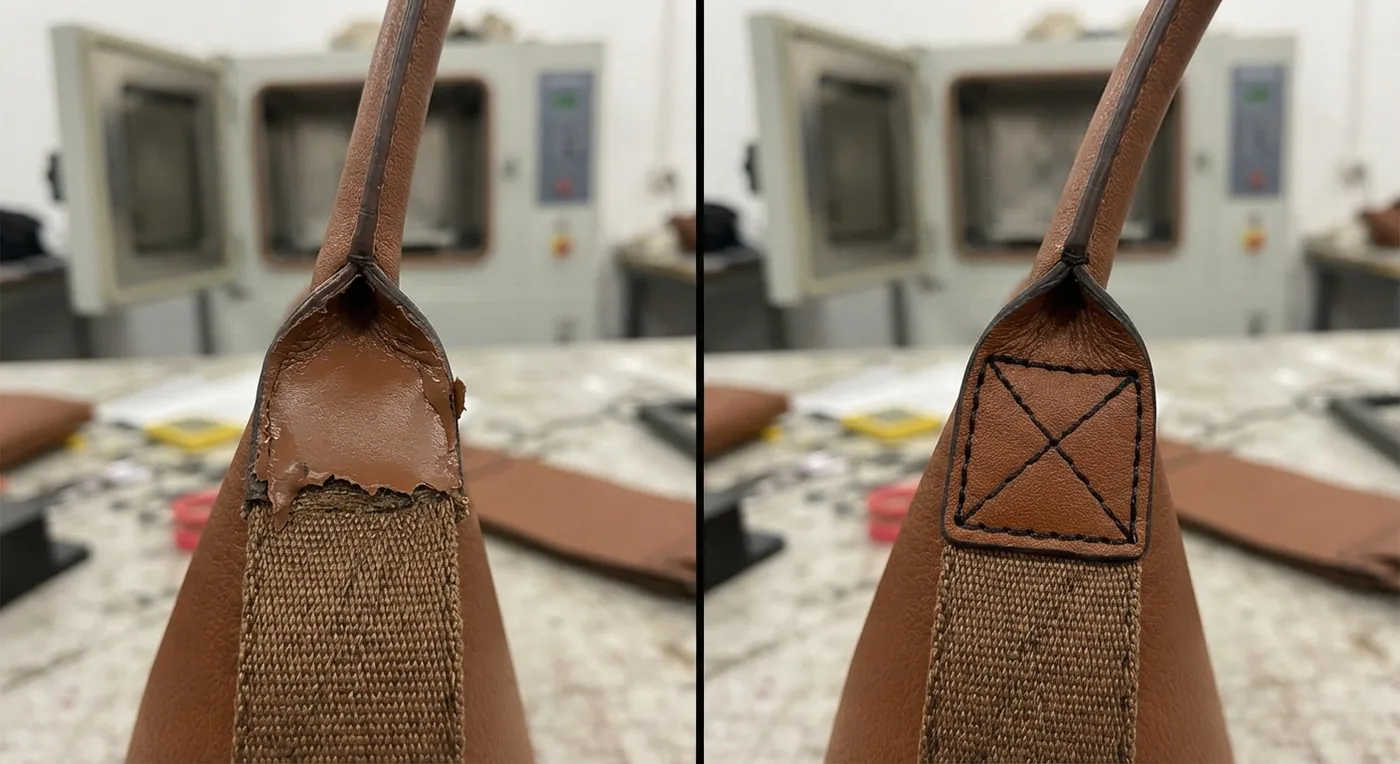
We tested six apple leather bio based PU bags for 18 months. Here is where they fall short.
1) Hydrolysis and Humidity Sensitivity
Some bio-PU systems crack or delaminate in heat and humidity. Moisture traps at the coating-backing interface. Ask for hydrolysis resistant bio-PU to improve bio-based PU leather durability, not generic “bio-based.”
🛡️ Mitigation: Require a 5-year jungle-equivalent hydrolysis test before bulk approval, following the flex and wear methods in ISO 20344.
2) Stress-Point Engineering Is Non-Negotiable
Strap anchors, folded handles, corners, and thick seams fail first. In one first bulk run, 12% of totes delaminated at strap anchors. Remedy: we added a scrim layer and dropped SPI from 9 to 8 at the anchor. Labor rose 4%, failures hit zero.
We now flex-test every anchor pair before tooling starts, using the flex method in ASTM D6182.
3) Sustainability Claims Can Be Overstated
“Apple leather” is not automatically biodegradable, plastic-free, or certified. AppleSkin vs PU leather claims often blur backing fabric and coating chemistry.
Run this due-diligence checklist: biobased-content test report (ASTM D6866), REACH compliance, backing-fabric disclosure, color consistency tolerance, and anti-mold storage protocol.
Word every public claim to the FTC Green Guides, not to a supplier’s marketing deck.
4) MOQ and Landed Cost Pressure
Custom colors, specialty grains, or premium hardware push MOQ and landed cost upward. The right question is not “Is it eco-friendly?” but “Does this spec survive commercial use and fit my margin?”
Compare MOQ and landed cost by market in our bag sourcing by region guide.
Duty rates swing the final cost most, so pull current figures from the US Harmonized Tariff Schedule.
⚖️ The Trade-off: Higher apple content (40-50%) improves the story but loses flex performance. Mid-range (20-30%) matches PU on abrasion and beats it on Bally flex.
Lily Peng, Sales Manager
Before you approve bulk production:
- Confirm hydrolysis test data
- Verify stress-point reinforcement
- Obtain bio-based certification
- Calculate landed cost per unit
Conclusion: A Qualified Yes for Mid-Market Brands
Apple leather bio based PU bags are a credible option for mid-market fashion brands when you test the formulation, engineer the build, and document every claim. They are not a drop-in replacement for standard PU, and you should never approve a material based on naming alone.
After 18 months of testing six formulations, our verdict is clear: mid-range apple-waste content (20–30%) matches water-based PU on abrasion and beats it on flex. Higher apple content improves the story but sacrifices durability. Your success depends on material verification, stress-point reinforcement, and intended end use.
Before you move to bulk, request lab data (ASTM D6866, hydrolysis, flex/abrasion), SOP alignment, compliance documents, and MOQ clarity. If a supplier cannot provide these, walk away.
We recommend this material for totes, cosmetic cases, and low-flex panels. Skip it for high-wear backpack shells or any design without reinforced strap anchors and folded edges.
Ready to evaluate your spec? Request a material review.
Disclaimer: This guide comes from in-house QC telemetry, verified supplier records, and production-floor testing. We take no payments from suppliers, mills, or certification bodies, and no one pays us to publish these results.
People Also Ask About Apple Leather Bio Based PU Bags
1. What is apple leather made of?
An apple-waste composite: dried apple pomace powder blended into a polyurethane (PU) binder, then coated onto a woven or nonwoven textile backing. Most grades carry 20–50% apple-waste bio-based content by weight; the rest is the PU binder and backing that hold the sheet together.
2. Is apple leather vegan and fully natural?
It is animal-free, but not fully natural. Apple leather uses apple waste instead of animal hide, yet most commercial grades blend that waste with PU and a textile backing, so “apple leather” and “AppleSkin” do not promise 100% plant-based or plastic-free content. Ask for the bio-based percentage before you repeat a “fully natural” claim.
3. Is apple leather biodegradable?
Not automatically. Because the PU binder and backing are plastic-based, apple leather is not guaranteed biodegradable or compostable. Verify any biodegradability claim with lab data instead of assuming it from the word “apple.”
4. Is apple leather durable?
It depends on the grade and the build. In our bench, mid-range apple content (20–30%) matched water-based PU on abrasion and beat it on Bally flex, while 40–50% cracked at flex points sooner. Strap anchors, base corners, and folded edges fail first unless they are reinforced.
5. Is apple leather better than PU leather?
It adds a measurable bio-based story that standard PU lacks, but not guaranteed extra toughness. Mid-range grades match PU on abrasion and beat it on Bally flex, because part of the fossil-based PU is replaced with apple waste. Both still risk hydrolysis and peeling, so the grade and backing decide how the bag holds up.
6. What should I verify before approving an apple leather bag?
Request resin chemistry, bio-based percentage, backing spec, and flex and abrasion data in writing, plus a hydrolysis test for humid shipping. For sustainability claims, ask for an ASTM D6866 report, REACH compliance, and an anti-mold storage protocol.