
90% of a brand’s success in the bag business and industry happens before a single unit ships. I have audited factory floors and managed global supply chains for years, and the reality is stark. Buyers no longer choose just styles or price points.
They choose sourcing models, risk profiles, and manufacturing capabilities. Today, the modern market spans fashion handbags, retail shopping bags, technical backpacks, promotional merchandise, packaging bags, and industrial specialty cases.
The bag market is getting tougher. Buyers want better prices, and eco-rules are getting stricter. You must meet ISO 9001 standards and use sustainable materials.
Our team found that your success depends entirely on choosing the right factory partner. Successful scaling depends entirely on material selection, supplier transparency, rigorous quality control, certified production, and a flawless shipping strategy.
I have engineered end-to-end production runs at LantaoBags, utilizing their vertically integrated OEM and ODM manufacturing model. This approach bridges the gap between artisan craftsmanship and industrial scale.
I have seen firsthand how proper bag sourcing and pricing protects margins and brand reputation. Conversely, poor procurement destroys both.
Any credible global handbag market analysis proves that your supplier is your most strategic partner. This breakdown moves beyond basic trend forecasting. It details exactly how procurement teams must evaluate manufacturing partners.
The following sections cover the foundational basics and the core concepts of vendor selection. They also outline the financial benefits of strategic procurement and the immediate logistical challenges brands must overcome to scale effectively.
What is the Bag Business and Industry?
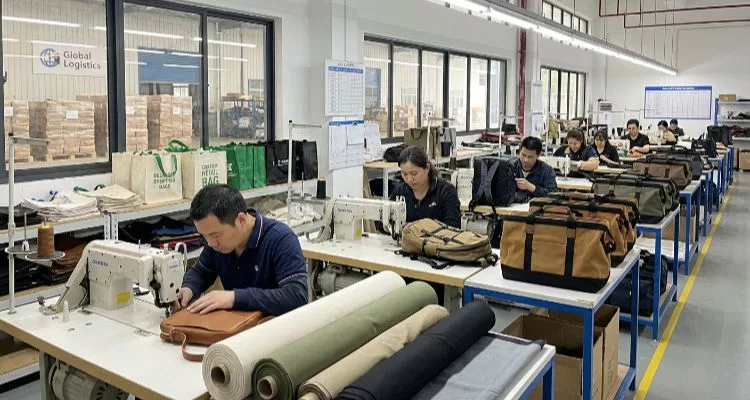
The bag business and industry is the global ecosystem of designing, engineering, and producing functional carriers. Think of bag manufacturing like commercial construction. You do not buy a building pre-built.
You hire architects, source materials, and manage crews. From our factory floors, we see this industry cover fashion handbags, retail shopping bags, reusable packaging, technical backpacks, cosmetic cases, medical transport bags, and private-label collections.
Buyers often confuse factory-led supply (buying generic catalog designs) with brand-led demand (engineering custom products to solve specific user problems). Before contacting custom handbag manufacturers, choose your precise production model:
-
OEM: You design the product; the factory builds it.
-
ODM: The factory designs the product; you brand it.
-
Private Label: You sell existing ODM designs under your brand.
-
Wholesale: You buy ready-made inventory in bulk.
-
Contract Manufacturing: You hire a factory purely for assembly.
We divide bag types and categories into four clean segments:
-
Fashion and luxury handbags.
-
Custom retail bag production for stores and events.
-
Bulk shopping bags for supermarkets, promotions, and packaging.
-
Heavy-duty industrial applications like tool bags, medical equipment bags, and specialty transit cases.
To scale safely, buyers and suppliers need an exact shared vocabulary. The International Chamber of Commerce defines global trade terms to prevent logistical failures. We rely on these essentials daily:
-
MOQ: Minimum Order Quantity. The smallest batch a factory accepts.
-
Tech pack: The visual blueprint detailing materials and hardware.
-
CAD prototype: A 3D digital model of your design.
-
Golden sample: The final physical prototype approved for mass production. It locks in your bag measurements and sizing.
-
AQL: Acceptable Quality Limit. The maximum defective units allowed during inspection (we use AQL 2.5/4.0).
-
FOB vs DDP: “Free on Board” (you handle shipping from the port) versus “Delivered Duty Paid” (the factory handles doorstep delivery).
-
Lead time: Total days from order placement to delivery.
-
Reorder cadence: Your scheduled inventory restock timeline.
Treat sustainable packaging solutions and eco-friendly bag suppliers as strict technical requirements, not marketing claims. In our experience, sustainable sourcing requires certified recycled materials, supply chain traceability, and extreme end-use durability. A recycled bag fails its environmental purpose if the seams rip after three uses.
💡 Key Insight: Sourcing success requires speaking the factory’s language. Master these terms to compare quotes accurately and prevent costly production delays.
How a Bag Moves from Concept to Bulk Delivery?
We map the daily journey of raw materials turning into finished goods. A successful program in the bag business and industry requires strict operational control.
We track the exact flow from the initial sketch to the final shipping container. Every design choice directly dictates factory execution. Here is how our manufacturing engine works in practice.
1. The Product Development and Sourcing Workflow
The workflow starts with a tech pack. This master blueprint defines the intended use, target price, and compliance needs. It prevents miscommunications between the design team and the sewing floor.
First, our engineers review the brief and translate your concept into a digital CAD mockup. This step exposes structural flaws before we cut a single piece of fabric.
Next, we source the physical materials. Then, our team cuts and sews a physical prototype within 7 to 10 business days. We send this unit to you for a revision loop.
Once approved, this prototype becomes the golden sample. We lock it in a secure vault. The factory must match this exact physical standard for every bulk unit.
This workflow scales linearly. We apply the exact same engineering logic to a startup fashion label launching 100 custom totes as we do for a corporate merch buyer ordering 2,000 laptop bags.
2. Production-Engineer Material Comparison
Material dictates field performance. We stress-test textiles daily on the factory floor to ensure they survive real-world conditions. A medical buyer sourcing a rugged transport bag requires completely different specifications than a luxury fashion brand.
Below is our technical evaluation of two foundational materials.
| Material Type | Relative Cost | Sustainability & Traceability | Durability & Benchmarks | Best Use Cases |
|---|---|---|---|---|
| rPET (Recycled Polyester) | Moderate to High. | High. Requires GRS certification for true traceability. | High. Usually ranges from 300D to 600D. Highly water-resistant with a PU coating. | Premium sustainable sourcing, corporate laptop bags, retail totes. |
| Virgin Polypropylene (Non-Woven) | Low. | Low. Made from new plastics. | Moderate. Measured in GSM (typically 80-120 GSM). Prone to abrasion over time. | High-volume promotional events, low-cost grocery bags. |
We test all heavy fabrics in our lab. We use a machine to rub the fabric thousands of times. Good nylon survives 50,000 rubs. We use thick 1000D nylon for heavy tool bags. This material stops tears and rips. It keeps your industrial gear safe on rough job sites.”
Canvas provides a heavy, premium feel (often exceeding 16oz GSM). Vegan leather (PU) mimics animal hide but requires specific polyurethane top-coats to prevent delamination.
You must balance these structural trade-offs. To dive deeper into how material textures impact retail perception, read our guide on bag finishes. You can also compare structural weights in our leather vs canvas breakdown, or explore how dye saturation limits impact bag colors.
3. Behind-the-Scenes Quality Control for Bulk Orders
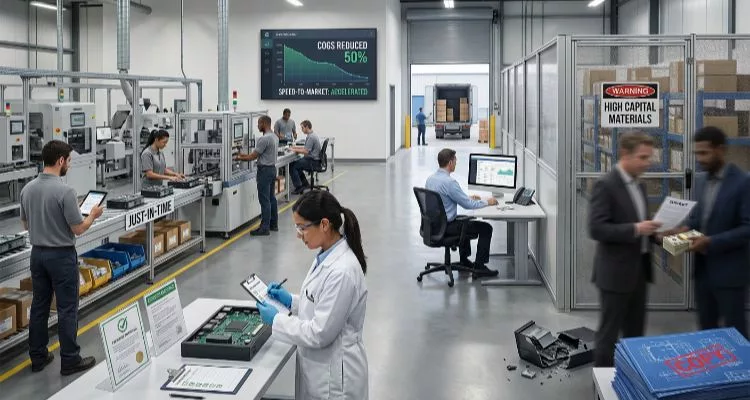
In the bag business and industry, design flair alone no longer guarantees sales. Big industry reports guide our choices. Grand View Research states the bag market will grow fast by 2030. They report that buyers now demand eco-friendly fabrics.
Top brands only work with certified factories. We study this data every quarter. We adapt our factory lines to meet these strict global rules.
We found that sustainable and technical features are now strict commercial requirements, not fleeting trends. Choosing the right supplier model turns these shifts into measurable ROI.
1. Scales Without Dead Inventory
We pair low-MOQ testing with global production capacity. Recently, a retail boutique tested custom handbag manufacturers runs with just 50 units.
When the design gained traction, we scaled their next order to 5,000 units in under 30 days. You validate new markets without trapping capital in unsold stock.
2. Cuts COGS by Up to 50%
We operate with direct-factory quoting and full Bill of Materials (BOM) visibility, stripping away trading company markups.
During a recent audit, direct bag sourcing and pricing reduced per-unit costs by 30% to 50%. You secure higher margins and reallocate savings into premium textiles.
📈 ROI Check: Compare your landed cost against a direct-factory BOM. If you cannot trace the exact price of your hardware and fabrics, you lose margin to hidden middleman fees.
3. Accelerates Speed-to-Market
Our sample-to-bulk workflow moves concepts from CAD to physical prototypes in 7 to 10 days. A recent McKinsey retail report confirms agile iteration defines e-commerce survival. You launch collections and capture shifting trends while competitors wait on sluggish vendor replies.
4. Verifies Quality and Compliance
We enforce strict AQL inspections and source textiles verified by the Global Recycled Standard (GRS). An enterprise event team recently ordered 2,000 branded conference bags.
Because we documented every seam stress-test, they delivered a flawless corporate experience. Premium bag features and functionality justify higher retail prices.
5. Consolidates Vendor Management
One partner engineers everything from eco-friendly retail totes to heavy-duty industrial cases. An industrial buyer recently consolidated their supply chain with us, securing compliance-sensitive transport gear alongside standard corporate backpack brands.
You eliminate the risk of juggling unverified factories, saving hours of administrative overhead.
A good factory protects your money. We promise high quality. If we ship a bad bag, we refund you or make a new one. We sign a strict quality agreement with every client. You get what you pay for.
We take the risk out of your global supply chain. We turn procurement into a verified competitive advantage.
Global sourcing in the bag business and industry carries significant financial risk. High upfront capital requirements exclude smaller startup brands. We track where buyers lose capital during our supply chain audits. Here is the reality check.
6. High Capital Requirements for Custom Materials
Custom molds and unique fabrics trigger massive Minimum Order Quantities (MOQs). We requested a custom-dyed 1000D nylon. The textile mill required a 3,000-yard minimum.
This volume freezes capital. Revisions also consume time. We log 15-day delays just adjusting a zipper placement on a physical prototype.
⚖️ The Trade-off: You gain unique brand aesthetics, but you sacrifice speed to market and liquidity.
7. Vendor Fraud and Eco-Compliance Risks
Recycled textiles carry a price premium and a high risk of vendor fraud. We tested backpacks from unverified suppliers claiming 100% recycled PET usage. Lab tests revealed zero recycled content.
The Federal Trade Commission fines brands for these false eco-claims. You must demand sustainable sourcing backed by physical Global Recycled Standard (GRS) documentation.
⚠️ Critical Warning: Never publish eco-claims without a verified chain of custody.
8. Hidden Logistics Costs and Capacity Strain
Shipping creates major financial blind spots. During Q4, port congestion delayed our critical freight by 32 days. Buyers also misunderstand Incoterms.
A low FOB (Free on Board) quote looks appealing until surprise customs bills arrive. We prefer LantaoBags’ model for bag sourcing and pricing. They separate material, labor, hardware, and shipping costs upfront.
🛡️ Mitigation: Require DDP (Delivered Duty Paid) quotes to see your true landed cost.
9. Quality Fade and Design Theft
Unverified factories swap materials after you approve the golden sample. We caught a supplier substituting generic zippers for contracted YKK hardware on a second production run.
Sharing unprotected tech packs also causes IP leakage. You must enforce strict bag quality and standards to prevent this margin decay.
The Transparent Procurement Checklist
Smart buyers use strict vetting protocols. Execute this checklist before releasing funds:
-
Verify claims: Request physical GRS certificate copies.
-
Lock the sample: Require signed approval on the physical golden sample.
-
Define inspection: Ask how they apply AQL 2.5/4.0 to sewn goods.
-
Check packaging: Confirm barcode specs for Amazon or retail distribution.
-
Demand timelines: Request a production lead-time breakdown by specific stage.
-
Control the cash: Pay a 30% deposit. Withhold the 70% balance until goods pass final third-party QC.
The Verdict: Strategic Sourcing
The bag business extends far beyond seasonal fashion. Today, it demands precise expertise in retail packaging, technical product engineering, and industrial logistics.
Scaling your operations successfully depends entirely on the exact intersection of durable materials, strict quality control, verified certifications, and seamless delivery.
While the upfront hurdles of high capital requirements and potential vendor fraud deter many buyers, the financial payoff of direct factory sourcing is undeniable.
If you demand strict compliance, rapid scalability, and aggressive margin control, you must partner with a transparent manufacturer. If you simply want the cheapest, unverified catalog inventory, look elsewhere.
As environmental mandates tighten and margins compress, the era of the ‘shady middleman’ is coming to an end. Sustainable sourcing only generates true value when it is rigorously documented, operationally realistic, and built for long-term durability.
Ultimately, true procurement strength comes from choosing a partner that combines artisan craftsmanship, strict engineering discipline, and flawless global delivery support. A trusted manufacturing partner actively reduces your uncertainty across design, production, and shipping.
Do not leave your inventory to chance. We recommend visiting LantaoBags to explore a transparent Manufacturing-as-a-Service model. Review our approach to bag sourcing and pricing to see exactly how direct BOM visibility cuts your landed costs.
Ready to lock in your golden sample? Contact us today to compare custom materials, request a physical sample review, or discuss MOQs and shipping terms before you commit to your next supplier.