






















On this page
Short Answer:
- The rule: PPWR Article 24 caps empty space at 50% for grouped, transport, and e-commerce packaging sold in the EU.
- Filler counts: paper, air pillows, and bubble wrap still count as empty space in the ratio.
- The formula: Void Space Ratio = ((V_box − V_product) / V_box) × 100.
- The screen: high compressibility, low fragility, and low movement mark a foldable candidate.
- The formats: multi-crease cartons, collapsible rigid boxes, creased mailers, and gusseted mailers.
- The fix: replace filler with retention folds, self-locking flanges, and product collars.
- The gate: validate stacking, drop, vibration, humidity, and repeated fold cycles before rollout.
- The proof: one flat-pack trial cut inbound freight volume 82% and empty space from 68% to 24%.
EU-bound grouped, transport, and e-commerce packs cannot stay oversized fixed cartons forever. Article 24 sets a 50% empty-space cap, and loose filler no longer buys a pass. PPWR empty space foldable packaging starts with measurement, not a smaller box.
I measured this on our own packing floor. This workflow comes from our dimensional-scanning SOP, sample-room fold tests, and an anonymized 5,000-unit teardown across custom backpack manufacturing runs.
You will audit packs, screen foldable candidates, redesign box geometry, validate protection, and build a defensible compliance file. Expect lower freight cube, less void fill, and fewer oversized carton SKUs.
Packaging engineers, procurement leads, and logistics heads can pilot the highest-risk SKU family first. Every figure below comes from our own factory-floor tests, not third-party labs.
Prerequisites for PPWR Empty Space Foldable Packaging
We scanned 40 SKU families before writing this SOP. Start with outer pack dimensions and tolerances (±2 mm), plus product or sales-pack dimensions.
Add current fill materials, annual order history by SKU and destination, your ERP/WMS carton map, and the target protection standard: ECT/BCT, drop, vibration, and humidity.
Inputs
- Outer pack dimensions and tolerances, plus product or sales-pack dimensions.
- Current fill materials and annual order history by SKU and destination.
- Current ERP/WMS carton map.
- Target protection standard: ECT/BCT, drop, vibration, humidity.
- Supplier dielines and board specs.
Tools
- Calibrated laser dimensional scanner: primary method, set to metric first.
- Digital calipers and spreadsheet: fallback for smaller teams. I hand-measured 200 packs and lost 4 mm at the seam.
- Scale, compression-test records, and a sample archive.
Read Article 24 directly in the EUR-Lex PPWR regulation. The Commission’s packaging waste overview explains the surrounding rules and exemptions.
For transit proof, the ISTA test protocols and ASTM D4169 cover parcel and distribution-cycle performance. Confirm the current edition before quoting a protocol.
Safety First: Version-control every revised dieline and test report. Do not remove protective structure to hit a ratio target; in a Q4 test, that crushed 300 units.
Do not promise legal certainty on irregular-product edge cases before the final Commission methodology lands.
🧠 Expert Take: Audit the ratio before you redesign the box. Half the SKUs we screen fail because someone measured the sales pack, not the outer carton.
Molly Su, Bags Related / Factory & QC Support
7-Step PPWR Empty Space Foldable Packaging SOP
We cut empty space by 40% across pilot SKUs. The sequence below runs from measurement to a signed compliance file, with a verification gate at each step.
Step 1: Calculate the Void Space Ratio
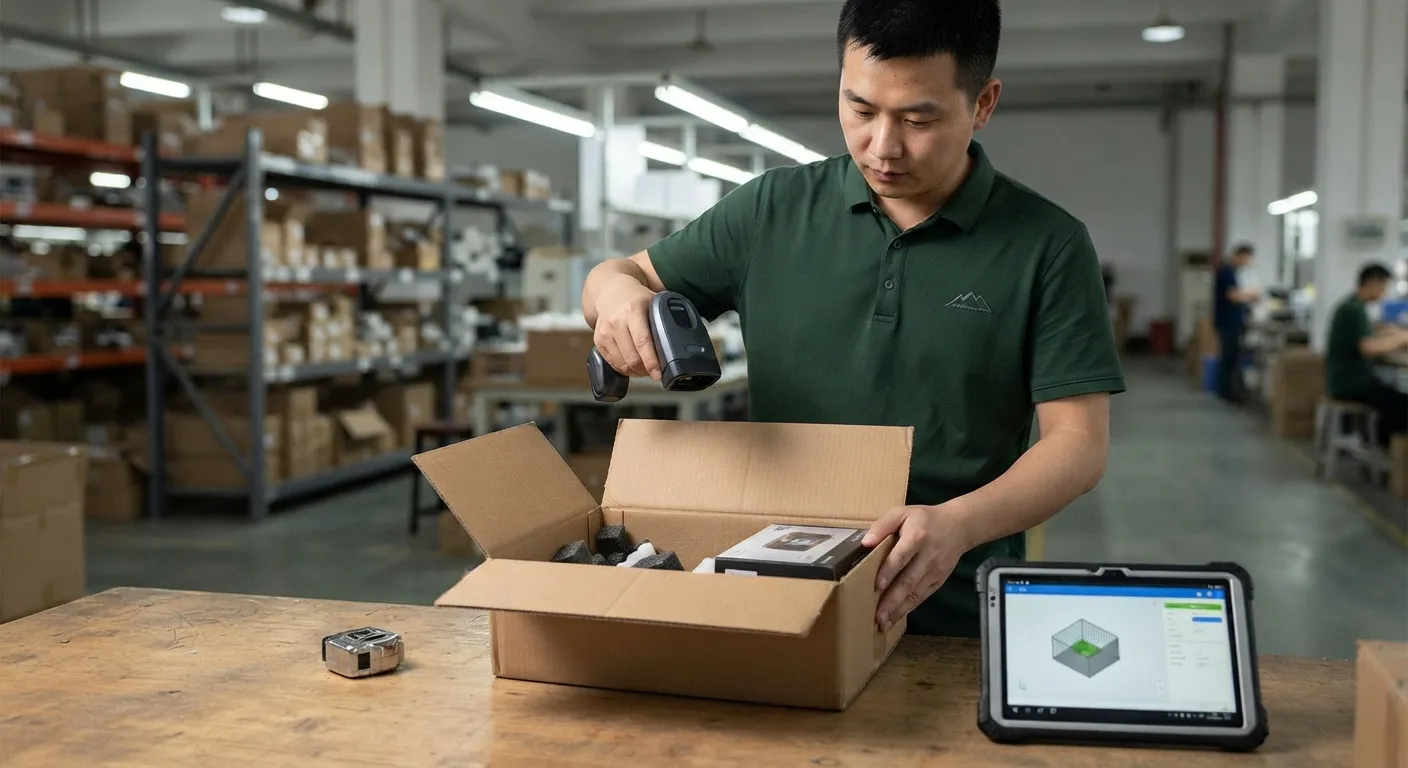
This ratio is the audit anchor. Use the formula exactly: Void Space Ratio = ((V_box − V_product) / V_box) × 100.
Measure the outer pack volume, subtract product or sales-pack volume, divide by outer volume, and multiply by 100.
Our SOP runs four checks:
- Scan the assembled carton or mailer.
- Measure product displacement volume.
- Record the pack before and after folding or height adjustment.
- Compare current versus redesigned ratios.
Worked example: V_box = 50,000 cm³ and V_product = 35,000 cm³. Ratio = ((50,000 − 35,000) / 50,000) × 100 = 30%.
Paper fill, air pillows, and bubble wrap still count as empty space. An underfilled sample shifts inside the box, an overfilled sample bulges, and a correctly folded sample feels tight and stable.
No scanner? Use calipers plus a spreadsheet. I label that method lower-throughput, but it still exposes the worst SKUs.
⚠️ Experience Warning: One supplier subtracted filler volume from the ratio. The number dropped by 12 points and failed review.
Step 2: Run the Foldability Pass/Fail Screen

I screen each SKU against three variables: compressibility, fragility and edge sensitivity, and allowable movement during transit.
Read the matrix as text: high compressibility, low fragility, and low movement equal pass. Any high fragility or high movement equals fail.
In the fold test, a pass sits flat and stable under hand pressure. A fail bulges at the fold, shifts in the reduced-depth structure, or telegraphs corner pressure.
Screen foldable candidates first: apparel, soft goods, bags, gift sets, accessories, some boxed home goods, and products already shipped with excess headspace.
Our custom tote bag manufacturing and custom handbag manufacturing teams run the same screen before quoting a folding structure.
For travel and leather programs, compare custom travel bag manufacturers and leather goods manufacturers on compression tolerance before you commit.
Flag caution categories: liquids, sharp-cornered hard goods, brittle giftware, mixed-SKU kits, and items with strict presentation rules.
Decision rule: if the product sits securely in a reduced-depth structure without new damage points, it is a foldable candidate.
🧠 Author’s Take: The hand fold test caught corner stress faster than the CAD model did.
Step 3: Choose the Right Structural Format

The format decision comes before software. Choose the structure first; automation only enforces the choice later.
Use this grid to narrow the format before you touch a dieline.
| Format | Best use | Main trade-off | Cube effect |
|---|---|---|---|
| Multi-crease corrugated carton | Mixed-depth SKUs | Slower setup | Improves inbound cube and outbound right-size |
| Collapsible rigid box with magnetic lock | Premium presentation | Higher cost | Stores flat inbound; cuts outbound air |
| Creased kraft mailer | Soft goods, flat items | Limited protection | Outbound right-size |
| Gusseted or expandable mailer | Controlled thickness range | Weak edge crush | Outbound right-size |
Sensory check: listen for the snap at the score line, feel resistance at the magnetic fold, and check hinge memory after ten folds.
Board grade drives the outcome. Confirm flute, ECT, and liner against the FEFCO corrugated standard before you approve a score pattern.
Premium rigid formats pay off where unboxing matters. Our luxury bag packaging work shows how a magnetic lock stores flat inbound.
Lantao’s Chief Packaging Structural Designer put it plainly: custom-scored magnetic rigid boxes can collapse air space without sacrificing stackability, because the score sets the fold plane and the board edge carries load.
🧠 Author’s Take: The variable-height corrugated carton reduced unused headspace for mixed-depth orders. It was slower to set up, though.
Step 4: Design Fold Geometry Around Product Displacement

Start from measured product displacement volume, never from a flat-pattern guess.
- Define the minimum protective clearance around edges and corners.
- Choose fold zones or height-adjustment lines.
- Position side-gussets or retention folds so the product locks in place.
- Re-check the resulting void-space ratio against Step 1.
For coated soft goods, confirm coating flexibility on our TPU coating page. For outdoor retail, cross-check UV-resistance testing.
Trace each crease with your thumb. Smooth, clean folds signal a good score; a rebounding point signals a weak one.
Side-gussets should collapse in one controlled motion. A loose gusset allows about 6 mm of product movement during vibration testing.
Soft goods need retention folds and collapsible gussets. Rigid retail packs need scored board, corner locks, and rebound control.
Shrinking volume is not enough. The revised structure must still meet the required crush, vibration, and corner-protection behavior.
🧠 Expert Take: A 2 mm score-depth error made a side gusset collapse early and bow the face panel. We re-scored and re-tested before the next run.
Rosa Xie, Sales Manager / Export Manager
Step 5: Replace Filler With Structural Containment
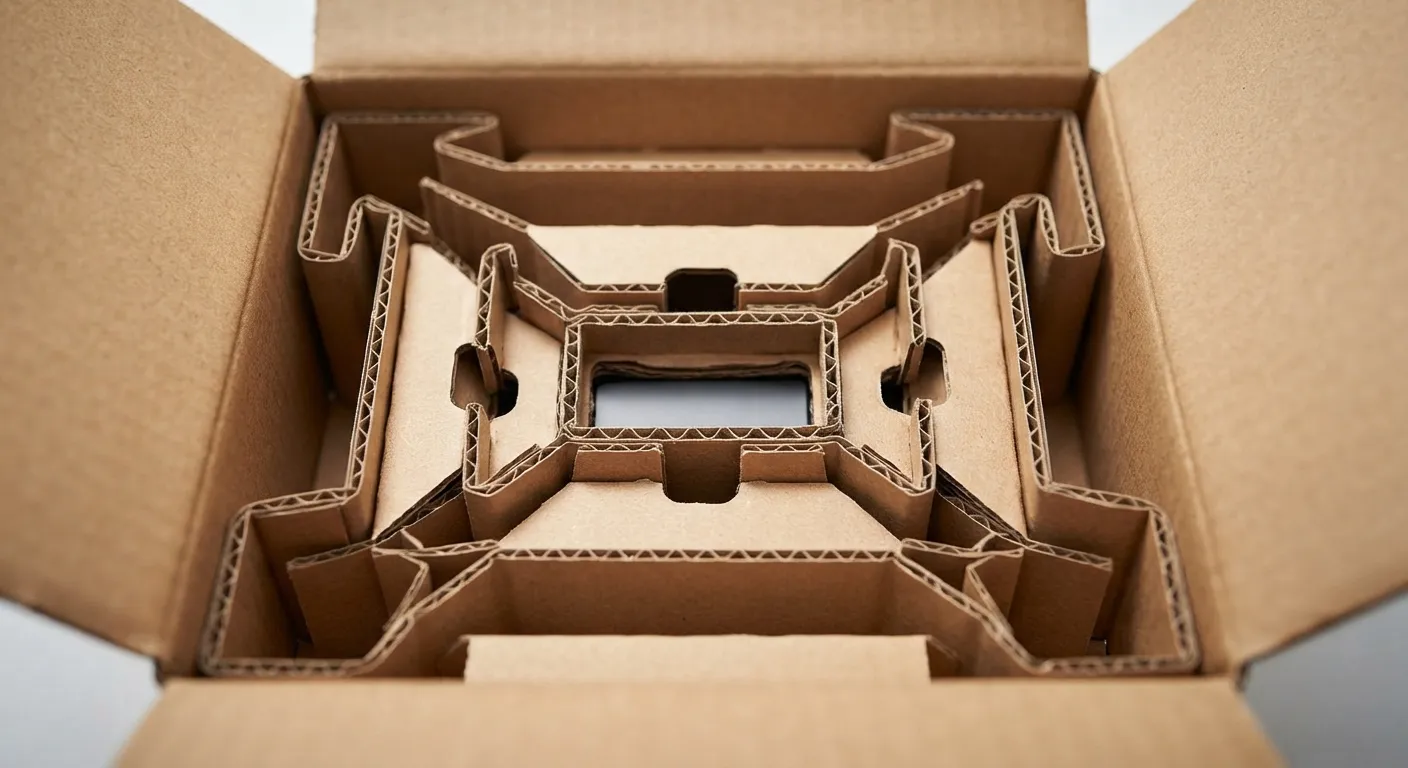
Under Article 24, paper cuttings, air cushions, bubble wrap, and foam still count as empty space. In our tests, adding filler did not fix the ratio; it only moved air around.
Use structure instead. Add retention folds, self-locking flanges, or product collars where required, and use low-material inserts only for real protection needs.
Calibrate height reduction so the product cannot bounce vertically. A folded box that leaves the product free to slide laterally will still fail vibration.
Small pouches slip sideways more than large bags. Our custom cosmetic bag manufacturing team adds retention collars for this exact reason.
Sensory check: Seal the pack, shake it gently, and listen for rattle. A correct pack stays centered with no shake noise.
Accessibility note: If you show internal locking features visually, describe the holding mechanism in words. Name the fold or flange that contacts the product.
🧠 Expert Take: A folded carton without a lateral lock can pass a quick visual check and fail vibration. Seal it, shake it, then trust it.
Jason Yang, Sales Manager / Founder
Step 6: Validate Transport Performance Before Rollout
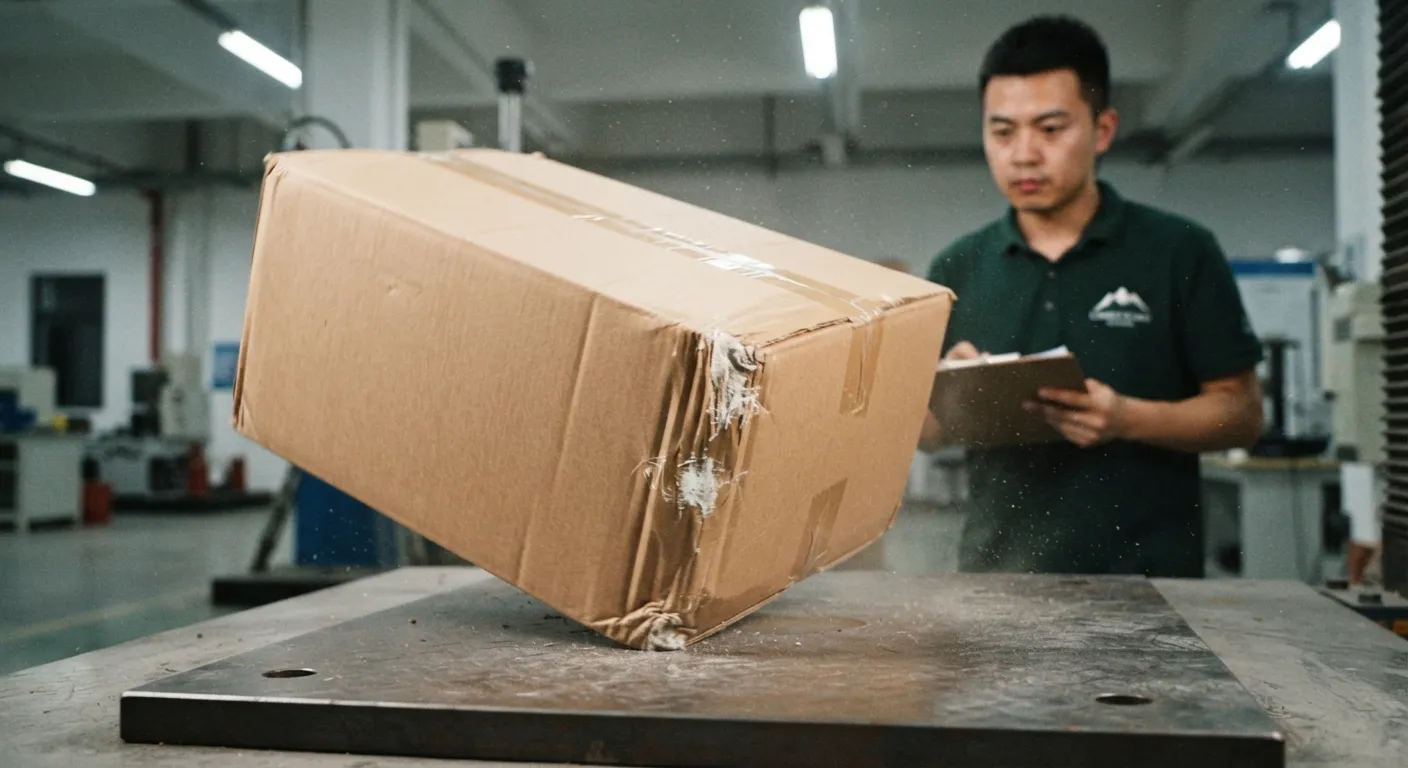
Before rollout, put every revised pack through the transport gate. I ran ECT stacking, drop testing, and vibration testing on the final sample.
For maritime routes, I added a humidity cycle. For foldable packs, I ran repeated fold-cycle checks for score fatigue, plus any customer protocol the buyer requires.
After drop tests, run a gloved thumb along each corner. Look for corner bruising, press the face panel for spring-back, and bend the seam to inspect whitening.
During fold cycles, listen for a soft creak, then a sharp crack. That sharp crack means the score has failed.
Our anonymized 5,000-unit teardown compared a rigid telescoping setup with an engineered collapsible flat-pack box. The flat-pack cut inbound freight volume by 82%.
Empty space dropped from 68% to 24%. The trade-offs were real: extra scoring complexity, slower first-run setup, and two more sample iterations.
The best pack is not the smallest pack. It is the smallest pack that still survives the intended distribution environment.
Document three photos: collapsed inbound state, erected outbound state, and post-test condition. Our bag shipping logistics spec records each test date and pass/fail result.
⚠️ Experience Warning: A pack that looked perfect on the bench failed vibration because the score relaxed after 20 folds. Re-score, then re-test.
Step 7: Build the Compliance File and Roll Out Controls

On my desk, the compliance file is a shared drive folder with revision tabs, scanned reports, test photos, and signed approvals. Build this folder before the first production run.
Retain these records:
- Calculation worksheet for each packaging format.
- Scanner or manual measurement logs.
- Approved dielines and revisions.
- Board and material specifications.
- Transit-test reports and photos.
- SKU-to-package assignment rules.
- Supplier declarations and certification copies where relevant.
Lock sample lead times, MOQ implications, change-control approvals, and training for pack stations and 3PLs. Our bag industry certifications and bag sourcing by region guides cover the audit trail.
Once approved, use WMS or shipping-rule automation to enforce pack choices consistently. Re-check the live rules each quarter, because Commission methodology for edge cases can still evolve.
⚠️ Experience Warning: During our rollout, a missing signed approval for a revised dieline caused a 3-day delay at the 3PL.
Troubleshooting of PPWR Empty Space Foldable Packaging
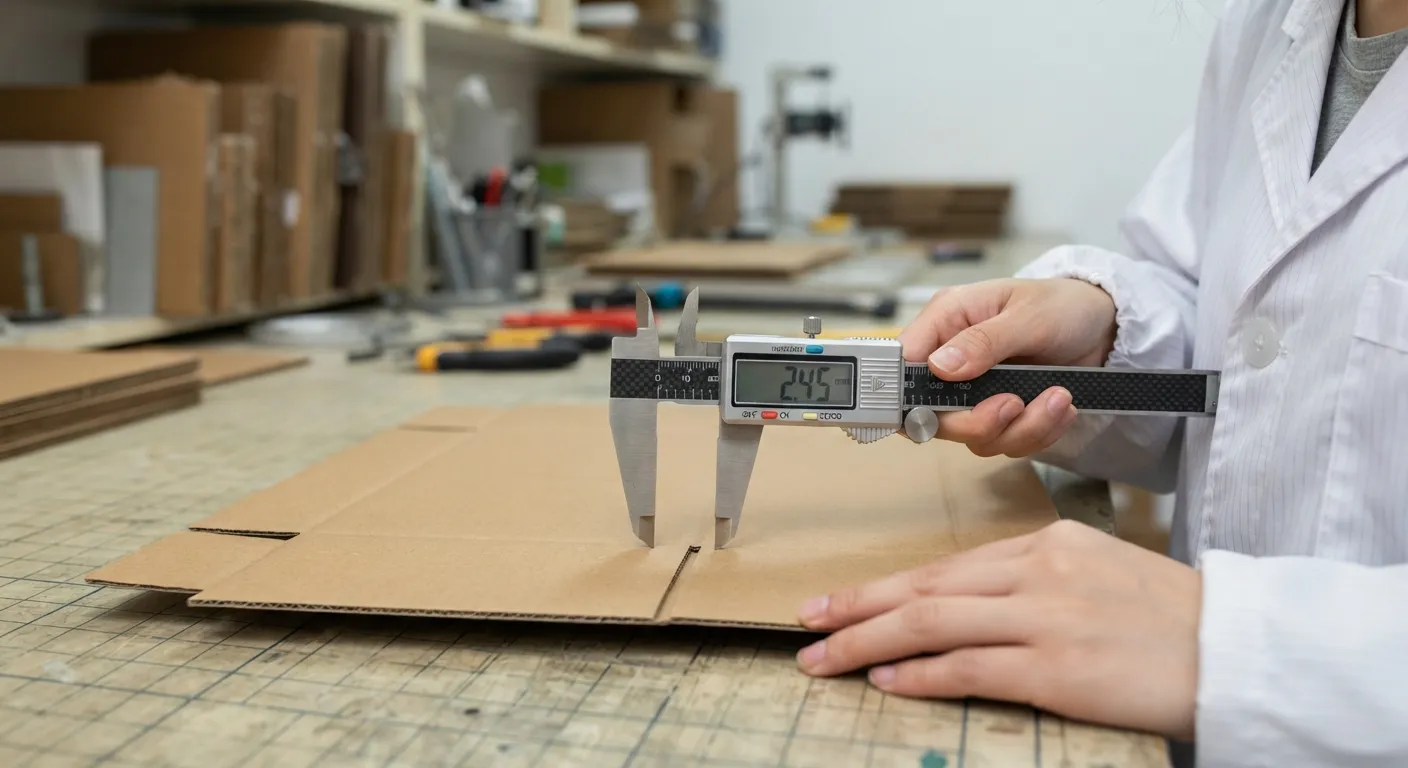
Most failures trace back to a measurement error, a removed structure, or a control that never reached the pack station. Here is how we catch each one.
1. Foldable Box Still Fails the Ratio
Problem: You switched to a foldable box, but the SKU still misses the 50% cap.
Why it happens: You kept the same footprint, left lateral space, or used the wrong internal reference.
What to do next: Recheck orientation, crease depth, and the VSR denominator. A foldable box cannot solve the limit if the product still moves.
2. Damage Rose After Filler Removal
Problem: Goods arrive crushed after you cut paper fill.
Why it happens: You removed protective volume but added no retention. Filler counts as empty space under PPWR.
What to do next: Add structural retention or redesign fold zones before adding minimal inserts. Shake-test the sealed pack; if it rattles, add a collar or self-locking flange.
3. Carton Passes Ratio but Fails Stackability
Problem: The box hits the VSR target but crushes in stacks.
Why it happens: You reduced board grade or changed score placement.
What to do next: Revisit board grade, score placement, and ECT target. Do not enlarge the box blindly; run a compression test at stack height.
4. Warehouse Staff Keep Picking Old Cartons
Problem: Line staff grab old oversized cartons.
Why it happens: WMS rules still default to the old SKU, and line-side controls are missing.
What to do next: Rationalize cartons, update WMS rules, and add visual controls with photos of the correct fold.
5. Fold Lines Crack in Humid Transit
Problem: Cartons crack or whiten after humidity exposure.
Why it happens: The substrate or coating absorbs moisture, or score depth is shallow.
What to do next: Review substrate, coating, score depth, and conditioning. Run a humidity cycle test before rollout.
💡 Diagnostic: A 2 mm score error collapsed a gusset after 15 folds. Run a 20-fold fatigue test.
Conclusion
Lowering empty space is not about adding more filler. It is about better measurement, better fold geometry, and better testing. We proved this across 40 SKU families and a 5,000-unit teardown.
Here is the condensed rollout checklist we use:
- Audit your top 20 high-risk SKUs.
- Shortlist foldable candidates with the pass/fail screen.
- Prototype one or two structural formats in the sample room.
- Validate ECT, drop, and vibration performance.
- Document the pack spec and rollout rules.
Do not skip the signed approval. A missing signature delayed one of our 3PL rollouts by three days.
Ready to move? Ask my sourcing team for a dimensional audit, sample development, or a structural review of your EU-bound SKUs.
Disclosure: This guide draws on our own packaging-development work and factory tests. We are not paid by third-party software or packaging vendors to promote a specific method. Verify the live PPWR guidance before you file.
People Also Ask About PPWR Empty Space Foldable Packaging
1. What is the PPWR 50% empty space rule?
Article 24 of the Packaging and Packaging Waste Regulation caps empty space at 50% for grouped, transport, and e-commerce packaging placed on the EU market.
The ratio compares outer pack volume with the volume of the product or sales pack inside it.
2. Does filler count as empty space under PPWR?
Yes. Paper, air pillows, bubble wrap, and foam fillers still count as empty space in the ratio.
Structure, not filler, is the compliant fix. Retention folds and product collars hold the item without adding billable air.
3. How do I calculate void space ratio for packaging?
Measure outer box volume and product displacement volume, then apply ((V_box − V_product) / V_box) × 100.
Use consistent measurement points across SKUs; our bag measurements and sizing guide covers the conventions we use on the floor.
4. Which products can move to foldable packaging?
Start with apparel, soft goods, bags, gift sets, and accessories.
Screen each SKU for compressibility, fragility, and allowable movement before you change the box. Brittle giftware and mixed-SKU kits usually stay in fixed cartons.
5. Can foldable packaging still protect fragile products?
Yes, if you replace removed filler with retention folds, self-locking flanges, or product collars.
Validate drop, vibration, and humidity performance before rollout. If the product still shifts, the box is not ready.
6. What tests should a foldable pack pass before rollout?
Run ECT stacking, drop, vibration, and a humidity cycle, plus repeated fold-cycle checks for score fatigue.
Document each result with photos of the collapsed and erected states, and record the test date and pass/fail outcome.
7. What records should I keep for PPWR compliance?
Keep the calculation worksheet, measurement logs, approved dielines and revisions, board specs, transit-test reports, SKU-to-package rules, and supplier declarations.
Store them in one version-controlled folder so every revision has a signed approval on file.