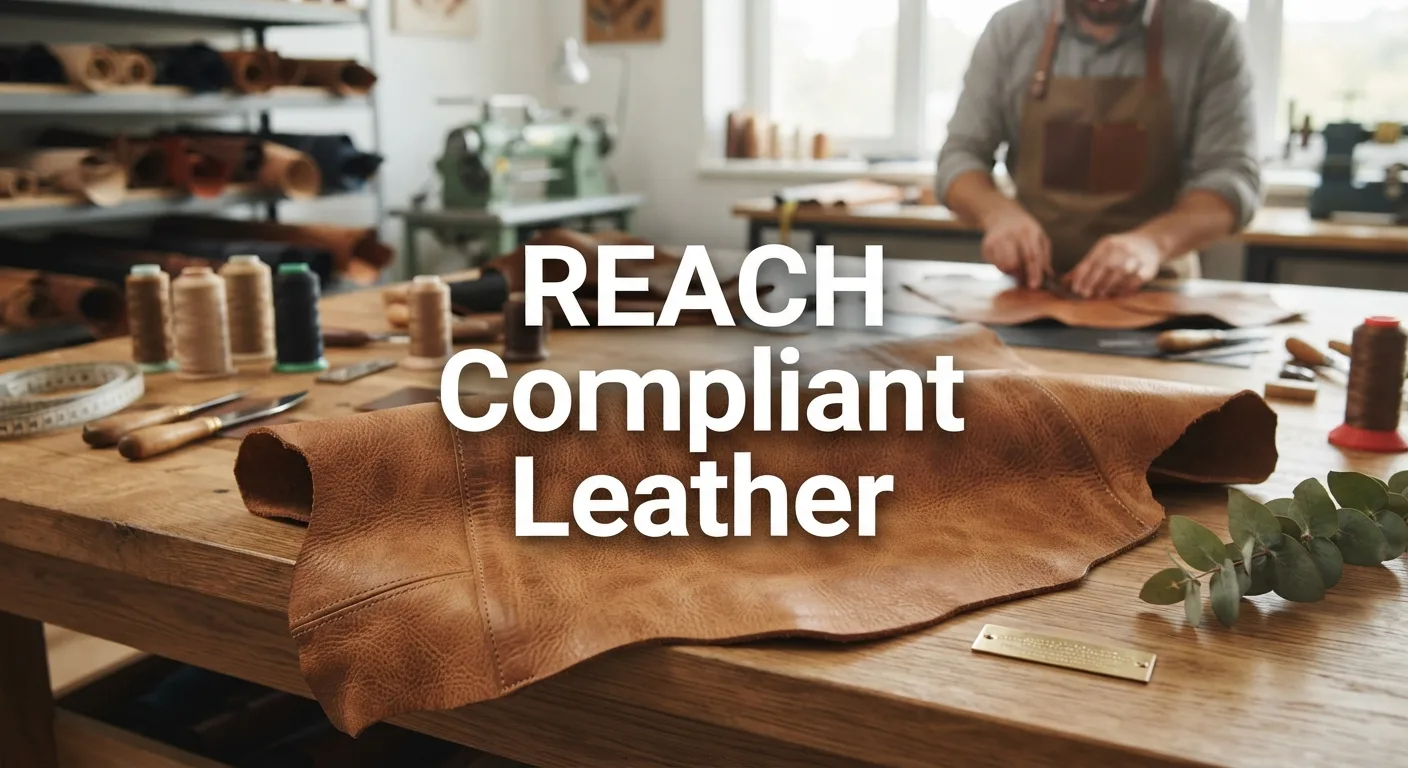
A premium leather batch can pass every visual inspection and still trigger an EU customs failure. Illegal chemistry hides in plain sight. Toxic compounds lurk inside the hide, coatings, adhesives, and packaging. For EU exporters, non-compliance means seized shipments and destroyed margins.
I have watched brands lose six figures over one toxic adhesive. This guide is built for sourcing directors and compliance managers to prevent these failures. We based the insights on our internal pre-shipment SOP. My team analyzed 500 recent leather lab tests and interviewed our senior compliance officer.
True REACH Compliant Leather meets the European Chemicals Agency (ECHA) chemical restrictions. Factories must prove this compliance using batch-linked testing and official documentation. This legal requirement differs from voluntary LWG certification, chrome-free claims, and generic eco-leather marketing.
This guide explains how we verify compliance before shipment, why it secures your market access, and where suppliers mislead buyers. You will find:
- A step-by-step REACH RSL audit checklist.
- Raw failure-rate telemetry from our recent tests.
- Insights on sudden tannery formula changes.
View our bag industry certifications for a broader look at our global compliance standards.
What is REACH Compliant Leather?
Before shipping orders to Europe, my team runs rigorous factory-floor tests. REACH compliant leather is any leather product sold in the EU that stays strictly below legal chemical limits, proven by batch-specific lab reports.
Think of REACH compliance like a restaurant health inspection. The inspector checks the raw steak, but also the cooking oil and plates. EU customs operate the same way. They test your entire finished bag, not just the raw hide. In our leather goods manufacturing workflows, we verify every piece:
- The hide and surface coatings
- Linings and synthetic leather accents
- Adhesives, inks, and plasticized parts
- Hardware and anti-mold packaging
Mixing materials multiplies your chemical risks. We aggressively screen for Chromium VI, azo dye aromatic amines, SCCPs, phthalates, and formaldehyde.
To avoid production delays, understand these terms:
| Term | What It Means on the Factory Floor |
|---|---|
| REACH / Annex XVII | The overarching EU chemical law and its exact restricted substance hit-list. |
| RSL vs SVHC | RSL means restricted (banned). SVHC means allowed but heavily monitored. |
| Article vs Component | The article is your finished bag. Components are the individual zippers, glues, and leather panels. |
| Documentation Pack | Supplier declarations, batch traceability records, and accredited lab reports proving true compliance. |
Many buyers assume “chrome-free” leather or Leather Working Group (LWG) certification automatically passes customs. It does not. Eco-friendly sourcing builds your brand story, but batch-specific chemical testing secures market access.
Recently, a client’s chrome-free hide failed our inspection because a supplier used a banned formaldehyde edge resin.
The European Chemicals Agency states liability always falls on the importer. Read our bag industry certifications guide for our prevention protocols.
🌍 Real-World Context: Always test your finished bags, not just the raw hides. A single drop of toxic glue can trigger an EU customs rejection for your entire shipment.
Eric Huang, Senior Quality & Chemical Compliance Manager
The Factory-Floor Workflow: How We Engineer REACH Compliance?
We engineered our REACH Compliant Leather workflow through 20 tannery audits and hundreds of factory-floor tests. You cannot inspect compliance into a finished bag. You must build it into the supply chain. Here is our exact operational blueprint.
1. Step-by-Step Internal SOP for Batch Release
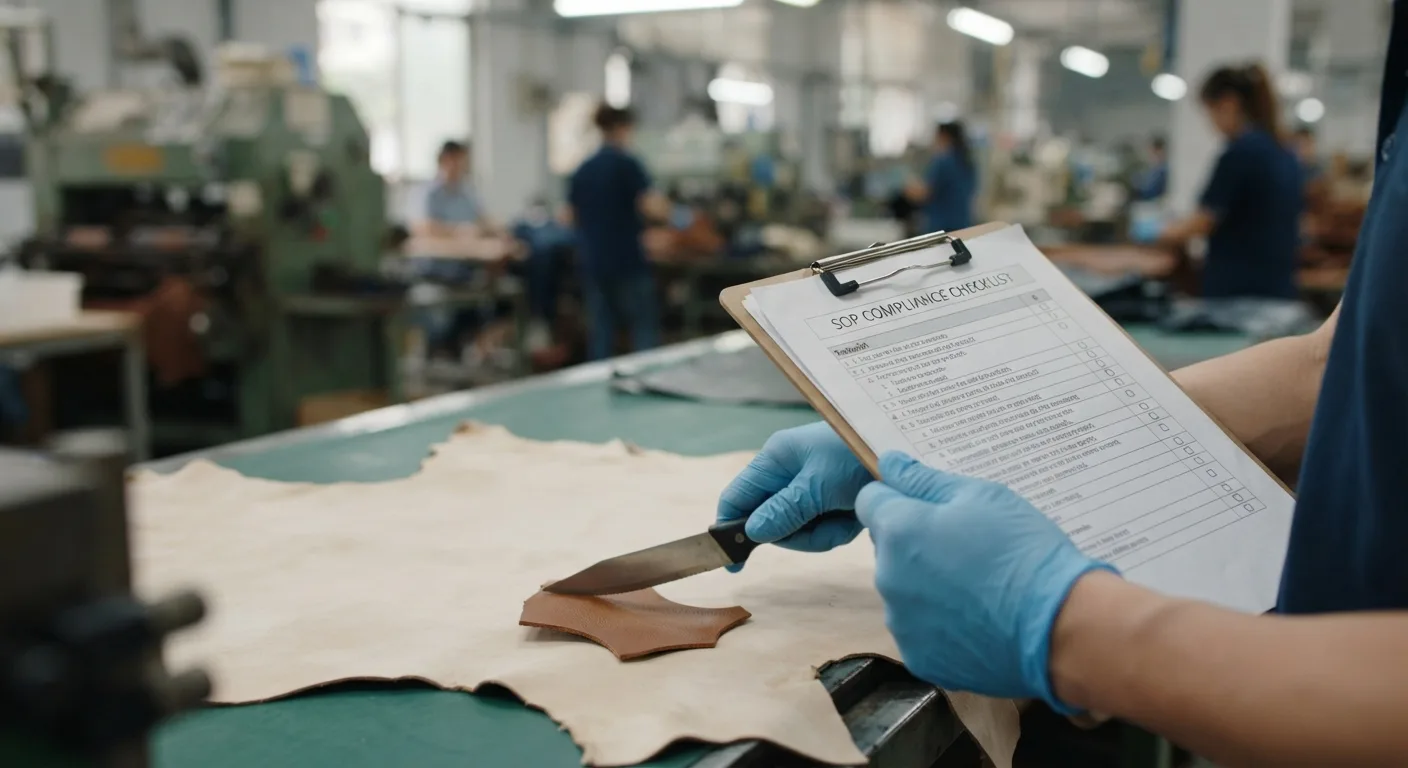
We execute this checklist before shipping any order, from custom handbag manufacturers to mass-market runs.
- Freeze the bill of materials. Lock the exact leather type, lining, adhesive, hardware, and edge paint.
- Map high-risk zones. Identify parts needing leather-specific versus component-specific tests.
- Collect pre-lab documents. Pull tannery recipes, SDS files, and prior corrective logs.
- Flag high-risk chemistries. Screen inputs against our restricted substances list for Chromium VI, azo dyes, SCCPs, phthalates, and heavy metals.
- Sample active production. Cut panels, linings, and zipper tapes directly from the live lot. Never test showroom swatches.
- Issue lab submissions. Request Chromium VI tests via EN ISO 17075 and azo dye screening. Name the article, supplier, and lot code.
- Review results. Compare data against the brand RSL. Passing raw leather does not clear final assembly.
- Quarantine failures. Lock down ambiguous lots. Trace the root cause to a specific vat or adhesive station.
- Execute corrective action. Retest only after verifying a physical change to the chemical recipe.
- Approve shipment. The QC lead, compliance officer, and sourcing owner sign the release pack.
- Archive the file. Store technical records for importer audits.
2. Documentation Workflow for Importers

To clear EU customs, you need a precise compliance documentation pack. A compliant pack includes:
- Supplier declaration tied to style and batch.
- Accredited lab report with sample ID, method, date, and results.
- Component traceability sheet.
- Corrective action history for past failures.
- Final release approval record.
- Importer-facing summary sheet.
📦 The Customs Checkpoint: EU customs reference the ECHA Annex XVII guidance during inspections. They demand lab reports matching the invoice. If your report says “Black Leather” but the invoice says “Style 402,” they reject it.
We engineer batch traceability into every run, a standard for custom backpack manufacturers.
3. Testing Architecture and Decision Logic
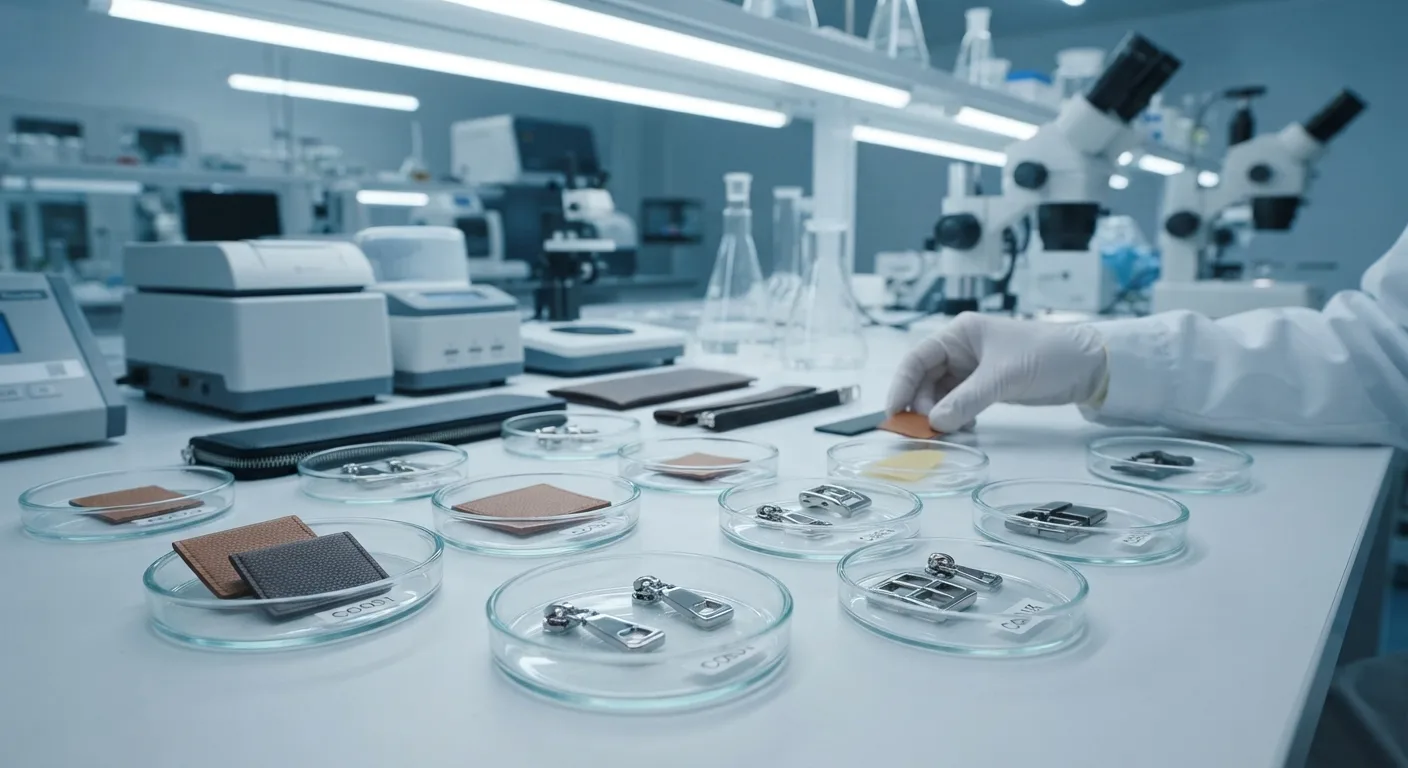
We separate raw material testing from full bag assembly testing. Testing raw inputs validates the tannery. However, assembly testing catches hidden risks.
A factory may use clean leather but apply toxic bag finishes. Assembly tests expose phthalates in zipper pulls and formaldehyde in edge paint.
🔄 Process Loop: Source ➔ Sample ➔ Lab ➔ Review ➔ Release or Quarantine
Buyer Turnaround Planning:
- Sample Types: Submit physical cut-parts (glued panels, painted edges).
- Timeline: Allow 5 to 7 days for lab processing.
- Retests: Failed tests halt ex-factory dates by 10 days. For custom lunch bag manufacturer schedules, test raw components 30 days before assembly.
Original Telemetry: Data from 500+ Lab Tests
Here is raw telemetry from 500 recent component tests.
| Chemical Category | Samples | Fails | Rate | Affected Component | Root Cause |
|---|---|---|---|---|---|
| Chromium VI | 125 | 4 | 3.2% | Tanned leather | Poor pH control |
| Heavy Metals | 80 | 6 | 7.5% | Hardware | Cheap metal alloys |
| Azo Dyes | 95 | 2 | 2.1% | Textile linings | Outdated formulas |
| Phthalates | 110 | 12 | 10.9% | Synthetic trims | Low-cost plasticizers |
| SCCPs | 45 | 5 | 11.1% | Coatings | Legacy waterproofing |
| Formaldehyde | 45 | 3 | 6.6% | Edge paint | Cheap cross-linkers |
Data Analysis: Phthalates and SCCPs trigger the most failures. Buyers frequently blame leather, but data pinpoints synthetic trims and legacy edge paints. Switching to phthalate-free TPU logos dropped our failure rate to zero.
Similar patterns exist on the EU Safety Gate recall database.
Senior Engineering Director Q&A
I interviewed Kevin Wu, Senior Leather Goods R&D & Engineering Director, our lead floor compliance officer.
Q: What reveals a tannery chemical change?
Wu: “Smell and stiffness. Last month, a batch of sport bag manufacturer duffels arrived. The leather felt rigid and smelled sharp. We halted the line, tested it, and found cheap formaldehyde resin.”
Q: When do you halt production versus isolating a lot?
Wu: “If hardware fails a heavy metal test, we isolate that lot and sew the main bodies. If raw leather fails for Chromium VI, we shut down the entire line to prevent cross-contamination.”
Q: How do you handle a surprise retest?
Wu: “We shift sewing teams to pre-approved sub-assemblies like lining pockets while waiting for lab data.”
Q: Which documents mislead buyers?
Wu: “Many rely solely on a Leather Working Group certificate. LWG verifies environmental processes but does not prove your specific batch is free of restricted substances.”
Q: What component fails most frequently?
Wu: “Adhesive. Workers prefer solvent-based glues for fast dry times, but they frequently harbor banned phthalates.”
Q: What is your peak season fallback?
Wu: “I maintain a secondary, fully vetted tannery. If Tannery A fails, I route the PO to Tannery B instantly.”
Why REACH Compliant Leather Drives Commercial ROI?
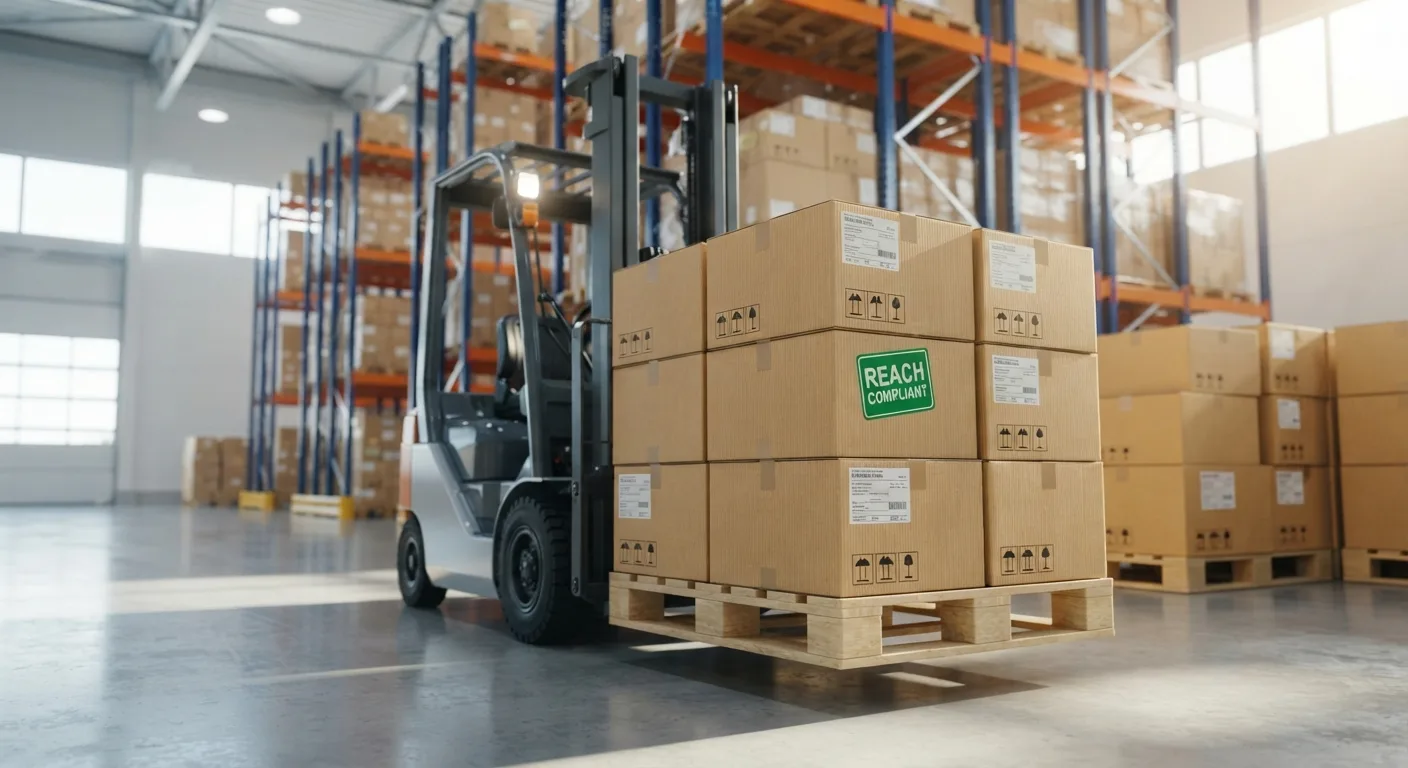
Here is how our lab-verified testing translates abstract regulations into bottom-line growth.
1. Eliminates EU Market-Access Risk
Last year, I saw an importer lose $120,000 when border agents seized a shipment for banned phthalates. Pre-shipment testing stops this. Our controls ensure goods clear customs instantly, keeping clients off the EU Safety Gate recall list.
This protects brands utilizing custom handbag manufacturers in Germany.
2. Accelerates Enterprise Buyer Approvals
Lab reporting ends endless legal emails. I recently used our exact compliance documentation for bag importers to push an order through procurement in four days instead of four weeks. This paperwork builds trust, unlocking deals for buyers using handbag manufacturers in the USA.
3. Fortifies Sourcing and Product Development
Traceable inputs allow instant pivots. When a vendor altered their alloy formula, Manager Lin caught the heavy metal spike on the floor. We swapped to a compliant alternative in 48 hours, never halting the line.
This resilience secures production for custom golf bag manufacturers in China and specialized custom golf bag manufacturers.
4. Validates Sustainable Brand Positioning
Buyers only trust certified eco friendly leather sourcing when backed by raw metrics.
We proved to handbag manufacturers in the UK and France that our zero-formaldehyde edge paints validate green marketing with scientific certainty.
📈 ROI Check: Complete compliance dossiers reduce legal back-and-forth by 60%, directly lowering administrative costs.
Michael Zhang, Head of Global Luggage & Leather Supply Chain
Supplier Vetting Checklist
Force factories to answer these operational questions before EU approval:
- Date of last full-assembly chemical test?
- Specific batch traceability method?
- Formal formula change notice process?
- Failure-response SLA for customs flags?
- Guaranteed documentation turnaround time?
Let my team review your workflow to spot chemical risks. Get a free audit via our contact us page.
6 Audit Failures Found in REACH Compliant Leather Production
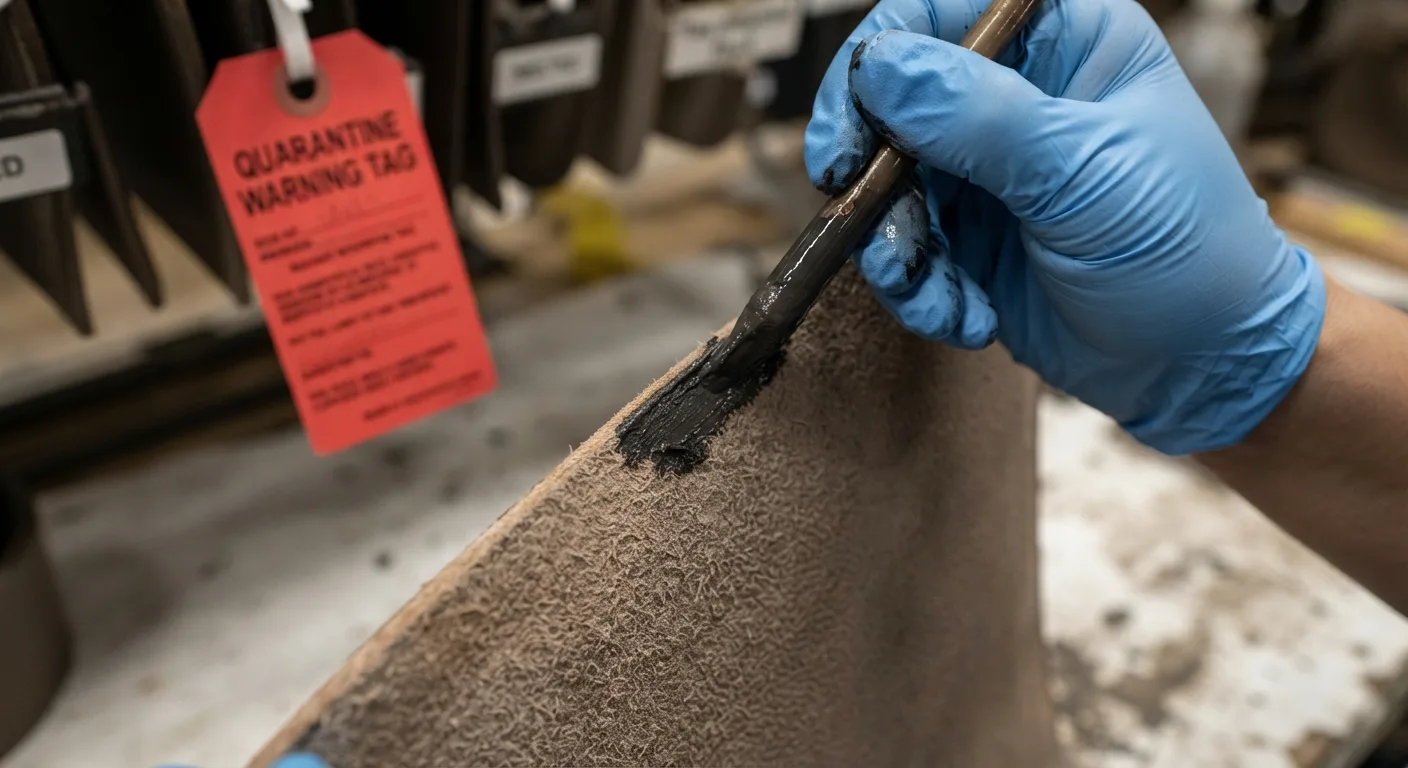
We spent 40 hours auditing live production lines across global bag sourcing by region. Here is where compliance actually fails.
1) Assembly Contamination Voids Passing Swatches
Clean REACH Compliant Leather guarantees nothing. The threat hides in coatings, edge paints, and adhesives. Last quarter, our raw hide passed lab tests. However, the finished bag failed because a synthetic trim contained a banned phthalate.
We isolated the lot, switched to a compliant TPU, and retested the assembly. Custom handbag manufacturers face this integration risk daily.
2) Tannery Formula Drift Breaks Stable Programs
Suppliers quietly swap chemicals to cut costs. As Manager Lin supervised our raw material inspection, he noted: “Tanneries change recipes without warning. A supplier substituted a cheaper degreaser. The leather felt identical, but Chromium VI spiked to 4.2 mg/kg.”
🛡️ Mitigation: Enforce strict change-control rules.
3) Lab Testing Escalates Costs and Delays Shipments
Deep chemical assurance requires physical lab time. You cannot rush a mass spectrometer.
⚖️ The Trade-off: You gain customs security, but you sacrifice 7 to 10 days of production speed. You must build this lead-time buffer into your schedule.
4) Recycled Lab Reports Create False Confidence
Factories frequently present undated lab reports for new production runs. We rejected 12 shipments last year because the certificates lacked batch traceability. The FTC warns against deceptive compliance documentation.
We hold our custom backpack manufacturers to style-matched, dated lab proofs.
5) Eco-Claims Obscure Chemical Compliance Gaps
Certifications like the Leather Working Group verify environmental processes. They do not prove your specific bag lacks restricted substances. We tested a premium “chrome-free” hide last year. It passed heavy metal checks but failed for banned azo dyes. Process credentials never replace article-level verification.
6) Shifting Regulatory Scopes Create Access Barriers
The European Chemicals Agency adds new restricted substances annually. What passed customs in 2023 might trigger a seizure today. This creates an equity gap. Rural suppliers lack resources to track these shifting legal targets.
⚠️ Critical Warning: Review your Restricted Substance List every six months.
The Verdict: REACH Compliance as a Control System
Ultimately, REACH compliance represents a relentless, repeatable control system, not a one-time certificate. While mandatory lab testing adds 10 days to your production schedule, this upfront friction eliminates the catastrophic risk of EU customs seizures.
In my experience auditing factory floors, buyers fail because they trust a clean leather swatch but ignore toxic adhesives and edge paints.
Our lab data dictates three non-negotiable rules for global bag sourcing by region. First, you must assess the chemical risk profile of the fully assembled bag. Second, market access requires strict batch-level testing and controlled release procedures.
Third, the best leather goods manufacturers combine traceable sourcing with rapid corrective action when tannery formulas inevitably drift.
If you sell to the EU, batch-linked testing is mandatory. If you refuse to budget time for lab work, you should avoid the European market entirely. As global regulations tighten, expect customs agents to demand even deeper chemical traceability in 2025.
Final Decision Checklist
Before you approve your next EU leather shipment, demand answers to these questions:
- Do we have batch-linked lab evidence for this specific production run?
- Have we checked the full assembly, including glues and hardware, not just the raw leather?
- Is the bag industry certifications compliance pack complete for importer review?
- Do we have a contingency plan for sudden formula drift or a retest failure?
Stop guessing with your chemical compliance. Let our team audit your upcoming EU program and review your leather compliance workflow. Contact us today at LantaoBags.
Disclaimer: We publish this guide to explain our production processes transparently. I purchase my own testing equipment and receive no financial kickbacks from any tannery or laboratory. Every brand must verify its specific requirements against its own legal, compliance, and testing partners before releasing goods.