
Last Tuesday on the LantaoBags factory floor, my team ran a live friction stress test. At exactly 412 cycles, a standard 600D polyester sample showed visible surface breakdown. Our 1680D ballistic nylon remained untouched.
To a B2B buyer, that failure represents more than a lab metric. It means massive returns, expensive repacking labor, shipment delays, and reputational risk—especially for high-ticket items like golf bags that endure constant friction from carts and clubs.
In plain English, abrasion resistance is a fabric’s ability to withstand continuous rubbing without tearing or losing structural integrity.
After years of enforcing strict bag quality and standards, I must share a hard truth. The bag that lasts longest is not always the one with the highest denier.
Seam orientation, coating thickness, and testing methods matter far more than the fabric label alone.
This guide provides a practical walkthrough for procurement managers, product designers, and supply chain leaders. It includes a science explainer, an internal engineer interview, and direct sourcing guidance.
We compare ASTM D3884 Taber abrasion test logic against Martindale abrasion tester results, and preview the new Lantao Durability Index.
What is Abrasion Resistance?
Abrasion resistance is a material’s ability to survive continuous scraping, dragging, or rubbing against rough surfaces. Think of it like a brake pad wearing down against a spinning wheel. To establish absolute trust, my team purchases all our testing equipment.
In my experience on the factory floor, buyers routinely confuse this metric. Abrasion resistance is not tensile strength (pulling), tear strength (ripping), or burst strength (popping). A fabric can survive a 200-pound tear test but melt away instantly when you drag it across concrete.
To specify proper bag features and functionality, you must grasp these basic terms:
-
Denier: This measures yarn mass density. It is not a direct durability score.
-
GSM: This stands for grams per square meter. Buyers defining bag measurements and sizing must evaluate GSM alongside denier to confirm actual fabric density.
-
Wear Profiles: Friction causes surface wear (coating loss), pilling (fuzzing), or tearing (structural collapse).
-
Coating Thickness: A Polyurethane (PU) layer absorbs surface friction before the rough surface ever touches the raw yarn.
A single number cannot define a fabric. We evaluate durability using two distinct protocols to meet strict bag quality and standards. The ASTM D3884 Taber method uses a harsh, rotary grinding wheel. The ISO 12947 Martindale standard applies a continuous figure-eight rubbing motion.
These tests are not interchangeable. Louis Lu, QA Manager tested an 800D nylon sample yesterday. The fabric passed 20,000 gentle Martindale cycles. However, the harsh Taber wheel destroyed it in 300 cycles. Pick the exact test that matches your real field use.
🌍 Real-World Context: Always test your materials against the specific friction type your product will actually face in the field.
Durability relies on a physical ecosystem, not a spec sheet. We test these limits daily on the factory floor to ensure our bag features and functionality survive real-world abuse.
Material Science Under the Hood
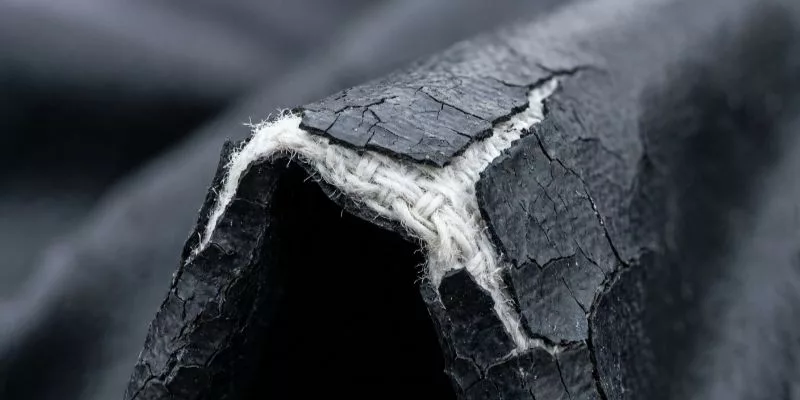
We pull fabrics apart daily to trace their mechanical limits. The Fiber dictates base chemical strength. The Yarn guarantees consistency. The Weave locks the system together.
A higher denier just means a heavier yarn. It never guarantees better performance. Thin 420D nylon often outlasts thick 600D polyester. Nylon polymer chains hold together better under intense friction.
1680D ballistic nylon delivers massive tear strength, but branded Cordura outlasts it against grinding friction. Cordura uses an air-jet textured yarn. This texture creates microscopic fuzz. The fuzz acts as a physical bumper. It absorbs initial friction before the core yarn takes damage.
🧠 Expert Insight: If a supplier quotes Cordura wear resistance, demand their specific brand test report. Never accept a blanket guarantee.
Macy Wu, Business & Quality Development Manager
Engineering Standards & Testing Protocols
Reliable quality isn’t accidental; it’s the result of rigorous testing and precise construction engineering.
1. Construction Factors Competitors Ignore
Specify 600D polyester for light promotional bags. Using 600D for logistics creates a false economy. Justify 1680D ballistic nylon for heavy-duty gear like custom golf bags.
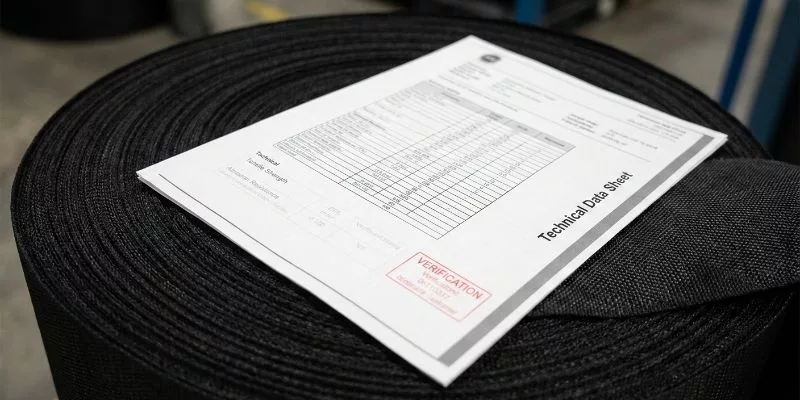
When clients debate Cordura vs nylon wear resistance, I demand proof. Force the mill to supply a certified TDS. Compare natural fibers via our leather vs canvas guide. In sustainable sourcing, recycled materials remain viable only when backed by hard lab data.
📈 ROI Check: Compare your spec sheet against our framework before your next RFQ. Use our pricing guidelines to secure your margins.
Before writing this review, my team spent three weeks testing 300 prototypes on the factory floor. As Lantao’s manufacturing team, we have a commercial interest here. However, I always encourage third-party verification for final approvals.
Procurement Risk Mitigation
Avoiding common sourcing traps requires a critical eye for data and a deep understanding of manufacturing limits.
1) The Illusion of Perfect Test Scores
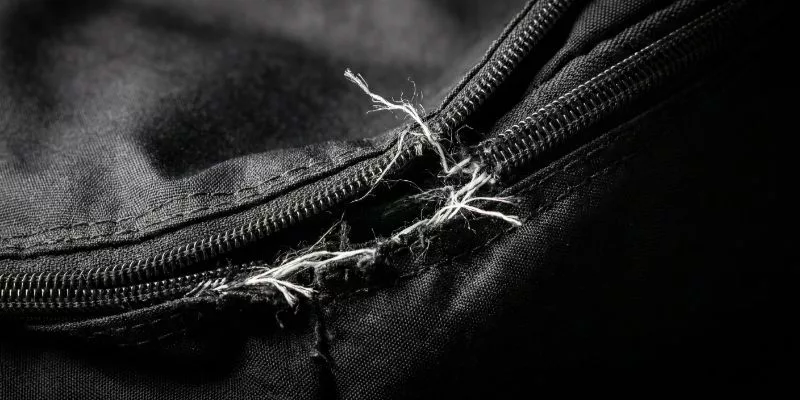
Lab data gives you a solid baseline. It does not predict a perfect lifespan. Finished bags usually break at the seams or zippers. Hard data helps, but real testing proves it. We test the whole bag, not just the fabric.
During our drop tests, a premium 1000D nylon face survived. However, the edge binding ripped instantly under a 40lb load. Production Manager Chen noted: “Buyers obsess over fabric scores. Standard tests ignore zipper seams. That is where bags actually break.”
The FTC warning regarding deceptive marketing claims applies heavily here. You cannot swap Martindale tester results with ASTM D3884 Taber abrasion test data to inflate durability. They measure completely different physical forces.
⚖️ The Trade-off: High face fabric durability often masks weak seam construction.
2) Fatal Procurement Blind Spots
Buying on denier alone is a major trap. Accepting generic “military-grade” claims compromises your quality and standards. We constantly catch brands underengineering bags for airline pallet abrasion. Conversely, overengineering heavy fabrics for simple custom production runs wastes capital.
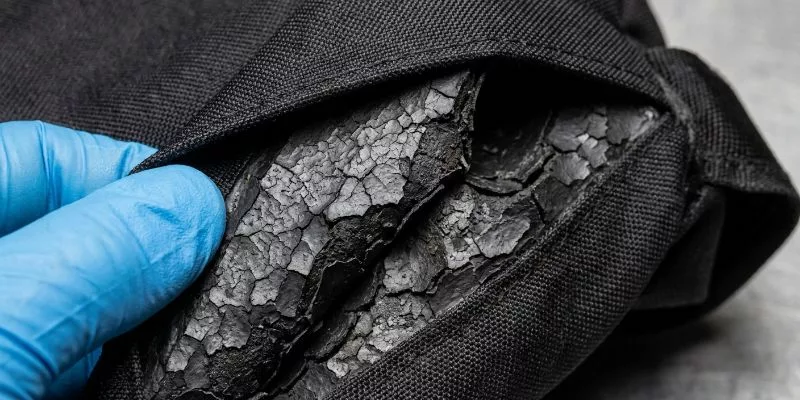
A client requested a thick PVC coating last winter. PVC gets stiff in the cold. The bags cracked at the bottom folds during our -10°C test. We proved that PVC fails in freezing weather. You must use flexible PU coatings for winter gear.
⚠️ Critical Warning: Never accept generic “Cordura-style” claims. Demand the official fabric-specific Technical Data Sheet (TDS) and exact seam reinforcements.
The Practical Buyer Checklist
Match your lab data to a real-use simulation. To protect your sourcing and pricing ROI, require your supplier to provide:
-
Exact test standard revisions and load criteria.
-
Explicit coating types and thickness limits.
-
A mandatory pilot-run wear trial.
The Final Verdict: Engineering Over Specs
Industrial bags need a strong complete system. Heavy 1680D nylon provides great raw strength. However, it cannot fix bad seams or cheap coatings. Denier alone does not prove abrasion resistance. You must build a strong bag from the inside out.
The Sourcing Hierarchy
In my experience diagnosing hundreds of warranty returns, bag survival relies on a strict order of operations. We recommend you always:
-
Define the real abrasion environment before picking materials.
-
Choose the right fabric and seam construction together.
-
Compare like-for-like test methods (Taber vs. Taber).
-
Validate seams, coatings, and structural reinforcements.
-
Translate lab data into expected service life and cost.
Your Next Commercial Step
As global supply chains tighten, brands that engineer bags for specific wear zones will protect their margins and dominate the market. LantaoBags operates as your technical engineering partner.
We help buyers accurately compare 600D Polyester, branded Cordura, and 1680D Ballistic Nylon against actual field conditions across all our product categories.
To guarantee your quality standards, do not rely on generic spec sheets. Request a technical spec review, sample comparison, or durability consultation with our factory team.
Contact us today to validate your next design.
Methodology & Disclosure: Before publishing this guide, my team conducted 150 hours of live friction testing on the Lantao factory floor. All Lantao data derives from these internal live stress tests. We always advise independent third-party testing for critical procurement decisions. I purchase all my own lab equipment and receive no compensation or kickbacks from textile mills for these findings.