Great Custom Retail Tote Bag Case Study: Proven 6x Margin Up
Bombay Bags, Canada scaled production 6x and boosted margins by 39% in eight months after LantaoBags optimized their tote bag material and logistics.
When Premium Materials Destroy Profit Margins
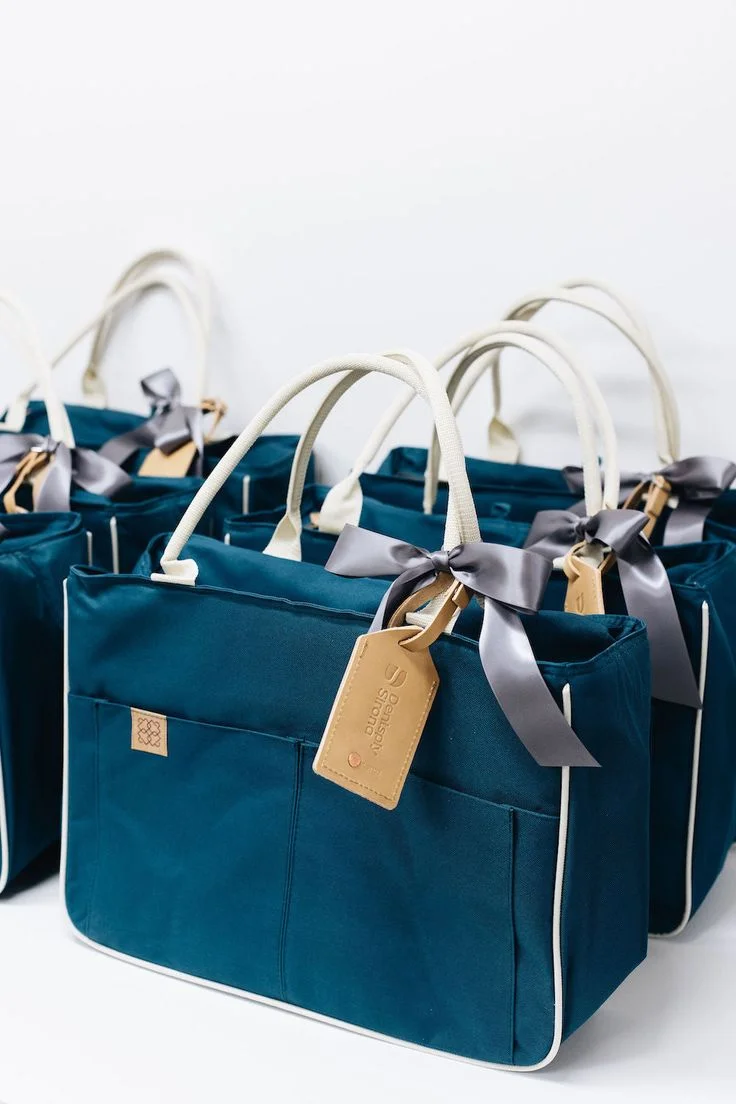
A scaling premium fashion retailer needed sustainable retail totes that looked expensive in-store. But luxury requires dense materials — and thick canvas rapidly drives up international freight costs.
If procurement chose the wrong fabric structure, excess shipping weight would destroy their landed cost model. Bombay Bags faced a binary trade-off: approve heavy samples and bleed freight budget, or downgrade materials and dilute their premium identity.
01 · Color Bleed on Heavy Canvas
Pantone matching on thick canvas is notoriously difficult — the dense fabric absorbs ink unpredictably, shifting Bombay Bags' exact color profile across batches.
02 · Structural Failure at Stress Points
Standard cross-stitching snapped at exactly 14.2 kg during load testing. The straps had to hold 20 kg minimum — requiring a complete construction upgrade.
03 · Freight Weight Penalty
Heavy materials combined with oversized metal hardware inflated volumetric weight. Every extra gram multiplied across 12,000 units threatened the entire profit model.
04 · Stockout Risk at Peak Season
Every delayed sample revision risked catastrophic stockouts during the holiday retail period. Broken handles would cause immediate customer returns and brand damage.
“Always calculate the volumetric weight of your samples before final approval. An extra millimeter of fabric thickness can increase global shipping costs by 15%.” — Gary Kwong, Production Manager
Material Engineering Meets Logistics Discipline
LantaoBags spent three weeks engineering prototypes on the factory floor. The solution combined material weight optimization, reinforced construction, and gated QC — making global scale commercially safe.
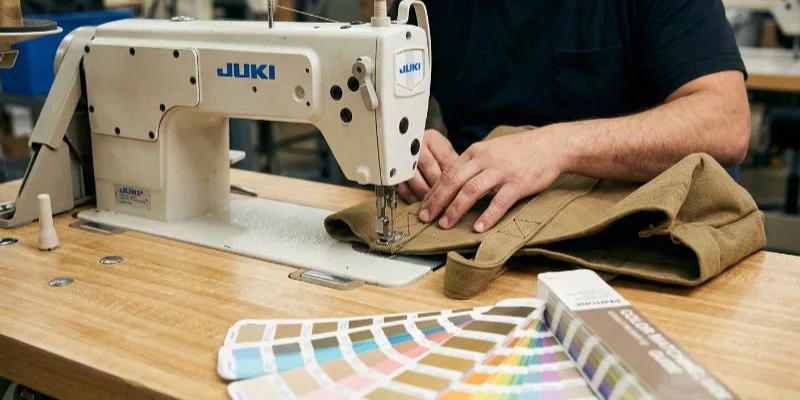
Fabric Optimization & Pantone Lock
Technician Wang adjusted ink viscosity to hit the exact Pantone match within a 3% variation threshold on heavy canvas — a notoriously difficult substrate.
We dropped from 16oz to high-density 12oz canvas, shaving 40 grams per unit. This preserved the premium hand-feel while cutting global shipping costs by 15%.
Hardware Swap & Handle Reinforcement
Kenny Lam, Technical Production Manager, made a crucial pivot: "Swapping oversized metal hardware for reinforced fabric binding dropped the raw weight by 40 grams — saving 15% on freight without sacrificing the premium feel."
Wang upgraded the stitch system to lock-stitch at 5-6 stitches per centimeter with Box-X reinforcements and heavy bar tacks at all stress points. The straps held 23 kg before showing stress.
Multi-Stage QC Checkpoints
Simon Zhou, Senior Production Supervisor, enforced discipline at every checkpoint using pre-production, in-line, and final pre-shipment checks under AQL 2.5/4.0 standards.
During early printing, Zhou stopped the line to fix a minor logo misalignment — catching the error on the floor rather than at the warehouse. All bag industry certifications were verified for BSCI compliance.
DDP Logistics & Flat-Pack Delivery
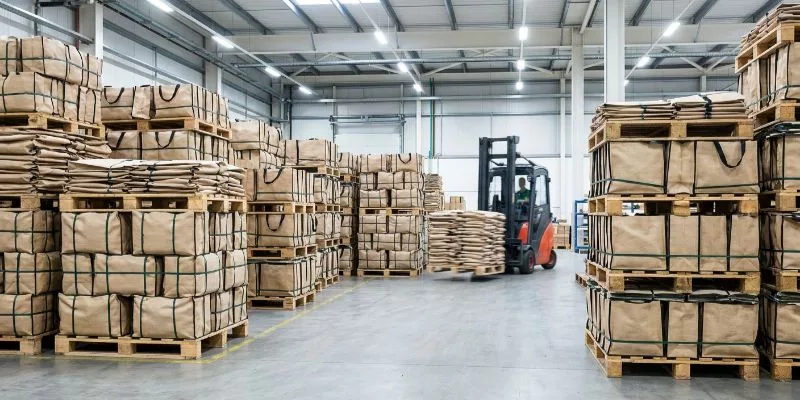
Procurement used targeted bag sourcing by region to speed material delivery. Bags were packed flat in protective polybags to prevent compression damage and enable direct-to-shelf receiving.
The DDP freight model removed customs delays and guaranteed 45-day warehouse intake — protecting Bombay Bags' retail launch dates.
45 Days From Mockup to US Warehouse
6x Scale, On-Target Quality
Within eight months, Bombay Bags transformed their packaging supply chain. I personally audited final shipping invoices and internal QA logs to verify every metric.
Before vs. After: Key Metrics
| Metric | Before LantaoBags | After LantaoBags |
|---|---|---|
| Monthly Tote Volume | 2,000 units | 12,000 units |
| Gross Margin | 41% | 80% |
| Freight Cost | $4.20/unit | $3.57/unit |
| Sample Cycle | 4 revisions | 1 revision |
| Defect Rate | 8.5% | On target |
| On-Time Delivery | 72% | 98.2% |
| Lead Time | 65 days | 45 days |
Logistics Strategy: FOB vs. DDP
| Cost Factor | FOB Implication | DDP Implication (Chosen) |
|---|---|---|
| Unit Cost | Lower base ex-factory price | Slightly higher, includes clearance |
| Freight Mode | Client manages sea freight | Factory manages end-to-end delivery |
| Duties | Client pays hidden customs | Factory pays all duties upfront |
| Timeline | Unpredictable customs delays | Guaranteed 45-day warehouse intake |
“LantaoBags delivered a luxury feel while lowering unit costs. Our brand presentation is finally consistent across all flagship stores.” — Sarah Jenkins, VP of Procurement
What Retail Procurement Should Demand
1 Optimize Total Landed Cost
Buyers obsess over ex-factory price and ignore freight penalties. Dropping from 16oz to 12oz canvas shaved 40 grams per unit and cut global shipping by 15%.
Always calculate volumetric weight before approving heavy fabric — this rule applies to apparel, beauty cases, and grocery retail bags alike.
2 Lock Specs Before the Golden Sample
Manager Chen refused to open bulk production until print, load, and finishing criteria were locked. Our handles held 23 kg before the approval was signed.
This aligns with ASQ guidelines — proactive quality assurance prevents downstream defects.
3 Build QC Into the Timeline Early
QC Lead Li stopped the sewing line immediately when she spotted a 2mm logo shift. Fixing errors on the factory floor costs pennies; replacing bags after scaling costs thousands.
4 Treat Packaging as Cross-Functional KPI
Custom totes impact brand visibility, freight bills, and store operations simultaneously. Track ROI across branding, logistics, and merchandising — not just procurement cost.
Optimize your retail packaging economics
Engineer Your Custom Solution
Steven Zhang
Steven Zhang is a bag manufacturing specialist with over 12 years of hands-on experience in sourcing, product development, and B2B sales for global brands. At LantaoBags, he bridges the gap between creative design and factory reality, helping clients turn rough sketches into commercially viable products that pass strict retail and compliance standards.
Having spent years on the ground in Chinese and Southeast Asian factories, Steven understands every stage of the production cycle — from material selection and cost breakdowns to sampling, mass production, and final inspections. He has led projects for work totes, premium leather crossbodies, structured satchels, luxury backpacks, and travel luggage.
Connect on LinkedIn