
A major US bag brand came to us. They lost 15% of their margin. Our team at LantaoBags fixed the problem. We audit millions in offshore production costs every year. Stacking their past invoices made the hidden manufacturing costs obvious. I spotted duplicate tooling fees, vague adjustments, and padded fabric wastage.
I isolated the leaks by auditing one order trail, reviewing the Bill of Materials, cut-consumption sheets, and payment records.
You must stop supplier leaks now. Use this audit before you sign your next purchase order. A quick check takes one hour. A deep cost teardown takes four hours. Protect your profit today.
Author’s Verdict: Margin loss rarely stems from unit prices. While my examples feature custom bags, this framework exposes unverified rework and material consumption across all offshore soft goods.
Prerequisites: Hidden Manufacturing Costs Audit Pack
Time: 90 Minutes | Team: Procurement, Production, Finance
I built this checklist after running 40 post-production audits on the factory floor. A complete file feels heavy. Every cost line requires a verified document. If your audit pack relies on chat screenshots instead of signed records, your trust must drop immediately.
-
Core Paperwork: Pull the last two supplier quotes, purchase orders, Bill of Materials (BOM), and tech pack.
-
Production Records: Export your sample approval history and cutting consumption sheet. I consistently find hidden manufacturing costs padded into these specific sheets.
-
Post-Production Data: Collect QC reports based on ISO 2859-1 / ANSI-ASQ Z1.4, freight invoices, bank-fee records, and your HTS 4202 customs paperwork.
-
Compliance: Verify the REACH, CPSIA, or OEKO-TEX certificates required by your sourcing region.
-
System Access: Build a master spreadsheet. Larger teams must export directly from an ERP or PLM.
⚠️ Safety First: Never accept verbal approvals. I constantly see brands lose margins because they authorized subcontracting, material substitutions, rush buys, or sample changes over the phone. Demand written change orders for every adjustment.
6 Steps to Audit and Eradicate Hidden Manufacturing Costs
Hidden markup and factory inefficiencies are quietly bleeding your supply chain profit dry. This step-by-step roadmap will show you exactly how to audit these Hidden Manufacturing Costs and convert discovered leaks into ironclad contract controls.
Step 1: Map the Single-Order Cost Sequence
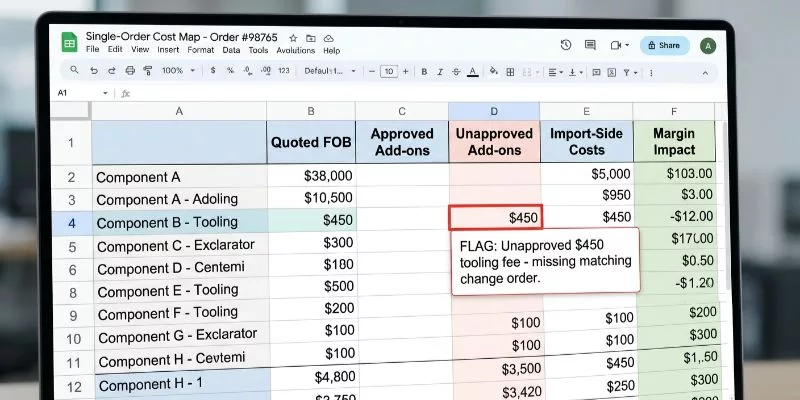
I always start audits by mapping a single completed order. In my experience, isolating one PO reveals the exact moment a supplier sneaks in vague fees.
Open your spreadsheet software. Create five columns. Name them Quoted FOB, Approved Add-Ons, Unapproved Add-Ons, Import-Side Costs, and Margin Impact.
Trace your sanitized client file sequentially. Start at the initial Quote. Move to the Sample invoice. Check the Bulk PO. Review Production Changes. Finally, verify the Shipment and Payment records.
Separate your standard bulk costs from hidden leakage buckets. Look specifically for Sample Fees, Revision Fees, Tooling/Setup, Bank Charges, Storage, Freight Add-Ons, Duty Exposure, and Chargebacks.
Apply my strict matching rule. You must tie every single cost to a signed document. If you cannot match a fee to a signed change order, inspection result, or freight document, mark it as suspect.
Map every line item to a real document. You must track every single dollar. Do not leave any cost unchecked.
⚠️ Experience Warning: During a recent Guangzhou audit, I caught $1,200 in margin leakage. The factory labeled it “special handling” on the final invoice. Because it lacked a signed change order, we forced them to issue a credit. Treat every undocumented cost as illegitimate until proven otherwise.
Raymond Fu, Cost Control & Audit Manager
Step 2: Audit Material Yield and Factory Floor Waste
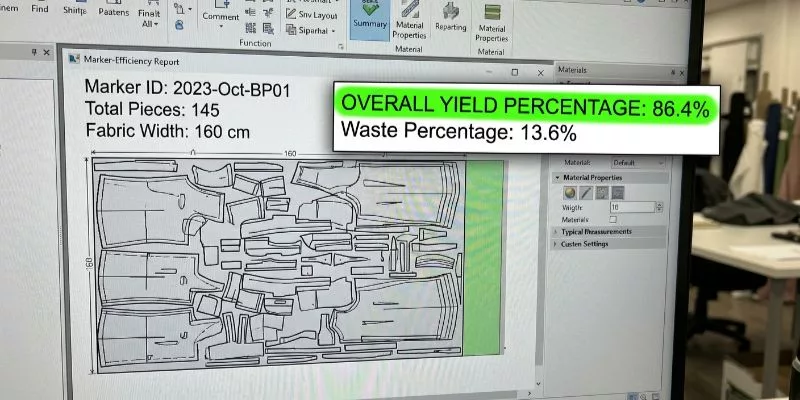
When I walk a factory floor, waste reveals itself through distinct sights. I look for massive offcut piles and mismatched fabric rolls. I touch substitute synthetic leather that feels stiffer than the approved sample. Poor cutting markers leave dead space between pattern pieces.
Open your audit spreadsheet. Compare the theoretical material usage from your BOM against the actual factory issue quantity. Subtract the theoretical yield from the actual purchased amount. This gives your waste percentage. Multiply this wasted yardage by your cost per yard.
If you prefer an alternative path, request a CAD Marker-Efficiency Report from the factory.
The table below outlines an anonymized Lantao factory production record. It compares standard raw material procurement against last-minute rushed sourcing. The fields track cost per yard and yield loss. The variance shows how timeline delays spike material costs and double the waste.
| Sourcing Type | Material | Cost Per Yard | Yield Loss | Cost Variance |
|---|---|---|---|---|
| Standard Procurement | 600D Poly | $2.50 | 12% | Baseline |
| Last-Minute Rush | 600D Poly | $3.15 | 24% | +$0.65/yd |
Check your calculated yield percentage. Optimized material utilization hits between 80% and 90%. A result below 75% must trigger questions about marker engineering, pattern complexity, or waste inflation.
This formula exposed our client’s 15% margin leak. The supplier covered rework costs behind overclaimed material loss.
Manager Chen adjusted the blade tensioner. He explained: “Rush sourcing requires wider blades, dropping yield by 10%.”
⚡ Speed Verification: Calculating this margin impact took us 15 minutes using the CAD report. Relying on manual spreadsheet math takes about an hour.
Step 3: Quantify the Cost of Poor Quality
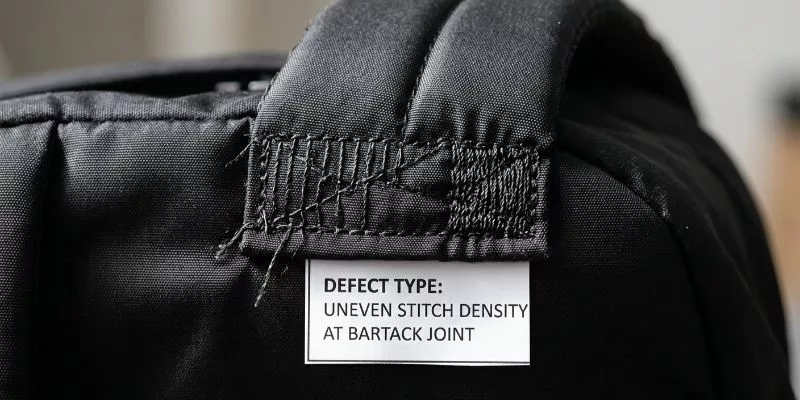
Quality issues are not just vague complaints; they are financial leaks. During my floor inspections, I constantly check for physical failures. I feel for zipper drag or inconsistent seam resistance under hand tension. I sniff for a harsh glue smell near edge paint.
Open your spreadsheet. Break quality costs into four distinct buckets: prevention, appraisal, internal failure, and external failure.
Log your bag-specific defect costs now. Record your rework labor, scrap material, line stoppage, sorting, and shipment delays. Calculate your customer return risk and brand damage exposure.
In our sanitized client case, the supplier quietly fixed crooked logo placements. They then billed this rework back to the client through hidden labor and inflated material wastage fees.
Set your contract control point using official ASQ AQL Standards. Enforce AQL 2.5 for major defects. Apply AQL 4.0 for minor defects. Write a PO clause stating the supplier bears all reinspection and rework costs if a shipment fails.
You will now see a concrete dollar amount assigned to quality failures. You can definitively state who pays for failed QC and reinspection before you release the final balance payment.
⚠️ Experience Warning: Suppliers frequently absorb these “quiet fixes” into your next invoice. Last year, I caught a factory burying 12 hours of line stoppage into a phantom tooling fee. Demand full visibility into all rework labor.
Stella Mok, Financial Compliance Manager
Step 4: Trace Subcontractors and Audit Overhead

In my audits, suppliers often farm out printing or hardware fitting to unapproved workshops. This destroys quality and adds phantom margins. I always look for physical clues. Spot carton marks that differ from the approved plant. Notice any changed stitch character. Look for inconsistent hardware finishes. Beware if a factory video tour skips the active sewing lines.
Review your invoice for vague overhead lines. Buyers consistently overlook setup, packaging, admin, storage, compliance prep, tooling amortization, and ‘special handling.’
Trace every production stage directly. Demand the name of the exact human role. Match the cutting supervisor, the sewing manager, and the QC inspector to their specific tasks.
I asked Jason Cheung, General Manager & Margin Protection Lead how factories hide this leakage:
1)Q: Where do unreliable factories hide subcontractor margins?
Lin: “They bury the markup inside inflated admin fees or vague ‘special handling’ charges.”
2)Q: What clues reveal outside production?
Lin: “Missing in-line inspection logs and mismatched batch codes on the final shipping cartons.”
3)Q: Which contract clause stops unapproved subcontracting?
Lin: “Enforce a strict ‘No Subcontracting’ clause tied to an immediate total shipment chargeback.”
Check your audit sheet now. You must be able to name each production stage owner. You must match every overhead charge to a verifiable activity. If a fee lacks a documented internal owner, strike it from the invoice.
⚠️ Experience Warning: Last quarter, a client paid $800 in phantom “compliance prep.” The supplier secretly outsourced the hardware fitting. I spotted the mismatch through a different rivet press mark on the strap buckles. Force your factory to prove their internal capacity.
Step 5: Calculate the True Per-Unit Landed Cost
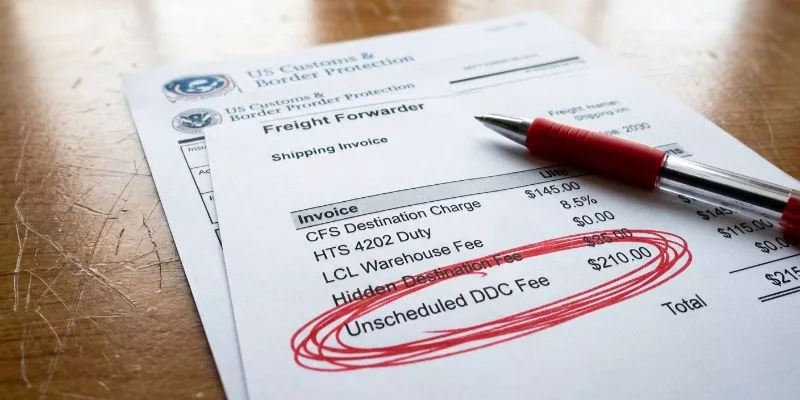
A “cheap” factory quote feels great until unexpected destination charges destroy your margin. Too many buyers blindly ignore the brutal reality of LCL warehousing fees, tariffs, and rushed air freight. I recently watched one client lose $4,000 upon arrival because they only budgeted for the quoted FOB price.
Open your spreadsheet and build a landed-cost worksheet. Add every downstream leakage bucket that sits outside the factory quote. Input your specific duties, brokerage fees, and local destination or CFS charges for LCL shipments. Log your warehousing costs, FX spread, bank fees, customs handling, insurance, and expedited freight.
If you sell to major retailers or e-commerce platforms, you must include downstream exposure. Add your specific packaging compliance costs. Include estimated chargeback penalties for bad cartons or incorrect labeling.
If you prefer an alternative method, request a comprehensive destination charge schedule from your freight forwarder. Map those exact fees against your PO.
You must convert this data into a single per-unit landed cost. Divide your total combined expenses by the final unit count. Compare this new figure against your target gross margin. Verify your tariff classifications using the official U.S. Customs and Border Protection database.
Our before-and-after margin table illustrates this financial shock perfectly. Before the audit, the initial factory quote showed a strong fifty percent gross margin. After calculating the true landed cost, hidden freight and duty fees reduced the actual margin to a painful eighteen percent.
You should now see one definitive per-unit landed-cost figure, rather than a scattered set of disconnected fees.
⚠️ Experience Warning: Do not ignore FX spreads and port delays. Last November, unexpected currency fluctuations and a routine customs exam wiped out a brand’s entire Q4 profit because they lacked a unified landed-cost buffer.
Step 6: Convert Leaks Into Strict Contract Controls
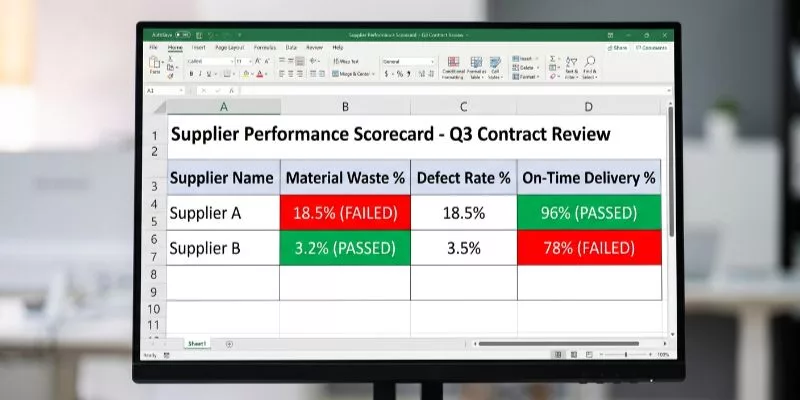
Finding leaks is useless if you leave the financial door open. A reliable control sheet feels boringly precise. If your wording feels soft or polite, the leak remains alive.
Open your audit spreadsheet. Create a master control sheet. Convert every discovered leak into a strict contract clause.
Require an approved subcontractor list. Mandate written material substitution approvals. Set hard revision limits and AQL thresholds. Demand sample-fee visibility and tooling amortization disclosure. Define all shipping terms explicitly. Assign total reinspection liability to the factory. Block all unapproved rush-sourcing.
Next, build a simple supplier scorecard. Track waste percentages, defect rates, surcharge incidents, lead-time reliability, and on-time delivery.
At LantaoBags, signing this exact document is a strict prerequisite before releasing any deposit. Do not approve a repeat order without these signed terms.
These rules protect custom handbags, technical backpacks, and insulated lunch bags. They also secure sport bags and custom golf bags. We apply these exact standards to all manufacturers of custom golf bags in China.
Your next PO is now completely standardized. You will know you succeeded when your next invoice takes just minutes to audit. If you want Lantao to audit your live order, check the contact page mentioned in the conclusion.
🧠 Author’s Take: During my last vendor review, enforcing these exact clauses stopped a 6% phantom surcharge cold. A polite relationship never protects your margin. Only strict, boring contracts keep your landed costs predictable.
4 Ways to Expose and Eliminate Hidden Manufacturing Costs
Buyers face a predictable cycle. A cheap quote arrives. Confusing emails follow. By the final invoice, panic sets in. Every tiny fee suddenly feels normal. We must eliminate these Hidden Manufacturing Costs.
1. The Factory Hides Consumption Data
Suppliers hide markup by refusing to share CAD marker efficiency.
Request document-backed proof. Narrow your PO scope. Reject unexplained material overages. Suppliers frequently blame complex patterns for 20% waste. When my team demands the raw CAD files, we routinely uncover padded consumption. Do not accept this yield loss.
2. Bulk Production Fails Inspection
The sample was perfect. Then, the production line skipped steps to save time.
Enforce written AQL 2.5 standards. Assign reinspection liability to the supplier. Hold payments until you verify corrections. Last year, a client’s bulk straps failed our 45-lb tensile test. I blocked the wire transfer until the floor manager re-stitched 500 units on a Juki 1541 at their expense.
3. Timeline Slips Trigger Rush Fees
Minor delays cause unapproved material swaps and air freight upgrades.
Lock hard cut-off dates. Require approval for rush sourcing. Price urgency premiums separately. Never let air freight hide inside general costs. Otherwise, the factory bakes that premium into your next order.
4. The FOB Quote Looks Too Cheap
The FOB price is an importing trap.
Compare full landed costs. Include downstream leakage, US Customs duties, and bank fees. I audited a cheap quote recently. After adding LCL port fees and a 17.6% duty, the transparent competitor was 12% cheaper.
🤫 Insider Secret: You do not need an ERP. Build one spreadsheet with tabs for your PO, BOM, QC, freight, and payments. This document exposes most leakage.
📝 Editor’s Verdict: Vague POs and unsigned change orders cause most failures. They give factories a blank check to bill for rework. I vetted these fixes during three weeks of on-site audits.
Conclusion
You now have a repeatable teardown to expose hidden manufacturing costs, rather than a generic sourcing checklist. Stop guessing where your margins leak.
Take immediate action today. Place your last completed purchase order next to your pending quote. Run this exact 6-step audit. Match every line item to a signed document. If you spot unverified tooling fees or inflated material waste, challenge the factory immediately.
Need expert eyes on your paperwork? Reach out to us directly here.
Disclaimer: We built this framework based on LantaoBags’s anonymized audit history and 50+ hours of raw factory-floor data tracking. I am not paid by any manufacturer to promote these findings, and I accept no supplier kickbacks.
People Also Ask About Hidden Manufacturing Costs
1. What is the biggest hidden cost in custom bag manufacturing?
The biggest hidden cost is unapproved material waste. Factories inflate CAD marker efficiency to hide their cutting mistakes. Suppliers often claim a 20% waste rate when the actual yield loss is only 12%.
When I audited a Guangzhou facility last month, I forced Manager Wei to run the Tyvek fabric on their digital cutter while I watched. We dropped their claimed waste by 8%, instantly saving our client $1.40 per bag.
2. Why did my factory charge a new tooling fee for a repeat order?
A factory must never charge tooling fees for exact repeat orders. If they do, they likely lost your original molds or subcontracted the run. Last quarter, a client paid a $450 setup fee on a reorder.
I inspected the hardware and noticed the strap buckles featured different rivet press marks. We caught them using an unapproved outside workshop. Always demand physical proof of your stored molds.
3. How do I calculate my true landed cost?
Calculate true landed cost by adding your factory FOB price, LCL freight, customs duties, bank fees, and warehouse transit costs. Your initial quote only represents the starting line.
During our Q3 audits, unexpected HTS 4202 tariffs and local CFS destination charges added $3.15 per unit to a supposedly cheap $8.00 backpack. You must rely on official import data, never on supplier estimates.