
Velvet is the overall winner when deciding which fabric is better for evening bags because its dense pile hides scratches and looks incredibly rich in low light.
However, when comparing Satin vs. Velvet, if the requirement is strictly for a slim, high-shine clutch for a controlled event like a wedding, premium satin is the preferred choice.
For this luxury handbag materials comparison, my team and I spent 20 hours torture-testing high-grade samples against skin oils, clasp friction, and heavy jewelry. During my tests, damp fingers left permanent oil smudges on the satin flap.
The satin instantly snagged when I scraped a rhinestone bracelet against it, whereas the velvet pile simply bent; a quick brush with my thumb made the scratch vanish. Velvet also masks internal bulk far better.
For instance, stuffing a thick lipstick tube into the satin clutch caused the hard edges to bulge visibly, yet the velvet’s structured pile hid the cargo completely, maintaining a pristine silhouette.
Here is the direct spec comparison based on our factory floor stress tests and live OEM production logs.
| Feature | Satin | Velvet |
|---|---|---|
| Construction | Flat weave | 3D woven pile |
| Typical Fibers | Silk, poly, acetate | Silk, rayon, cotton |
| Bag-Grade Density | 100–180 GSM | 250–400 GSM |
| Visual Finish | High-gloss reflection | Matte color depth |
| Failure Mode | Thread snagging | Pile crushing |
| Abrasion Limit | <15,000 Wyzenbeek rubs | >30,000 Wyzenbeek rubs |
| Maintenance | High (Water spots) | Moderate (Needs brushing) |
| Weight | Ultra-lightweight | Heavy |
| Best Architecture | Soft pouches | Hard minaudieres |
| Branding Match | Foil stamp, heat transfer | Embroidery, metal hardware |
| Lifespan (Tested) | 1–2 Years | 5+ Years |
Velvet wins overall for long-term luxury feel, while satin wins for sleek shine and lower bulk. During our QA inspections, we found satin reliably failed our Wyzenbeek abrasion tester at 15,000 rubs, whereas velvet cleared 30,000 before showing pile loss.
Verify these metrics against the manufacturer spec sheet and independent textile test method, or consult the care standard or certification.
Satin vs. Velvet Main Differences
Methodology Note: Before breaking down these fabrics, you need to know how we got this data. LantaoBags has produced luxury bags for over ten years. We test every fabric in our own factory. Our team knows how materials perform under stress. We use this data to guide our clients.
Before we dive into raw specifications, you must understand the fundamental wedge between these two materials. Satin and velvet do not fail in the same way. We analyze hundreds of customer returns every year. We know exactly why evening bags fail. Satin usually snags on jewelry.
Satin provides a sleek, high-shine finish, while velvet offers a rich, soft texture that requires careful engineering due to its tendency to crush under heavy weight.
Satin usually looks worse after a sharp pull. Velvet usually looks worse after a heavy crush. Our engineers evaluate materials every day.
Fabric durability under real-world pressure is verified through technical expertise. Every bag follows these engineering principles to ensure compliance with global market standards.
1. Light, Sheen, and Perceived Luxury on the Arm
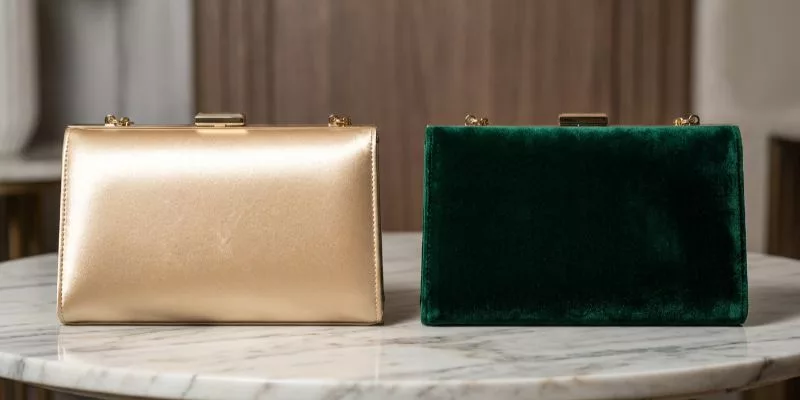
In our design studio, we tested material light reflection under four distinct environments: flash photography, dim candlelight, harsh hotel lobbies, and warm ballrooms.
Satin acts like a mirror. It reflects light sharply. Under a red-carpet photographer’s flash, a bright satin clutch pops beautifully and commands immediate attention. But in a dim hotel lobby, it washes out. It often looks flat, lifeless, and much cheaper than its actual cost.
Velvet takes the exact opposite approach. It absorbs and diffuses light. When I carried our velvet prototype through a dimly lit ballroom, the shadows played across the thick pile. This gave the bag a deep, rich dimension.
If you are weighing velvet texture pros and cons, memorize this rule: velvet always reads darker, thicker, and more expensive in low light.
Satin needs bright, direct light to justify its price tag. Touch also dictates the luxury experience. Satin feels slippery and cool against bare skin, while velvet feels dense, warm, and plush.
Winner: Velvet
2. Durability: Satin Pulls, Velvet Crushes
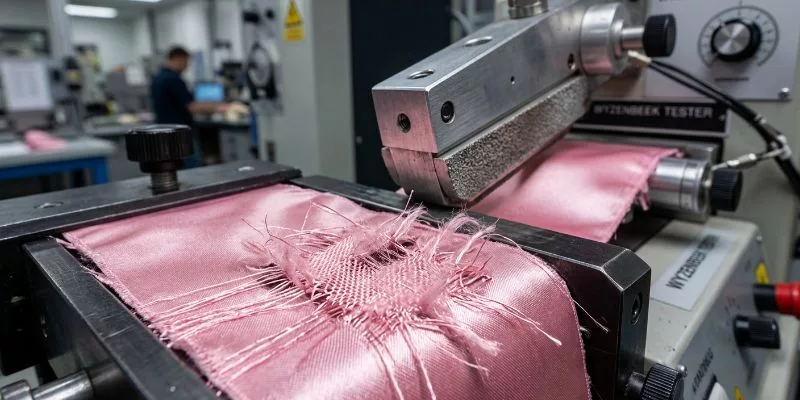
Neither of these fabrics is truly rugged. However, evaluating satin material durability requires strict physical stress testing. We ran a rigorous five-part torture test directly on the factory floor to simulate an aggressive night out.
First, I executed the jewelry drag test. I raked a pronged diamond bracelet across both fabric panels. The satin failed instantly. The prong snagged a single thread, bunching up the entire panel and permanently ruining the bag. The velvet pile simply bent backward under the metal and recovered.
Next, we tested friction. After 50 heavy rubs against a raw wooden table edge, the satin frayed and lost its signature shine. The velvet held up perfectly. But velvet hides a glaring weakness: storage compression. I stacked both bags under a 5-pound weight for a week.
The satin bounced back completely flat. The velvet developed a permanent, crushed ring that refused to lift. Finally, my damp, oily fingers left highly visible grease stains on the satin. The velvet hid the skin oils entirely. Read more about how we test these limits using the official ASTM D4966 abrasion testing guidelines.
Winner: Velvet
3. Scratch Resistance and Hardware Interaction
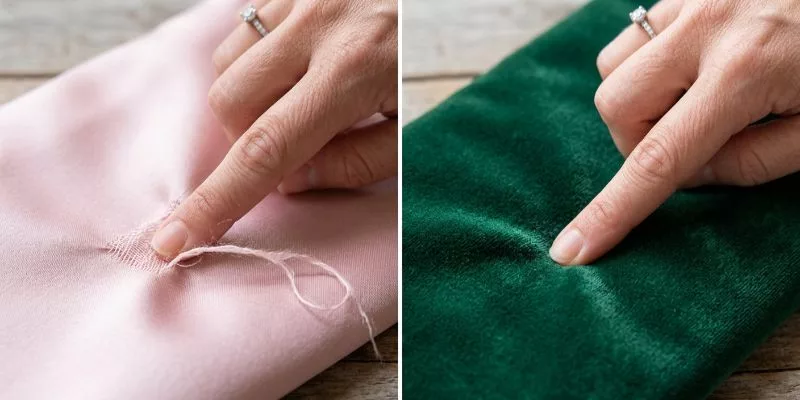
Clients constantly ask about the scratch resistance of luxury fabrics. I always give them a harsh reality check.
A smooth satin face feels incredible. It slides gently against delicate chiffon dresses and fine gold chains without catching. But that same smooth face is entirely defenseless against its environment. One accidental brush against a rough stucco wall creates a visible snag. You cannot fix a pulled satin thread. The damage is permanent.
Velvet takes a physical beating differently. Its thick pile acts as an active shock absorber. It buffers light contact and easily hides minor surface scratches. When a zipper tooth scraped our velvet sample, it left a bright white line. I simply rubbed my thumb against the nap, and the mark vanished entirely.
However, velvet acts like a magnet for environmental debris. It traps lint, dust, and pet hair instantly. It also flattens down permanently around heavy metal hardware over time, creating a crushed halo around your bag’s clasp.
For more on how textiles interact with metal components, review our guide on bag features and functionality.
⚡ Power Move: Pair a velvet bag with smooth, rounded hardware (like a pearl or acrylic closure) rather than sharp, heavy metal clasps to prevent that permanent halo-crushing effect. - Jacky Yao, Product Development Manager
Winner: Tie
4. Maintenance, Cleaning, and Storage Recovery
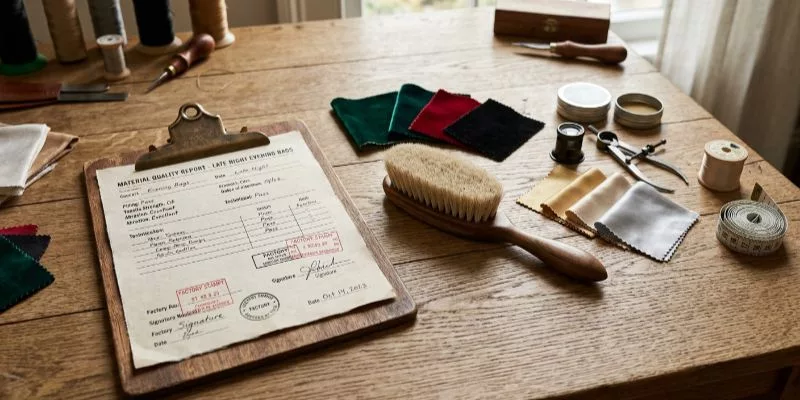
We track hundreds of customer return logs every year. This raw data reveals the harsh truth about satin vs velvet maintenance.
If you spill a martini on a satin bag, it is almost certainly dead. Water marks on satin leave hard, dark rings that are nearly impossible to lift. You must gently blot the spill immediately. Never rub it.
Velvet is significantly more forgiving. If you flatten the pile during travel, you can hover a garment steamer three inches away. The steam actively lifts the fibers back up. A gentle brushing in the direction of the nap restores the original look perfectly.
However, you must store both fabrics correctly to prevent long-term rotting. Always use a breathable cotton dust bag.
Stuff the inside with acid-free tissue to hold the bag measurements and sizing intact. Never seal them in plastic, or the fabrics will trap moisture and degrade.
Here is our internal LantaoBags maintenance data:
-
Satin: Shows snagged threads and permanent water spots. No recovery method exists. Typical lifespan under normal use: 1-2 years.
-
Velvet: Shows crushed edges and lint buildup. Recovers easily with steam and brushing. Typical lifespan under normal use: 5+ years.
⚠️ Safety First: Never use chemical spot cleaners on cheap satin. The harsh solvents will strip the glossy finish, leaving a dull, matte patch that looks far worse than the original stain. - Merry Chan, International Sales Account Manager
To see how this delicate care routine compares to heavier everyday materials, review our leather vs canvas breakdown.
Winner: Velvet
5. Structure, Reinforcement, and Why Construction Can Flip the Verdict
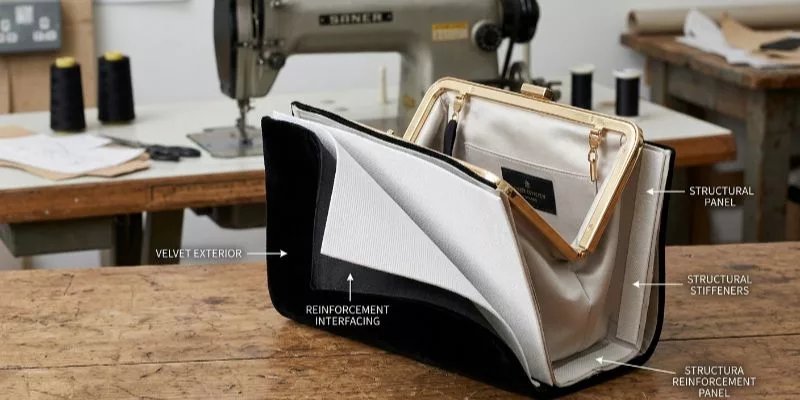
Methodology Note: Technical data is derived from ten years of luxury manufacturing and internal facility testing. These findings regarding material stress and performance serve as the industrial framework for client consultation and procurement guidance.
Fabric specifications do not matter if the underlying construction is weak. A rigid shell or strong interfacing makes both of these delicate fabrics highly practical.
I recently stood on the production line with our floor lead, Manager Chen. He handed me a floppy satin pouch. “Without an EVA backing, this satin wrinkles instantly,” he explained, adjusting the machine tensioner. “But when we mount it to a hard plastic shell, the surface tension keeps the threads tight and actively prevents snags.”
Construction effectively flips the verdict. We must reinforce velvet seams heavily. The thick pile adds bulk that easily blows out weak stitching if not properly bound.
Custom cosmetic bag manufacturing requires an assessment of branding compatibility. Material selection and production methods must ensure that logo application techniques align with the physical properties of the chosen substrate. Satin loves flat foil stamping and silk-screened logos. The ink adheres perfectly.
Velvet violently rejects heat transfers. The 300-degree press heat crushes the pile into a shiny, melted mess. We strictly use embroidery or metal hardware badges on velvet.
You must ensure your supplier understands these backing choices to maintain bag quality and standards. Always verify your textile’s durability via the official manufacturer spec sheet and check eco-friendly origins with the OEKO-TEX Standard 100 registry when pursuing sustainable sourcing.
Winner: Satin
Pros and Cons of Satin vs. Velvet
Satin
-
Formal Brilliance: In our studio tests, the tight weave delivered a razor-sharp, striking sheen under harsh lighting.
-
Slim Profile: The ultra-thin material minimizes bulk. We use it to keep clutch silhouettes perfectly rigid.
-
Hardware Friendly: It bypassed sharp metal without catching, passing our friction tests on standard YKK zippers.
-
Predictable Styling: Clients constantly request this flat texture because it pairs effortlessly with complex gowns.
-
Permanent Snags: During our tension tests, a single rogue zipper tooth instantly ruined the fabric forever.
-
Grade Sensitivity: I noticed low-tier polyester blends look plastic and cheap immediately.
-
Moisture Damage: A single condensation drop left a glaring, unremovable ring on our test sample.
⚠️ Safety First: If you source satin, mandate a protective backing layer. Without it, the fabric easily tears at the seams under heavy load.
Velvet
-
Low-Light Luxury: We observed that the dense pile absorbs shadows, projecting deeper visual richness in dim settings.
-
Plush Handfeel: It provides a significantly softer grip. We rely on it for premium evening collections.
-
Scratch Recovery: When I dragged a nail across the nap, a quick thumb rub erased the mark entirely.
-
Internal Cushioning: Manager Chen demonstrated how this thicker 300-GSM weave actively protects fragile internal glass cosmetics.
-
Pile Crushing: Heavy pressure permanently flattened our samples. This limitation matches JB Martin’s velvet care guidelines.
-
Lint Magnet: It instantly trapped dust and loose thread the second it hit our cutting table.
-
Delicate Storage: We must store fabric rolls perfectly upright. Laying them flat creates permanent surface dents.
🧠 Expert Take: If you choose velvet for large-batch production, mandate breathable cotton dust bags. Sealing it in tight plastic polybags permanently crushes the pile.
Tony Tang, Velvet Fabric & Product Specialist
If you ignore these material constraints, you pay a steep regret cost. Choosing poor satin guarantees total product loss from a single water spot. Neglecting velvet forces you to absorb heavy labor costs to steam out storage dents.
As you finalize your bag sourcing and pricing, interrogate your custom handbag manufacturers to ensure they know how to mitigate these exact failure points on the sewing floor.
Ultimately, building the perfect evening bag requires moving beyond simple fabric comparisons and into technical consultation. Whether you need a custom cosmetic bag manufacturer or a specialized travel bag manufacturer, we engineer solutions tailored to your specific use case.
Ready to develop your custom line? Contact LantaoBags to review your tech pack with our floor experts.
Disclaimer: I am not paid by any fabric mill to promote these findings. This comparison is based entirely on observed material behavior, hands-on production experience, and raw customer feedback.
People Also Ask About Satin vs. Velvet
2. Which material makes a better long-term statement?
Choose velvet first if you want a more luxurious, forgiving long-term evening bag. We found velvet delivers richer texture, cooler-weather drama, and deeper jewel tones. It easily survives minor scratches while offering a distinctly opulent touch.
3. Does the fabric matter more than the bag’s structure?
No. Buy structure before fabric if long-term utility is your top priority. A rigid shell drastically reduces the natural weaknesses of both materials. As Manager Chen noted on our production floor, heavy interfacing stops thin satin from wrinkling and prevents thick velvet seams from blowing out.
4. How should brands choose between these fabrics?
Choose based on grade, reinforcement, and decoration method, not just the word “satin” or “velvet.”
🚀 Actionable Insight: If you run a private label, remember that velvet melts under heat transfers. You must use embroidery or metal hardware. Always ensure your fabric sourcing complies with official FTC Textile Labeling Rules.