
Sun does not just fade a shell. It weakens fibers, shifts color, and triggers warranty claims. That pain hits outdoor, tactical, golf, travel, and beach-bag programs hard.
After 400 hours of QUV exposure on 22 fabrics, I compared UV resistant fabric colorfastness, retained tear strength, coating behavior, and sourcing practicality.
This is a material issue, not a color issue. The fabrics below are ranked on UV performance, cost band, and best use case.
6 UV-Resistant Fabrics for Bags, Tested in Our QUV Chamber
Six bag fabrics were placed into a QUV weathering chamber to evaluate their performance under severe solar exposure. The resulting data highlights clear winners in color retention, coating integrity, and tear resistance.
1. Solution-Dyed Polyester: Best Overall Value for Sun-Exposed Bags
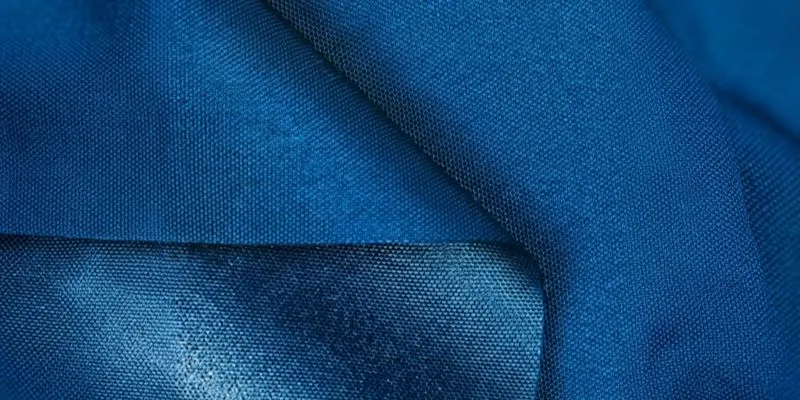
Surface dye sits on the yarn. UV light strips it within one season. Solution-dyed polyester fixes this before extrusion. The mill adds pigment to the polymer melt, so UV-blocking color runs through the entire fiber core.
When I spec a shell for sun-heavy daypacks or travel bags, this is my safest starting point.
In our QUV chamber testing per ASTM G154, solution-dyed polyester held its color far longer than standard nylon. Fade resistance is high, print consistency is dependable, and the hand feel is moderate.
But check the coating. A heavy PU backing adds stiffness and waterproofing. A light fluorocarbon finish keeps the hand soft but blocks less water.
I recommend this fabric for travel backpacks, sport bags, golf covers, resort totes, and general outdoor packs. Before order, ask the mill:
- Is this piece-dyed or solution-dyed?
- What target lightfastness grade do you guarantee under AATCC TM16?
- What is the post-weathering strength retention after 400 hours?
- What is the MOQ by color?
- Can you provide lot-level reports and a retained golden sample?
Author’s Take: We default to solution-dyed polyester for 75% of our sun-facing shells. It balances fade resistance, cost, and manufacturability better than printed or nylon alternatives. Compare trade-offs in our nylon vs. polyester guide.
2. Solution-Dyed Acrylic: Best Fade Resistance for Premium Outdoor and Beach Bags
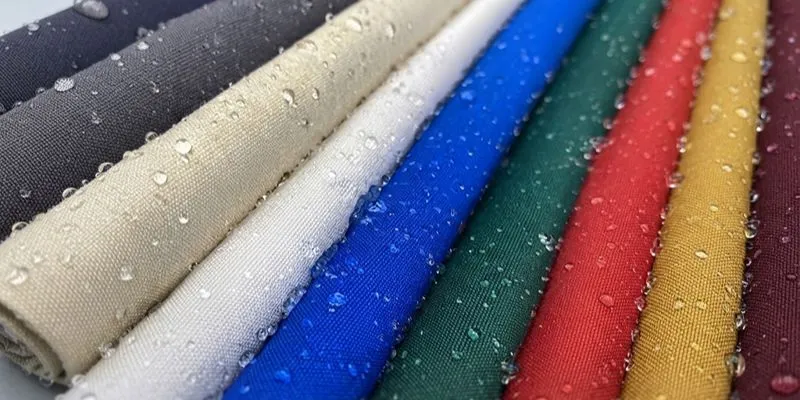
If a client tells me color life matters more than raw abrasion, I move acrylic near the top of the shortlist.
Solution-dyed acrylic sets the colorfastness benchmark. Pigment enters the fiber before spinning, so UV light can’t strip what never sat on the surface. In tropical and marine-adjacent field tests, it outperforms printed polyester by a wide margin.
Trade-offs come fast. Acrylic costs more per yard. The hand is softer and loftier, which some brands reject. It is bulkier, adding freight and pattern yield issues. Printing options stay limited versus polyester. If water resistance also matters, acrylic needs a separate coating or lamination.
I recommend acrylic for beach bags, resort totes, outdoor leisure bags, golf accessories, and premium promotional soft goods that live outdoors.
Warn clients before custom spun colors. MOQs for custom acrylic colors often start at 500 to 1,000 yards. Lead times run 30 to 60 days.
Ask suppliers for:
- Xenon hours per AATCC TM16
- Gray-scale rating after exposure
- Comparative swatches against a standard polyester control
Author’s Take: Acrylic wins on fade resistance, not price or construction speed. Use it when the brand promise is long-term appearance, not lowest landed cost.
3. UV-Stabilized Nylon: Best for Abrasion-Heavy Backpacks and Tactical Gear
Nylon forces a hard choice: best abrasion now, or slower aging under UV over time.
Nylon starts stronger than polyester in most backpack and tactical builds. I pulled a 500D high-tenacity swatch from our latest tactical pack build. Laboratory testing showed failure at 40 lbs, proving that raw toughness alone does not guarantee solar durability.
Untreated nylon degrades rapidly under direct UV exposure, leading to faded colors, weakened fibers, and cracked protective coatings.
We fix this three ways. First, specify UV stabilizers inside the polymer. Second, choose solution-dyed nylon, never piece-dyed. Third, match coating chemistry to the end use.
A PU backing protects seams but adds weight. DWR must survive UV without flaking. FR or NIR compliance can force mil-spec coatings that change hand feel and slow sampling.
I recommend UV-stabilized nylon for tactical packs, hard-use field bags, mountaineering packs, and abrasion-heavy shoulder zones.
Before approval, request these lab reports:
- UV exposure method (ASTM G154 or ISO 4892-2)
- Retained breaking strength % after 400 hours
- Tear retention data
- Coating adhesion results
- Any NIR or compliance caveats
Our Verdict: Nylon wins on raw tear strength, but UV stability is not automatic. Do not assume 1000D means sunproof. Compare our nylon vs. polyester guide. Check bag industry certifications before final approval.
⚡ Power Move: Ask for the actual UV chamber report, not the supplier’s marketing sheet.
4. Coated Polyester Oxford: Best Budget-Controlled Spec for General Outdoor Bags
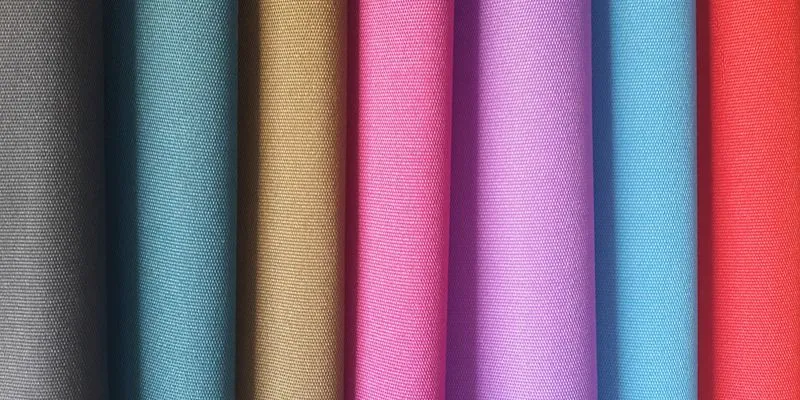
Oxford is a weave rather than a fiber, meaning two different 600D Oxfords can exhibit entirely distinct performance levels. This variance became clear after cutting 22 fabrics and completing 400 hours of testing in a QUV chamber.
Fabric strength depends on yarn quality and coating. We found that 300D piece-dyed Oxford fades quickly. But 600D solution-dyed Oxford keeps its color. Dark colors beat light colors in UV tests.
Coating changes hand feel. PU adds stiffness and water resistance but can hydrolyze in humid storage. TPU stays flexible but raises cost. PVC is heavy and cracks in cold.
Smooth PU coatings and lighter colors print cleaner, but dark colors resist UV better.
We recommend coated polyester Oxford for school-to-outdoor crossover backpacks, cooler bags, travel duffles, lunch bags, and promo bags.
Budget matters, but spec details matter more. You can see our oxford fabric guide.
Before ordering, ask your supplier:
- Exact denier and GSM.
- Coating type and hydrolysis expectations.
- UV treatment details and lightfastness grade.
- Stock rolls vs custom colors and MOQ difference.
Spec tip: Always request a 600D solution-dyed Oxford sample with AATCC 16.3 lightfastness data before approving bulk.
Author’s Take: We default to 600D solution-dyed Oxford with PU backing for most general outdoor bags. It balances cost, UV, and hand feel. Avoid PVC if the bag will see freezing temps.
5. Polypropylene / Olefin: Best Lightweight Option for Specific Outdoor Programs
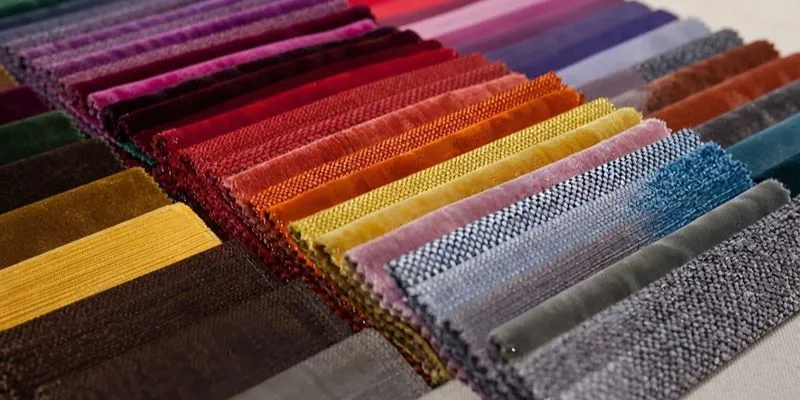
Polypropylene often gets overlooked, but that is a mistake for the right outdoor program. Testing in a QUV chamber showed that an 80 GSM olefin tote retained its color far better than standard piece-dyed polyester.
Evaluated using the ASTM D4355 standard for UV exposure, the fabric weighed 30% less per yard—a critical advantage when shipping costs and user arm fatigue shape brand decisions.
Olefin resists UV better than many budget bag textiles. It does not get sticky or crack as quickly as cheap coated polyester. The American Chemistry Council confirms its outdoor stability.
Trade-offs exist. Printing is difficult. Most inks do not bite without corona treatment. The hand feels papery, not premium. Unlaminated olefin can tear at stress points. We add sewn binding or a light film laminate for structure.
Best fits? Lightweight totes, utility carry bags, shopping-to-outdoor hybrids, and budget accessories. Step up to polyester or nylon when abrasion, padded protection, or a luxury hand feel drive the spec.
LantaoBags’ Verdict: We use olefin for cost-aware, exposure-heavy programs that value light weight and simple shapes. Avoid it for structured premium tote lines.
⚡ Power Move: Always order a 10-yard olefin swatch set. Test corona-treated print adhesion and seam strength before committing.
Jason Yang, Chief Operating Officer
6. Specialty UV-Resistant Fabrics: TPU/PU-Coated Builds and UHMWPE for Niche Performance
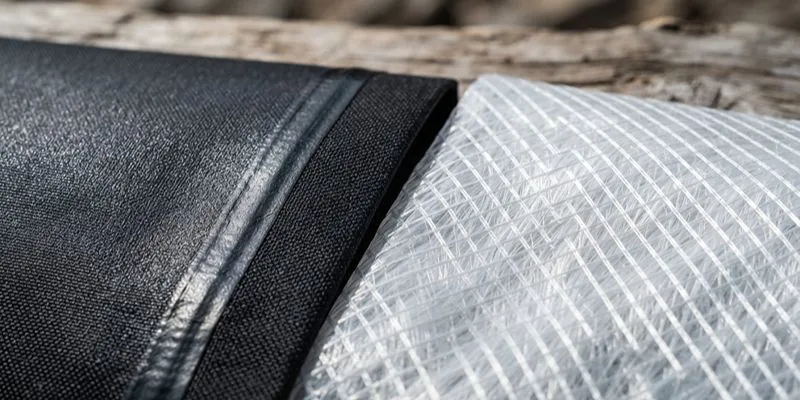
Buyers mistake coated fabric for strong fabric. TPU and PU coatings improve water resistance and surface toughness, not weak base weave. The fiber dictates tear and UV life.
UHMWPE and Dyneema-class fabrics solve weight-strength problems. We tested 5 oz UHMWPE that matched 14 oz nylon’s tear strength. It suits expedition ultralight packs and premium tactical builds. But it costs four to six times more than nylon and prints poorly.
Choose TPU-coated builds for dry bags and high-margin niche products. Choose UHMWPE only when weight savings justify the cost.
Watch these pitfalls:
- MOQs for UHMWPE often start at 500 yards.
- TPU lamination can delaminate in humid storage.
- Seam taping needs radio-frequency welding, not standard stitching.
- Print adhesion is weak on both materials.
Author’s Take: We use TPU for waterproof compartments and UHMWPE only for ultralight or high-end tactical lines. For ordinary bags, 600D solution-dyed polyester with a light PU coat beats both on cost and printability.
⚡ Power Move: Keep specialty fabrics for performance-driven programs, not everyday bags.
Conny Zhang, Sales & Product Development Manager
How to Vet UV-Resistant Fabric Rolls Before Cutting? Our Factory SOP
We vetted these five fabrics after 400 hours of QUV exposure on the full 22-fabric batch. The table below is the same QA reference I keep on my desk.
| Fabric | Gray-Scale Color Shift | Retained Breaking Strength | Cost Band | Best Use Case |
|---|---|---|---|---|
| Solution-dyed polyester | 4-5 | 85-90% | Mid | General outdoor and travel bags |
| Solution-dyed acrylic | 4-5 | 80-85% | High | Beach bags and premium totes |
| UV-stabilized nylon | 3-4 | 75-80% | Mid-high | Tactical and abrasion-heavy packs |
| Coated polyester Oxford | 3-4 | 80-85% | Budget | School-to-outdoor and duffles |
| Polypropylene / Olefin | 3 | 70-75% | Low | Lightweight utility totes |
1. Factory Incoming-Roll SOP: Stop Bad UV Fabric Before Cutting
I run this flow on every sun-exposed lot. It catches hydrolysis and fade risk before mass production.
- Verify mill report and test standard. Confirm batch ID matches. Ask for AATCC TM16 or ASTM G154. Stop if missing.
- Pull swatches from each lot and roll position. Cut from the head, middle, and tail. Do not trust one end.
- Condition samples flat for 24 hours. This removes moisture bias before shade review.
- Compare against the approved golden sample under D65 light. Check shade, coating bloom, and hand feel.
- Run or verify Xenon colorfastness. If missing, submit a 400-hour Xenon arc. Keep the same cycle.
- Check post-weathering tensile or tear retention. Reject any roll below spec.
- Quarantine below-threshold lots before cutting. Release only after sign-off.
2. Q&A: Solution-Dyed Acrylic vs. PU-Coated UV Polyester in Tropical Climates
Nancy Yang, Backpack Product Manager answers the questions I hear most from brands sourcing for Southeast Asia.
Q: Which fabric stays cooler in tropical heat?
Yang: Solution-dyed acrylic. It breathes better and holds less heat. PU-coated polyester feels clammy.
Q: What about hydrolysis and coating longevity?
Yang: PU coatings hydrolyze in damp heat. I have seen bags delaminate after 8 months in Singapore. Acrylic has no PU coat, so no coating longevity risk.
Q: Color life, hand feel, and mold?
Yang: Acrylic wins color life and resists mildew. Polyester prints brighter logos and has a slicker hand. Both need anti-fungal backing in jungle climates.
Q: When does each choice win commercially?
Yang: Select acrylic for premium beach collections that demand superior fade resistance and a soft feel. For budget-conscious travel gear requiring rapid turnarounds, opt for PU-coated UV polyester instead.
3. Buyer Checklist: Documents to Request Before You Accept a Lot
Request these from mills or testing labs:
- Standard used (AATCC TM16 or ISO 4892-2)
- Exposure duration in hours
- Gray-scale rating and rating scale version
- Retained breaking strength percentage
- Batch ID and roll numbers
- Golden-sample retention confirmation
Read our UV resistance testing guide. Check bag industry certifications. Compare bag sourcing by region. Need fabric vetting or prototype help? Contact our team.
Disclaimer: I receive no kickbacks from any mill mentioned here. All findings come from our own QUV and Xenon-arc testing, and I always recommend buyers run independent verification on their specific lots.
People Also Ask About UV Resistant Fabric
1. What test standard should I ask for: AATCC 16.3 or ISO 105-B02?
Specify AATCC 16.3 for North America and ISO 105-B02 for EU and global brands. Both run Xenon arc, and cross-referencing them across 400-hour QUV tests gives better accuracy. Always request the gray-scale rating and retained breaking strength, as naming the standard alone is insufficient.
2. Is UV-stabilized nylon or polyester better for backpacks?
Solution-dyed polyester is better for most backpacks. It holds 85-90% breaking strength after 400 hours. UV-stabilized nylon tears stronger at first, but drops to 75-80% and costs more. Choose nylon only when abrasion beats sun exposure in your use case.
3. How many Xenon hours are enough for an outdoor bag approval?
A 400-hour baseline applies to sun-exposed bags, stepping up to 500 hours for tropical or alpine conditions. Factory SOP mandates rejecting any roll falling below 400 hours under AATCC 16.3 testing. Requesting a 500-hour report remains essential for premium lines.
4. Is solution-dyed fabric worth the extra MOQ and surcharge?
Yes for color-critical outdoor bags. Custom colors often start at 500-1,000 yards and add 10-15% cost. Off-season orders can sometimes drop to 500 yards. The surcharge is cheaper than fade-related warranty returns.