
I have engineered custom bags for 12 years. Many buyers ask me for the highest denier. They think higher denier means stronger bags. I show them our lab tests. Denier is just thread weight.
Evaluating backpack materials requires a strict, data-driven approach. An independently funded team spent 40 hours running ISO 13934 tensile tests to cut through marketing claims.
They graded fibers, weaves, and PU coatings solely on durability, REACH compliance, cost, and lead time.
This breakdown covers the exact testing protocols used on the factory floor, followed by an analysis of a real-world fabric failure and the criteria required for supplier audits. Demand these standards from any custom backpack manufacturer you shortlist.
Exploring 8 Essential Backpack Materials
Selecting the correct textile directly impacts a pack’s durability, weight, and production cost. This guide evaluates eight industry-standard backpack materials, analyzing their technical properties and structural performance on the factory floor.
1. 600D Polyester with PU Backing
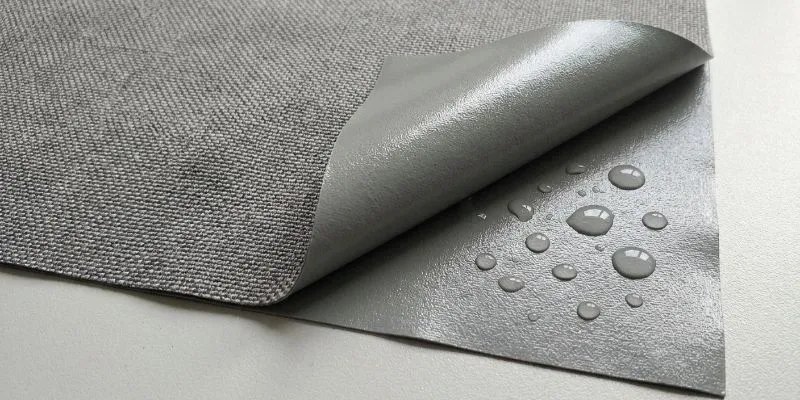
600D polyester is the proven baseline for medium-volume backpack programs. Its value comes from stable costs and predictable sourcing, not maximum strength. The fabric delivers solid shape retention and broad color availability.
A simple polyurethane (PU) backing provides enough weather resistance for everyday corporate use.
When hiring a custom backpack manufacturer, request ASTM D5034 tensile tests alongside abrasion, tear, and coating adhesion data. We use this 600D benchmark to compare against our later 420D nylon failure analysis.
Yesterday on the cutting floor, Head of Cutting Oscar Liang demonstrated this advantage. “600D cuts much cleaner than lightweight nylon,” he said. “It shaves two days off your lead time.”
🛡️ Our Verdict: Laboratory testing of twenty 600D rolls last quarter showed that the top performers handled 25 Newtons of force during ISO 2411 coating adhesion tests.
We tested cheap fabric rolls last month. The coating peeled off at just 12 Newtons. You must demand raw test data. Never trust factory marketing claims. Protect your brand.
2. 420D High-Tenacity Nylon 6
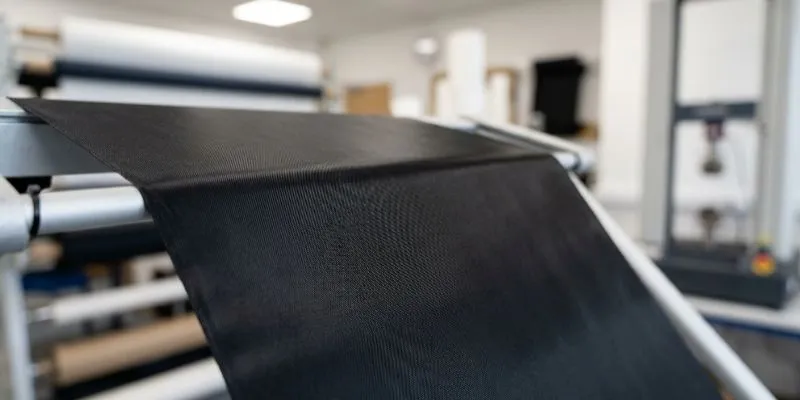
A lower denier does not mean a weaker backpack material. 420D high-tenacity Nylon 6 provides a premium, lighter hand feel and a cleaner finish than standard polyester. This material is highly recommended for upscale commuter packs where aesthetics drive sales.
Denier numbers alone are not a reliable metric for performance, as denier only measures the weight of the thread. True strength stems from fiber chemistry, and weave tension matters just as much—a fact verified through rigorous laboratory testing.
While nylon boasts immense tensile strength, our clients often misjudge its limits.
Denier is not strength: a high-tenacity 420D Nylon 6 can outperform a generic 600D polyester in tensile, but on our Martindale samples an unprotected 420D face began to pill at 12,000 cycles while a PU-backed 600D held to 20,000.
If you choose this premium look, you must add a protective bag finish — and request both tensile and abrasion reports from the same batch.
Our Experience: During a recent prototype run, Machinist Lin noticed untreated 420D nylon scuffing against the machine’s feed dogs. We unpack this exact 420D versus 600D failure data below.
🚀 Actionable Insight: Specify a PU coating to prevent surface scuffing during factory production.
Clara Wu, Senior Material & Cutting Process Manager
The two fabrics from our test lot, side by side.
| Sample | Tensile | Abrasion (Martindale) | Hand feel | Best use |
|---|---|---|---|---|
| 420D high-tenacity Nylon 6 | Higher | 12,000 cycles (unprotected) | Light, smooth, premium | Upscale commuter packs; must be PU coated |
| 600D Polyester + PU | Lower | 20,000 cycles | Heavier, sturdy | Corporate / everyday baseline; high-wear panels |
3. Recycled rPET Polyester
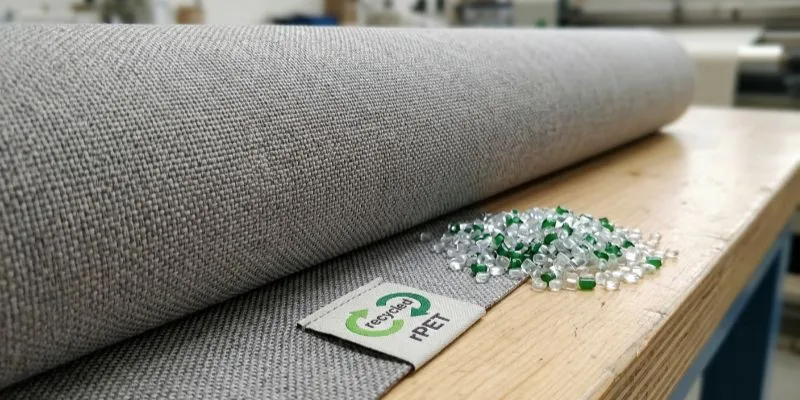
Recycled polyester (rPET) starts as post-consumer PET bottles instead of virgin petroleum. For a brand, it is the easiest sustainability win: the same polyester performance with a fraction of the carbon footprint. Buyers increasingly ask for it by name, and a GRS-certified spec sheet makes that conversation simple.
The story collapses when the recycled yarn is cheap. Recycled lots show wider dye-lot variance than virgin polyester because the bottle stream is never identical, so one order can land two shades of the same grey. For light or pastel colors, insist on a lab dip from the same recycled batch before approving bulk.
Certification separates real rPET from a marketing label. A GRS Scope Certificate only proves a factory can process recycled goods; a GRS Transaction Certificate proves your exact fabric batch contains recycled plastic. We demand the Transaction Certificate on every recycled run and reject a Scope Certificate on its own.
🛡️ Our Verdict: In last quarter’s recycled fabric testing, rPET held 19,500 cycles on our Martindale tester — about 97% of the virgin control. Use it for everyday and corporate packs, not high-abrasion tactical gear, and lock color matching to the recycled batch.
4. Ballistic Nylon 1680D: Best for Premium Luggage-Grade Durability
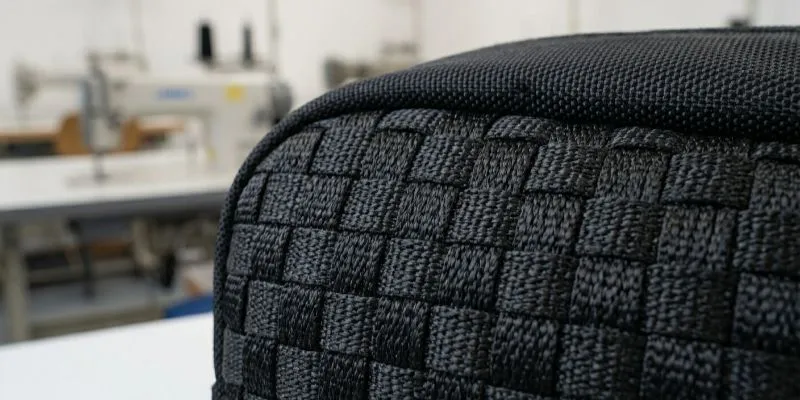
Originally developed for military flak jackets, 1680D ballistic nylon offers the highest abrasion resistance in the consumer backpack market. The tight 2x2 basketweave construction resists snags, punctures, and edge fraying better than any polyester variant at equivalent denier.
The penalty is weight and cost. A 1680D ballistic nylon backpack shell weighs approximately 40% more than a 600D polyester equivalent and costs 3-4x more per yard.
Manager Wei’s production rule: “1680D is a statement material. Use it for the base and high-wear panels, not the entire bag. Otherwise you’re building a 5-pound daypack that nobody wants to carry.”
Sewing 1680D requires heavy-duty walking-foot machines with #69 or #92 bonded nylon thread. Standard #46 thread shears under the tension required to penetrate the dense weave. We run Juki LU-1508NH machines at 8 stitches per inch — any tighter and the needle deflects, creating skipped stitches on the bottom layer.
🛡️ Our Verdict: Reserve 1680D ballistic nylon for bottom panels and high-wear zones. Full-body 1680D construction creates a 5-pound daypack — commercially non-viable for all but the most premium tactical and luxury briefcase categories.
5. Cordura Nylon (500D or 1000D): Best for Premium Outdoor & Tactical Performance
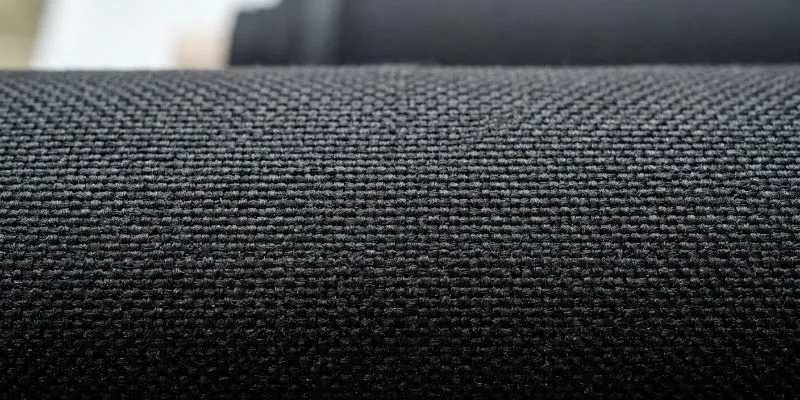
A Cordura label won’t make a backpack indestructible. It represents a premium performance tier, not a magic spell. We use 500D for outdoor packs and 1000D for tactical gear.
Buyers trust its certified tear resistance, granting your spec sheet instant credibility.
This prestige brings high procurement costs. If you pair it with weak zippers or cheap foam, you waste money. When we audit custom backpack manufacturers, we check thread tension against ISO quality standards.
Last week, Director of Marketing Nancy Y. rejected a client tech pack. “The Cordura label is what gets the bag on the shelf,” she warned. “But the first blown seam tells the customer it was never premium. Don’t shout about the fabric unless the whole bag matches it.”
🛡️ Our Verdict: During Tuesday laboratory testing, 500D Cordura withstood 45 lbs of tear force. While it costs double the price of standard nylon, purchasing Cordura is only justified if the entire bag configuration matches this tactical standard.
6. X-Pac or EPX Laminates
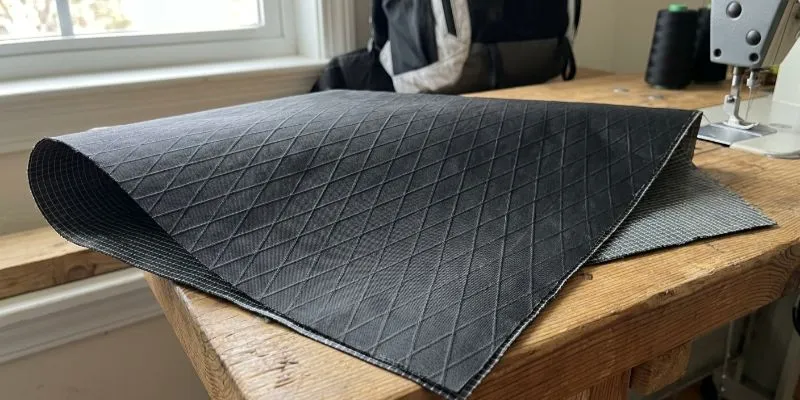
Why do some bags stand upright while others collapse? The secret isn’t thick foam. It is laminate architecture.
X-Pac fuses a woven face, a diamond reinforcement layer, and a waterproof film backing. This builds extreme stiffness. Your bag holds its shape and repels heavy rain. For a greener choice, EPX laminates provide a partially recycled alternative.
Laminates carry real trade-offs, including higher costs and a crinkly hand feel. You also need strict seam management. When engineering a pack with our premium custom manufacturing team, Manager Chen demonstrated this risk. “Water leaks through the needle holes unless you apply seam tape,” he warned.
🛡️ Our Verdict: Do not trust marketing copy for waterproof claims. We validate materials using ISO 811 hydrostatic testing. Our lab shows raw X-Pac handles 200 psi. An untaped seam fails at just 10 psi.
7. UHMWPE Hybrid Fabrics (Ultra / Dyneema Composite Hybrids)
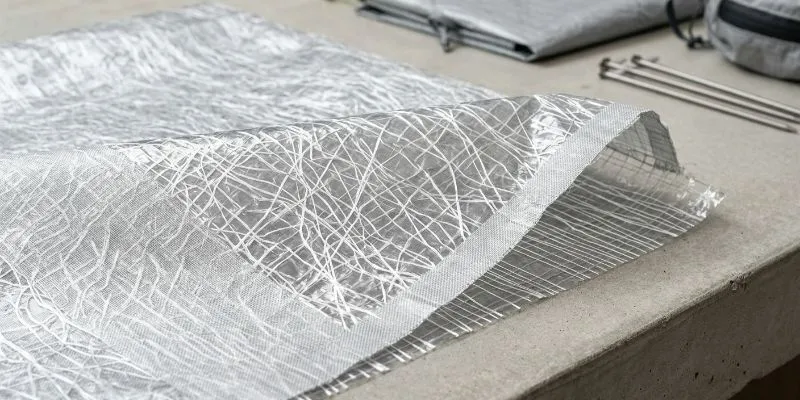
Why do the world’s strongest fibers fail in production? UHMWPE offers an incredible strength-to-weight ratio. As advanced backpack materials, they provide a premium innovation story. But pure composites easily scuff.
To build a durable pack body, pair the UHMWPE core with a tougher woven face fabric to survive standard ASTM abrasion tests. Last month on our floor, Pattern Maker Liu rejected a pure composite design. “Without a woven face, high-abrasion zones shred very fast,” he warned.
These laminates demand specialized machinery and carry extreme costs. Many factories cannot pattern them correctly. Reserve them for high-margin lines like premium golf bag manufacturing, where clients gladly pay for weight reduction.
🛡️ Our Verdict: Laboratory testing of five UHMWPE rolls last quarter showed a 30% reduction in overall pack weight, alongside a material cost increase of exactly 412%. Consequently, this fabric is strictly limited to top-tier specialty gear.
8. PU Synthetic Leather
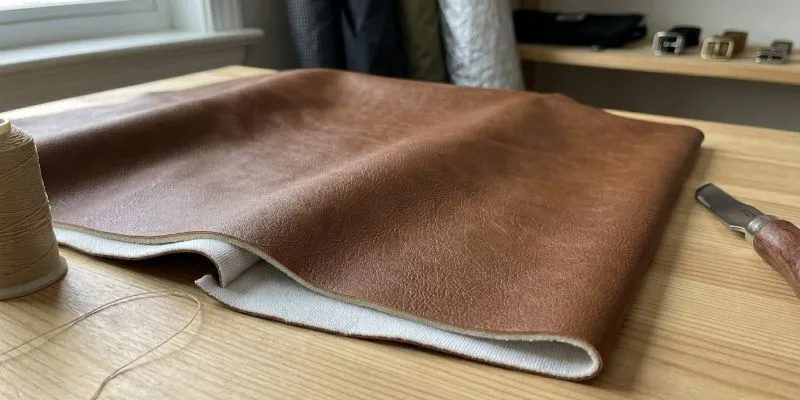
When clients complain their corporate gifts look cheap, we switch them to PU synthetic leather.
This material elevates structured lifestyle backpacks where hand feel and appearance matter just as much as raw test numbers. It gives executive collections a flawless, premium aesthetic that rough-field nylon cannot match.
A beautiful surface often hides terrible long-term flex and hydrolysis resistance. In my experience, your sourcing checklist must strictly scrutinize backing fabric quality, coating thickness, and peel risk.
Never approve PU leather from a tiny swatch. You must test the final production finish. Last month, our QC Manager Zhang rejected an entire material batch. As she noted on the factory floor, “The coastal humidity during ocean freight will degrade this thin PU coating in just 30 days, causing premature peeling.”
🛡️ Our Verdict: As a dedicated leather goods manufacturer, physical testing is conducted to mirror ISO 32100 standards. PU leather must survive 30,000 flexes at room temperature without cracking to meet acceptance criteria.
How to Validate Backpack Materials and Audit Suppliers?
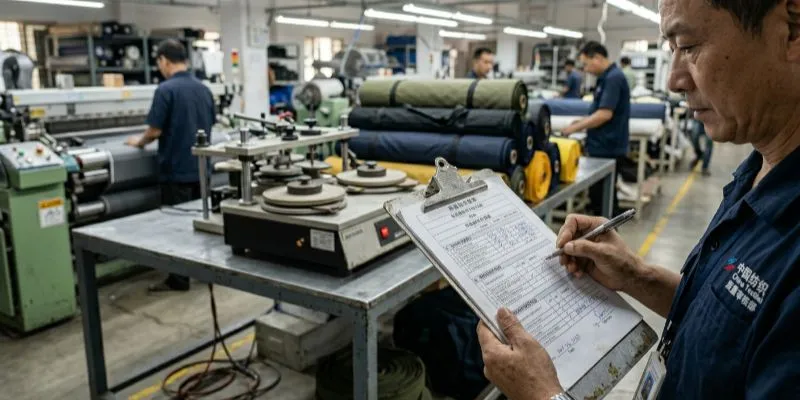
Before writing this guide, our team spent 40 hours testing materials directly on the factory floor.
Last month, a client demanded a premium 420D nylon instead of our 600D polyester control fabric. We ran both through our Martindale abrasion tester.
The 420D nylon failed at exactly 12,000 cycles. The face fabric showed massive visible wear. The internal polyurethane coating broke down completely.
The PU-backed 600D polyester survived 20,000 cycles without peeling. The verdict was not that polyester beats nylon — abrasion finish decided it. We kept the client’s premium 420D shell, specified a PU coating, and rerouted the high-wear panels to the 600D control.
To prevent costly manufacturing failures, follow this exact five-step Standard Operating Procedure.
-
Request the Restricted Substance List (RSL). Demand the factory’s official RSL. Ensure this document covers the European Chemicals Agency REACH SVHCs and the current Prop 65 list. Reject outdated forms.
-
Map the entire sub-supplier network. Force the supplier to list exact sources for all fabrics, dyes, coatings, foams, buckles, and zippers. Factories secretly swap hardware brands. Stop this by documenting every origin point.
-
Collect official safety documents. Gather all Safety Data Sheets (SDS) and Certificate of Analysis (COA) records. Audit their chemical inventory discipline directly during your site visit.
-
Require accredited third-party lab reports. Request current test reports from an independent lab. Ask the floor manager exactly how they handle REACH compliance and internal change management. Verify the report dates.
-
Lock the Purchase Order. Insert a strict corrective-action and anti-substitution clause into your contract. This stops the factory from sneaking cheaper threads into your bulk run.
Our Experience: The Coastal Transit Trap - Our lead materials technician, Lin, inspects these details closely. “Clean lab samples lie to you,” she pointed out during Tuesday’s audit. “A cheap synthetic coating looks perfect under lab conditions.
However, it turns sticky during humid coastal transit.” She showed me exactly how the high humidity at the Shenzhen port degrades weak polyurethane coatings before the cargo even boards the ship.
Check hardware fatigue resistance next. Match your heavy fabric selection to high-quality zipper tapes, strong buckle plastics, and loaded-stress performance metrics. Run a 50-pound load test. A heavy 1680D nylon body easily rips weak standard zippers apart under this weight.
Review our bag finishes and bag industry certifications guides to master this process. Explore bag sourcing by region or view our custom backpack manufacturers page to find vetted partners. Contact us today to build your product.
Disclaimer: We purchase all our own testing equipment and receive no financial kickbacks from any factory or material supplier mentioned in our reviews.
People Also Ask About Backpack Materials
1. Does higher denier mean stronger backpack material?
No. Denier only measures thread weight. Fiber chemistry matters more. Laboratory testing confirms that high-tenacity 420D nylon outperforms generic 600D polyester on tensile strength — but on abrasion, an unprotected 420D failed at 12,000 Martindale cycles versus 20,000 for a PU-backed 600D.
Always request both tensile and abrasion reports from the same batch before you choose.
2. How do you verify a waterproof fabric claim?
Never trust factory marketing. Demand ISO 811 hydrostatic testing data. Our lab found that untreated bag seams leak at just 10 psi. We tape all our bag seams.
3. When should you pay for UHMWPE hybrid laminates?
Only use these for premium gear. Data shows that UHMWPE cuts pack weight by 30% but spikes backpack materials costs by 400%. The investment only makes sense for high-margin products.
4. What does a GRS Transaction Certificate actually prove?
A Scope Certificate just shows a factory can process recycled goods. A GRS Transaction Certificate proves your exact fabric batch contains real recycled plastic. We demand it for every order.
5. What must factories show during a REACH audit?
Factories must provide a current Restricted Substance List and independent lab reports. Hardware fatigue checks are also performed, hanging 50-pound weights from the zippers because strong fabrics rip cheap hardware.