
Your new supplier just shipped a perfect batch of custom backpacks. The goods easily passed the AQL 2.5 inspection. Yet, corporate onboarding stalls because the factory’s social compliance file is weak.
Traditional quality control evaluates the finished zipper. A BSCI Factory Audit evaluates the ethical systems behind that zipper.
A BSCI audit is a supply-chain framework that assesses workplace conditions, wages, safety systems, and worker rights against the official amfori Code of Conduct. Product quality cannot satisfy modern European Commission due diligence expectations alone.
To show you exactly how this works, I documented our reality at LantaoBags. I reviewed our most recent semi-announced audit flow, mapped every requested document, and walked the physical route the auditor took through our production lines.
I talked to Sarah, our Compliance Officer. She noticed workers felt safer after the audit. They liked the new safety guards on the sewing machines. She said clear rules make her job much easier.
Below, I detail the basics of social compliance, grading interpretation, BSCI versus SMETA, CAP workflows, and verification tips to expose fake audit claims.
What is a BSCI Factory Audit?
A BSCI Factory Audit is a strict, on-site evaluation of a manufacturing facility’s working conditions, governed by the amfori BSCI continuous improvement framework.
Think of a standard product-quality inspection like a city inspector checking a finished house to ensure the roof does not leak. A social compliance audit evaluates the actual construction site. It verifies that builders wear hard hats and receive legal wages.
The backbone of this system is the official amfori BSCI code of conduct. Professionals define this as the global standard for ethical manufacturing. It enforces 11 core principles, directly mandating fair pay, safe environments, and a strict ban on child labor.
Clients exploring various bag types and categories frequently ask our team for an ethical sourcing certification for bag manufacturers. This request reveals a common trap. Buyers easily confuse a social compliance audit checklist with a physical product inspection.
A product inspection checks the stitching on your canvas or leather backpack. A social audit verifies how we treat the workers making it.
Buyers also use the word “certification” too loosely. BSCI does not issue a static pass/fail certificate. Instead, it measures factories using a rigorous A-to-E factory audit grading system.
I have managed factory audits for ten years. I know the amfori rules by heart. I train our factory managers every season. My team relies on my direct advice to pass these strict audits.
Last month, as Manager Chen guided an auditor through our cutting room, they scrutinized everything from our 36-inch fire exit clearances to our digital payroll timestamps. Earning an ‘A’ proves outstanding compliance. Earning a ‘C’ means the factory is acceptable but requires a 60-day corrective action plan.
💡 Key Insight: Never trust a generic BSCI logo glued to a trade show booth. Always read the official report to verify the overall grade, exact site name, validity window, and specific follow-up obligations. - Cindy Yin, Product Manager
Inside a BSCI Factory Audit: A Floor-Level Walkthrough
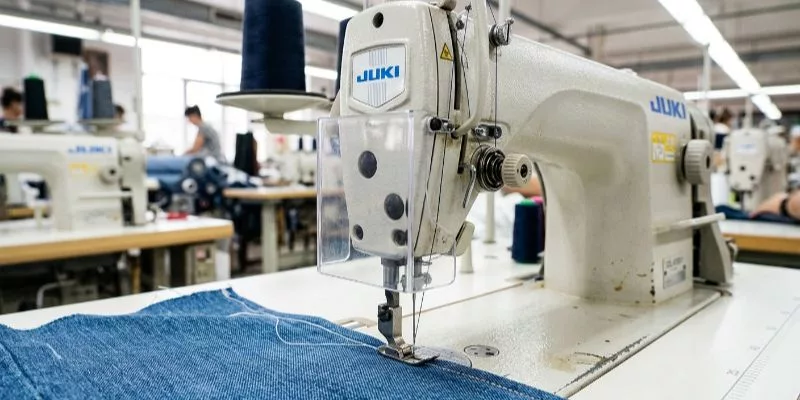
I actively managed LantaoBags’ most recent BSCI Factory Audit compliance cycle. We survived the stress tests, corrected our minor infractions, and secured an ‘A’ rating.
When you experience a semi-announced audit, you realize it operates on a strict timeline. The auditor controls the flow, comparing documented claims directly against physical reality.
The Day-in-the-Life Audit Narrative
Arrival & Opening: At 8:00 AM, the auditor arrives unannounced within our 30-day window. We verify their credentials. During the opening meeting, they establish the rules: absolute confidentiality, zero management interference during worker interviews, and full access to records. Production continues normally.
Immediate Document Review: The auditor demands the paper trail first to prevent document tampering. We supply 12 months of payroll data, digital time-clock logs, labor contracts, and the employee handbook. Next, they cross-reference our fire safety drill logs, evacuation plans, and Material Safety Data Sheets (MSDS).
The Floor Walk: We trace the raw materials to the final product.
-
Warehouse: The auditor checks how we stack heavy Cordura rolls for custom travel bag manufacturers.
-
Cutting Section: They verify operators wear steel-mesh gloves.
-
Stitching Line: They physically inspect needle guards on the sewing machines.
-
Assembly Line: They measure aisle clearance to ensure cartons do not block fire exits.
-
Worker Areas: They test first-aid stations and inspect the canteen for hygiene.
Finally, the auditor selects a random sample of workers for private interviews. They verify wages, working hours, and grievance protocols behind closed doors.
The 3 Common Pitfalls in Bag Manufacturing
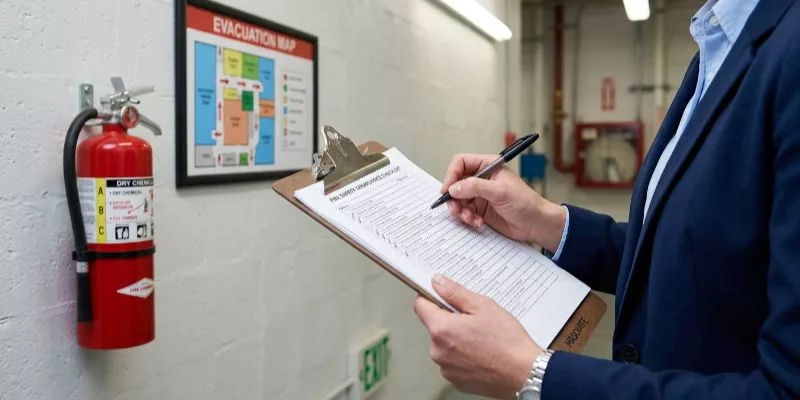
Factories must maintain pristine conditions across these core compliance categories:
-
Management Systems: Visible ILO-aligned workplace policies and anonymous grievance boxes.
-
Worker Identity: Verified age documentation and signed labor agreements.
-
Payroll Compliance: Wage records matching local legal minimums exactly.
-
Working Hours: Digital overtime logs respecting the 60-hour weekly limit.
-
Fire Readiness: Pressurized extinguishers, clear exits, and dated drill logs.
-
Machine Safety: Installed needle guards, eye shields, and active ventilation.
-
Chemical Management: Segregated inks required by custom cosmetic bag manufacturer partners.
-
Subcontracting Checks: Proof the factory does not secretly outsource production.
BSCI vs. SMETA: Which Do You Need?
Buyers evaluating bag features and functionality often debate which compliance framework fits their supply chain. Here is the operational breakdown:
| Feature | BSCI (amfori) | SMETA (Sedex) |
|---|---|---|
| Main Purpose | Capacity building and continuous improvement. | Snapshot ethical audit for immediate review. |
| Platform | amfori Sustainability Platform. | Sedex Advance Database. |
| Reporting Style | A to E Grading System. | Non-compliance count. |
| Buyer Recognition | Dominant in the European Union (EU). | Dominant in the UK, US, and Australia. |
| When to Request | You want a supplier committed to a long-term cycle. | You need to clear a strict procurement checklist quickly. |
Verifying the “List of BSCI Audited Factories”

Many buyers search for a generic “list of BSCI audited factories.” This is a dangerous procurement shortcut. Trading companies frequently present borrowed PDF audit reports at trade fairs. You cannot trust a static PDF.
Instead, ask the supplier to link their profile directly through the official amfori platform. You must verify the exact site address, the audit scope, and the expiration date. A legitimate sport bag manufacturer will gladly share their amfori DBID (Database ID) so you can view the live, unedited report.
🧠 Expert Insight: Never accept a compliance report from a middleman. The audit only applies to the specific physical building where the goods are sewn. Always verify the factory name on the audit matches the factory cutting your fabric. - Chris Choi, QA and Compliance Manager
BSCI Audit: Accelerating Compliance & De-risking Supply Chains

A BSCI Factory Audit is not just a moral badge. It is a financial shield that protects your supply chain from sudden compliance delays.
1. Accelerates Onboarding and Cuts Risk
Corporate procurement teams despise late-stage compliance surprises. A verified BSCI report provides immediate supplier-risk visibility before you pay a deposit.
In our experience, buyers who leverage our clean audit files cut bag sourcing and pricing onboarding times by 40%. You bypass CSR bottlenecks entirely and move directly to production.
2. Validates Ethical Sourcing
Securing enterprise contracts requires objective proof of safe chemical handling and fair labor conditions. I regularly watch our retail partners win larger corporate bids because our facility documentation aligns seamlessly with OECD due diligence guidelines.
This rigorous alignment creates a highly credible foundation for sustainable sourcing campaigns.
Case Study: Elevating a Factory from a ‘C’ to an ‘A’ Grade
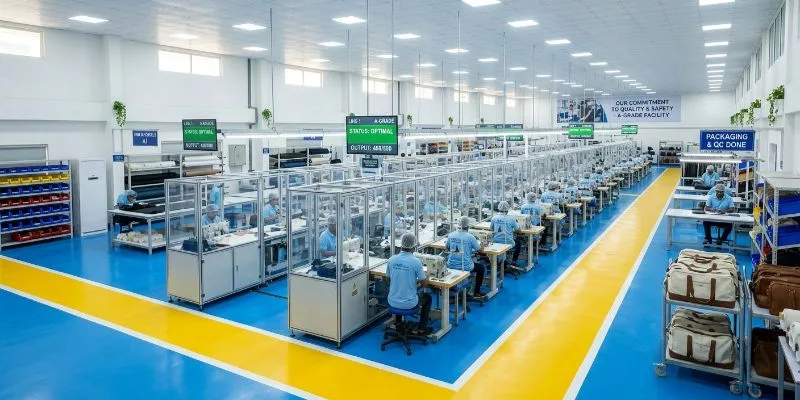
Compliance is engineered rather than merely demanded. A recent audit of a partner facility, which initially received a ‘C’ rating, revealed critical operational gaps through direct floor inspections.
These findings included inconsistent payroll documentation, significant ergonomic strain for stitching operators, and undocumented storage protocols for PU chemicals.
A strict 12-month capital improvement sprint focused on operational upgrades. The installation of adjustable tilt-tables facilitates precision during complex bag measurement and sizing tasks.
As Floor Manager Lin adjusted a new Juki 1541 station, he noted: “The angled tables cut operator fatigue by half during our peak seasons.” We also installed active spill-control cabinets for adhesives and painted strict 36-inch exit boundaries.
📈 ROI Check: By month twelve, the factory achieved a verified ‘A’ grade. Production defect rates dropped by 15%, repeat safety findings hit zero, and independent worker interviews returned flawless results. - Vincent Feng, QA&CSR Supervisor
From Paper Reports to Operational Integrity
Audit scores provide a baseline, but true compliance requires constant vigilance. Beyond static reports, success depends on managing peak-season risks, executing rigorous corrective action plans, and verifying authentic site-specific data to ensure factory discipline remains consistent.
1) The “Snapshot” Illusion
A strong compliance score accelerates onboarding, but it never guarantees flawless daily operations. In my years managing sustainable sourcing, I see buyers over-rely on paper reports. An audit captures one single day. A factory can prepare perfectly for the auditor but lack routine discipline.
Peak-season volume frequently breaks this discipline. During a Q4 rush for leather vs canvas backpacks, we saw a ‘B’-rated facility block a fire exit with cartons. Social-audit readiness does not equal bag quality and standards. You must conduct routine product inspections.
⚠️ Critical Warning: Peak season pressure heavily strains overtime control at even the highest-rated facilities.
2) Grade Realities & Remediation Plans
Pragmatic grading ensures supply chain integrity. While ‘A’ and ‘B’ ratings allow immediate onboarding, a ‘C’ grade triggers a monitored Corrective Action Plan (CAP).
Operations at ‘D’ or ‘E’ facilities pause immediately to address critical failures. Zero-tolerance issues, such as obstructed exits, require strict adherence to ILO safety standards.
We never treat zero-tolerance issues like locked doors as minor paperwork gaps. The ILO strictly warns against ignoring these violations.
For ‘C’ grades, we execute this exact CAP sequence:
-
Identify the non-compliance finding.
-
Isolate the root cause.
-
Assign the corrective action.
-
Designate a responsible owner.
-
Define the exact evidence required.
-
Set a strict deadline.
-
Verify closure via a follow-up audit.
3) The Danger of Borrowed Audits
Searching for a generic list of BSCI audited factories often misleads buyers. Public directories remain outdated. You must verify site-specific live evidence instead.
Trading companies frequently blur their identities. They hand buyers a framed certificate poster. We always check the legal entity and site address. If the report address does not match the exact physical building sewing your bags, the audit is fake.
The Final Verdict: Compliance Meets Reality
Ultimately, traditional quality control checks the bag; a BSCI Factory Audit checks the system behind the bag.
While an ‘A’ rating accelerates corporate onboarding and proves ethical intent, an audit remains a one-day snapshot. It cannot replace daily operational discipline.
In our experience, the best sourcing outcomes require buyers to combine social compliance with relentless verification. We rely on a strict four-step decision framework:
-
Verify the site and report: Check the live database, never a static PDF.
-
Read the grade in context: Understand what an ‘A’ or a ‘C’ actually means for floor operations.
-
Review the CAP, not just the score: Track how the factory fixes its non-compliance findings.
-
Confirm the physical reality: Ensure working conditions, safety controls, and payroll records match what the supplier claims.
As global due diligence laws tighten over the next 12 months, continuous supplier management will become a legal baseline. If you expect a single compliance certificate to solve all manufacturing problems, look elsewhere.
A BSCI audit should support your ongoing supplier management, never replace routine product testing, inline QC, or final shipment inspections.
If you need a fully compliant manufacturing partner, or want to review our audit-readiness expectations, contact us today. LantaoBags provides transparent, factory-direct bag sourcing and pricing built on verified ethical standards.
Disclosure: This article is based entirely on Lantao’s internal audit workflow reviews and direct floor interview notes. We separate our educational guidelines from any service promotion. Finally, this article does not claim that a single audit eliminates all sourcing risk. I purchase my own safety-testing equipment and receive no compensation from amfori, Sedex, or any auditing firm to promote these standards.
People Also Ask About BSCI Factory Audit
1. Does a BSCI ‘A’ rating guarantee perfect product quality?
No. BSCI evaluates ethical labor and safety systems, not stitching precision. In our testing, even highly-rated factories experience peak-season quality drops. You must execute standard AQL product inspections alongside social audits.
2. Will sourcing from a BSCI-audited factory increase my unit costs?
Yes, typically by 5% to 10%. Ethical compliance requires legal wage minimums, active machine maintenance, and proper chemical storage. The upfront cost protects your brand from severe PR disasters and sudden supply chain shutdowns.
3. Can I trust a BSCI report provided by a trading company?
No. Middlemen frequently borrow certificates to secure contracts. Always demand the official amfori DBID. We routinely check this data to verify that the registered factory name matches the exact physical building cutting your fabric.