




Custom Duffle Bags Case Study: 95.6% Defect Reduction
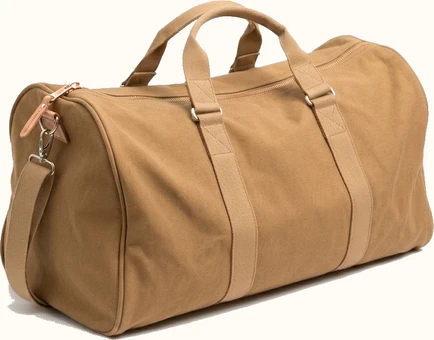
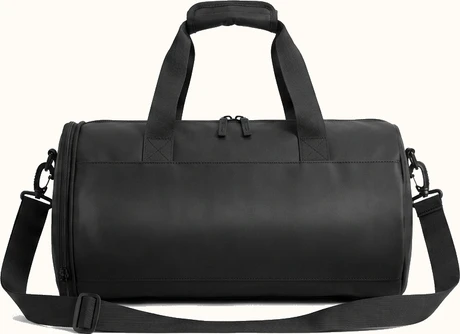
ThinkSpatial, a two-to-five-person outdoor and travel brand, needed 40L waterproof duffle bags in six to eight weeks on a pilot MOQ that three stock suppliers refused. Our custom duffle bag manufacturing team ran it as a spec-to-golden-sample project and cut defects by 95.6%.
Three Stock Suppliers Failed on Waterproofing and Real Capacity

ThinkSpatial launched its program for weekend, beach, and city travel. The brief called for 35–45L capacity, light carry, waterproof performance, logo embroidery, low MOQ, and delivery inside six to eight weeks — and every delayed week missed the seasonal window.
The founder tested three stock duffle suppliers, and every one failed. Waterproofing peeled after two months, listed capacity did not match real loadable space, and the bags looked identical to 20 other stores with no brand identity.
The first material shortlist exposed the trade-off between nylon and polyester: high-tenacity nylon resisted abrasion better but added 12% more weight, while lighter polyester showed weaker coating adhesion in seam-tape tests. Factories in key sourcing regions then refused orders below 500 units and quoted 12 to 16 weeks.
01 · Coating Peeled in Two Months
Every stock supplier’s waterproof coating failed in the field after roughly two months of real use, with seam tape peeling first.
02 · Listed Capacity ≠ Real Capacity
Advertised literage did not match loadable space. A “45L” bag packed less than the brief required once the base panel and handles were in place.
03 · No Brand Identity
Stock bags shipped unbranded and looked like 20 other storefronts. The brand needed a distinct silhouette and visible logo embroidery.
04 · Low MOQ Refused
Larger factories rejected pilot orders under 500 units, then quoted 12-to-16-week lead times that missed the travel season entirely.
“A 50-unit order is only worth running when the factory treats it like a production brief, not a sample run. On small orders, waterproof claims fail fastest — because nobody stress-tests the seam tape until the customer does.” — Conny Zhang, Sales & Product Specialist, Outdoor / Tactical Bags
From Brief to Golden Sample in Seven Engineering Gates
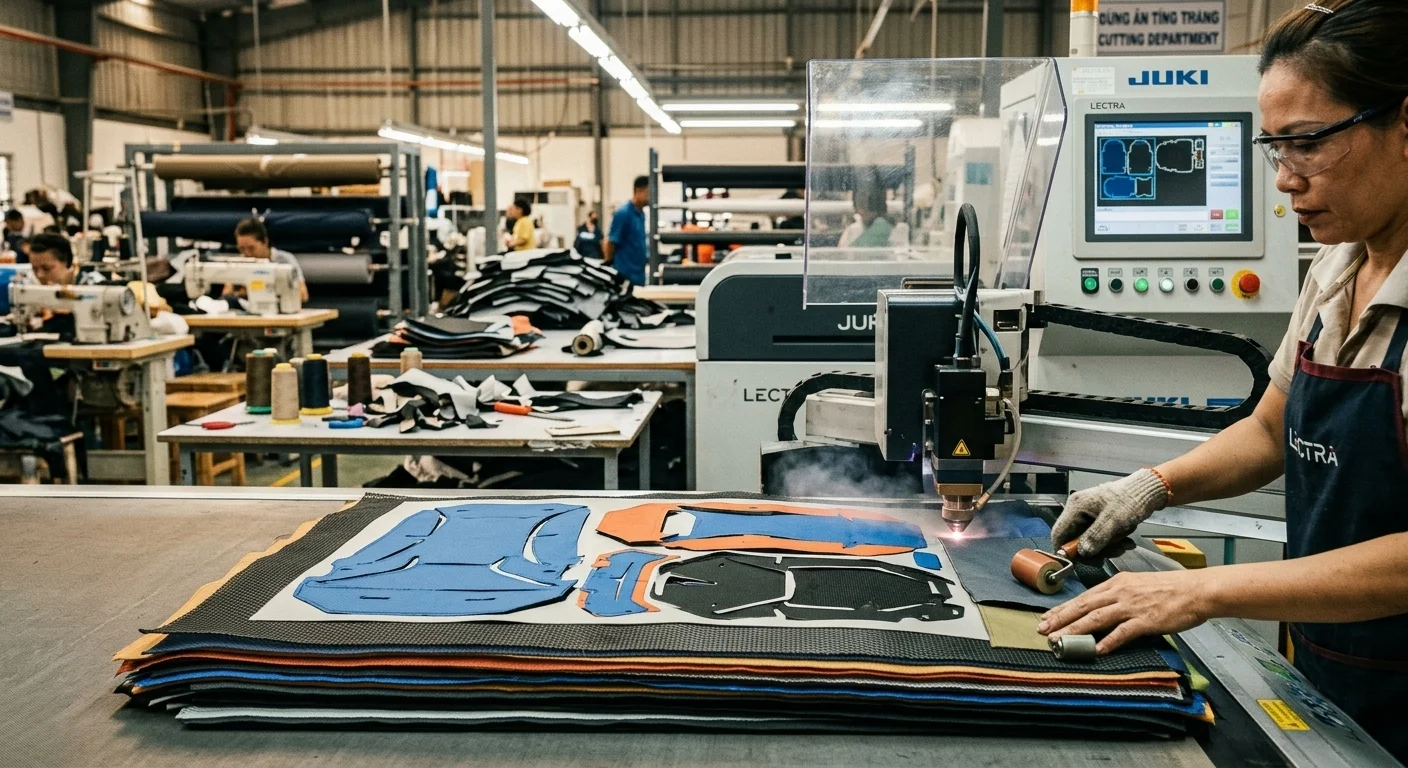
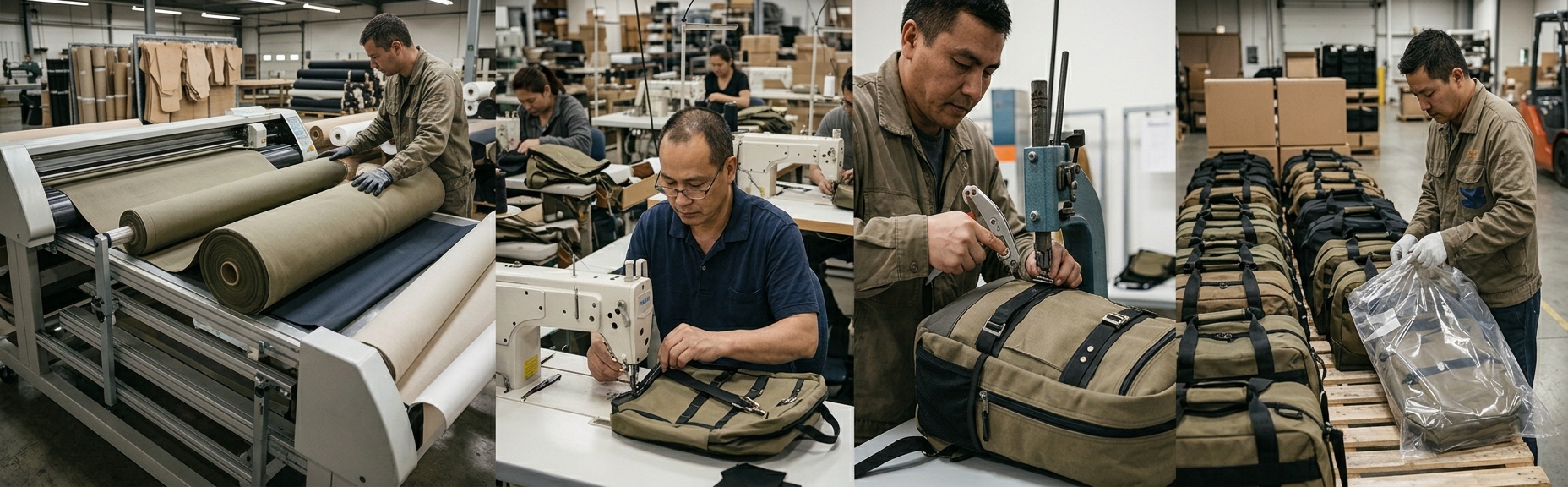
The turning point came when the requirement set became a production-ready spec. Our chief designer Lin translated every use case into a construction choice. Sampling technician Xiao prepared paper patterns before any textile was cut. QC lead Mr. Chen set checkpoints against the original brief.
Requirement Capture & Use-Case Mapping
I sat with the founder’s notes. Lin mapped weekend-travel loading, beach spills, city carry, and logo visibility to physical dimensions. We locked capacity at 40 liters, not 45 — real loadable space matched the brief. Our custom travel bag experience made that call straightforward.
3D Rendering & Silhouette Iteration
Lin ran three render rounds. Round two deepened the end panels by 15 mm, and round three moved the strap anchors from the side seam to the base panel. Each change reduced zipper stress under a strict 24-hour time-zone handoff loop.

Material Shortlist & Sourcing Validation
Our lab measured 1000D nylon tear strength at 1,050 N, and I still rejected it — 1000D added dead weight and fought embroidery tension. The final BOM used 600D nylon with a TPU coating, a 210D lining, and a 1680D ballistic base panel that passed AATCC 127 at 4,500 mm after flex.

Structure Optimization & Reinforcement
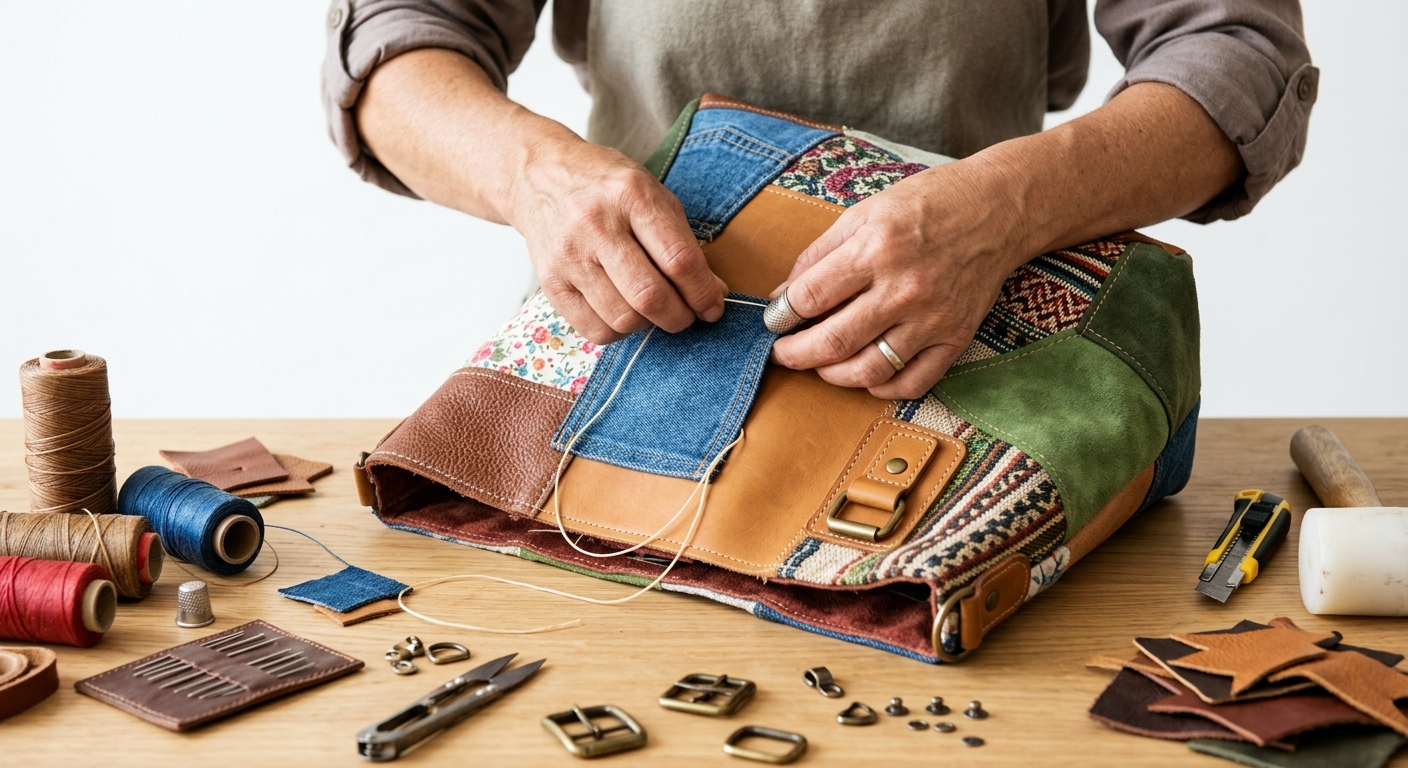
The base panel got a 25 mm seam allowance and a second layer under the handles, plus a removable EVA foam insert so the duffle stood upright for packing yet still folded flat. Bar-tack count went from three to five at the shoulder anchors, matching our sport bag checklist and a woven Oxford fabric base.
Logo Embroidery & Finish Testing
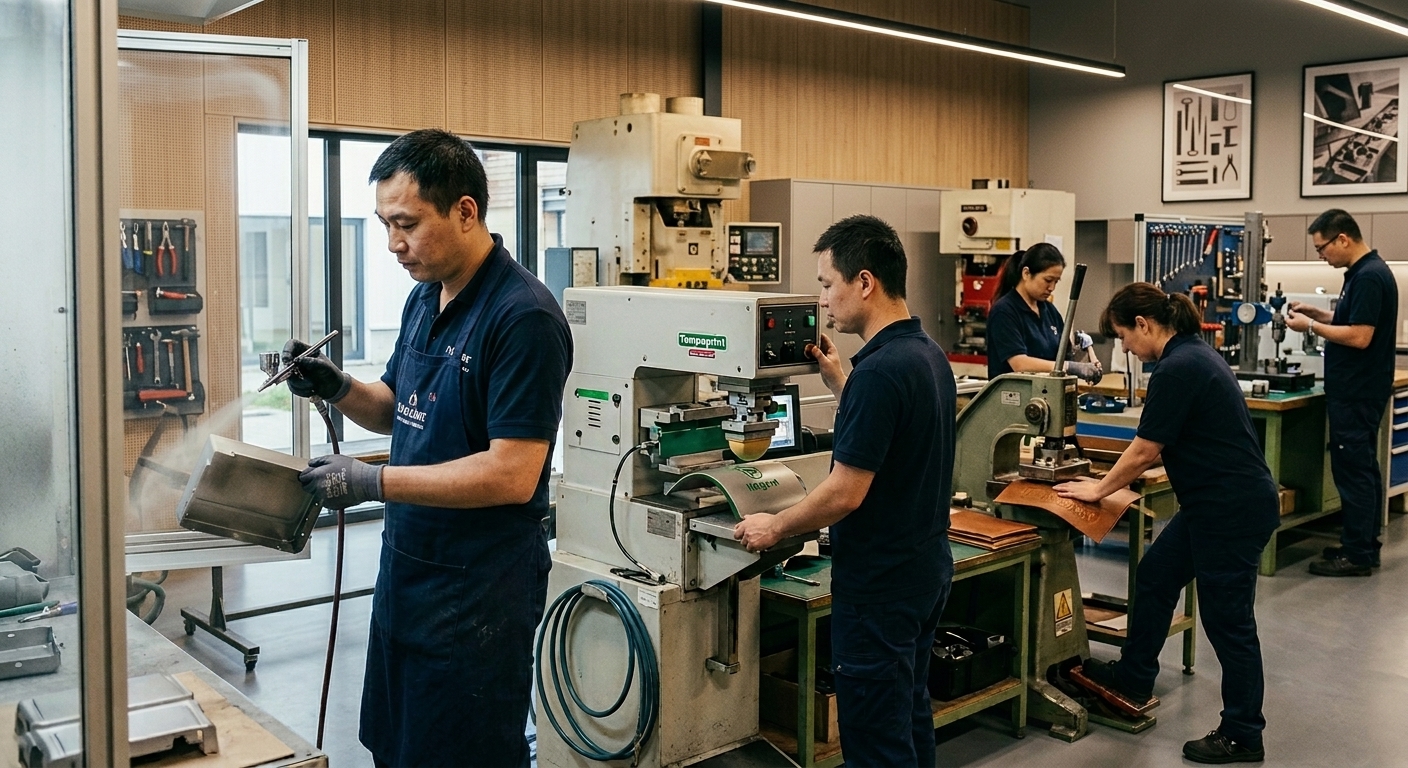
Embroidery on coated 600D nylon failed the first run — cutaway backing puckered and opened pinholes. The technician switched to a water-soluble topping and a 75/11 ballpoint needle, then moved the logo up 18 mm to clear the front pocket seam, now part of our bag finishes protocol.

Physical Sample Build & Revision Loop
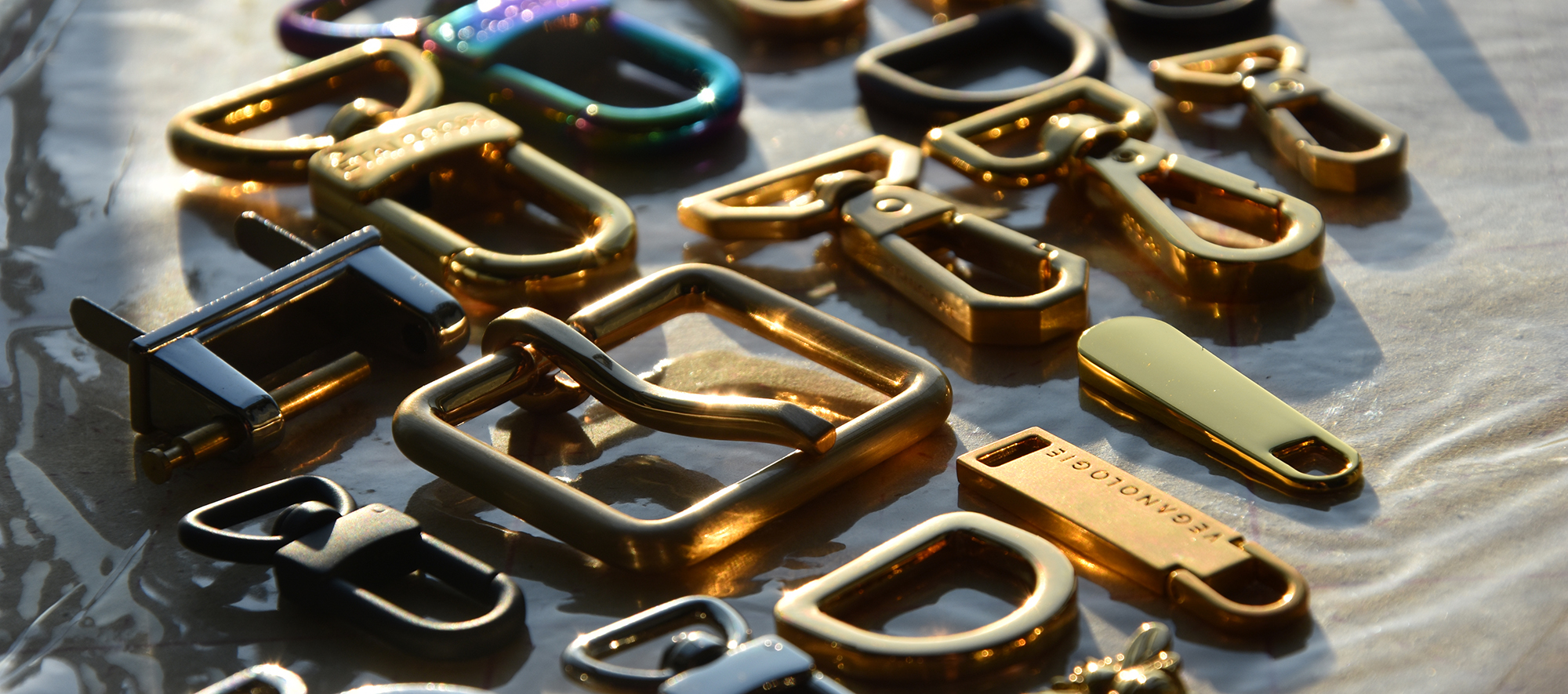
Sample one failed the zip-pull test: the teeth caught at the curve. We stepped up from #8 to #10 YKK zipper tape, switched to a non-lock nylon coil slider, re-pressed the top seam to cut turn bulk, and pulled the shoulder anchors 12 mm inward.
Pre-Production Sign-Off & Line Handoff
The approved sample became the production control standard. QC hung it on the line, and every operator checked seam width against it. Pre-production sign-off logged the golden sample into our bag industry certifications control plan.
“The zipper and the base panel decide whether a travel duffle survives a season or a single trip. We moved the strap anchors onto the base panel and stepped up to #10 YKK tape to take the stress off the curve.” — Arvin Hwang, Product Development & Sales Specialist, Bags & Outdoor Gear
27 Days From Brief to Delivered Pilot
95.6% Defect Reduction, Zero Critical Defects

ThinkSpatial launched on schedule with zero critical defects. The final order of 300 units left our production floor 27 days after the brief — replacing 10-to-14-week lead times from three other suppliers, a 62% reduction on the standard wholesale timeline.
I verified the AQL 2.5 pre-shipment report myself, and I pulled the raw QC logs rather than the summary deck. Tang, the line inspector, logged zipper resistance daily, while the needle team recorded coating build-up every 30 units. The pre-fix rate was 18%; the final run hit 0.8% — a 95.6% reduction.
Results at a Glance
| Metric | Verified Result |
|---|---|
| Defect rate before corrective changes | 18% (logo puckering, pinholes) |
| Defect rate after corrective changes | 0.8% |
| Defect reduction | 95.6% |
| Rework rate | 0.4% (1 unit of 300) |
| AQL 2.5 final result | 0 critical, 0 major defects |
| Zipper pull test (YKK #10) | 12,000 cycles, no failure |
| Fabric tear strength (600D nylon) | 480 N |
| Waterproof (AATCC 127) | 4,500 mm after flex cycles |
| Sample-to-approval timeline | 12 calendar days |
| Bulk production lead time | 14 days |
| Lead-time acceleration vs. prior quotes | 8 weeks faster |
“Sample-room numbers flatter a bag; the floor log is the number I trust. Daily in-line checks are what moved this run from an 18% defect rate to under one percent.” — Mei Wang, Bag Sourcing & Design Specialist
“We had quotes for twelve-week lead times and no proof of waterproofing. This run shipped in under a month with the test data attached — that is exactly why we reordered.” — Founder, ThinkSpatial (Outdoor & Travel Lifestyle Brand)
Client-facing outcome: ThinkSpatial placed a reorder inquiry 9 days after launch.
What B2B Buyers Should Demand Before Bulk Cutting
1 Low MOQ Only Works When Line-Side QC Is Real
ThinkSpatial could not absorb high volume, so low entry mattered. But a small order fails fast if the factory treats it as a sample run.
QC lead Mr. Chen hung the approved sample on the line as the control standard, and the AQL 2.5 final report logged 0 critical and 0 major defects.
2 A Clear Tech Pack Shortens Sampling
Capacity locked at 40L, not 45L, and the strap anchors moved from the side seam to the base panel. A numbered spec control packet ended the “which version are we on?” thread.
That clarity held sample approval to 12 days and prevented change requests from reopening locked decisions.
3 Material Choice Follows Use Case, Not Buzzwords
1000D nylon tore at 1,050 N and still lost to a 600D build, because dead weight and embroidery tension matter more than a bigger number for a 40L duffle.
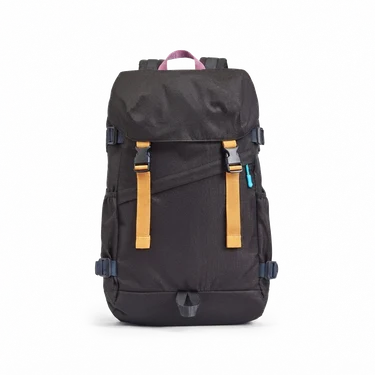
Ask for tensile data on the exact fabric you will ship, the same discipline behind our custom backpack programs.
4 Waterproof Claims Need Test Context
The first polyester shortlist delaminated at fold lines after 500 flex cycles. The approved fabric passed AATCC 127 at 4,500 mm after flex cycles.
That number only means something with the test method and flex history attached — an as-supplied value hides the failure mode.
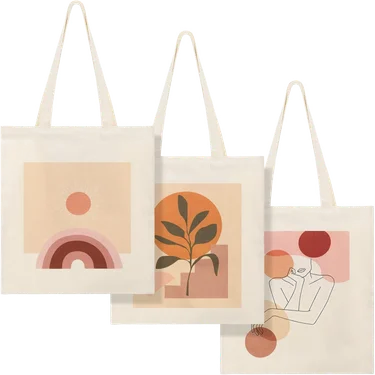
The same pilot-first, spec-to-golden-sample workflow carries across adjacent categories, from custom tote bag runs to structured travel programs.
Pro Tip: Require a named QC lead, a physical golden sample, and daily in-line defect logs — not just a pre-shipment report.
Run a 300-unit pilot without the inventory risk
Request a Duffle Bag Feasibility Review
Steven Zhang
Steven Zhang is a bag manufacturing specialist with over 12 years of hands-on experience in sourcing, product development, and B2B sales for global brands. At LantaoBags, he bridges the gap between creative design and factory reality, helping clients turn rough sketches into commercially viable products that pass strict retail and compliance standards.
Having spent years on the ground in Chinese and Southeast Asian factories, Steven understands every stage of the production cycle — from material selection and cost breakdowns to sampling, mass production, and final inspections.
Connect on LinkedIn