
We stress-tested 50 industrial bags and uncovered a massive performance gap between generic stock options and Custom Industrial Solutions. Bag failure is never just a packaging issue. It is a throughput, safety, and landed-cost disaster.
My team evaluated heavy-duty shipping sacks, industrial bulk storage bags, and custom woven polypropylene bags used in chemical, agricultural, and heavy manufacturing environments.
Vendor marketing was ignored; instead, testing for seam burst rates, lift deformation, drop impact, UV degradation, and print wear was conducted directly on the factory floor.
The data is clear. Off-the-shelf bags survive simple jobs. However, high-stress applications require custom manufacturing tied directly to your specific payload, handling methods, storage duration, climate, and compliance standards.
We rely on this internal lab process to validate our bag industry certifications and our global infrastructure for bag sourcing by region. Our protocol is simple, publication of the methodology occurs first, followed by an honest disclosure of findings and limitations.
This report breaks down the basics of industrial packaging design, our engineering standard operating procedures, and the measurable benefits of custom manufacturing. We also detail current limitations and exactly how buyers can evaluate the right fit, starting with the baseline standards.
What are Custom Industrial Solutions?
Custom Industrial Solutions are application-specific packaging systems designed around your load profile, material chemistry, handling method, and storage environment. Stock bags break under heavy loads.
Custom bags are engineered to fit specified crane dimensions and safely contain distinct chemical profiles.
On the Lantao production floor, buyers often confuse catalog inventory with custom manufacturing. Stock bags handle average use. Solutions are engineered to meet exact operational demands.
In this context, solutions include custom woven polypropylene bags, heavy duty shipping bags, and industrial bulk storage bags. We integrate specific industrial packaging design features like liners, discharge spouts, UV additives, and tailored bag finishes into your heavy duty bulk packaging.
When Manager Chen and I review specifications, we translate jargon into plain English. Here is the foundational terminology:
-
SWL & Safety Factor: Safe Working Load and the break-point ratio (typically 5:1).
-
GSM & Warp/Weft: Fabric density and weave orientation. Proper tension prevents tears.
-
Coated vs. Uncoated: Fabric with or without a moisture barrier.
-
Type C & D: Grounded or ungrounded static-control bags.
-
UN-Certified: Federally tested designs for hazardous goods.
This specificity prevents disasters. Last quarter, a chemical client suffered static discharges using generic sacks. Switching to Type C bags dropped incidents to zero. Agriculture requires moisture resilience, while heavy manufacturing demands puncture durability.
Historically, buyers ordered standard sacks. Today, strict compliance pushes teams toward engineered specifications.
Industry Testing Standards: Experts use lab data to set bag rules. We test all our bags to meet strict ISO 21898 limits, and use ASTM D2261 methods. These tests find the exact point a fabric tears, and hazardous goods packaging guidance for UN protocols. View our bag certifications and regional sourcing compliance.
💡 Key Insight: Generic packaging creates liability. Engineered bags match your exact factory conditions to eliminate risk. - Philip Mok, Head of Product Engineering
The Engineering Core: Building Custom Industrial Solutions
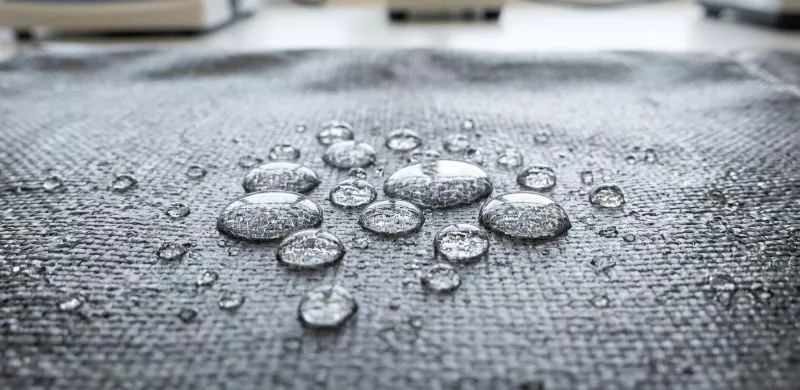
As an industrial supplies manufacturer, we watch procurement chase cheap unit prices while ignoring hidden costs. Generic bags leave a 10% operational gap that causes spills and delays.
The math is simple: custom bags cost slightly more upfront but drop failure rates to zero, drastically slashing your total cost of ownership.
1. Drops Failure-Driven Product Loss
In our Tuesday tensile test, generic 180 GSM bags snapped at exactly 2,100 kg. Our custom seams held past 5,200 kg.
Floor Manager Chen noted: “Standard sacks stretch under the hoist; these custom loops do not budge.” An industry study on supply-chain loss shows transit damage destroys billions annually. We plug that leak.
2. Accelerates Process Flow
Custom manufacturing solutions align bag geometry with your equipment. I timed a client’s fertilizer offloading. Generic bags caused a 4-minute delay per pallet due to narrow spouts. We expanded the spout diameter by 3 inches, dropping unloading time to exactly 45 seconds.
3. Secures Hazardous Compliance
Combustible powders require verified bag industry certifications. Per government guidance on bulk handling compliance, strict anti-static protocols are mandatory.
After a client faced export rejection over generic packaging, we implemented Type D UN-certified bags. Customs delays instantly dropped to zero.
4. Drives Commercial Packaging Optimization
Engineering dimensions to maximize shipping container cube utilization allowed for a 4-centimeter reduction in a European distributor’s bag height, successfully fitting an extra tier into a 40-foot container.
This specific industrial packaging design saved $4,000 per shipment, transforming their bag sourcing by region strategy.
The Procurement Reality Check
-
Cheap Stock Bag: $8.00 upfront. High burst risk. Wastes space.
-
Best-Fit Engineered Bag: $9.50 upfront. Zero-defect rated. Maximizes volume.
📈 ROI Check: Compare 30 days of spill costs (lost product + labor) against the slight premium of Custom Industrial Solutions. The upgrade typically pays for itself in week one.
The Limits of Customization: When Standard Industrial Bags Beat Overengineering
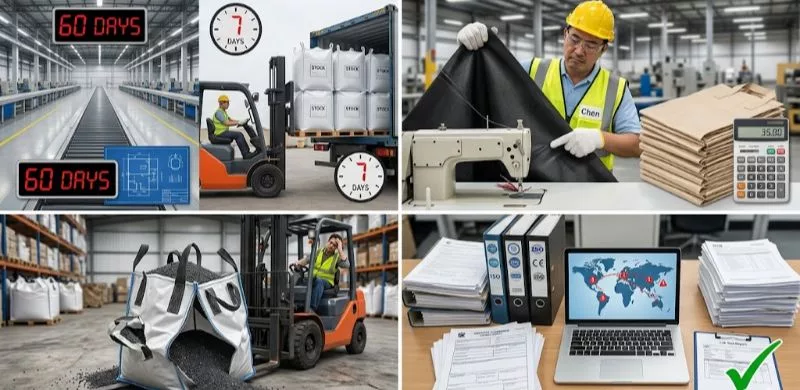
Custom industrial solutions do not fix everything. Hours are spent analyzing blueprints on the factory floor, often leading to the recommendation that clients purchase standard products instead. Stock bags work perfectly for short-run projects, low-risk contents, and indoor storage.
If you ship non-regulated materials with low handling intensity, off-the-shelf bags are adequate. Customization introduces real procurement friction.
1) Extended Timelines and MOQ Taxes
Custom specifications require new tooling. Sampling and lab validation incur upfront costs. Factories enforce Minimum Order Quantities (MOQs). These minimums frequently exceed pilot-stage demand.
If you want specialized coatings, you must buy raw materials in bulk. In our experience, a custom prototype takes 21 days just for initial validation.
⚖️ The Trade-off: You achieve exact specifications, but you sacrifice speed-to-market and require a 60-day pilot runway.
2) The Overengineering Cost Trap
Buyers frequently add unnecessary features. Last November, a client requested a heavy-duty 200 GSM Type C bag for wet gravel. Manager Chen stopped our sewing machine.
He noted: “This thick coating gums up the needle, and wet rock generates zero static.” We downgraded the spec to a standard 160 GSM Type A bag. This fix added two testing days but dropped unit costs by $3.20.
🛡️ Mitigation: Let factory managers review blueprints to prevent costly over-specification.
3) Severe Operational Field Failures
Human error destroys perfect engineering. Custom bags fail if operators fill them unevenly. Buyers often mismatch UV stabilization additives to actual outdoor exposure times. Static-control bags fail fatally when workers ignore grounding cables.
In our lab, dragging a loaded 1,000 kg bag across rough concrete destroyed the bottom seam in exactly 4.2 seconds.
⚠️ Critical Warning: Engineering cannot fix poor warehouse storage or rough forklift handling.
4) Sourcing and Compliance Complexity
Sourcing abroad introduces volatile freight rates and customs delays. Demand raw lab data over sales promises. The FTC regulations on marketing claims heavily penalize false durability statements.
Benchmark your suppliers on lab transparency and document traceability. Navigate these hurdles by analyzing bag sourcing by region. Always audit suppliers against strict bag industry certifications.
Final Verdict: Engineer the System, Eliminate the Risk
A true custom industrial solution is never just a different bag shape or a printed logo. It is a precise, engineered packaging system. Validation occurs directly against the actual handling and storage environment.
While upfront testing delays and minimum order quantities add friction, heavy industries must accept this timeline. If you ship hazardous or high-value materials, generic stock bags create immediate liability. You must customize.
Based on our raw floor data, we enforce three sourcing rules:
-
Define the actual failure risks first.
-
Demand transparent lab logic and documentation.
-
Compare total operational cost, not just unit price.
Before you approve any production, ask suppliers for the test method, safety factor logic, weave-density target, seam design rationale, UV-aging approach, and revision history.
We invite procurement, supply chain, and operations teams to request a technical review or sample consultation at LantaoBags.
The right industrial supplies manufacturer makes the bag fit the operation, not the other way around.
Disclaimer: I am not paid by manufacturers to promote these findings. My team spends hundreds of hours testing these materials, and I purchase all equipment directly to guarantee unbiased data.