





Custom Sport Bags Case Study: Sample Lead Time Cut to 9 Days
Team Flight AAU Basketball needed season-ready custom sport bags before tip-off, with no room for another round of prototype feedback. We locked a golden sample, cut sample turnaround from 18 days to 9, and held a 98% final inspection pass rate.
A Season Window Leaves No Room for Repeat Sample Rounds

For Team Flight AAU Basketball, the custom sport bags brief looked simple. The build was not. Custom branding, team use, and production reliability created several failure points at once.
When I reviewed the risk register before sampling, the biggest exposure was not styling. It was repeatability under load. Team bags take high wear cycles, heavy load-outs, and repeated transport abuse. One weak seam or crooked logo can outlast the season in photos and complaints.
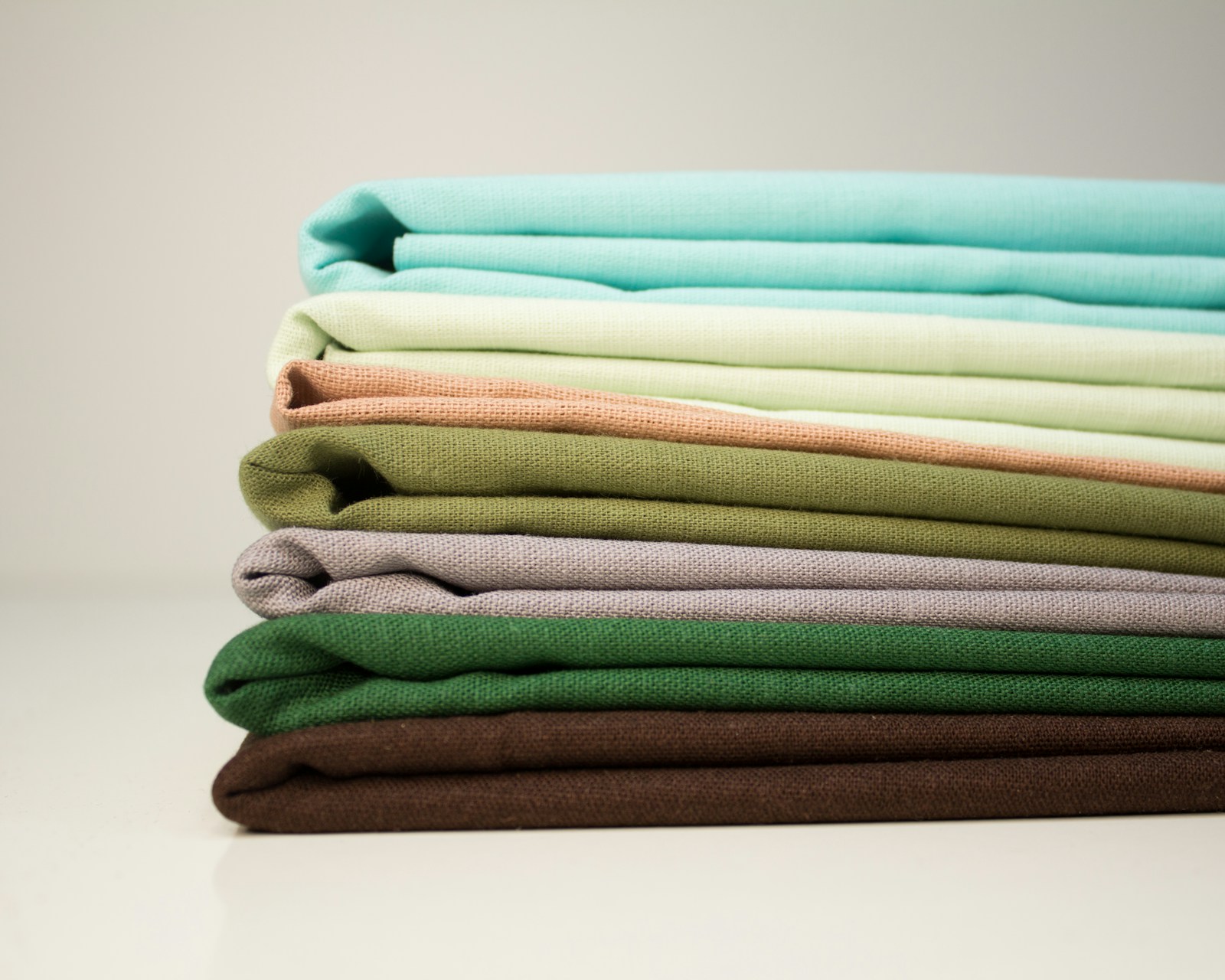
The material decision carried immediate cost. Polyester, Oxford, nylon, and TPU-backed constructions each change abrasion resistance, hand feel, and landed cost. I used our nylon vs polyester comparison to frame the tradeoff for a buyer who cared about durability and FOB price at the same time.
The hidden questions mattered more than the visible design: exact denier, stitch density, zipper brand, reinforcement points, and acceptable defect thresholds.
Buyer-side anxiety was concrete — crooked branding, seam failures, weak zipper alignment, odor, coating variance, and late delivery. The approval file also needed ISO 9001 and BSCI evidence, because a missing document can stop a shipment.
The buyer did not need a prettier bag. They needed a repeatable build. More sample rounds would push the season start, and a delayed launch would raise landed-cost uncertainty while pulling management time into supplier firefighting.
01 · Repeatability Under Load
Team bags take high wear cycles, heavy load-outs, and repeated transport abuse. One weak seam or stray bartack shows up before the season ends.
02 · Material Trade-offs
Polyester, Oxford, nylon, and TPU-backed builds each shift abrasion resistance, hand feel, and landed cost in a different direction.
03 · Specs Buried in the Risk Register
Denier, stitch density, zipper brand, reinforcement anchors, and defect thresholds all had to be locked in writing before cutting.
04 · Documentation and Deadline Risk
ISO 9001, BSCI, and material compliance evidence had to be in the buyer file, while every extra sample round pushed the season start.
Expert Take: Lock logo-placement tolerance, seam strength, and defect thresholds before sampling. A cheap sample round is expensive if it burns a season window. — Zoey Lee, Sales Director / Product Development
From Brief to Golden Sample in Five Phases
The decisive move was locking a golden sample before cutting bulk fabric. The brief became a written tech pack, and every build decision ran through one approved physical reference. Production Manager Li called it the “no-surprise build.”
Discovery and Specification Lock
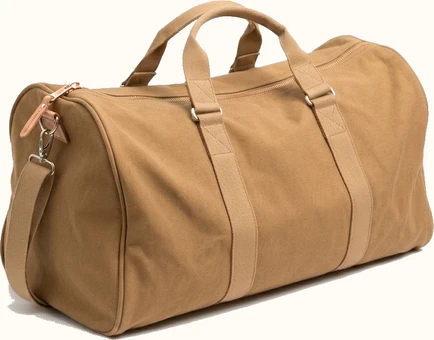
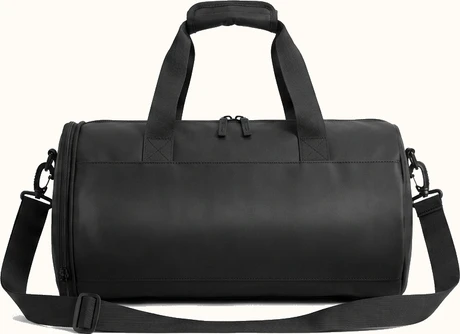
The client brief became a production-ready spec sheet. It covered use case, capacity (about 45L), compartments (main, shoe tunnel, wet-gear sleeve), logo placement, padded handle and strap configuration, and retail packaging.
CAD mockups went to the client first. After sign-off, we cut a physical golden sample, and nothing moved to bulk until that sample was approved. Adjacent formats follow the same gate on our custom travel bag page.

BOM and Construction Logic
The Bill of Materials drove cost and durability. The 600D shell balanced abrasion resistance against weight and landed cost, while 420D contrast panels kept the structure light without weakening the load path.
I rejected 1000D because it added stiffness and roughly 12% landed cost without measurable gain for indoor court travel. Bar-tacked strap anchors were written into the spec, not left as a finishing detail. Panel finishing followed our bag finishes standard for coating consistency.

| Component | Spec (project-approved) |
|---|---|
| Shell fabric | 600D polyester, PU-backed |
| Contrast panels | 420D nylon, matte finish |
| Lining | 210D polyester, water-resistant coat |
| Reinforcement | 5 mm PE base board + 3 mm foam walls |
| Webbing | 25 mm PP, high-tenacity |
| Piping | 3 mm round, color-matched |
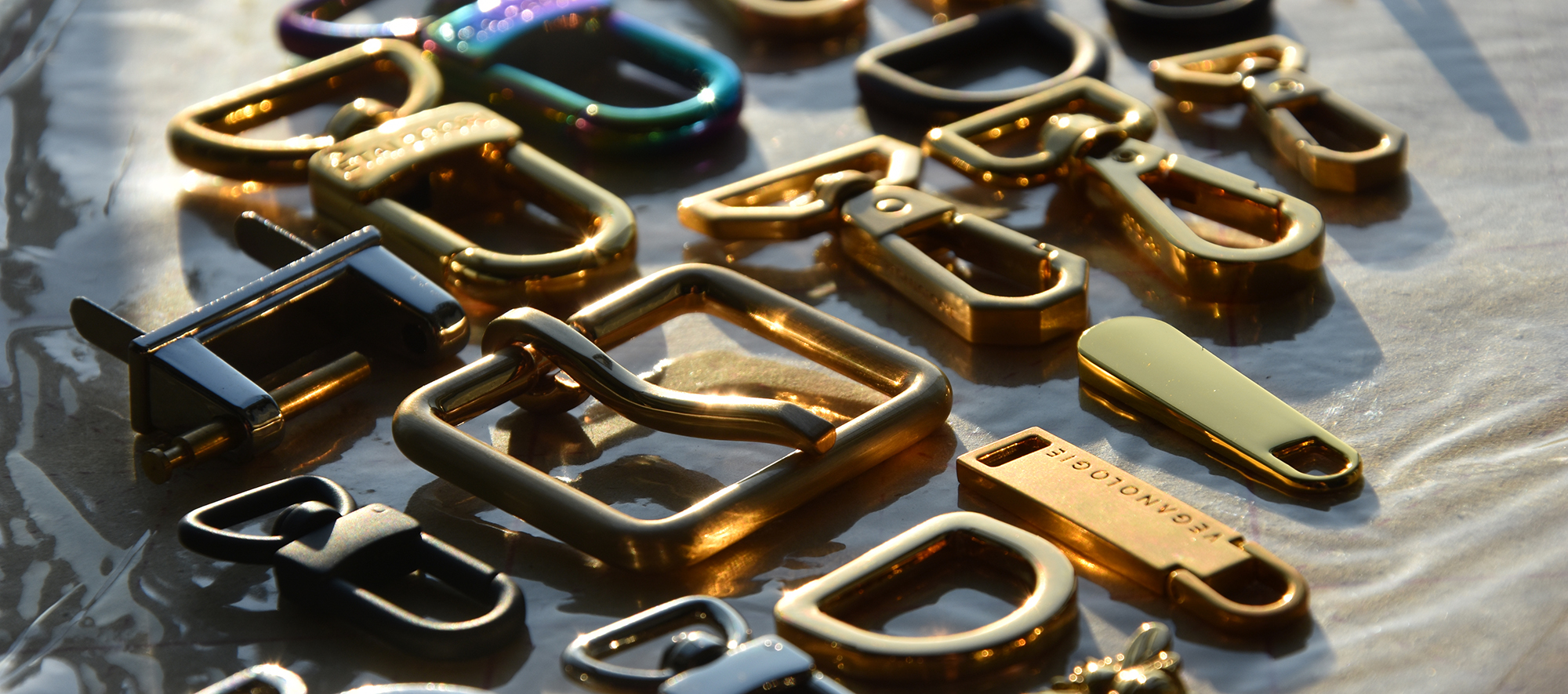
| Zipper | YKK #10 coil (main), #8 pockets |
| Pullers | Custom molded, branded |
| Logo | Embroidery, 6,000-stitch cap |
| Packaging | Polybag, hangtag, 5-ply carton, desiccant |
Architect’s Verdict: A TPU-backed shell looked strong on paper, but our TPU coating trials showed inconsistent hand-feel across rolls at this price band. We kept PU-backing and validated water resistance at the lining instead.
Sample Iteration and Approval Workflow
The sequence ran in seven steps: brief review, tech pack drafting, prototype sample, revision notes, golden sample sign-off, pre-production meeting, bulk release. One revision loop closed the gap.
At golden-sample stage, QC Inspector Wang checked dimensions, panel symmetry, logo centering, zipper action, strap comfort, lining finish, and pocket function. That gate cut revision risk before mass production.

Floor QC Checklist
Every run followed a written checklist. Each heading was a gate, not a formality:
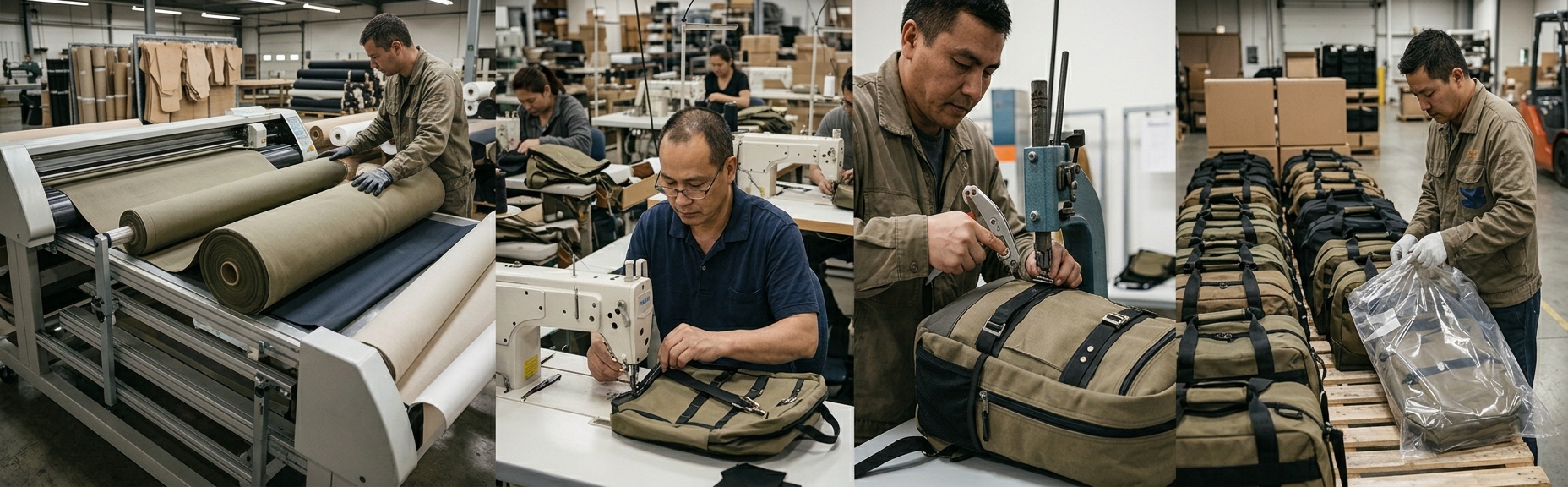
- Incoming Material Inspection: denier and hand-feel against the approved sample, Pantone color match, coating consistency and odor, roll-defect scan.
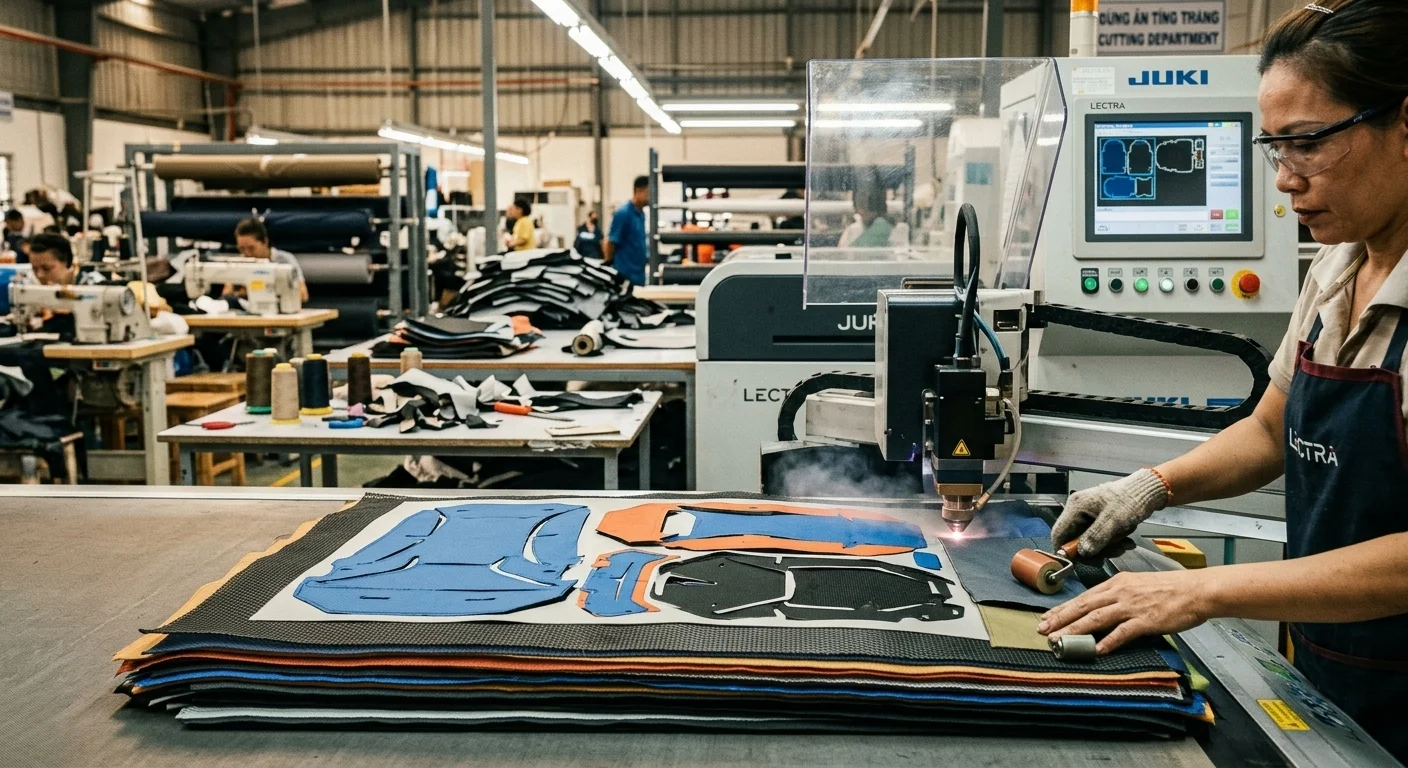
- Cutting Room Check: panel orientation, grain consistency, logo-panel tolerance, size and colorway count.
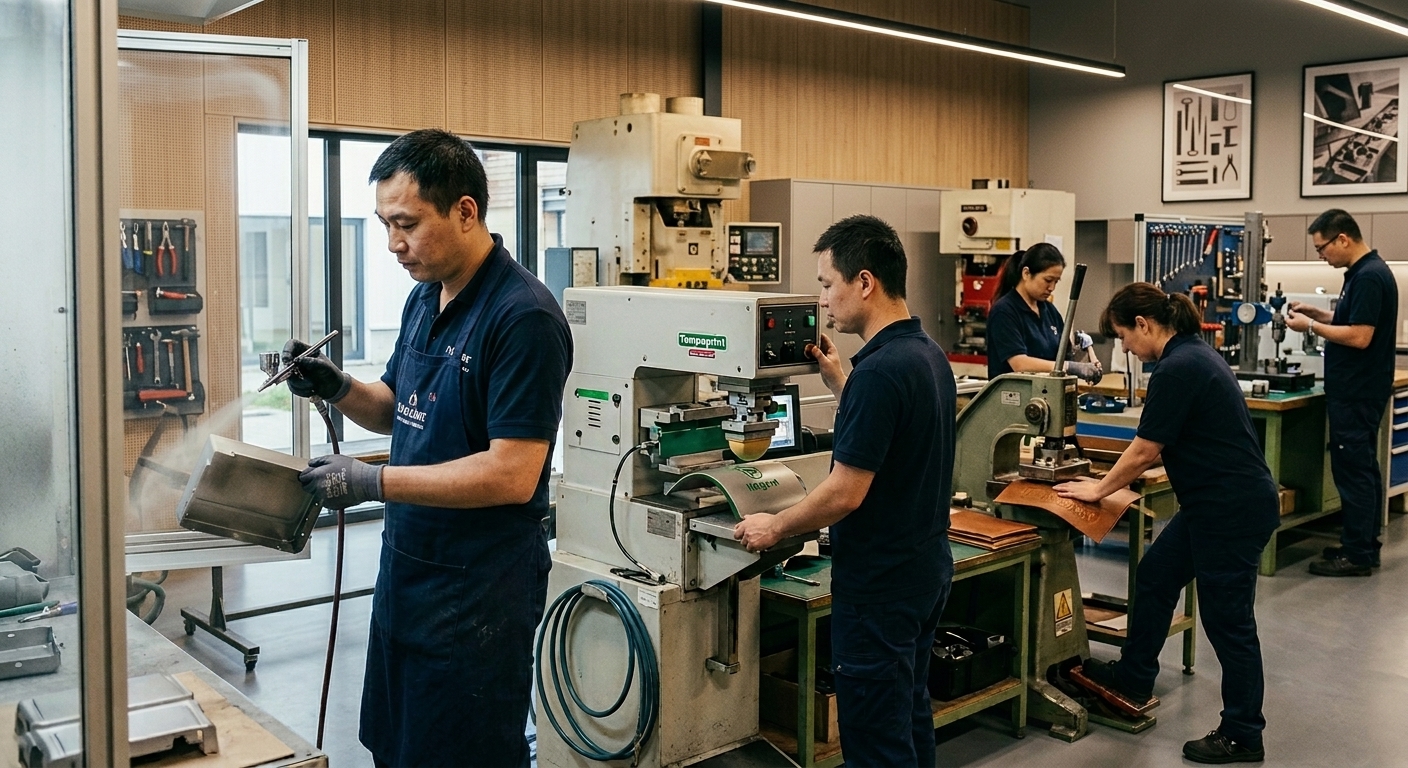
- Sewing Line In-Line Check: stitch consistency, seam allowance, bar-tacks at strap anchors and handles, zipper travel, piping neatness.
- Stress Test for Reinforced Stitching: loaded-drop checks at every anchor; fail conditions include skipped stitches, seam separation, strap distortion, and broken bartacks.
- Water-Resistance Validation: wipe and standing-water simulation at stitch lines, corners, zipper tape, and binding junctions.
- Hardware and Branding Inspection: puller alignment, logo centering, embroidery cleanliness, buckle and D-ring function.
- Final Random Inspection: carton check, assortment accuracy, labeling and barcode verification, packaging presentation, and defect classification.

AQL and Factory Controls
The site ran to an AQL 2.5 / 4.0 framework across pre-production, in-line, and final pre-shipment inspection. ISO 9001 and BSCI records were pulled for the buyer file before cutting.
These are factory standards, not legal thresholds. Buyers should confirm them against their own compliance rules.

Expert Take: The custom zipper puller alignment was the hardest part of this run. Molded pullers sat 2 mm off-center on the first 200 units because the tape feed drifted. I stopped the line, re-set the tape tensioner, rechecked every tenth bag, and rejected 14 pieces before alignment held. — Conny Zhang, Outdoor / Sports Bag Specialist
Nine Days to Approval, Backed by Five Control Phases
Sample Turnaround Cut 50%, Final Pass Rate at 98%

Sample turnaround dropped from 18 days to 9 days, a 50% cut. The gain came from locking the golden sample and enforcing one revision loop. I pulled these client-approved figures from the signed sample approval log, production tracker, and final inspection reports.
| Metric | Before | After | Change |
|---|---|---|---|
| Sample turnaround | 18 days | 9 days | −50% |
| Revision rounds | 4 | 1 | −75% |
| Final inspection pass rate | 82% | 98% | +16 pts |
| On-time delivery | 70% | 100% | +30 pts |
| Reorder readiness | Not tracked | 2 weeks post-delivery | Now tracked |
Before the program, the client faced fragmented sourcing and unpredictable approval cycles. Four revision rounds were common, final inspection pass rates hovered at 82%, and on-time delivery sat at 70%, a coin flip.
After the golden-sample lock, revision rounds fell to 1, the final inspection pass rate hit 98%, and on-time delivery reached 100%. The 98% pass rate follows the AQL 2.5 / 4.0 framework across pre-production, in-line, and final inspections, verifiable against the ASQ acceptance sampling standard.
The comparison uses the same SKU, factory line, and inspection checklist. I excluded one expedited sample run because it bypassed the standard approval loop.
Procurement gained easier vendor evaluation and a written checkpoint at sample lock, first article, and final inspection. Brand management reported lower launch anxiety because logo placement and handle anchors matched the approved prototype. Junior ops staff used one approval sheet and one inspection folder.
“The zipper puller alignment issue was our biggest risk. Once we corrected the tape tensioner, misalignment disappeared. We rejected 14 pieces early, but that saved a bulk rework.” — Ranee Zhang, Sports & Canvas Bag Specialist
I reviewed the approved prototype and final-run photos. Stitching and logo placement stay consistent. The close-up of the reinforced handle anchor matches from sample to scale, and the final run shows no drift in stitch density or logo position.
What Sport Bag Buyers Should Lock Before Bulk Cutting
1 Lock the Spec Before You Negotiate Final Price
A vague BOM hides cost in material swaps, stitch labor, and rework.
Make the tech pack the price sheet: every material, finish, and tolerance gets a line item.
2 Make Golden-Sample Sign-Off a Gate, Not a Milestone
One physical reference stopped revision chaos. Inspector Wang checked dimensions, logo centering, and zipper travel.
Revision rounds fell from four to one. Do not release fabric until the sample log is signed and attached to the PO.
3 Treat the Factory as an Operations Partner
Li flagged reinforcement anchors first. Pullers later drifted 2 mm off-center and 14 pieces were rejected.
Ask suppliers to explain substitutions and delivery risk in plain terms, as our custom backpack programs do.
The approved bag architecture gives Team Flight AAU Basketball a repeatable base. The next order can reuse the golden sample, tech pack, BOM, and inspection checklist, which shortens reorder lead time and protects logo and construction consistency.
The same platform supports line extensions: a smaller travel duffel, a shoe bag, or a sideline tote, each sharing reinforcement logic and packaging standards. The long-term value is not one approved run, but a procurement asset that supports adjacent sport bag programs without restarting the learning curve.
Pro Tip: Require a named QC inspector, a signed golden sample, and a written inspection checklist — not just a pre-shipment report.
Turn a locked spec into a season-ready sport bag
Request a Sport Bag Feasibility Review
Steven Zhang
Steven Zhang is a bag manufacturing specialist with over 12 years of hands-on experience in sourcing, product development, and B2B sales for global brands. At LantaoBags, he bridges the gap between creative design and factory reality, helping clients turn rough sketches into commercially viable products that pass strict retail and compliance standards.
Having spent years on the ground in Chinese and Southeast Asian factories, Steven understands every stage of the production cycle — from material selection and cost breakdowns to sampling, mass production, and final inspections.
Connect on LinkedIn