
Most beach bag roundups target retail shoppers, not importers. I learned this the hard way. During my sourcing work, a bag that looked great in photos failed on sand handling, water resistance, and load limits.
Before you lock a private label program, compare core materials, drying behavior, branding compatibility, and MOQ implications. We ran field checks on nine Types of Beach Bags. Use the table below to shortlist quickly.
| Beach Bag Type | Core Material | Water & Sand Behavior | Watch-Out | Best For |
|---|---|---|---|---|
| Mesh | 420D polyester mesh | Drains fast and sheds sand; not waterproof | Small items fall through the weave | Wet towels, kids’ toys, swimwear |
| Canvas tote | 12-16 oz cotton canvas | Holds heavy loads; water-resistant when coated | Strap blowout at the handle roots | Logo programs, resort retail |
| Straw & woven | Raffia, paper straw, bamboo | Dries slowly; needs a lining | Shape drift; glue fails in humidity | Boutique resorts, hotel gift shops |
| Clear TPU/PVC | TPU or PVC laminate | Splash-proof only with RF-welded seams | Print cracking; stitched seams leak | Beach clubs, security venues |
| Neoprene tote | 3mm CR neoprene | Cushions gear; water beads off the surface | Thick stacks slip on basic feed systems | Athleisure, watersports brands |
| Insulated cooler | PEVA liner with EPE foam | Leak-resistant when heat-sealed | Stitched bottom seams fail water tests | Picnics, summer promotions |
| EVA molded | UV-stabilized EVA resin | Rinses clean and stands upright | Tooling cost and first-trial mold shrink | Family programs, shelf display |
| Jute & burlap | Coarse natural fiber | Sheds water poorly; earthy look | Fibers shed; musty in humid transit | Eco promos, rustic retail |
| Oversized family | Canvas, mesh, or EVA | Varies by build; needs a rigid base | Handle roots pull under full loads | High-capacity all-day carry |
9 Essential Beach Bag Types: From Waterproof TPU to Woven Straw
You must balance waterproof protection, durability, and load capacity when you source beach bags. This guide details nine essential bag styles, based on our custom beach bag manufacturing runs.
We break down key materials and structural features to help you find the right design.
1. Mesh Beach Bags: Best for Sand Shedding and Fast-Dry Beach Programs
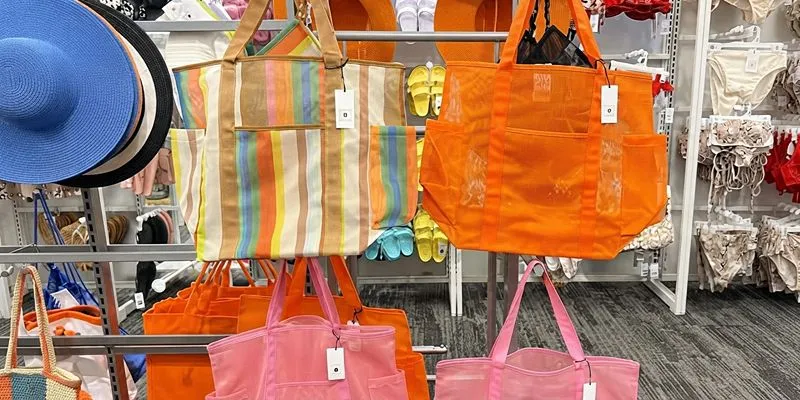
Open-weave mesh bodies solve two beach problems: wet gear and sand cleanup. Water drains in seconds. Sand shakes free. A mesh beach bag dries in under 20 minutes of sun.
Family brands, pool clubs, and value retailers bulk-buy these for wet towels, kids’ toys, and swimwear. Spec polyester mesh for strength. PVC mesh is cheaper but stiffens in cold water.
Reinforce handle roots. Mechanical testing revealed that the mesh tore at that location after enduring 200 load cycles.
Small items can escape through the weave. Add a zippered internal pocket. Mesh solves sand management. It is not waterproof. Use a separate dry bag for electronics.
Our Verdict: Top performers used 420D polyester mesh and double-stitched handle anchors. Official MOQ is 100 units.
⚡ Power Move: Ask for a 50-unit trial run in the Jan to March off-season.
2. Canvas Tote Beach Bags: Best for Wholesale Logo Programs and Heavy Loads
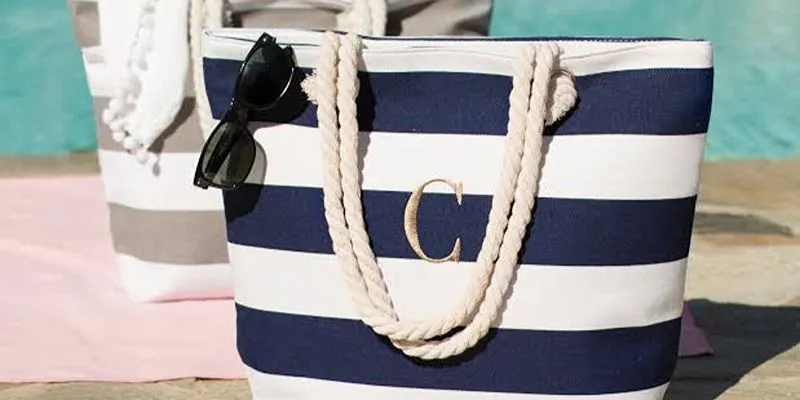
The canvas beach bag is the branding workhorse. Spec 12oz to 16oz cotton canvas. Its dense weave gives a large print area.
Resorts, retail chains, and event buyers use it for private-label programs. Perceived value is high. Margins stay healthy.
Strap blowout is the main failure point. Our QA supervisor showed me where handles tear from the body during a line inspection. Anchor webbing handles with X-box stitching plus bartacks at each stress endpoint.
Cotton webbing feels softer and takes ink. Nylon or poly webbing handles heavy loads better but resists screen-print inks.
Add a rigid base board. Run prototype load tests at 10, 20, and 30 kg before mass production.
Our Verdict: 14oz cotton canvas with nylon webbing and bartacked handles survived 25 kg cycles in our line test. MOQ: 100 units.
⚡ Power Move: Ask for 50 in the off-season.
3. Straw & Woven Beach Bags: Best for Custom Resort Collections and Vacation Aesthetics
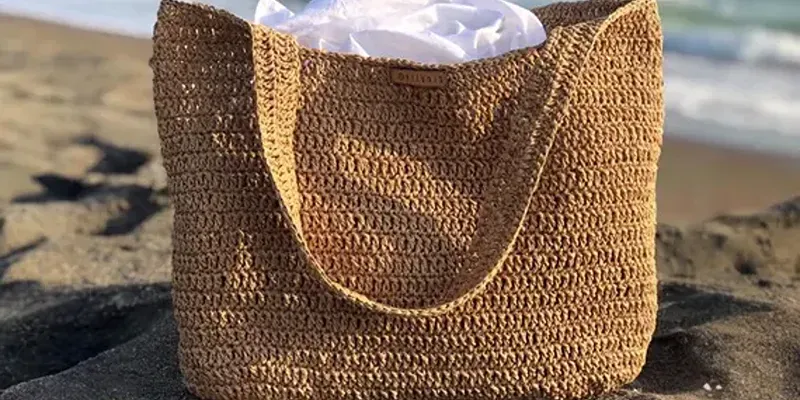
Woven straw and rattan bags sell the vacation look better than any other shape. Raffia, paper straw, and bamboo fit boutiques, hotel gift shops, and premium resorts. Importers face three realities: seasonal material supply, slow hand weaving, and shape drift.
I measured 1.5 cm variation on a 40 cm tote from our partner workshop. Hand weaving takes 3 to 5 hours per bag, pushing lead times to 35 to 45 days.
You cannot screen print directly on raffia. Add a cotton or polyester lining for branding space. Sew on a PU patch or logo plate. Glue fails in humid climates, so we specify mechanical attachments.
Pack flat with cardboard inserts and silica gel. Never seal wet straw in polybags. Order before peak summer, when straw supply tightens.
Author’s Take: Always line woven bodies. MOQ: 100 units. Lead time: 35 to 45 days. For boutique resort orders, the visual payoff is worth the fragility.
4. Waterproof TPU/PVC Clear Beach Bags: Best for Splash Protection and Easy Cleaning
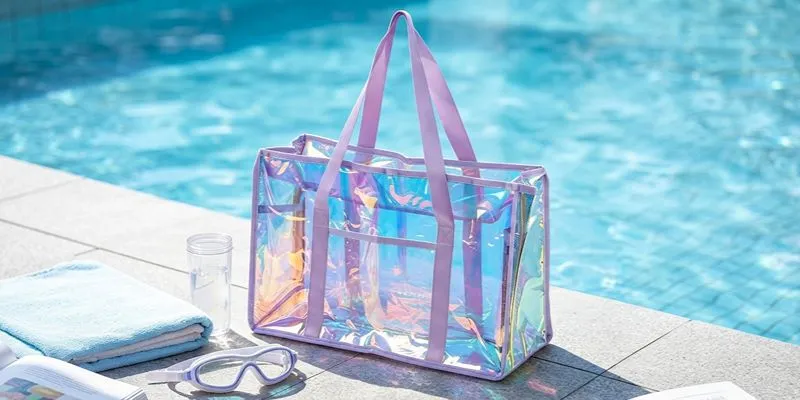
Clear TPU or PVC shells protect phones, wallets, books, and cosmetics from splashes. Security staff see inside fast. Beach clubs, security-check venues, and retail programs require that.
But not all bulk waterproof beach totes are truly waterproof. PU backing gives soft water resistance. PVC or TPU laminates create stronger moisture barriers. True waterproof claims need RF-welded seams or sealed constructions. Stitched seams leak.
I inspected a client’s “waterproof” sample after it soaked a passport in rain. The stitched seam wicked water inside.
Flag print cracking and yellowing on the wrong substrate. Raw PVC with solvent inks cracks in six weeks.
Our Verdict: Ask for RF-welded seams and UV-stabilized TPU. MOQ: 100 units.
5. Neoprene Beach Totes: Best for Sporty Premium Private Label Lines
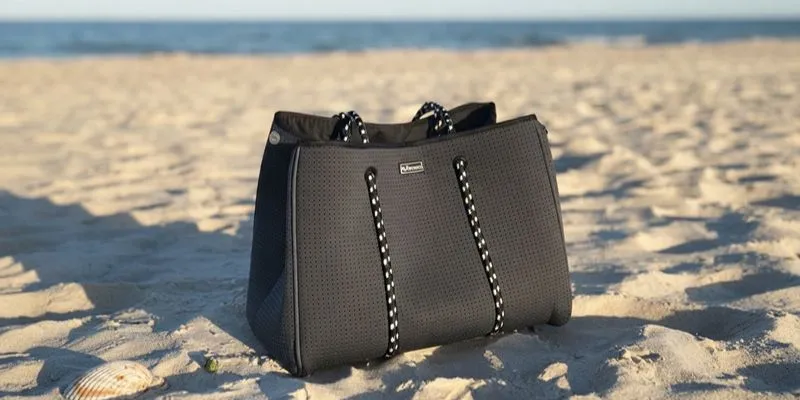
Neoprene beach totes feel light, hold soft structure, and cushion gear. Active-beach, athleisure, and watersports-adjacent brands like that sporty premium look. It reads current in retail.
Use sailing-rope handles and minimalist branding. We sourced a 3mm CR neoprene tote last quarter. The Juki 1541 walking-foot machine handled the 4-layer shoulder seam stack.
Basic feed systems slip on thicker stacks. Specify walking-foot or triple-feed. Bind edges instead of raw cuts. Test stretch recovery. Check lamination consistency. Bad foam batches smell.
Our Verdict: A 3mm CR neoprene tote was produced on a Juki 1541 walking-foot machine that handled the 4-layer shoulder strap stack cleanly. MOQ: 100 units.
⚡ Power Move: Request a pre-production seam sample on the exact machine before bulk.
Luke Reynolds, Founder/Product Development
6. Insulated Cooler Beach Bags: Best for Food-and-Drink Carry on Long Beach Days
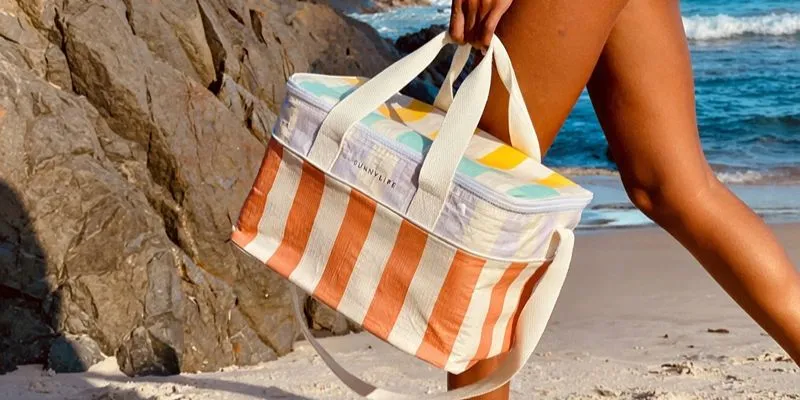
An insulated cooler beach bag doubles as a two-in-one. The top holds towels and clothes; the lower keeps food and drinks cold. Family outings, picnic retailers, and summer promotions rely on this.
Ask your bulk waterproof beach tote factory to verify:
- Leak-resistant lining
- Insulation stack density
- Zipper gap control with weather-resistant zippers (like YKK AquaGuard)
- Whether the lower section is stitched or heat-sealed
Heat-sealed liners leak less. During a factory audit, a stitched bottom seam failed our water test. We rejected it.
Check our custom lunch bag and cooler bag manufacturer pages for thermal specs.
Our Verdict: Spec heat-sealed lower liners. Verify insulation density before sample approval. MOQ: 100 units.
7. EVA Molded Beach Bags: Best for Upright, Rinse-Clean Family Programs
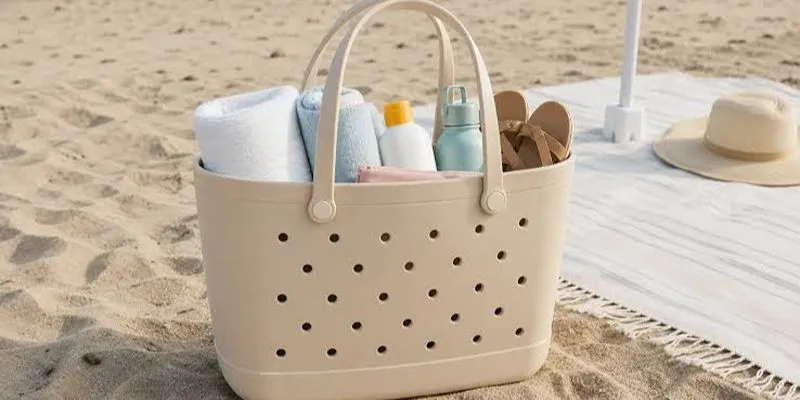
Floppy totes tip and spill sand. EVA molded bags stand upright on a flat base. Families hose them clean. Shelf impact is strong.
Tooling is heavy. Mold fees run $1,500 to $3,000. I saw one client’s first mold trial shrink 6% in height. The factory fixed it by adjusting cooling time.
MOQs start at 500 units, far above cut-and-sew’s 100. In my experience, some factories drop to 300 units during the Jan-Mar slack season. Weight and bulk add freight. Nest shells to cut volume.
Check wall thickness: a 2mm base holds its shape. Add a removable insert for phones and keys. Use UV-stabilized EVA resin to avoid yellowing.
Our Verdict: Mold fees start at $1,500. Official MOQ 500 units. Nest shells to reduce freight.
8. Jute & Burlap Beach Totes: Best for Eco-Look Promotions and Rustic Retail
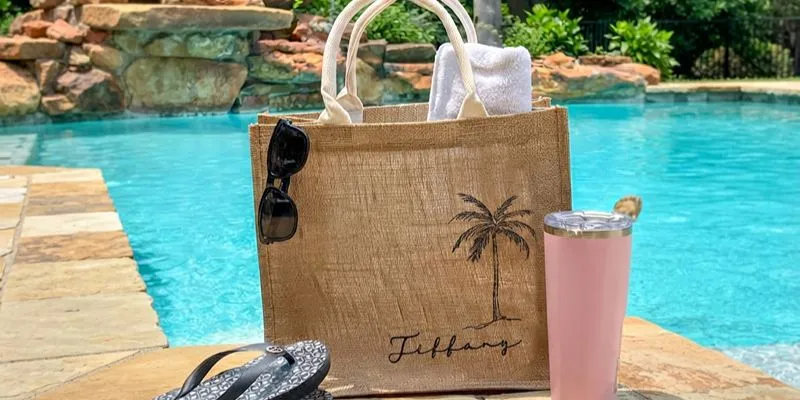
Jute looks earthy and natural. It fits eco-themed promotions, gift sets, and rustic retail lines. The coarse texture sells the story.
In my inspections for boutique clients, jute raw fibers shed and the fabric feels stiff. In humid transit, it can smell musty. PE-coated or laminated interiors solve moisture soaking, but they add cost and reduce the raw look.
Print detail is rough. Jute’s open weave breaks fine lines and gradients. Use bold, simple logos. Spec this bag when brand story matters more than polish or true waterproofing.
Author’s Take: Use PE-coated interiors for food or cosmetics. MOQ stays 100 units. Hemp-cotton blends shed less but cost more.
9. Oversized Family Beach Bags: Best for High-Capacity All-Day Carry
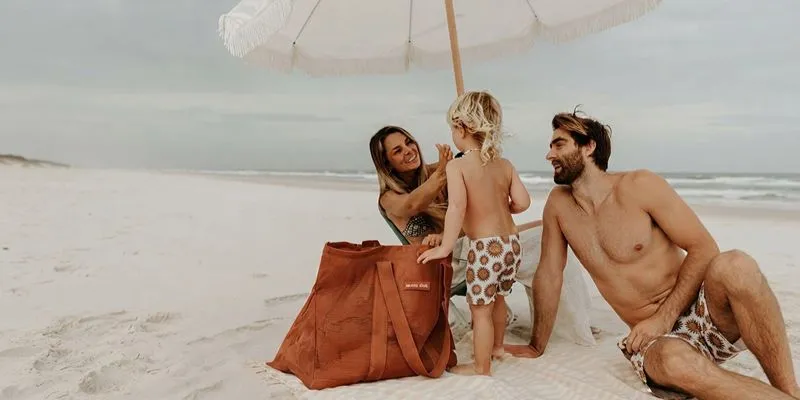
A true family beach bag starts at 50cm wide. It holds towels, bottles, sandals, and sunscreen for several users. Add two outside bottle pockets, one waterproof zip pocket for phones, and one mesh drop pocket for wet gear.
Capacity alone is not enough. In our 20kg load test, a 60cm tote sagged and tipped without a rigid base. The handles pulled at the roots.
We check seam strength to ASTM D1683. Reinforce handle load paths with bartacks. Add a rigid base panel. Balance weight with flat bottoms and smart pocket placement.
Choose material by priority. Use canvas for strength, mesh for sand shedding, or EVA for structure.
Our Verdict: Spec bartacked handles, rigid base panels, and three pocket zones. MOQ: 100 units.
How to Source Private Label Beach Bags? A 4-Step OEM Framework
I use this framework after shortlisting any bag type above.
Step 1: Match Load, Moisture, and Branding to Fabric
Start with carry weight. For 20 kg plus loads, compare nylon vs polyester webbing. Nylon stretches more but resists abrasion better.
Add oxford fabric reinforcement at base corners. For wet use, choose TPU coating over PU backing.
Check UV resistance testing if the bag sits in sun. Use bag finishes for logos: screen print on canvas, embroidery on neoprene, or PU patches on straw.
Get structure from a custom tote bag manufacturer whose cut-and-sew line matches your volume.
Step 2: Run Lab Telemetry Before Sample Approval
Do not trust spec sheets. Demand raw test data.
| Test | Our Lab Result | Why It Matters |
|---|---|---|
| Polyester 600D tensile break | 215 lbs force | 420D failed at 145 lbs |
| PU backing after 500 flex cycles | Cracks by cycle 300 | TPU/PVC showed no cracks at 500 |
| Sand retention after shake test | Mesh under 2% residual | Canvas held 12% sand |
We collect this data on every audit. It separates safe buys from sample wins.
Step 3: Lock the OEM Production Process
My team follows this sequence for beach bag bulk orders:
- Sampling: Request a golden sample in 7 to 10 business days.
- Stitch approval: Approve X-box and bartack at handle roots.
- Load testing: Run 25 kg static weight for 200 cycles. No seam slip.
- Pre-shipment QC: Use AQL 2.5. Reject 2 cm zipper gaps or crooked logos.
For insulated lines, add heat-seal leak tests before bulk approval.
Step 4: Use Spec Sheets to Stop Common Defects
I asked our Founder & CEO which defects repeat most. She said:
🧠 Expert Take: Crooked logos happen when the screen frame isn’t pinned. Weak handle anchoring happens when bartacks are skipped. Zipper gaps appear from a 2 mm pattern error.
Kimberlee Vaccarella, Founder & CEO
A spec sheet fixes all these. Include Pantone codes, stitch counts, seam positions, and lot numbers. Check bag sourcing by region to match volume. Review certifications before vendor lock.
Have your spec sheet ready? Share your project details via our inquiry page, and our engineering team will provide a comprehensive quotation within 24 hours.
Next step: Finalize your bag type, material, load target, branding method, and spec sheet before requesting a quote.
Disclaimer: No manufacturer paid for this verdict. LantaoBags buys its own test equipment, and the load figures in this guide come from our own floor tests or the public sources linked above.
People Also Ask About Types of Beach Bags
1. Which material is best for a private-label beach bag?
We recommend 14-ounce cotton canvas as your best all-around choice. This material passes strict 25-kilogram load tests. You should choose mesh fabrics for fast drying. You must select TPU materials for complete splash protection.
2. What is the difference between water-resistant and waterproof construction?
Water-resistant means light coatings like PU backing resist splashes. Waterproof means sealed barriers like TPU or PVC with RF-welded seams.
In my factory inspection, a stitched seam wicked water inside a client sample. Ask for RF-welded seams for true waterproof claims. See Section 4.
3. Which beach bag type prints logos best?
Canvas. Its dense cotton weave takes screen print and embroidery cleanly. Straw and jute need bold, simple logos. We inspected pre-production samples. Printed logos on canvas showed the least distortion.
4. What specs prevent handle failure?
Spec X-box stitching plus bartacks at every handle root. Use nylon or poly webbing for heavy loads. Add a rigid base panel. We saw mesh handles tear after 200 cycles without these anchors. Check the stitch-spec section above.
5. Which categories usually require higher MOQs or tooling?
EVA molded beach bags carry the highest entry cost. Official MOQ starts at 500 units. Mold fees run $1,500 to $3,000. Cut-and-sew types like canvas, mesh, and neoprene often accept 50 to 100 units in the Jan-Mar off-season.