







On this page
Short Answer:
- RPET: best all-round material for most custom cosmetic bags.
- TPU: best for clear, waterproof pouches.
- PU: best for luxury shelf feel.
- PVC: only wins on the lowest clear-bag price.
- Decision rule: match the material to the failure mode and claim you can defend.
Cosmetic bags usually fail at seams, stiffening, and coating peel before the fabric itself gives out. We tested four swatches for film thickness, hydrostatic head, and handfeel in our QC lab.
This guide compares what B2B buyers actually check: waterproofing, durability, handfeel, sustainability paperwork, and total cost. It draws on live custom cosmetic bag manufacturing runs.
The guide answers four buyer questions: which material leaks least, ages best in humidity, feels most premium, and supports the cleanest claim. I also show where PU beats RPET and where PVC stays rational.
Main Differences Among Cosmetic Bag Materials
Match the shell to the failure you cannot tolerate. The table groups each material by structure, handfeel, cost band, and claim readiness; the numbered sections below explain the test logic.
| Feature | RPET | TPU | PU | PVC |
|---|---|---|---|---|
| Material | Recycled polyester, 300D–600D | TPU film, 0.2–0.6 mm | PU-coated synthetic leather | PVC film, 0.2–0.6 mm |
| Waterproof performance | Water-resistant; needs PU backing | Waterproof; AATCC 127 tested | Water-resistant; coating varies | Waterproof but stiff |
| Handfeel | Matte, crisp | Smooth, clear, slightly tacky | Soft, padded leather-look | Plasticky, cold, stiff |
| Relative cost | Mid | Premium | Premium | Lowest |
| Sustainability / claim readiness | GRS/RPET claim ready | Weak claim support | REACH/RoHS available | Phthalate risk; check Prop 65 |
| Best use case | Travel pouches, promo kits | Clear pouches, wet bags | Luxury vanity cases | Budget TSA pouches |
| Main risk | Pilling if low denier | Scratch haze | Peeling if bonding poor | Cracking, odor, phthalates |
Every figure here comes from our own production-floor tests and inspection records — internal lab results, not third-party certification.
1. Waterproof Performance: TPU vs PVC vs PU vs RPET

A waterproof material is not automatically a waterproof bag. TPU and PVC films are solid barriers: RF-weld the seams and the pouch stays dry under a leaking shampoo bottle.
RPET and PU depend on backing, lamination, coating, lining, and stitching. A coated fabric is only as good as its weakest stitch hole. Stitched seams leak, taped seams help, and RF welding wins for clear builds.
We cut a coated 1680D nylon swatch and a PU leather sample, clamped both on the hydrostatic-head rig, and raised pressure until failure. We inspected the first leak at needle holes, edge folds, and laminated backing.
The PU sample failed around the needle holes. The coated nylon held until the backing separated near a turned corner, and the TPU film survived after flexing. We verify against AATCC TM127.
For clear builds, seal the film instead of stitching it. Our TPU coating guide covers weld parameters and film grades.
Who wins this category: TPU for clear waterproof builds. RPET can compete only with a sealed backing and taped seams.
2. Durability and Hidden Failure Modes in Real Storage Conditions

What fails first depends on the shell. TPU picks up scratch marks, weld stress, and panel hazing. PVC yellows, stiffens, smells, and risks cold cracking.
PU is the quiet failure: hydrolysis, peeling, corner abrasion, and delamination near zipper ends. RPET frays on raw edges and loses spill protection if left unlined.
We ran bottle-leakage simulation, fold-recovery checks, zipper-end stress, and packed-carton compression. The vinyl often failed first in the corners.
The table below compares recycled RPET canvas with virgin polyester across 500 wash cycles. Abrasion was measured on the ASTM D4157 oscillatory-cylinder method.
| Test | RPET canvas (600D) | Virgin polyester (600D) |
|---|---|---|
| Tear strength, warp (lbs) | 28.5 | 31.2 |
| Tear strength, fill (lbs) | 24.8 | 27.0 |
| Abrasion resistance (cycles) | 22,000 | 25,000 |
| Fold recovery after 500 washes | Class 4 (Slight creasing) | Class 4.5 (Minimal creasing) |
We also logged a PU hydrolysis chamber test for coated fabrics and a low-temperature crack check for clear films. Hydrolysis screening followed ISO 1419 accelerated-ageing methods.
For outdoor or window-exposed programs, add UV exposure data from ASTM D4329. Our UV resistance testing guide covers sample prep and pass limits.
Who wins this category: RPET for general fabric storage; TPU for clear panels.
🧠 Expert Take: PVC looks fine at sample approval. Put it in a humid bathroom for three months, and the coating changes. TPU in the same chamber shows only surface hazing.
Bill Lee, Founder and CEO
3. Handfeel, Premium Perception, and Logo Execution
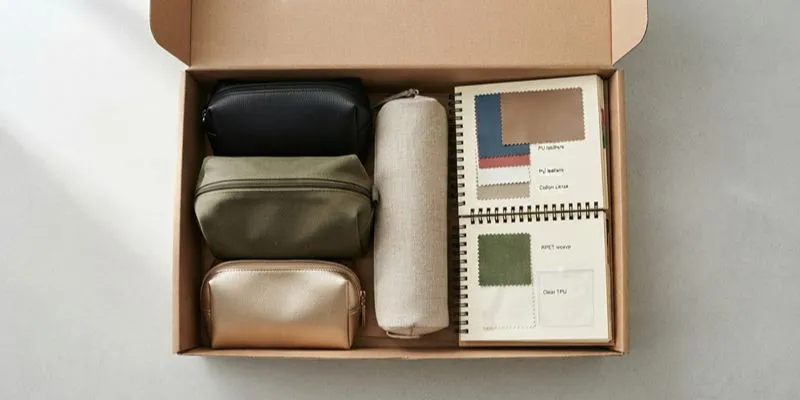
Handfeel changes how a buyer reads your brand. TPU feels soft and elastic with a premium clear finish. PVC feels harder and colder unless you upgrade the grade.
PU offers the strongest luxury shelf language: smooth or grained, dense, and leather-like. RPET can feel promotional or retail-ready depending on denier, weave, coating, and lining.
Logo execution follows handfeel. PU accepts debossing and metal plates beautifully. RPET works best with screen prints or heat transfers. Clear films need printed patches or silicone logos, because surface tension and flexing affect adhesion.
For custom makeup bag leather options, PU is not one thing. Standard PU, recycled PU, and microfiber synthetic leather each carry a different cost and abrasion profile.
The finish decides the perceived value. See our guides on synthetic leather and bag finishes for coating and surface options.
Genuine leather is a separate conversation: higher cost, different import rules, and different audit expectations. Our custom handbag manufacturers and leather goods manufacturers guides cover both routes.
Who wins this category: PU.
4. Sustainability and Compliance: Which Claims Survive Due Diligence?

A greener-sounding material name is not enough. Paperwork is verified before any claim is approved. RPET has the strongest recycled-content story when GRS scope and transaction documents are complete.
TPU can be a better performance story than PVC, but that does not make it automatically the greenest material. PU’s claim strength varies by formulation and backing. PVC draws the most scrutiny.
Our document checklist is short: recycled claims need GRS scope and transaction documents; organic or natural blends need proof; chemical safety depends on market; and audit reports supply social-compliance context.
For recycled content, request GRS certification from Textile Exchange. For skin-contact and restricted substances, ask for OEKO-TEX Standard 100 test reports.
EU retail needs REACH documentation, explained in the ECHA REACH guidance. US retail adds a Prop 65 review before listing.
We verify all of this before quoting a sustainability claim. For the full certificate map, see our bag industry certifications guide.
Who wins this category: RPET, only with complete paperwork. Without it, the claim fails due diligence.
5. Cost Bands, MOQ Logic, and When Budget Shortcuts Backfire?
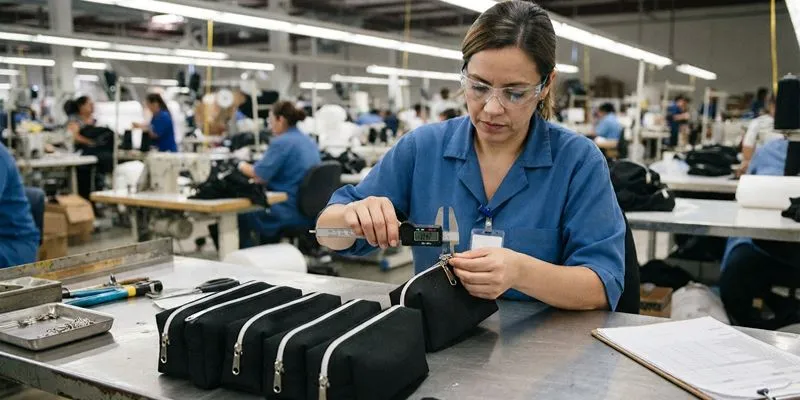
Cost is more than shell material. Zipper gauge, puller finish, lining, padding, logo method, and packaging protection all move the quote.
PVC usually wins opening price for simple clear-bag programs, but you pay later in stiffness, odor, or cracking complaints. RPET often wins all-round value for scalable branded projects.
PU adds perceived value but increases failure-risk review and packing sensitivity. TPU costs more than PVC but saves complaints when premium feel or odor matters.
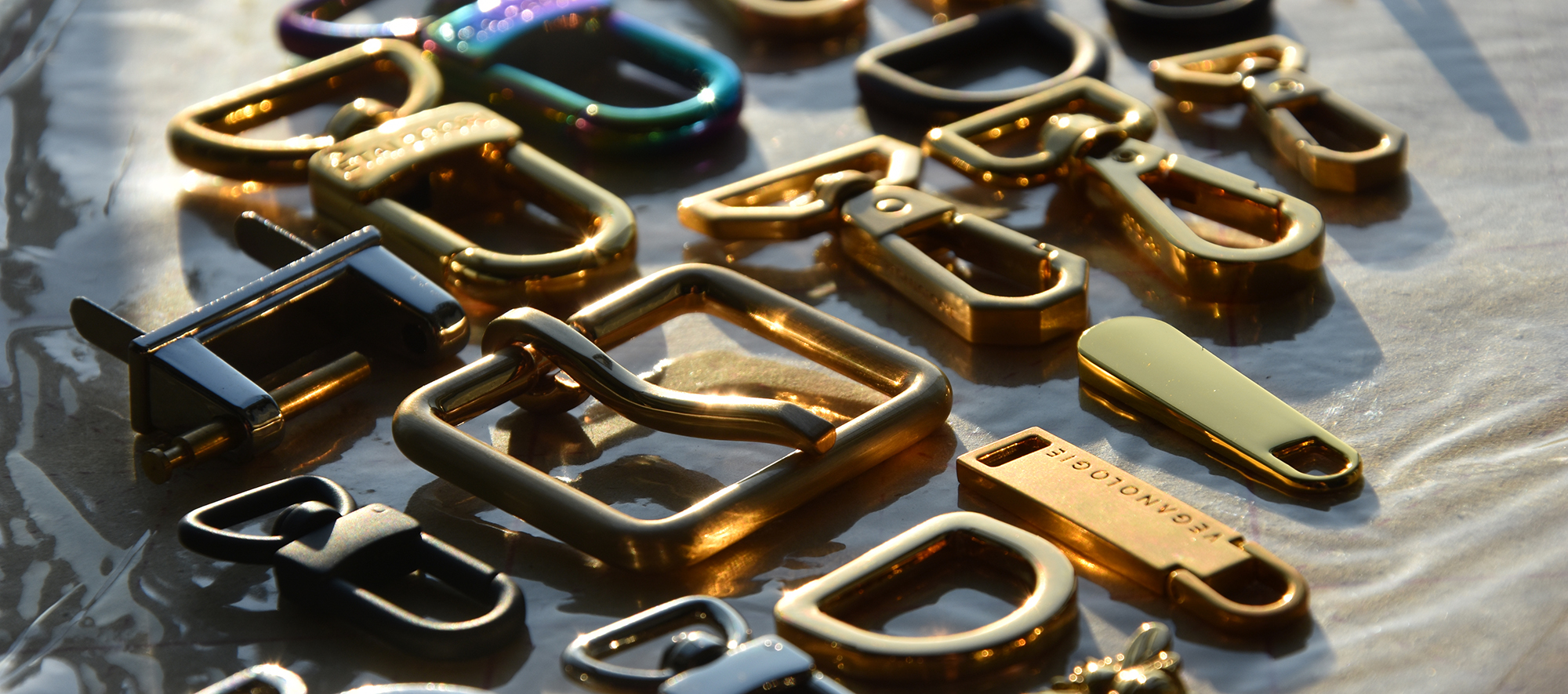
Hardware should not be an afterthought. Plan #3 versus #5 zipper selection deliberately for cosmetic bags: a #3 coil zipper looks sleek but can buckle under a full vanity load, while a #5 feels stronger and resists zipper-end stress.
SBS and YKK both work when matched to the right gauge; we test both without turning it into a brand war. For bathroom or coastal programs, set a minimum corrosion test.
Our current spec is 24 to 48 hours of neutral salt spray, following ASTM B117, for plated pullers.
We also ran a zipper-pull stress SOP on 1680D nylon versus PU leather. Load the bag with the standard test weight, cycle the zipper, and apply pull force to the head and end-stops.
Inspect stitch elongation, tape distortion, coating crack, and corner burst, then repeat after humidity conditioning. The PU leather sample cracked near the zipper end earlier than the 1680D nylon.
Canvas versus nylon makeup bags is a related choice. Canvas wins natural storytelling and printability; nylon wins lighter weight, abrasion resistance, and easier wipe-down.
We source both depending on the brand story. See nylon vs polyester and oxford fabric for the base cloths.
Who wins this category: RPET for total cost-to-risk. PVC only if clear price is non-negotiable.
The best material is the one whose failure mode you can tolerate and whose claim you can defend on paper.
Pros & Cons of Cosmetic Bag Materials
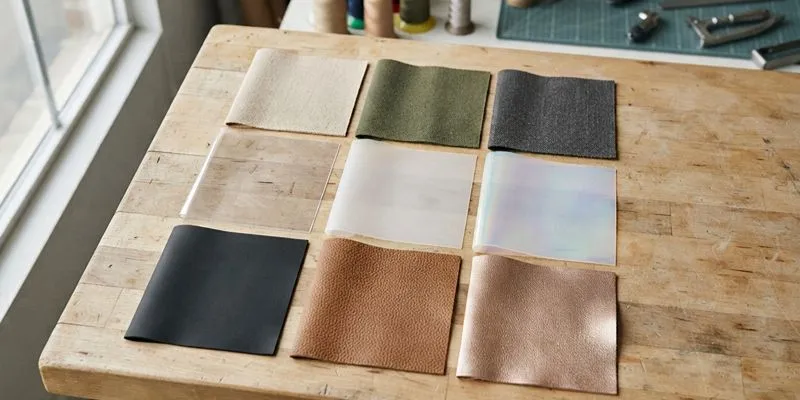
The verdicts below summarize the lab results, not catalog claims. Each list is short on purpose.
1. TPU
Top Pros:
- Premium Clear Feel: Flexible, soft, resists stiffening in cold bathrooms.
- Odor Advantage: No harsh plastic smell in test samples.
- True Waterproofing: RF-welded seams stayed dry under pressure during lab testing.
Main Cons:
- Higher Unit Cost: Often 20 to 40 percent more than PVC for identical panels.
- Welding QC Sensitivity: Weak welds leak. We reject more first articles on TPU than fabric shells.
Best for: Premium clear pouches and wet bags.
Avoid if: You need the lowest clear-bag price.
2. PVC
Top Pros:
- Lowest Clear-Bag Cost: Wins opening quotes almost every time.
- Easy Visibility: Clear panels read well in retail displays.
Main Cons:
- Odor and Yellowing: Chemical smell after storage; yellows under UV and heat.
- Stiffness and Scrutiny: Feels plasticky. Compliance teams flag phthalates and Prop 65 risk more often.
Best for: Budget TSA pouches.
Avoid if: You sell into clean-beauty or sustainability-conscious retail.
3. PU
Top Pros:
- Luxury Shelf Feel: Soft, padded, leather-like. Best perceived value.
- Strong Logo Execution: Debossing and metal plates look sharp.
Main Cons:
- Hydrolysis Risk: Under jungle-test chamber conditions, PU peeled at zipper ends sooner than expected.
- Surface Marking: Light colors pick up scuffs and stains easily.
Best for: Luxury vanity cases and high-margin gift sets.
Avoid if: You ship to humid climates or need long-term stability.
4. RPET
Top Pros:
- Best Overall Value: Decent price, durable, credible recycled story. 600D RPET shells passed our zipper stress tests.
- Versatile Branding: Screen prints and heat transfers apply cleanly.
Main Cons:
- Not Inherently Waterproof: Unlined seams let liquid through. We soaked a sample; water wicked within 30 seconds. Add PU backing or taped seams.
- Perceived Cheapness If Too Thin: Low-denier RPET feels flimsy. A 300D unlined tote can undermine premium positioning.
Best for: Scalable travel pouches and promo kits.
Avoid if: You need fully clear, wipe-clean, or true waterproof performance.
Next up: These trade-offs translate directly into clear buying scenarios for your specific order.
⚠️ Safety First: Even the best shell fails if zipper gauge is underspecified or puller plating corrodes in humid bathrooms. We inspect trims as closely as shell fabric. A failed zipper is a failed bag.
Andy Xiao, Vice General Manager
Which Material Should You Source? A Buyer-by-Buyer Verdict
Choose TPU if you need a clear, wipe-clean, premium travel or TSA-style cosmetic bag. We confirmed TPU resists bathroom humidity and welds cleanly. See our custom travel bag manufacturers page.
Choose PVC if you need the cheapest clear-pouch route and can tightly control grade, odor, and compliance. Shipping PVC into clean-beauty retail requires a prior Prop 65 compliance review.
Choose PU if your brand sells premium gift sets, skincare launches, or retail hero SKUs where shelf feel matters most. The debossed logo alone can justify the cost.
Choose RPET if you need the strongest balance of cost, recycled-content story, and scalable production. In our tests, 600D RPET shells held up better than expected under zipper stress.
Scenario slices:
- Best for travel: TPU
- Best for high-end retail: PU
- Best for eco-friendly programs: RPET
- Best for promotional gift-with-purchase: RPET (screen print friendly)
- Best for humid bathroom storage: TPU
- Best for Amazon / large retail complaint prevention: TPU for clear, RPET with sealed seams for fabric
Before you RFQ, send this checklist:
- Target size
- Target unit cost
- Preferred material plus backup
- Zipper / hardware spec
- Logo method
- Market
- Compliance requirements
We match the material to your failure-mode tolerance, not just the cheapest quote. For promotional kits, see our custom tote bag manufacturer page.
Request a material sample pack or submit your RFQ through Contact LantaoBags.
Disclaimer: I recommend based on test logic and sourcing experience, not paid placement.
People Also Ask About Cosmetic Bag Materials
1. Which cosmetic bag material is best overall?
RPET wins for most scalable programs. It balances unit cost, durability, and a credible recycled-content claim, and 600D shells passed our zipper stress tests.
Choose TPU or PU when the brief demands clear waterproofing or luxury feel. PVC remains the budget clear option, but only when compliance risk is controlled.
2. Is TPU better than PVC for clear cosmetic bags?
Yes, for premium and humid-use programs. TPU stays clearer, resists stiffening, and carries much less odor risk than PVC.
TPU costs 20 to 40 percent more and demands tighter weld QC. PVC stays viable for budget TSA pouches sold into low-scrutiny channels.
3. Can RPET cosmetic bags be waterproof?
RPET fabric itself is water-resistant, not waterproof. Unlined seams wick water within seconds, as our soak test showed.
Add a PU backing, taped seams, or a welded liner to reach a sealed, leak-resistant build. Claim only what your test report supports.
4. Which material feels most premium?
PU. It delivers a soft, padded, leather-like surface, and it accepts debossing and metal plates cleanly.
TPU feels premium in clear builds, while thin RPET reads promotional. Denier, weave, and lining decide the final result.
5. What certifications should I request before approving a cosmetic bag material claim?
Request GRS for recycled content, OEKO-TEX for skin-contact safety, and REACH or Prop 65 documentation for your market.
Add audit reports for social compliance. Reject self-declarations, and ask for certificates within 48 hours.