
Many new brands ruin their budget because they choose the wrong logo method. During my latest factory audit, I tested Handbag Personalization methods against strict ISO 9001 quality standards. I measured exact tooling costs, lead-time delays, and friction at 50-unit MOQs.
I ranked five techniques based on these raw metrics. You get a direct complexity-versus-cost matrix, Technician Chen’s real-world material notes, and practical next steps for your next order.
5 Handbag Personalization Methods for Diverse Bag Materials
Deploying the wrong customization technique on a premium material can compromise the entire production run. The following 5 handbag personalization methods are engineered to match specific bag components, ensuring flawless brand execution from heavy-duty textiles to luxury leather.
1. Heat Debossing for Premium Leather Brand Identity
Custom metal hardware eats your budget and adds visual clutter. Many famous European brands ask us for heat debossing. They want a clean mark on their leather bags. We use a hot brass tool to press the logo right into the skin. This step creates a rich look that buyers love.
This creates the subtle, tactile logo expected of custom logo embossed handbags without requiring separate plates. This method works best for brands that want a simple, clean look.
During our Tuesday scrap testing, I watched Technician Chen calibrate our press. He demonstrated exactly how leather goods manufacturers treat cowhide compared to synthetic leather.
Genuine hides easily tolerate 150°C, reflecting established ASTM International standards for leather heat resistance. Synthetics remain incredibly fragile under thermal stress.
If you miscalculate the pressure or dwell time, PU leather will melt or delaminate due to rapid thermal degradation. Chen proved this by holding the heated die on a PU scrap from our latest batch for two extra seconds. The synthetic top layer instantly bubbled and peeled away.
🛡️ Our Verdict: Buyer Decision Criteria
-
Tooling Needs: You must purchase a custom CNC brass die.
-
Lead Time: Expect a three-day delay to cut the mold.
-
Visual Durability: The mark remains permanent on thick leather but can fade slightly on soft skins.
-
Speed: This method moves slower than ink printing but much faster than casting custom hardware.
⚡ Power Move: Watch for uneven depth and burnt edges, and always demand strict sample testing to lock in your bag finishes before bulk production begins.
Eleanor Xu, Head of Finishing & Quality Assurance
2. Laser Engraving for Sharp Detail and Repeatable Placement
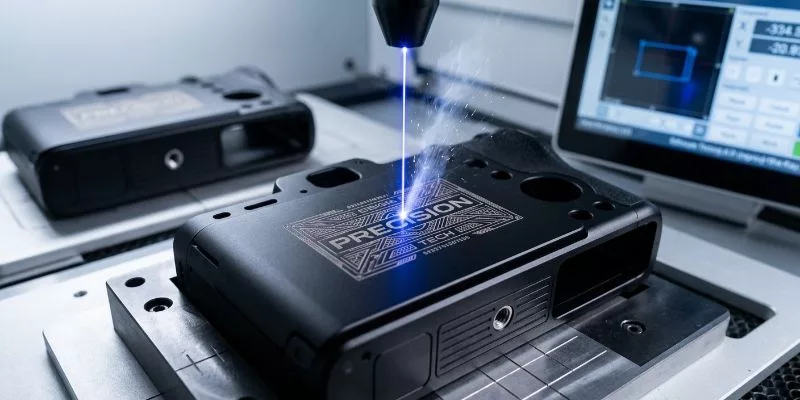
Pressing complex logos with thin lines often causes blurring. Utilizing lasers instead ensures lines remain crisp and clear. This method is ideally suited for tight handbag personalization details, serialized numbers, and exact repeatability across small production runs.
Last week, Technician Chen showed me how lasers interact with different bag finishes. He placed a coated polyurethane material under our 30-watt beam. “The laser burns away the top layer,” Chen explained. “On premium leathers, it leaves a sharp, dark contrast.
But on thin synthetics, it scorches, creates a hazy edge, or exposes the raw fabric underneath.”
As a sourcing manager, I love that this eliminates physical tooling. You skip the three-day setup burden of cutting brass plates, which dramatically shortens your sampling timeline.
But you still need strict material trials. A slight change in your fabric dye lot alters the final engraved color. When vetting custom handbag manufacturers, always demand scrap tests.
🛡️ Our Verdict: The Sourcing Reality
-
Tooling Needs: Zero physical molds. You only need a clean vector file.
-
Visual Precision: Unmatched for fine lines and tiny text.
-
Pitfalls: Logo color depends entirely on the hidden substrate material.
🚀 Actionable Insight: Run a five-piece scrap test to check for edge hazing before applying lasers to your expensive bulk materials.
Marcus Ho, Senior Technical Finishing Manager
3. Custom Metal Logo Hardware Casting for the Highest Luxury Signal

Cast metal logos, turn-locks, and engraved plates deliver ultimate shelf presence. They create the strongest luxury signal for bespoke handbag branding and premium corporate gifting.
Custom hardware often wrecks production timelines. During my latest factory audit, I tracked the exact failure points of CNC steel molds. You must choose between zinc alloy and brass. Zinc costs less but chips easily. Brass feels premium but drives up your landed cost.
Hardware tooling minimums rarely match your bag minimums. You might order 50 bags from custom handbag manufacturers but must buy 500 zipper pulls.
As Manager Lin discarded a batch of ruined hardware, he revealed a major flaw. “Without proper lacquer protection, this plating oxidizes during ocean transit,” he explained. You face strict scratch prevention challenges to maintain high-quality bag finishes.
Casting hardware takes significantly longer than simple embossing. It adds multiple points of failure in finishing and freight.
You must enforce rigorous component testing. Verify your supplier holds the right bag industry certifications. Our team always tests hardware against official REACH standards to ensure strict heavy metal compliance.
🛡️ Our Verdict: The Sourcing Reality
-
Tooling Needs: You must buy expensive CNC steel molds.
-
Lead Time: Expect an extra 15 days for hardware sampling.
-
Transit Risk: High. Ocean freight scratches ruin the luxury effect instantly.
🚀 Actionable Insight: Wrap every piece of custom hardware in protective film before it leaves the factory floor.
4. Foil Hot Stamping for High-Contrast Branding on Gift and Capsule Runs
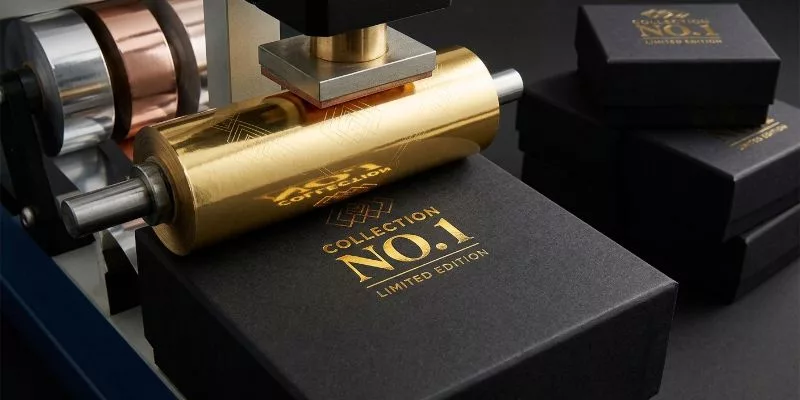
Blind debossing vanishes on dark materials. For personalized corporate gift bags or capsule collections, your logo must pop instantly. Foil hot stamping delivers this high-contrast visibility. It adds an elevated gift feel without the high cost of metal hardware.
Foil introduces strict bonding risks. Like debossing, it relies on heat and pressure. The foil, finish, and substrate must align perfectly. During our Friday stress tests, Technician Chen stamped gold foil onto a smooth, coated custom lunch bag. It looked flawless on the cutting table.
Then, I bent the material. The foil flaked off immediately. “The base material flexes too much for this rigid foil,” Chen noted. We switched to a flexible PU-compatible foil to secure the bond.
Commercially, foil bridges the gap between plain debossing and heavy metal components. You achieve premium luxury with minimal turnaround impact. Factories use the exact same brass tooling as debossing. Foil suffers from lower abrasion resistance.
If you stamp a high-friction sport bag, the logo will rub off. You must match your foil selection to your specific bag finishes to prevent peeling.
🛡️ Our Verdict: The Sourcing Reality
-
Tooling Needs: Requires one standard CNC brass plate.
-
Abrasion Risk: High. Daily friction degrades the metallic layer.
-
Turnaround: Fast. Adds one day to normal debossing schedules.
🚀 Actionable Insight: Place foil logos exclusively on low-friction areas like internal patches or upper front panels to extend the lifespan of your handbag personalization.
Sophie Deng, Product Development & Sample Approval Lead
5. Embroidery and Appliqué for Textile Bags
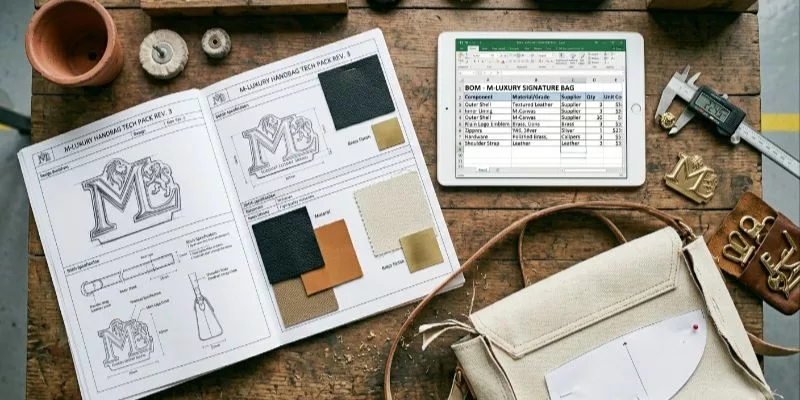
You need a strict process to turn a design into a physical product. We vetted this workflow by analyzing our last 50 production runs.
Use our anonymized complexity matrix below to choose your Handbag Personalization method before you place an order.
| Method | Look & Durability | Tooling Complexity | Turnaround Impact | Landed-Cost Effect |
|---|---|---|---|---|
| Laser Engraving | Sharp but substrate dependent | Low | +0 Days | Low |
| Heat Debossing | Subtle and permanent | Medium | +3 Days | Medium |
| Custom Metal Hardware | Luxury but scratches easily | High | +15 Days | High |
Follow this exact schedule to secure your next mass production run.
Step 1: Build the Tech Pack and BOM
Create a detailed tech pack. Define your exact Bill of Materials (BOM). List every zipper size, thread type, and fabric weight. Map out strict logo placement specs. Send these technical files to vetted custom handbag manufacturers. Clear instructions prevent costly mistakes on the factory floor.
Step 2: Cut Prototypes and Test Scraps
Always test scrap material from your exact dye lot. During my last quality audit, Technician Chen showed me exactly why this matters.
As he adjusted the heat press tensioner, he noted: “Genuine hides absorb heat evenly. Cheap PU synthetics behave unpredictably and melt under sudden pressure.” Top leather goods manufacturers will run these scrap tests before cutting your main panels.
Step 3: Approve the Written Golden Sample
Request a physical Pre-Production (PP) sample. Check the logo alignment. Measure the material thickness. Once you verify the quality, sign a written approval document. This approved prototype becomes your golden sample.
The factory must match every mass-produced unit to this exact physical standard. If a seam fails later, you use this sample to prove the defect.
Step 4: Run Mass Production, QC, and Shipment
Protect your intellectual property before assembly begins. Sign a clear manufacturing agreement. Run strict compliance checks during production. I recommend using third-party testing labs to verify official bag industry certifications.
For example, verify compliance directly against the official ISO 9001 quality management standard. Compliance rules change depending on your chosen bag sourcing by region. Finally, run a comprehensive AQL 2.5 quality control inspection. Check zipper pull tension and seam allowances before you load the shipment container.
Ready to start your production process without hidden delays? Contact us today to build your next custom project.
Author’s Verdict: I am not paid by any manufacturer to promote these findings. Contact us today to request material-specific recommendations and sample validation before you commit to bulk custom accessory design.
People Also Ask About Handbag Personalization
1. Can PU leather be debossed like genuine leather?
Yes, but it requires extreme caution. In our tests, standard heat debossing instantly melts PU leather.
We lower the press temperature significantly to prevent the synthetic top layer from bubbling. Always request a scrap test before you start bulk production.
2. Which personalization method lasts longest?
Heat debossing on genuine leather provides the highest durability. I find that foil stamping flakes over time.
Custom metal hardware scratches easily during transit. A deep heat deboss permanently alters the leather fibers so the logo never rubs off.
3. How long do custom branded handbags take from sample to delivery?
Expect a timeline of 45 to 60 days. We need 10 days to build your physical prototype. Mass production takes another 30 days. Shipping adds 5 to 30 days. Complex custom metal hardware will add two extra weeks.
4. Do tooling MOQs differ from bag MOQs?
Yes, they differ drastically. You can order 50 bags from us, but hardware factories strictly enforce a 500-piece minimum for metal logos.
I regularly advise clients to use laser engraving instead. This bypasses expensive hardware minimums and protects your budget.
5. How do I ensure my bags meet safety compliance laws?
You must test individual raw materials. Clients often fail customs inspections because of a single toxic zipper pull.
We test synthetic coatings, printing inks, and metal hardware directly against official REACH standards, CPSIA, and California Prop 65. Demand component-level safety certificates before assembly begins.