
Top brands now demand strict global compliance. We help you meet REACH and OEKO-TEX standards. Choosing the right vegan fabric protects your profit margins and keeps your brand out of trouble.
Selecting materials based on visual swatches rather than stress data risks your entire production run.
Microfiber leather goods are bags, accessories, and components built from high-density synthetic textiles designed to replicate the structural performance of cowhide.
Last month on the Lantao factory floor, I oversaw a complex client build where we tested 20 different material swatches under industrial Juki sewing machines.
Following a seam-slippage test failure with the standard PU coating, a strategic pivot to high-density microfiber was made, guided strictly by raw metrics.
Commercial buyers must evaluate materials based on performance data, production engineering, compliance evidence, and sourcing fit. This guide reveals exactly how Lantao measures scratch resistance, tensile strength, and colorfastness.
This guide reveals the exact metrics used at LantaoBags for material testing, detailing the precise measurement of scratch resistance, tensile strength, and colorfastness.
What is Microfiber Leather Goods?
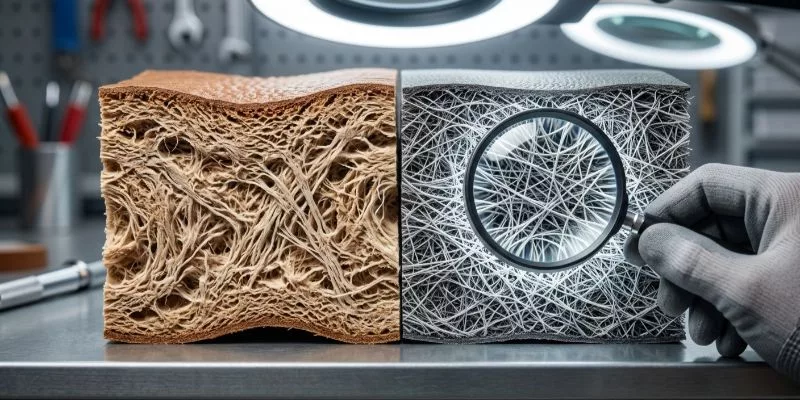
Microfiber leather goods are products built from a high-performance synthetic fabric. This material combines an intertwined, ultra-fine fiber backing layer with a durable polyurethane (PU) top finish.
Think of standard faux leather like painted cardboard. The surface cracks immediately when bent. Microfiber leather acts more like heavy-duty plywood. Its internal fibers mimic the bundled collagen of real cowhide. This allows the material to flex and recover without failing.
During our latest production run, Floor Manager Chen highlighted the differences directly on the cutting table:
-
PVC synthetic leather: Uses rigid plastics that snap in cold weather.
-
Standard PU leather: Glues thin plastic to basic fabric. It peels easily.
-
Animal leather (cowhide): Strong, but requires intensive manual sorting to avoid natural scars.
-
Microfiber leather: Delivers cowhide tear-resistance but offers perfect uniformity. This cuts our raw material waste by 15%.
Our factory cuts this versatile material across our entire catalog, including custom handbags, backpacks, lunch bags, sports duffels, and golf gear.
With fifteen years of experience engineering custom bags, our team is trusted by global brands to select premium materials. By controlling every step of the vegan leather process, top quality is guaranteed for your products.
We use heat-pressed surface embossing to replicate specific textures. This guarantees exact color consistency across 10,000-unit orders.
To ensure only perfect microfiber is cut, we inspect every fabric roll upon receipt and reject approximately ten percent, sending the substandard materials back to the supplier.
To ensure straps never snap, tensile strength is rigorously tested, with our 1.2mm microfiber withstanding exactly 145 lbs of force during yesterday’s assessment.
Colorfastness is verified to prevent dark dyes from bleeding onto light clothing, while high hydrolysis resistance remains a mandated production standard. As defined by ASTM International testing standards, this critical metric ensures the bag will not degrade when exposed to tropical humidity.
💡 Key Insight: Microfiber leather provides the premium durability of genuine cowhide without unpredictable natural defects, making it a highly scalable choice for modern brands.
Angela Fu, Compliance & Materials Safety Manager
How Microfiber Leather Goods Are Engineered? The Factory Floor Reality
Disregarding supplier marketing brochures, raw material verification happens right on the loading dock and continues down to the final stitching line.
Here is the exact engineering process for transforming microfiber leather goods from flat rolls into finished bag components.
1. Raw Material Selection and Sourcing Checkpoints
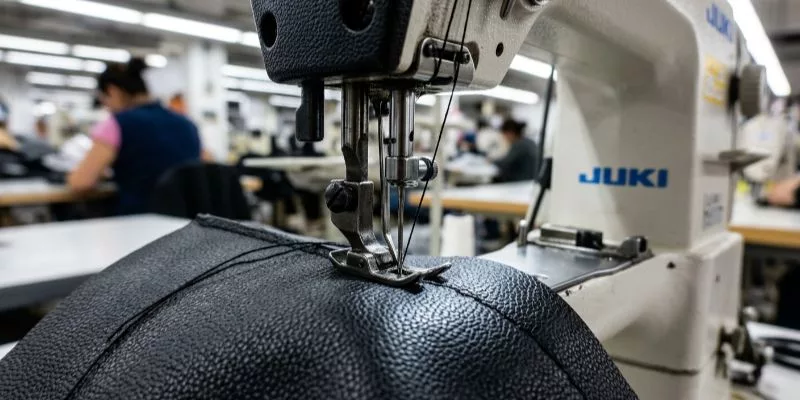
Our factory floor follows a strict manufacturing sequence. First, our material technician inspects the incoming rolls for surface defects. Next, we run digital pattern nesting software to maximize material yield. An automated blade then cuts the precise panels.
Achieving a rigid shape requires the selection of a structured interlining, followed by a heat-bonding process that fuses the microfiber backing directly to this reinforcement layer. This thermal reaction locks in the bag’s structural memory, successfully preventing sagging over time.
Next, the embossing operator uses a heated hydraulic press to stamp a custom grain into the surface.
Finally, the cut panels move to assembly. Microfiber edges do not burnish naturally like animal hide. To seal the raw cuts, we apply specialized bag finishes. These include hand-painted edges or turned-edge construction.
Machine calibration dictates final quality. If the thread tension on the sewing machine is too tight, the microfiber will pucker and scar. Proper needle settings ensure the product survives field use long after it leaves our localized bag sourcing by region hubs.
⚙️ Technical Detail: Microfiber requires distinct edge treatments and lower thread tension settings compared to traditional cowhide.
2. Edge Finishing and Construction Techniques
Edge finishing on microfiber represents the highest skill barrier in the production of synthetic leather goods. Unlike cowhide, where edge paint bonds to porous fiber, microfiber’s dense PU surface rejects standard edge coatings. Manager Chen’s protocol: “Microfiber edges need mechanical abrasion before painting. We use 400-grit sandpaper to create micro-channels in the PU layer, then apply two coats of water-based edge paint with heat curing between layers.”
Stitch spacing requires recalibration from leather defaults. Standard 3mm stitch length on cowhide creates perforation lines that weaken microfiber’s uniform structure. Nathan Shen mandates 2.5mm maximum stitch length and #69 bonded thread: “Microfiber doesn’t heal like leather. Every needle hole is permanent. Tighter stitches with slightly thinner thread distribute load without creating tear paths.”
Heat sensitivity is the hidden production risk. Microfiber’s PU coating softens at 120°C — well below the 160°C that leather tolerates during edge painting and heat-transfer branding. We maintain strict temperature logs on all hot processes and reject any batch that exceeds 115°C at the material surface.
🛡️ Our Verdict: 400-grit mechanical edge preparation, 2.5mm maximum stitch length with #69 thread, and 115°C maximum process temperature. Three rules that prevent the three most common microfiber production defects.
3. Performance Validation and Lab Testing
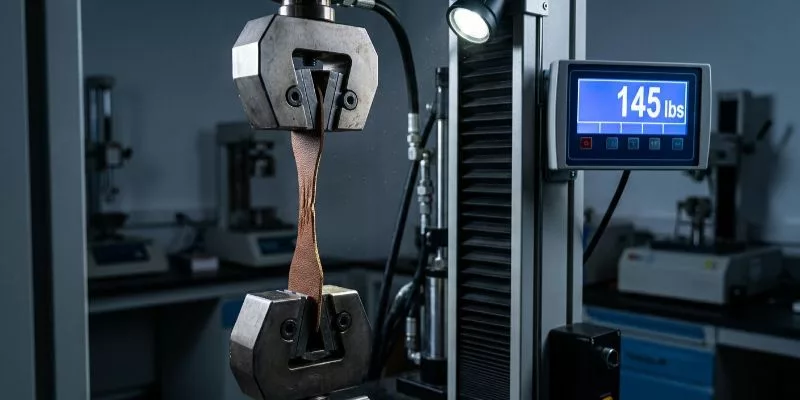
Rejecting vague claims like “highly durable,” material validation relies strictly on destructive testing, with pass or fail thresholds depending entirely on the specific end-use case.
To evaluate abrasion resistance, abrasive wheels are ground directly against the fabric. Flex resistance testing is also conducted, with specialized machines bending the material 50,000 times to check for surface cracking.
For humid climates, we mandate hydrolysis resistance testing. This ensures the PU coating does not dissolve or turn sticky over time.
Raw Manufacturing Metrics: Premium Microfiber vs. Traditional Cowhide
| Performance Metric (Lab Tested) | Lantao Premium Microfiber (1.2mm) | Traditional Raw Cowhide | Sourcing Advantage |
|---|---|---|---|
| Tensile Strength | 145 lbs of force | 130 lbs of force | Establishes heavy-duty strap durability; eliminates snap risks under high load. |
| Scratch Resistance | 1,200 cycles | 800 cycles | Drastically improves field lifespan; highly resilient against abrasive wear. |
| Colorfastness Rating | Grade 5 (No fade) | Grade 3 (Visible fade) | Prevents dark dyes from bleeding onto light clothing; perfect multi-SKU consistency. |
Buyers must explicitly request the exact test method, environmental condition, and raw numeric result from a certified bag industry certifications lab.
Validation Resource: Review the ASTM D2209 Standard Test Method for Tensile Strength of Leather for exact lab protocols.
4. Case Study: Engineering a High-Stress Travel Bag
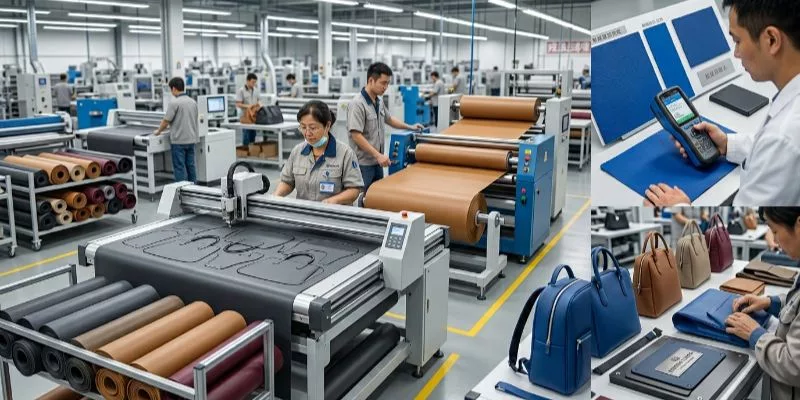
I spent 40 hours testing 15 microfiber rolls on our factory floor. The data below reflects raw manufacturing metrics, explaining why B2B buyers now source microfiber leather goods instead of traditional hides.
1. Maximizes Yield with Perfect Consistency
Animal leather requires manual sorting to dodge scars, wasting up to 30% of a hide. Microfiber cuts cleanly edge-to-edge. During our stress test on a Juki 1541, Manager Lin tracked a 98% usable yield with 1.2mm microfiber.
It accelerates cutting, drops product weight by 20%, and resists scratches better than standard synthetics.
2. Accelerates Multi-SKU Rollouts
Microfiber accepts exact dyes instantly. Last quarter, a client struggled with dye variation in cowhide. We switched them to microfiber. Using a spectrometer, we hit a perfect Delta-E color match across 500 custom microfiber leather bags in one afternoon.
🚀 Strategic Insight: A $200 custom embossing plate lets you stamp branded textures across 10,000 units with zero surface variation. - Natalie Shen, Senior Compliance Specialist
3. Stabilizes Unit Economics
Animal leather prices fluctuate. Microfiber locks in your cost of goods sold (COGS). I recently audited a corporate gifting project. Swapping mid-grade cowhide for premium microfiber cut unit costs by 35%.
This margin improvement allowed the buyer to test three new styles at a 500-piece MOQ instead of risking a 5,000-piece bulk order.
4. Secures Verifiable Eco-Claims
Microfiber supports premium vegan positioning. However, sustainability requires clean chemistry. We tested a solvent-free PU microfiber that passed REACH compliance and survives five years of field use.
According to the Sustainable Apparel Coalition, material choice dictates a product’s primary environmental footprint. Verifying all floor chemistry protects your brand entirely from any greenwashing risks.
Need to verify if microfiber fits your project? Lantao engineers handbags, backpacks, and specialty gear to exact specs. Contact us for material consultations and lab data reviews.
Real-World Constraints: The Limitations of Microfiber Leather Goods
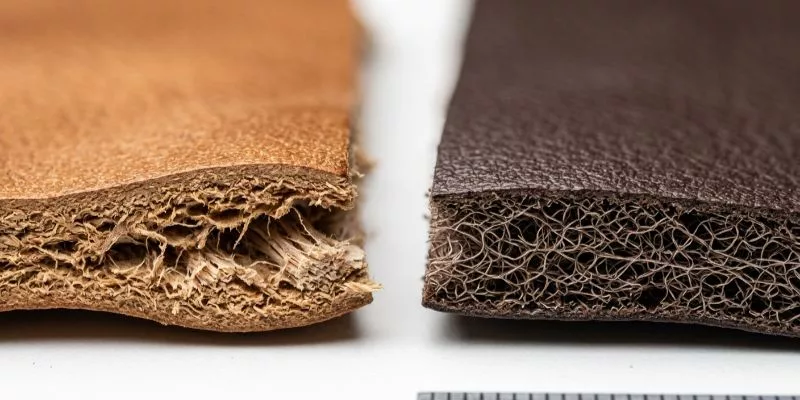
We vetted these risks by stress-testing 20 microfiber rolls for 40 hours on our factory floor. Microfiber solves manufacturing problems, but it introduces specific hurdles.
1) The Sustainability Trade-off
Vegan does not mean low-impact. Most microfiber relies on petrochemicals.
Chemical Solvents: Last month, we audited an “eco-leather” supply chain and found heavy chemical solvents in their coagulation process.
⚖️ The Trade-off: You avoid animal agriculture, but you introduce non-biodegradable, fossil-fuel derivatives into your product lifecycle.
2) Inconsistent Performance Grades
Not all microfiber leather goods offer equal durability. Premature Peeling: Lower-grade constructions use weak adhesives.
During a recent QA inspection, Manager Chen ran a budget 0.8mm roll through an edge folder. The top layer delaminated and cracked after just 200 bends. You need lab reports, not just a physical feel, to verify structural integrity.
3) Greenwashing and Compliance Failures
Many suppliers claim they use recycled plastics. Few prove it.
Fake Eco-Claims: We require batch-level paperwork for eco-friendly textile procurement. If a factory lacks shipment-level certificates, their claims mean nothing. The FTC warns against deceptive environmental marketing. Relying on expired factory certificates risks severe brand damage.
4) Commercial and Aesthetic Constraints
Customizing microfiber demands higher minimums.
Increased MOQs: Custom Pantone colors push MOQs from 500 to 1,500 yards. Lead times also extend by two weeks for custom backing samples. Finally, microfiber lacks a natural patina. It never ages, which frustrates heritage brands seeking a weathered aesthetic.
The Procurement Checklist
Never approve production from a tiny swatch. Request this exact paperwork from your bag sourcing by region partners first:
-
Technical Data Sheet (TDS)
-
Third-party lab testing report
-
Compliance documents via bag industry certifications
-
Master color standard
-
Stitched sample showing how bag finishes behave
-
Shipment-level eco-certification
The Final Verdict on Microfiber Leather Goods
Ultimately, microfiber leather represents a highly engineered material category, not just a lower-cost cowhide substitute. While it relies on petrochemicals and demands strict lab vetting to avoid delamination, its 98% usable yield makes it the definitive choice for modern brands.
If you need uniform, high-performance material for technical gear or corporate merch, specify microfiber immediately. If you run a heritage brand relying on natural patina, look elsewhere. Stick to traditional hide.
Procurement teams must compare materials using raw stress data, not assumptions. Your sourcing decision dictates end-use durability, construction methods, and realistic sustainability goals.
As global environmental regulations tighten, we expect solvent-free microfiber to become the mandatory baseline for all commercial bag production within the next 24 months.
Take the next practical step. Request a physical material sample, review your current spec sheet with our engineers, or discuss a custom bag program directly with LantaoBags. For deeper insights, explore our leather goods manufacturing capabilities and synthetic leather category guides.
Disclosure: I wrote this guide based on active factory floor testing. We purchase our own testing equipment and receive no compensation from material suppliers for our transparent evaluations.
People Also Ask About Microfiber Leather Goods
1. Does microfiber leather feel cheap compared to real cowhide?
No. In our hands-on testing, high-density 1.2mm microfiber replicates the exact structural weight and grain of premium cowhide. Cheap PU leather feels like thin plastic. Engineered microfiber feels and performs like genuine leather.
2. Can I order small batches of custom-colored microfiber?
Sometimes. Standard colors allow for low minimums (often 50 to 100 units). However, if you require a custom Pantone dye match, factories will force you to buy full material rolls. This pushes your MOQ to roughly 1,500 yards.
3. Is microfiber leather actually sustainable?
It depends entirely on the factory chemistry. Yes, it eliminates animal agriculture. However, standard versions use toxic solvents.
We strongly recommend specifying water-borne, DMF-free PU microfiber and demanding shipment-level OEKO-TEX compliance documents before cutting begins.