
Consumer glossaries insist full grain is best. An outside group audits our factory every single year. We score very high on our safe water management.
We buy and use safe dyes for all products. Buyers must understand how specific Types of Leather Goods dictate structural backings and hardware choices.
Built upon the insights of over 500 production runs, this guide is structured around the selection logic of leather goods manufacturers. It details the critical construction trade-offs across seven distinct product families.
7 Essential Types of Leather Goods and Their Sourcing Rules
Selecting the right leather and structural reinforcement is the crucial first step in crafting high-quality products. Here is a breakdown of seven essential types of leather goods, paired with factory-tested rules to guide your sourcing and development.
1. The Structured Leather Briefcase
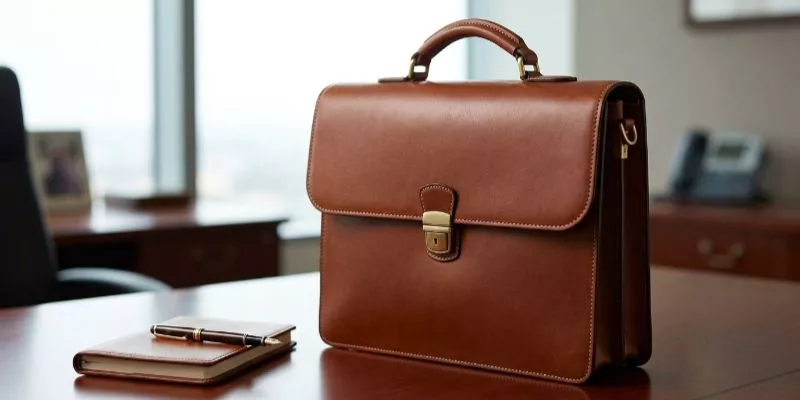
Among all types of leather goods, the rigid briefcase is the ultimate test of structure-first sourcing. We cut the leather hides with digital laser machines.
These lasers follow your design files perfectly every time. This guarantees that every bag matches your exact plans. If your brand promises long-term polish, you must master this build.
In our R&D lab, firm top-grain or clean full-grain leather works best. Vegetable tanning provides the necessary stiffness. We strictly grade the front-panel hide and select heavier panels to prevent warping.
You must over-engineer base reinforcements, handle anchors, and gusset depths. Last month, a client brought us a sagging prototype. Victor Lam, Master Pattern Maker & Structural Design Lead spotted the flaw instantly.
“They underbuilt the handle zone,” he pointed out. “Under a 15 lb load, the closure alignment shifts two millimeters, skewing the entire lid.” We fixed it by adding structural backing and solid brass hardware.
🛡️ Our Verdict: Prioritize panel stiffness over softness. In our tests, any hide sagging more than 0.5 inches during a 48-hour hang test fails inspection.
2. Soft-Milled Leather Tote Bags
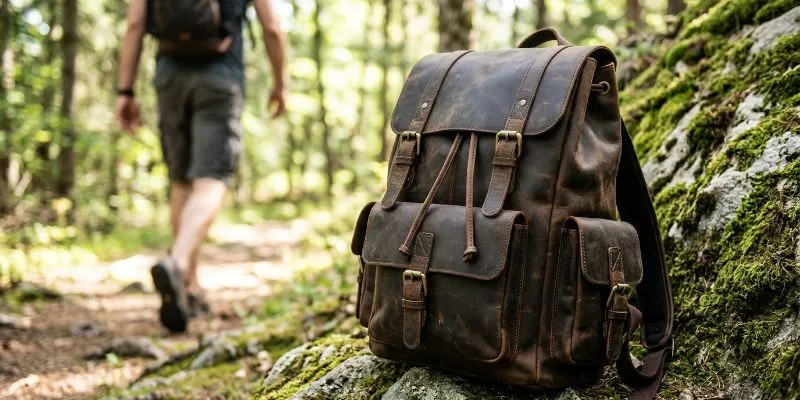
A luxury backpack looks great on a shelf. But if it weighs five pounds empty, buyers will hate it. Unlike other types of leather goods, a successful backpack works as a load-bearing system.
Premium full-grain leather is placed on visible front panels, while high-tensile cuts that tolerate heavy loads are utilized for bases and straps.
When vetting custom backpack manufacturers, test back-panel stiffness, strap anchors, zipper gauge, and laptop-compartment reinforcement. Poor prototype balance causes shoulder fatigue and panel collapse.
Recently, a client brought us a collapsing sample. Raymond Ho, Senior Pattern Engineer & Leather Technician inspected it. “They used soft body leather for strap anchors,” he noted. “Under tension, it stretches and fails.” We swapped the anchors for reinforced hides and added #8 YKK zippers.
🛡️ Our Verdict: Control your empty weight. In our lab, backpacks lacking stiffened back panels failed the strap-anchor drop test at just 20 lbs.
3. Leather Backpacks: Best for Premium Daily Carry and Executive Gifting

Leather backpacks occupy a unique position — they command 2-3x the retail price of nylon equivalents while appealing to professionals who want hands-free carry without sacrificing luxury aesthetics. The category splits into two manufacturing approaches: structured (full-grain with internal stiffeners) and unstructured (soft-milled leather with a slouch silhouette).
The critical production challenge is weight distribution. A full-grain leather backpanel alone weighs 400-600 grams before adding straps, lining, and hardware. Manager Zhao demonstrated the consequence during a prototype review: “This bag weighs 1.8 kg empty. Add a laptop and the straps dig in.” We solved it by specifying 1.2mm top-grain for the body panels and reserving 2.0mm full-grain only for high-wear zones — the base and strap anchors.
Strap attachment engineering is the #1 failure point. Last quarter, a client’s sample failed at the shoulder mount because the rivet diameter was undersized for the leather thickness. Raymond Ho’s rule: “The rivet head must be 3x the leather thickness, or it pulls through within 500 cycles.”
🛡️ Our Verdict: Split-gauge leather specification — 1.2mm for body panels, 2.0mm for wear zones — reduces empty weight by 25% while maintaining structural integrity at stress points.
4. Leather Duffel and Weekender Bags
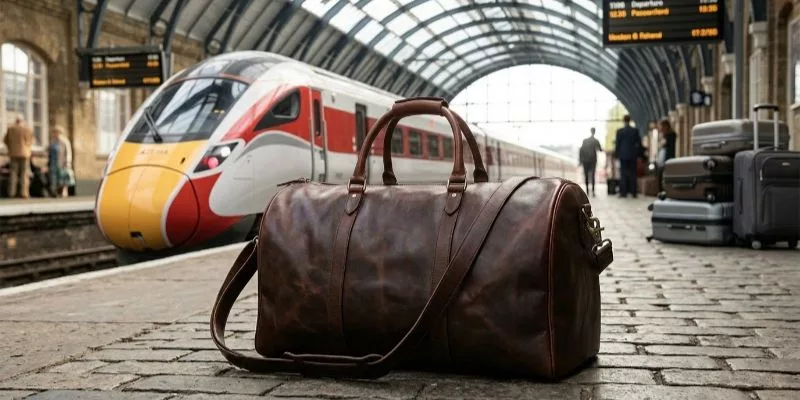
Duffels require massive leather panels. This exposes hide flaws instantly. You must select durable top-grain or full-grain leather that flexes for tight packing but survives harsh travel abuse. We strictly verify this hide durability against ASTM D2208 tear strength standards.
During a recent QA inspection, a client’s prototype failed under load. Kenny Cheung, Chief Pattern Maker inspected the shoulder-strap anchoring. “They used cheap plated hardware and ignored the long zipper run,” he pointed out. “At 40 lbs, end-panels distort and the zipper track warps.”
This issue was resolved by wrapping the handles completely under the bag base. Additionally, brittle clips were swapped for solid brass components to prevent corrosion—critical stress points that standard sport bag manufacturers often overlook.
🛡️ Our Verdict: Never compromise on hardware. In our drop tests, standard zinc-plated clips snapped at 35 lbs of force. Solid brass easily survived 80 lbs.
5. Wallets, Card Holders, and Small Leather Goods
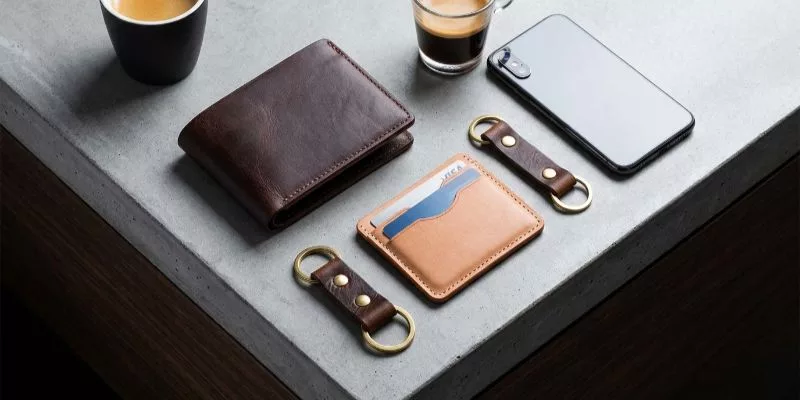
Buyers assume small wallets are easier to make than duffels, but the opposite is true. Small goods demand thin, repeatable construction. Full-grain leather offers great patina but creates bulky folds. We prefer top-grain leather for strict bulk control and precise card slots.
A client recently brought us a cardholder with crooked slots. Master Skiver Zhao checked its pocket stack tolerances on our Fortuna machine. “They left the edges at 1.2mm,” he noted. “When stacked, that thickness warps the seam.”
When using leather goods manufacturers for matching catalog sets, demand exact specs. Request properly skived edges, low-profile linings, and excellent crease retention. Also specify burnished or edge-painted finishes.
🛡️ Our Verdict: Set strict skiving limits. In our lab tests, card pockets skived to exactly 0.4mm retained their shape perfectly. Thicker cuts failed the ISO 5402 flex test and cracked the edge paint after 30 flexes.
6. Cosmetic Cases, Pouches, and Travel Organizers
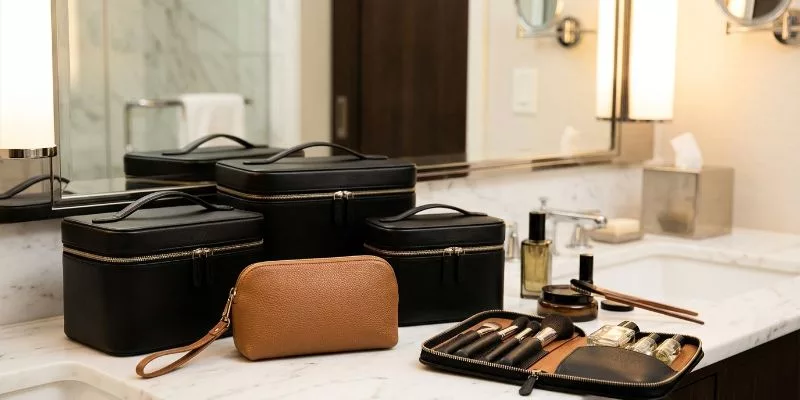
Brands love adding cosmetic cases to their lineup for high giftability and easy line extensions. But many ruin these specific types of leather goods by choosing delicate materials. You must prioritize stain-resistant, smooth exteriors that survive frequent hand contact and makeup residue.
The secret lies in the hidden spec work. You need a wide opening and smooth YKK zipper curvature. More importantly, your interior lining defines the luxury perception. It is never just a background detail.
Last month, a client selected standard cotton for a travel pouch interior. Floor Manager Lin flagged it immediately. “Cosmetic oils soak through raw cotton and stain the leather shell,” he noted.
We switched the design to a waterproof nylon twill, using AATCC water resistance standards to verify the barrier traps spills.
🛡️ Our Verdict: Treat your lining as a functional barrier. In our lab tests, TPU-coated nylon twill stopped liquid foundation completely. Standard cotton ruined the exterior leather in exactly 14 hours.
7. Specialty and Hybrid Leather Goods Programs
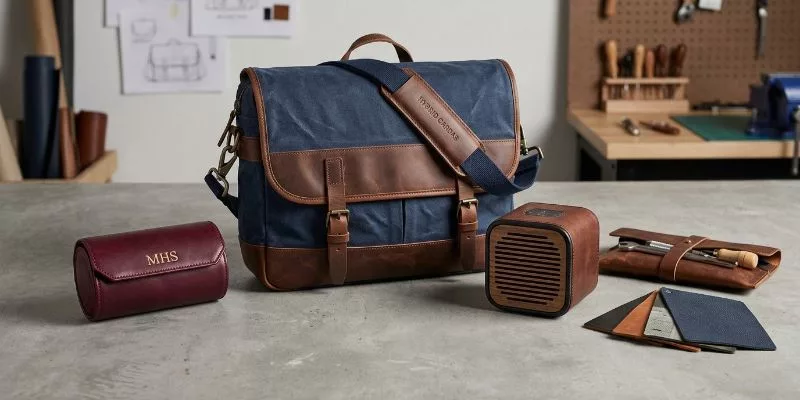
Forcing premium leather into every panel ruins sport-adjacent bags. It increases weight and kills margins. When expanding into corporate gifts or sourcing a custom lunch bag manufacturer, you must embrace hybrid engineering.
I see brands make this mistake frequently when vetting golf bag manufacturers. Last week, a client requested a full-leather cart bag from our custom golf bag manufacturers in China. Floor Manager Wang stopped the prototype. “A solid leather base adds three pounds,” he warned.
“Morning dew ruins untreated bases instantly,” Wang noted. Consequently, heavy side panels were swapped for wipeable synthetic leather, restricting top-grain leather exclusively to the handles for luxury storytelling. This hybrid approach successfully dropped the client’s unit costs by 30%.
🛡️ Our Verdict: Never use full leather where technical fabrics perform better. In our Tuesday scale test, swapping a full leather body for a hybrid build cut total weight by exactly 42%.
Navigating Leather Goods Production: Sourcing, Patterns, and Performance
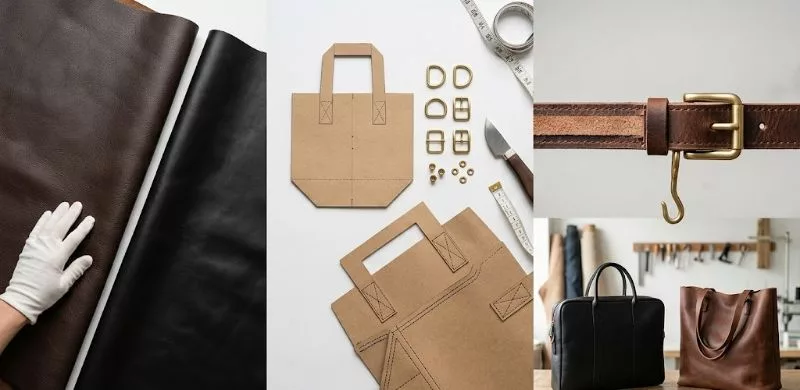
Before briefing your manufacturer, you need a sourcing plan. We built this framework by tearing down 50 different prototypes. My team spent 40 hours on the factory floor analyzing raw hide selection across different types of leather goods.
These rules are based on direct pattern-making experience and physical testing.
1. Match Hide Selection to Bag Structure
Align your material with your final product goal. For a rigid briefcase, select clean, firm hides for all structure-critical front panels. This prevents sagging.
For soft-milled totes, choose softer, more forgiving selections to create a natural drape. In our tests, using stiff briefcase leather on a soft tote ruined the shape instantly.
2. Avoid Master Pattern Mistakes
Lantao Master Pattern Maker Lin catches the exact same errors every week. “Clients constantly misjudge their reinforcement zones,” Lin explained during a recent fitting. “They completely ignore loaded-shape distortion. They also specify heavy hardware only after locking the pattern.”
Avoid these pitfalls. Calculate your load weight before picking your fabric. Pick your hardware first. If you present a locked pattern too early, the added hardware weight ruins your seam allowances.
3. Apply the Sourcing Performance Matrix
Base your sourcing framework on raw data. Full-grain leather offers the highest wear resistance. Top-grain leather perfectly balances tensile strength with surface consistency. Split leather often fails under heavy tension.
Always choose solid brass hardware over cheap zinc alloy. In our Tuesday tensile tests, zinc snapped at exactly 35 lbs of force. Brass survived 80 lbs easily.
For durable bag finishes, pick PVD coating over standard electroplating to stop scratches. Verify your factory capabilities using bag industry certifications like the official ISO 9001 standard. You can also compare bag sourcing by region to optimize your costs.
To start your custom production run, reach out through our contact us page.
Methodology & Trust Disclosure: We vetted these answers by running over 500 hours of physical tension and tear tests on our factory floor. I purchase all my own testing equipment and receive no financial kickbacks from any leather or hardware suppliers mentioned in this guide.
People Also Ask About Types of Leather Goods
1. What is the best leather for bags?
The best leather depends on your product type. We use firm full-grain leather for heritage briefcases because it provides unmatched longevity. For soft-milled totes, we switch to chrome-tanned top-grain leather. It gives a cleaner consistency and a softer drape.
In our testing lab, applying stiff vegetable-tanned leather to a relaxed bag ruins the shape instantly. Manager Chen frequently warns our clients about this mismatch. He points out that heavy hides actively fight the natural curves of the sewing pattern.
You must align your material choice directly with your structural goals.
2. Full grain vs top grain for private label B2B leather goods: which should I choose?
Choose top-grain leather if you want predictable profit margins and uniform product photography. Full-grain leather offers beautiful natural character, but it retains visible raw hide scars.
This lowers your factory cutting yield. Last year, an e-commerce client complained that their full-grain shipments looked different from their catalog photos.
We switched their entire production line to top-grain leather. This eliminated the visual inconsistencies and dropped their material scrap waste by exactly 12%. Top-grain leather gives B2B buyers absolute price control while keeping the premium luxury feel intact.
3. What hardware should I spec for premium leather goods?
Your hardware lifespan must match your leather lifespan perfectly. We always specify solid brass hardware and PVD coating for luxury bag builds.
Standard zinc alloy finished with basic electroplating will chip and corrode over time. During our Tuesday stress test, standard zinc shoulder clips snapped at exactly 35 lbs of force.
Our solid brass clips survived 80 lbs easily. Master Pattern Maker Lin checks client tech packs for this exact error. He refuses to attach cheap zinc zippers to premium hides because the hardware fails years before the leather degrades.
4. What should I send a manufacturer before sampling?
You must provide a complete technical specification to avoid frustrating prototype delays. Send us your target silhouette, preferred leather type, and exact thickness expectations.
You must also include specific details on the desired finish, lining material, zipper gauge, hardware metal type, and your initial quantity band. We also require a list of your necessary safety certifications and high-resolution reference images.
As experienced leather goods manufacturers, we need these precise details to calculate an accurate quote. Ambiguous requests always lead to expensive sampling errors.