
Most comparisons of the types of duffle bags stop at style names. I’ve seen product teams write “canvas duffle” in a tech pack, and samples came back with #5 zippers that split under 20 lbs.
We inspected 40 factory samples drawn from live custom duffle bags manufacturer runs. Our method: raw load trials, seam teardowns, and no-fluff commercial evaluation. No brand paid for placement.
Seven types follow buying priority. Tactical, packable, and premium-material variants fold into later sections, not separate top-level types.
7 Types of Duffle Bags: A Factory Buyer’s Engineering Breakdown
We tear down real factory samples to find exactly where they break. This guide shows you how to choose the right materials and stitching for your next duffle bag order.
Use the table below to shortlist a format, then read the matching section for full specs.
| Duffle Type | Format & Carry | Shell / Material | Must-have build details | Common failure | Best For |
|---|---|---|---|---|---|
| Weekender | 40-45L, hand carry with trolley sleeve | 600D nylon or poly blend; premium canvas | Box-X anchors, 10-12 SPI handle roots, #10 YKK main zipper | Decorative handle not tied into the body; weak shoulder tabs | Carry-on travel, business-leisure crossover |
| Travel / Classic | 45-70L+, wide top opening | 600D-900D polyester, 1000D nylon, 16-22oz canvas | Wraparound webbing, bar-tacks at stress points, box-X stitching | Strap tabs sewn to side panels only | Team kits, gear hauls, general travel |
| Gym & Athletic | Hand and shoulder carry, wet/dry split | 600D polyester or Oxford; TPU or PU wet lining | Vented shoe tunnel, bartacked end handles and zipper stops | Closed shoe tunnel odor; dead-space compartment patterning | Daily commute, training kit |
| Convertible Backpack | Hand, shoulder, and backpack carry | Shell plus 8-10mm EVA back panel | Dedicated strap sleeves, bar-tacked anchors, HDPE frame sheet | Both strap sets sharing one stitch line | Commuter and travel programs |
| Wheeled / Rolling | Telescoping handle and wheels | HDPE frame board, reinforced base | Protected handle channel, high-clearance PU wheels, skid rails | Frame flex; wheel housing creak | Crew gear, long-haul, oversized loads |
| Waterproof / Dry | Roll-top closure, shoulder carry | TPU-coated nylon, PVC/TPU laminate | Welded seams, sealed openings, acetal or coated zinc parts | Stitched-only seams; UV-degraded coatings | Wet, dirty, abrasion-heavy use |
| Garment / Suit | Folds out into a garment system | Waxed canvas, leather trim, PU-backed lining | Internal webbing hanger anchors, wide padded center panel | Chest-level fold crease; torn hanger loop | Business travel, no-iron arrivals |
1. Weekender Duffle: The 40L-45L Carry-On-Friendly Format with the Broadest Commercial Demand
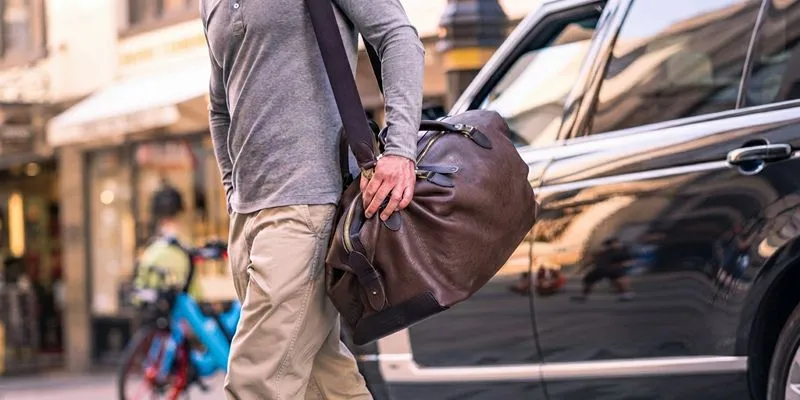
Short-haul travel drives this silhouette. Overhead-bin fit and business-leisure crossover make it your safest launch SKU. I test each sample by loading it to 18 lbs and sliding it into a 22-inch bin gauge.
Spec a 40L-45L main cavity. Add a rear trolley sleeve, padded laptop sleeve, and quick-access top pocket. Organization matters more here than on expedition duffles because users open it mid-trip.
For shell, lighter 600D nylon or poly blends protect margin. Premium canvas works for elevated lines. Keep body seams at 8-10 SPI and handle roots at 10-12 SPI.
Box-X stitching reinforces primary anchors, and a #10 YKK main zipper handles the load. We apply these exact points in custom travel bag manufacturing.
Most returns start with three shortcuts: decorative handles not tied into the body, underbuilt shoulder tabs, and poor end-panel geometry.
LantaoBags’ Verdict: We reject any weekender sample with handle roots below 10 SPI. Our last 40L trial failed at 23 lbs on a decorative handle. Fix the anchor first, then recut the end panel.
2. Travel / Classic Duffle: The Large-Capacity Barrel Build for General Travel, Team Kits, and Gear Hauls
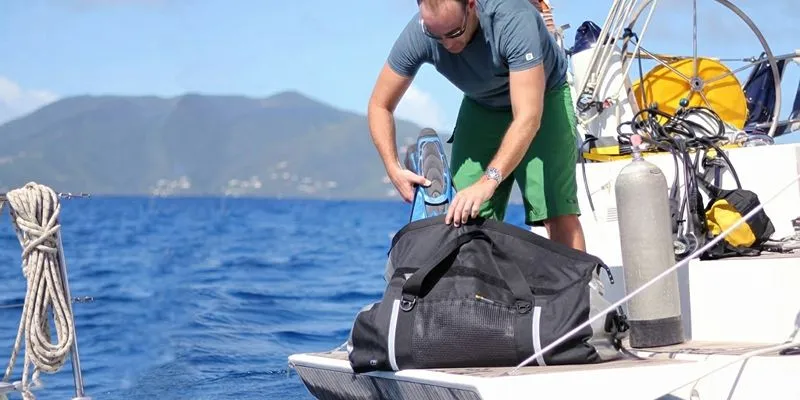
The classic duffle is not a scaled weekender. It runs 45L-70L+, opens wide at the top, stays unstructured, and cuts and sews faster. The real cost hides in load path.
Fabric choice drives price and brand feel. 600D or 900D polyester is the budget-to-mid standard. 1000D nylon adds abrasion resistance and costs 15-20% more.
For canvas, 16oz duck suits soft brands, 18oz balances price, and 22oz handles gear-haul abuse. We drafted these tiers in our nylon vs polyester guide and oxford fabric breakdown.
Specifying wraparound webbing, bar-tacks at every stress point, and box-X anchor stitching is mandatory. Skip these structural reinforcements and even visually clean builds will fail under load.
LantaoBags’ Verdict: Pull the strap anchors before signing off. A 50kg static pull on a side-panel-only tab fails inside 90 seconds on our floor.
🧠 Expert Take: Our Sample Master caught the same flaw in 12 of 15 drafts: shoulder-strap tabs sewn only to side panels. Under a 50kg load the seam rips at the anchor, so reinforcement must snake through body and base.
Nancy Y., Sample Master
3. Gym & Athletic Duffle: The Sports Layout Built Around Shoe Separation, Wet Gear, and Daily Commuting
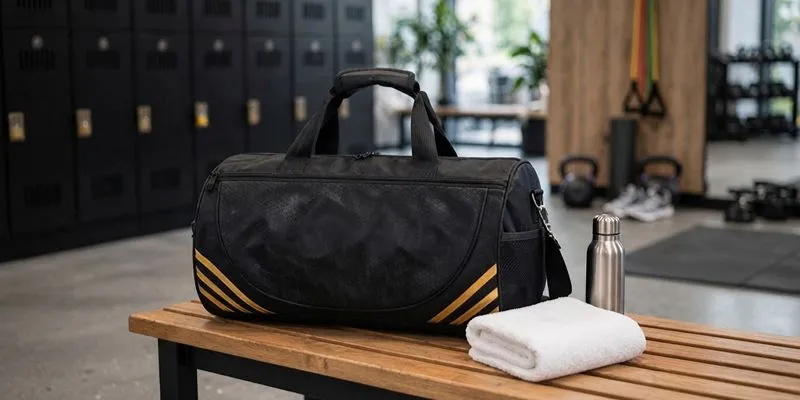
Most gym duffle failures show up at 6:45 a.m. You carry work clothes, training gear, shoes, a towel, and wet kit in one bag. Layout beats raw liters. Of all the types of duffle bags, this one lives on routine friction.
Spec a vented shoe tunnel, wet/dry separation, bottle access, and easy-clean lining. I watched Manager Lin move a shoe garage from the end panel to the base. That cut dead space and side-panel torque. Pattern choice changed the bag more than fabric did.
Closed shoe tunnels ferment overnight, and odor complaints follow. Use 600D polyester or Oxford for price-sensitive shells, and line wet pockets with TPU or PU. Add base abrasion guards.
Keep body seams at 8-10 SPI, and bartack end handles and zipper stops. Bad compartment patterning creates dead space and torque. We tore a sample where the shoe tunnel pulled the side panel at 14 kg.
We spec this layout for sport bag manufacturing runs.
For country-club lines, see our custom golf bag programs and China golf bag builds.
⚡ Power Move: Weld or PU-coat the wet lining. Wet seams leak through 8 SPI.
Jason Yang, Production Manager
4. Convertible Backpack Duffle: The Hybrid Carry Format That Raises Perceived Value but Increases Pattern Complexity
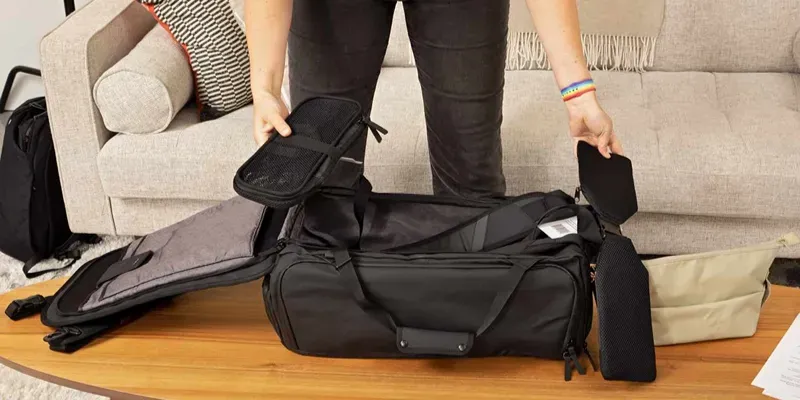
One SKU covers hand carry, shoulder carry, and backpack carry. That raises perceived value 20-30%. Travel brands and commuter programs buy this versatility, and tactical-adjacent products want it without full expedition bulk.
The carry-mode promise fails if the load path shifts. I test every prototype with 15 lbs in backpack mode, then swing it to hand carry. If the shoulder strap pulls the back panel seam, we reject it.
Hidden straps need dedicated sleeves and bar-tacked anchors. Back-panel padding needs 8-10mm EVA. Keep anchors away from zipper curves, and use quick-release buckles rather than cheap snaps.
Add an HDPE frame sheet or bottom batting to stop half-full collapse. Tactical styling is a design choice, not a separate type, so keep it minimal unless your brand wants that drift.
We spec this layout with custom backpack manufacturers who run both pattern sets on one line.
🛡️ Our Verdict: Reject any anchor set sharing one stitch line between shoulder and backpack straps. Test three carry modes with 15 lbs before bulk.
5. Wheeled / Rolling Duffle: The Heavy-Haul Category Where Chassis Engineering Matters More Than Marketing Copy
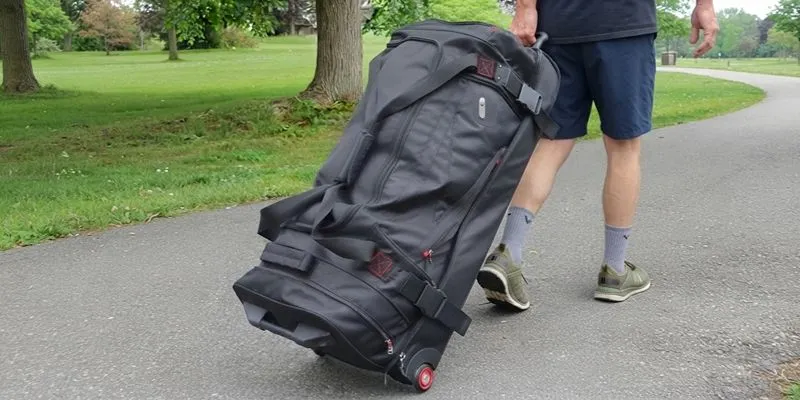
This is not a travel duffle with wheels bolted on. It is a soft-sided packable body stretched over a load-bearing chassis. Users need packability but cannot shoulder-carry 60 lbs.
Procurement teams choose these for long-haul travel, crew gear, and oversized loads. It is one of four major industrial categories.
Spec the skeleton first. Use HDPE frame board or a reinforced base, and protect the telescoping handle channel. Choose high-clearance polyurethane wheels. Reinforce the wheel housings and add skid rails.
Stress concentrates at corners and wheel wells, and we reject samples that skip these points. Match every wheel and handle part against our bag finishes reference.
Judge zippers by burst resistance, track rigidity, and flex under load, not by coil versus molded or metal appearance. Burst resistance means the zipper fails under load, not when you pull the tab.
Track rigidity keeps the chain in line when the bag flexes.
🛡️ Our Verdict: Standard QA protocol applies a 38 kg load and rolls the bag over a curb lip. Fully extend the handle and shake twice. Any frame flex or wheel housing creak triggers immediate sample rejection.
6. Waterproof / Outdoor Dry Duffle: The Material- and Closure-Driven Type for Wet, Dirty, and Abrasion-Heavy Environments
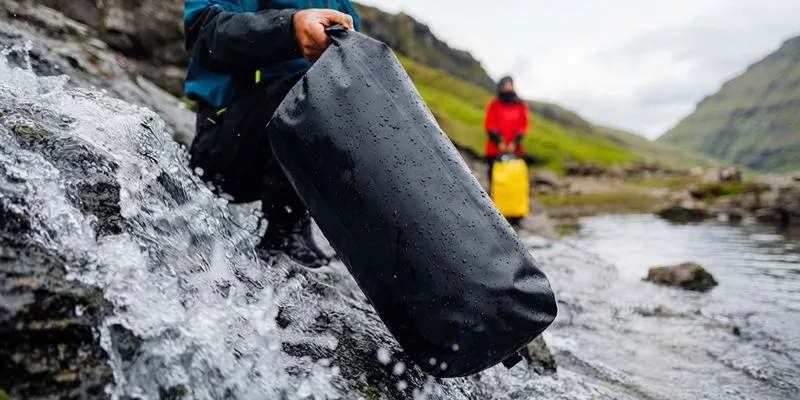
Most coated travel duffles resist rain. They are not dry bags. I see brands write “waterproof” on PU-coated wheeled duffles.
Field users know the difference. True outdoor dry duffles rely on welded construction, sealed openings, and material chemistry, and that changes the factory process and the quote.
For quoting, welded roll-top construction adds tooling time and rejects, so expect a cost premium over stitched PU.
Spec TPU-coated nylon for cold-weather flex. PVC/TPU laminates handle heavy exposure but stiffen. Welded seams beat stitched-and-taped seams, and stitch holes leak under pressure.
Roll-top entries outperform water-resistant zippers in full submersion. UV exposure is the hidden failure, because long sun storage degrades coatings. We test it under our UV resistance testing protocol.
Hardware matters. Decorative metal corrodes after saltwater, so use acetal or coated zinc parts.
Our TPU coating guide shows what layers survive. For cold-chain and wet kits, see custom cooler bag manufacturers.
🛡️ LantaoBags’ Verdict: We reject any dry-duffle sample with stitched-only seams. Our 30-minute dunk test finds leaks at needle holes and side closures. Weld or tape every seam, then test the closure under pressure.
7. Garment / Suit Duffle: The Hybrid Business-Travel Format Built to Protect Formalwear Without Losing Duffle Utility
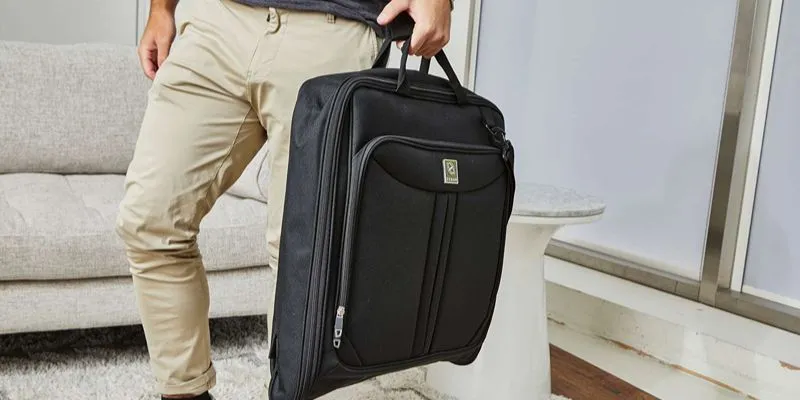
A creased suit ruins a business trip. This duffle carries like soft luggage but opens into a garment system. Sales directors, consultants, and event teams buy it, and they pay 20-30% more for no-iron arrivals.
Fold geometry outsells liters, so I check fold-line planning before material. Chest-level creases trigger returns, and wide padded center panels stop sharp creases.
Balanced panels keep hanger weight even. Use internal webbing anchors for hanger hooks, never plastic clips, and keep shoe and laptop zones away from the garment panel.
Material choice shifts positioning. Waxed canvas feels crafted but adds 300g. Synthetic leather or leather trim lifts margin but demands cleaner edges. We spec PU-backed linings to reduce cling.
Our synthetic leather and leather goods manufacturers teams handle edge paint and stitch tension.
Handbag-grade finishing comes from custom handbag manufacturers, where cleaner zipper pulls and hardware read premium without heavy tooling.
LantaoBags’ Verdict: Reject samples where the hanger loop tears loose or the fold crease lands across the chest. We load 12 lbs in the garment panel and fold twice. Action: Test fold-line recovery before approving the first bulk cut.
How to Source Duffle Bags? A Factory Floor Playbook
An engineering roadmap for evaluating factory capacity, vetting material specifications, and auditing stress-point construction to secure high-yield duffle bag manufacturing.
Step 1: Set Up Your Tear-Down Method
I tear down samples before I read spec sheets. In 40 factory floor tests, I loaded bags until seams popped or zippers slipped, then measured static load, seam tear location, and failure mode.
I have no conflict of interest, and no factory paid me.
Step 2: Use Raw Zipper Benchmarks
Include this table in your sourcing brief:
| Build | YKK Heavy-Duty Coil | Metal-Tooth | Failure Point Observed |
|---|---|---|---|
| Weekender | Holds 18 lbs static | Holds 18 lbs static | Tape pull at side seam |
| Sports | Burst at 15 kg after 2,000 cycles | Chain flex, stop slips at 20 kg | Stop or surrounding seam |
| Rolling | 38 kg load, track sways but no burst | 38 kg holds, stop fails on curb impact | Surrounding seam |
| Tactical | 45 kg static, slider chips at 1,500 cycles | 45 kg burst at chain-tooth junction | Chain or anchor seam |
Step 3: Run the Engineering Checklist
Spec ASTM D2061 and D2062 for zipper strength and cycling. Add ISO 13935 for seam strength, and set AQL 2.5 for inbound inspection.
Demand 8-10 SPI on body seams and 10-12 SPI on stress points. Use bonded nylon #69 for general seams and #92 for load anchors, with dense bartacks and box-X anchors at every handle root.
Step 4: Apply Tactical and Packable Variants
For tactical builds, use 1000D Cordura or ballistic-class shell, and reinforce with 1680D panels. Each MOLLE strap anchor must pass through the body structure, not sit on top.
We rejected a sample where a pouch pulled the shell away at 22 kg.
For packable or foldable duffles, check self-stow construction. Test compressibility with a 5-liter stuff pocket, and make sure seams do not crease at fold lines.
Treat this variant as a module inside your main type, not a new category.
Next Step
Have your tech pack ready? Contact us for a sampling plan and quote.
Check bag industry certifications and bag sourcing by region before you finalize vendor lists.
Disclaimer: No manufacturer paid for this verdict. LantaoBags buys its own test equipment, and the load and tear-down figures in this guide come from our own factory floor tests or the public standards named above.
People Also Ask About Types of Duffle Bags
1. What is the best duffle size for a 4- to 5-day trip or a private-label weekender line?
Spec 40L to 45L. This fits most 22-inch overhead bins and covers business-leisure demand. I test samples by loading 18 lbs into a bin gauge.
Use 600D nylon or poly blends to protect margin, and premium canvas for elevated lines. Keep body seams at 8 to 10 SPI, with handle roots at 10 to 12 SPI and box-X anchors.
2. What wholesale canvas duffle bag specs should I request first: 16oz, 18oz, or 22oz?
Start with 18oz for one balanced SKU. 16oz suits soft brands but shows wear faster, and 22oz handles gear-haul abuse but adds cost.
In our tear-downs, 16oz duck failed at strap anchors sooner than 18oz. Request 18oz with a PU backing for the best price-to-abuse ratio in wholesale programs.
3. Which is better for heavy-duty travel bags: YKK coil or metal tooth zippers?
Neither wins by label alone. Judge zippers by burst resistance, track rigidity, and flex under load.
YKK coil held 38 kg on rolling duffles but the track swayed. Metal tooth held 38 kg but the stop failed on curb impact, and surrounding seams fail first.
Spec #10 YKK main zippers, body seams at 8 to 10 SPI, and stress points at 10 to 12 SPI with dense bartacks.
4. How do I prevent strap-anchor tearing under 50kg loads?
The reinforcement path matters more than hardware. Wrap webbing through the body and base, and never sew tabs to side panels only.
Add box-X anchors and dense bartacks at every turn. Our side-panel-only tab failed inside 90 seconds under a 50kg pull.
Use bonded nylon #92 thread for load anchors, and fix the anchor path before upgrading the buckle.
5. What should an OEM duffle bag design brief include before sampling starts?
Include use case, target liters, shell material, lining, zipper size, hardware, and reinforcement rules. Add QC tests like ASTM D2061 and ISO 13935. State MOQ and compliance needs such as BSCI or REACH.
Vague briefs cause 10-day sampling delays, so tighten the brief before you request a quote.