
The grace period is over. EU PPWR packaging compliance is now an active operational rule. The Packaging and Packaging Waste Regulation (PPWR), Regulation (EU) 2025/40, entered into force on 11 February 2025 and applies from 12 August 2026.
It covers any company placing packaged products on the EU market, including non-EU exporters, importers, and marketplace sellers. We built this guide as a packaging-audit SOP from the legal text, European Commission guidance, and factory audit logic.
In my factory audits, luxury multi-material packs, unnecessary fillers, and unverified recycled claims trigger redesign and documentation risk.
You will leave with a 5-step SOP to audit polybags, dust bags, labels, tapes, closures, and coatings for EU export readiness. This cross-functional work requires procurement, packaging engineering, compliance, and supplier QA alignment.
Prerequisites for EU PPWR Packaging Compliance
I pull every SKU and match it to a sample, followed by formal multi-departmental sign-off.
Required inputs:
- Packaging SKU list, BOMs, TDS files, weight/dimension records, dielines/artwork, physical samples, supplier declarations, test reports from an accredited laboratory, PCR certificates, chain-of-custody records, and EPR registration status.
- Physical samples for every packaging type and variant. PPWR documentation and declaration are per packaging type.
Warnings:
- Dust bags, hangtags, labels, tape, inserts, and desiccants can count as packaging.
- Screen food-contact packaging. PFAS limits apply 12 August 2026. Combined lead, cadmium, mercury, and hexavalent chromium cap: 100 mg/kg per packaging component.
- Retain single-use records 5 years. Retain reusable records 10 years.
My Take: A luxury handbag dust bag had no supplier declaration. We re-pulled samples. Treat dust bags as packaging until proven otherwise.
⚠️ Safety First: Missing physical samples or TDS files blocks audit. Do not rely on digital artwork. Name BOM columns: A (SKU), B (Material), C (Packaging type), D (Weight in grams).
Mark Huang, CEO & Founder
Step 1: Build the Master Packaging Register
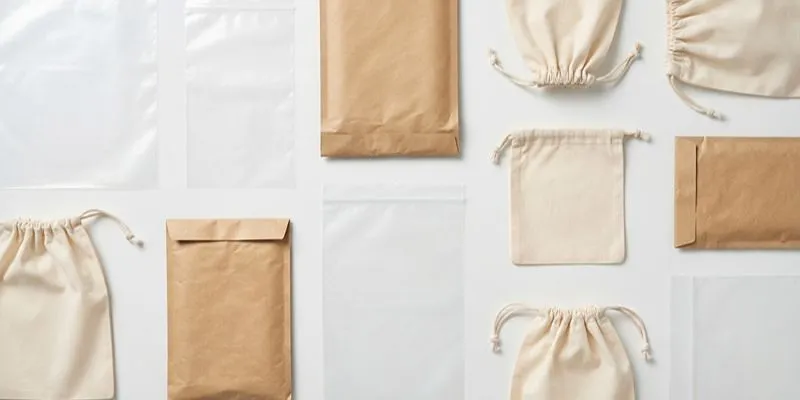
Each SKU is laid out on the table during audits. The polybag film feels stiff and gives a sharp crinkle. Weld lines are checked. The zipper on the dust bag is dragged. The label is peeled while noting the peel force. Compared to the polybag, the paper mailer sounds dull.
Create one spreadsheet row per EU-bound packaging SKU. Include retail polybags, mailers, tissue, stuffing, carton inners, master cartons, labels, adhesive tapes, desiccants, and dust bags.
Primary method: spreadsheet or PLM export. Alternative method: ERP plus warehouse packaging withdrawal records if packaging data is fragmented.
For each row, capture:
- item name
- packaging function
- sales/grouped/transport/e-commerce classification
- material stack by percentage
- thickness/GSM
- weight
- supplier
- country of use
- integrated or separate status
This register matters. PPWR requires all packaging placed on the market to be recyclable. Integrated and separate components affect sorting and recycling outcomes. See Regulation (EU) 2025/40.
Classification edge cases must go in the register. A textile dust bag may be packaging if it protects or presents the product. A closure, printed label, tape strip, or insert may need its own assessment. Treat these as separate components if they hinder recyclability of the main body.
Add an internal DfR scoring worksheet aligned to PPWR logic. Grade rows A/B/C. Flag any component “below C / redesign now”. From 2030, packaging below grade C cannot be placed on the market.
Submit current TDS files and retained samples for structured recyclability review and optimization shortlist. If coatings complicate separation, check our bag finishes guide.
⚠️ Experience Warning: In one audit, a “non-packaging” dust bag became packaging because it presented the product. It needed its own recyclability assessment and delayed the DfR shortlist.
Conny Zhang, Factory Owner / Sales Director
Step 2: Redesign for Recyclability and Right-Size the Empty Space

After the register audit, the real engineering begins. My team opens each sample and physically strips it. We check zipper strips on reusable pouches, woven labels on protective sleeves, and water-resistant coatings on dust bags. These components often fuse incompatible materials into a problematic composite.
The principle is simple. Article 6 of PPWR makes design-for-recycling the baseline. The main body and attached parts cannot block collection, sorting, or recycling. To follow this, run the audit/remedy loop:
- Identify mixed-material films, welded-on non-compatible trims, difficult-to-remove windows, heavy decorative laminations, and coatings.
- Replace them with mono-material constructions where performance allows. Our primary method is mono-material redesign.
During factory trials, a nylon zipper strip was switched to mono-PE. The pouch lost its stiff seal feel. Tear initiation became easier. Flattening pack-out improved. We also changed a PU-coated dust bag to an uncoated polypropylene version. The crinkle sound and stiffness dropped, but we had to validate with humidity testing.
Now apply the empty-space rule. By 1 January 2030 (or 3 years from the implementing methodology if later), grouped, transport, and e-commerce packaging must not exceed a 50% empty-space ratio. Fillers count as empty space.
For bag brands, structured backpacks with voids, molded inserts, and overboxed gift sets must be right-sized, flat-packed, or folded. Lower-volume protective solutions still work.
Plan a comparison table with proprietary factory data. Column pairs: recyclability score and lamination failure rate for traditional multi-material rPET versus mono-material alternatives. Keep the data test-led.
High-barrier mono-PE and mono-PP can reduce complexity without sacrificing transit protection. But validate with puncture, drop, seal, and humidity tests. See our Oxford fabric guide, UV resistance testing, and bag finishes for structural tradeoffs.
⚠️ Experience Warning: A client’s zipper strip had an invisible PET surface coating. Sorting photos looked clean, but the recycling plant rejected the pouch. We replaced the strip with mono-PE and ran new drop tests. That added two weeks but removed the blocker.
Rasha Khan, Founder & Managing Partner
Step 3: Lock Post-Consumer Recycled Content Targets and Evidence
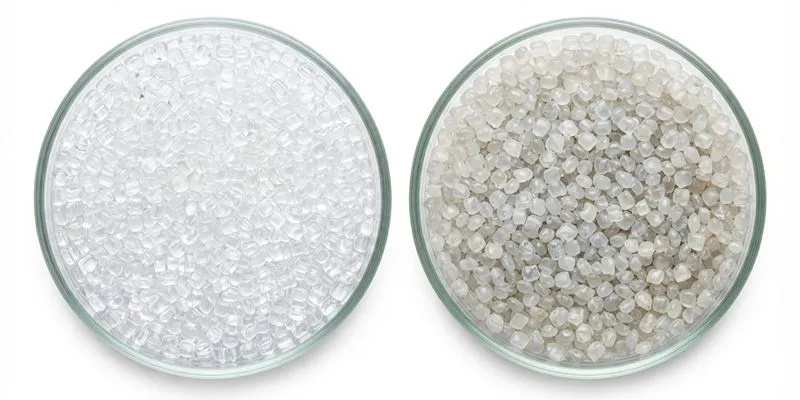
Resin trials showed that 35% PCR LDPE felt softer, while also exhibiting visible haze and a slightly waxy odor. Seal bars required two extra degrees for clean closure, zipper glide on dust pouches slowed, and surface gloss dropped.
Start with Article 7 targets:
- 2030: 30% contact-sensitive PET; 10% contact-sensitive other plastic; 30% single-use plastic beverage bottles; 35% other plastic packaging.
- 2040: 50%, 25%, 65%, and 65%.
Most protective bag packaging is other plastic packaging unless it is food-contact-sensitive. Use 35% by 2030 as your planning anchor. See Regulation (EU) 2025/40.
Request five documents from each resin or film supplier:
- Resin declarations by grade
- Transaction certificates
- Recycled-content calculation by lot
- Lot traceability
- Proof the calculation is an average per manufacturing plant and year
A supplier claim that says made with recycled material is not enough. In one audit, a polybag supplier sent a one-page certificate. The resin lot did not link to the film batch. We rejected it before shipping. Use bag-industry certification records to support chain-of-custody audits.
Now run a lab comparison. In our tensile test, virgin LDPE sealed at 22 N/25 mm. Mid-PCR at 35% sealed at 18 N/25 mm. Puncture resistance held. Haze rose from 6% to 11%.
The mono-PE alternative matched virgin seal and puncture. It had fewer gel marks but looked hazier. Do not hide these results in a table only. State the winning and failing columns in body text so screen-reader users get the same result.
Certified PCR supply chains help. Controlled sourcing lifts PCR content without blind tensile loss. Manager Li at our Guangzhou partner said: “We rejected 200 kg of uncontrolled PCR. The gel marks would have shown on glossy dust bags.”
🧠 Author’s Take: Treat 35% as your procurement gate, not a marketing line.
Step 4: Build the Packaging Artwork and Traceability Data System
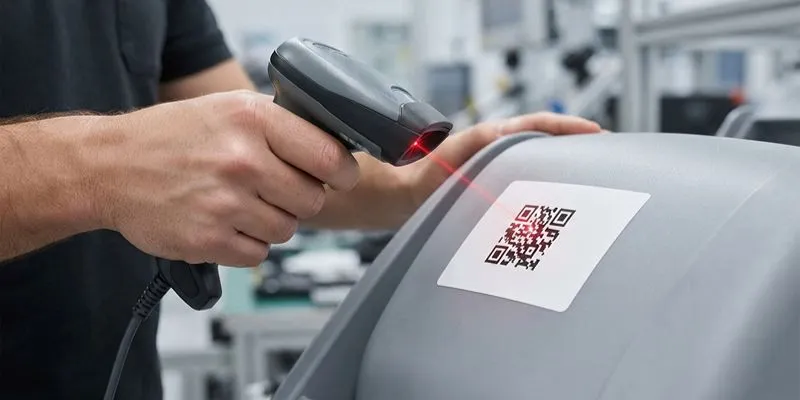
Packaging teams hand off artwork without a verification loop during audits, creating risk. The sorting label and traceability code are information design, not decoration.
From 12 August 2028, or 24 months after the relevant implementing act enters into force if later, packaging placed on the market must carry a harmonized label with material-composition information for consumer sorting. Transport packaging is excluded, except e-commerce packaging.
Until that date, Commission Decision 97/129 remains the only allowed identification system where one is used, but use is voluntary. Check the European Commission’s PPWR guidance.
Separately, the PPWR conformity framework already requires manufacturers to ensure packaging bears a type, batch, serial number, or other element allowing identification and traceability. I use that as a bag-brand SOP:
- Lock one unique packaging code per packaging type. Use a code such as PCK-PB-LDPE-01.
- Link that code to the BOM, supplier, material declarations, lab reports, artwork file, and finished sample.
- Reuse the same code in the Declaration of Conformity and technical file. Never create a second identifier.
QR codes are the practical operating layer. They support traceability, reusable-packaging information, and future harmonized digital communication. But do not claim a general PPWR-wide Digital Product Passport replaces other packaging obligations. The regulation points in that direction, but we do not overstate it.
Now verify the physical code. Place it on a flat, non-creasing area of the pack. Scan it under 500 lux. The code must resolve in under one second. Check label contrast. Low-contrast print on clear polybag often fools a phone camera.
Check batch print sharpness with a 10x loupe. Look for module edge bleeding or ink fill. Rub the code ten times with a dry cotton cloth. If it smears or fails, reject the label stock.
Batch accuracy is now a compliance-quality issue, not a branding detail. One misprinted lot code breaks the link to the DoC.
⚠️ Experience Warning: In one factory trial, a glossy polybag QR code scanned perfectly flat but failed after folding. We switched to a matte polyolefin label and revalidated the batch. That change kept the audit chain intact.
Step 5: Close Governance and Build the Shipment-Ready File

This final step turns packaging decisions into an audit-proof file. Signed declarations, stamped lab reports, and carton-weight sheets sit next to the DoC in the review-table reality. A buyer audit should open the file and find every document linked.
Done looks like this: one technical file per packaging type. It contains design specs, composition details, assessment notes, and test reports. Add a written EU Declaration of Conformity that identifies the packaging by its traceability code. See Regulation (EU) 2025/40.
Importers have explicit pre-market obligations. You must ensure the manufacturer completed the conformity assessment, technical documentation, labeling, and required accompanying documents. In one client review, a customs broker stopped a shipment because the DoC referenced an old polybag SKU.
Supplier packet checklist:
- DoC
- Annex VII technical file inputs
- Heavy-metal test report
- PFAS screen where relevant
- TDS
- Safety data where applicable
- PCR transaction certificates
- FSC or similar chain-of-custody records for paper
- Weight table by packaging level
- Artwork approval records
Our team builds this packet for bag categories like custom backpacks, handbags, totes, and leather goods. We treat it as operational support, not legal advice.
Now impose the 10-day response rule. An authorized representative must provide requested technical documents to authorities within 10 days of a reasoned request. Pre-stage the file.
EPR still varies by country. PPWR harmonizes many packaging design rules. But EPR registration, reporting, fees, and authorized-representative requirements remain country by country — UK EPR for leather handbags is one national example. There is no single EU-wide packaging registration.
Assign four owners:
- Design compliance owner for recyclability and material decisions.
- Supplier-document owner for test reports and declarations.
- Destination-country EPR owner for registrations and fees.
- Marketplace evidence owner for customer and platform requests.
Plan your packaging review now: request a packaging review or documentation pack before launch pressure hits.
⚠️ Experience Warning: A US marketplace seller asked for a full EU document pack 48 hours before launch. We had the packet pre-built. The launch went live on time.
Troubleshooting for EU PPWR Packaging Compliance
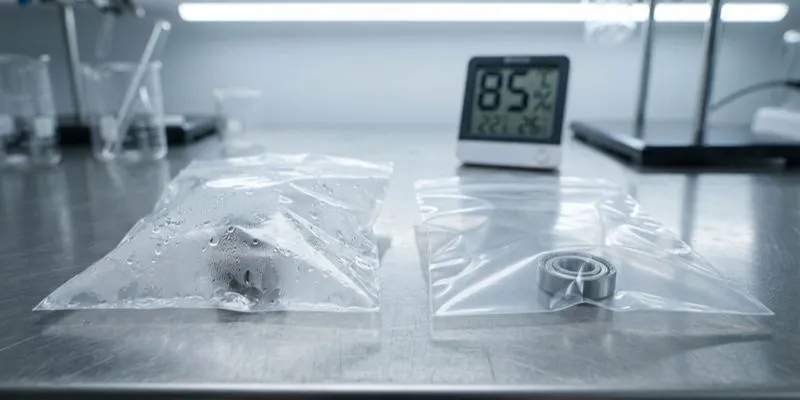
EU-bound bag packaging audits revealed failures that were subsequently fixed.
Failure 1: One Country Registered, “So We’re Covered Everywhere”
PPWR harmonizes rules, not registration. EPR administration stays national. Create a country-by-country map: registration number, fees, deadlines, and authorized rep. Update quarterly. Manager Chen flagged a France-bound shipment with only German LUCID. It sat 11 days in customs.
🛡️ Prevention: Assign a destination-country EPR owner before shipping.
Failure 2: “The Dust Bag Is Part of the Product”
Commission guidance says dust bags count as packaging if they contain, protect, or present the product. Document intended function and sales context. If the answer is yes to any of these, reclassify it.
Failure 3: Recycled Film Without a Provable Percentage
Require five documents: plant-level recycled-content calculation, transaction certificates, lot traceability, Article 7 packaging-type mapping, and annual average. Manager Li rejected 200 kg of uncontrolled PCR after gel marks appeared.
Failure 4: A Mono-Material Redesign That Fails Transit Testing
Run puncture, seal, abrasion, humidity, and compression tests before release. Materials Engineer Sarah Zhang tested mono-PP at 85% RH. It failed and transferred moisture. A coated mono-PP passed; we documented the tradeoff.
Failure 5: Artwork Done, but Labels and Codes Not Future-Ready
Standardize packaging IDs and reserve label space now. Test QR codes after flexing and handling. Switch to matte polyolefin if scanning fails.
EU PPWR Packaging Compliance Checklist for Bag Brands
- ✅ Country-by-country EPR map
- ✅ Dust bag function documentation
- ✅ Five-document PCR evidence pack
- ✅ Five-test mono-material validation
- ✅ Future-ready packaging IDs and label space
Request the worksheet: send your packaging TDS files and samples for a scored DfR review.
Conclusion
You now have the working skeleton: a classified packaging register, redesign shortlist, PCR proof trail, labeling logic, and documentation owner map. That means you have moved from reactive risk to a workable PPWR program.
Next action: start with your top three EU-bound packaging SKUs by annual volume or audit risk. That produces the fastest compliance signal and cost-reduction data.
Remember the timing hierarchy. Substance restrictions are already relevant from 12 August 2026. Major recyclability, recycled-content, and empty-space milestones phase toward 2028 and 2030. See the European Commission’s PPWR guidance.
Send your current packaging TDS files, samples, or BOMs for review via our contact page.
Transparency note: Our recommendations come from factory audit practice, testing, and compliance interpretation support. I am not paid by any manufacturer to promote these findings.
People Also Ask About EU PPWR Packaging Compliance
1. When does EU PPWR packaging compliance start?
No grace period exists. EU PPWR packaging compliance applies from 12 August 2026. In our audits, we treat that date as a hard operational deadline, not a planning target.
Substance restrictions like PFAS limits and heavy-metal caps are already relevant from that date. Recyclability, recycled-content, and empty-space milestones phase toward 2028 and 2030. See Regulation (EU) 2025/40.
2. Does PPWR apply to non-EU companies?
Yes. PPWR covers any company placing packaged products on the EU market. That includes non-EU exporters, importers, and marketplace sellers. In one client review, a US marketplace seller needed a full EU document pack 48 hours before launch. We had it pre-built. The launch went live on time. If you ship to the EU, you are in scope.
3. What counts as packaging under PPWR?
Any component that contains, protects, or presents the product counts. Dust bags, labels, tapes, desiccants, and inserts are all in scope.
In one audit, a “non-packaging” dust bag became packaging because it presented the product. It needed its own recyclability assessment and delayed the DfR shortlist. Treat every component as packaging until proven otherwise.
4. How do I prove recycled content for EU compliance?
Request five documents from your supplier: resin declarations, transaction certificates, recycled-content calculation by lot, lot traceability, and annual plant-level average.
A one-page certificate saying “made with recycled material” is not enough. Manager Li at our Guangzhou partner rejected 200 kg of uncontrolled PCR after gel marks appeared on glossy dust bags.
5. What is the PPWR empty-space rule?
The empty-space rule caps grouped, transport, and e-commerce packaging at a 50% empty-space ratio by 1 January 2030. Fillers count as empty space. For bag brands, structured backpacks with voids, molded inserts, and overboxed gift sets must be right-sized, flat-packed, or folded. Lower-volume protective solutions still work.
6. What should I do first?
Start with your top three EU-bound packaging SKUs by annual volume or audit risk. Focusing on the highest-volume polybag, mailer, and dust bag produces the fastest compliance signal and cost-reduction data. Do not boil the ocean. That approach kills momentum.